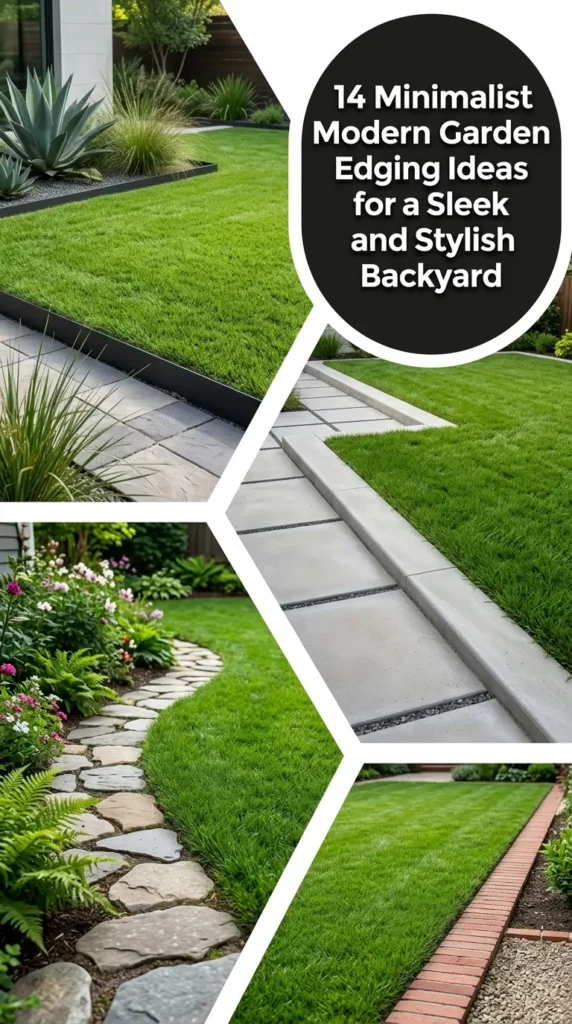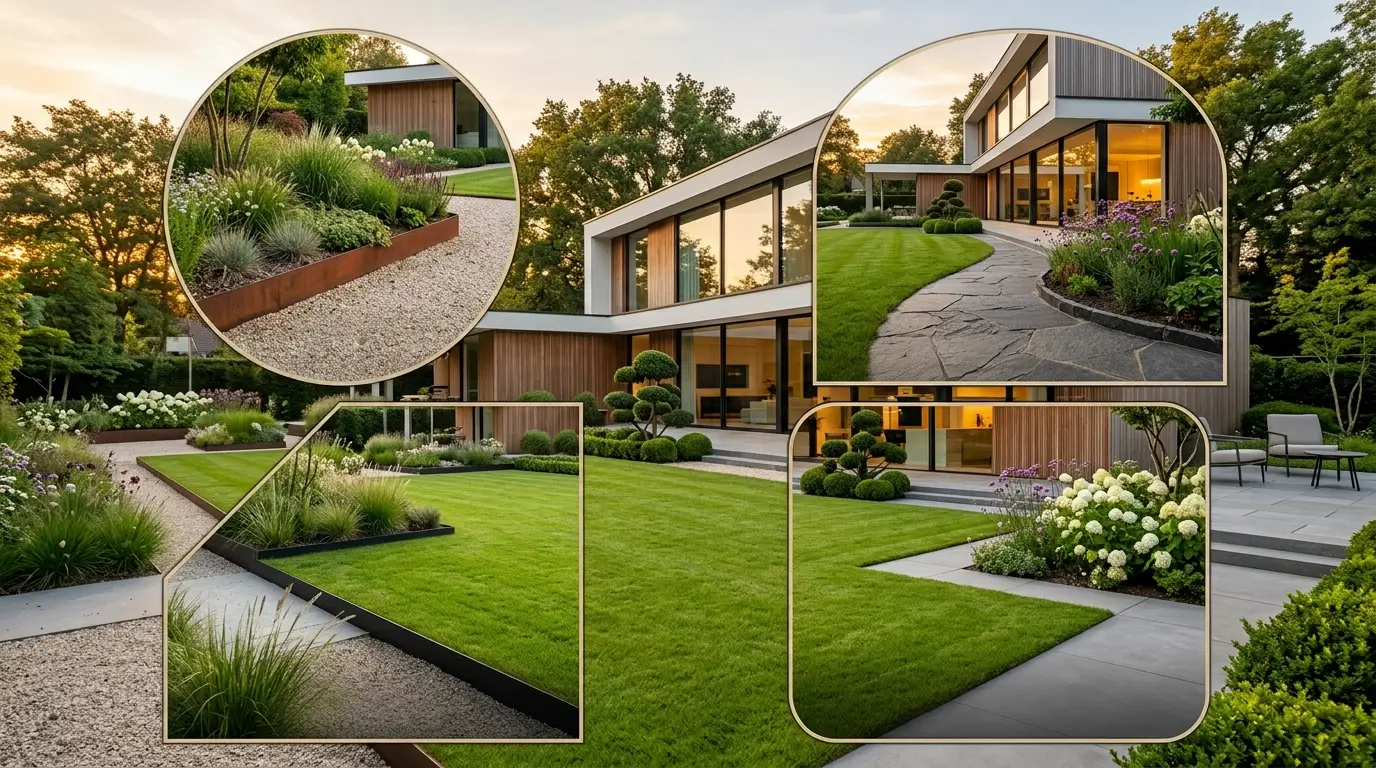
Few things shape the look of a garden quite like a thoughtfully designed border. It’s one of those subtle details that often goes unnoticed until it’s done exceptionally well.
Modern garden edging steps away from fussy, decorative fences and embraces simplicity instead: crisp lines, understated dividers, and carefully chosen materials that create quiet contrast without demanding attention.
The result feels polished, intentional, and effortlessly sophisticated.
Whether your goal is to give a lush lawn a clean, tailored outline, stop mulch from creeping onto pathways after every rainfall, or draw the eye toward striking architectural plants, the right edging does far more than define space.
It brings balance, structure, and a sense of purpose to the entire landscape, turning an ordinary backyard into a refined outdoor retreat that feels both contemporary and inviting.
Why Choose Minimalist Modern Edging?
Traditional landscape borders often rely on bulky concrete blocks, scalloped plastic, or heavy natural boulders.
While functional, they can clutter small yards and visually distract from your plant choices.
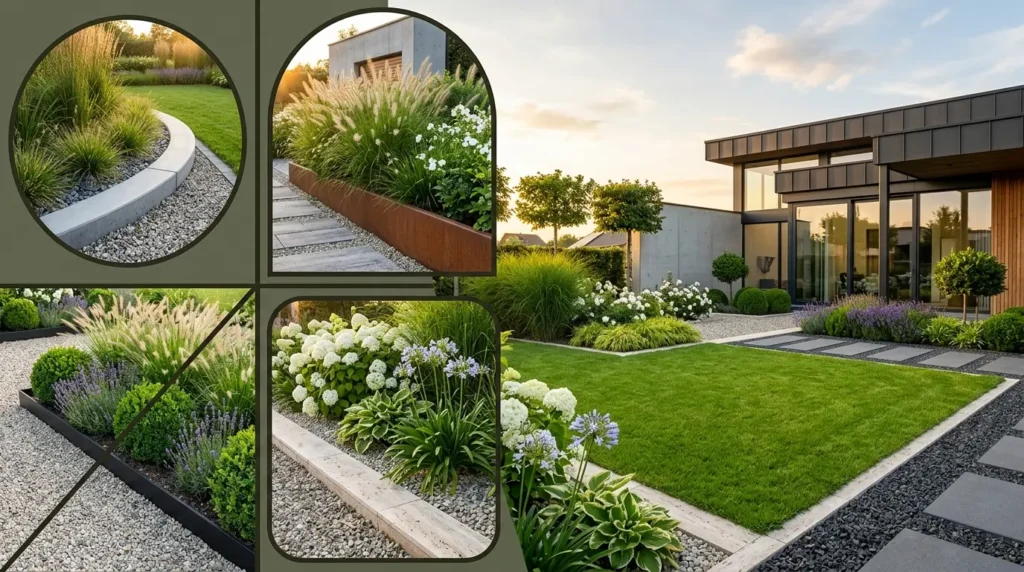
Minimalist modern edging focuses on understated framing.
By keeping the border thin, flush, or monochromatically neutral, the edging creates a razor-sharp barrier that highlights plant textures, ornamental grasses, and decorative gravel.
Beyond aesthetics, modern borders prevent lawn grass from creeping into flowerbeds, hold mulch in place during heavy rain, and drastically reduce weekly yard maintenance.
1. Matte Black Steel Edging
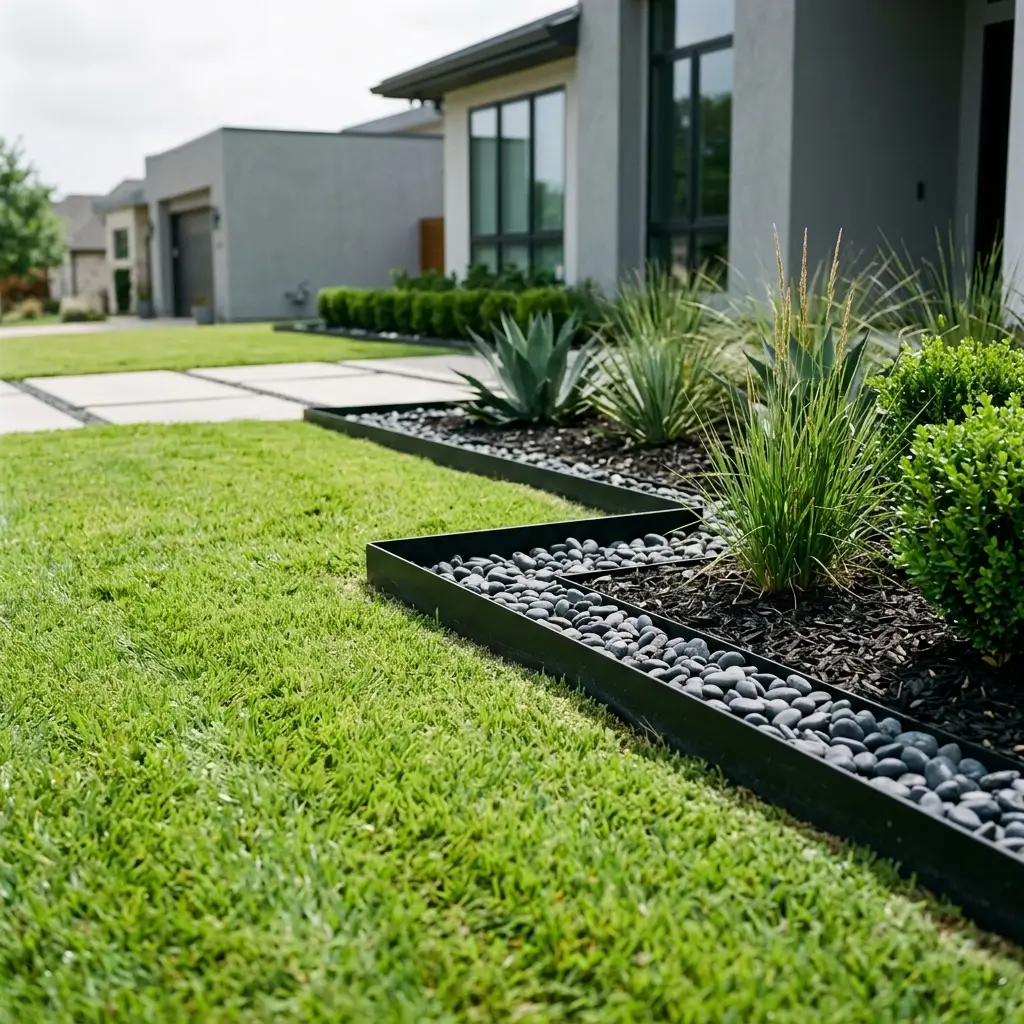
Matte black steel edging brings crisp geometric boundaries to modern landscapes without distracting from your plants.
Its ultra-thin profile sits low against turf, creating a razor-sharp separation between lush green lawns and dark mulch or stone beds.
Constructed from durable powder-coated metal, this border withstands extreme weather conditions while remaining resistant to rust and soil corrosion.
The sleek dark finish acts as a sophisticated accent that complements contemporary architecture, giving your garden a tidy, high-end appearance with almost zero ongoing maintenance required over time.
2. Weathered Corten Steel Borders
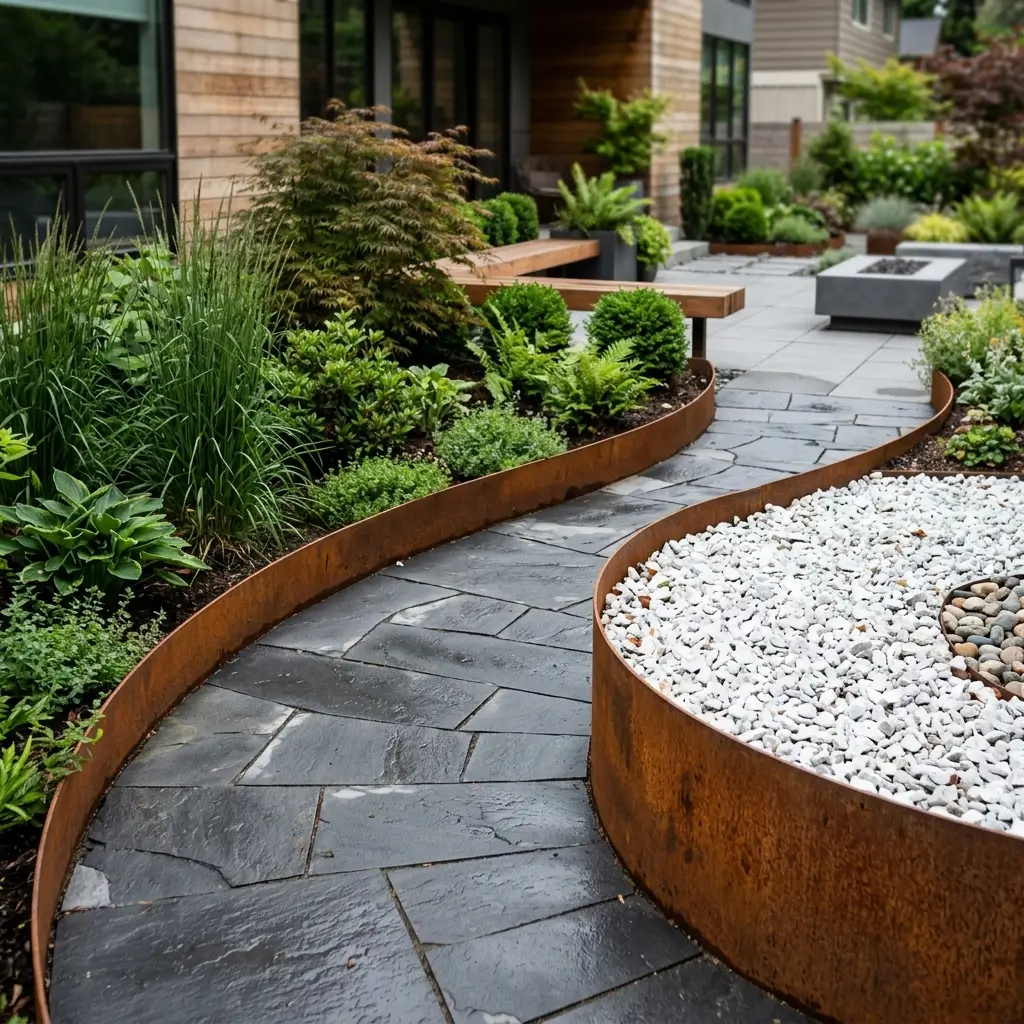
Weathered Corten steel edging introduces an industrial yet organic aesthetic to contemporary yard spaces.
As the steel reacts naturally with outdoor moisture, it forms a protective patina of rich copper and rust tones that seals the metal against further corrosion.
This architectural edging offers exceptional structural integrity for straight paths or sweeping geometric curves.
The warm, earthy coloration produces a striking visual contrast against deep green foliage, white gravel, and charcoal pavers, making it an enduring favorite among modern homeowners seeking longevity, texture, and understated artistic style.
3. Poured Concrete Strip Edging
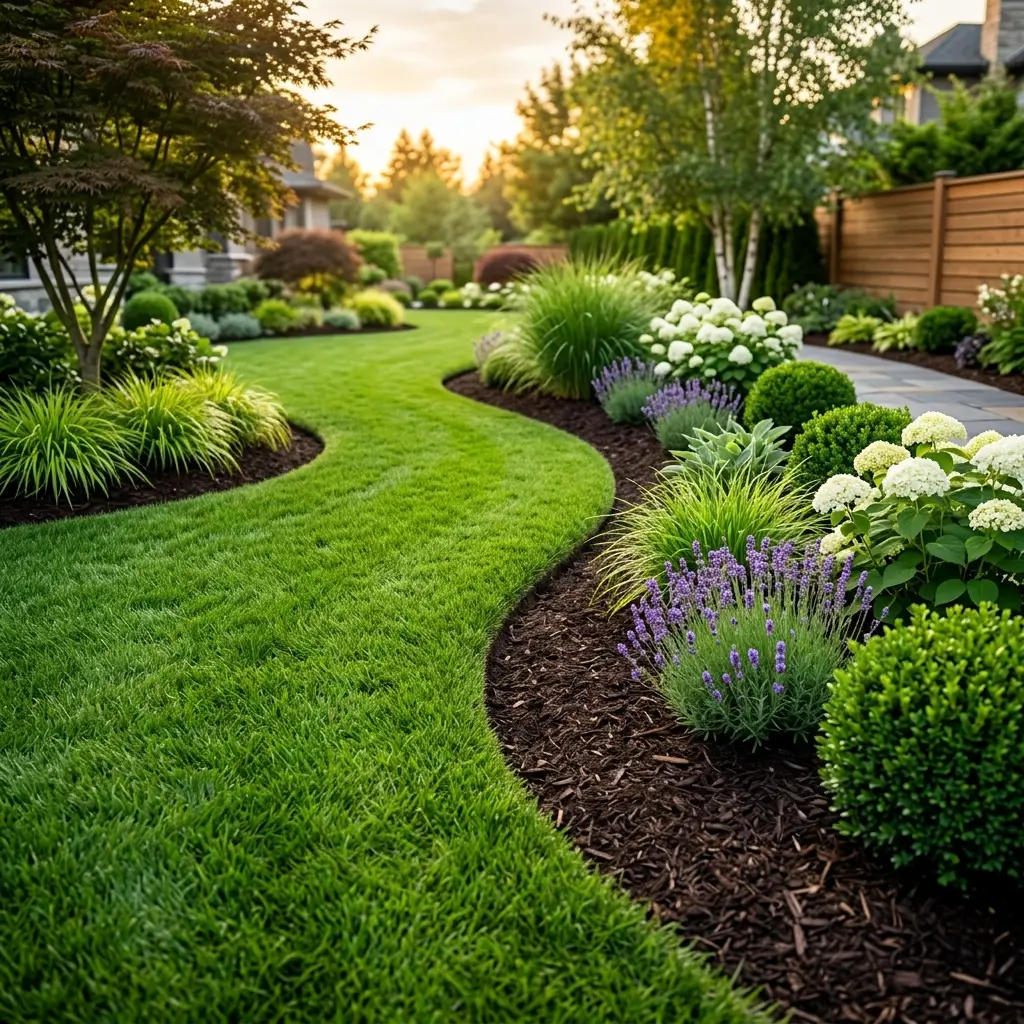
Poured concrete borders deliver a continuous, seamless framing option ideal for structured landscape designs.
Formed directly along flowerbed perimeters, this thick barrier prevents invasive root systems and wandering grass from creeping into pristine garden beds.
The neutral gray tone integrates beautifully with modern architectural materials like glass, steel, and smooth masonry.
Because it is custom molded on site, concrete edging easily accommodates precise right angles, sharp geometric frames, or smooth continuous lines, offering custom durability that easily lasts for decades with simple periodic surface cleaning.
4. Flush Gray Porcelain Paver Borders
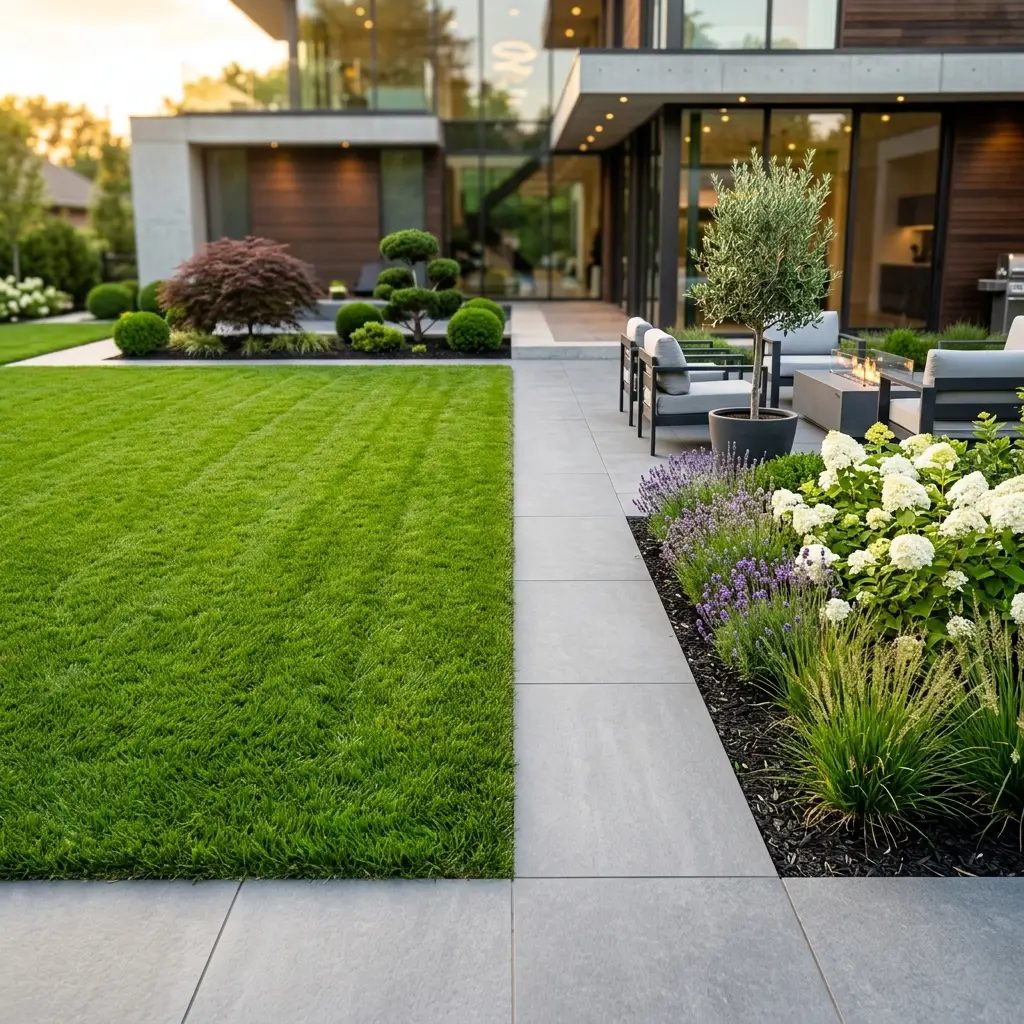
Large-format porcelain pavers laid flush with grass lawns establish a sleek, modern transition between turf and planting beds.
Their non-porous surface resists moisture absorption, mildew growth, and stubborn dirt accumulation, ensuring a clean aesthetic throughout every season.
By setting these pavers level with the lawn line, lawnmower blades glide across smoothly without requiring tedious string trimming around flowerbed edges.
The uniform matte gray finish emphasizes minimalist geometry while providing a functional walking boundary that keeps soil and decorative mulch neatly contained inside your beds.
5. Polished Aluminum Strip Edging
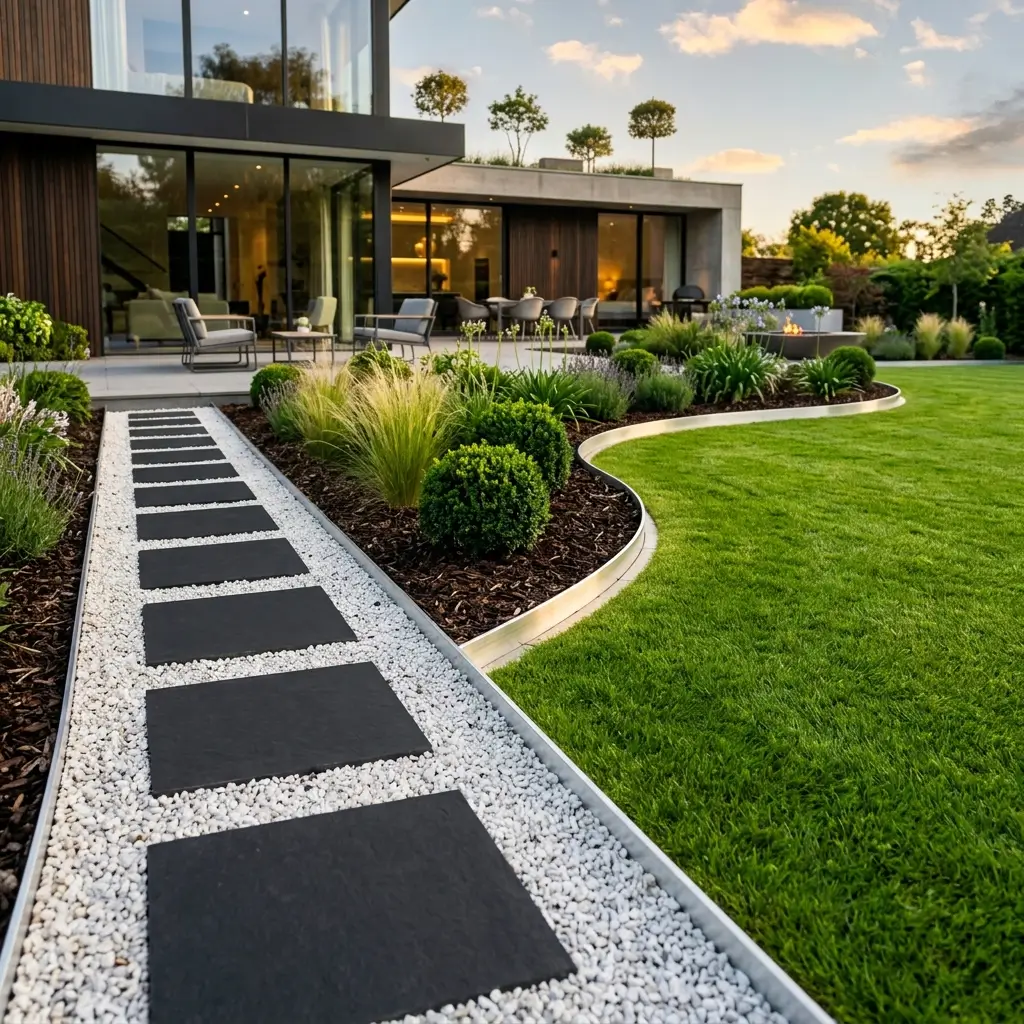
Aluminum edging offers an ultralight yet remarkably strong solution for modern gardens that demand sharp structural lines.
Resistant to rust and rot, silver or brushed aluminum strips create an ultra-clean boundary that frames lush green turf against darker soil or decorative gravel.
The material bends smoothly around soft curves without kinking, allowing homeowners to design sophisticated custom layouts easily.
Because the metal is lightweight and flexible, installation requires minimal excavation while providing long-lasting stability against frost heaves, heavy rainfall, and shifting garden ground over many years.
6. Recycled Composite Timber Edging
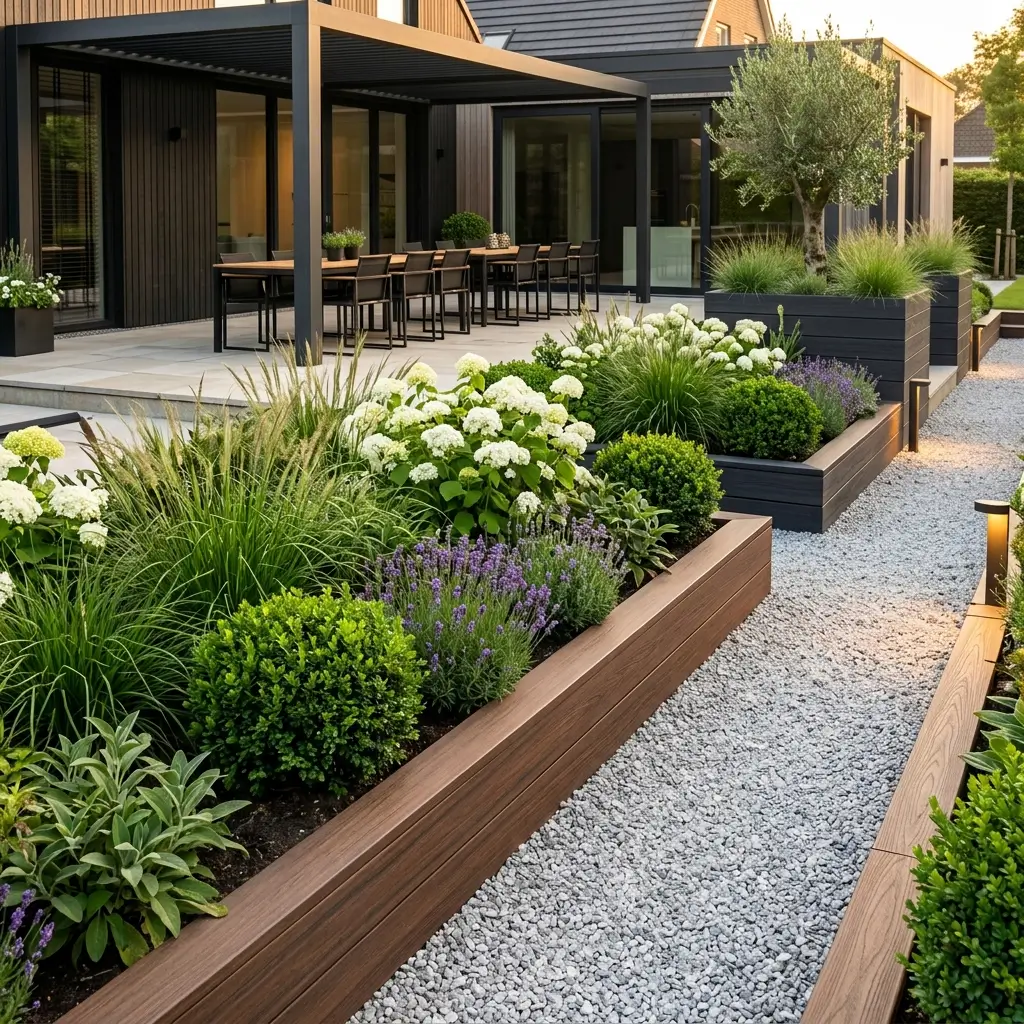
Composite timber borders provide the organic warmth of authentic wood combined with the heavy-duty resilience of recycled polymers.
Modern composite boards do not splinter, warp, or rot from constant exposure to damp garden soil, making them an eco-conscious alternative to traditional treated lumber.
Laid in straight horizontal lines, dark brown or charcoal composite edging creates a structured, architectural frame around raised garden beds and gravel pathways.
They require no annual staining or sealing, keeping your outdoor space looking pristine with minimal labor each season.
7. Monochromatic River Rock Trenches
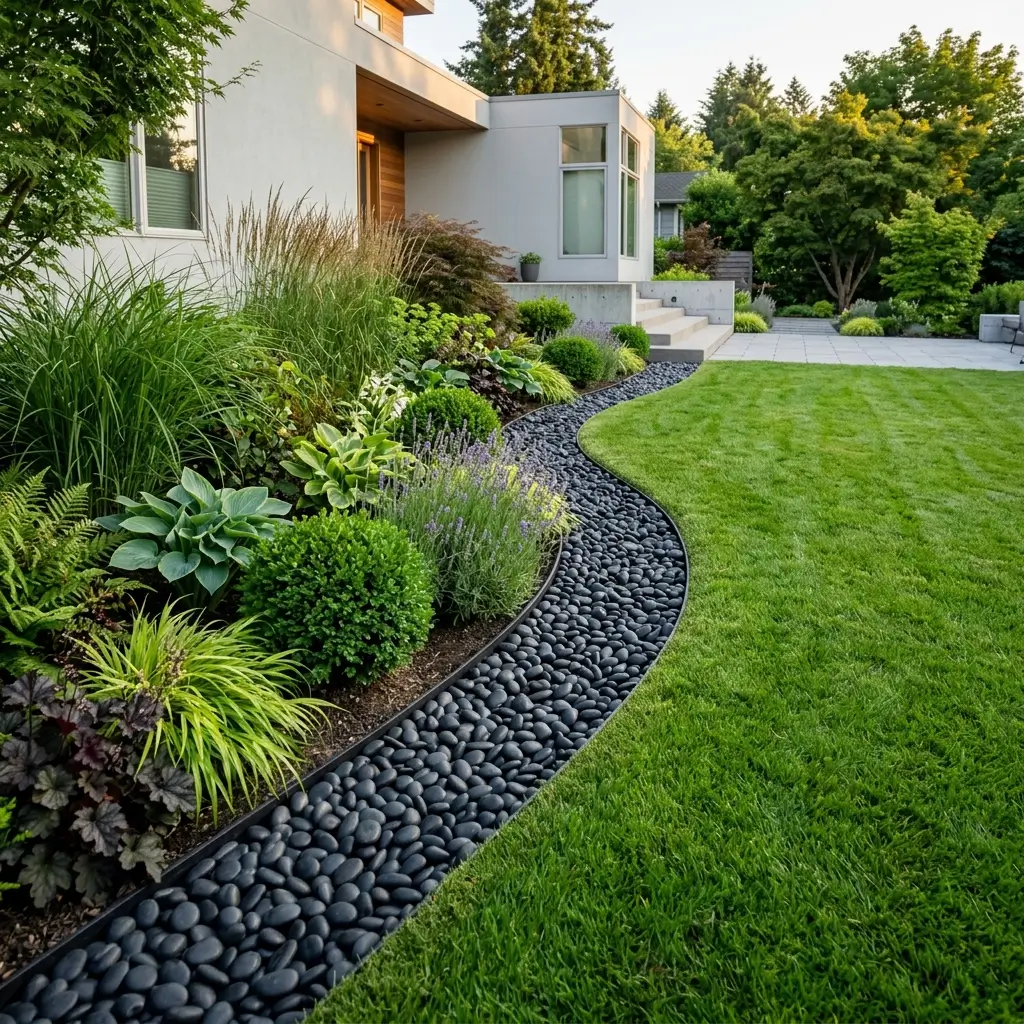
A shallow dry trench filled with uniform black or white river pebbles creates a striking minimalist boundary with built-in drainage benefits.
By digging a shallow border channel between turf grass and flowerbeds, this pebble technique absorbs excess rainfall runoff while preventing lawn weeds from encroaching on delicate ornamental plants.
The stark monochromatic color contrast highlights plant shapes and foliage textures, producing a tranquil Zen-inspired landscape layout.
It offers an affordable DIY solution that feels tailored, serene, and naturally refined without harsh rigid structure.
8. Minimalist Linear Brick Borders
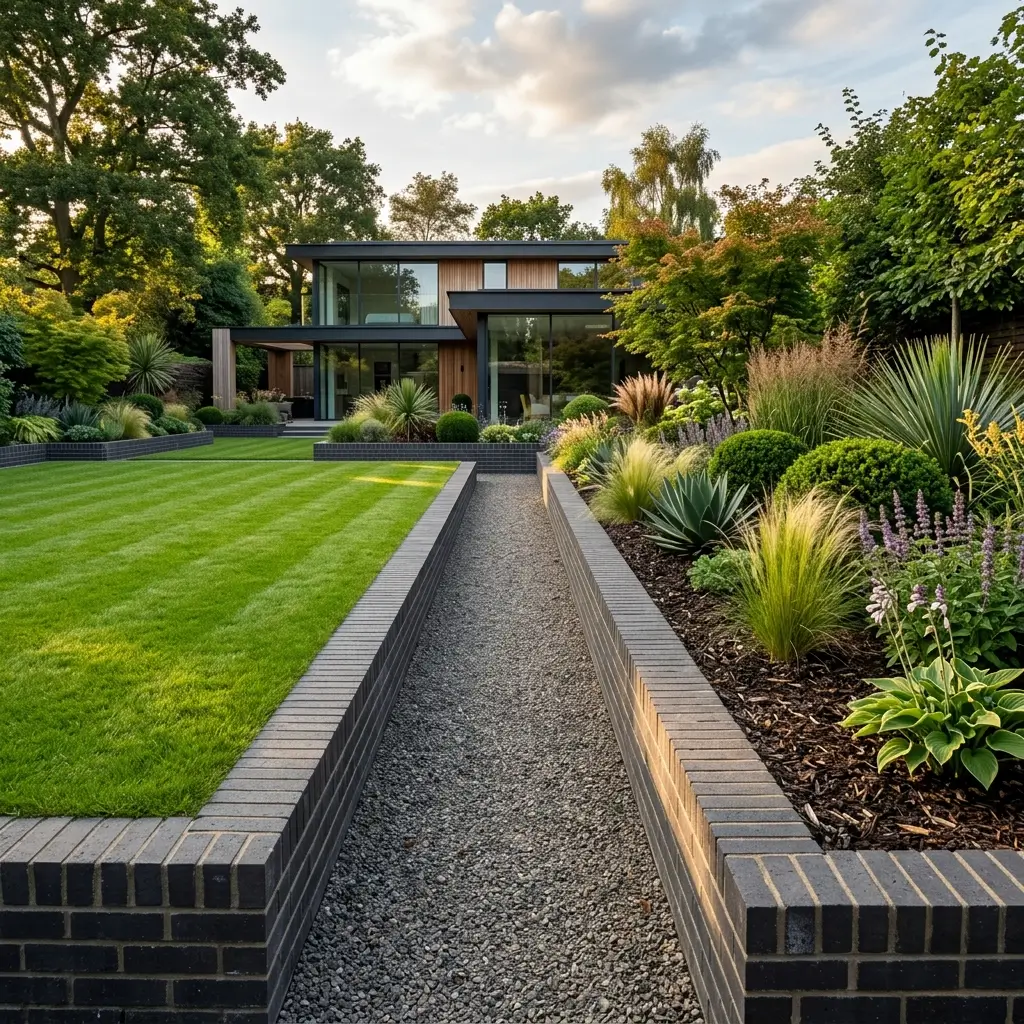
When arranged in precise soldier courses or flat linear layouts, dark gray or muted red architectural bricks generate timeless structure with contemporary appeal.
Utilizing tight mortar joints or sand-filled seams ensures crisp alignment that outlines flowerbeds, tree rings, and lawn areas cleanly.
Bricks provide substantial physical mass, keeping heavy soil and wood chip mulch firmly in place during severe rainstorms.
Choosing dark slate tones over traditional rustic red bricks emphasizes modern geometric design principles while offering a sturdy, long-lasting barrier that handles heavy foot traffic effortlessly.
9. Polished Granite Cobble Edging
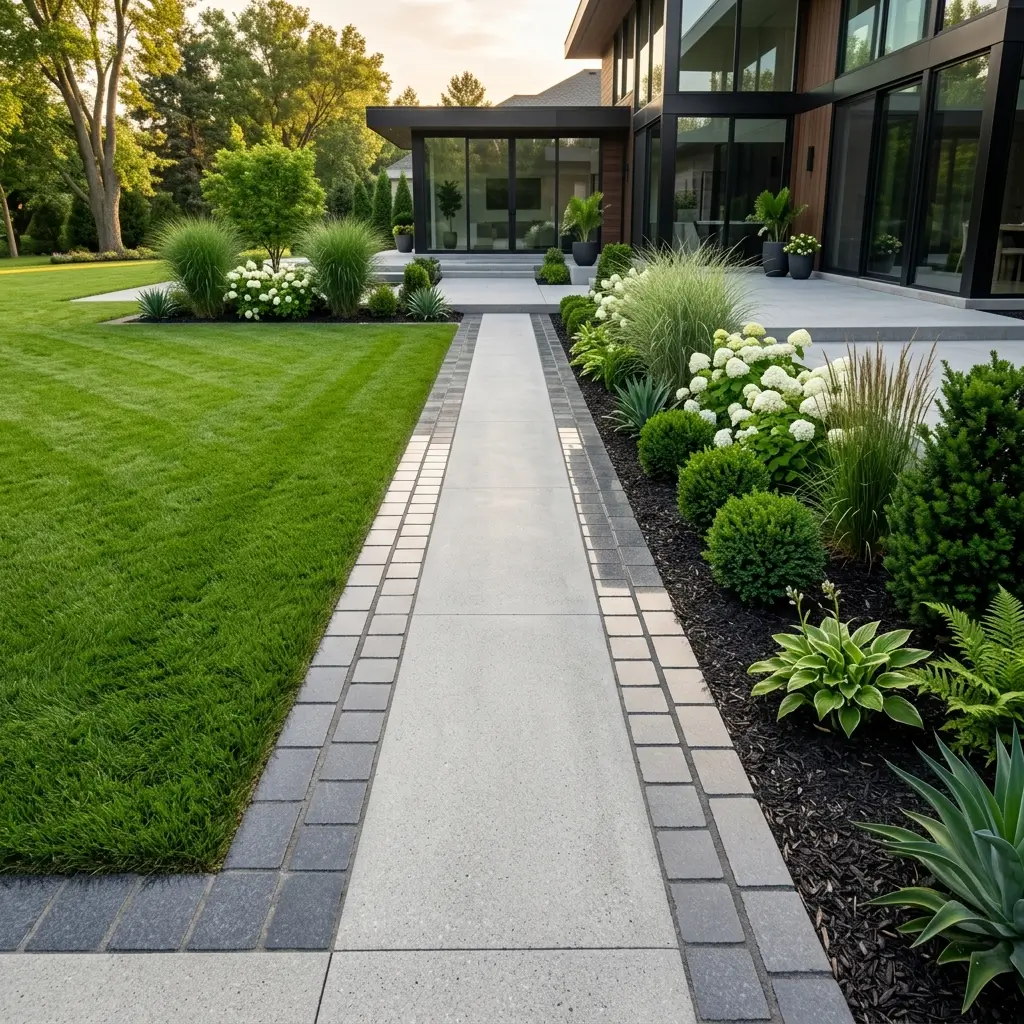
Granite cobble borders bring refined luxury and durability to contemporary yards through natural stone strength.
Cut into uniform square or rectangular dimensions, granite blocks deliver clean edges that complement smooth concrete walkways and modern home facades.
Their low water absorption rate makes them virtually immune to freeze-thaw damage, cracking, and surface discoloration across harsh winter months.
Set in mortar or tightly packed gravel, these dark grey stone borders establish an elegant, low-maintenance separation between garden greenery and hardscape surfaces that easily lasts for generations.
10. Recycled Rubber Strip Edging
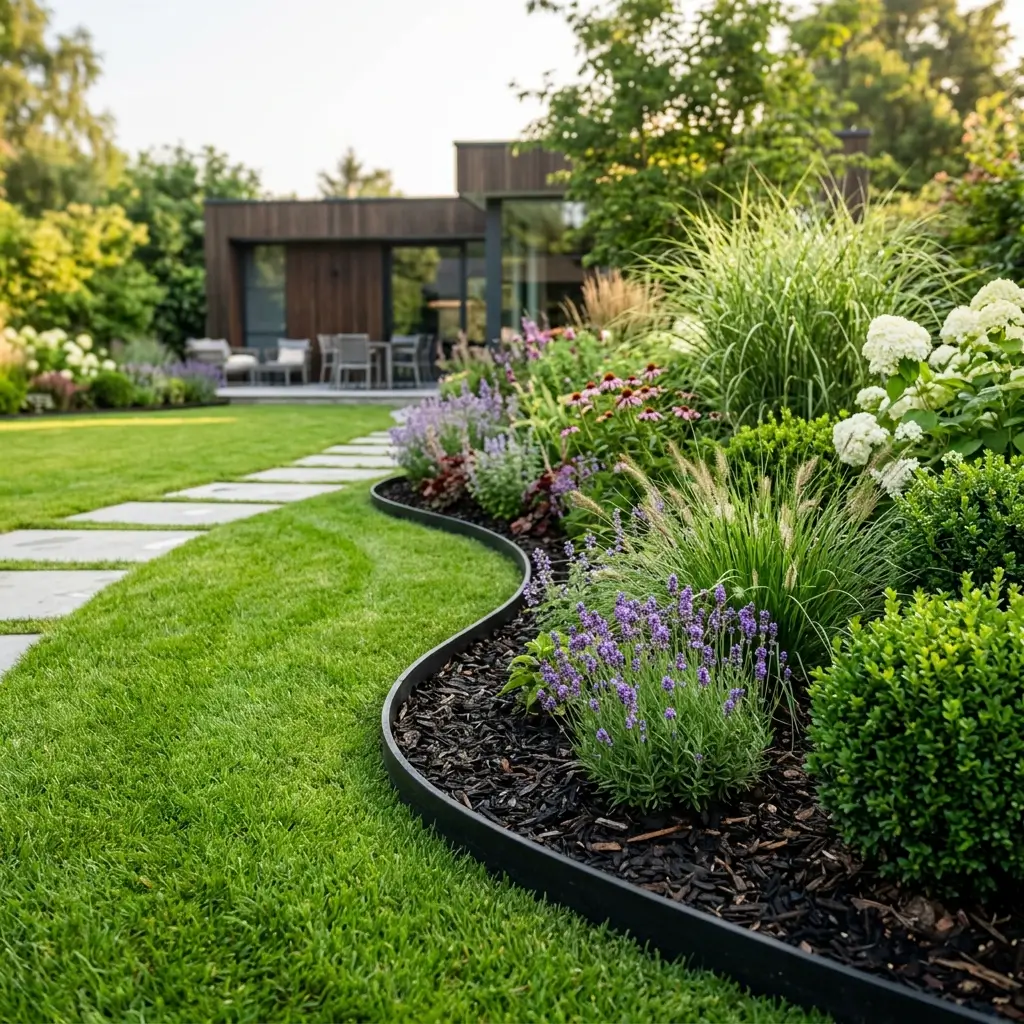
Recycled rubber lawn edging offers an eco-conscious, incredibly flexible alternative that forms crisp boundaries around curved garden beds.
Derived from recycled tires, this durable material withstands lawnmower bumps, foot traffic, and changing weather without cracking or fading.
Its flexible composition makes installation simple without specialized tools or heavy machinery, making it popular among DIY homeowners.
The subtle matte texture blends seamlessly into surrounding soil and mulch, delivering a safe, child-friendly edge that effectively retains moisture and suppresses persistent weeds around delicate ornamental shrubbery.
11. Smooth Basalt Slate Edging
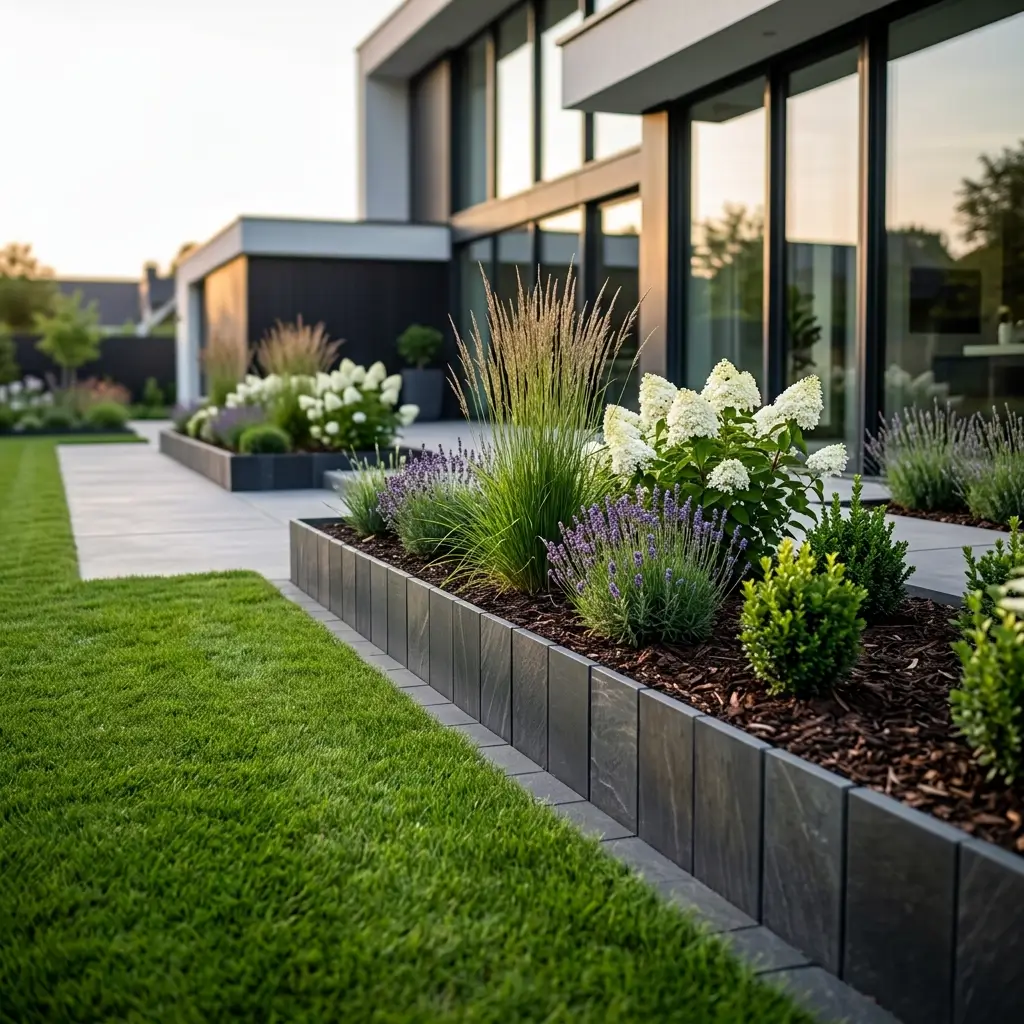
Smooth basalt slate tiles inserted vertically create a sleek, dramatic border with deep charcoal tones that enhance vibrant garden greenery.
Slate provides exceptional natural density, resisting water penetration, chipping, and weathering over years of continuous exposure.
Placing thin basalt slabs in a uniform straight line yields a refined aesthetic that pairs beautifully with minimalist architecture and contemporary xeriscaping.
The dark natural stone creates sharp architectural contrast alongside ornamental grasses and bright flowers, elevating simple backyard plant beds into striking visual gallery features.
12. Subtle Stainless Steel Strip Edging
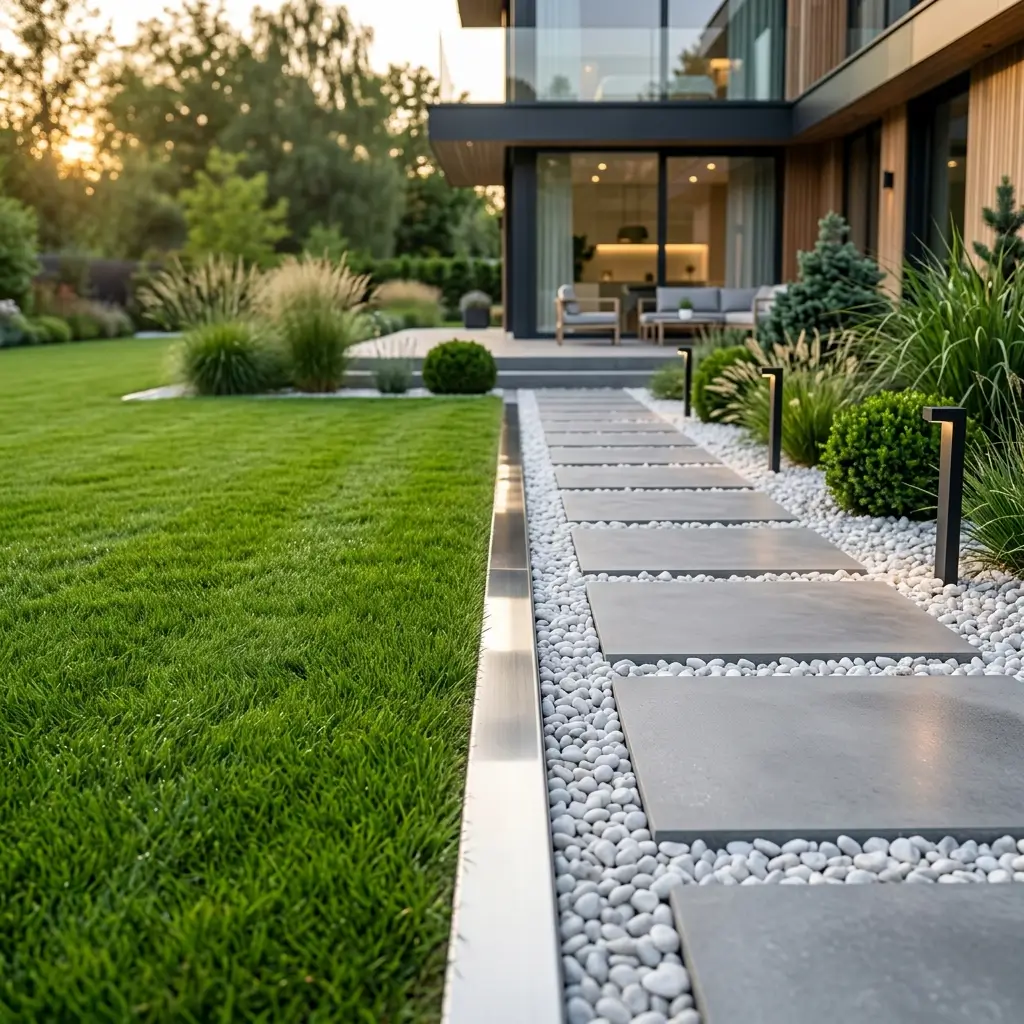
Stainless steel landscape edging delivers a reflective, ultra-modern border that accents clean architectural lines in urban gardens.
Its bright silver polish reflects ambient natural light and subtle landscape lighting, creating a high-tech finish along lawn edges and pebble pathways.
Made from corrosion-resistant steel alloys, this edging maintains its pristine luster through rain, snow, and extreme sun without tarnishing or structural degradation.
The flexible yet rigid metal strips hold straight lines flawlessly, offering an upscale framing option for modern yards that demand neat precision and zero rot.
13. Natural Bamboo Border Edging
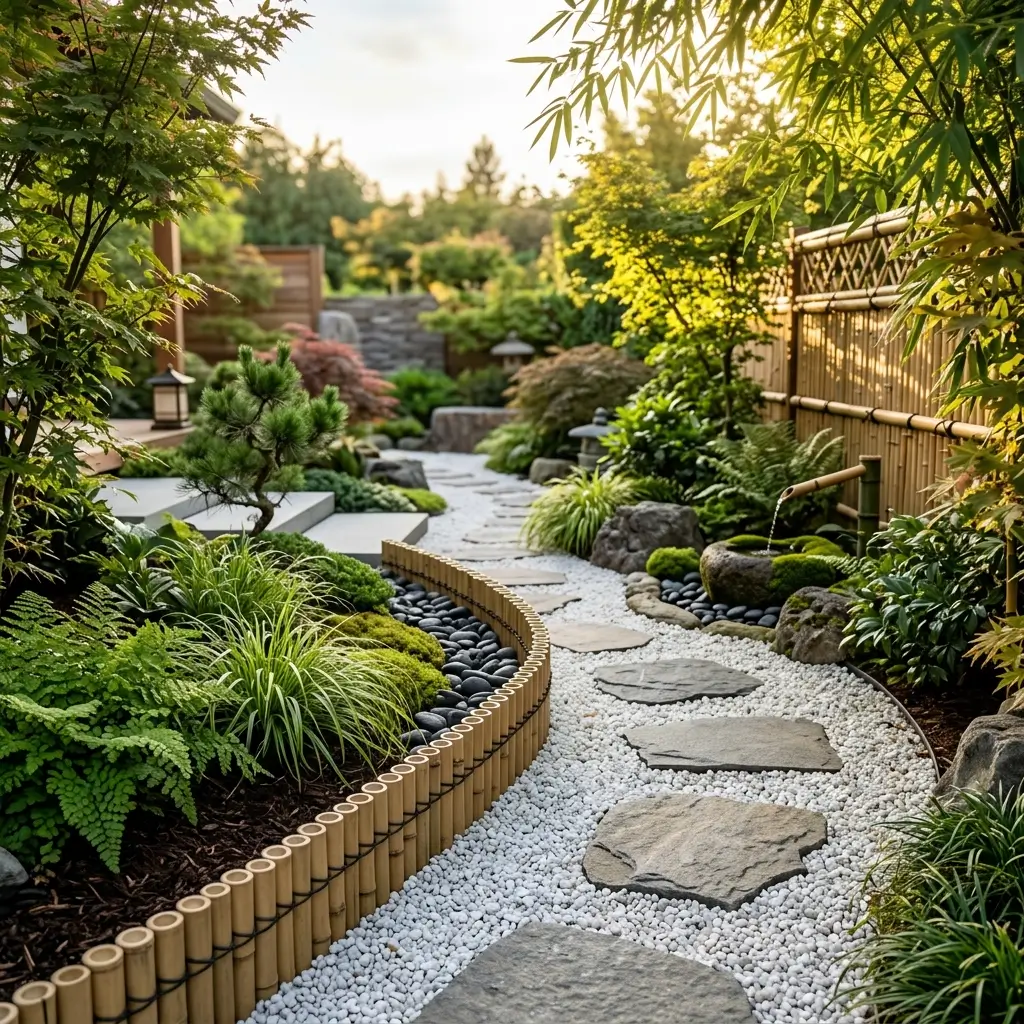
Natural bamboo pole edging infuses organic texture into modern minimalist landscapes, bringing a tranquil Japanese Zen aesthetic to garden beds.
Standardized bamboo poles bound with sturdy steel wire create low, uniform roll borders that frame gravel gardens, fern beds, and paved stone walkways nicely.
Treated bamboo resists natural moisture decay while retaining soft wood tones that ground modern geometric structures.
It provides an eco-friendly, renewable option that softens hard landscape elements while keeping mulch contained and defining plant zones cleanly across serene backyard settings.
14. Embedded LED Strip Light Edging
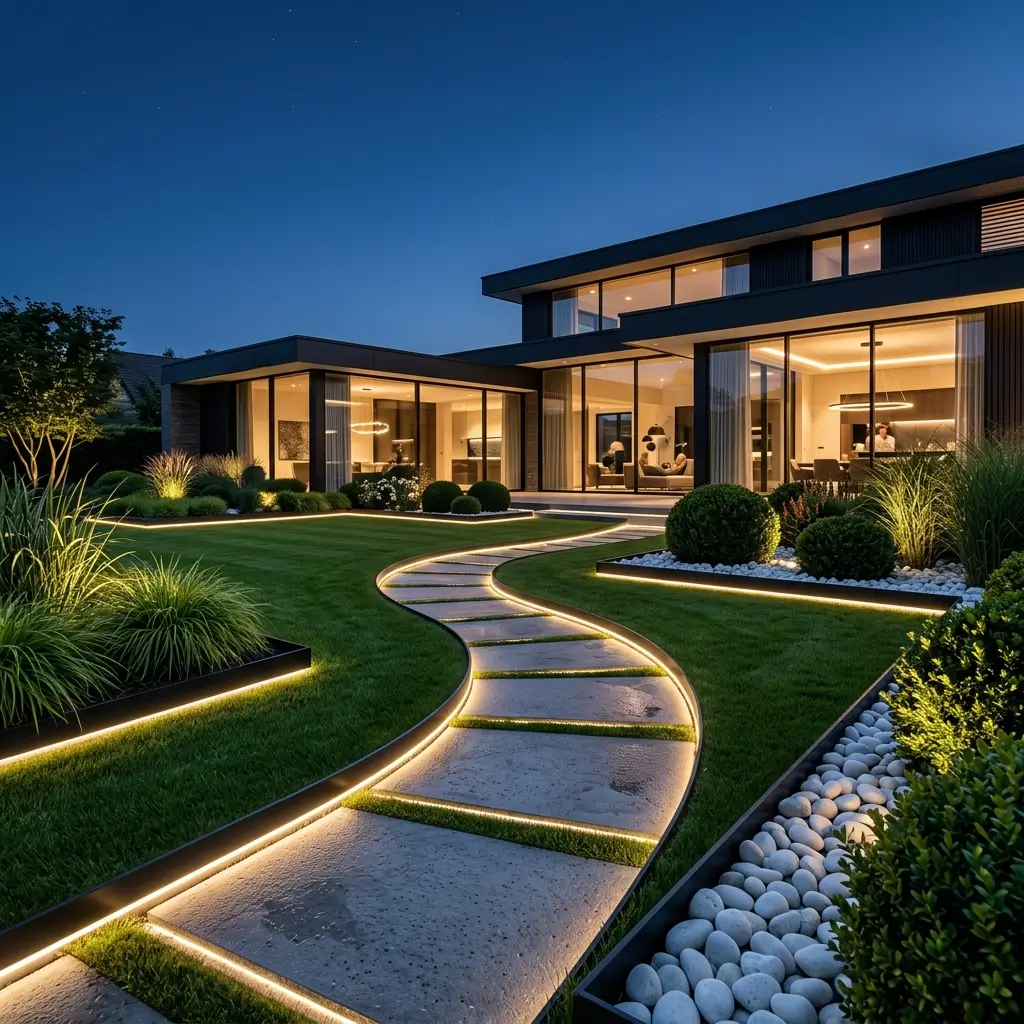
Integrating waterproof LED light strips along metal or stone garden edging transforms your landscape into a striking ambient nightscape.
Tucked discreetly beneath the upper lip of lawn borders or paver edges, low-voltage illumination outlines garden pathways and geometric plant beds smoothly.
During daytime, the low-profile fixtures remain practically invisible, preserving clean minimalist lines.
At dusk, energy-efficient lighting casts a gentle downward glow, highlighting plant silhouettes and hardscape textures while enhancing evening backyard safety without harsh glare or bulky outdoor light posts.
Pros and Cons of Minimalist Modern Edging
| Feature | Pros | Cons |
| Metal Edging (Steel/Aluminum) | Razor-thin profile, highly durable, holds perfectly straight lines. | Higher initial material cost; metal can heat up in direct summer sun. |
| Stone & Paver Edging | Allows lawnmowers to glide flush; long-lasting natural look. | Requires shallow trenching and manual leveling during setup. |
| Concrete Edging | Custom molded, completely prevents root intrusion, zero shifting. | Permanent installation; prone to surface cracking if ground shifts severely. |
| Composite & Rubber | Flexible for soft curves, eco-conscious, budget-friendly. | Slightly thicker profile than metal strips. |
Essential Installation Tips for Success
- Dig a Uniform Trench: Excavate about one-third of the height of your edging material into the soil. This locks the border in place and prevents frost heave during freeze-thaw cycles.
- Use a Guide Line: Minimalist designs rely on precision. Set up stake-and-string lines or use a laser level before burying metal strips or laying pavers.
- Lay Landscape Fabric First: When building stone or pebble trenches, lay heavy-duty weed barrier fabric beneath the aggregate to prevent soil mixing and weed growth.
- Set Flush with Turf: Set flat paver borders approximately 1/2 inch below the grass blades. This lets your lawnmower wheel ride directly on the stone without chipping mower blades.
Common Mistakes to Avoid
- Installing Edging Too High: Raising metal strips or bricks several inches above the grass creates a tripping hazard and prevents your lawnmower from making a clean pass.
- Ignoring Drainage: Solid barriers like poured concrete can trap pooling rainwater inside flowerbeds. Ensure subtle weep holes or permeable gravel gaps are included where needed.
- Skipping Soil Compaction: Setting heavy pavers or bricks onto loose, uncompacted soil will cause uneven settling after the first heavy rainfall.
- Over-complicating Curves: Minimalist design relies on clean geometry or gentle, deliberate sweeps. Avoid erratic zigzagging or chaotic wavy patterns.
Frequently Asked Questions
How deep should garden edging be installed?
Generally, at least one-third of the edging material’s total height should sit below soil level. For metal strip edging, 3 to 4 inches below grade effectively blocks grassroots from sneaking into garden beds.
Which modern edging material lasts the longest?
Corten steel, stainless steel, granite cobbles, and poured concrete are the most durable options, easily lasting 20 to 50+ years with negligible degradation.
Can I install minimalist edging on a slope?
Yes! Metal strip edging and modular paver blocks excel on sloped ground because they can be stepped or smoothly contoured along changes in elevation.
Bringing It All Together
Upgrading to minimalist modern garden edging is one of the highest-yield improvements you can make for your yard’s overall curb appeal.
By choosing low-profile materials whether sleek powder-coated steel, rich Corten, or flush stone pavers you establish a neat visual frame that keeps your outdoor space looking structured, intentional, and effortless to maintain year-round.