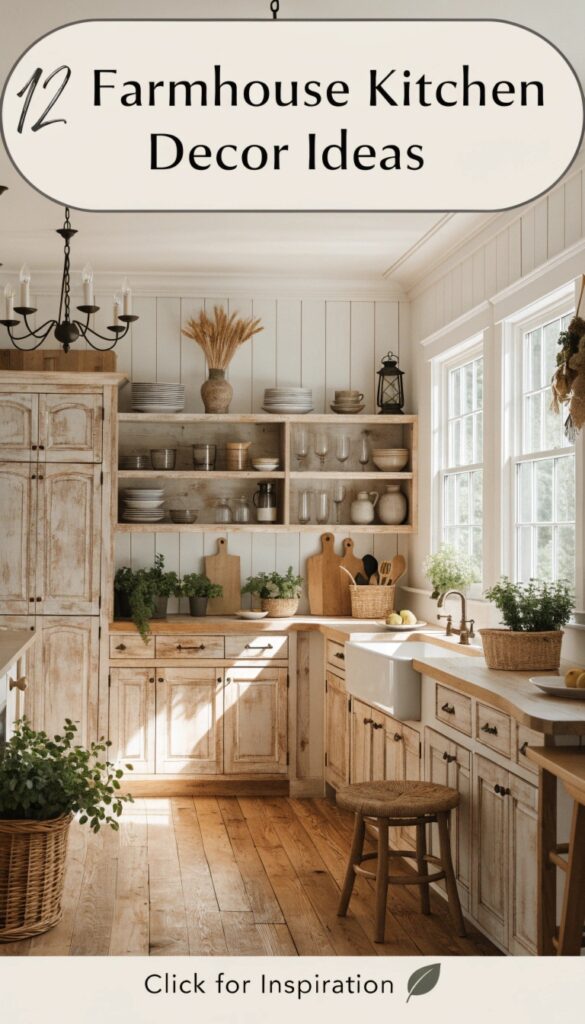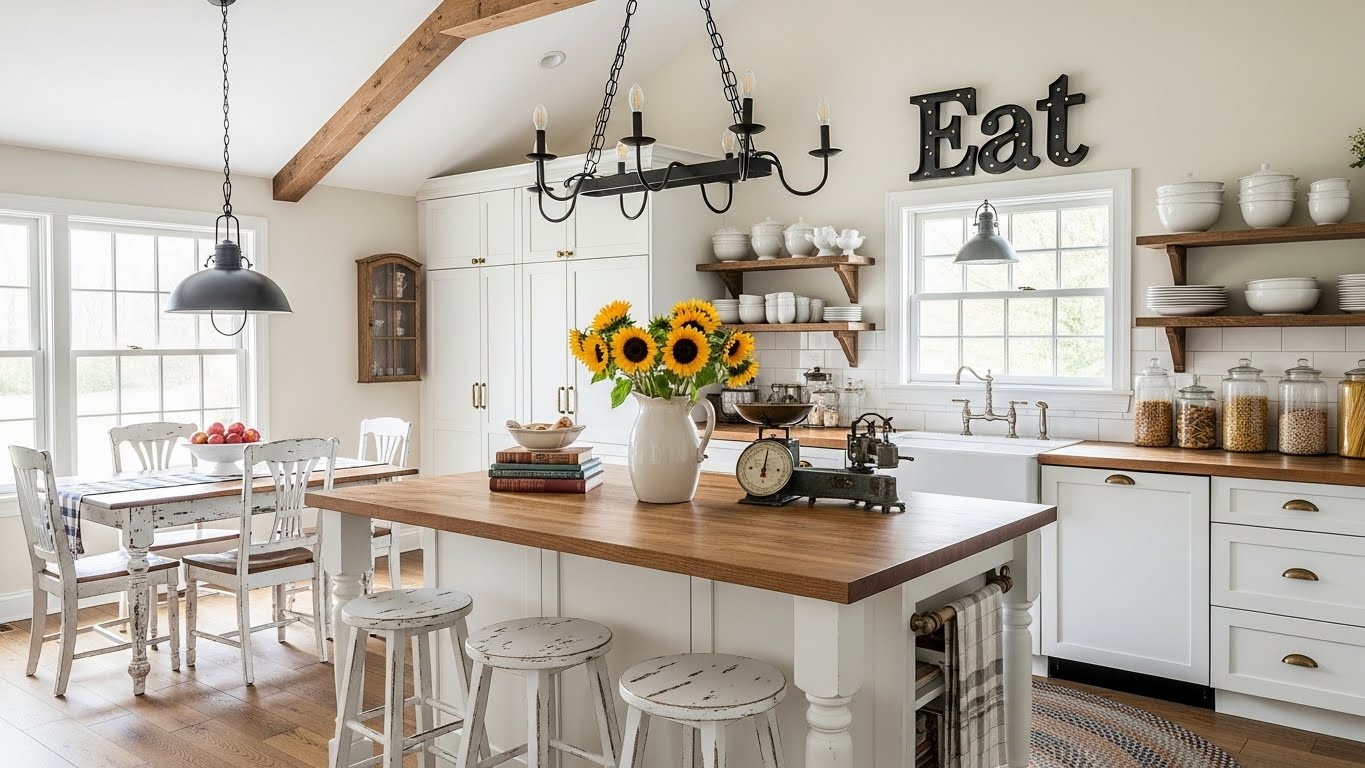
Farmhouse kitchen decor is all about creating a space that feels comfortable, practical, and full of character. Natural wood, simple cabinetry, vintage-inspired accessories, and soft colors can make a kitchen feel welcoming without requiring a complete renovation.
The best part is that you can adapt this style to almost any home, whether you have a spacious country kitchen or a small apartment kitchen with limited storage.
You don’t need reclaimed beams, expensive stone countertops, or a farmhouse sink to achieve the look. Sometimes, changing cabinet colors, adding a few wooden accents, or replacing outdated lighting can make a noticeable difference.
The trick is choosing details that complement one another instead of filling every available surface with decorations.
These 12 farmhouse kitchen decor ideas explore different ways to bring rustic character into your home while keeping everyday cooking, cleaning, and storage in mind.
Each idea includes practical considerations to help you decide what will work best for your kitchen, your budget, and your available space.
Why farmhouse kitchens remain popular
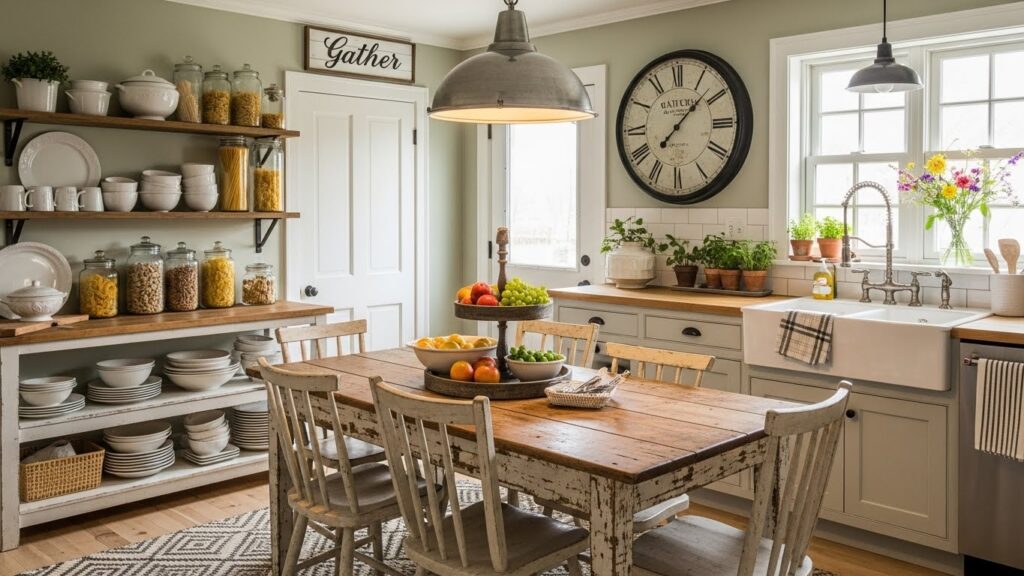
Farmhouse style remains popular because it feels comfortable without looking unfinished. It blends rustic materials wood, stone, ceramic, linen, and metal with simple layouts and familiar shapes.
It also works well in real homes. Deep sinks make washing large pots easier, open shelves keep everyday dishes within reach, and durable surfaces can handle family use.
The style can lean traditional, with more reclaimed wood and antiques, or modern, with cleaner lines, matte black hardware, and simplified cabinetry.
Before choosing decor, decide which version suits your home:
| Style direction | Best features | Works well with |
|---|---|---|
| Traditional farmhouse | Reclaimed wood, antiques, apron-front sinks, vintage accessories | Cream, sage, warm white, aged brass |
| Modern farmhouse | Clean shaker cabinets, black hardware, simple lines | White, gray, black, natural oak |
| Cottage farmhouse | Gingham, florals, beadboard, softer colors | Pastels, linen, painted furniture |
| Rustic farmhouse | Raw wood, stone, metal, heavier textures | Darker stains, iron, leather, stoneware |
1. Open Shelving
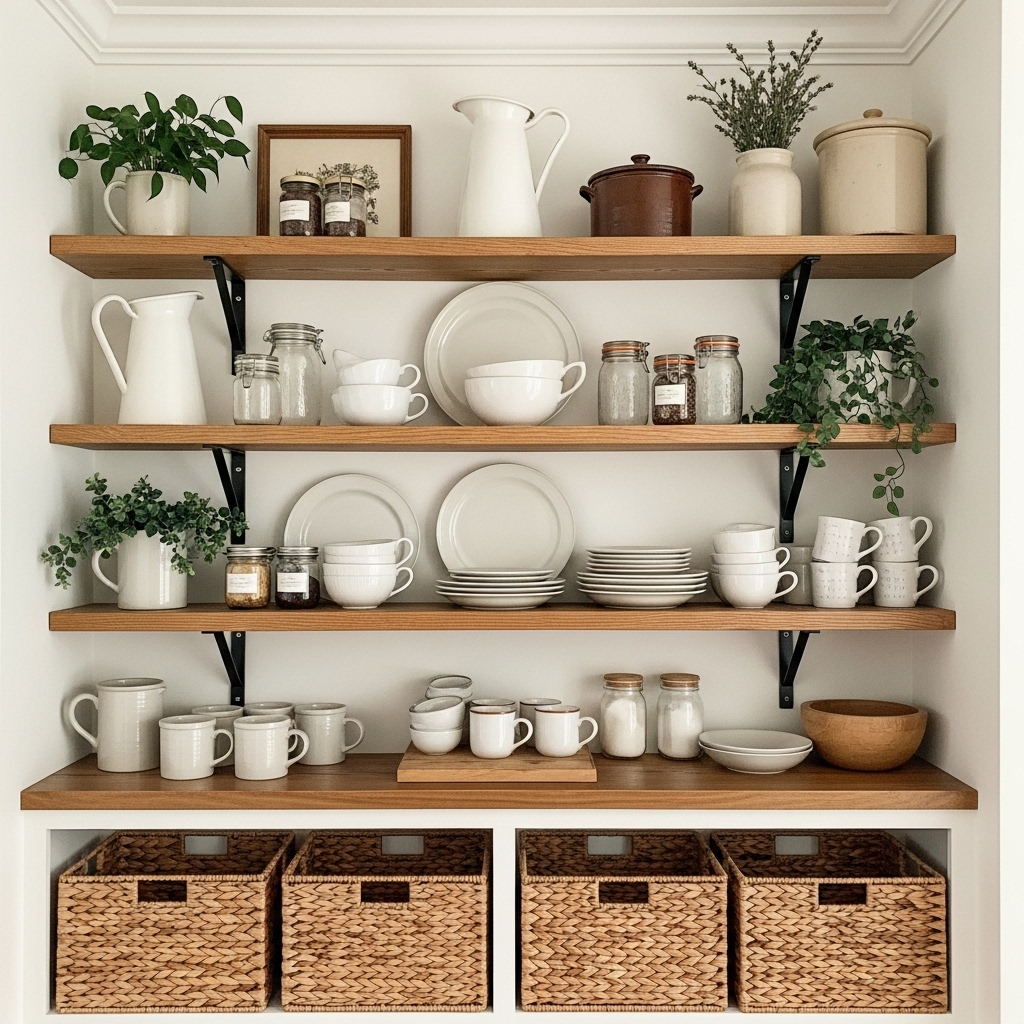
Open shelves can make a kitchen feel larger and more personal, but they only work if you can keep them tidy. Use them for items you genuinely use often: everyday plates, glasses, mugs, mixing bowls, glass storage jars, or a few cookbooks.
For the best result:
- Install shelves where upper cabinets would feel heavy, such as beside a window or above a coffee station.
- Leave at least 16 to 18 inches between shelves if you want room for tall pitchers, stacked bowls, or small appliances.
- Use sturdy wood shelves, ideally at least 1.5 inches thick, so they do not look flimsy.
- Keep about two-thirds of the display functional and one-third decorative.
- Add woven baskets underneath for napkins, snacks, tea, or less attractive but necessary items.
Avoid putting delicate decor directly above a stove or sink, where grease and moisture can build up. If your kitchen gets busy, limit open shelving to one wall and use closed cabinets elsewhere.
2. Shiplap Walls or Backsplash
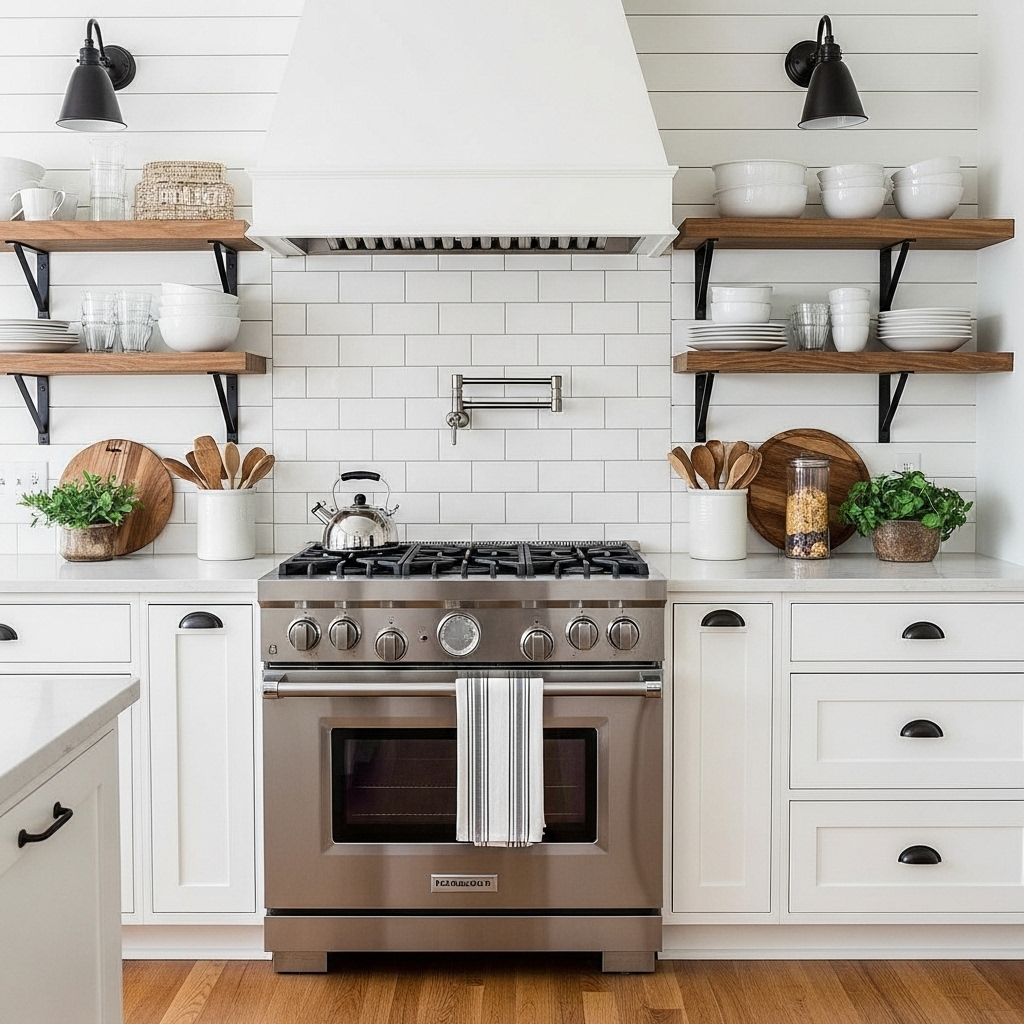
Shiplap and other forms of horizontal wall paneling add texture without relying on bold patterns or complicated finishes. Their simple lines work particularly well with shaker cabinets, wooden countertops, and understated farmhouse accessories.
White paneling is a popular choice because it reflects light and creates a clean background for natural materials. However, warm cream, pale gray, or muted sage can also work beautifully if you want a little more color.
You do not need to cover every wall. A small section beside a breakfast nook, a pantry wall, or a dining area can introduce the look without overwhelming the kitchen.
Where should you install it?
Choose a relatively dry wall that is away from direct splashing and excessive heat. Traditional wood paneling needs suitable preparation and protection against moisture.
If you want a paneled look near a sink or cooking surface, use materials and finishes specifically rated for that location and follow the manufacturer’s installation instructions.
For an affordable alternative, consider a small painted accent wall or a suitable decorative panel behind a dining bench. You can still achieve the visual effect without committing to a large renovation.
Remember that shiplap and subway tile serve different purposes. Paneling adds architectural texture, while tile is generally a more practical choice for a backsplash that receives frequent water or food splashes.
3. Apron-Front Sink
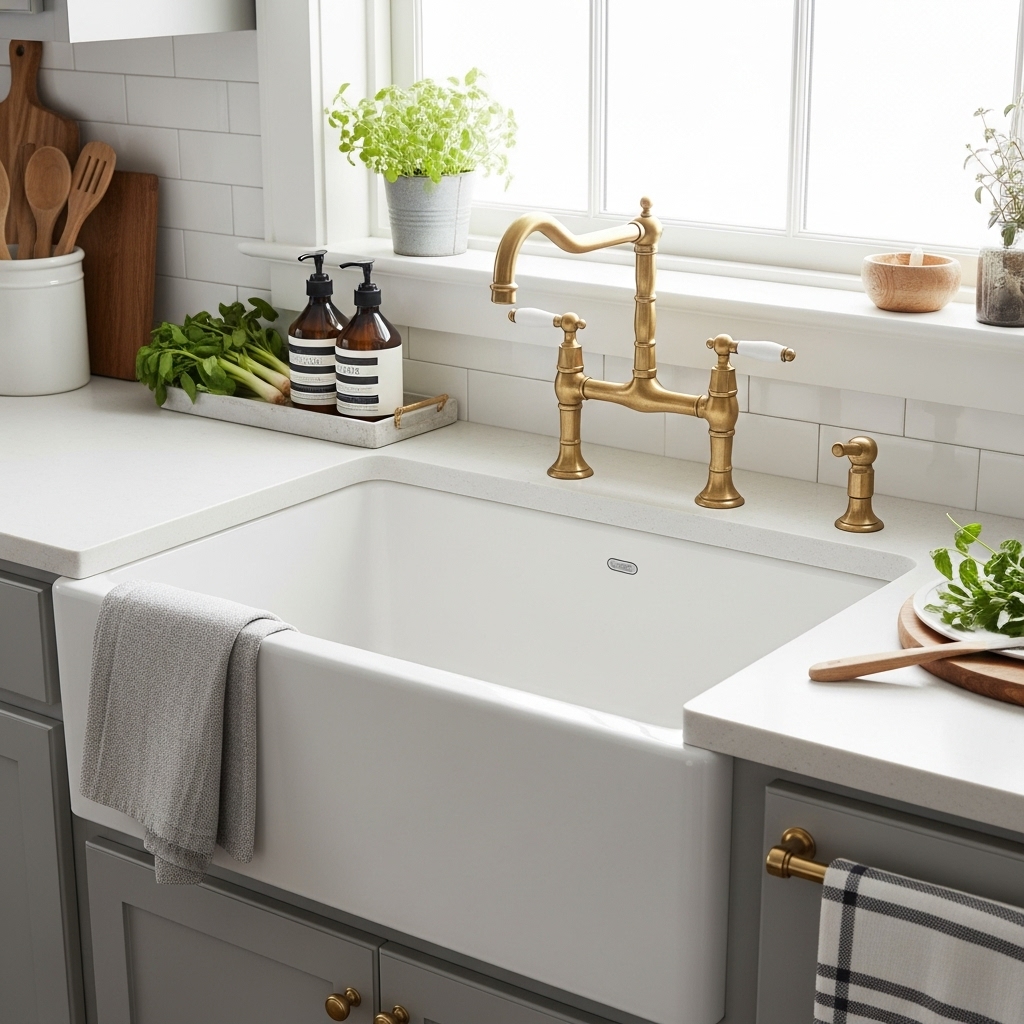
An apron-front sink is one of the most recognizable features of a traditional farmhouse kitchen. Its exposed front creates a distinctive focal point, while a generously sized basin can make washing large pots, baking trays, and vegetables more convenient.
White fireclay is a classic option, but apron-front sinks are also available in stainless steel and other materials. Each has a different appearance and maintenance profile, so consider how the sink will be used before choosing a finish.
Pair a white sink with brushed brass, polished chrome, or matte black hardware. For a coordinated look, repeat the chosen metal finish on cabinet handles or nearby lighting rather than introducing several competing finishes.
What to consider before buying
- Cabinet compatibility: Some farmhouse sinks require a specially designed cabinet or modifications to existing cabinetry.
- Weight: Certain ceramic and fireclay models are heavy and may require additional support.
- Installation cost: Plumbing adjustments, countertop changes, and cabinet work can add substantially to the overall price.
- Maintenance: Follow the manufacturer’s cleaning instructions to protect the sink surface and faucet finish.
If replacing your sink is outside your budget, keep the existing basin and update the surrounding area instead. A coordinated soap dispenser, a simple wooden tray, and an attractive faucet can improve the appearance without requiring a major project.
4. Rustic Kitchen Island
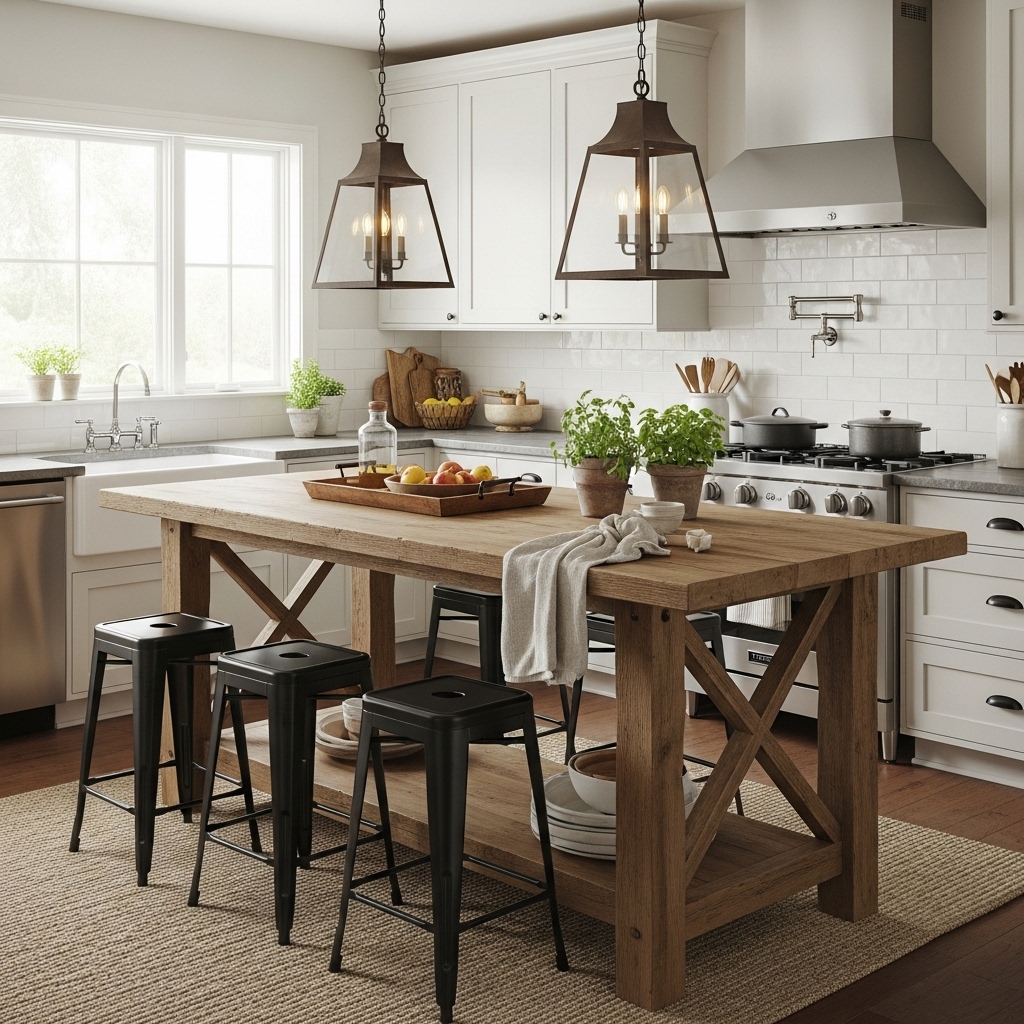
A rustic kitchen island can provide additional preparation space, storage, and a natural gathering point for family meals.
The most successful designs balance the visual weight of the island with enough room to move comfortably around it.
Look for natural wood grain, a simple painted base, sturdy legs, or a butcher-block-style countertop. A distressed finish can add character, but a smooth, well-maintained surface may be more practical in a busy household.
For a classic farmhouse appearance, pair a wooden island with painted cabinets, understated metal handles, and pendant lighting. You can introduce contrast by choosing an island color that differs slightly from the surrounding cabinetry.
How to make an island work in your kitchen
Start by measuring the room and mapping out cabinet doors, drawers, appliance openings, and walking routes. Make sure the island does not obstruct the refrigerator, oven, or dishwasher when they are open.
The amount of clearance required depends on the layout and local building requirements, so consult a qualified kitchen designer if space is tight.
If your kitchen is too small for a fixed island, consider a movable butcher-block cart or a compact worktable. These options can provide extra preparation space without permanently occupying the center of the room.
Keep the countertop useful. A fruit bowl, a small herb pot, or a wooden tray can add decoration, but leave enough uninterrupted space for chopping, serving, and preparing meals.
5. Vintage Pendant Lighting
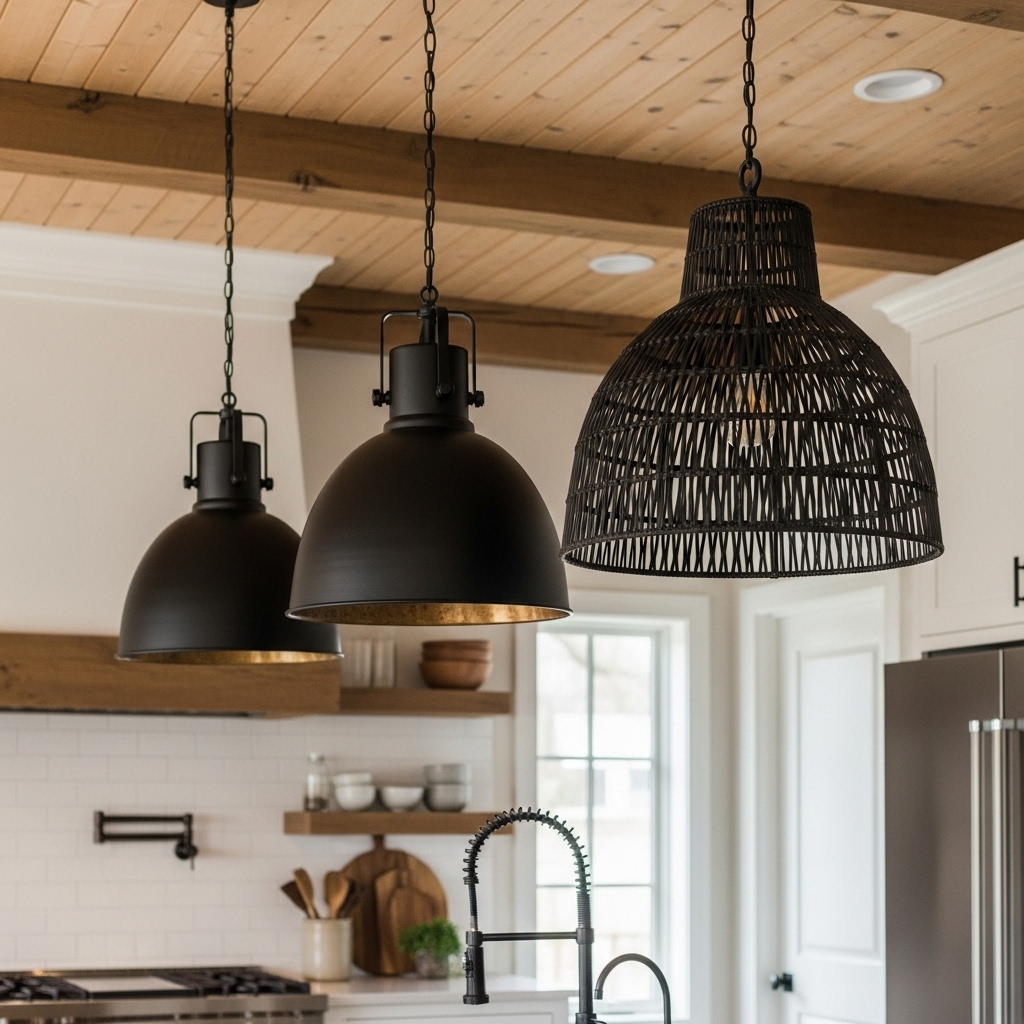
Pendant lights above an island or sink provide both style and task lighting. Black metal pendants suit a modern farmhouse look, while woven rattan, aged brass, or glass fixtures feel softer and more traditional.
A useful rule is to hang pendants about 30 to 36 inches above an island countertop. If you use a cluster of three, keep the spacing even so the arrangement looks intentional rather than random.
For the best lighting plan, combine:
- Overhead lighting for general brightness
- Pendant lights for task areas
- Under-cabinet lighting for countertops
- A warm bulb temperature, around 2700K to 3000K, for a cozy evening feel
Avoid choosing pendants only for appearance. Make sure they provide enough light for chopping, reading recipes, and cleaning up.
6. Subway Tile Backsplash
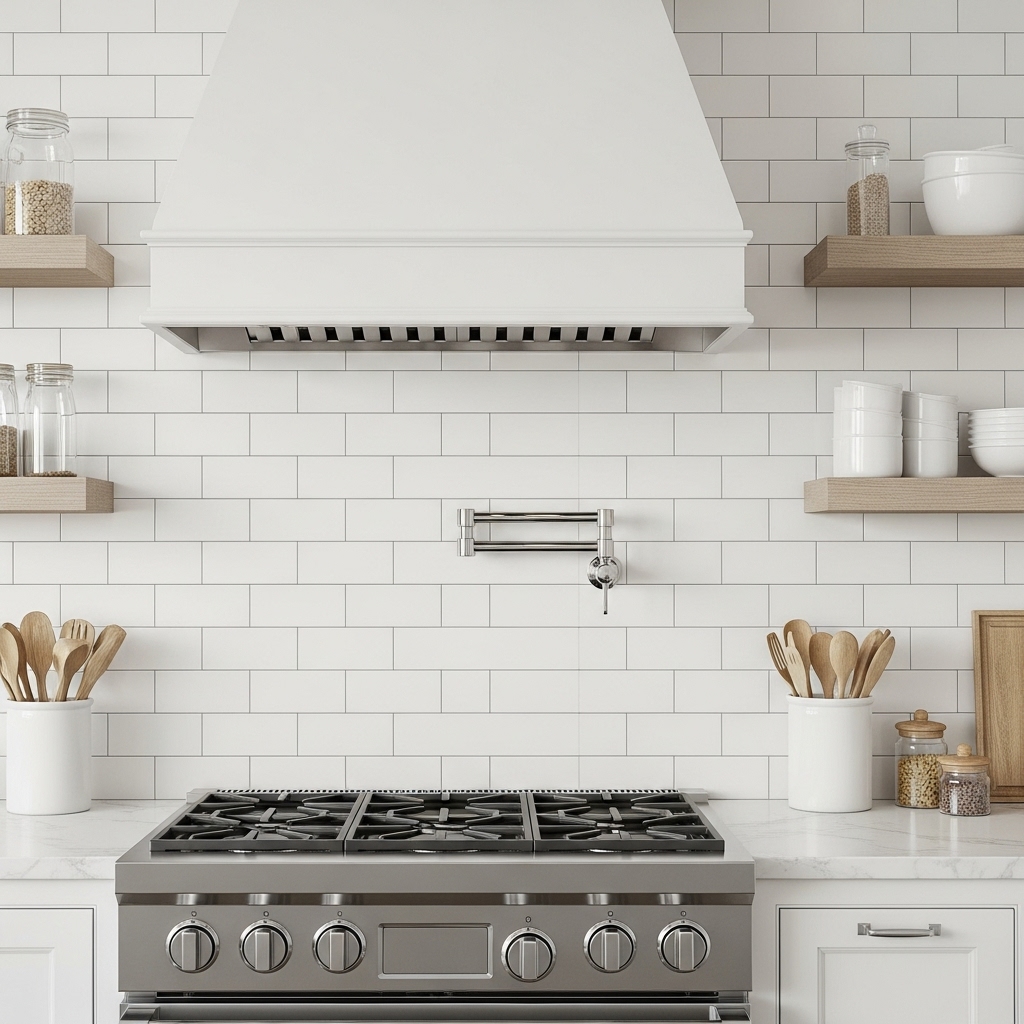
Subway tiles are a natural fit for farmhouse kitchens because their simple rectangular shape complements both traditional and contemporary cabinetry.
White tiles with light gray grout create a restrained look, while darker grout makes the tile pattern more noticeable.
The classic brick layout is a dependable choice, but vertical stacking or other arrangements can give the kitchen a slightly different character. Glossy tiles reflect more light, while matte finishes offer a softer appearance.
How to choose the right backsplash
Consider the color of your countertops, cabinet doors, and flooring before settling on a tile. Warm white tiles tend to work well with cream cabinetry and honey-toned wood. Cooler whites may complement gray cabinets, stainless steel, and darker countertops.
Grout color matters too. Pale grout can create a subtle, continuous appearance, while darker grout emphasizes individual tiles. Whichever you choose, proper grout installation and maintenance are important for keeping the surface looking good.
Tile is particularly useful behind sinks and cooking areas because it creates a surface that is generally easier to wipe down than untreated wood paneling.
If a full backsplash renovation is too expensive, concentrate on a small section that needs protection or refresh the surrounding wall with an appropriate washable finish. Peel-and-stick backsplash products may be suitable in some settings, but always check their heat, moisture, and surface-compatibility limitations.
7. Wood Beam Ceilings
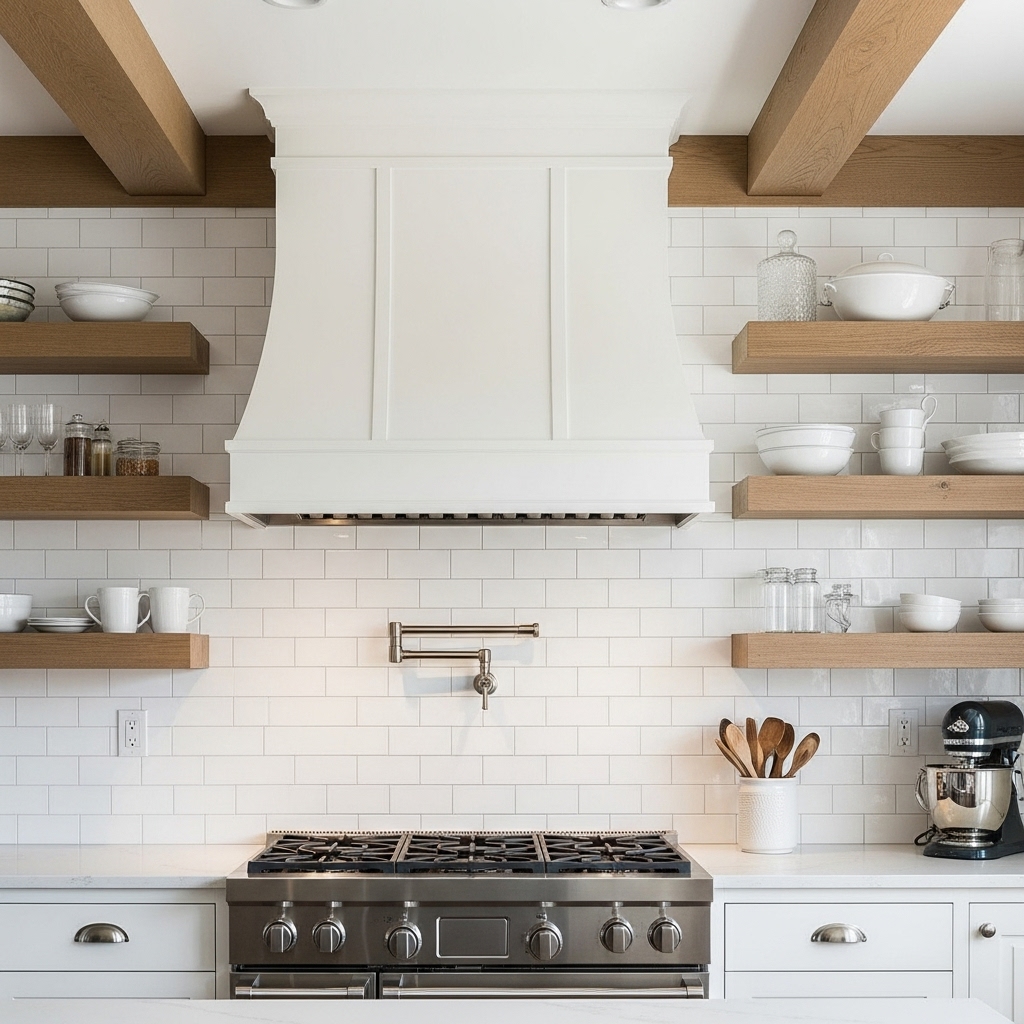
Wood ceiling beams introduce architectural interest and help create the feeling of a traditional country kitchen. Their natural texture contrasts beautifully with white ceilings, simple cabinets, and smooth countertops.
In a spacious kitchen, darker beams can make a high ceiling feel more grounded. In a smaller room, lighter wood or a restrained beam design can provide warmth without making the ceiling feel too heavy.
You can combine beams with wooden shelving, a dining table, or a few carefully selected accessories. However, matching every wood surface exactly is not necessary. Slight variations in tone can make the room feel more natural and less like a showroom.
Are real wood beams necessary?
No. If your home does not have exposed structural beams, decorative faux beams can provide a similar visual effect. They are often lighter than solid timber, although installation requirements vary.
Before installing any ceiling feature, determine whether the existing ceiling can support it and whether the proposed work will interfere with wiring, ventilation, or other services. Never cut or alter structural components without appropriate professional advice.
For a lower-cost alternative, consider adding wood accents at eye level, such as a wooden shelf, a dining table, or a natural wood cabinet finish. These can introduce the same material character without ceiling work.
8. Vintage Accessories
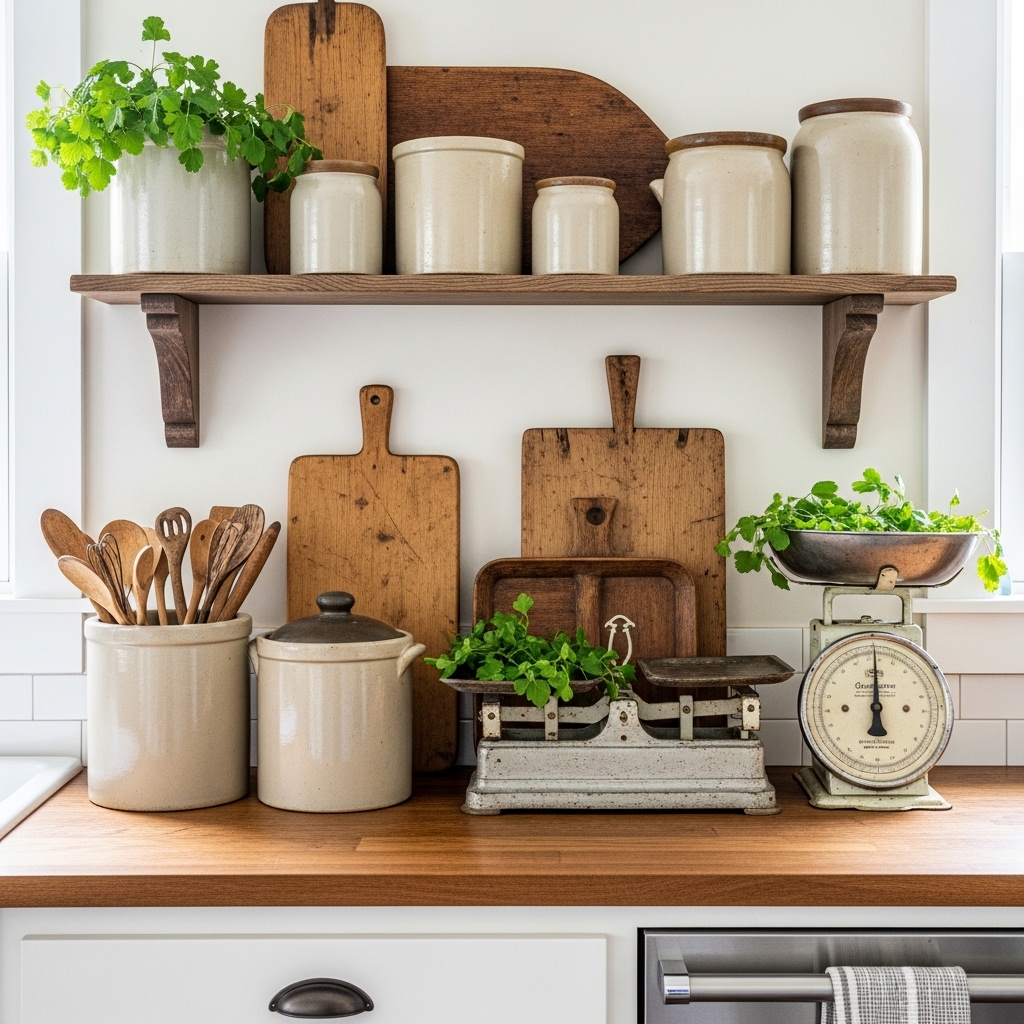
Vintage accessories can give a farmhouse kitchen a more personal appearance than a collection of matching decorations. Old wooden breadboards, ceramic crocks, enamel containers, and secondhand serving pieces introduce differences in color, texture, and finish that make the room feel collected over time.
You do not need genuine antiques to achieve this look. Secondhand shops, flea markets, and family-owned household pieces can all provide interesting finds. The important thing is to choose objects that fit the kitchen’s color palette and have a useful purpose or a clear place to be displayed.
Simple ways to style vintage pieces
- Arrange a few wooden boards against a backsplash when they are not being used.
- Place a ceramic crock near the cooking area to hold clean, frequently used utensils.
- Use a sturdy bowl for fruit on an otherwise uncluttered countertop.
- Display a small collection of ceramic pieces on open shelving rather than spreading them throughout the room.
Before bringing secondhand items into food-preparation areas, check their condition. Decorative pieces with peeling paint, damaged coatings, rust, or uncertain food-contact safety are better used away from direct contact with food.
Avoid filling every counter with ornaments. A few well-chosen pieces will generally have more visual impact than numerous unrelated objects, and they are easier to move when cleaning.
9. Gingham or Floral Textiles
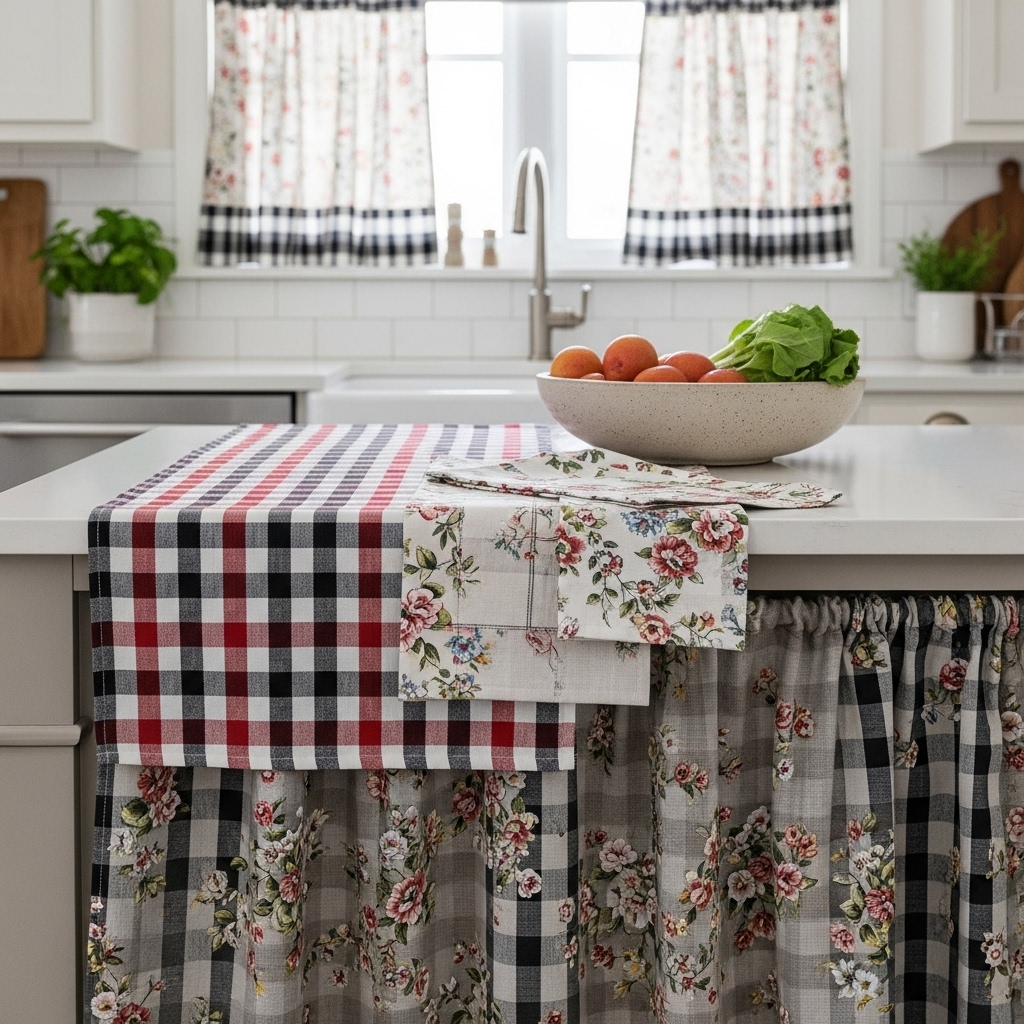
Textiles are an easy way to introduce the softer side of farmhouse kitchen decor. Gingham checks, small floral patterns, relaxed linen, and simple cotton fabrics can make a room feel less formal without changing its permanent features.
Red-and-white gingham offers a traditional country look, while muted blue, sage green, beige, and cream can create a quieter palette. Floral prints work particularly well when their colors connect with existing cabinets, dishes, or curtains.
You can use these patterns on a table runner, washable café curtains, tea towels, seat cushions, or a small tablecloth.
How to combine patterns without creating clutter
Choose one main pattern and use simpler fabrics alongside it. For example, a checked table runner can work with plain linen curtains and solid-colored seat cushions. If you prefer floral curtains, keep the other textiles relatively understated.
Practicality matters in a kitchen. Choose washable materials for areas exposed to food and moisture, and avoid hanging loose fabrics close to burners, hot surfaces, or other fire hazards.
Textiles are also useful for renters because they can be changed without drilling holes or replacing cabinetry. If you want to refresh the room seasonally, changing a runner or tea towels is often enough to create a different look.
10. Painted Shaker Cabinets
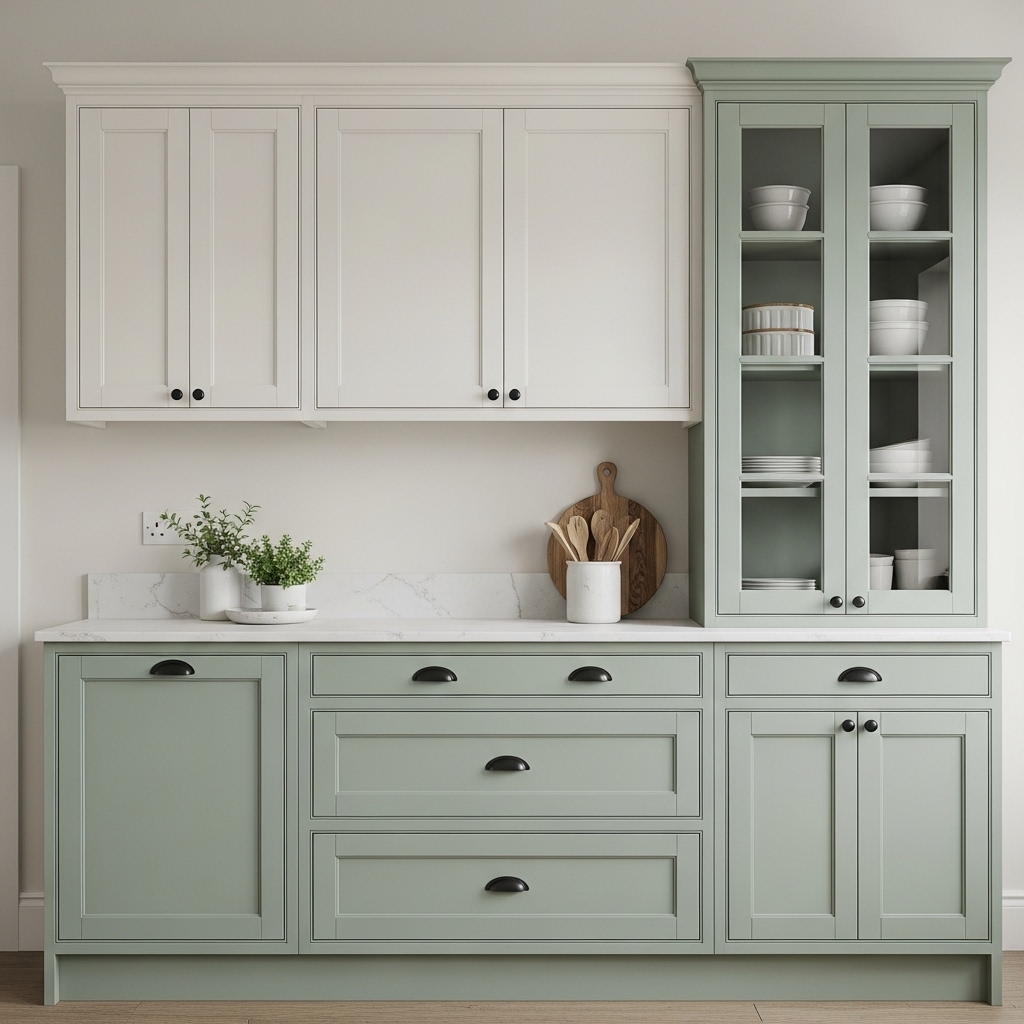
Painted Shaker cabinets are a strong farmhouse choice because their simple frame-and-panel design works with both traditional and modern interiors. They also make cabinet updates more affordable than full replacement.
Popular color combinations include:
- Cream upper cabinets with sage-green lower cabinets
- Warm white cabinets with black hardware
- Soft gray cabinets with brass pulls
- White cabinets with a navy island
- Light oak accents with muted green cabinetry
If your cabinets are structurally sound, cleaning, sanding, priming, and painting can transform the room. Use a durable cabinet paint and test samples in your kitchen’s natural light before committing. Colors can look very different under warm evening lighting.
11. Beadboard Accents
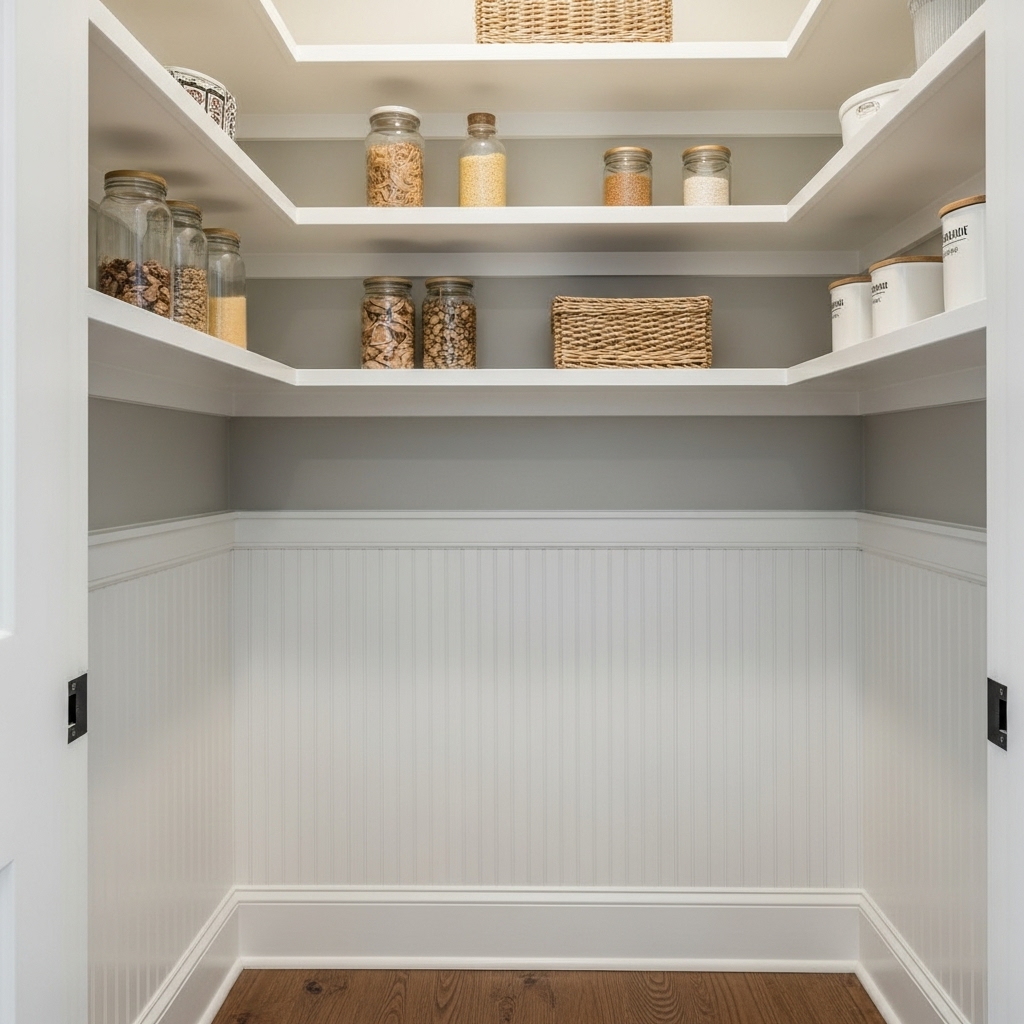
Beadboard is a type of paneling with narrow vertical grooves that creates a gentle, repeated texture. It works particularly well in farmhouse kitchens because it adds detail without competing with wood grain, patterned textiles, or decorative tiles.
You can use beadboard on a pantry wall, the back of a suitable open cabinet, a breakfast nook, or the side of a kitchen island. Painted white, it creates a clean, traditional appearance. Muted green or warm gray can make the detail feel more contemporary.
One advantage of using beadboard in a limited area is that it introduces texture without requiring a complete room makeover.
Where beadboard works best
Consider locations that are relatively protected from frequent splashing. In areas exposed to moisture, choose a product and finish specifically suitable for the conditions, and follow the manufacturer’s guidance for sealing edges and joints.
If you want to add beadboard behind open shelving, keep the shelves and displayed items relatively simple. The paneling already provides visual detail, so too many decorative objects can make the arrangement feel busy.
For a low-cost alternative, you could paint a small wall section in a contrasting color or use another suitable decorative panel. The aim is to create depth and character while maintaining a surface that is practical to clean.
12. Natural Wood Elements
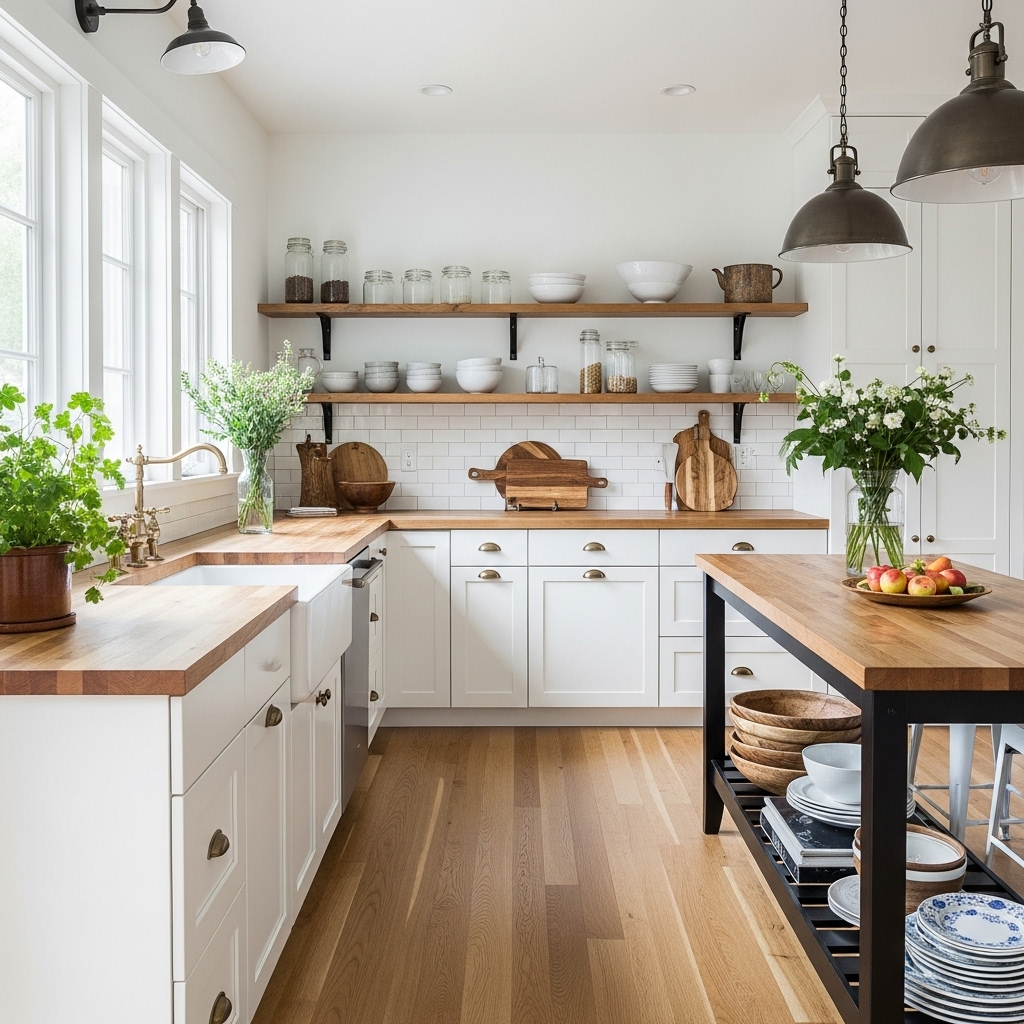
Natural wood is one of the most adaptable materials in farmhouse kitchen design. It brings warmth to painted cabinetry, adds texture to neutral interiors, and helps connect different parts of the room.
You can introduce it through a butcher-block countertop, wooden dining table, open shelves, cutting boards, stools, cabinet fronts, or a simple serving tray. You do not have to use wood everywhere. A few carefully placed elements can be enough to soften an otherwise white or gray kitchen.
Different wood tones can work together when the overall palette feels balanced. For instance, pale oak shelves can complement a medium-toned dining table, while darker wooden stools can add contrast. Consider the undertones and finish of each piece instead of trying to match every surface perfectly.
How to keep wood practical in a working kitchen
Wood surfaces require care, particularly around sinks and food-preparation areas. Follow the manufacturer’s instructions for sealing, cleaning, and maintaining wooden countertops. Avoid leaving standing water on the surface, and use suitable cutting boards where appropriate.
Wooden accessories also benefit from sensible placement. Keep decorative boards and trays away from areas where they will be constantly exposed to splashes or heat.
If a new countertop is beyond your budget, start with smaller pieces. A wooden tray, a pair of stools, or a few useful kitchen utensils can introduce natural texture at a much lower cost.
To complete the look, combine wood with a small amount of greenery, ceramic accessories, or understated metal hardware. This creates contrast without making the kitchen feel crowded.
Practical Tips for Planning Your Farmhouse Kitchen Makeover
Before buying decorations or beginning installation, decide which changes will make the biggest difference to your kitchen. A little planning can help prevent unnecessary purchases and ensure the finished room remains functional.
1. Start with a realistic budget. Decide how much you can spend before choosing materials. Small updates, such as paint, textiles, and secondhand accessories, may cost much less than new countertops, electrical work, or custom cabinetry. Compare local prices and include installation costs where necessary.
2. Choose a consistent color palette. Begin with two or three main colors, then introduce natural wood and a restrained metal finish. This makes it easier to combine different farmhouse elements without creating a disjointed appearance.
3. Measure before buying. Check wall lengths, shelf dimensions, cabinet openings, appliance doors, and walking routes. This is particularly important when choosing an island, replacing a sink, or installing pendant lighting.
4. Prioritize storage and work surfaces. Open shelving looks attractive, but closed cabinets are often better for hiding clutter and protecting less frequently used dishes. Preserve enough clear countertop space for food preparation.
5. Choose materials that suit your household. A kitchen used for daily family cooking may need durable finishes and easy-to-clean surfaces. Decorative paneling and delicate textiles should be selected with moisture, heat, and cleaning requirements in mind.
6. Shop secondhand selectively. Thrift shops and flea markets can be useful sources of baskets, ceramic pieces, wooden accessories, and small furniture. Inspect each item for damage, cleanliness, and suitability before bringing it into your kitchen.
7. Add decoration gradually. Start with one or two changes, live with them for a while, and see how they work with the existing room. You can always add more later. This approach is often less expensive than buying an entire collection of matching accessories at once.
Conclusion
Farmhouse kitchen decor does not have to involve a complete renovation or a large collection of rustic accessories. The most successful spaces combine a few thoughtful design choices with practical features that support everyday cooking and family life.
Open shelving can make frequently used dishes easier to reach, subway tiles can protect busy walls, and painted shaker cabinets can refresh an older kitchen. Wooden accents, vintage accessories, and simple textiles add personality without requiring major structural changes.
The right combination depends on the room you already have. A compact kitchen may benefit from lighter colors, careful storage, and a few natural textures, while a larger space might accommodate a wooden island, pendant lighting, or decorative ceiling beams.
Start with the change that addresses your biggest need, whether that is improving storage, brightening a dark corner, or making the kitchen feel more personal. By choosing materials carefully and avoiding unnecessary clutter, you can create a farmhouse-inspired kitchen that looks welcoming and remains useful for years to come.
Frequently Asked Questions
1. How can I decorate a farmhouse kitchen on a small budget?
Start with changes that do not require major construction. Repainting suitable cabinet doors, adding washable curtains, displaying a few wooden accessories, and shopping secondhand can all help introduce farmhouse character. You can also rearrange existing dishes and accessories to create a more coordinated display.
Costs depend on your location, material choices, and whether you do the work yourself or hire a professional. Set a spending limit for each project and compare prices before purchasing supplies.
2. What is the difference between modern farmhouse and traditional farmhouse kitchens?
Traditional farmhouse kitchens tend to emphasize natural wood, vintage furnishings, classic hardware, and rustic finishes. Modern farmhouse kitchens retain some of those materials but combine them with cleaner lines, simpler decoration, contemporary lighting, and more restrained color palettes.
Both approaches can use shaker cabinets, wood accents, and neutral colors. The difference lies mainly in how traditional details are combined with modern finishes and layouts.
3. What farmhouse kitchen decor works best in a small kitchen?
Light cabinet colors, simple subway tile, carefully placed open shelves, and a few wooden accents can help a small kitchen feel brighter and more organized. Choose storage that uses available wall space without blocking movement, and avoid filling countertops with decorations.
If a fixed island would restrict access to cabinets or appliances, consider a compact movable cart instead.
4. Are open shelves practical for everyday kitchen use?
Yes, provided they are planned around the way you use your kitchen. Open shelves are convenient for frequently used dishes, mugs, and glasses, but they require regular dusting and may collect grease near cooking areas. Closed cabinets are often better for storing less frequently used items or anything you prefer to keep out of sight.
A combination of open shelves and closed storage usually provides a useful balance.
5. Which colors work best in a farmhouse kitchen?
White, warm cream, beige, sage green, muted blue, and soft gray are all suitable options. Natural wood and understated metal finishes can add contrast and texture.
Before choosing a color, consider the existing countertops, flooring, natural light, and cabinet finishes. Test paint samples in the actual room so you can see how they look throughout the day.
6. Can I create a farmhouse kitchen without replacing my cabinets?
Absolutely. You can update suitable existing cabinets with paint and new hardware, introduce wooden accessories, change curtains, add a backsplash where needed, or improve the lighting. Even a small change can help create a more coordinated appearance.
Keep the existing cabinetry if it is structurally sound, and direct your budget toward the features that need the most attention.
7. What materials are best for farmhouse kitchen countertops?
The right countertop depends on your budget, cooking habits, maintenance preferences, and desired appearance. Butcher block offers natural warmth but needs appropriate care. Quartz provides a range of colors and patterns with relatively straightforward maintenance, while natural stone varies in its resistance to stains and etching.
Compare the maintenance requirements, installation costs, and suitability of each material before making a decision.
8. How do I prevent farmhouse kitchen decor from looking cluttered?
Choose a small number of decorative pieces and give each one enough space to stand out. Group similar items together, keep everyday essentials accessible, and leave clear sections of countertop for food preparation.
It also helps to limit the number of competing colors and patterns. A simple palette, natural textures, and useful accessories can create farmhouse character without filling every surface with decorations.