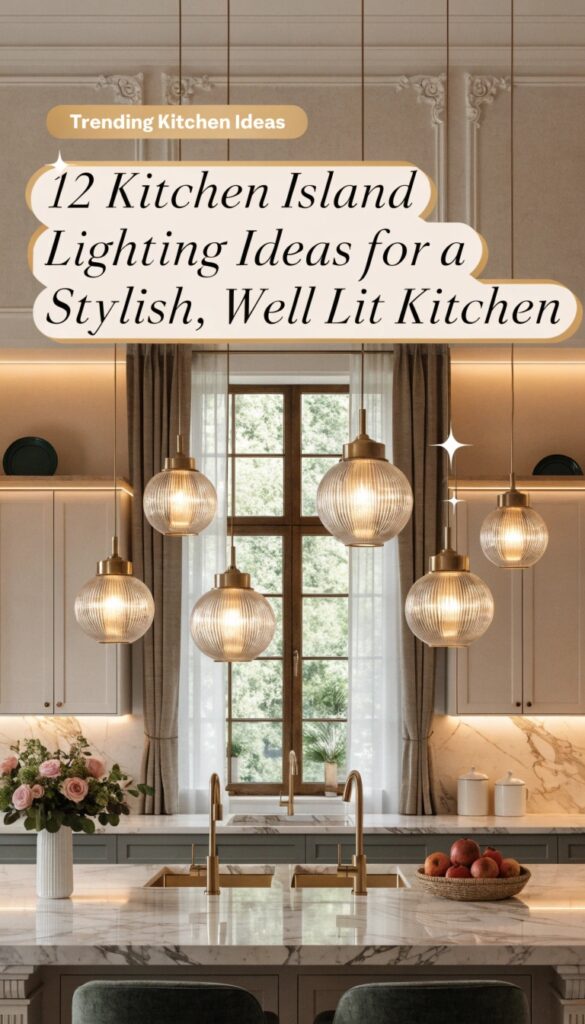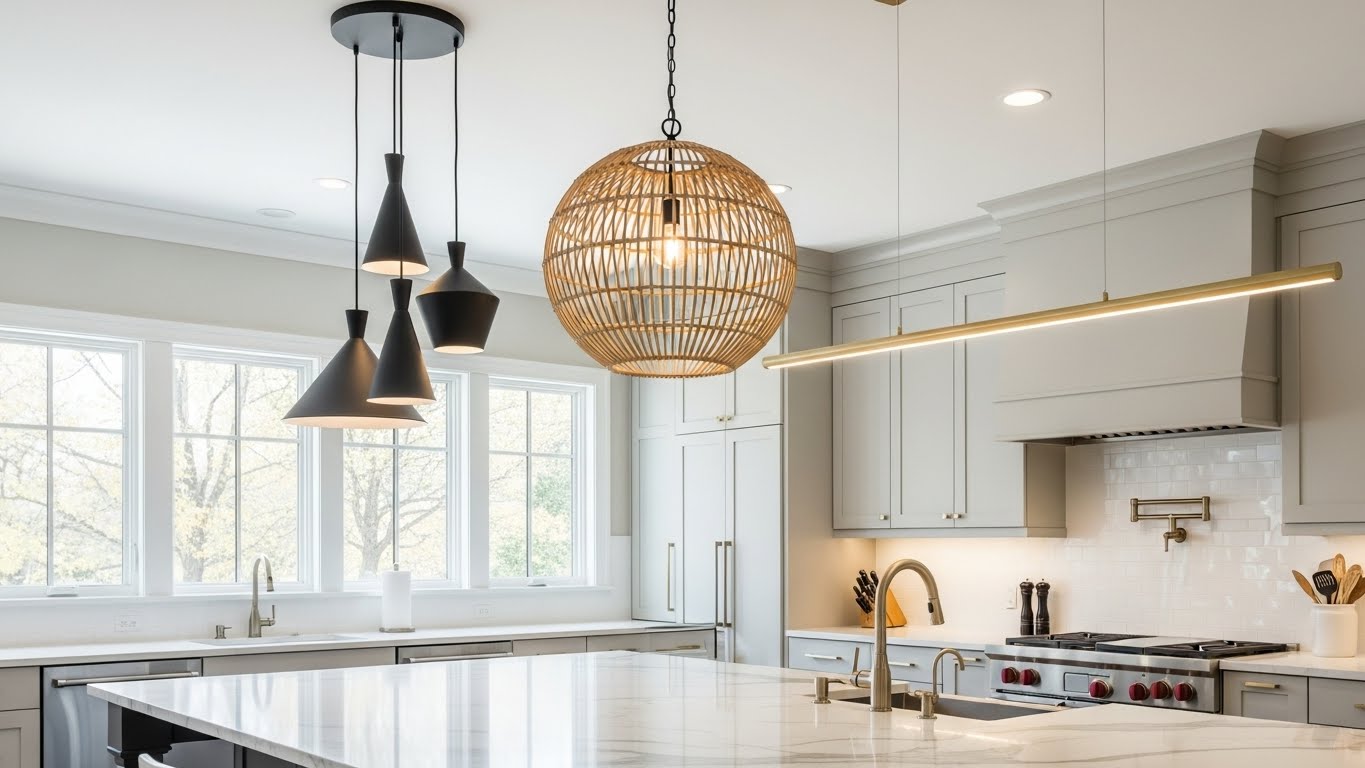
Kitchen island lighting can change the way your entire kitchen looks and functions. The right fixtures make food preparation easier, brighten up a dark countertop, and give the island a more finished appearance.
They can also help define the kitchen as a place where family members cook, eat breakfast, work, or gather with friends.
However, choosing island lighting involves more than finding a beautiful pendant online. The size of your island, ceiling height, cabinet finishes, natural light, and daily activities all influence which fixtures will work best.
Some kitchens benefit from two or three pendant lights, while others look better with a single linear fixture or an adjustable track system.
If you prefer a decorative touch, a sculptural chandelier or colorful pendant can become the main feature of the room.
These 12 kitchen island lighting ideas explore different styles and explain where each one works best, what to consider before buying, and how to create a balance between attractive design and useful illumination.
1. Classic Pendant Lights
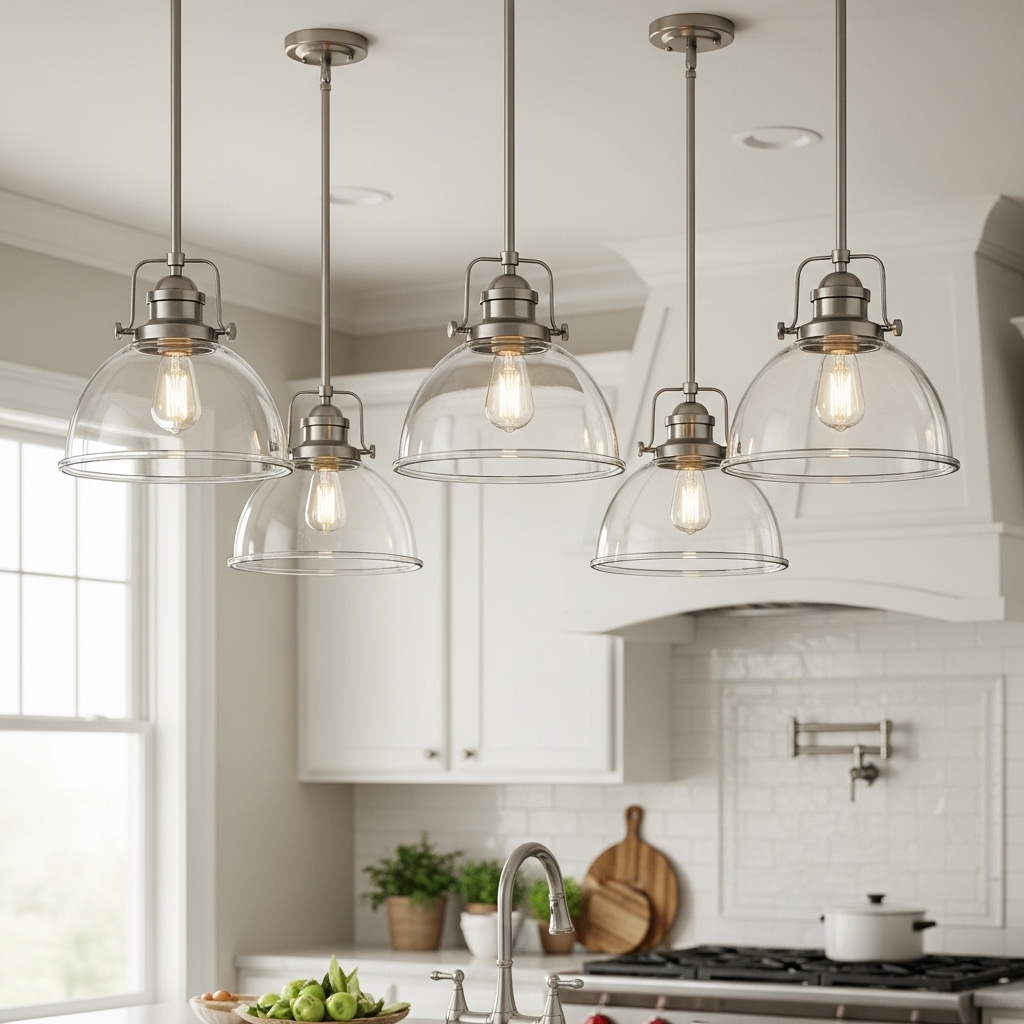
Classic pendant lights are a reliable choice for kitchens that need focused illumination without an overly complicated design. Their simple shapes work particularly well in traditional, farmhouse, transitional, and contemporary interiors.
Clear glass pendants allow the fixture to feel light and unobtrusive, making them a good option for kitchens where you want to preserve an open view. Frosted glass creates a softer appearance and can help reduce the direct glare of exposed light sources.
For a balanced arrangement, consider two larger pendants over a shorter island or three smaller ones over a longer countertop. The correct number depends on the dimensions of the fixtures and how much light they provide, rather than a fixed rule.
How to make this style work: Choose finishes that complement your cabinet hardware, kitchen faucet, or other metal details. Brass can warm up white cabinetry, while black or brushed nickel creates a more understated contrast.
Before installing the lights, check that they will not obstruct views across the kitchen. Dimmable bulbs are also useful because the same lights can provide brighter illumination during food preparation and a softer atmosphere during meals.
Best for: Homeowners who want versatile lighting that will remain attractive as kitchen trends change.

2. Linear Suspension Fixtures
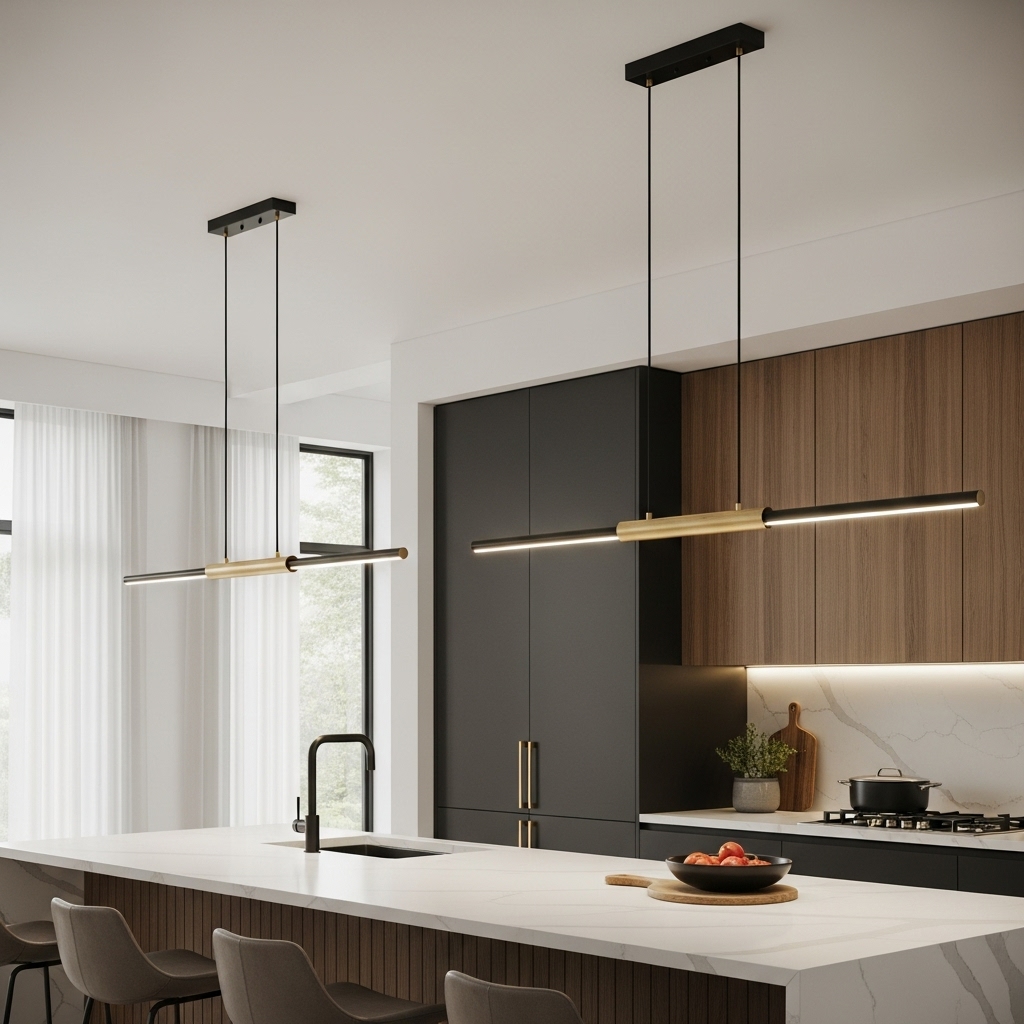
A linear suspension fixture is an excellent option for a long kitchen island. Instead of arranging several separate pendants, you can use one elongated fitting to create a clean, continuous line above the countertop.
These fixtures come in many designs, including slim metal bars, suspended glass tubes, and combinations of wood and metal. Matte black works well in modern kitchens, while warm brass and bronze finishes can soften a room with white or gray cabinetry.
One advantage of a linear fixture is that it can distribute light across a wider section of the island without creating several separate visual focal points. This is particularly helpful in open-plan kitchens where the island is visible from the living or dining area.
Pay attention to the light distribution before choosing a model. Some decorative linear fixtures provide mostly ambient light, while others direct illumination downward onto the work surface. A beautiful fitting may still need support from recessed ceiling lights or under-cabinet lighting.
How to make this style work: Measure the island before shopping. A fixture that is too short may look disconnected from the countertop, while one that is too large can dominate the kitchen.
Best for: Long islands, contemporary kitchens, and homeowners who prefer a streamlined appearance.
3. Statement Chandeliers
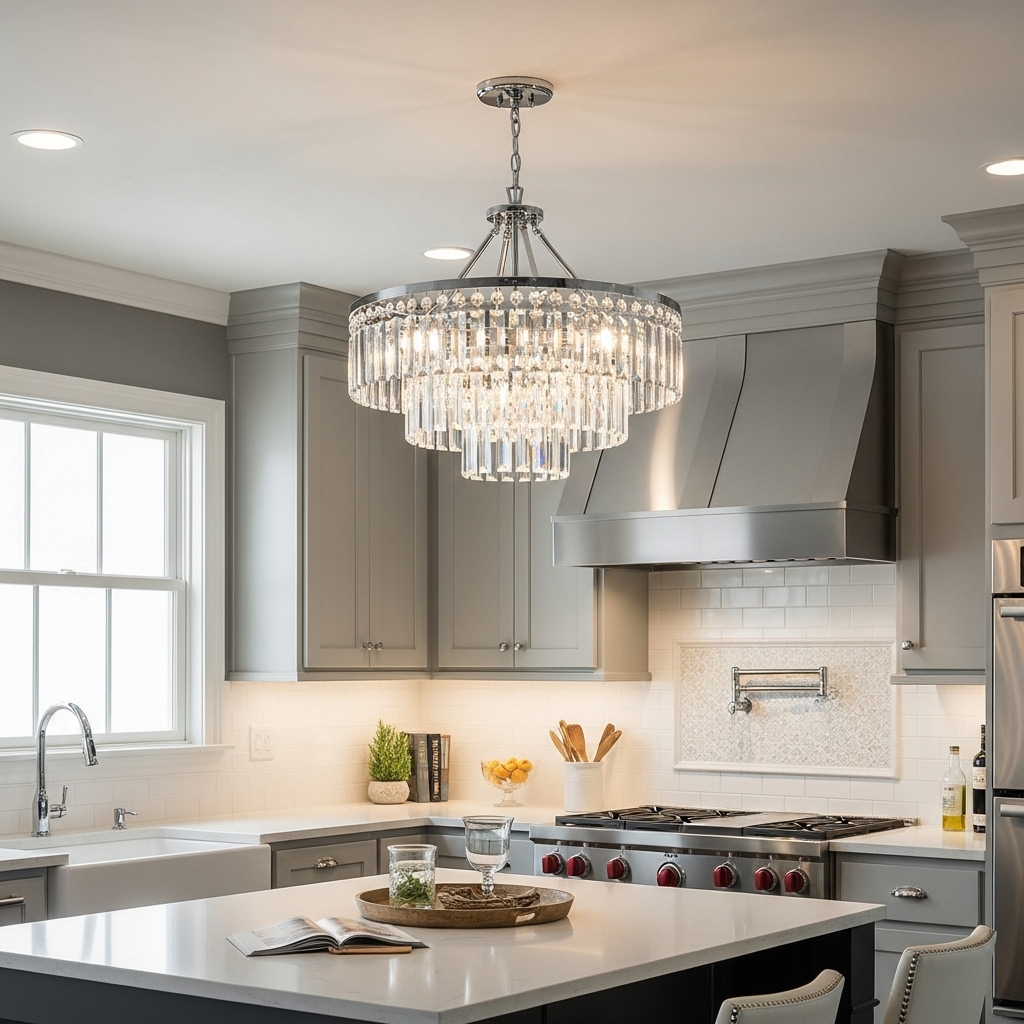
A chandelier can make a kitchen island feel more decorative and sophisticated. Rather than blending into the ceiling, it becomes a feature that draws attention to the center of the room.
Modern chandeliers range from delicate glass designs to branching metal structures and compact crystal arrangements. A carefully chosen piece can complement a traditional kitchen just as easily as a contemporary one.
The most important consideration is scale. A large chandelier may look impressive in a spacious kitchen with high ceilings but feel overwhelming above a small island. Before buying one, consider the fixture’s width, depth, hanging length, and visual weight.
Chandeliers can also create shadows or glare if their bulbs and shades are not suited to the work surface. For this reason, it is worth combining a decorative chandelier with other lighting sources that illuminate the countertop more evenly.
How to make this style work: Keep nearby decorative elements relatively simple if the chandelier has an intricate shape. This allows the fixture to stand out without making the kitchen feel crowded.
Best for: Spacious kitchens, elegant interiors, and islands that serve as a gathering place as well as a cooking area.
4. Industrial Exposed Bulbs
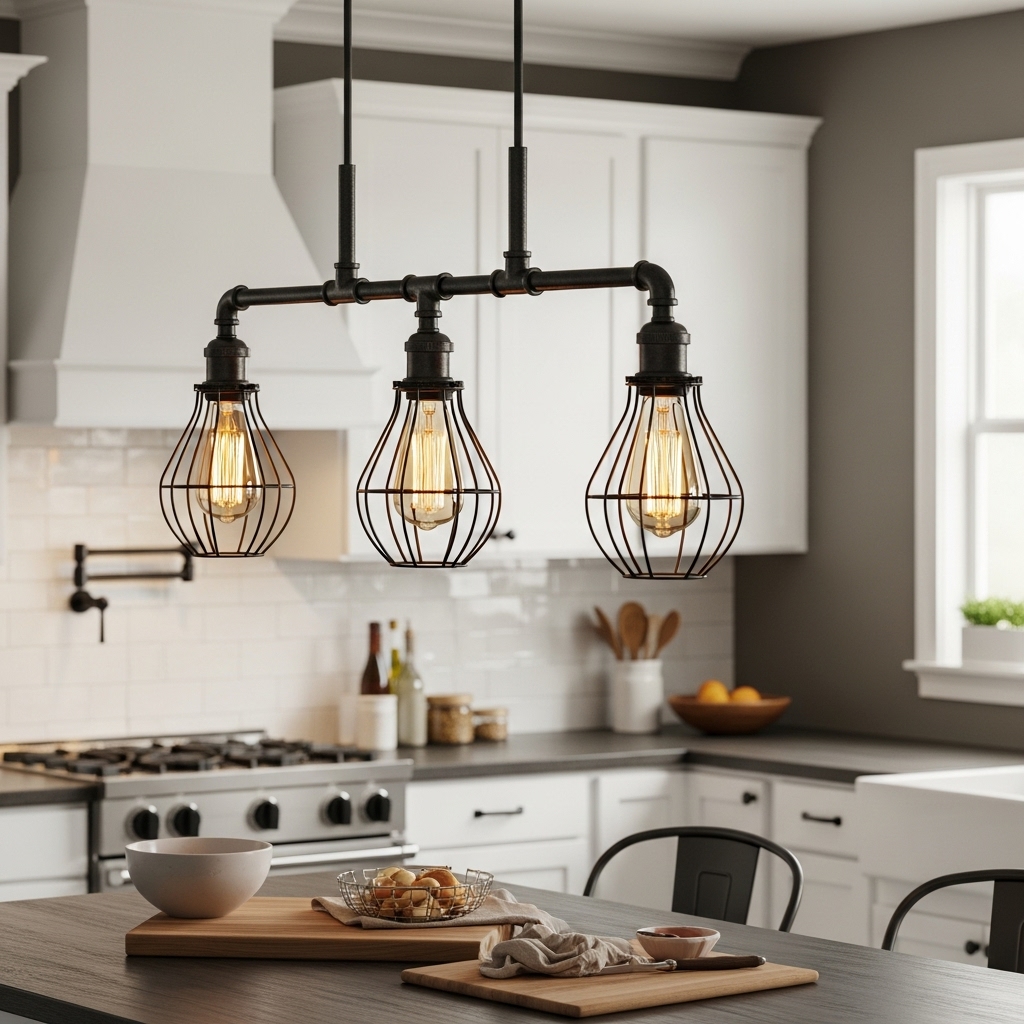
Industrial lighting introduces a stronger, more rugged character to the kitchen. Exposed-bulb pendants, metal cages, dark finishes, and simple mechanical details work especially well in loft-style interiors and kitchens with open shelving or concrete-inspired surfaces.
Black metal pendants create a noticeable contrast against white cabinets. In a kitchen with natural wood, brick, or darker countertops, the same fixtures can reinforce the room’s warmer, more textured appearance.
However, exposed bulbs are not always the most comfortable choice for task lighting. Depending on their position and brightness, they can shine directly into your eyes when you are sitting at the island or standing nearby.
Look for fixtures that shield the bulb from common viewing angles. If you like the appearance of vintage filament bulbs, choose versions that provide suitable brightness and a comfortable color temperature rather than relying on appearance alone.
How to make this style work: Combine industrial pendants with warm wood accents, simple cabinet hardware, or a restrained color palette. This prevents the room from feeling too cold or visually heavy.
Best for: Industrial, rustic-modern, and loft-inspired kitchens.
5. Woven Rattan Shades
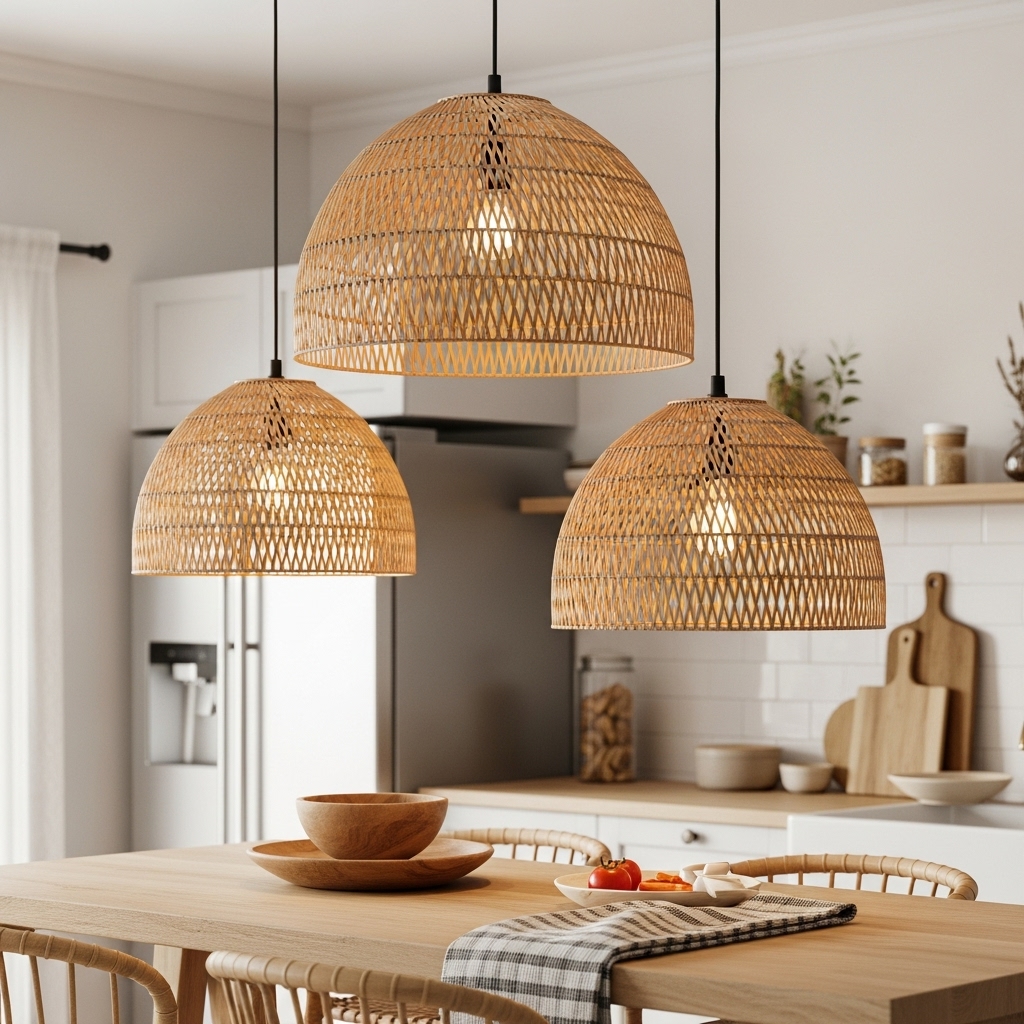
Rattan and bamboo pendants add warmth and natural texture, making them useful in coastal, bohemian, Scandinavian, and relaxed family kitchens. Their woven shades diffuse light softly, which can make a bright kitchen feel less stark.
Choose larger woven shades if you have high ceilings or a wide island. For a more tailored look, use two or three matching shades rather than mixing several different sizes.
Because natural materials can collect dust and grease over time, place them where they can be reached easily for cleaning, and avoid installing them directly above a very active stovetop-adjacent prep area.
6. Sculptural Modern Pieces
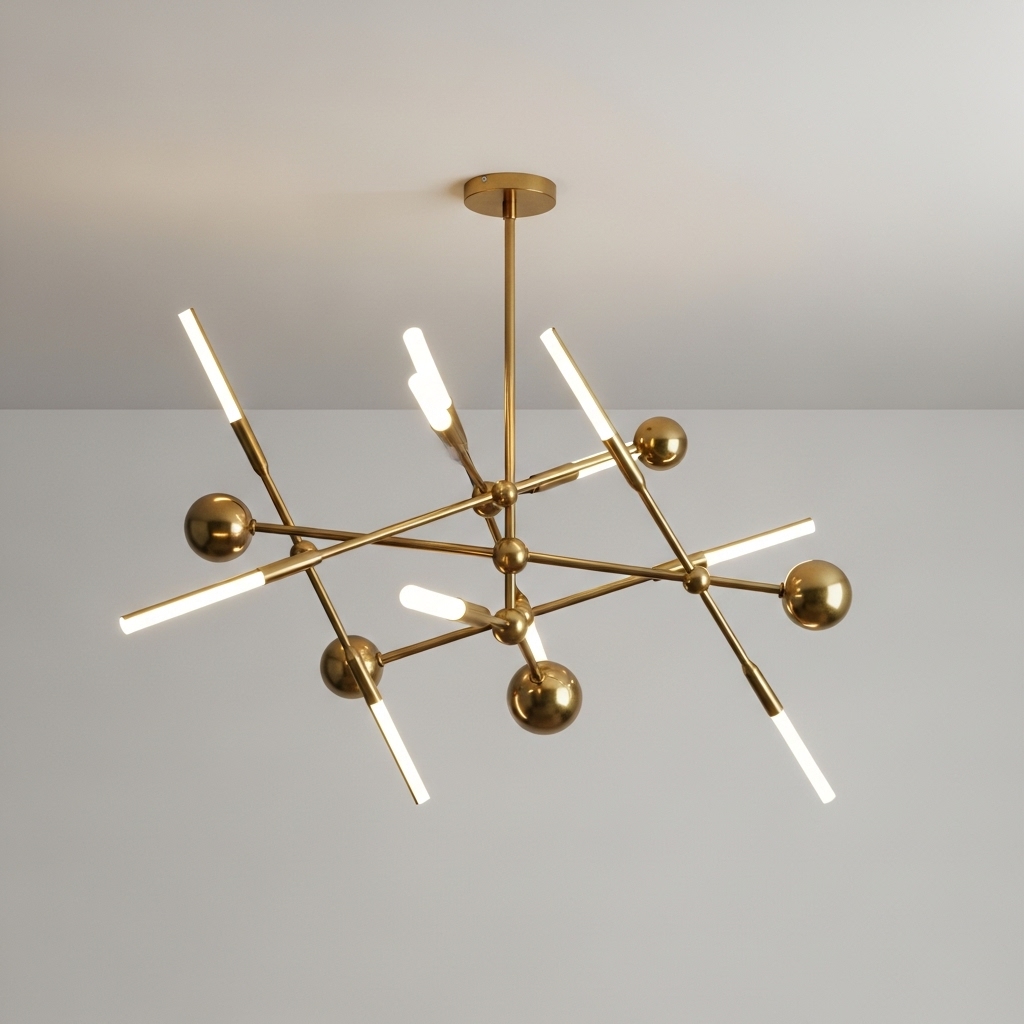
Sculptural lighting is ideal for homeowners who want their kitchen island to feel distinctive. Instead of relying on a conventional shade, these fixtures use unusual shapes, curved arms, geometric forms, or arrangements of spherical lights.
A sculptural fixture can become the main decorative feature in a minimalist kitchen. For example, a branching brass design can introduce warmth to an otherwise neutral interior, while a black geometric fitting can complement contemporary cabinetry.
The challenge is finding a design that looks impressive without interfering with everyday activities. Wide arms, oversized globes, and unusual proportions may occupy more visual space than expected, particularly in kitchens with low ceilings.
Look at the fixture from several angles before purchasing it. Consider how it will appear when viewed from the dining area, living room, and main kitchen entrance. Its dimensions matter just as much as its appearance in a product photograph.
How to make this style work: Keep the surrounding decor relatively restrained and check that the fixture provides enough usable light. If it is primarily decorative, supplement it with other lighting sources.
Best for: Modern kitchens, minimalist interiors, and homeowners who enjoy distinctive design.
7. Crystal Accented Glow
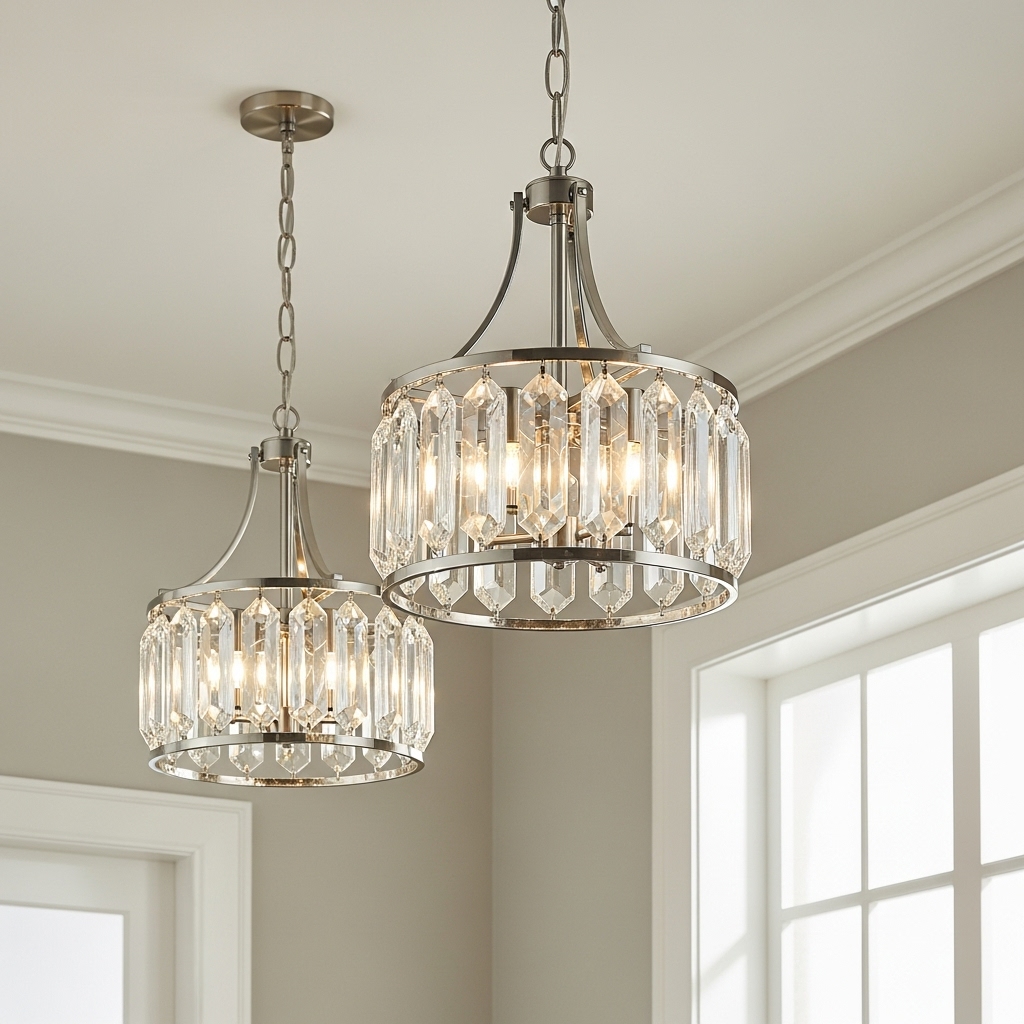
Crystal and decorative glass pendants offer a way to add sparkle without committing to a large chandelier. Their reflective surfaces catch the light and introduce extra detail above the island.
Clear, faceted, and bubble-style glass can each create a different effect. Clear glass keeps the fixture visually light, faceted crystal produces more noticeable reflections, and textured glass introduces interest without requiring an elaborate metal frame.
These designs work well with polished stone countertops, brass hardware, and kitchens that combine neutral colors with reflective finishes. They can also brighten the appearance of a smaller kitchen because transparent shades tend to obstruct views less than solid, oversized fixtures.
There are a few practical details to consider. Highly reflective materials may create distracting glare, while intricate glass shapes can require more frequent cleaning to maintain their appearance.
How to make this style work: Choose the level of sparkle that suits your room. A pair of understated glass pendants may be more effective than several elaborate fixtures competing for attention.
Best for: Glamorous, transitional, and contemporary kitchens that need a decorative accent.
8. Multi-Tiered Cascades
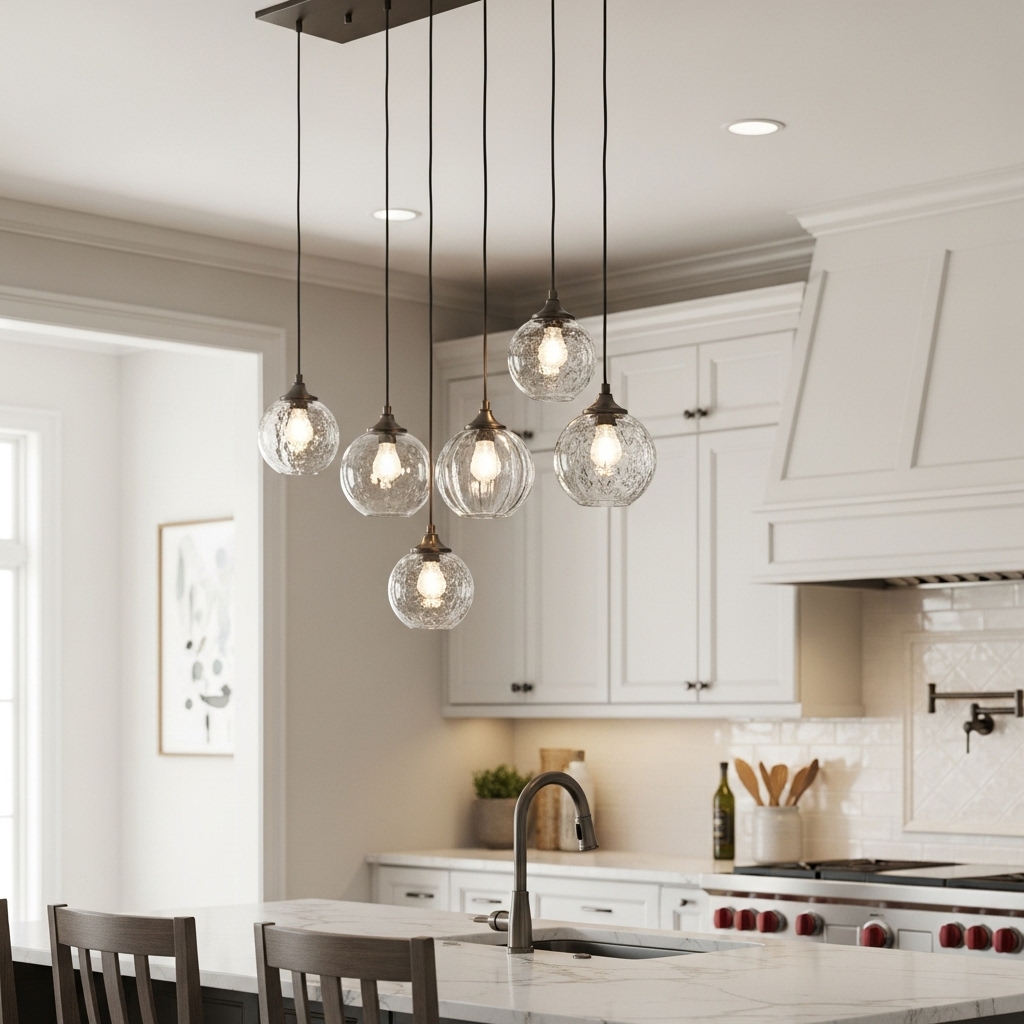
Multi-tiered pendant arrangements introduce movement by suspending several lights at different heights. The effect can resemble a waterfall, with glass globes or compact shades forming a layered composition above the island.
This approach adds depth to kitchens with high ceilings and can make a large island feel more connected to the surrounding space. Glass orbs provide a lighter appearance, while metal shades create a more structured design.
Although the arrangement can be striking, it requires careful planning. Pendants at different heights should not block important sightlines or hang so low that people can easily bump into them while working or sitting at the island.
It is also important to consider where the light falls. A decorative cascade may illuminate the center of the island more effectively than its outer edges, depending on the position and beam direction of each bulb.
How to make this style work: Check the overall dimensions of the complete arrangement, not just the size of an individual pendant. If your kitchen has a low ceiling or limited space above the island, a simpler linear fixture may be more practical.
Best for: High-ceiling kitchens, large islands, and homeowners who want a layered decorative feature.
9. Track Lighting Systems
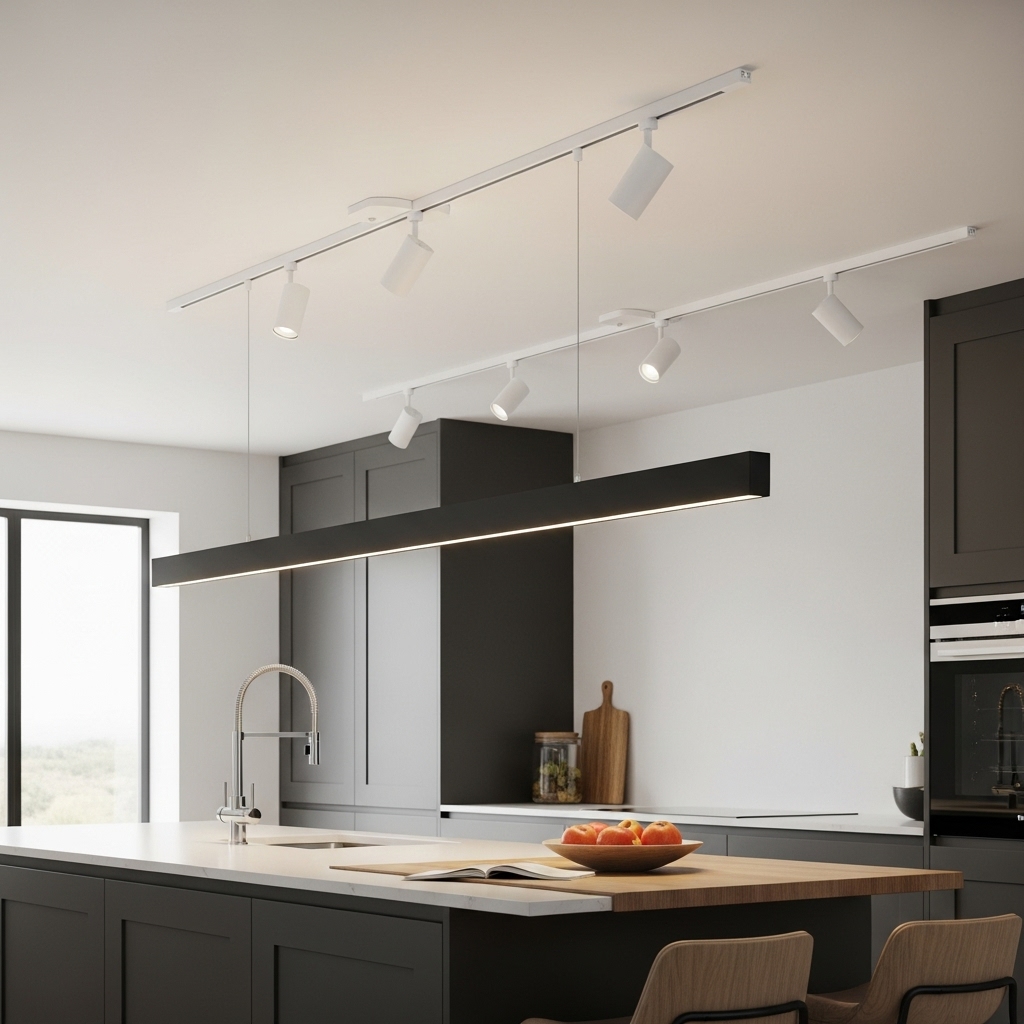
Track lighting is a practical alternative to hanging pendants, particularly when you need flexibility or want to keep the space above the island relatively open.
Individual heads can often be adjusted to direct light toward different areas. Depending on the system, this may include the island’s preparation surface, a nearby sink, or a breakfast bar.
This flexibility makes track lighting useful in kitchens where one area serves several purposes. It can also be a sensible choice when a conventional pendant arrangement would obstruct the view between the kitchen and an adjoining living area.
The appearance depends on the track design. Slim black rails create a noticeable architectural feature, while white systems can blend into a pale ceiling. Some systems are designed for directional task lighting, so check the beam angle and light output before buying.
Track lighting is not automatically brighter or more efficient than pendants. Performance depends on the lamps, fixture design, placement, and controls.
How to make this style work: Aim the heads carefully to reduce shadows on the work surface. Avoid pointing bright lamps directly toward seated people or reflective countertops.
Best for: Multifunctional kitchens, flexible layouts, and homeowners who prefer adjustable lighting.
10. Frosted Glass Bars
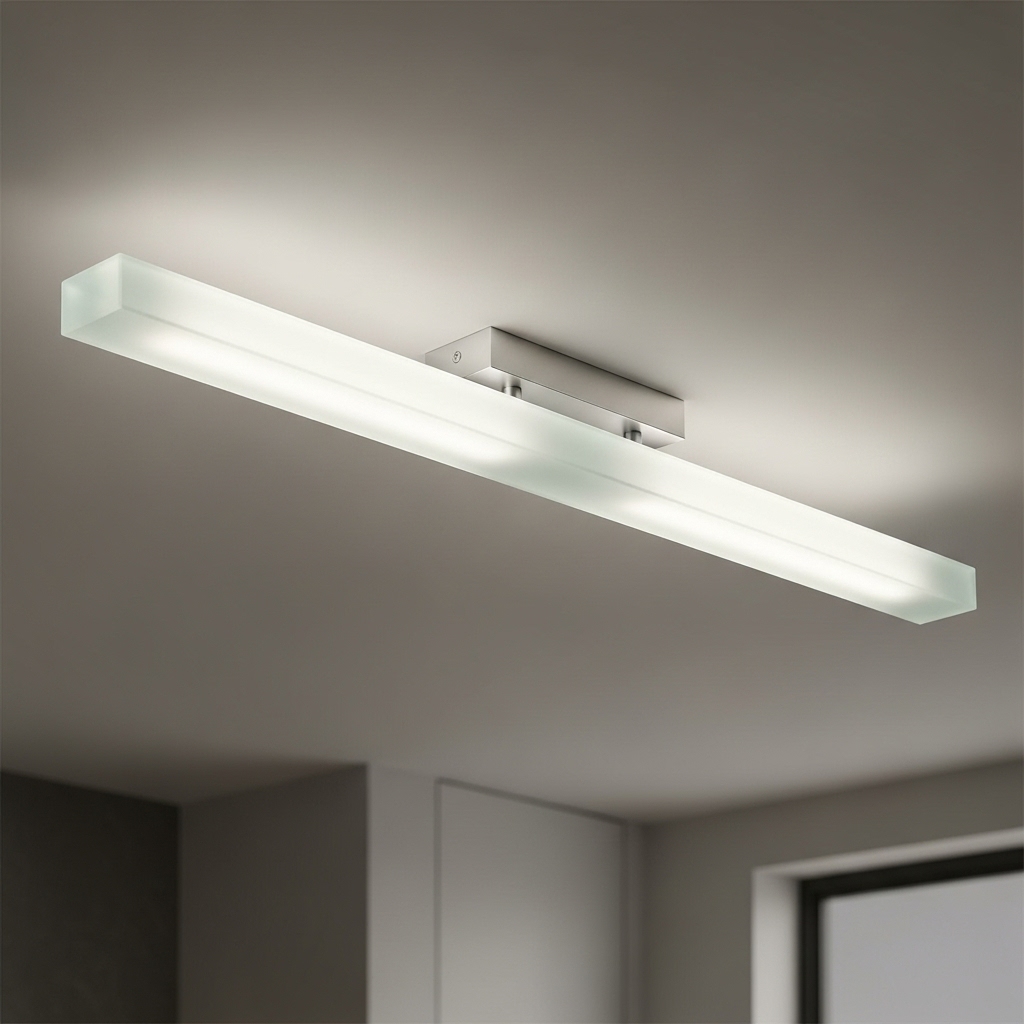
Frosted-glass linear fixtures combine a simple profile with a softer appearance than many exposed-bulb designs. The diffused glass can reduce the visibility of individual light sources and help create a more comfortable glow.
Their elongated shape makes them particularly suitable for rectangular kitchen islands. Rather than creating several separate points of light, a well-designed fixture can spread illumination along a larger section of the countertop.
This style suits minimalist, contemporary, and transitional interiors. It can also work in a kitchen where the cabinetry and countertops already have strong patterns, since the fixture itself does not need an elaborate shape to make an impression.
One important distinction is that frosted glass does not guarantee uniform illumination. The quality of the diffuser, light output, and positioning all affect the result.
How to make this style work: Look for a fixture that directs sufficient light toward the countertop and check whether its bulbs or integrated LEDs can be replaced or serviced. Dimming capability is helpful if the kitchen also functions as a dining or social space.
Best for: Modern kitchens, long islands, and homeowners who prefer understated lighting with a soft appearance.
11. Dimmable LED Crystals
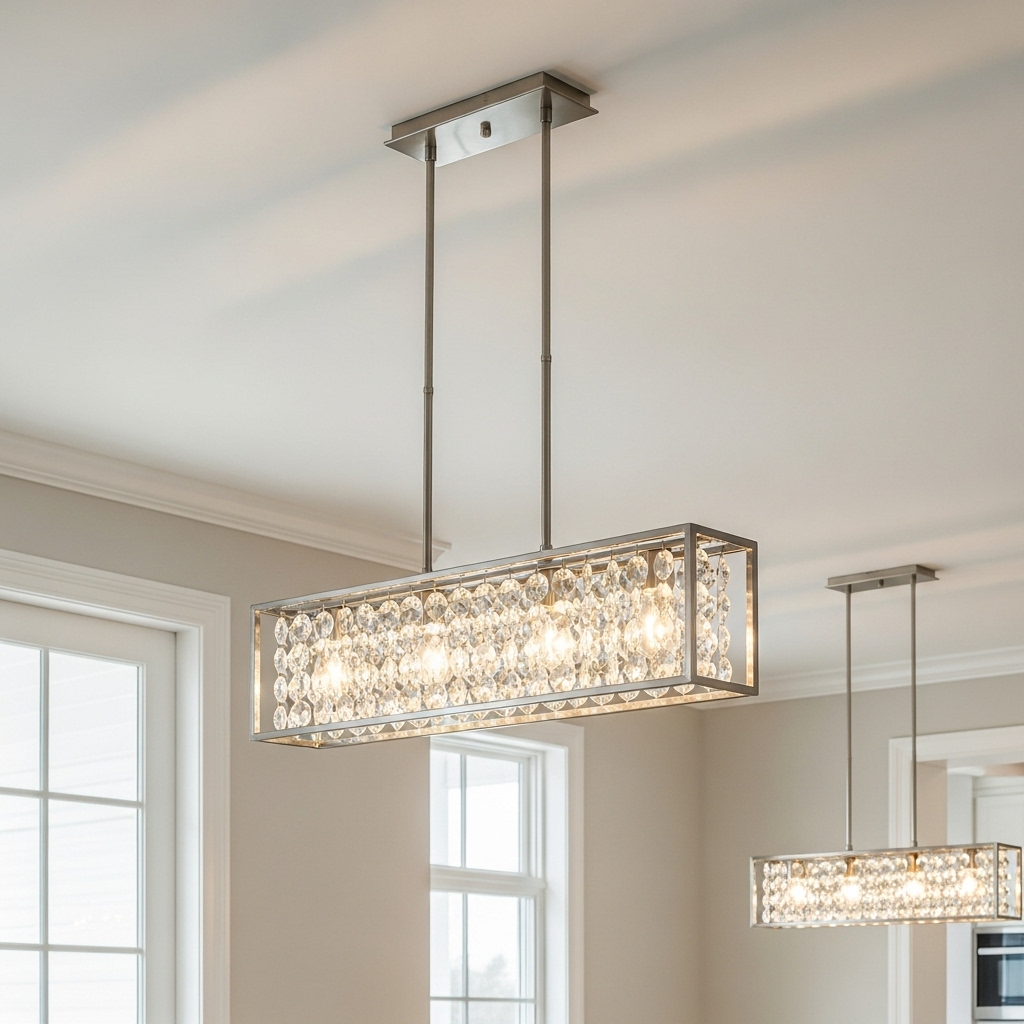
Dimmable LED pendants are a useful choice for kitchens that need to accommodate different activities throughout the day. Bright light helps when chopping ingredients, reading recipes, or cleaning the countertop, while a lower setting creates a more relaxed atmosphere during breakfast or evening gatherings.
LED lighting is available in many styles, including crystal-effect globes, slim metal pendants, and contemporary geometric fixtures. This makes it possible to prioritize practical performance without sacrificing the look of your kitchen.
When comparing products, look beyond claims about energy efficiency. Check the fixture’s actual light output in lumens, its color temperature, and whether the dimmer is compatible with the lamp or integrated LED driver.
Also verify whether the product is designed for a standard dimmer switch or requires a particular control system. Incompatible equipment can cause flickering, limited dimming, or other performance problems.
How to make this style work: Select a color temperature that complements your kitchen finishes and the other lights in the room. If possible, use compatible dimming controls to make the transition from food preparation to dining more comfortable.
Best for: Busy family kitchens, multifunctional islands, and homeowners who want flexible light levels.
12.Color-Pop Fixtures
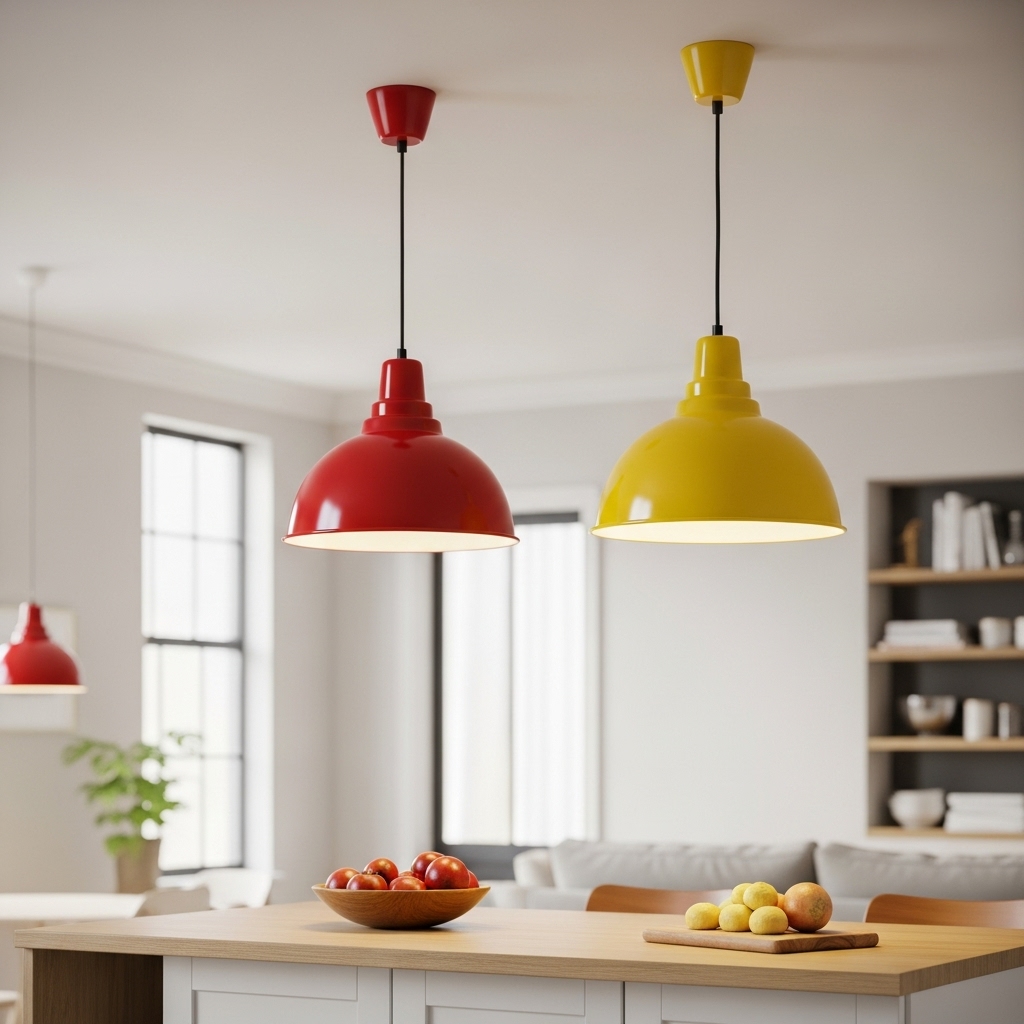
Colorful pendant lights can give a neutral kitchen more personality. Red, yellow, green, blue, and other saturated shades introduce a clear focal point without requiring you to repaint the cabinets or replace the countertops.
A pair of colored pendants can work particularly well above a white island, while a single contrasting fixture may be enough in a smaller kitchen. The color can also connect to details elsewhere in the room, such as bar stools, artwork, textiles, or small decorative accessories.
You do not have to choose a bright primary color to achieve this effect. Muted green, dusty blue, terracotta, and warm cream can provide color while keeping the kitchen’s overall appearance calm.
Before committing to a bold shade, consider how it will look under both natural daylight and artificial lighting. Some finishes appear different depending on the light source and surrounding colors.
How to make this style work: Repeat the chosen color in one or two smaller details rather than introducing several competing shades. This helps the pendants feel connected to the overall design.
Best for: Eclectic, modern, playful, and otherwise neutral kitchens.
Why Choose Kitchen Island Lighting
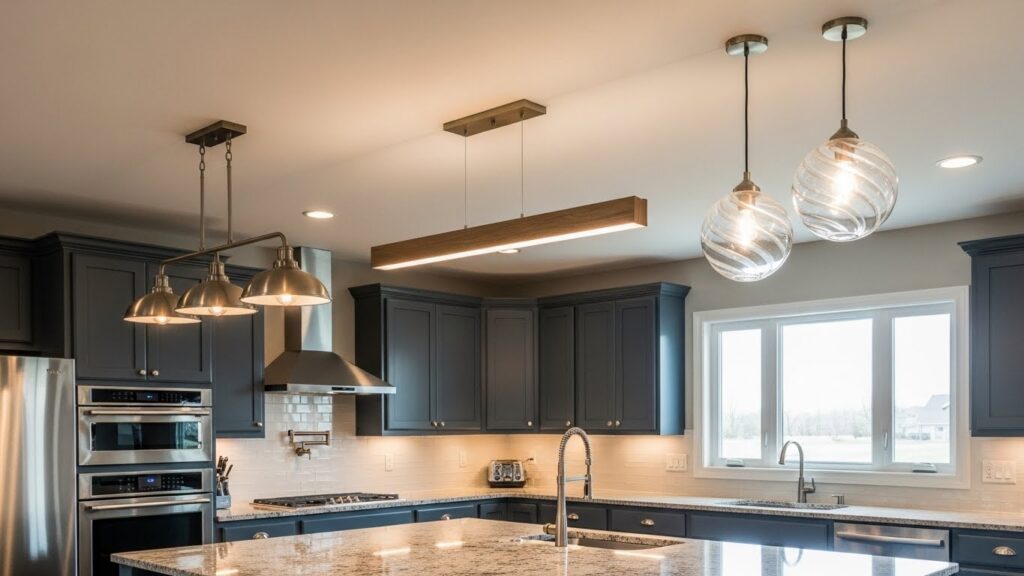
Finding an attractive fixture is only part of the decision. The following considerations can help you narrow down the options before spending money or arranging installation.
Measure the Island Before Buying
Start by measuring the island’s length and width, then consider the height of the ceiling. A large fixture may overwhelm a compact countertop, while a tiny pendant can look out of proportion over a long island.
As a starting point, a linear fixture around two-thirds of the island’s length may create a balanced appearance, but this is not a strict rule. The fixture’s shape, shade size, and surrounding space all influence the final result.
For multiple pendants, plan the spacing before buying. Account for the width of each shade and leave enough room to avoid a crowded arrangement.
Choose a Comfortable Hanging Height
Many kitchen pendants are installed with their lowest point approximately 30–36 inches above the countertop. This is a common starting range, not a universal requirement.
Your ceiling height, fixture dimensions, seated and standing sightlines, and the manufacturer’s installation instructions may call for a different position. A particularly large pendant may need more clearance, while a compact fixture can sometimes sit lower without obstructing the view.
Before finalizing the installation, check that the lights will not interfere with cooking, conversation, or movement around the island.
Pay Attention to Brightness
Lumens indicate how much visible light a lamp or fixture produces. Wattage mainly describes power consumption, so it is not a reliable way to compare the brightness of modern LED products.
There is no single lumen figure that works for every island. The amount of light needed depends on the countertop size, fixture design, beam direction, ceiling height, and existing lighting.
For a practical setup, combine island lighting with other suitable sources where necessary. Recessed ceiling lights and under-cabinet lights can help reduce dark areas and shadows that pendant fixtures may leave behind.
Select a Suitable Color Temperature
Color temperature, measured in kelvins (K), affects whether light appears warm or cool.
- 2700K–3000K: A warm, comfortable appearance that works well in kitchens with wood finishes and relaxed dining areas.
- Around 3500K: A more neutral appearance that can suit a range of modern kitchen designs.
- 4000K and above: A cooler appearance that some people prefer for a crisp, task-focused environment.
These are general descriptions rather than rules. Compare the available options with your existing kitchen lights and finishes, and avoid mixing noticeably different color temperatures unless the contrast is intentional.
Consider Dimming and Energy Use
Dimmable lighting can make a kitchen more versatile, particularly if the island serves as a workspace during the day and a dining area in the evening.
LED fixtures are often a good option because they can provide useful illumination while consuming less electricity than many older light sources. However, actual performance depends on the product’s efficiency, operating hours, and compatibility with its controls.
Before purchasing, confirm that the fixture and dimmer are compatible and that replacement bulbs or components will be available when needed.
Think About Cleaning and Maintenance
Kitchen lights are exposed to cooking residue, airborne grease, and dust. Smooth glass and metal surfaces are often easier to wipe down than intricate designs with numerous small details.
Woven shades and elaborate crystal fixtures may require more careful maintenance. If you cook frequently or have limited time for cleaning, choose a design that suits your routine as well as your preferred style.
Always switch off the light and allow it to cool before cleaning, and follow the manufacturer’s instructions.
Check Installation Requirements
Lighting above an island should be installed securely and in accordance with the manufacturer’s instructions and applicable electrical requirements.
Check the fixture’s weight, mounting method, and compatibility with your ceiling. If new wiring, circuit changes, or other electrical work is required, use a qualified electrician.
Also consider whether the light source is suitable for the location and whether the fixture can be maintained safely after installation.
Which Kitchen Island Lighting Style Is Best for Your Kitchen?
If you are still deciding between the options, use your kitchen’s layout and daily needs as the starting point.
- For a small kitchen: Consider compact glass pendants or a slim linear fixture that does not visually crowd the room.
- For a long island: A linear suspension fixture or a carefully spaced group of pendants can provide a more balanced appearance.
- For a kitchen with high ceilings: A sculptural chandelier or multi-tiered arrangement can fill the vertical space.
- For a warm, natural interior: Woven rattan pendants or fixtures with brass and wood details can complement the existing materials.
- For a modern minimalist kitchen: Frosted-glass linear lights or simple geometric pendants offer a restrained look.
- For flexible task lighting: Consider adjustable track lighting or compatible dimmable LED fixtures.
- For a decorative focal point: Crystal pendants, sculptural designs, or colorful shades can introduce more personality.
The best option is the one that fits the dimensions of your island, provides comfortable light for everyday tasks, and works with the rest of the room.
Frequently Asked Questions
How high should kitchen island lights hang?
A common starting point is approximately 30–36 inches above the countertop. The ideal height depends on the fixture’s size, ceiling height, sightlines, and manufacturer guidance. Check the arrangement before installation to make sure the lights will not obstruct conversation or interfere with daily activities.
How many pendant lights should I put over my kitchen island?
Two pendants may be enough for a shorter island, while three smaller pendants can work well over a longer one. Larger fixtures may need more space, so decide based on their actual dimensions and light distribution rather than choosing a number alone.
Are pendant lights or linear fixtures better for a kitchen island?
Pendant lights offer more flexibility in shape, spacing, and decorative style. Linear fixtures provide a continuous visual line and can distribute light along a long countertop. Neither is automatically better; the choice depends on the island’s size, your preferred appearance, and the fixture’s lighting performance.
What type of lighting is best for food preparation?
Look for lighting that provides adequate illumination across the work surface without creating uncomfortable glare or strong shadows. A combination of suitable island fixtures, ceiling lights, and under-cabinet lighting can be more effective than relying on one decorative fitting.
Are LED lights suitable for kitchen islands?
Yes. LED fixtures are available in many designs and can be energy-efficient. Check the product’s lumen output, color temperature, dimming compatibility, and replacement options before purchasing.
Can I use a chandelier over a kitchen island?
Yes, provided its dimensions and installation requirements suit the space. Check the ceiling height, hanging clearance, and light distribution. A chandelier that is too large or produces insufficient task lighting may not be the most practical choice for a small or heavily used island.
What is the best lighting for a small kitchen island?
Compact pendants, a modest linear fixture, or carefully positioned track lights can work well. Transparent or visually light designs may help maintain an open appearance. Avoid oversized shades that dominate the countertop or block views across the kitchen.
Final Thoughts
Kitchen island lighting should do more than complete the room’s decoration. It should make everyday tasks easier, complement the materials around it, and create a comfortable atmosphere for the people who use the kitchen.
Classic pendants offer versatility, linear fixtures suit longer islands, and sculptural chandeliers bring a more dramatic touch. Woven shades add natural texture, while dimmable LEDs and track lighting offer practical flexibility.
Before choosing a fixture, measure your island, consider your ceiling height, compare light output, and think about how you use the space throughout the day. When style and function work together, the result is a kitchen that feels well planned rather than simply decorated.