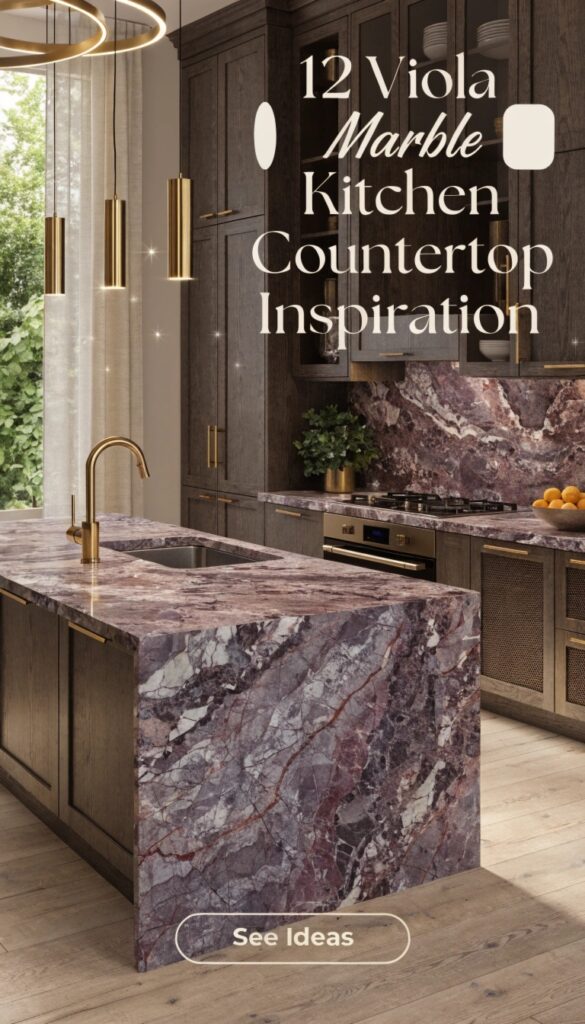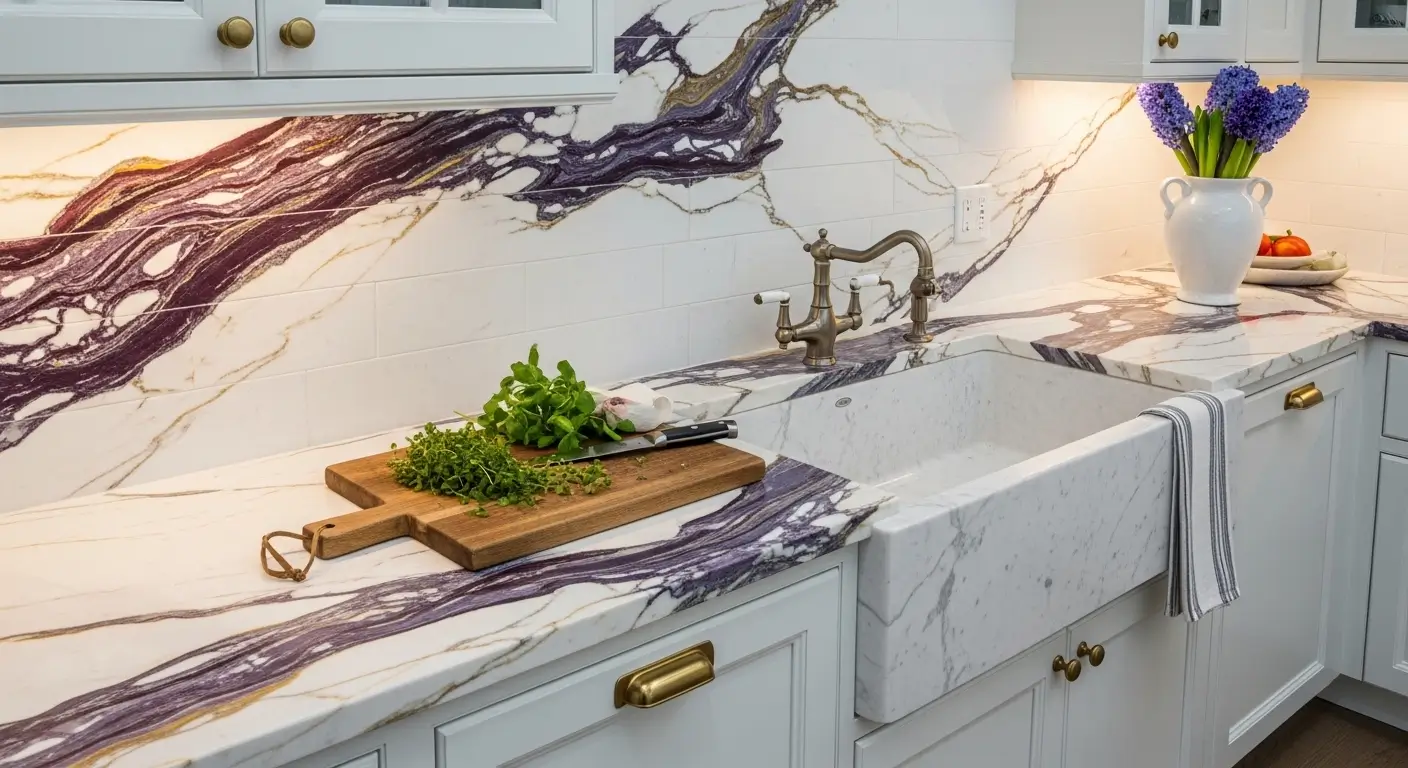
Calacatta Viola marble is a distinctive choice for anyone who wants their kitchen countertop to become part of the room’s design rather than simply a surface for preparing food.
Its creamy background and bold burgundy, plum, and purple veining give it a character that is quite different from the quieter patterns found in many white marbles.
The stone can work in several types of kitchens, from contemporary spaces with flat-panel cabinets to traditional rooms with painted woodwork.
The key is deciding where to use it, which materials to pair with it, and how much of its dramatic pattern your kitchen can comfortably accommodate.
Before choosing a slab, it is also worth understanding the practical side. Marble can scratch, stain, and develop dull marks when exposed to acidic ingredients.
Its appearance is a major attraction, but it requires more thoughtful care than some engineered countertop materials.
In this guide, you will find 12 ways to incorporate Calacatta Viola marble into your kitchen, along with advice on cabinet colors, finishes, installation details, and everyday maintenance.
Why Choose Calacatta Viola?
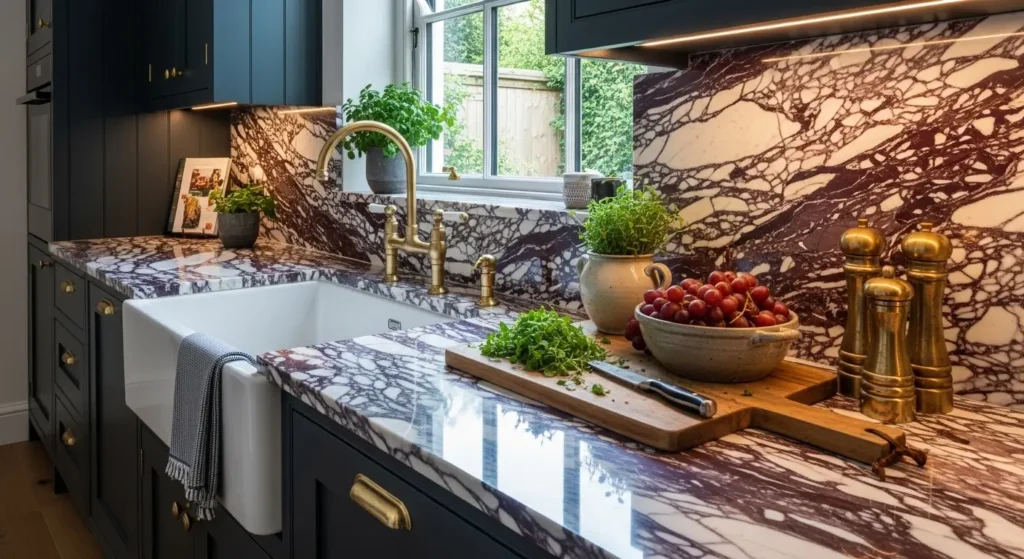
Calacatta Viola stands out because its veining often forms broad, irregular strokes of burgundy and purple against a pale background.
Depending on the slab, these markings can appear soft and flowing or bold enough to dominate the entire design.
Unlike a countertop with a uniform pattern, every natural marble slab has its own arrangement of colors and veins. This makes slab selection especially important when the countertop will occupy a large area, such as a kitchen island.
Another advantage is its versatility. You can combine the stone with warm wood, creamy cabinets, dark finishes, brass hardware, or simpler countertop materials. Using it selectively can create a strong focal point without covering every surface in a dramatic pattern.
However, marble is not maintenance-free. It is susceptible to etching from acidic foods, and sealing can reduce the risk of staining without making the surface completely stain-proof.
If you prefer a countertop that needs very little attention, compare marble with quartz or other suitable alternatives before making a final decision.
What to know before buying
Visit the stone yard and approve the exact slabs before fabrication. Look at the full slab under good lighting, check the vein direction, and ask to see how the fabricator plans to cut and position each piece.
For a kitchen island, decide whether you want the strongest veins across the top, down the waterfall edges, or both. A slab with a dramatic center vein may look beautiful on an island but overwhelming as a full backsplash.
Ask your fabricator about:
- Polished, honed, or leathered finishes
- Edge profile and corner protection
- Seam placement
- Sink cutout and faucet-hole layout
- Sealing of cut edges before adhesive is applied
- Whether bookmatching is possible with the available slab sequence
1. The Classic Waterfall Island
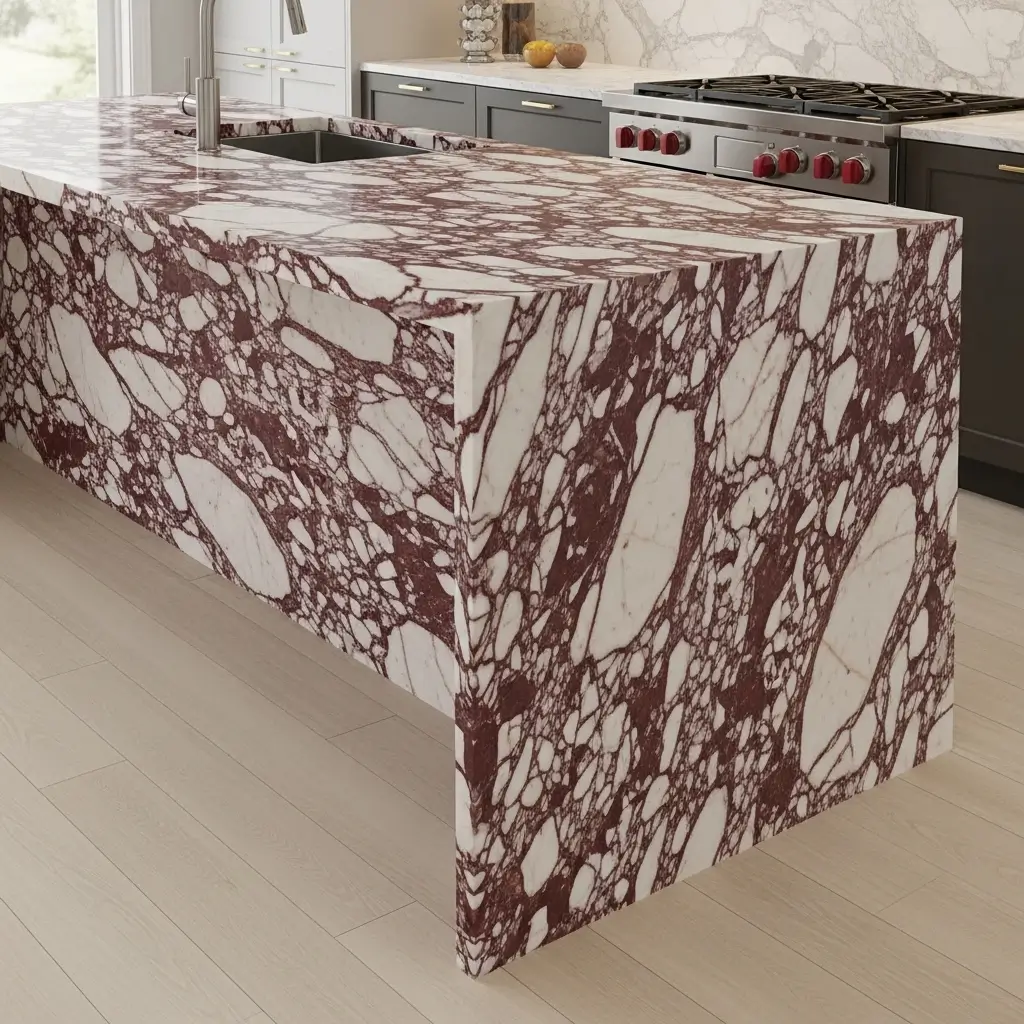
A waterfall island is one of the most effective ways to display the distinctive veining of Calacatta Viola marble. Instead of ending at the edge of the countertop, the stone continues down one or both sides of the island to the floor.
This arrangement allows the veins to travel across a larger surface, making the island feel like a connected piece of natural stone. It works particularly well in open-plan kitchens, where the island can be seen from the dining or living area.
For a balanced result, pair the marble with understated cabinetry. Cream, warm white, natural oak, and muted taupe allow the burgundy markings to remain the main attraction. Dark cabinets can also work, especially when the kitchen has sufficient natural or artificial light.
Before installation, discuss the slab layout with your fabricator. The veins should be positioned deliberately across the top and waterfall panels, and the finished edges need to be properly supported and fabricated.
Practical tip: A waterfall island uses more stone than a standard island, so request a detailed quotation that includes slab selection, fabrication, edge construction, and installation.
2. Full-Height Backsplash Integration
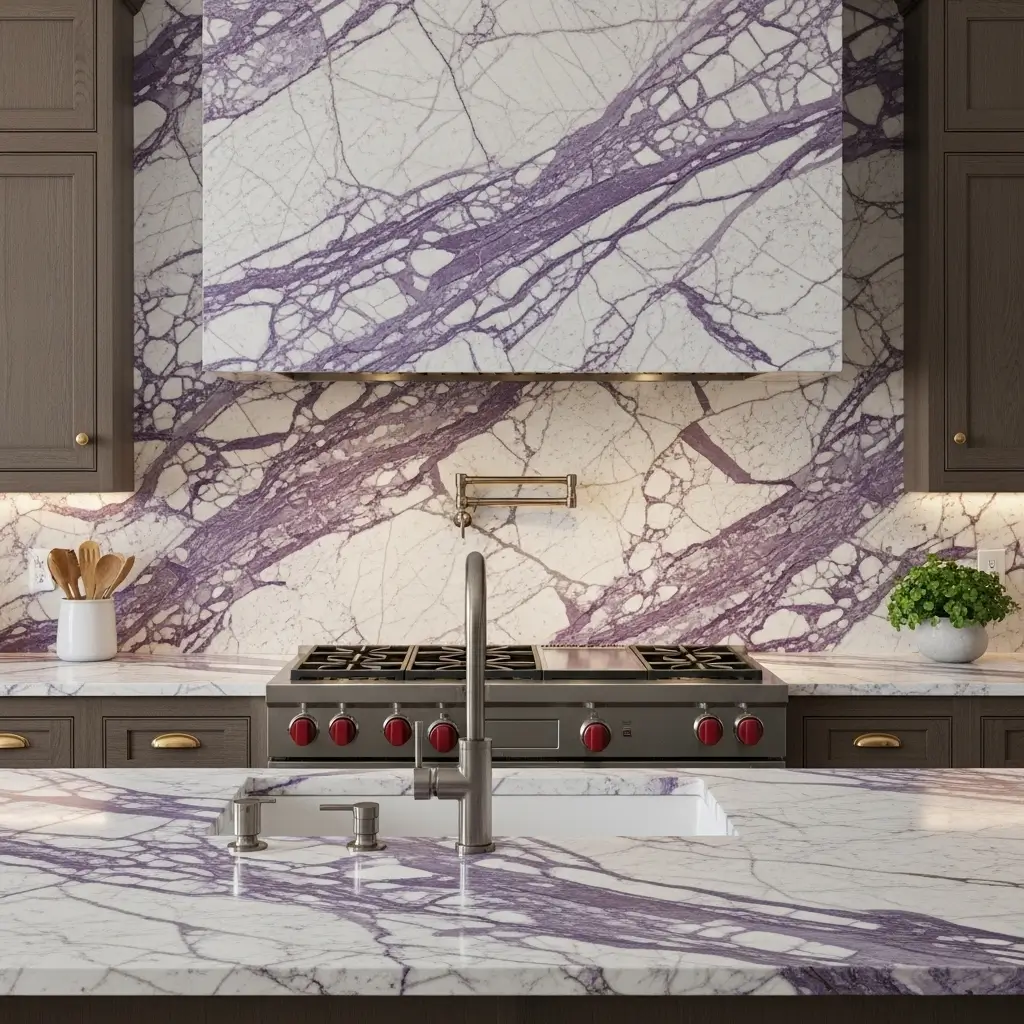
A full-height Calacatta Viola backsplash carries the countertop material up the wall, creating a continuous visual connection between the work surface and the cabinetry above it.
This approach is particularly effective behind a hob or along a main preparation area. The marble’s natural markings provide decoration without requiring a separate patterned tile or busy wall covering.
It also reduces the number of grout joints compared with a tiled backsplash. However, the finished surface still needs appropriate installation, sealing where recommended, and regular cleaning.
Under-cabinet lighting can bring out the variation in the stone, but choose the lighting temperature carefully. Very cool lighting may make the creamy background appear less warm, while softer neutral lighting can complement the natural colors.
Because the pattern is already strong, keep nearby cabinet doors and hardware relatively simple. If you want a matching countertop and backsplash, have the fabricator plan how the veins will meet at the joint.
Practical tip: Ask about the thickness, weight, wall preparation, and installation requirements before committing to a large marble backsplash. A properly prepared wall and experienced installer are essential.
3. Pairing with Natural Oak Cabinetry
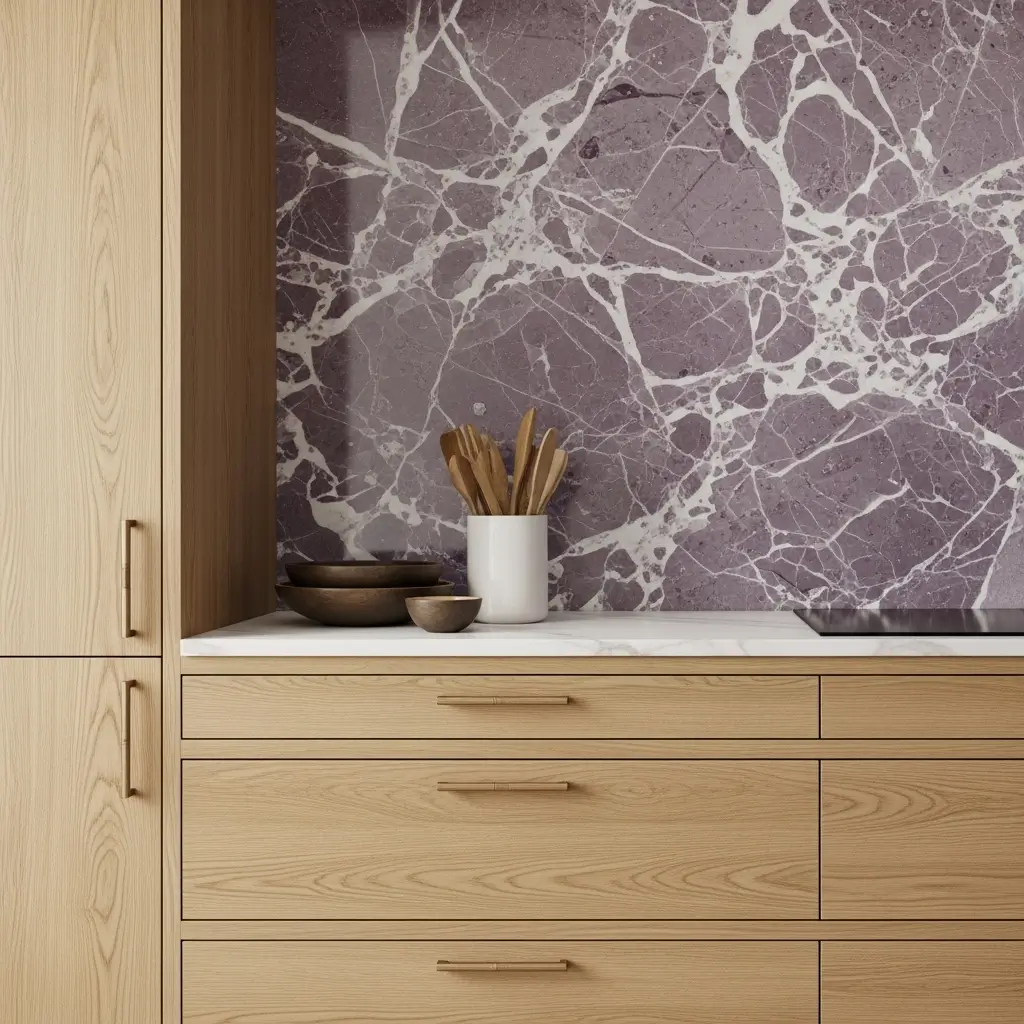
Natural oak is an excellent partner for Calacatta Viola because it introduces warmth and texture without competing with the stone’s dramatic markings.
The wood grain provides a softer, more organic appearance, while the marble brings contrast and visual interest. Together, they can suit a contemporary kitchen, a relaxed transitional interior, or a space with understated Scandinavian influences.
The shade of oak matters. Pale, natural finishes tend to create a lighter and more casual atmosphere. Medium-toned oak gives the kitchen more warmth, while heavily golden or orange-toned finishes can produce a stronger contrast that may not suit every marble slab.
For a cohesive design, repeat the wood tone in a few carefully chosen places, such as bar stools, open shelving, or a dining table. Avoid introducing too many competing wood finishes.
If the kitchen is small, use oak on the lower cabinets and keep the upper portion lighter or more open. This helps maintain a sense of space while allowing the marble island or countertop to stand out.
Practical tip: Bring a sample of your cabinet finish to the stone showroom. Comparing the actual materials side by side is more reliable than selecting each one from a separate photograph.
4. The Monolithic Integrated Sink
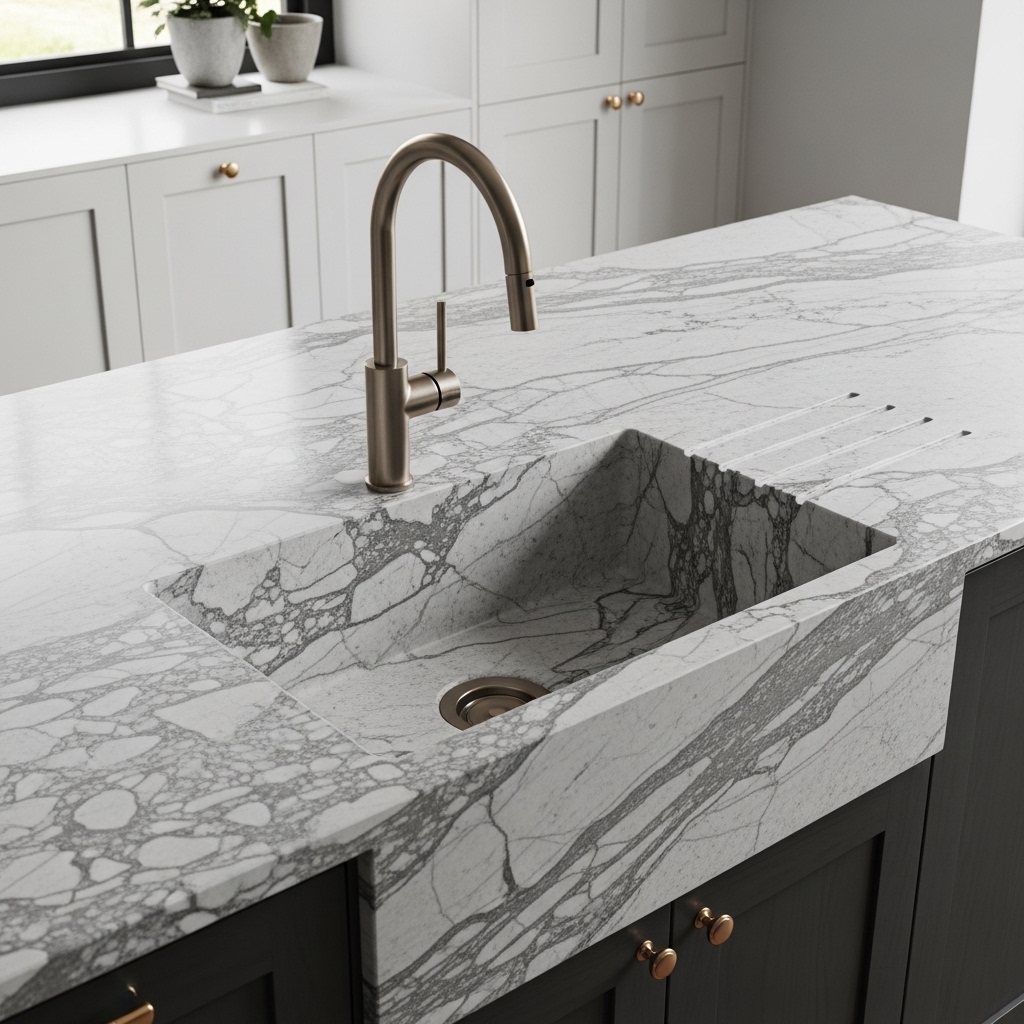
An integrated marble sink creates a continuous-looking surface by extending the countertop material into the sink area. The result can be striking, particularly when the veins are planned to flow across the surrounding counter and sink panels.
This is a specialized design rather than a simple countertop upgrade. Marble sinks require careful fabrication, appropriate support, and a practical drainage design.
Depending on the construction, seams may still be necessary, so discuss the finished details with your fabricator before approving the design.
There is also a maintenance consideration. A sink is frequently exposed to water, soap, food residue, and cleaning products. Marble can develop dull etch marks from acidic substances, and its surface may need more care than a conventional stainless-steel sink.
A useful compromise is to use Calacatta Viola on the main countertop and choose a stainless-steel or other suitable sink material.
You can still achieve a coordinated appearance without placing natural marble in the most demanding part of the work area.
Practical tip: If you choose an integrated marble sink, ask how the basin will be supported, how the drain will be constructed, and how the finished surface should be cleaned.
5. Brass and Gold Hardware Accents
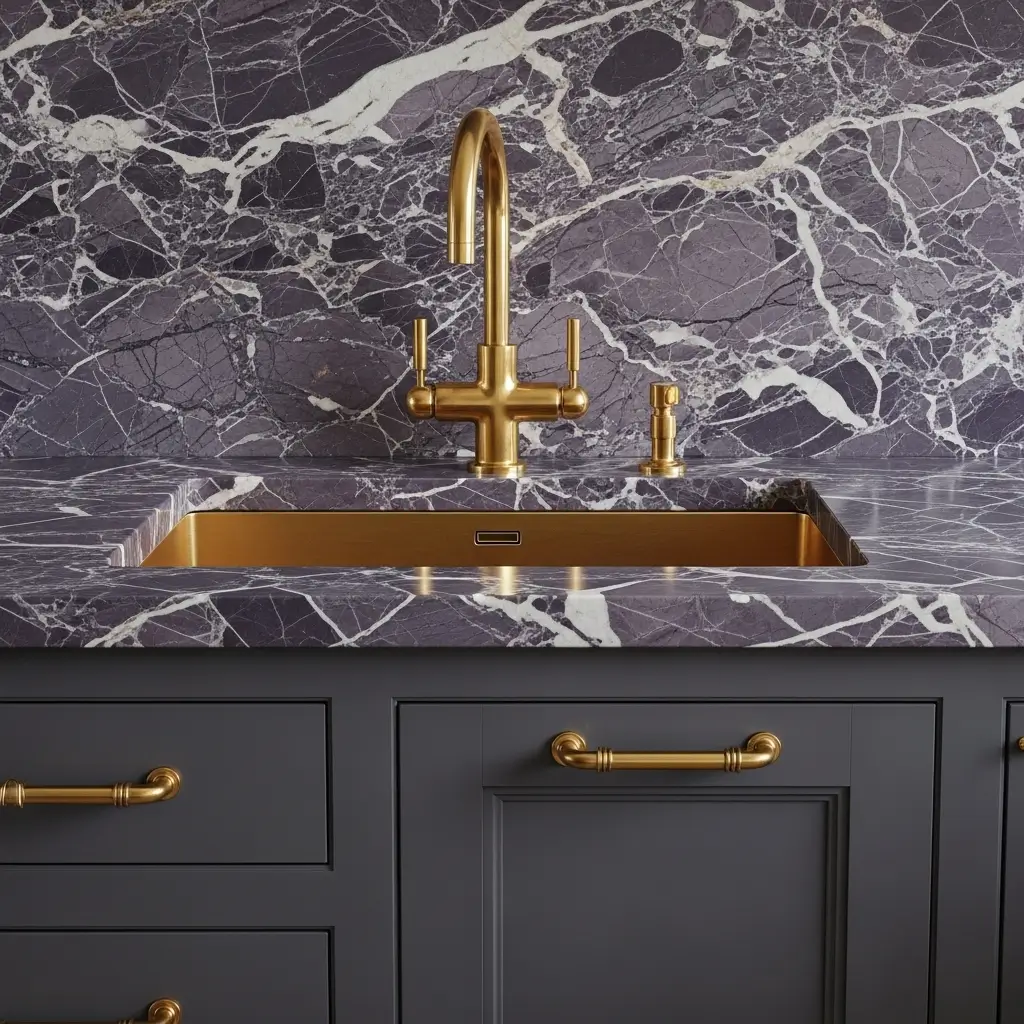
Brass and gold-toned hardware can complement the cream and burgundy colors found in Calacatta Viola marble. The warm metallic finish adds contrast without introducing another dominant pattern.
Brushed brass is a good option for a softer appearance. It works well with oak cabinets, cream-painted doors, and warm neutral walls. Polished brass creates a brighter, more formal look, while darker bronze can give the kitchen a more traditional character.
The trick is to use the finish consistently. Cabinet pulls, the kitchen faucet, and pendant-light details can share a similar tone without being identical in shape or style.
Gold-toned hardware is not the only suitable choice. Chrome, stainless steel, and black finishes can also work, depending on the other materials in the room. If your marble has cooler grey markings, a cooler metal finish may create a more balanced combination.
Practical tip: Select hardware after choosing the marble slab and cabinet color. This makes it easier to coordinate the smaller details with the actual tones in the stone.
6. Minimalist Shaker Cabinet Contrast
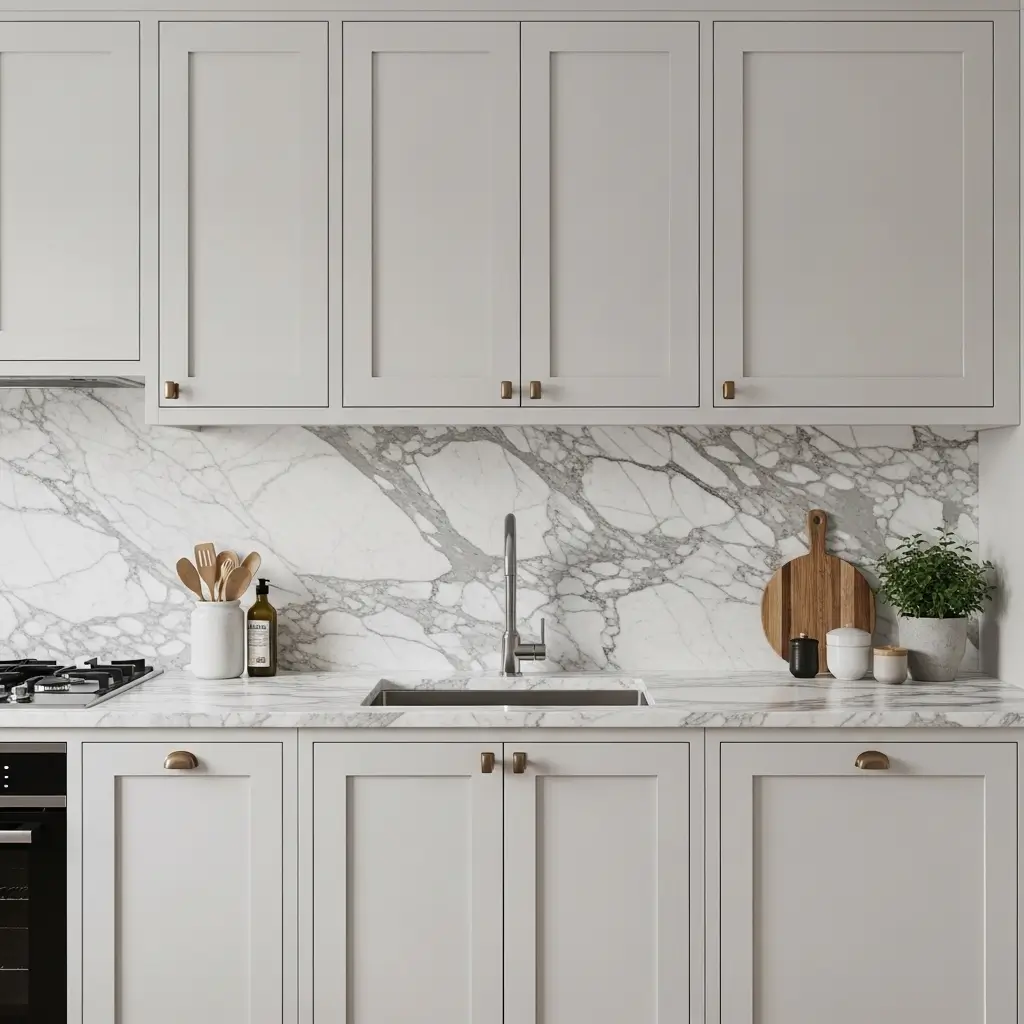
When the countertop has a strong pattern, simpler cabinet fronts can prevent the kitchen from feeling visually crowded.
Flat-panel cabinets create a clean, contemporary backdrop. Shaker cabinets introduce a little more detail while remaining restrained enough to work with dramatic marble. Both styles can suit Calacatta Viola, depending on the overall character you want.
Warm white and ivory cabinets create a gentle contrast with the stone’s creamy background. Light grey offers a cooler, more understated appearance, while taupe provides warmth without the visible grain of wood.
For smaller kitchens, consider using the marble on one main countertop or a compact island rather than extending it across every available surface. A single focal point can make a stronger impression than several competing features.
If you prefer a traditional kitchen, Shaker cabinets with simple brass pulls can bridge the gap between classic detailing and the marble’s bold pattern. For a modern interior, flat-panel doors and discreet hardware keep the composition clean.
Practical tip: Avoid combining heavily detailed cabinet doors, elaborate tile patterns, and dramatic marble across the same sightline unless you have a clear design plan. Let one feature lead and allow the others to support it.
7. Floating Marble Shelves
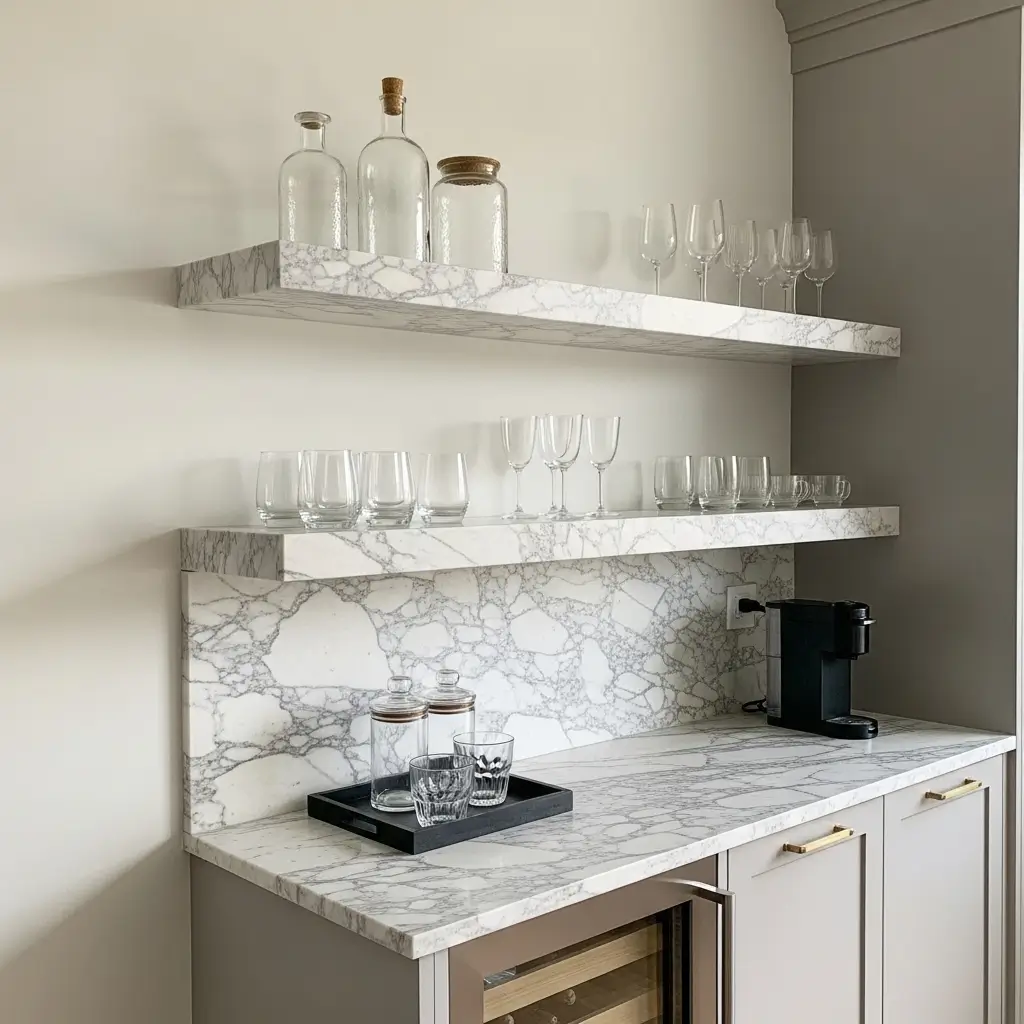
Marble shelving can carry the countertop material onto the wall, creating a visual connection between different parts of the kitchen.
A short shelf above a coffee station or beside a cabinet run is often enough to introduce the stone without making the entire wall feel heavy. Off-cuts from countertop fabrication may be suitable for smaller shelves, depending on their dimensions and condition.
These shelves can display everyday glassware, a few ceramic bowls, or selected decorative pieces. Keep the arrangement relatively light so the marble remains visible rather than disappearing behind a collection of objects.
However, stone shelves are heavy and need suitable brackets or another engineered support system. The wall construction, shelf depth, thickness, and expected load all matter. A floating appearance should never come at the expense of secure installation.
Marble is also not the most forgiving material for every shelf location. Avoid placing it where bottles, cookware, or other heavy items are likely to strike the edge.
Practical tip: Ask your installer whether the available off-cuts are suitable for shelving and how they should be supported. Do not assume that every leftover piece can safely be reused.
8. Softened Curved Edge Profiles
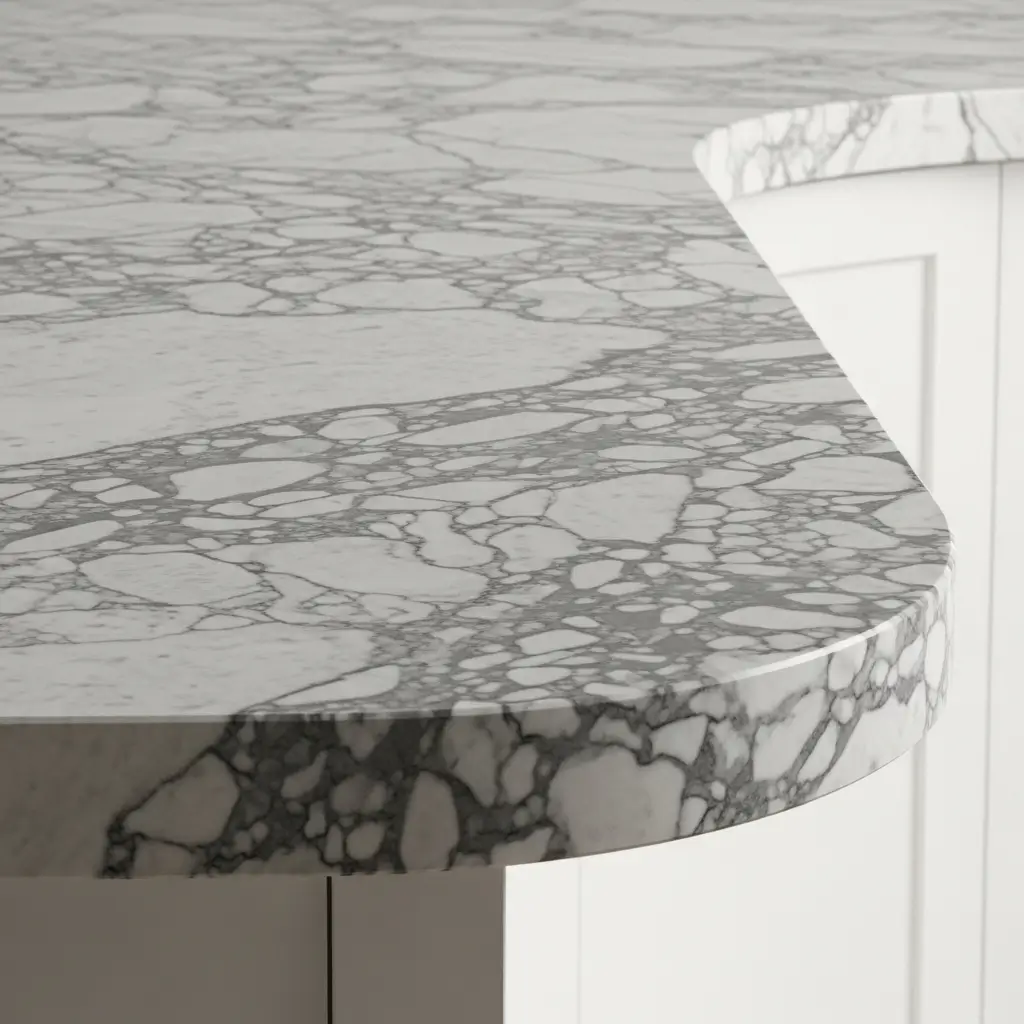
The edge profile can change how Calacatta Viola looks and feels in a kitchen. A square edge gives the countertop a crisp, contemporary appearance, while a rounded or eased edge introduces a softer outline.
A bullnose profile has a more noticeably rounded finish. It can suit traditional kitchens, curved islands, and designs where you want the stone to feel less angular.
Rounded corners may also reduce the risk of bumping into a sharp point, particularly around a kitchen island. However, they do not make the marble scratch-proof or eliminate the possibility of chipping.
A thick-looking edge can make the island appear substantial, but achieving this appearance may require additional fabrication. A simpler edge can reduce visual weight and keep attention on the veining.
When choosing the profile, consider the cabinet style and the size of the room. A modest eased edge is versatile and easy to coordinate with different interiors, while more elaborate profiles may work better in traditional spaces.
Practical tip: View edge samples before ordering. A small physical sample can help you understand how the profile changes the appearance of the stone and the finished countertop.
9. Moody Black Cabinet Synergy
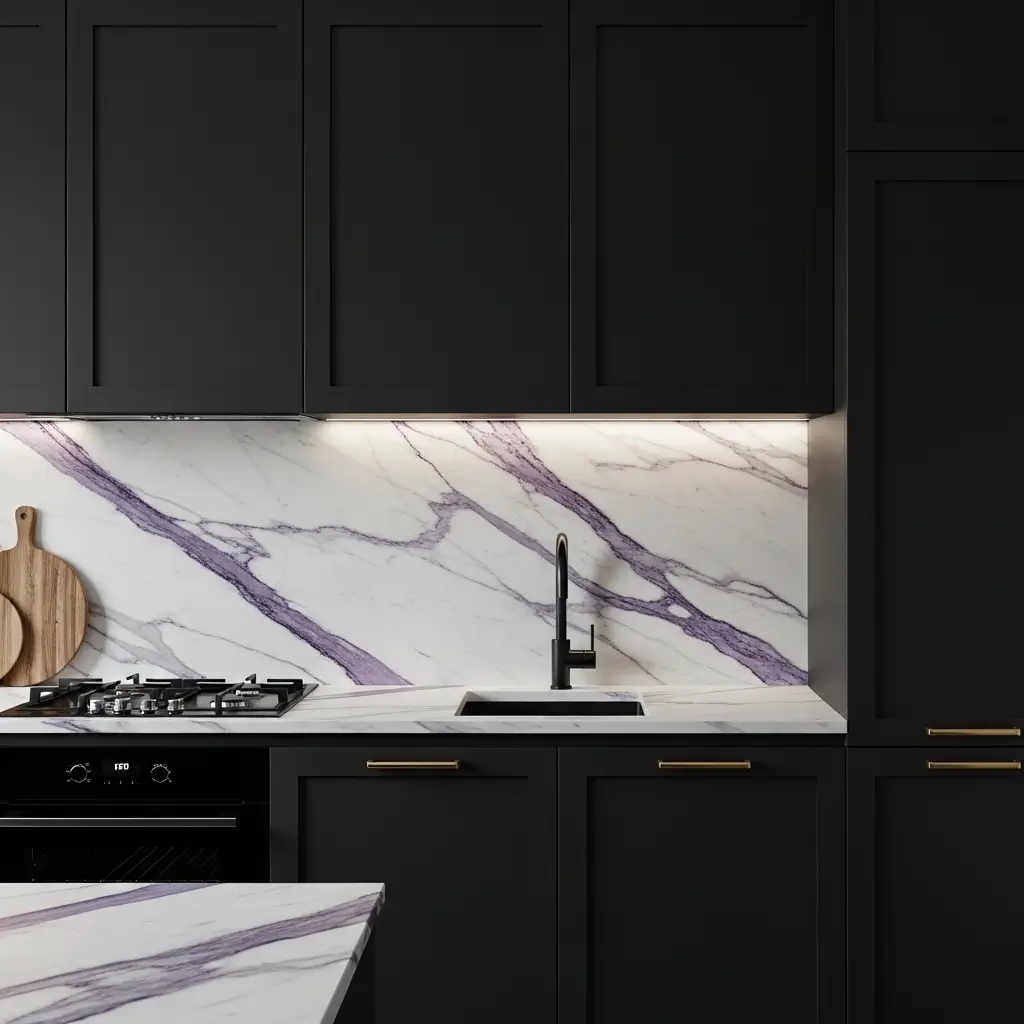
Matte black cabinets create a strong contrast with the pale background of Calacatta Viola. The dark cabinetry makes the cream areas appear brighter and gives the burgundy veining more depth.
This combination suits a moody, evening-oriented kitchen, especially one with warm lighting, brass fixtures, and dark flooring. It can feel dramatic, so balance it with lighter elements such as a pale plaster hood, cream walls, or oak shelving.
If the room has limited natural light, use black selectively perhaps on the base cabinets only and keep upper walls lighter.
10. Mixed Stone and Texture Medley
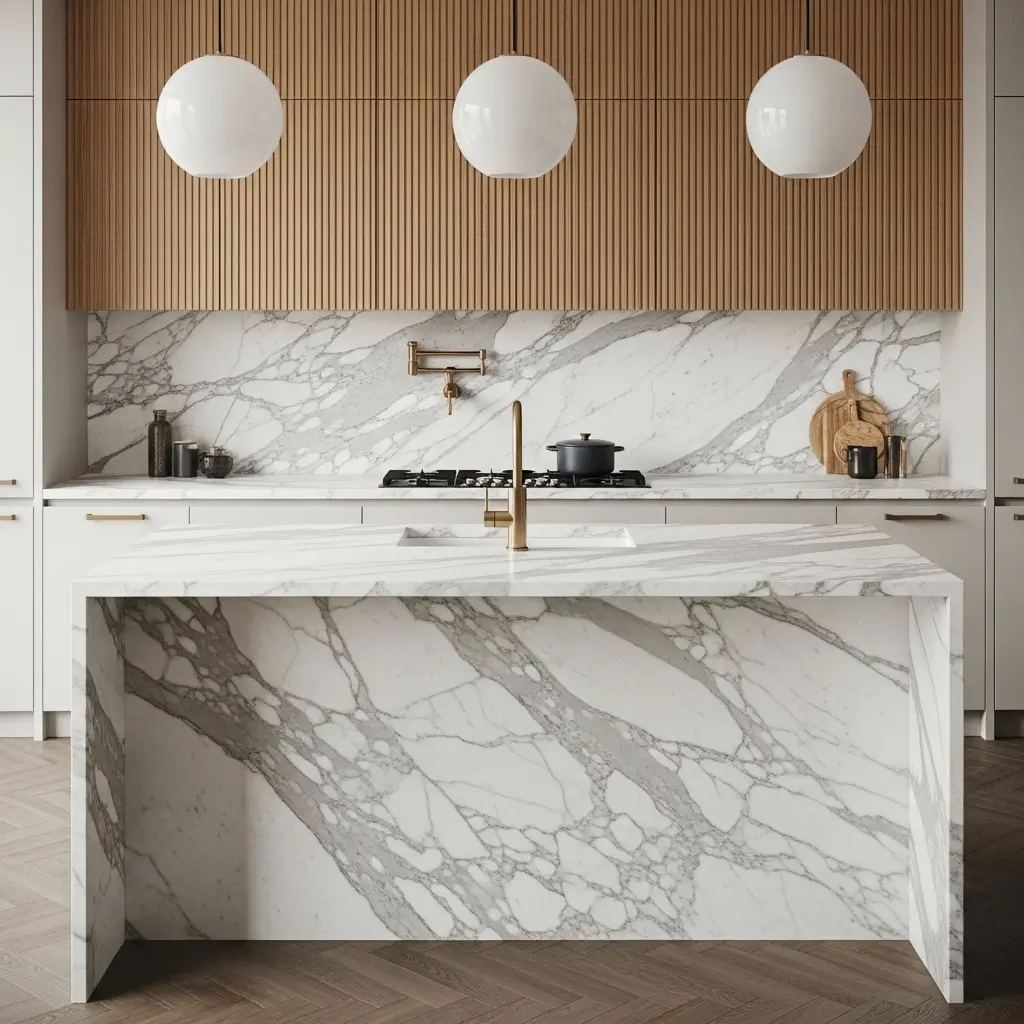
Using Calacatta Viola alongside a quieter material can make a kitchen more balanced and potentially help manage the project budget.
One option is to reserve the dramatic marble for the island and choose a simpler countertop for the perimeter cabinets. Another is to use the marble on the main work surface while introducing natural wood on shelving or a breakfast bar.
The important thing is to give each material a clear role. If both countertops have highly contrasting patterns, the room can feel disjointed. A plain or subtly patterned secondary surface usually allows the Viola marble to remain the focal point.
Fluted wood, smooth painted cabinetry, brushed metal, and understated tiles can all add texture without competing with the stone. If you introduce a second stone, compare its background color and veining with the actual Viola slab rather than relying on the material names alone.
Mixing materials can also help you prioritize where to spend money. You may decide that a statement island deserves the more distinctive stone while secondary preparation areas use a simpler, suitable surface.
Practical tip: Compare the total installed costs of both materials, including fabrication, edge finishing, transport, and installation. A lower-priced secondary slab does not automatically mean the entire project will cost less.
11. The Social Breakfast Nook
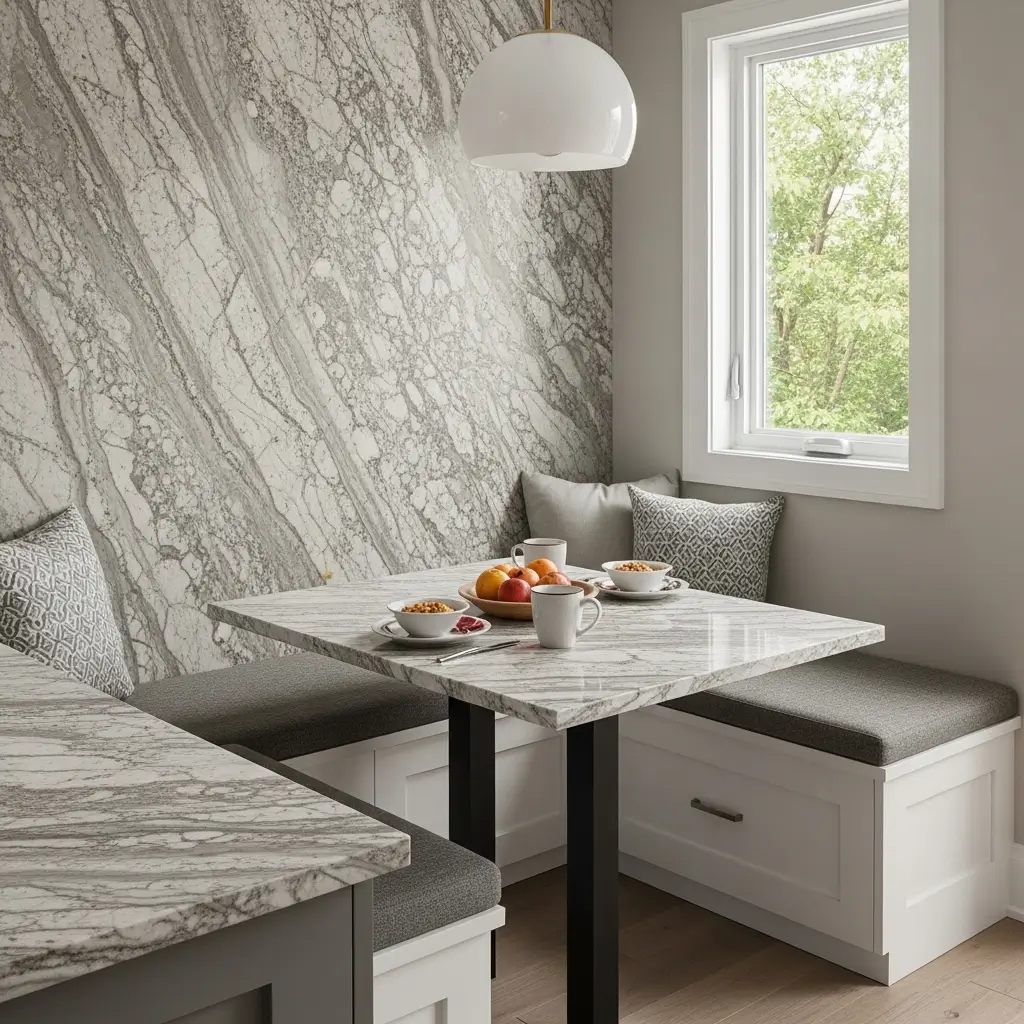
A breakfast nook is another way to introduce Calacatta Viola without covering the entire kitchen in the same stone.
A small table or built-in dining ledge can provide a natural extension of the kitchen’s material palette. This is particularly effective in open-plan homes where the cooking and dining areas share the same visual space.
For a compact nook, consider a simple tabletop with a restrained base. The stone already supplies plenty of pattern, so the chairs, lighting, and surrounding finishes can remain relatively understated.
Think about how the table will be used. A breakfast surface may encounter coffee, juice, citrus, food spills, and everyday scratches. Marble can be suitable if you are comfortable with the care it requires, but it is not automatically the most practical choice for every family.
A dining table also needs to be designed for its intended use. Confirm the support structure, finished height, seating clearance, and edge details before fabricating the stone top.
Practical tip: If you want the appearance of Calacatta Viola in a breakfast area but prefer easier maintenance, consider using it as a smaller accent rather than the entire dining surface.
12. Book-Matched Wall Cladding
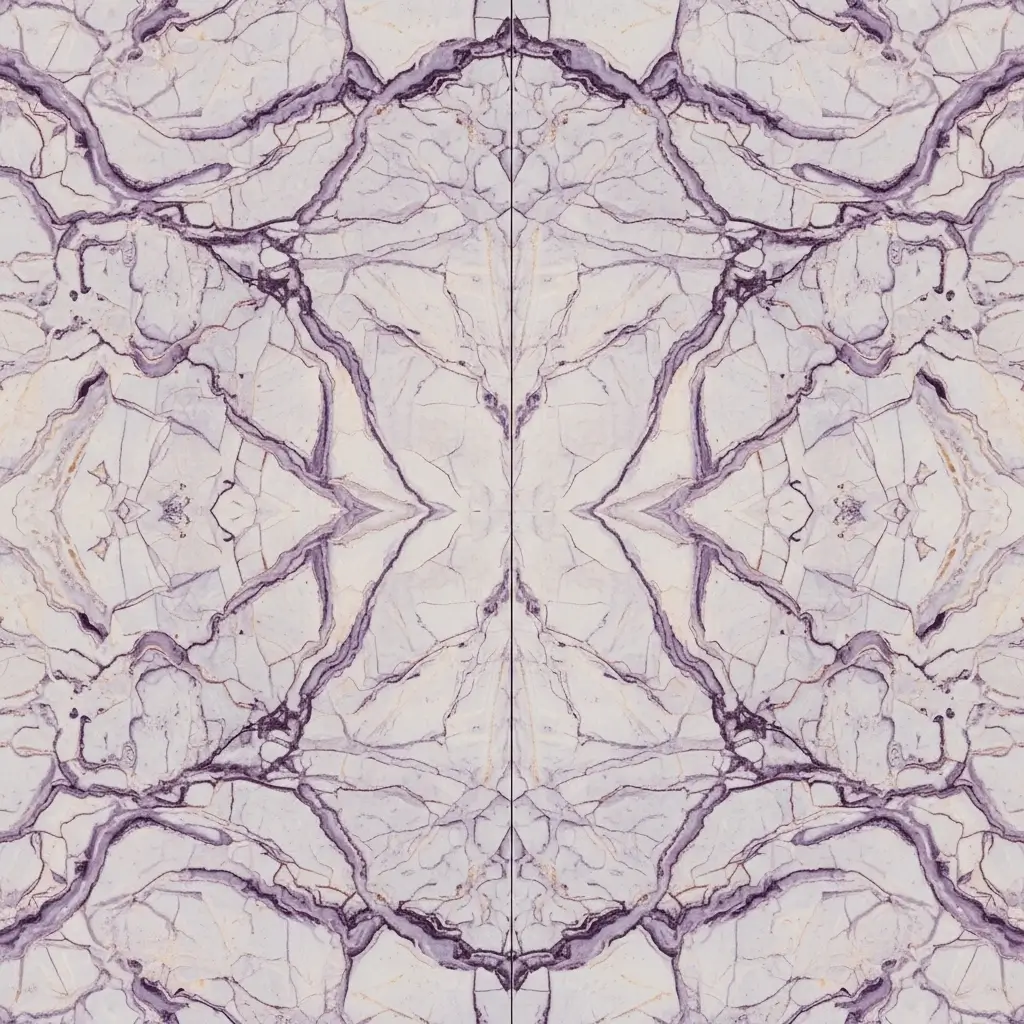
Book-matching is a fabrication technique in which adjacent slabs are arranged to create a mirrored pattern. When the veining is positioned carefully, Calacatta Viola can form a striking symmetrical feature across a backsplash, island, or wall.
This approach is especially effective when the slabs contain strong, flowing veins. The mirrored arrangement can emphasize those natural markings and turn a large surface into a central design feature.
Book-matching requires planning before the stone is cut. The fabricator needs to consider the sequence of slabs, vein direction, finished dimensions, cut-outs, and the positions of visible joints.
It can also increase material waste and fabrication costs because the pieces must be selected and arranged to achieve the intended pattern. Not every slab will produce a dramatic mirror image, so inspect the actual material before approving the layout.
A book-matched feature is usually most successful when the surrounding cabinetry and finishes remain simple. This gives the pattern room to stand out without making the kitchen feel crowded.
Practical tip: Ask to approve the slab layout before cutting begins. Where possible, have the fabricator mark the intended cuts and show how the veining will align after installation.
Pros and Cons of Calacatta Viola Marble Countertops
Before choosing this stone, consider how its appearance compares with the care and expense involved.
| Advantages | Disadvantages |
|---|---|
| Distinctive natural veining makes each slab visually different. | Dramatic or selected slabs can be expensive and difficult to source. |
| Works with wood, painted cabinets, and several metal finishes. | Acidic foods can etch the surface and dull its polish. |
| Can be used for islands, backsplashes, and selected accent surfaces. | Spills and oils can stain the stone, particularly if protection is inadequate. |
| Can be fabricated into a variety of edge profiles and layouts. | Large islands, book-matching, and custom sinks may add fabrication costs. |
| Can provide a long-lasting countertop when properly installed and maintained. | Scratches, chips, and etching may require professional repair. |
Whether marble is the right investment depends on your priorities. If natural variation and distinctive appearance matter most, the extra care may be worthwhile. If your main priority is minimal maintenance, compare other countertop options before making a decision.
How to Care for Calacatta Viola Marble Countertops
Marble care begins with understanding the difference between staining and etching. A stain occurs when a substance penetrates or discolors the stone. Etching is a chemical reaction that can dull or alter the surface, often after contact with acidic ingredients.
Sealing can help reduce staining, but it does not prevent acid etching. The right care routine therefore involves both protecting the surface and cleaning it appropriately.
Clean up spills promptly
Wipe away wine, coffee, cooking oil, tomato sauce, citrus juice, and other spills as soon as possible. Use a soft cloth and a suitable stone cleaner, following the product’s instructions.
Avoid scrubbing a spill aggressively, as abrasive materials can damage some finishes.
Use a cleaner suitable for marble
Choose a pH-neutral cleaner formulated for natural stone. Avoid vinegar, lemon-based cleaners, and other acidic products, which can etch marble. Abrasive powders and harsh cleaning products can also damage the finish.
Use cutting boards and trivets
Always prepare food on a cutting board rather than directly on the marble. Use trivets or heat-resistant pads for hot cookware, and coasters where drinks may leave spills or rings.
These habits reduce everyday wear and help protect the countertop from avoidable damage.
Ask whether sealing is appropriate
Ask your stone supplier which sealer is suitable for your specific marble and how often it should be reapplied. The correct interval depends on the stone, the product, and how the countertop is used.
Do not assume that every marble countertop needs resealing on the same schedule. Follow the sealer manufacturer’s instructions and consult your installer if you are unsure.
Inspect the surface regularly
Look for persistent stains, dull patches, chips, and changes around sink edges or seams. Some marks can be cleaned, while etching and deeper surface damage may need professional attention.
Understanding these differences can prevent you from using an inappropriate cleaning product in an attempt to fix the problem.
Mistakes to Avoid When Choosing Viola Marble
1. Selecting a slab from a small photograph.
Natural marble varies from slab to slab. Whenever possible, inspect the actual slab or request a detailed view of the specific piece you intend to purchase. Check the background color, vein density, and placement of prominent markings.
2. Assuming sealing makes marble maintenance-free.
A suitable sealer can reduce staining, but it does not make marble resistant to acidic foods or eliminate the possibility of scratches. Continue using appropriate cleaners and protective accessories.
3. Ignoring the cost of fabrication.
The price of the stone is only one part of the project. Waterfall panels, sink cut-outs, book-matched layouts, custom edges, transport, and installation can all affect the final cost. Request an itemized quotation.
4. Combining too many bold finishes.
Dramatic marble, heavily patterned tiles, ornate cabinet doors, and multiple competing metal finishes can make the room feel busy. Choose a primary feature and use quieter materials around it.
5. Overlooking the installation details.
Large slabs and stone islands require appropriate support, accurate measurements, and careful handling. Ask your fabricator about seams, edge construction, cabinet support, and the finished layout before approving the work.
6. Choosing marble without considering your daily routine.
A kitchen used for frequent cooking and food preparation may expose marble to more spills and wear than a lightly used entertaining space. Be honest about the level of maintenance you are willing to undertake.
Frequently Asked Questions
Is Calacatta Viola real marble?
Yes. Calacatta Viola is a natural marble sold under that commercial name. Its characteristic appearance is a pale background with dramatic burgundy or purple veining. Confirm the precise stone identification and origin with your supplier, as commercial stone names and sourcing can vary.
Is Calacatta Viola suitable for kitchen countertops?
It can be used for kitchen countertops, islands, and backsplashes. However, marble is susceptible to etching, staining, and scratching. It is best suited to homeowners who appreciate its natural appearance and are prepared to maintain it carefully.
Does Calacatta Viola stain easily?
Marble can stain when substances such as oil, wine, or coffee remain on the surface or penetrate the stone. The degree of risk depends on the particular slab, finish, sealer, and spill. Wiping up spills promptly and using an appropriate stone-care routine can reduce staining.
Does sealing prevent etching?
No. Sealing helps make the stone more resistant to staining, but it does not prevent the chemical reaction that occurs when acidic substances contact marble. Lemon juice, vinegar, and other acids can dull a polished surface even when it has been sealed.
What is the difference between Calacatta Viola and Carrara marble?
Carrara marble is commonly associated with a white or grey background and relatively subtle grey veining, although its appearance varies. Calacatta Viola is known for more prominent burgundy and purple markings against a lighter background. The exact appearance of both materials depends on the slab.
Which cabinet colors work best with Viola marble?
Natural oak, warm white, ivory, taupe, black, and selected grey finishes can all work well. The best choice depends on the specific slab, lighting, floor color, and the overall kitchen style. Comparing physical samples is more reliable than choosing colors independently from online photographs.
Is Calacatta Viola more expensive than ordinary marble?
The price varies with availability, slab selection, thickness, supplier, and fabrication requirements. A particularly striking slab or a book-matched installation may cost more than a simpler project. Compare quotations for the complete installation rather than the stone alone.
Can I use Calacatta Viola in a small kitchen?
Yes. In a smaller kitchen, using it on one countertop, a compact island, or a short backsplash can create a focal point without overwhelming the room. Pairing it with light cabinetry and restrained finishes can help the design feel balanced.
Is Calacatta Viola better than quartz?
Neither material is automatically better for every household. Natural marble offers distinctive veining and natural variation but needs more careful maintenance. Engineered quartz generally offers more predictable patterns and easier day-to-day care, although its heat tolerance and maintenance requirements depend on the product. Compare the specific materials and warranties before deciding.
Final Thoughts
Calacatta Viola marble can give a kitchen a distinctive identity, whether it appears on a waterfall island, a full-height backsplash, or a smaller accent surface.
Its bold veining provides plenty of character, so the most successful designs usually pair it with materials that complement rather than compete with the stone.
Before purchasing, compare actual slabs, review the fabrication details, and calculate the full installed cost. Consider how you use your kitchen every day, too. A countertop should suit your cooking habits and maintenance preferences as well as your preferred interior style.
With a carefully planned layout and appropriate care, Calacatta Viola can become a lasting feature of your kitchen. The best design is not necessarily the one that uses the most marble; it is the one that makes the most of the stone while creating a space that works for the people who use it.