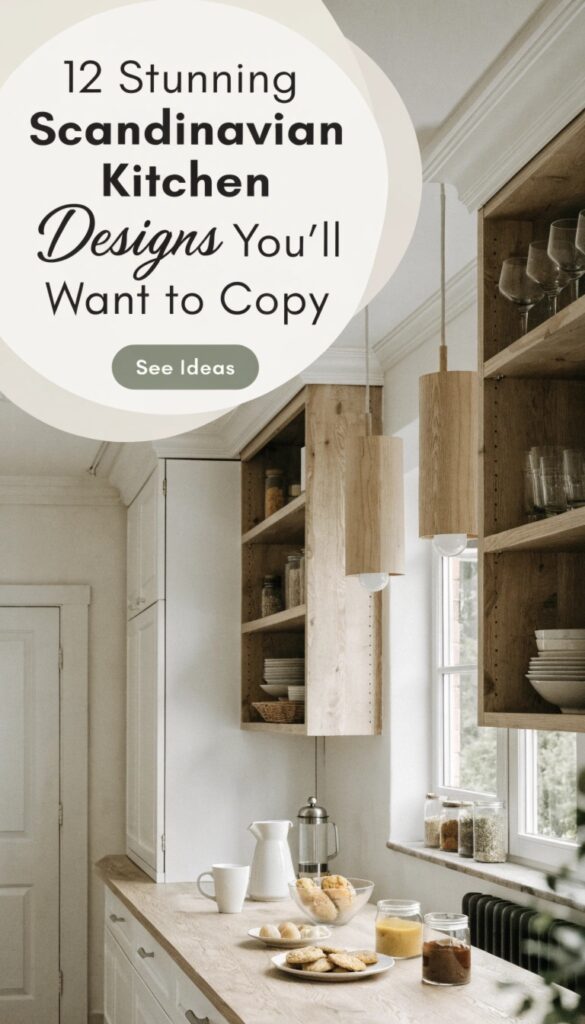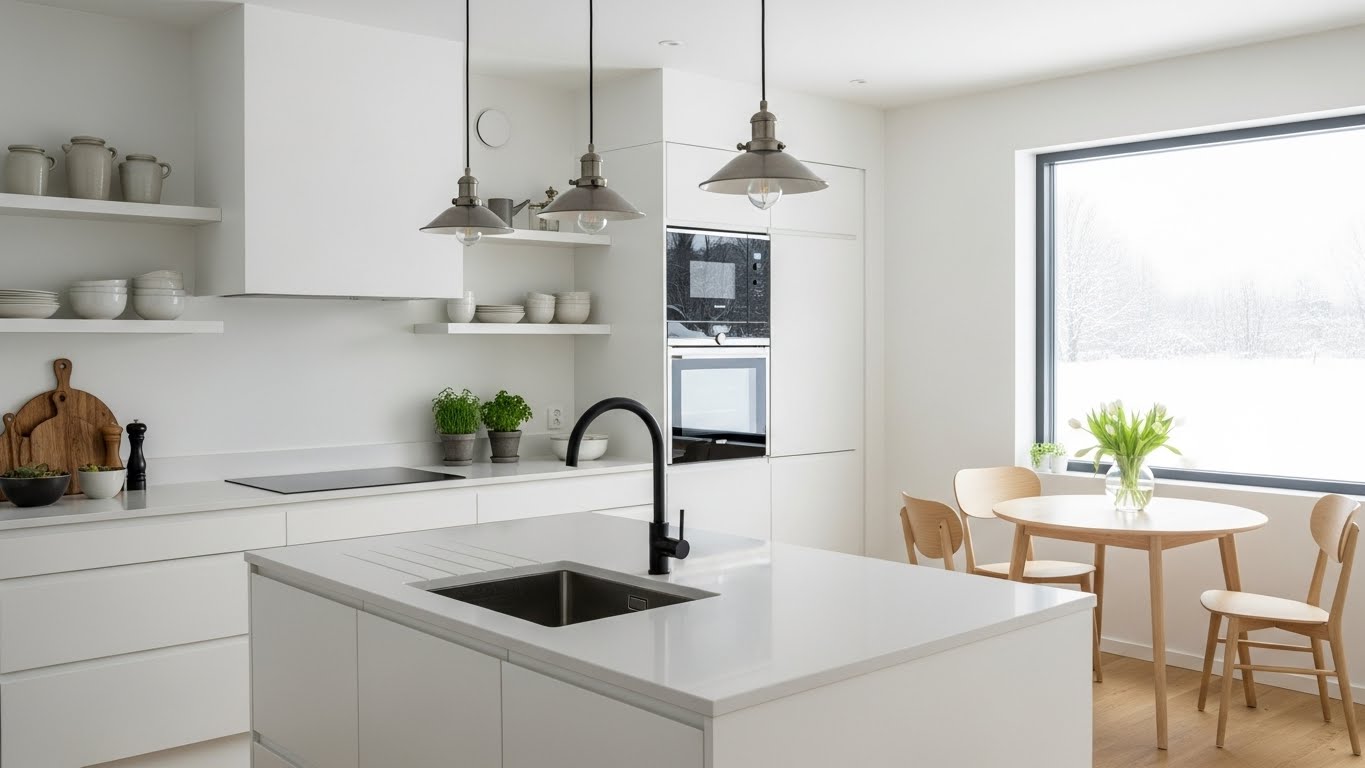
Scandinavian kitchen design is known for its light colors, natural materials, simple cabinetry, and practical use of space. Inspired by Nordic interiors, this style combines clean lines with warm textures to create kitchens that feel welcoming rather than overly decorated.
It works particularly well for homeowners who want a bright, organized space that remains comfortable for everyday cooking and family life.
The beauty of a Scandinavian kitchen lies in the details. Light oak cabinets can soften a white room, open shelving can make frequently used items easier to reach, and carefully planned lighting can transform a dark corner into a useful workspace. Even a small kitchen can benefit from this approach without requiring a complete renovation.
You do not need to replace every cabinet or purchase expensive appliances to achieve the look. Sometimes, changing the cabinet handles, introducing a natural wood finish, improving storage, or choosing a more cohesive color palette makes a noticeable difference.
In this guide, you will discover 12 Scandinavian kitchen design ideas, along with practical ways to recreate each look, choose suitable materials, and adapt the style to your available space and budget
Why Choose Scandinavian Kitchens
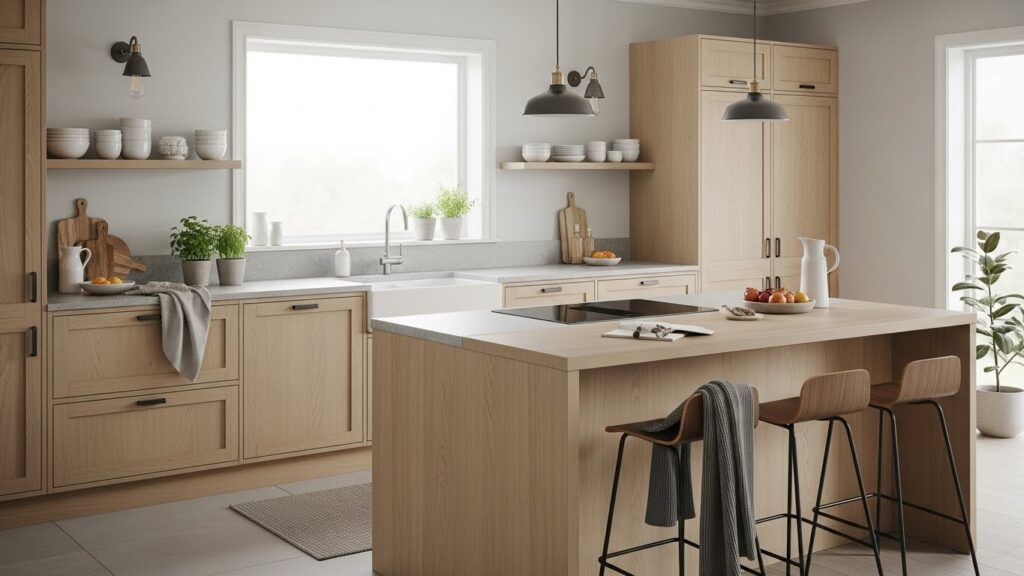
A Scandinavian-inspired kitchen prioritizes three things: natural light, functional design, and materials that create a comfortable atmosphere.
Instead of filling the room with decorative objects, the style focuses on making essential features attractive and useful.
One of its biggest advantages is flexibility. White cabinetry and pale wood can complement a compact apartment kitchen, while a larger room can accommodate a spacious island, pendant lighting, and a combination of closed and open storage.
Another benefit is that the design can be adapted to different budgets. You might choose solid oak for selected features while using wood-look laminate elsewhere. Similarly, existing cabinets can often be refreshed with paint and new handles rather than replaced.
Scandinavian kitchens also make organization a priority. Deep drawers, well-planned cupboards, and clear work surfaces help reduce visual clutter, making everyday tasks easier.
Before choosing a design, consider how you actually use your kitchen. Think about where you prepare meals, how much storage you need, whether you eat in the kitchen, and which areas receive the most natural light. These practical decisions will have a greater impact on the finished room than decorative details alone.
1. Flat-Panel Cabinets
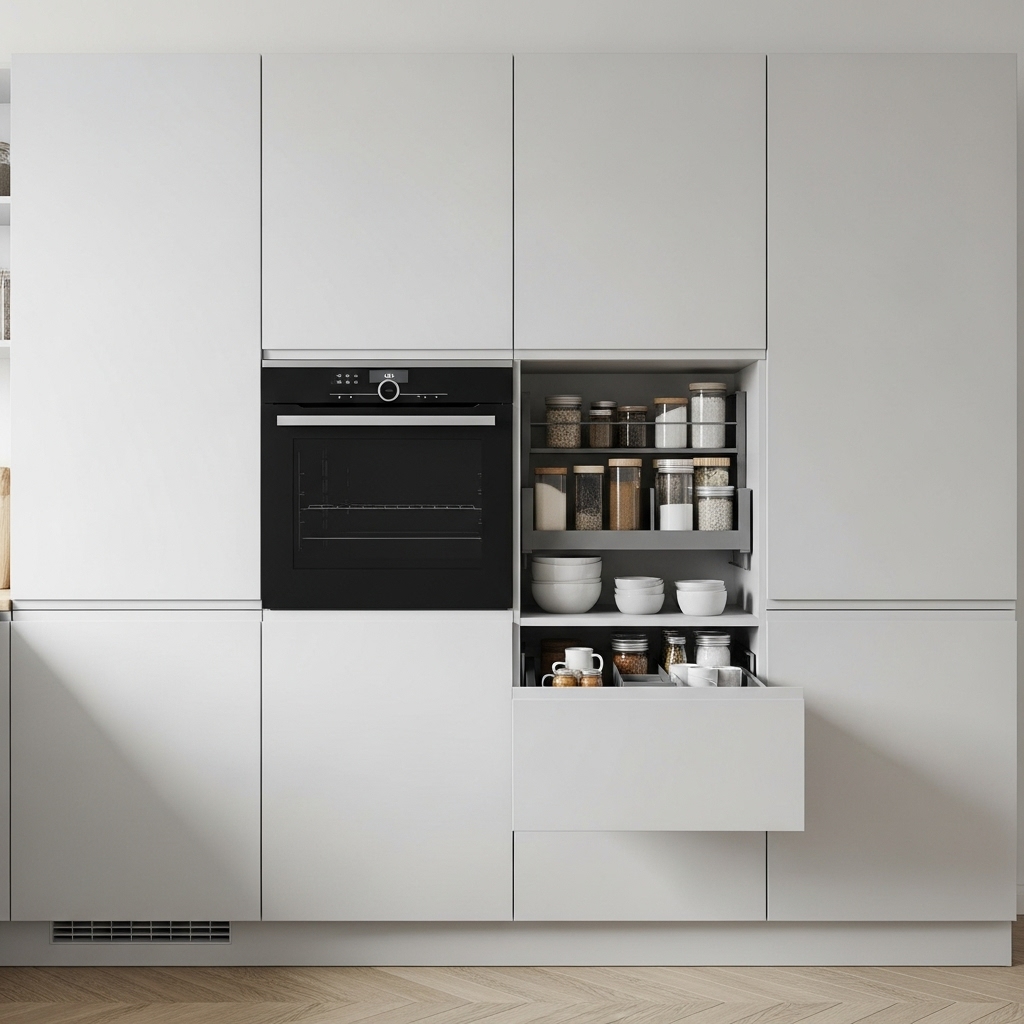
Flat-panel cabinets are a defining feature of many modern Scandinavian kitchens. Their smooth, unembellished fronts create a simple appearance that works well with white walls, natural wood, and understated hardware.
White, warm gray, and soft beige are versatile cabinet colors. White can help a dim kitchen feel brighter, while warmer neutrals introduce a softer appearance. Pale wood-effect fronts are another option if you want the room to feel less stark.
How to recreate this look: Choose plain cabinet doors with minimal detailing and keep the finishes consistent across the room. If your existing cabinet frames are in good condition, repainting suitable doors and replacing dated handles may be more economical than installing entirely new cabinetry.
Pay attention to the finish as well. Matte surfaces have a soft, understated appearance, but some matte finishes show grease or fingerprints more readily than others. Ask for a sample and test how easily it can be cleaned before making a final decision.
In a small kitchen, extending the same cabinet color across the upper and lower units can create a more unified appearance. Add a timber cutting board, wooden stools, or a pale wood shelf to prevent the space from feeling too plain.
Best for: Small kitchens, contemporary homes, and anyone who prefers a simple look that is easy to update with accessories.
2. Natural Wood Elements
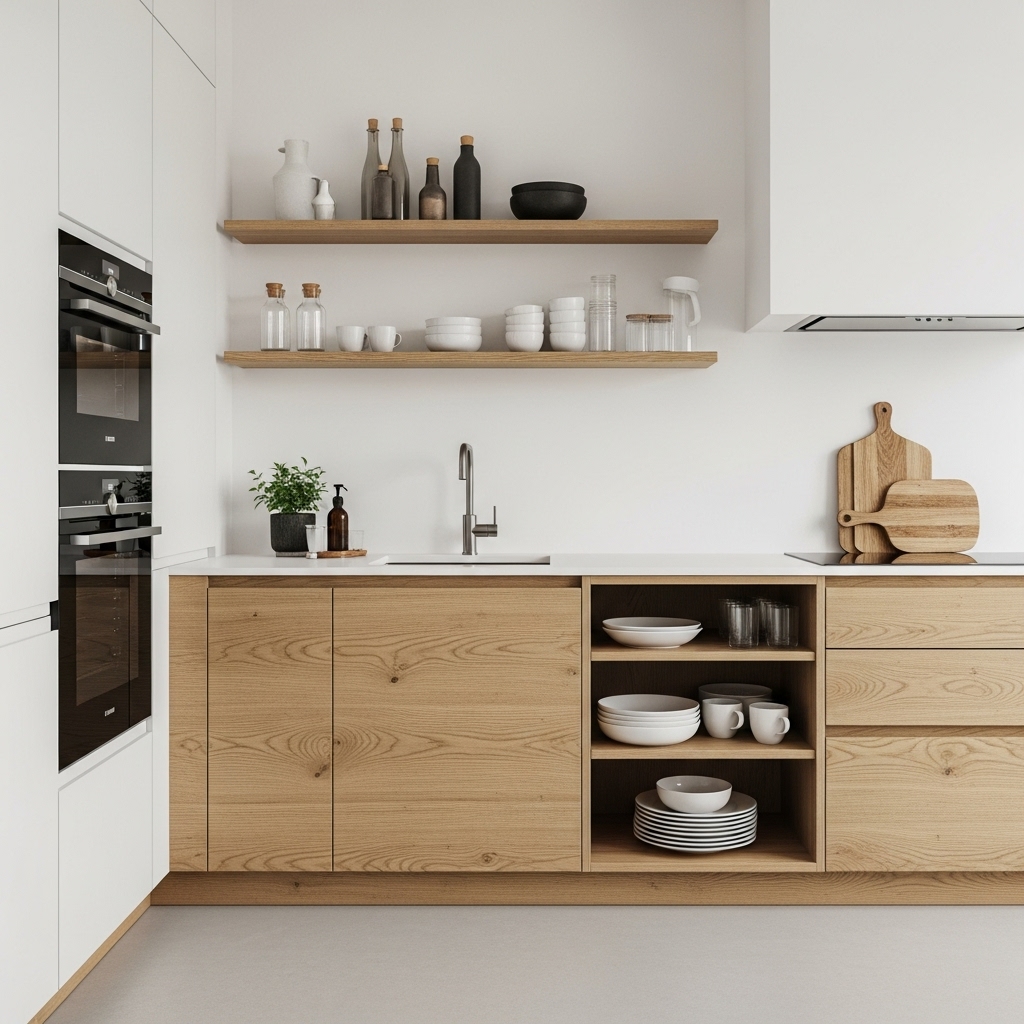
Natural wood brings warmth to Scandinavian kitchens and helps balance the coolness of white cabinets, stone surfaces, and metal appliances. Oak, ash, birch, and other light-toned woods are popular choices because their grain adds interest without overwhelming the room.
Wood does not have to dominate the kitchen to make an impact. A timber countertop, a few floating shelves, wooden dining chairs, or a light oak cabinet section can introduce enough natural texture to soften the overall design.
How to recreate this look: Start with one or two wood elements and repeat the same or a complementary tone elsewhere. For example, oak cabinet fronts can work beautifully with a pale timber dining table and simple wooden stools.
Try to avoid combining too many unrelated wood colors. If your floor has a strong orange or reddish undertone, test cabinet and furniture samples beside it before purchasing anything. The aim is to create a coordinated palette rather than make every wooden surface identical.
Maintenance is important, particularly around sinks and cooking areas. Wood exposed to water needs an appropriate protective finish and regular care. Solid timber also responds to changes in moisture, so spills should be wiped up promptly and manufacturer instructions followed.
If natural wood is beyond your budget, quality wood-effect laminate or veneer can provide a similar visual effect at a different price point.
Best for: Kitchens that feel too cold, homeowners who enjoy natural materials, and interiors that need warmth without extra decoration.
3. Neutral Color Palette
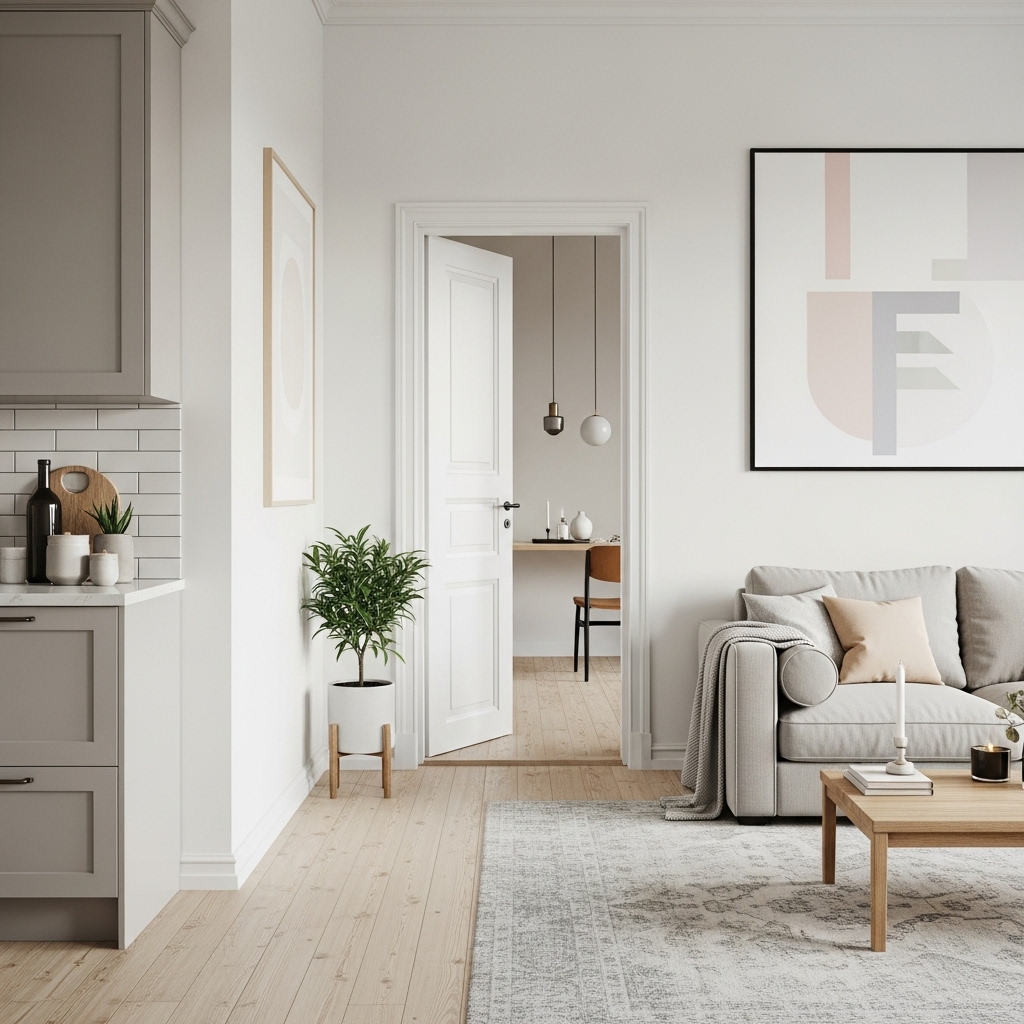
A neutral color scheme helps create the understated appearance associated with Scandinavian kitchens. White, cream, warm gray, beige, and soft taupe are useful starting points because they work with a variety of cabinet styles and countertop materials.
However, choosing neutral colors does not mean every surface must be white. A kitchen with warm ivory cabinets, pale oak details, and a light gray backsplash can feel more inviting than one finished entirely in stark white.
Small accents also make a difference. Matte black handles can provide contrast, while muted sage green or dusty blue introduces color without dominating the room.
How to recreate this look: Begin with the largest surfaces, including the cabinets, walls, floor, and countertop. Choose two or three main colors, then introduce a smaller accent through hardware, textiles, or accessories.
Consider the direction and amount of natural light in the room. A cool white may look crisp in a sunny kitchen but feel harsh in a darker space. Warm whites and creamy neutrals can be more comfortable in rooms that receive limited daylight.
Before painting or ordering cabinets, test samples at different times of the day. Place them beside your existing flooring and countertop so you can see how the colors interact.
Best for: Homeowners who want a timeless interior, people decorating on a limited budget, and kitchens where several finishes need to work together.
4. Abundant Natural Light
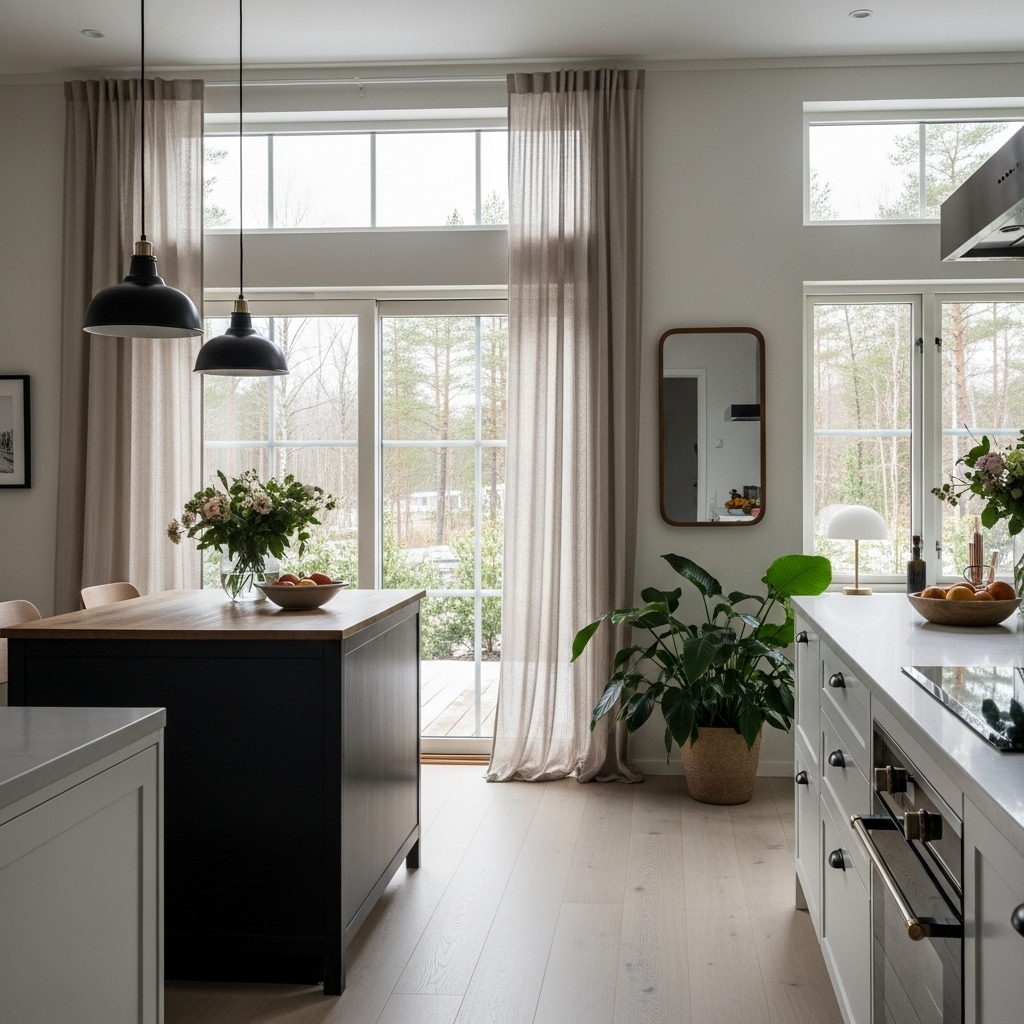
Natural light helps Scandinavian kitchens feel open and comfortable. Large windows are ideal, but you can still make a meaningful difference in a room with limited daylight by choosing suitable finishes and keeping windows unobstructed.
Light-colored walls, pale cabinetry, and a restrained palette help reflect available light around the room. Glossy or lightly reflective surfaces can contribute, although too many shiny finishes may create glare or make fingerprints more noticeable.
How to recreate this look: Avoid placing bulky decorations directly in front of windows. If privacy is important, consider light-filtering window treatments that allow daylight through while providing the coverage you need.
A mirror or reflective backsplash may help distribute light in some layouts, especially when positioned thoughtfully. However, neither can replace adequate lighting or make a windowless room behave exactly like one with natural daylight.
For kitchens that remain dark after sunset, combine ceiling lighting with under-cabinet task lights. This makes the worktop easier to use and prevents the entire room from depending on a single overhead fixture.
If you are planning a major renovation, window enlargement or changes to external openings may require professional advice and approval under local building requirements.
Best for: North-facing or shaded kitchens, compact apartments, and rooms that feel darker than you would like.
5. Minimalist Hardware
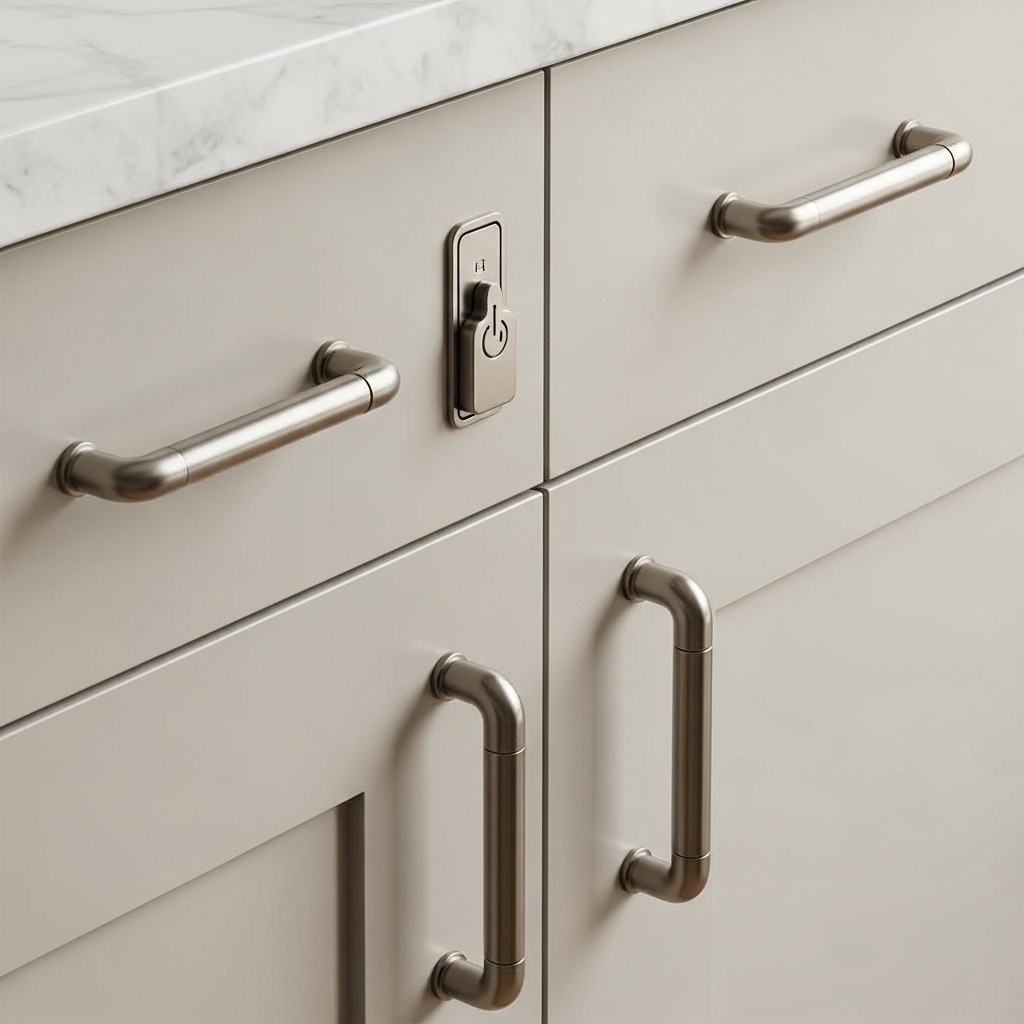
Cabinet handles may be small, but they influence the overall appearance of a kitchen. Simple hardware helps maintain the clean lines associated with Scandinavian design, while the right finish can connect cabinets to faucets, lighting, and appliances.
Slim brushed-metal pulls work well with white or timber cabinets. Matte black handles provide stronger contrast, while integrated grips offer a more streamlined appearance.
Handle-free cabinetry can look attractive, but it is not automatically the most practical option for every household. Push-to-open mechanisms need to operate reliably, and the correct hardware depends on the weight and construction of the doors.
How to recreate this look: If you are updating an existing kitchen, replace mismatched or ornate handles with a consistent design. Measure the distance between existing screw holes before purchasing replacements; doing so can save you from drilling new holes or repairing the cabinet fronts.
For a coordinated appearance, choose a small number of metal finishes and repeat them intentionally. Your cabinet handles do not necessarily have to match every appliance, but too many unrelated finishes can make the room feel less cohesive.
Consider comfort as well as appearance. Handles should be easy to grip, particularly on heavy drawers and frequently used cupboards.
Best for: Kitchen refresh projects, modern cabinetry, and anyone who wants a visible improvement without replacing major fixtures.
6. Integrated Appliances
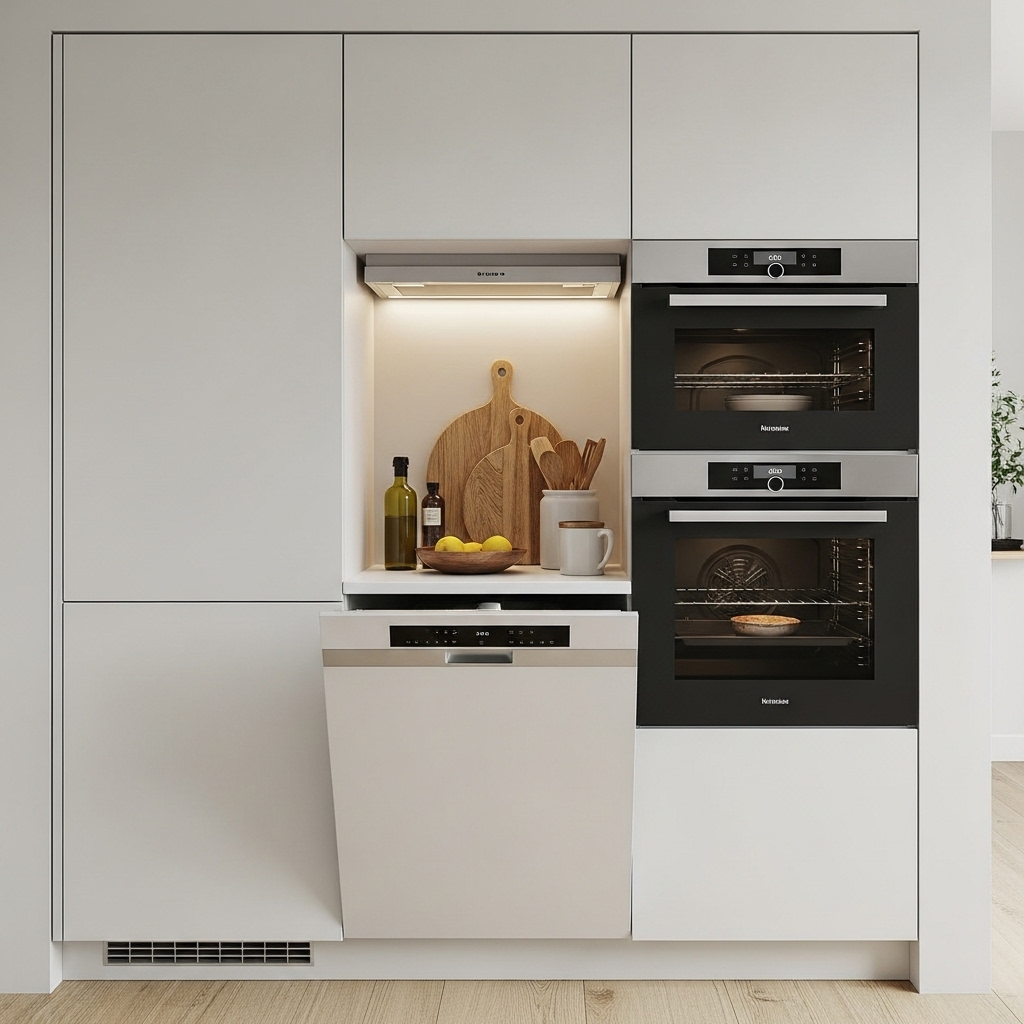
Integrated appliances are designed to sit within kitchen cabinetry, often behind matching panels. Refrigerators and dishwashers can therefore blend into the surrounding units instead of becoming prominent visual features.
This approach creates a continuous line across the kitchen, particularly when paired with flat-panel doors and a restrained color palette. Built-in ovens and carefully positioned microwaves can also help keep the layout organized.
However, integrated appliances are not essential to Scandinavian design. Freestanding stainless-steel appliances can look equally appropriate when their placement and finishes work with the rest of the room.
How to recreate this look: If you are designing a new kitchen, check appliance dimensions before ordering cabinets. Allow for the ventilation, access clearances, door movement, plumbing, and electrical requirements specified by the manufacturer.
Think about maintenance and future replacement, too. Integrated appliances may require compatible cabinet panels and more planning when a unit needs to be replaced. Their purchase and installation costs can also be higher than those of some freestanding alternatives.
If your budget is limited, prioritize practical appliance placement and a tidy arrangement rather than replacing working appliances simply to achieve a matching appearance.
Best for: New kitchen installations, open-plan homes, and homeowners who prefer a continuous, streamlined finish.
7. Open Shelving
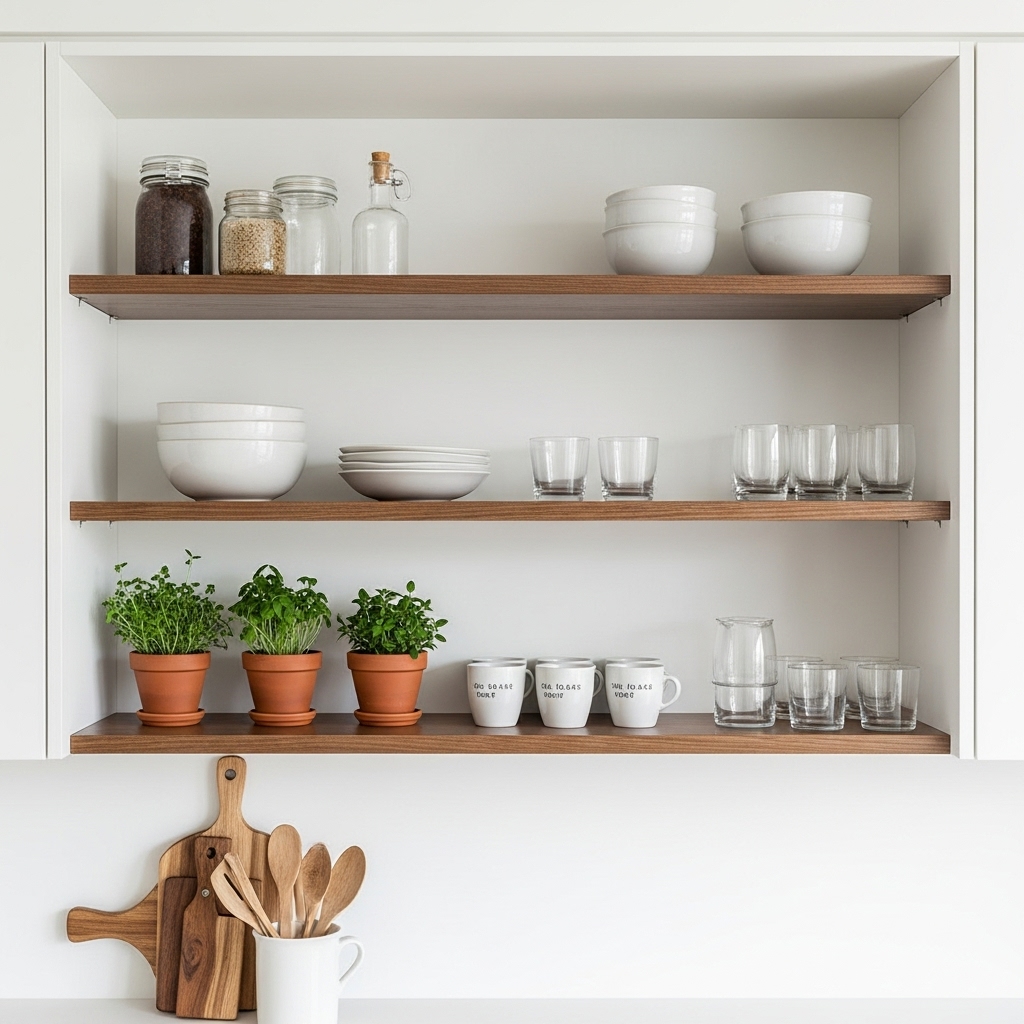
Open shelving introduces a more relaxed element to Scandinavian kitchens. It provides space for everyday dishes, drinking glasses, cookbooks, and a few decorative objects without making the room feel crowded with upper cabinets.
Wooden shelves are particularly effective because they bring texture into a kitchen dominated by painted surfaces. White shelves can blend into the wall, while darker finishes provide a subtle contrast.
The key is to use open shelves selectively. Everything on display becomes part of the room’s appearance, so an overcrowded shelf can quickly undermine the simple look you are trying to create.
How to recreate this look: Replace one small section of upper cabinetry with shelves, or install a shelf above a countertop where it will not interfere with food preparation. Keep frequently used items within easy reach and group similar objects together.
Remember that open shelves require cleaning. Cooking grease and dust can accumulate on exposed dishes, particularly near a hob. Keep shelves away from areas where heat, splashes, or steam could damage their contents.
For everyday convenience, combine open shelving with closed cupboards. Display attractive ceramics and glasses while storing food packets, cleaning supplies, and less frequently used equipment behind doors.
Before installation, confirm that the wall and fixings can safely support the intended load.
Best for: Kitchens that need extra personality, people who use their dishes regularly, and homeowners who want to display a small collection of useful items.
8. Smart Storage Solutions
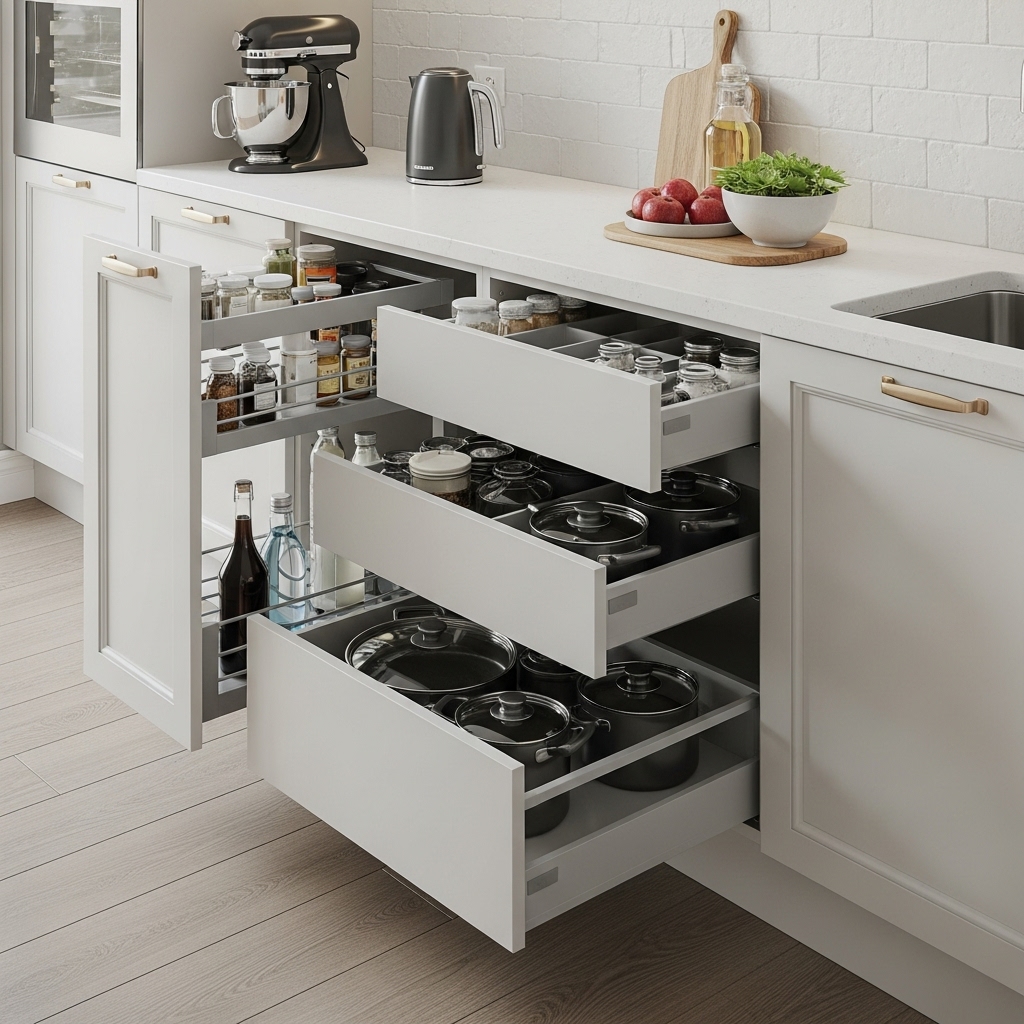
Good storage is one of the most practical features of Scandinavian kitchen design. The goal is not to hide everything unnecessarily but to give each item a sensible place so that the room remains easy to use.
Deep drawers can make pots, pans, and food containers easier to access than cupboards with several stacked shelves. Pull-out pantry units can improve access to dry ingredients, while drawer dividers help prevent utensils from becoming mixed together.
Corners and narrow gaps also deserve attention. Depending on the layout, a corner pull-out, a narrow pull-out cabinet, or adjustable shelving may make an awkward space more useful.
How to recreate this look: Before buying organizers, empty your existing cupboards and group items according to how you use them. Keep everyday plates, cooking utensils, and frequently used ingredients near the areas where you need them.
Store heavy cookware in accessible lower drawers where practical. Keep rarely used appliances in less convenient storage spaces, provided they can still be retrieved safely.
For a budget-friendly improvement, use adjustable drawer dividers, labeled containers, and shelf inserts before investing in custom cabinetry. Measure each cupboard carefully so that organizers fit without blocking hinges or drawer movement.
Do not sacrifice essential worktop space just to create more storage. The best solution makes it easier to prepare food, clean up, and move around the kitchen.
Best for: Busy households, small kitchens, and anyone whose countertops have become crowded with everyday items.
9. Quartz or Wood Countertops
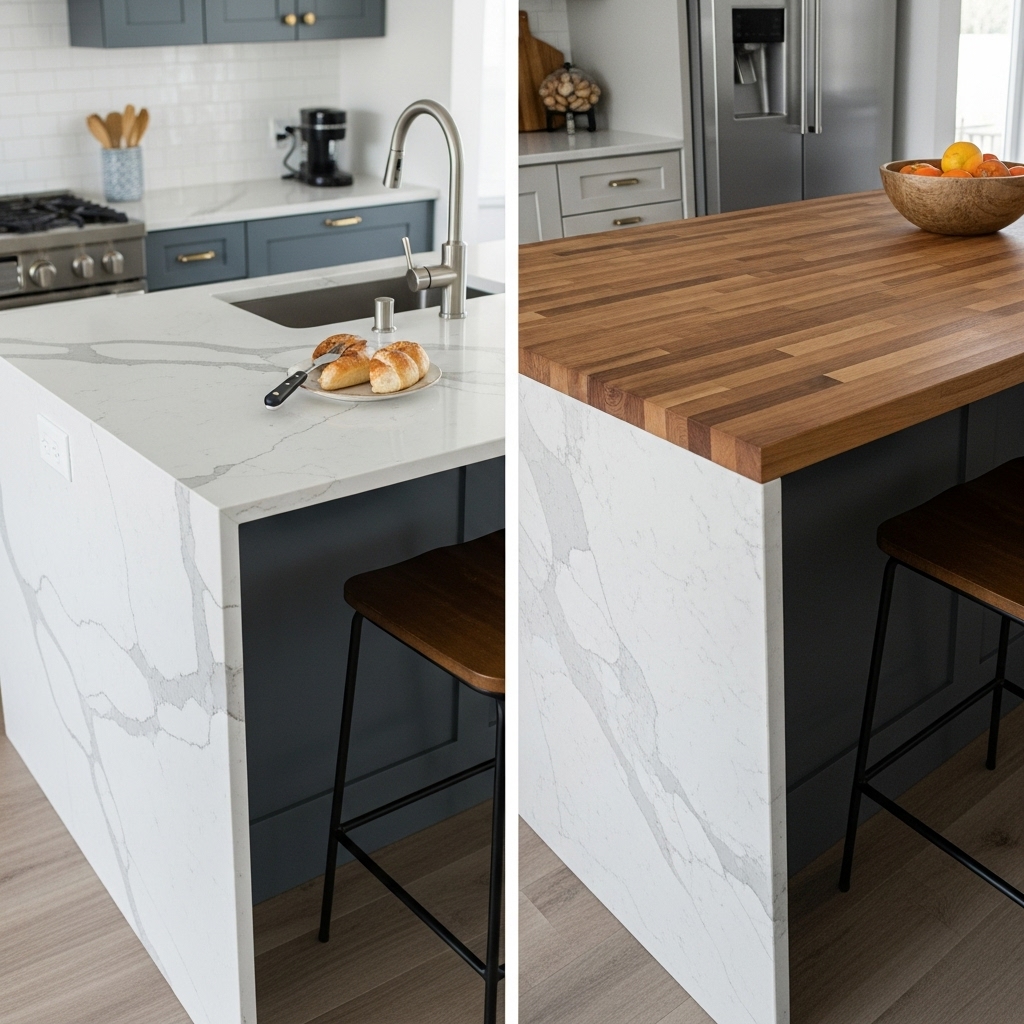
Countertops play a major role in the finished look of a Scandinavian kitchen. Pale quartz and other light-colored engineered surfaces provide a clean appearance, while timber introduces a more traditional and natural character.
Neither option is automatically best for every household. The right choice depends on how you cook, how much maintenance you are prepared to do, and what your budget allows.
Light-colored quartz
Engineered quartz is available in a range of pale colors and subtle patterns. It can create a clean, contemporary appearance without the need for the regular sealing required by some natural stones.
However, quartz is not indestructible. Heat can damage some products, and manufacturers may specify particular cleaning methods. Use appropriate trivets and follow the care instructions supplied with your countertop.
Wood countertops
Wood provides warmth and can complement oak cabinets, white walls, and simple hardware. Depending on the finish and construction, it may need periodic oiling or other maintenance to protect the surface.
Water around sinks deserves particular attention. Standing water can damage wood, so spills should be wiped up promptly and exposed edges kept properly protected.
How to choose between them
If you want a low-maintenance surface for frequent cooking, compare engineered stone with other suitable countertop materials. If natural warmth is your priority, timber may be worth considering, provided you are comfortable with its care requirements.
For a more economical renovation, investigate durable laminate options in a pale stone or timber effect. A convincing finish can achieve the desired appearance without the expense of some premium materials.
Before purchasing, compare samples in your kitchen’s actual lighting and ask suppliers about warranties, installation requirements, and maintenance.
Best for: Homeowners choosing new worktops, kitchen renovations, and anyone trying to balance style with long-term upkeep.
10. Statement Pendant Lighting
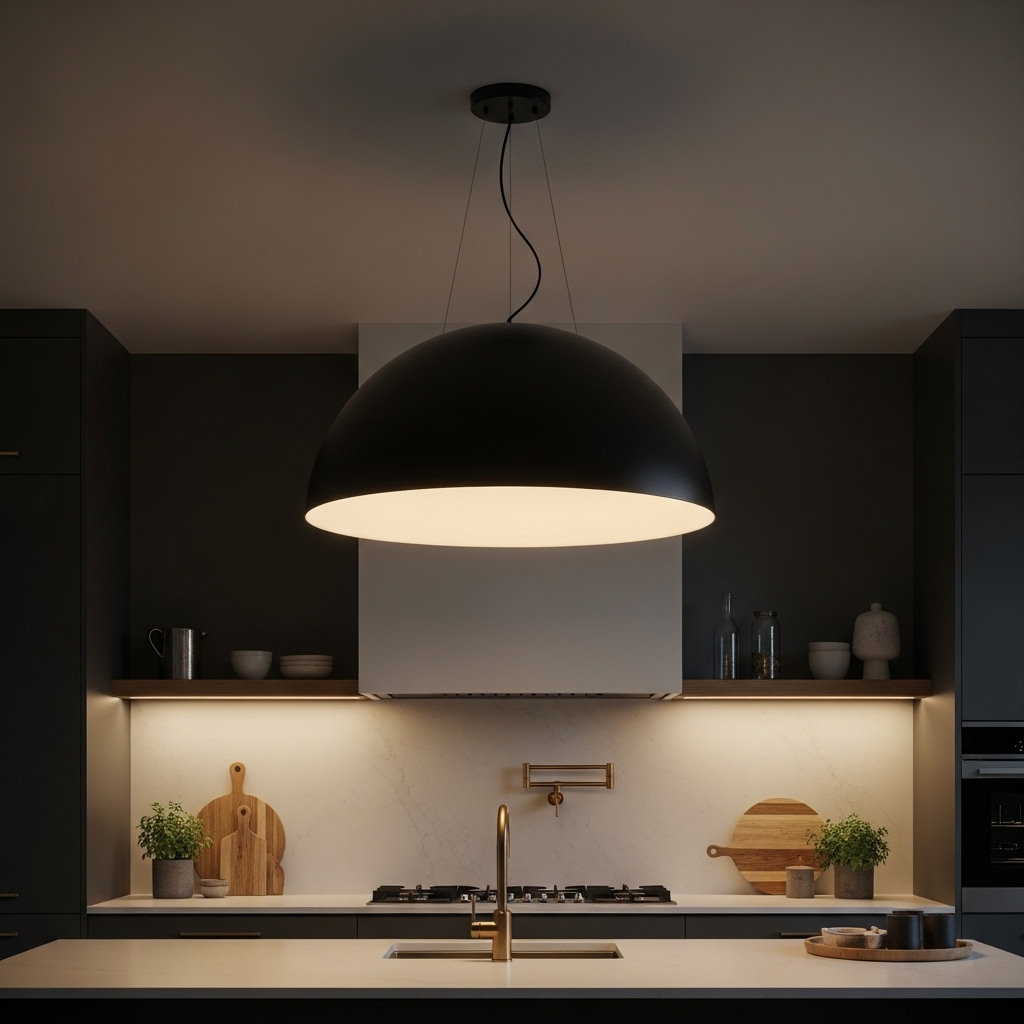
Pendant lighting can introduce character into a Scandinavian kitchen without requiring elaborate decoration. A simple black, white, glass, or muted-metal fixture can provide a focal point above an island or dining area.
The most important consideration is how the light functions. Decorative pendants may create atmosphere, but food preparation also requires adequate illumination over work surfaces.
How to recreate this look: Choose a fixture that suits the scale of your island or table. One larger pendant may work in a compact space, while a row of smaller fixtures can provide balanced coverage over a longer island.
Avoid selecting lights based on appearance alone. Check the brightness, beam direction, bulb compatibility, cleaning requirements, and suitability for the installation location.
A layered lighting plan is usually more practical than relying on pendants alone. Combine general ceiling lighting with under-cabinet task lighting and softer illumination for evening meals.
Dimmable lights can be useful when the fixtures and bulbs are compatible, allowing you to adjust the atmosphere throughout the day. Electrical installation should be handled by a qualified professional where required.
Best for: Kitchens with islands, open-plan dining spaces, and rooms that need better lighting as well as a decorative focal point.
11. Greenery and Textiles
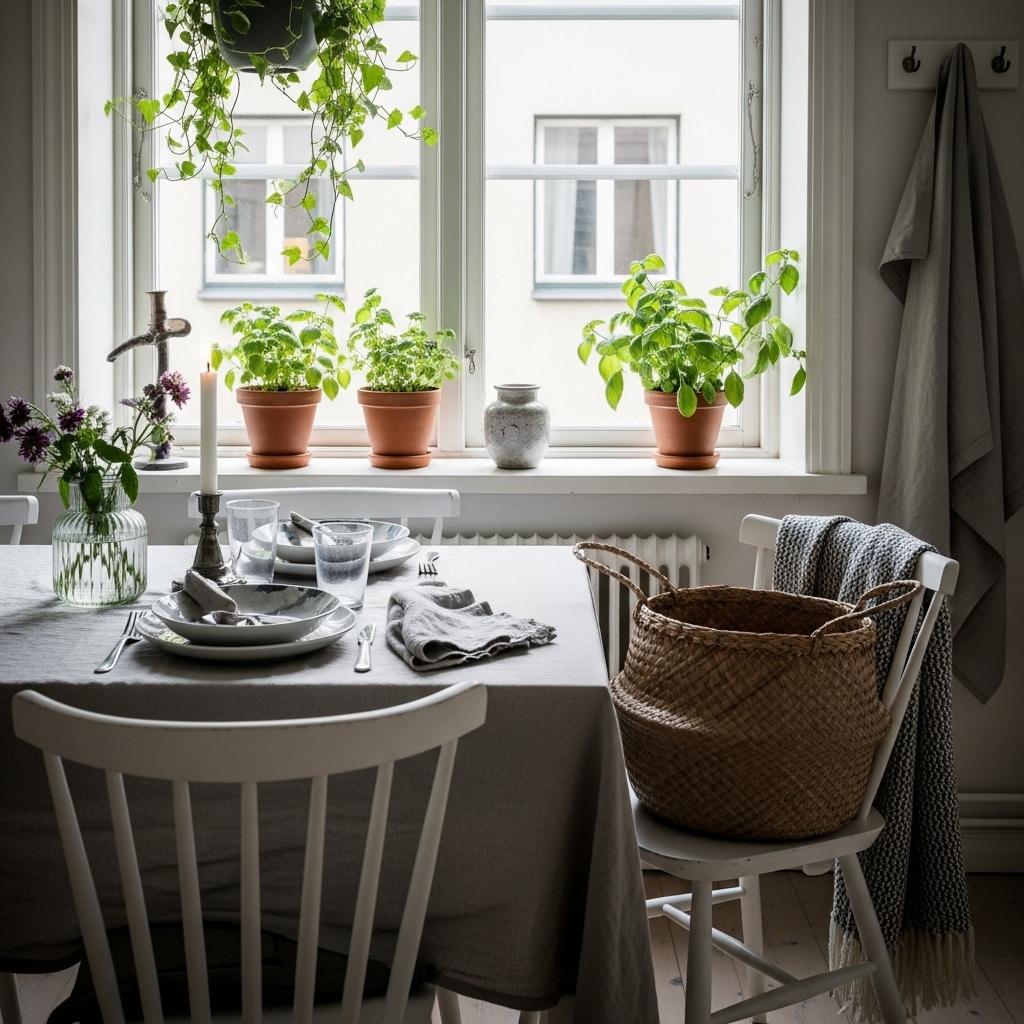
Plants and textiles soften the harder surfaces found in many modern kitchens. A few carefully chosen accessories can make white cabinetry and stone countertops feel less formal without adding unnecessary clutter.
Fresh herbs are a particularly practical choice. Basil, mint, and other suitable herbs can provide ingredients for cooking while introducing a natural touch to the room. Their success depends on the available sunlight, watering needs, and growing conditions.
Textiles offer another simple way to introduce warmth. Linen or cotton tea towels, washable table runners, and woven baskets can add texture without requiring a permanent renovation.
How to recreate this look: Begin with a small number of useful accessories. Place a herb pot near a suitable light source, keep a simple textile on the dining table, or use a basket to organize items that you reach for frequently.
Choose fabrics that can be washed easily, especially near food preparation areas. Keep loose towels, curtains, and other combustible materials away from open flames and hot cooking surfaces.
Plants should also be positioned where they will not obstruct work areas or create hygiene problems. Use suitable containers with drainage arrangements that protect the countertop from water damage.
Rather than filling every empty surface, leave enough clear space for preparing meals. The aim is a kitchen that feels lived-in and comfortable while remaining easy to clean.
Best for: Renters, homeowners decorating on a budget, and kitchens that need a little color and natural texture.
12. Multifunctional Islands
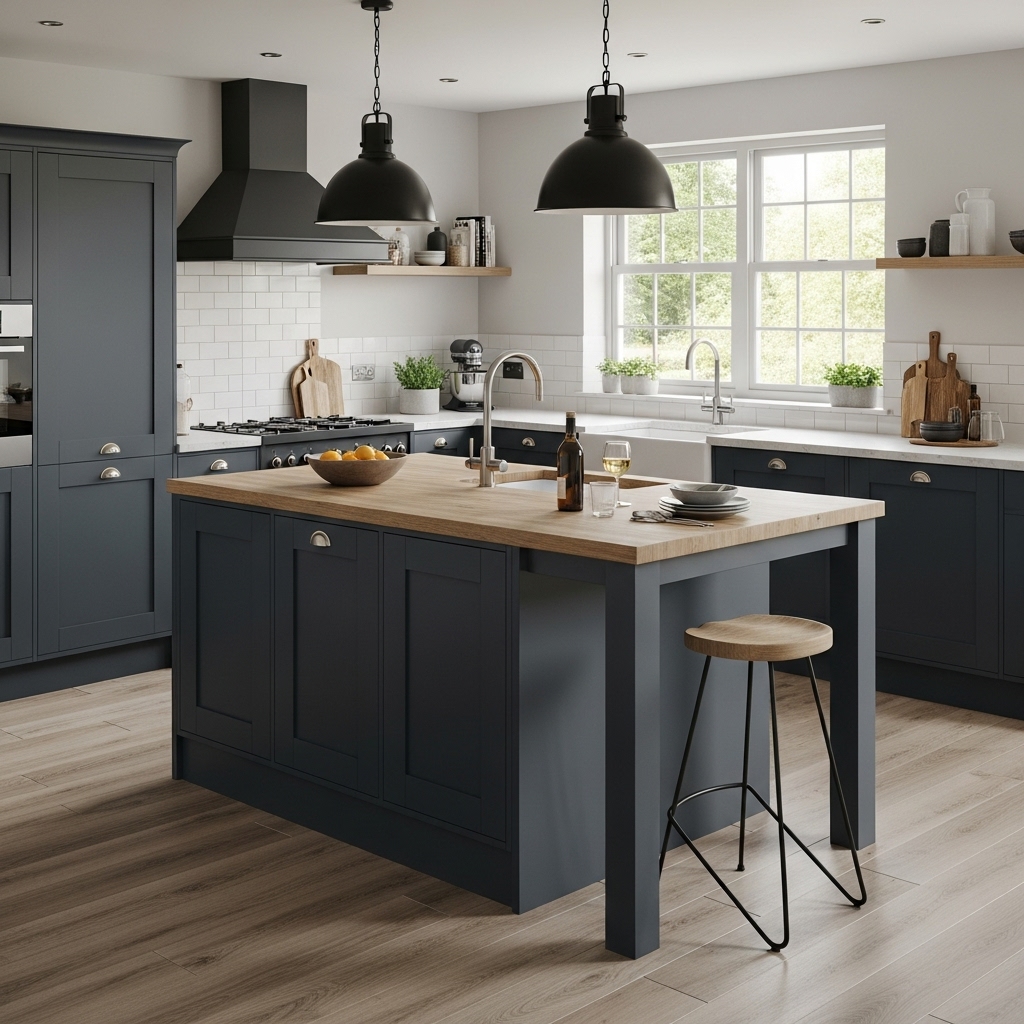
A kitchen island can provide extra preparation space, storage, seating, or a convenient place to serve food. In a Scandinavian kitchen, its design usually follows the same restrained palette as the surrounding cabinets, with wood or a complementary countertop adding contrast.
However, an island is not suitable for every kitchen. Installing one without allowing enough room to move around can make cooking more difficult and interfere with cupboard or appliance doors.
How to recreate this look: Start by identifying what you need most. If storage is the priority, choose an island with drawers and cupboards. If you regularly eat in the kitchen, a suitable overhang and comfortable stools may be more useful.
Measure the available floor area and account for the movement of drawers, dishwasher doors, refrigerator doors, and oven doors.
As a planning starting point, many kitchens benefit from roughly 36–42 inches (91–107 cm) of clear aisle space, although the appropriate dimensions depend on the layout, accessibility requirements, and appliance locations. Have a kitchen professional check the plan before installation.
If the room is too small for a permanent island, consider a movable kitchen cart or a narrow worktable. These alternatives can provide extra preparation space without permanently occupying the center of the room.
An island with a sink, hob, or electrical outlets requires additional planning for plumbing, ventilation, and safe electrical installation. These features should be decided early rather than added as an afterthought.
Best for: Spacious kitchens, open-plan layouts, and households that need additional preparation space or casual seating.
Essential Tips for Creating a Scandinavian Kitchen on a Budget
You can achieve the Scandinavian look without replacing every surface in your kitchen. A few carefully chosen improvements may be enough to create a more cohesive and practical room.
1. Work with your existing cabinets. If the cabinet structure is sound, consider repainting suitable doors, changing the handles, or replacing only damaged sections.
2. Choose a limited color palette. Use two or three coordinating colors for cabinets, walls, and major surfaces. This can make the room feel more organized without requiring expensive finishes.
3. Spend carefully on work surfaces. Compare laminate, engineered quartz, natural stone, and timber based on installation cost, maintenance, durability, and appearance rather than price alone.
4. Improve the lighting first. Add suitable under-cabinet lights and replace inadequate fixtures where possible. Good lighting can make a kitchen more comfortable to use while highlighting the materials already in place.
5. Organize before purchasing storage products. Measure your cupboards and identify the items that cause the most clutter. Buy dividers and organizers only when you know what will fit and solve a real problem.
6. Introduce wood through smaller details. Wooden stools, cutting boards, shelves, and dining accessories can add warmth without the expense of replacing all your cabinets.
7. Test colors and finishes before committing. Check samples against the existing floor and countertop in both daylight and artificial light. This simple step can help prevent expensive mismatches.
8. Prioritize durability in high-use areas. Spend time comparing countertops, cabinet finishes, drawer hardware, and flooring. These surfaces experience frequent wear and are more difficult to change than accessories.
The most successful budget-friendly kitchen is not necessarily the one with the fewest purchases. It is the one where each change improves the way the room looks or functions.
Common Mistakes to Avoid in Scandinavian Kitchen Design
A minimalist kitchen can still be impractical if appearance takes priority over everyday use. Keep these common mistakes in mind as you plan your space.
- Using too much white without contrast: Introduce timber, warm neutrals, or a few darker details to prevent the room from feeling stark.
- Installing open shelves everywhere: Too many exposed surfaces create additional cleaning and organization work. Balance open shelving with closed storage.
- Choosing materials based on appearance alone: Check maintenance requirements, moisture resistance, durability, and manufacturer instructions before buying.
- Ignoring the work triangle and circulation: Make sure the sink, cooking area, refrigerator, and preparation surfaces are arranged to support comfortable movement.
- Adding an island to a cramped room: A movable cart or wall-mounted work surface may be more useful than a permanent island.
- Relying on one ceiling light: Combine general lighting with focused illumination for food preparation and other tasks.
- Buying organizers before measuring: Confirm cupboard and drawer dimensions before spending money on storage accessories.
A successful Scandinavian kitchen should make daily routines easier, not simply resemble a photograph.
Frequently Asked Questions
What defines Scandinavian kitchen design?
Scandinavian kitchens commonly feature simple cabinetry, light or muted colors, natural materials, practical storage, and carefully planned lighting. The overall aim is to create a functional, comfortable room without excessive decoration.
Can I create a Scandinavian kitchen in a small space?
Yes. Use light-colored cabinetry, keep frequently used items organized, and make the most of vertical storage. Choose compact appliances where appropriate and avoid installing an island if it restricts movement. A small table or movable cart may provide more flexibility.
Are dark colors suitable for a Scandinavian kitchen?
Yes. Black, charcoal, deep green, and other darker colors can create contrast when used thoughtfully. Consider dark handles, a pendant light, or a limited section of cabinetry rather than covering every surface if you want to preserve a bright appearance.
Which materials work best for Scandinavian kitchen cabinets?
Painted wood, wood veneer, and quality laminate are all possible choices. The best material depends on your budget, preferred appearance, cleaning routine, and the level of wear the cabinets will experience. Compare samples and product specifications before purchasing.
Are Scandinavian kitchens expensive to create?
They can be designed for different budgets. A complete renovation with custom cabinetry and premium countertops can be expensive, but smaller changes such as repainting cabinets, replacing handles, improving lighting, and introducing natural textures may achieve a similar overall style at a lower cost.
How can I make my kitchen feel warmer without creating clutter?
Use one or two natural wood finishes, add a few practical textiles, and introduce greenery where suitable. Keep countertops clear enough for food preparation and use closed storage for items that do not need to remain on display.
Do Scandinavian kitchens always have white cabinets?
No. White is common because it reflects light and pairs well with natural materials, but warm beige, soft gray, muted green, and pale timber are also suitable choices. The key is creating a balanced palette that works with the room’s lighting and existing finishes.
What type of countertop is best for a Scandinavian kitchen?
There is no single best option. Engineered quartz offers a consistent appearance and generally straightforward care, while timber adds natural warmth but requires attention to moisture and maintenance. Laminate can provide a more affordable alternative. Compare the product’s care instructions, cost, and suitability for your cooking habits.
Conclusion
Scandinavian kitchen design offers a practical way to create a kitchen that feels bright, organized, and welcoming. Its appeal comes from combining simple cabinetry, natural materials, thoughtful lighting, and storage that supports everyday routines.
You do not need to adopt every feature to achieve the look. Start with the changes that will make the greatest difference in your home, whether that means introducing light wood, improving task lighting, simplifying cabinet fronts, or finding a better place for everyday essentials.
If you are working with a limited budget, focus on a consistent color palette and a few durable, useful improvements before investing in major renovations. In a larger kitchen, you may have room for an island and integrated appliances; in a compact space, efficient storage and clear work surfaces may matter much more.
The best Scandinavian kitchen is one that suits the people who use it. Choose finishes you can maintain, storage that matches your habits, and a layout that makes cooking and cleaning comfortable. With those priorities in place, the result can be attractive, practical, and adaptable for years to come.