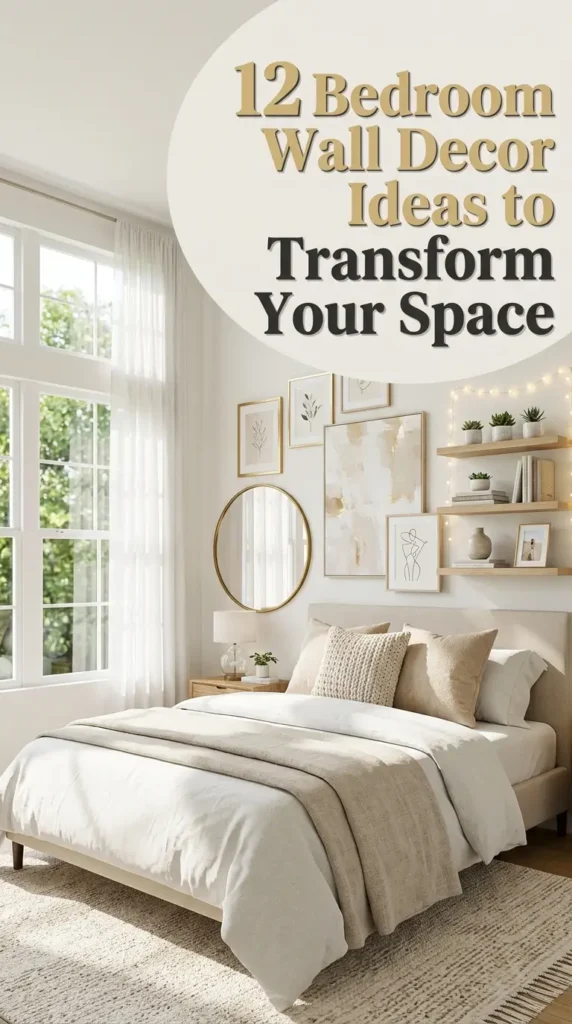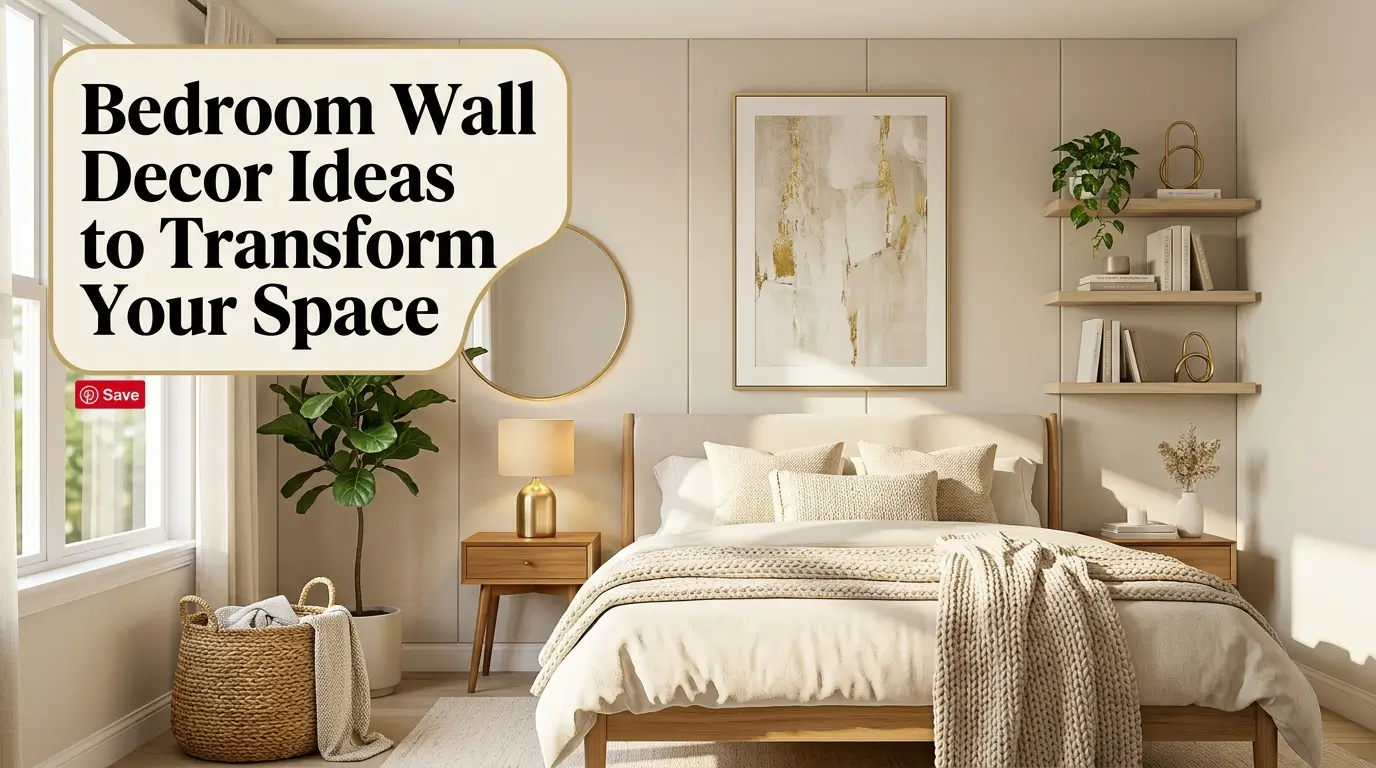
Your bedroom walls can do much more than hold up a coat of paint. They can make a small room feel brighter, give a plain bed a beautiful focal point, display meaningful memories, or introduce the warmth that makes a space feel like home.
The good news is that decorating your bedroom walls doesn’t have to involve an expensive renovation. A carefully arranged collection of pictures, a well-placed mirror, a textured wall hanging, or a simple floating shelf can change the entire look of a room.
The trick is choosing decorations that suit your available space, existing furniture, budget, and personal style. Some options are ideal for renters who cannot drill holes, while others work best for homeowners looking to create a more permanent feature.
In this guide, you’ll find 12 bedroom wall decor ideas, along with practical tips on where to place them, how to style them, and what to consider before getting started.
Why Choose Unique Bedroom Wall Decor?
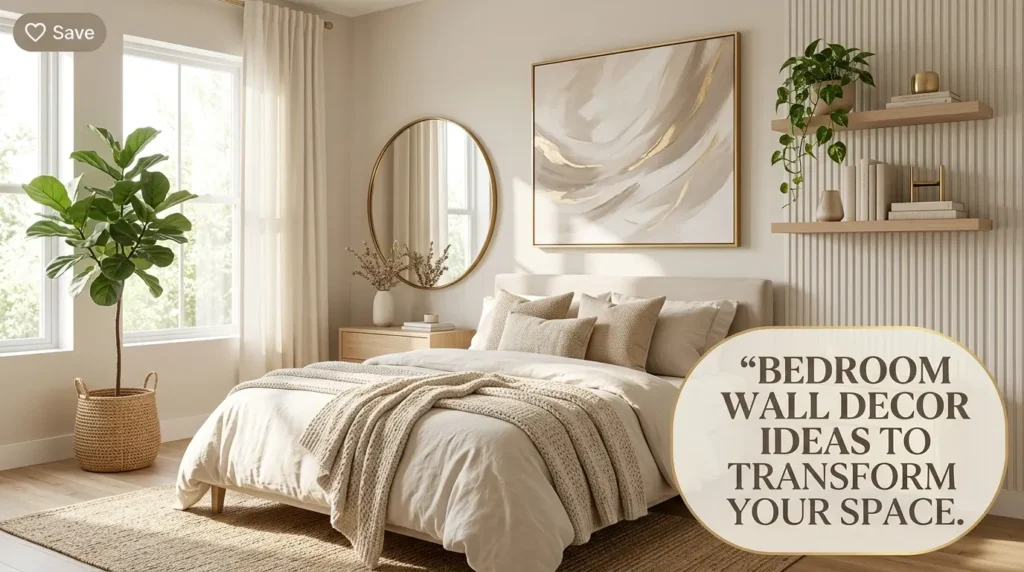
Empty walls can make a bedroom feel unfinished, but filling every available space isn’t the answer either. The right decoration gives the room a focal point and helps connect the colors, furniture, lighting, and textiles already in it.
For example, framed artwork can introduce color without requiring new furniture. Wood panels can add warmth to a room with plain walls, while mirrors can reflect daylight and make a compact bedroom feel more open.
Wall decor can also serve a practical purpose. Floating shelves provide display space, wall-mounted planters introduce greenery without occupying bedside tables, and removable wallpaper can add personality to a rental bedroom.
Before choosing anything, look at the wall you want to decorate. Is it directly above the bed, opposite a window, beside a dressing table, or behind a reading chair? The answer will help you select a decoration that looks intentional rather than out of place.
1. Gallery Wall
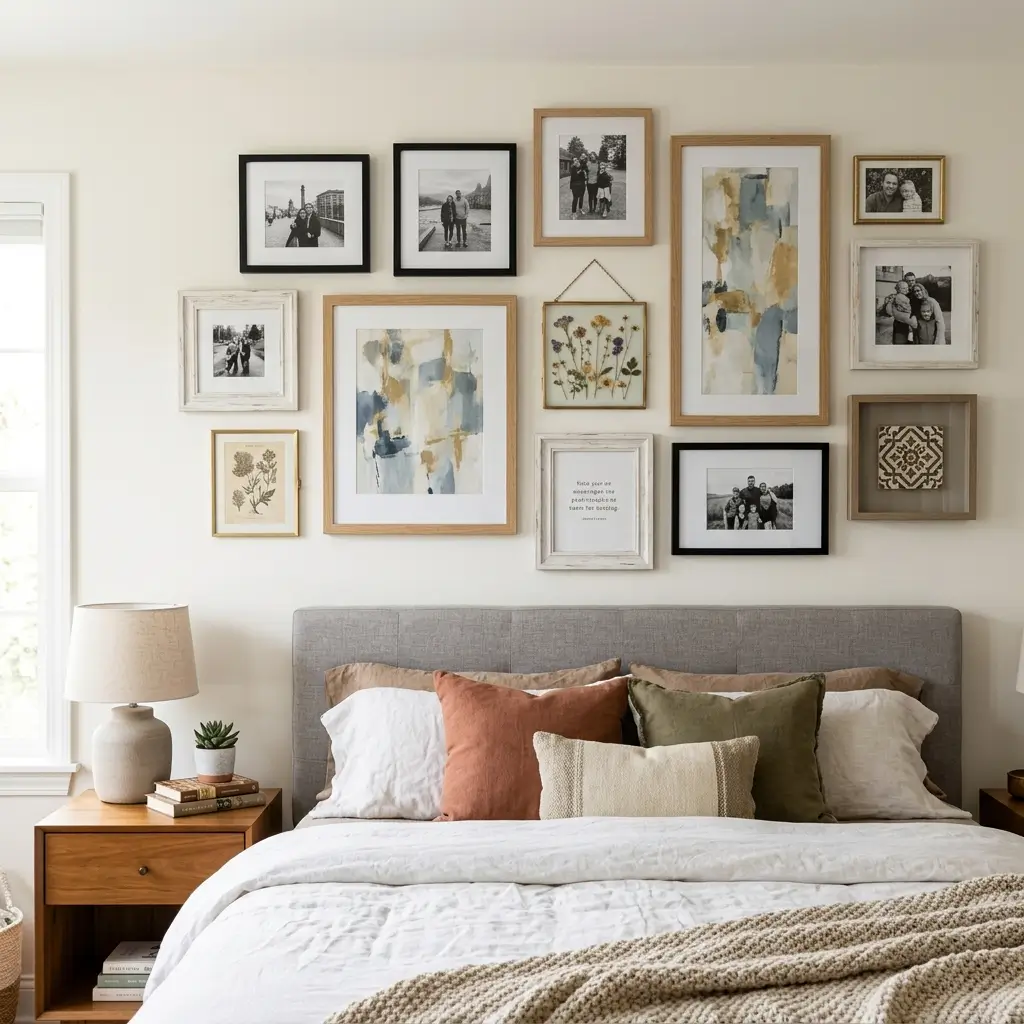
A gallery wall is a lovely way to display photographs, illustrations, artwork, and other pieces that mean something to you. Instead of relying on one large decoration, you can build a collection that reflects your interests and gives the bedroom a more personal feel.
For a coordinated appearance, choose two or three colors that appear throughout the frames or artwork. Black frames with monochrome photographs create a clean, modern look, while natural wood frames and botanical prints suit a softer, nature-inspired bedroom.
You don’t have to make every frame identical. Different sizes can add interest, provided the arrangement feels balanced.
How to arrange it: Start by placing the frames on the floor in front of the wall. Experiment with the layout until the collection looks balanced, then measure the overall width and height. You can also cut paper templates to the size of each frame and temporarily attach them to the wall before drilling.
For a bed-centered gallery wall, keep the collection within the width of the headboard or make it slightly narrower. Leave a consistent gap between frames to avoid a scattered appearance.
Best for: Bedrooms with large empty walls, personal photographs, and people who enjoy displaying meaningful objects.
Budget tip: Print your own photographs and use a few affordable frames rather than purchasing an entirely new art collection.

2. Floating Shelves
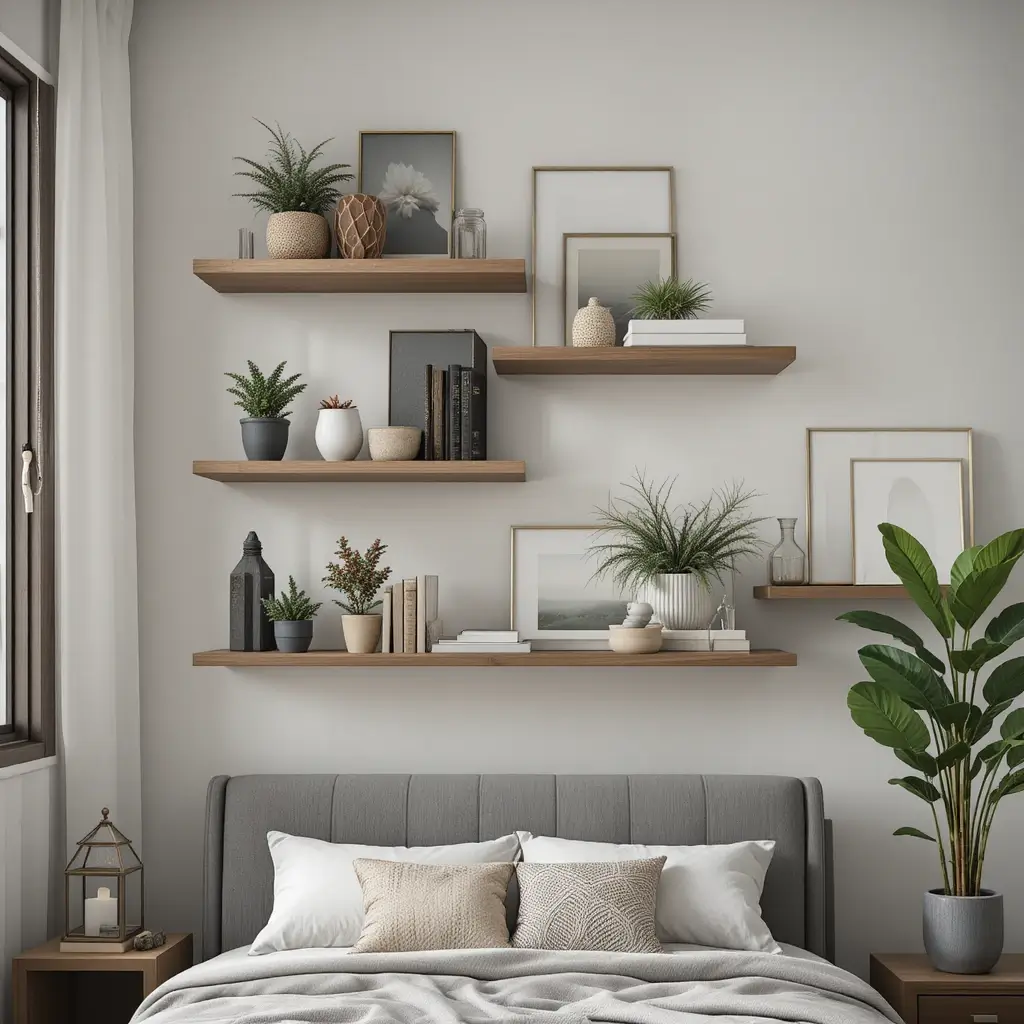
Floating shelves are useful when you want your bedroom walls to look attractive without adding another piece of furniture to the floor. They provide space for books, small framed prints, decorative objects, and lightweight ornaments.
Natural wood shelves work well in warm, neutral bedrooms, while white shelves blend into pale walls for a more understated look. Black metal or dark wood can create contrast in a contemporary space.
Rather than covering an entire wall with shelves, start with one or two above a desk, beside a dressing area, or on an empty section of wall away from the bed. Arrange a small group of objects and leave some empty space between them.
How to style them: Combine objects of different heights, such as a short stack of books, a small framed print, and a decorative vase. Keep the tallest items toward the back and avoid filling every inch of the shelf.
Before installation, check the shelf’s weight limit and use mounting hardware appropriate for your wall type. A shelf secured to plasterboard or drywall may require suitable anchors or attachment to studs, depending on its load. Avoid placing heavy objects above the bed.
Best for: Small bedrooms, readers, and anyone who wants both decoration and useful display space.
Budget tip: One well-styled shelf can make a difference without the cost or visual clutter of a full shelving arrangement.
3. Large Canvas Art
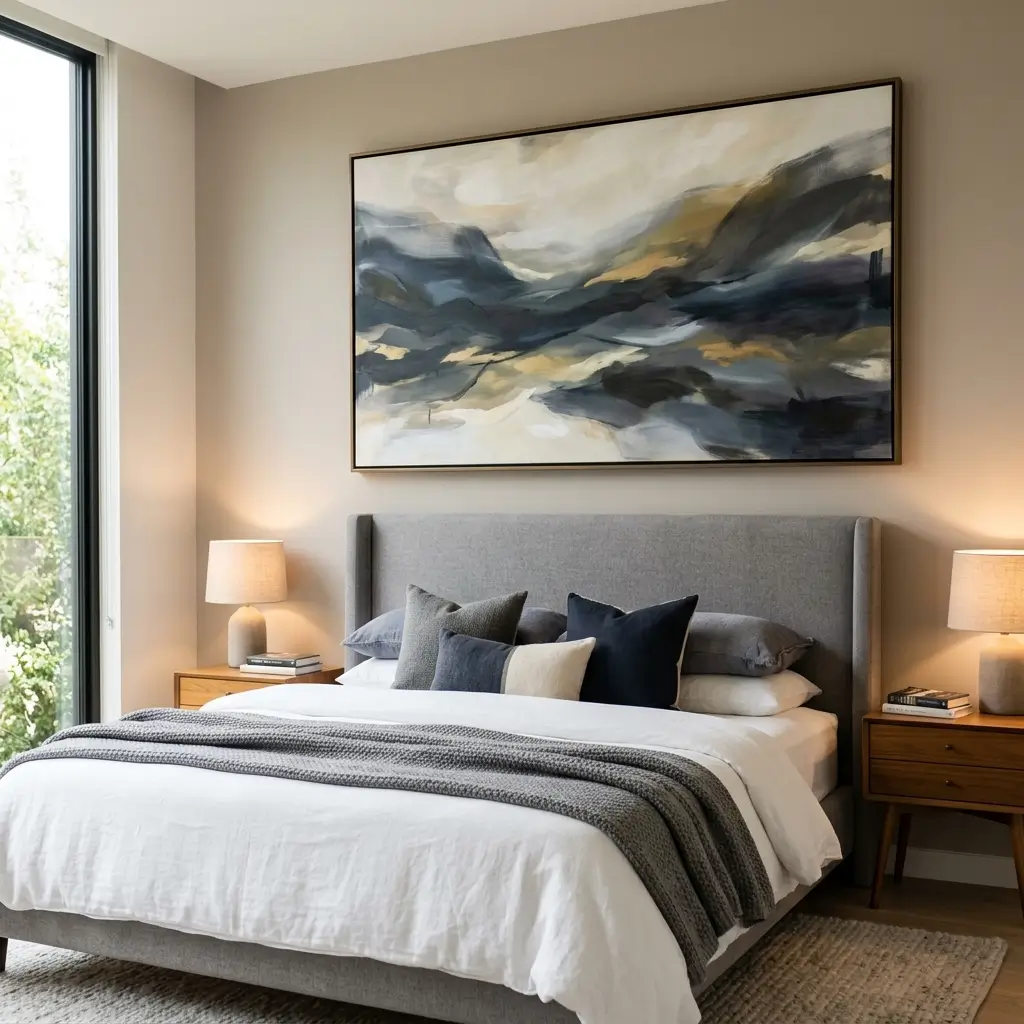
If you prefer a simple bedroom rather than a wall covered in decorations, one large canvas can provide all the visual interest you need.
A landscape can create a calm atmosphere, abstract artwork can introduce color, and a minimalist line drawing can complement a contemporary interior. Choose a piece that works with your bedding, curtains, and other prominent colors instead of selecting artwork in isolation.
The wall above the headboard is a natural place for a large canvas because it draws attention to the bed and gives the room a clear focal point.
How to choose the right size: Measure the width of your headboard before shopping. As a starting point, artwork around two-thirds to three-quarters of the headboard’s width often looks balanced, although the ideal size depends on the room and the shape of the artwork.
Hang the piece low enough to feel connected to the bed rather than floating near the ceiling. If you have a tall headboard, account for its height when deciding where the artwork should sit.
Best for: Minimalist bedrooms, large empty walls, and people who prefer a single statement piece to multiple smaller decorations.
Budget tip: Look for affordable canvas prints or create your own artwork. A thoughtful choice of color and scale matters more than an expensive frame.
4. Macrame Wall Hanging
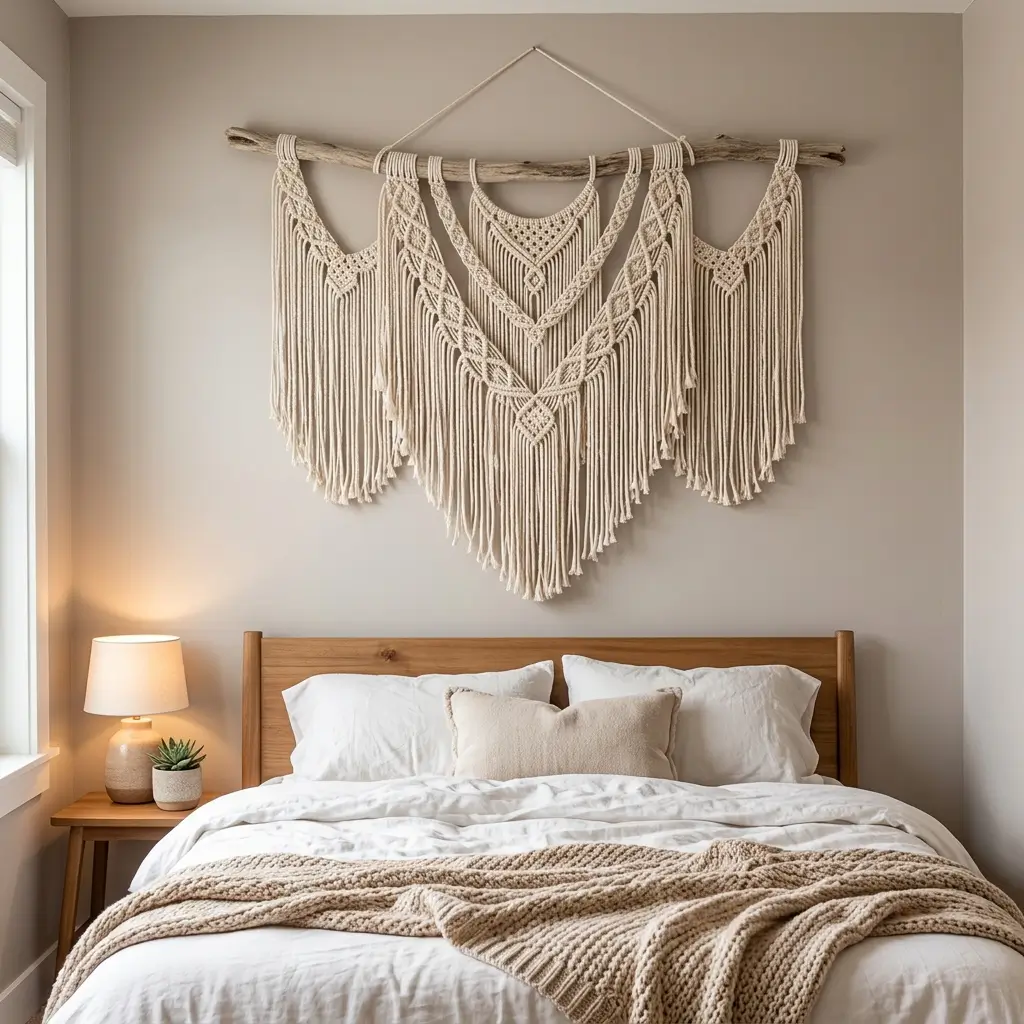
Macrame brings softness and texture, which is useful if your bedroom has lots of hard surfaces such as glass, metal, or painted walls. It suits bohemian, coastal, Scandinavian, and natural-style bedrooms.
Choose a piece with cotton cord, wooden beads, or a driftwood rod for a relaxed look. A large macrame hanging can work above the bed, while a smaller one fits well beside a mirror or dresser.
Because macrame is lightweight, it is easy to hang with a nail, adhesive hook, or tension rod. Dust it regularly with a soft brush or use a handheld vacuum on low suction.
Avoid placing it directly above a heater or in a damp corner, since fabric fibers can collect dust and moisture.
5. Removable Accent Wallpaper
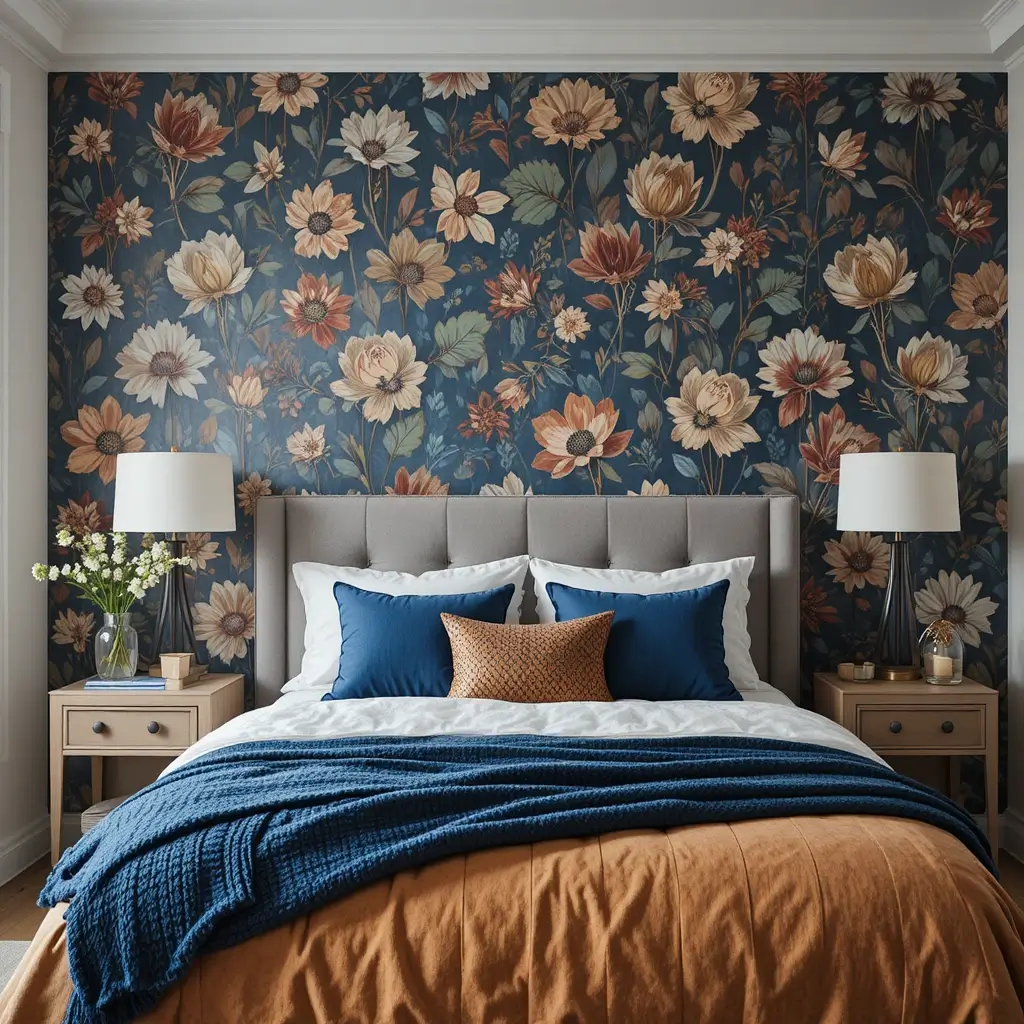
Removable wallpaper is a useful option when paint alone doesn’t provide the look you’re after. It comes in a range of patterns, including subtle stripes, botanical prints, geometric designs, and wallpaper that imitates wood or other materials.
Using it on one wall can introduce color and pattern without making the entire bedroom feel busy. The wall behind the headboard is often a good starting point because it naturally frames the bed.
For a restful appearance, consider muted greens, soft blues, warm beige, or a small-scale pattern. If the bedding and curtains are already patterned, a simpler wallpaper design may be easier to coordinate.
Before you install it: Measure the wall carefully and check the product’s coverage, application instructions, and compatibility with your paint or wall finish. Test a small, inconspicuous section first if the manufacturer recommends it.
Removable wallpaper is not automatically suitable for every rental property or wall. Some products can lift paint, leave adhesive residue, or struggle to adhere to textured surfaces. Check your tenancy agreement and the manufacturer’s guidance before applying it.
Best for: Renters with permission to make reversible changes, feature walls, and people who enjoy experimenting with patterns.
Budget tip: Decorating one accent wall is usually less expensive than covering the whole room. Compare the total cost of the required rolls, not just the price of one roll.
6. Decorative Mirror Arrangements
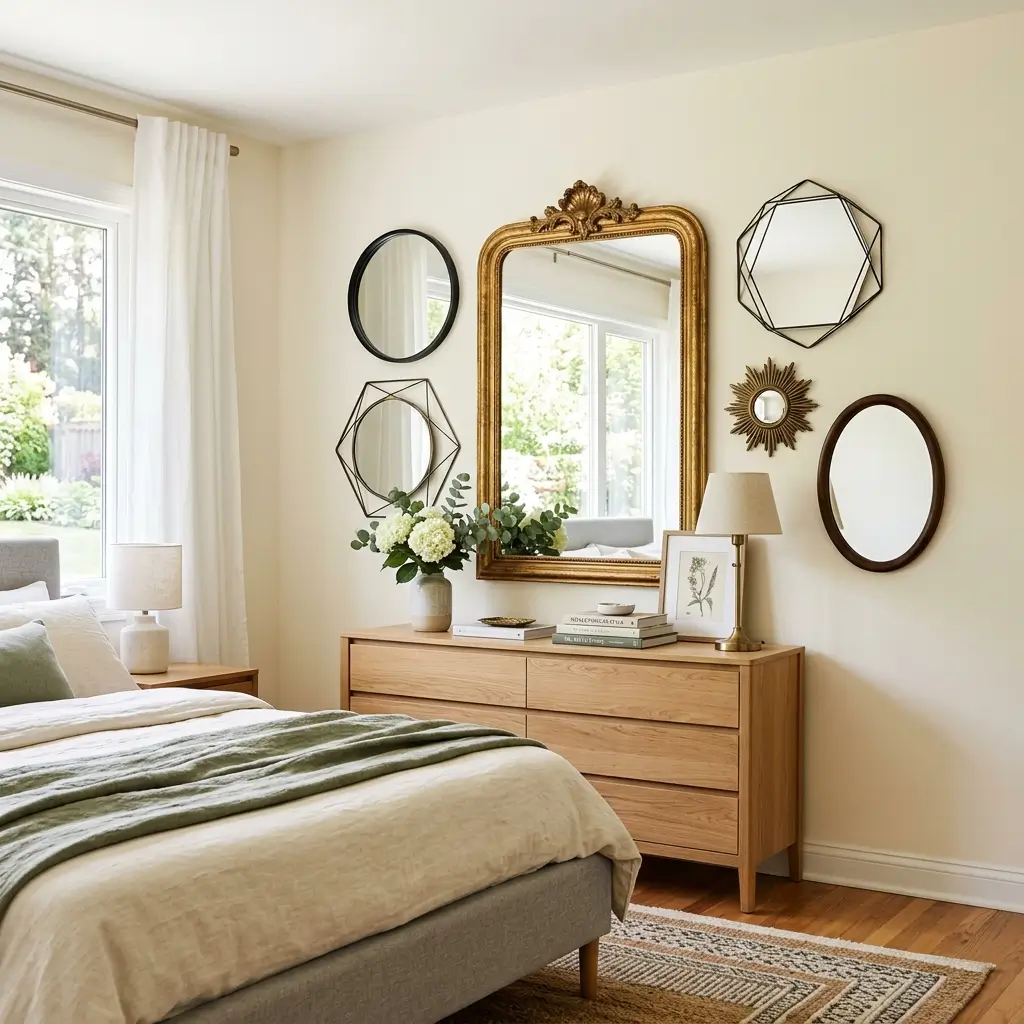
Mirrors combine practical use with decoration. A well-positioned mirror can reflect daylight, brighten a darker part of the bedroom, and make the space feel more open.
A large rectangular mirror suits many modern interiors, while round mirrors can soften a room filled with straight lines. Ornate frames add character, and frameless mirrors create a more understated appearance.
You can also arrange several smaller mirrors together, provided their shapes and finishes work well as a group.
Where to place them: Look at what the mirror will reflect before deciding where to hang it. Positioning a mirror across from or at an angle to a window may help distribute daylight, depending on the room’s layout. If it reflects a cluttered corner, however, it may draw more attention to that area.
In a small bedroom, a tall mirror on an available wall can provide a useful full-length view without taking up much floor space.
Use suitable wall fixings, particularly for large or heavy mirrors. Secure them according to the manufacturer’s instructions and avoid mounting heavy glass directly above the bed where a fall could cause injury.
Best for: Small bedrooms, darker rooms, dressing areas, and anyone who wants decor that also serves a daily purpose.
Budget tip: One appropriately sized mirror can be more effective than several small decorative mirrors.
7. Indoor Hanging Planters
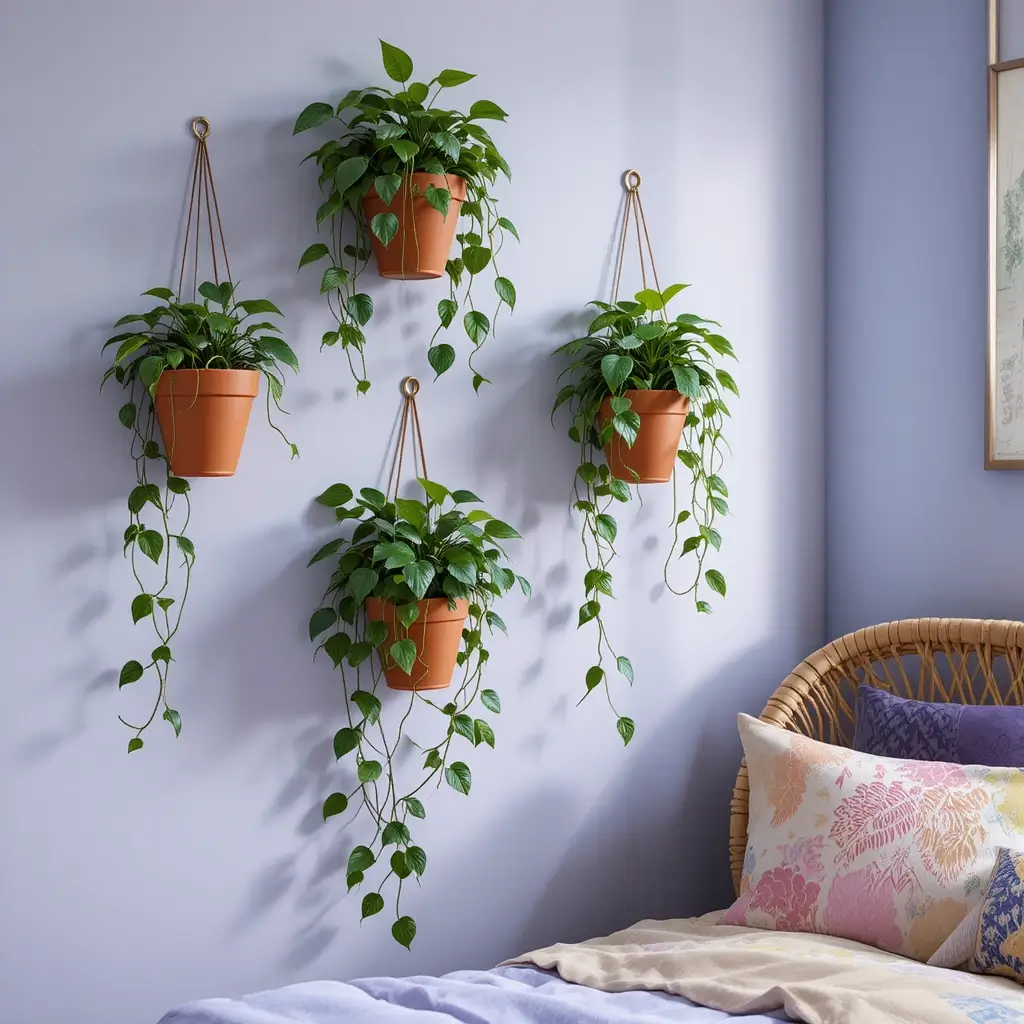
Plants can bring color, organic shapes, and a softer feel to a bedroom. Wall-mounted planters are particularly useful when bedside tables and floor space are already occupied.
Trailing plants can look attractive on a suitable wall-mounted shelf or in a secure hanging planter. Heartleaf philodendrons and pothos are common choices for indoor growing, although the best plant depends on the amount of natural light, temperature, and care you can provide.
You don’t need to cover an entire wall in greenery. One or two plants can create a focal point, especially against a plain white, beige, or muted green background.
How to choose a location: Check the plant’s light requirements before installing the planter. A spot that looks attractive may not receive enough light for healthy growth. Also consider watering access, drainage, and whether moisture could stain the wall.
Use a planter designed for the chosen plant and make sure the mounting system can support the combined weight of the container, soil, and water. Avoid positioning it above the bed or near electrical equipment where leaks could create problems.
If you have pets, check whether the plant is toxic to them before bringing it indoors. Pothos and philodendrons, for example, are toxic to cats and dogs if chewed.
Best for: Nature-inspired bedrooms, plant lovers, and rooms with suitable natural light.
Budget tip: Start with one easy-care plant before investing in a complete wall garden. If living plants aren’t practical, a carefully chosen artificial plant can provide a similar visual effect.
8. Custom Neon Signs
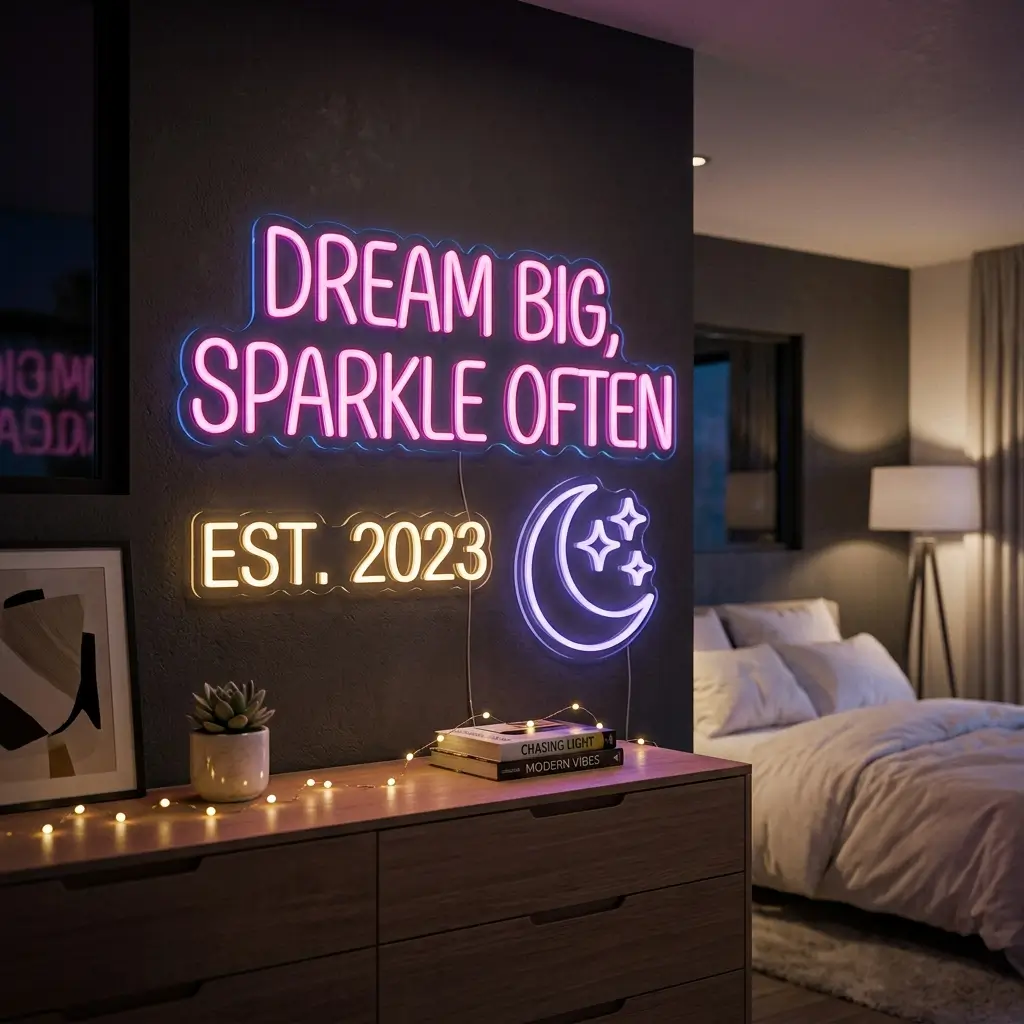
A custom LED neon-style sign can give a bedroom a playful, contemporary, or personalized touch. It might feature a short phrase, a simple shape, a name, or a design that reflects your interests.
The color of the light makes a noticeable difference. Warm white can feel understated, while pink, blue, or other saturated colors create a stronger visual statement.
Rather than choosing the brightest sign available, think about how it will look alongside your bedside lamps and other lighting. A sign that complements the room’s existing light sources is often easier to live with than one that dominates the entire space.
How to position it: Place the sign where it can be seen clearly without competing with a large piece of artwork. Before drilling holes, check the power supply, cable length, mounting requirements, and the location of the nearest suitable outlet.
Choose a product with clear electrical specifications and follow its installation instructions. Keep the power supply and cables away from bedding, and avoid placing the sign where its light could interfere with sleep.
Best for: Contemporary bedrooms, creative spaces, and people who enjoy colorful accent lighting.
Budget tip: A small, simple design may provide the desired effect without the expense of a large custom sign.
9. Metal Wall Sculpture
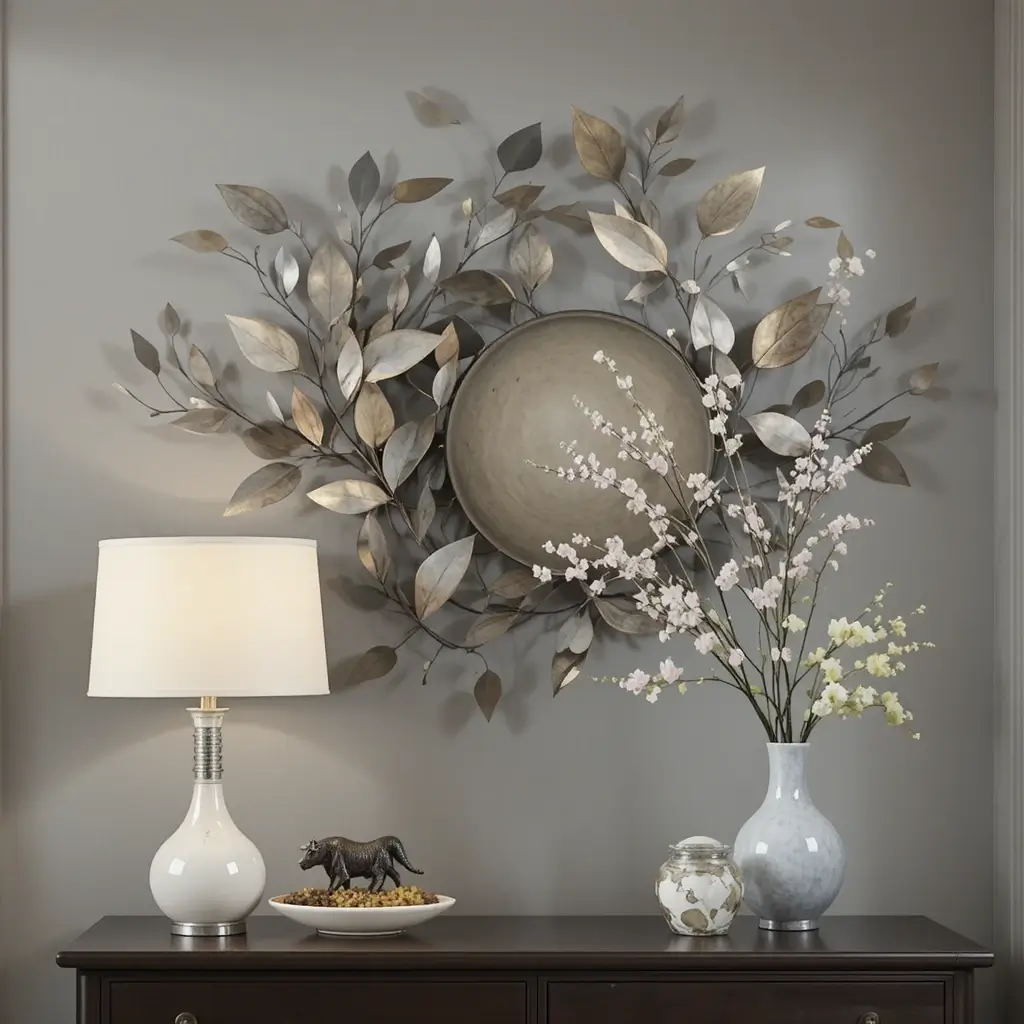
Metal wall sculptures add dimension that a flat print cannot provide. Depending on the design, they can make a bedroom feel modern, industrial, elegant, or nature-inspired.
Botanical shapes, abstract lines, geometric patterns, and sculptural branches are examples of designs that can work well above a dresser or on an empty wall beside the bed.
The finish matters as much as the shape. Matte black creates a strong outline against a pale wall, brushed brass adds warmth, and silver-toned metal can complement cooler color schemes.
How to choose a piece: Consider the wall color and the finish of nearby furniture, lamps, and handles. You don’t have to match every metal exactly, but repeating one finish elsewhere in the room can help the design feel connected.
Check the dimensions, weight, sharp edges, and mounting instructions before purchasing. Large metal pieces may require more secure fixings than their appearance suggests.
Best for: Modern bedrooms, contemporary interiors, and walls that need a three-dimensional feature.
Budget tip: A single, well-proportioned sculpture can provide enough visual interest without requiring several smaller pieces.
10. Fabric Tapestries
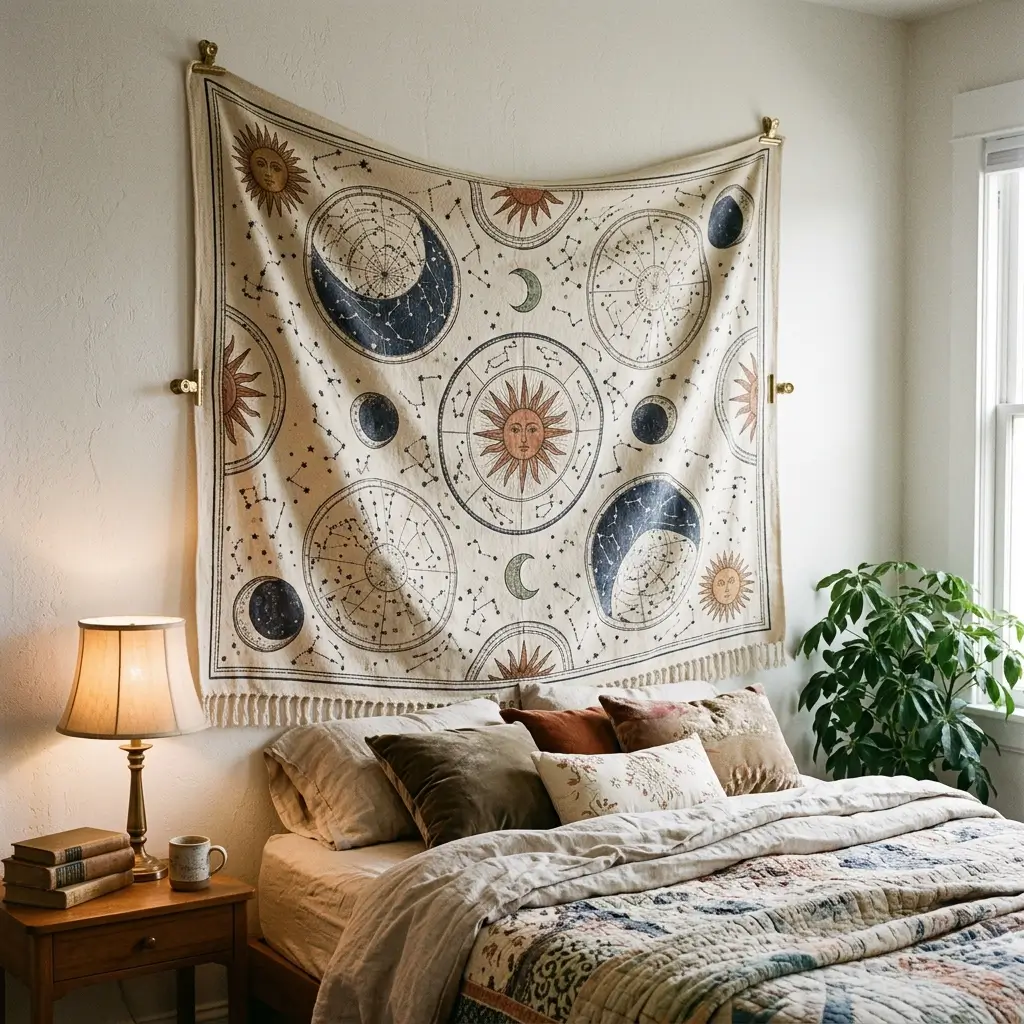
A fabric tapestry offers a way to introduce color, pattern, and softness without committing to a painted or wallpapered accent wall.
Tapestries are available in botanical, geometric, abstract, vintage-inspired, and celestial designs. A subtle pattern can complement neutral bedding, while a bolder print can become the room’s main focal point.
They can be especially useful in rented homes because many lightweight designs can be hung using suitable removable hardware, provided the wall finish and the item’s weight allow it.
How to hang it neatly: Measure the wall before buying the tapestry. A piece that is too small can look lost, while one that covers nearly the entire wall may overpower the room.
You can use a curtain rod, a purpose-made hanging system, or suitable clips, depending on the fabric and weight. Smooth out wrinkles and make sure the top edge sits straight.
Fabric can collect dust and may be affected by moisture, so check the cleaning instructions. Keep the tapestry away from heaters, candles, and other sources of heat or flame.
Best for: Cozy bedrooms, renters, students, and anyone who wants a large decorative feature without framing artwork.
Budget tip: Choose a design that can be machine-washed or easily cleaned if maintenance is a priority, and check the actual fabric dimensions before ordering.
11. Wood Slat Panels
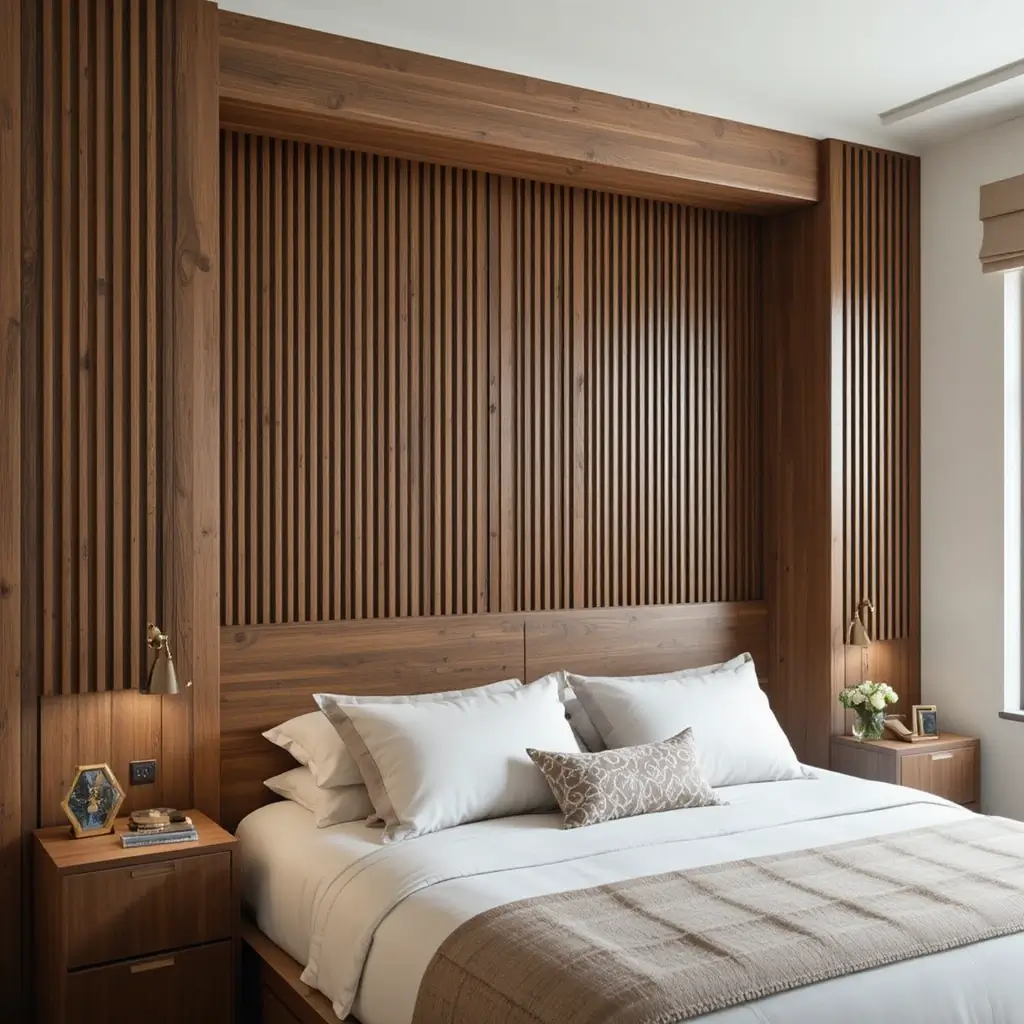
Wood slat panels can give a bedroom a more architectural appearance by introducing repeated lines, natural grain, and a sense of structure.
Depending on the color and spacing, they can suit Scandinavian-inspired interiors, contemporary bedrooms, and warmer minimalist designs. Light oak tones tend to feel airy, while darker finishes create more contrast.
One popular approach is to use slats behind the headboard, allowing the bed and wall treatment to form a single visual feature. Another option is to cover only part of a wall to define a reading corner or dressing area.
Before installing them: Measure the wall and decide whether you want to cover the full width or create a narrower feature. Check the panel thickness, finish, fixing method, and compatibility with your existing wall.
Wood slats can draw the eye vertically, but they won’t physically increase the ceiling height. The final effect depends on the panel design, wall proportions, and surrounding furniture.
Because installation can involve cutting, adhesives, or drilling, check the manufacturer’s instructions and consider professional help for large or heavy panels. Renters should confirm permission before making permanent alterations.
Best for: Homeowners planning a lasting feature wall and bedrooms that need more texture or architectural detail.
Budget tip: A partial-width panel feature behind the headboard can be less expensive than treating the entire wall.
12. Framed Textiles
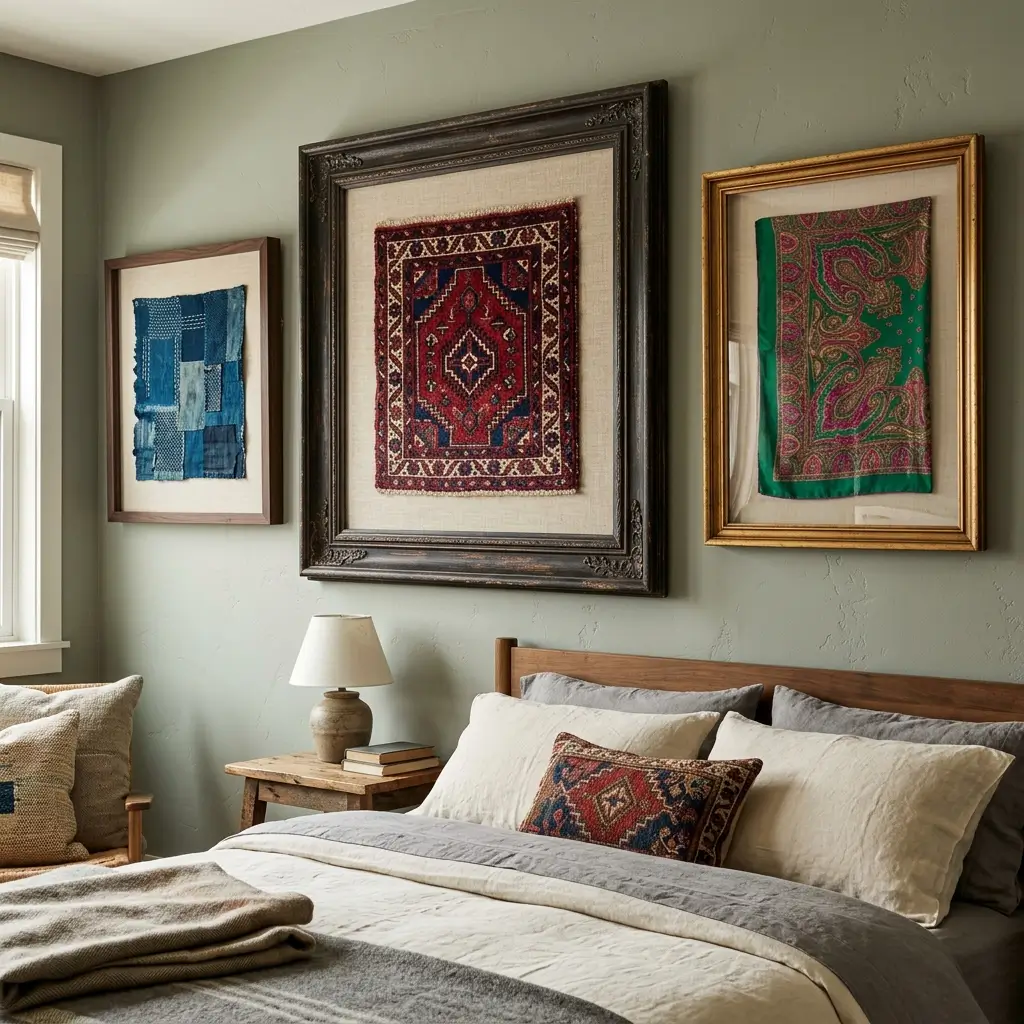
Framed textiles are an alternative to conventional paintings and printed posters. A patterned scarf, a piece of embroidered fabric, a vintage textile, or a section of decorative cloth can become an unusual focal point when displayed in a frame.
This idea works particularly well when the fabric has a pattern, color combination, or personal meaning that you want to preserve.
A textile with muted colors can complement a calm, neutral bedroom, while a richly patterned piece can bring contrast to a simple interior. The frame can either blend into the design or provide a deliberate contrast.
How to display it: Choose a frame large enough to show the fabric’s most interesting details. Avoid stretching delicate material too tightly or using adhesives that could damage it.
For valuable, vintage, or fragile textiles, consider archival mounting materials and a framer experienced in textile preservation. Direct sunlight can fade many fabrics, so choose a location away from strong, prolonged sunlight.
Best for: Eclectic bedrooms, vintage-inspired interiors, and people who want to display a meaningful textile rather than leave it stored away.
Budget tip: If the fabric is inexpensive and durable, a simple ready-made frame may be sufficient. Delicate or valuable material deserves more careful framing.
Tips for Perfect Placement
- Eye Level is Key: Always hang your primary artwork so the center is approximately 57 to 60 inches from the floor.
- Consider the Headboard: Ensure your decor is wider than the headboard if you are hanging a single piece, or keep a cluster within the width of the bed for a balanced look.
- Negative Space Matters: Don’t feel the need to fill every inch; leaving some white space prevents the room from feeling cluttered.
Mistakes to Avoid
- Using Small Pieces on Large Walls: A tiny frame on a vast wall can look lost. Opt for larger pieces or a gallery arrangement.
- Ignoring Lighting: Beautiful decor can look dull in the dark. Use sconces or picture lights to highlight your wall art.
- Improper Hanging Hardware: Always check the weight of your item to ensure you aren’t damaging your drywall or risking the item falling.
Pros and Cons
| Feature | Pros | Cons |
| Aesthetics | Instantly elevates the room’s mood and style. | Can easily become visually cluttered if overdone. |
| Functionality | Can hide wall imperfections or provide storage. | Some options require permanent holes in the wall. |
| Customization | Easy to swap out based on trends or seasons. | High-quality pieces can be a significant investment. |
Frequently Asked Questions
Q: How do I decorate a rental bedroom without damaging the walls?
A: Use adhesive-based products like command strips, or opt for lightweight items like tapestries and peel-and-stick wallpaper.
Q: Can I mix different styles of wall decor?
A: Yes! The key is to have a unifying element, such as a consistent color palette or matching frame finishes, to tie different styles together.
Q: What is the best decor for a small bedroom?
A: Mirrors are ideal for small rooms because they reflect light and create the illusion of more space.
Conclusion
Wall decor is the finishing touch that transforms a bedroom from a place you sleep into a place you love.
Whether you prefer the organic feel of plants and macrame or the bold statement of a neon sign, the right choice will harmonize your space.
By following these ideas and tips, you can create a balanced, beautiful environment that feels uniquely yours.
Final Thoughts
Don’t be afraid to experiment with different textures and heights. Decorating is a journey, and your walls can evolve as your tastes change over time.
Start with one focal point and build your collection gradually to ensure every piece has meaning and purpose within your design.
Wrapping It Up
From the functional elegance of floating shelves to the timeless appeal of framed textiles, the possibilities for bedroom wall decor are endless.
Focus on pieces that bring you comfort and inspiration. With a little planning and creativity, your bedroom walls will soon become the highlight of your home.