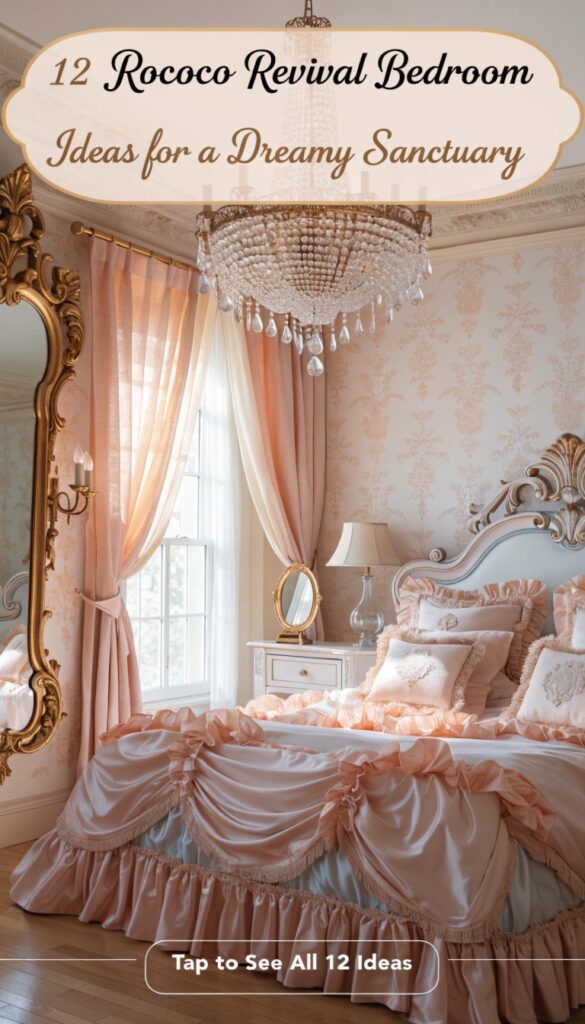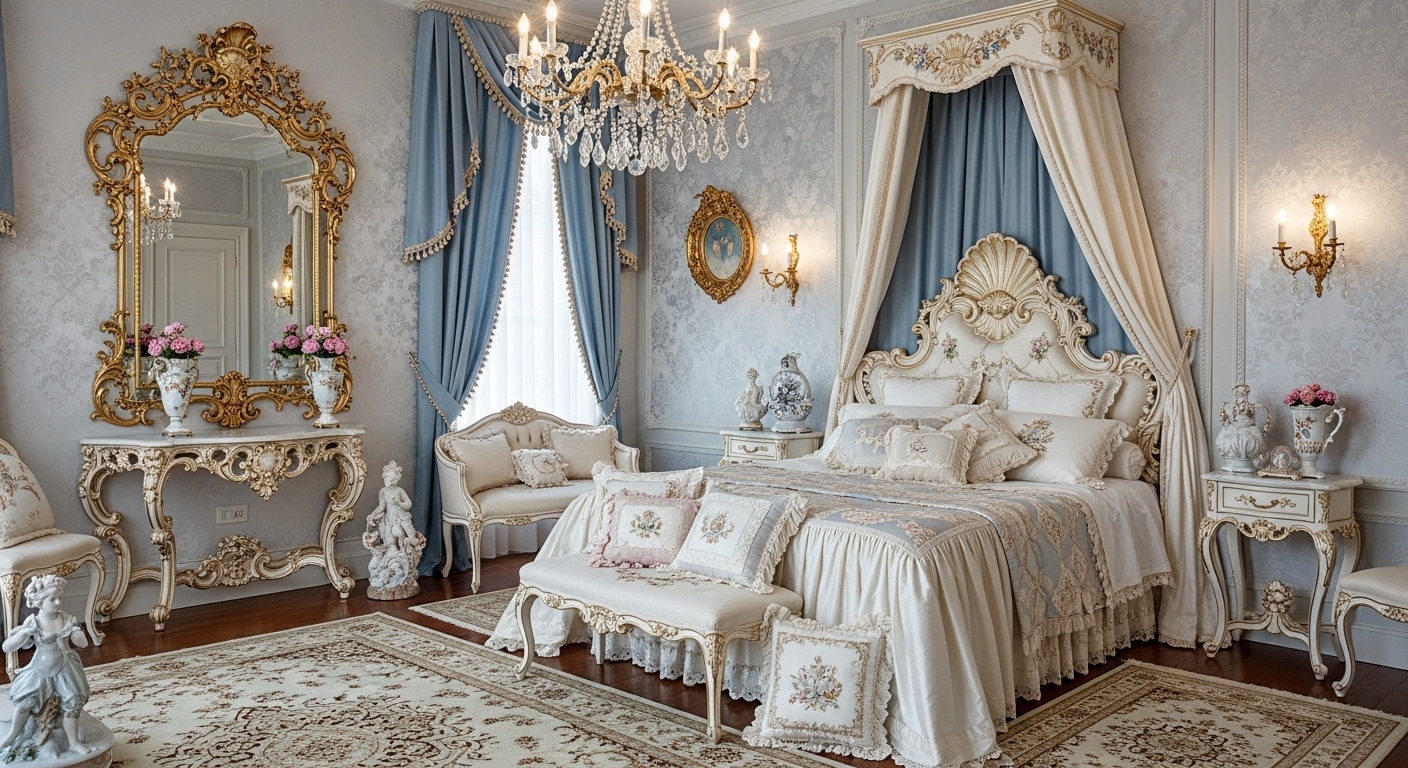
Rococo Revival brings romantic curves, soft pastels, carved detailing, and gilded accents into the bedroom but it works best when the ornamentation is balanced with comfort and restraint.
This style draws on 18th-century French Rococo, yet the furniture most people find today is often Rococo Revival, a 19th-century interpretation marked by bolder carving, curving silhouettes, cabriole legs, tufted upholstery, and motifs such as shells, roses, scrolls, and acanthus leaves.
A successful Rococo Revival bedroom should feel indulgent without becoming a costume set. The aim is a calm, luxurious retreat: light colors, graceful lines, layered textiles, and a few statement pieces rather than ornament everywhere.
What Is Rococo Revival?
Rococo began in 18th-century France as a lighter, more playful reaction to the grandeur of Baroque design. It favored asymmetry, pale colors, shells, flowers, ribbons, C- and S-shaped curves, and intimate rooms designed for relaxation and conversation.season
Rococo Revival emerged later most notably during the mid-1800s and reinterpreted those ideas for Victorian-era homes. Its furniture tends to be larger and more robust, with deeper carving, heavier upholstery, and dramatic floral or scrollwork details.
For a modern bedroom, use Rococo Revival as a direction, not a rulebook. Pair one or two ornate focal points with simple bedding, warm lighting, and uncluttered surfaces.
1. Embrace a Soft Pastel Palette
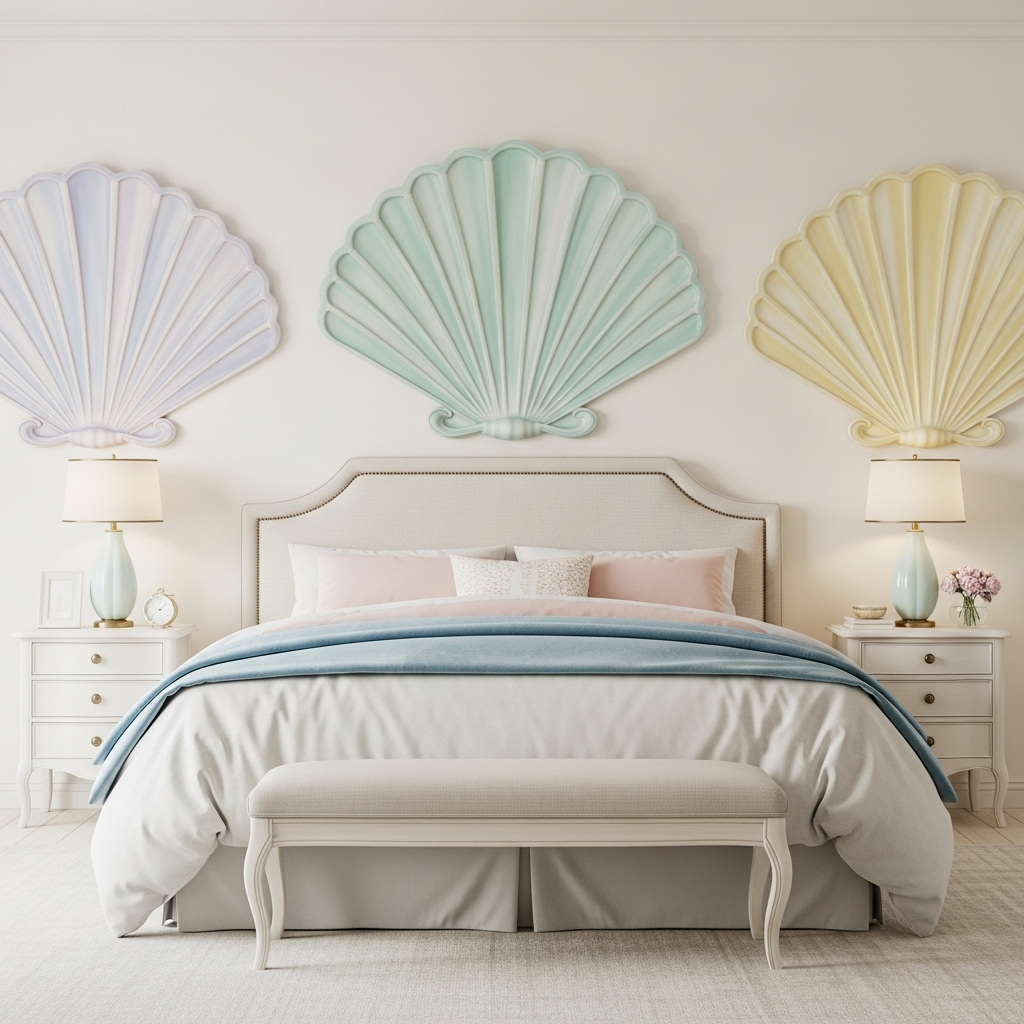
Soft colors provide an excellent starting point for a Rococo Revival bedroom. Powder blue, blush pink, pale sage, lavender, and buttery yellow complement the style’s decorative furniture and flowing shapes without making the room feel too heavy.
You don’t need to use all these colors at once. Choose one main shade, a neutral background, and one or two supporting accents. For example, pale blue walls paired with ivory bedding and muted gold accessories create a calm foundation for a more elaborate headboard or mirror.
If you prefer warmer surroundings, blush walls, cream curtains, and light wood furniture can achieve a similar effect.
How to make it work: Test paint samples on different walls before committing to a color. A shade that looks delicate in daylight may appear much stronger under warm evening lighting. In a small bedroom, keep the largest surfaces relatively light and reserve stronger colors for cushions, artwork, or an upholstered chair.
For a more modern interpretation, combine pastel walls with plain white bedding and just a few ornate accessories. This lets the historic details stand out instead of competing with one another.
2. Install Intricate Wall Paneling
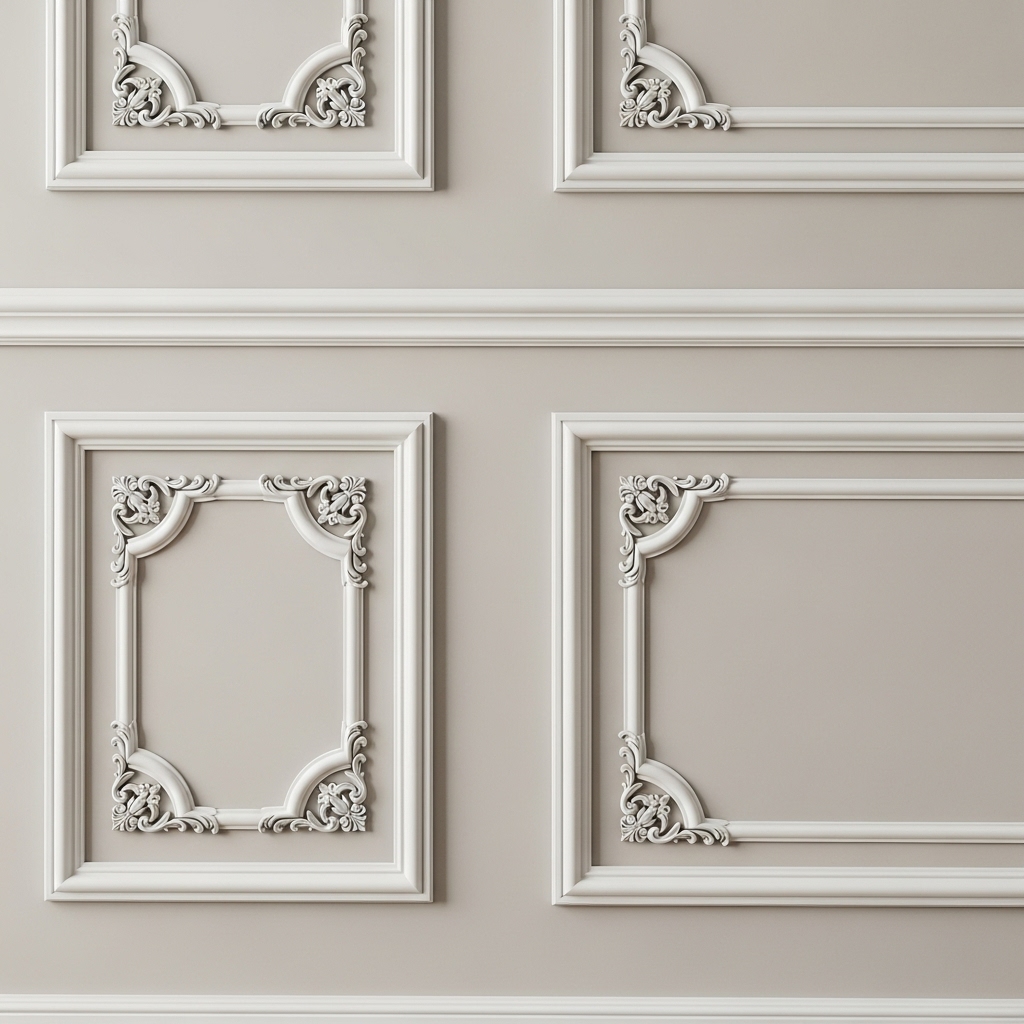
Boiserie decorative wood paneling is one of the strongest ways to create a French-inspired backdrop. Traditional Rococo paneling often includes carved frames, scrolls, shells, foliage, and gilded highlights.
You do not need authentic antique paneling. Simple picture-frame molding can create the same architectural effect when painted in a soft white, pale gray-green, or muted blush.
For a subtle approach, paint the molding the same color as the wall. For more contrast, use white molding against a pastel wall. Keep the panels larger and simpler in a small bedroom; intricate panels can make the space feel crowded.
3. Choose a Statement Tufted Headboard
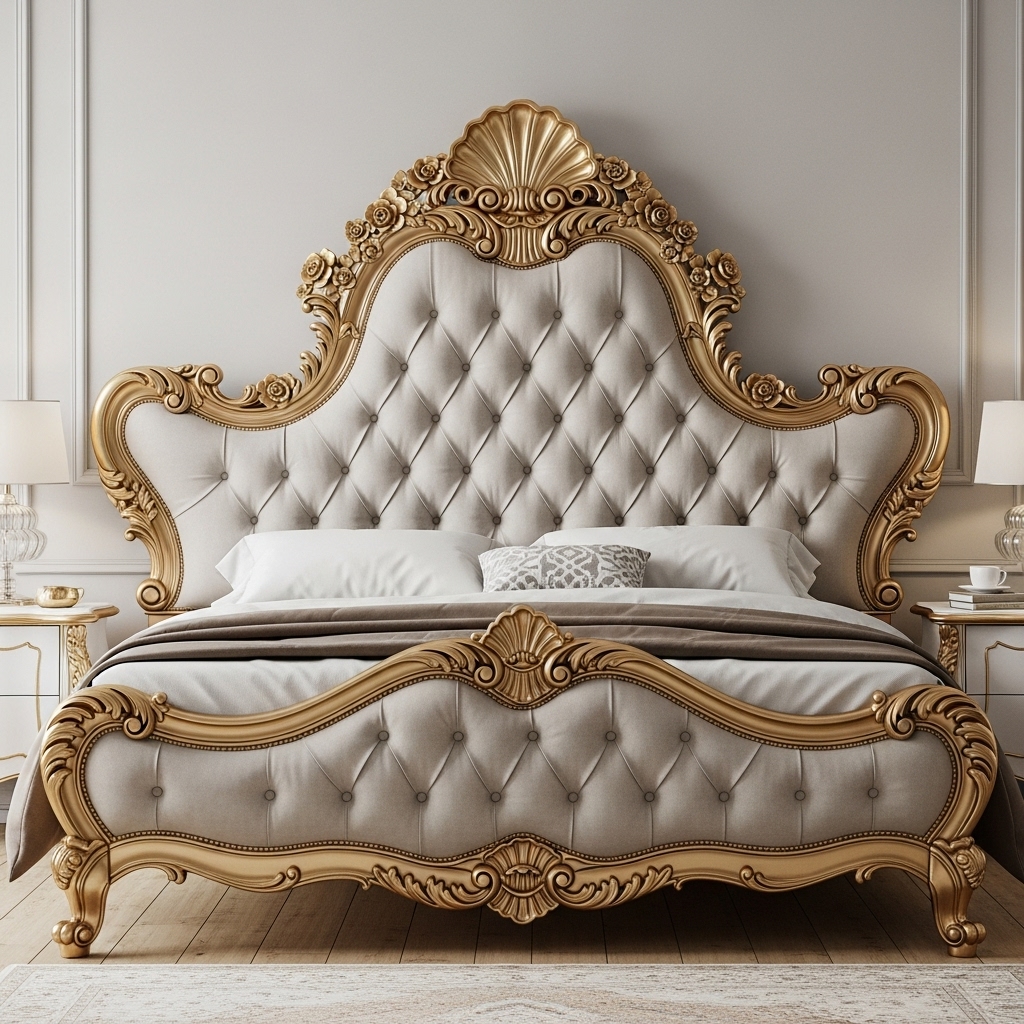
The bed usually occupies the largest visual area in a bedroom, making the headboard an effective place to introduce Rococo-inspired design. Look for rounded silhouettes, gently scalloped edges, carved floral details, or button-tufted upholstery.
Velvet in dusty rose, pale blue, cream, or sage can give the bed a traditional appearance without requiring an elaborate antique frame. If you prefer wood, a carved headboard in an ivory or aged-gold finish can provide the same decorative impact.
The important thing is to choose a headboard that suits the size of your room. A tall, heavily carved design can look impressive in a spacious bedroom but overwhelm a narrow one. Measure the available wall space and check that the headboard won’t obstruct windows, switches, or bedside lighting.
Styling tip: Let the headboard be the main feature. Pair a decorative design with relatively simple bedding, perhaps using a quilted coverlet, two or three decorative cushions, and a soft throw. Too many competing patterns can make the bed look cluttered.
If buying new furniture isn’t practical, consider an existing wooden headboard that can be repainted, or add a curved upholstered panel behind the bed. A thoughtful update can establish the style without replacing all your furniture.
4. Hang a Crystal Chandelier
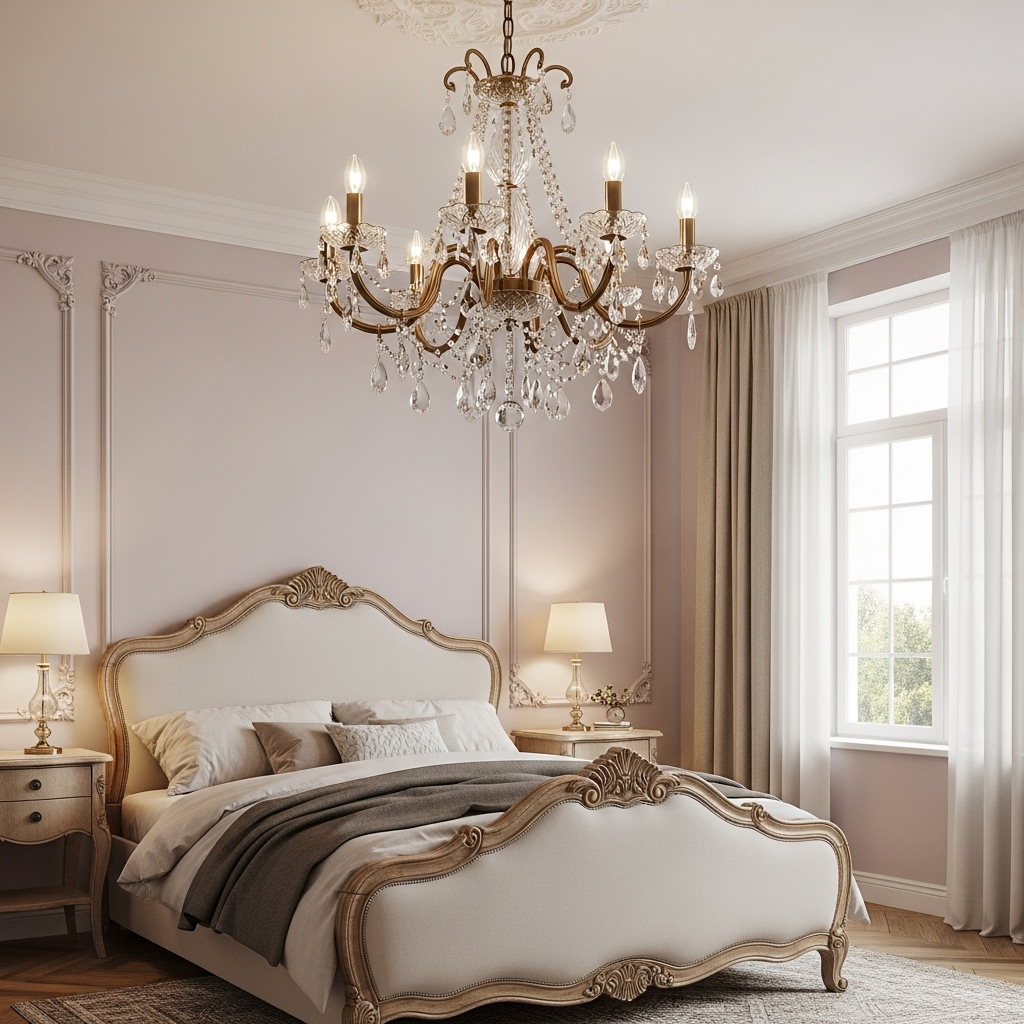
A chandelier can bring a Rococo Revival bedroom together by introducing sparkle, curved metalwork, and a sense of height. Crystal details, candle-shaped bulbs, and brass or gold-toned arms work particularly well with pale walls and decorative furniture.
However, an elaborate ceiling light isn’t essential. A small chandelier with glass drops or a compact vintage-inspired fixture can create the same general atmosphere in a room with limited space.
How to make it work: Choose the fixture according to the room’s dimensions and ceiling height. Check the manufacturer’s installation and clearance requirements, especially if the light hangs above the bed or a walking route. The fixture should complement the room rather than become an obstacle.
Light quality matters just as much as appearance. Warm-white bulbs can make cream fabrics and gold finishes feel inviting, while a dimmer allows you to reduce the brightness in the evening. Use bedside lamps as well so you aren’t relying on the overhead light for every activity.
For renters or anyone working with a limited budget, a decorative table lamp with a sculpted base and fabric shade can provide a similar visual cue without requiring electrical alterations.
5. Incorporate Gilded Mirrors
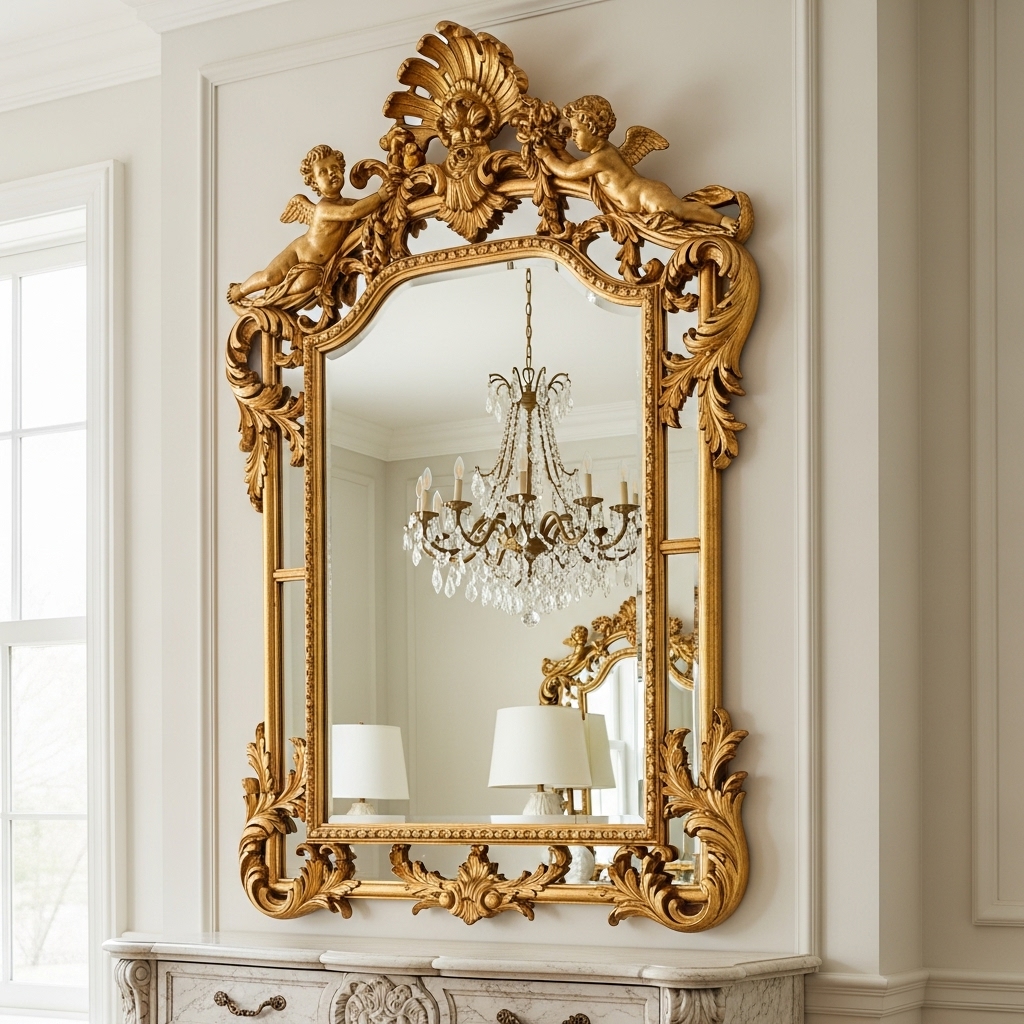
An ornate mirror is one of the easiest ways to introduce Rococo-inspired detail without changing the entire bedroom. Look for frames with scrolling leaves, curved edges, floral carvings, or an aged gold finish.
A large mirror above a dresser creates a natural focal point, while a smaller one can add character to a vanity area. If your bedroom receives limited daylight, positioning a mirror where it reflects a window or another light source can help the space feel brighter.
How to make it work: Consider the reflection before deciding where to hang the mirror. Reflecting a window, an attractive lamp, or a well-styled part of the room usually works better than reflecting an untidy corner. Avoid placing it where it creates unwanted glare from overhead lighting.
Secure heavy mirrors using appropriate wall fixings for the wall material and the mirror’s weight. If drilling isn’t possible, a freestanding mirror may be a better option than relying on unsuitable adhesive strips.
You can also achieve the look affordably by updating an existing frame with gold-colored paint or a suitable gilding wax. Apply the finish selectively to raised details if you want a softer, aged appearance rather than a completely shiny surface.
6. Dress Windows with Voluptuous Drapery
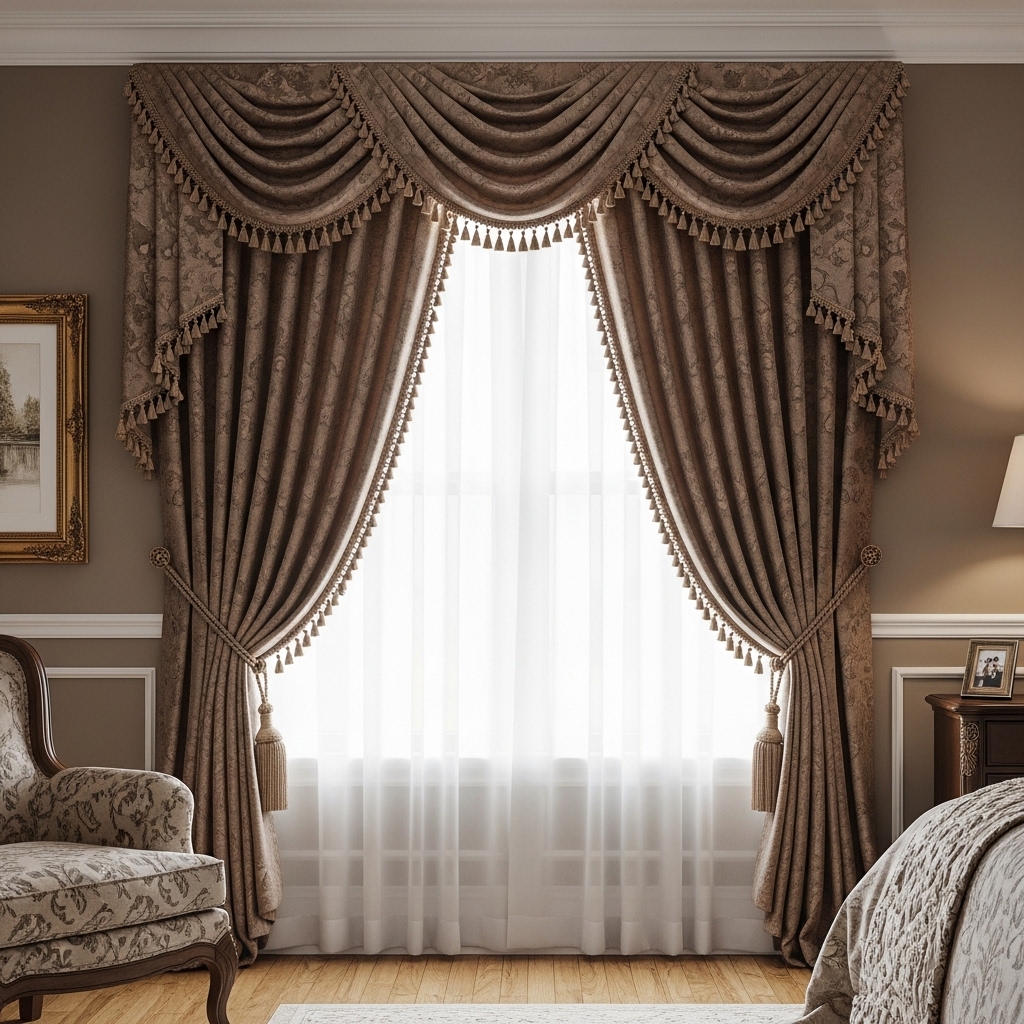
Full-length curtains suit the romantic character of Rococo Revival interiors. Fabrics such as velvet, satin, linen blends, and patterned damask can soften the room while introducing color and texture.
For a light, airy bedroom, try ivory curtains with a delicate floral pattern. If you prefer a richer look, dusty rose or muted blue panels with decorative tiebacks can add depth. Tassels, braided cords, and shaped valances are optional details rather than requirements.
How to make it work: Measure from the intended curtain-rod position to the floor, then choose a length that creates a neat finish without leaving an awkward gap. Hanging the rod above the window frame can make the window appear taller, provided the ceiling and surrounding trim allow it.
Consider the fabric’s practical purpose, too. Sheer curtains provide privacy during the day but usually offer little nighttime privacy. If you need a dark bedroom for sleeping, combine decorative curtains with a suitable blackout lining or separate blackout blind.
Avoid heavy velvet in a room that already feels crowded or receives very little daylight. A lighter fabric with a subtle pattern can preserve the romantic look without adding unnecessary visual weight.
7. Select Furniture with Cabriole Legs
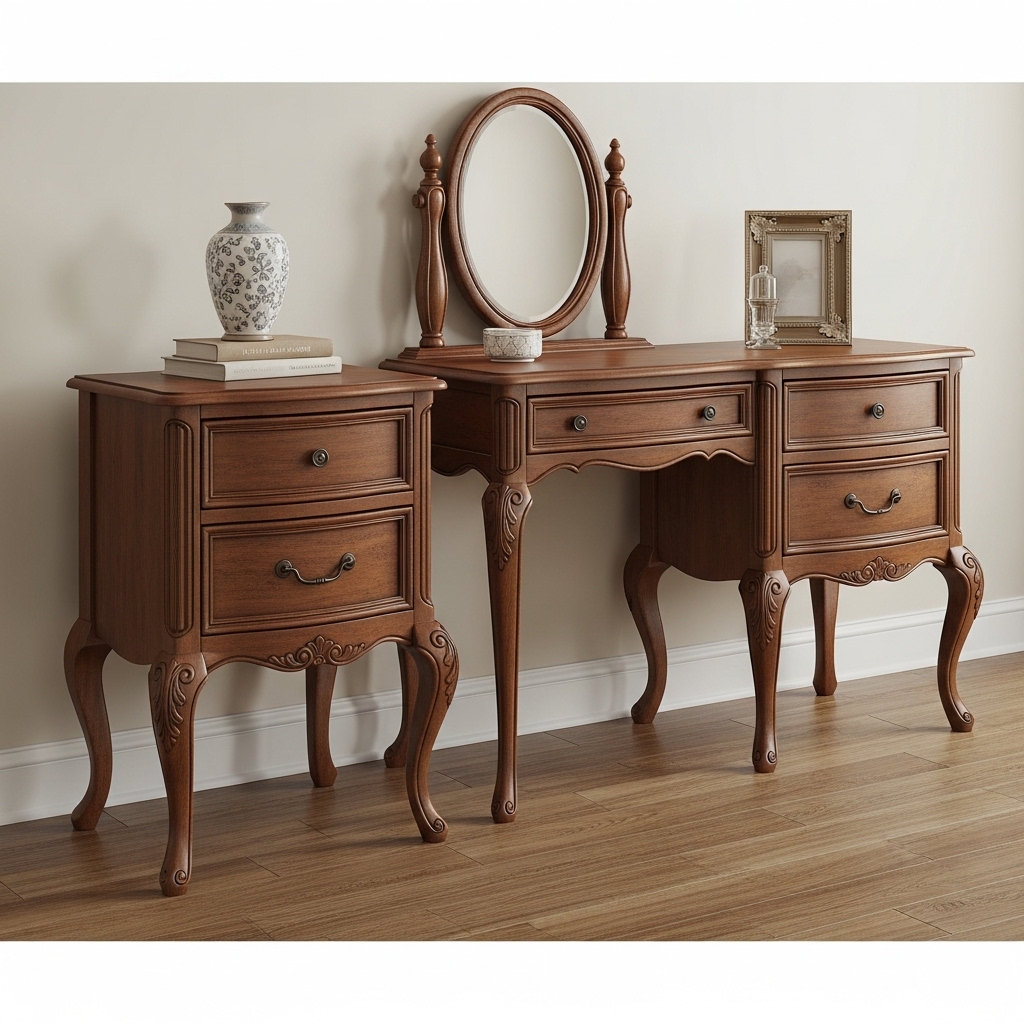
Cabriole legs are curved furniture legs that bend outward and then inward, creating a graceful S-shaped profile. They appear on many traditional chairs, tables, and cabinets and are a useful feature to look for when choosing Rococo-inspired bedroom furniture.
A bedside table with curved legs, a small dressing table, or an occasional chair can introduce this shape without requiring a matching bedroom suite. Painted wood, carved details, and brass-colored handles can help tie different pieces together.
You don’t have to buy every item in the same finish. An ivory bedside table can work alongside a natural wood dresser if their shapes and proportions feel compatible. Mixing finishes also helps prevent the room from looking like a showroom.
How to make it work: Start with the furniture you use most. A bedside table should have enough space for a lamp, phone, book, or glass of water. Drawers are useful for keeping everyday items out of sight, while open shelves can make a small piece feel lighter.
Measure the walking space around the bed before choosing curved furniture. Decorative legs won’t help if the table sticks into the main walkway or makes drawers difficult to open.
If you already own sturdy wooden furniture, consider replacing plain handles, refinishing the surface, or adding a decorative chair with curved legs. Small changes can establish a consistent style at a lower cost.
8. Create a Dedicated Vanity Area
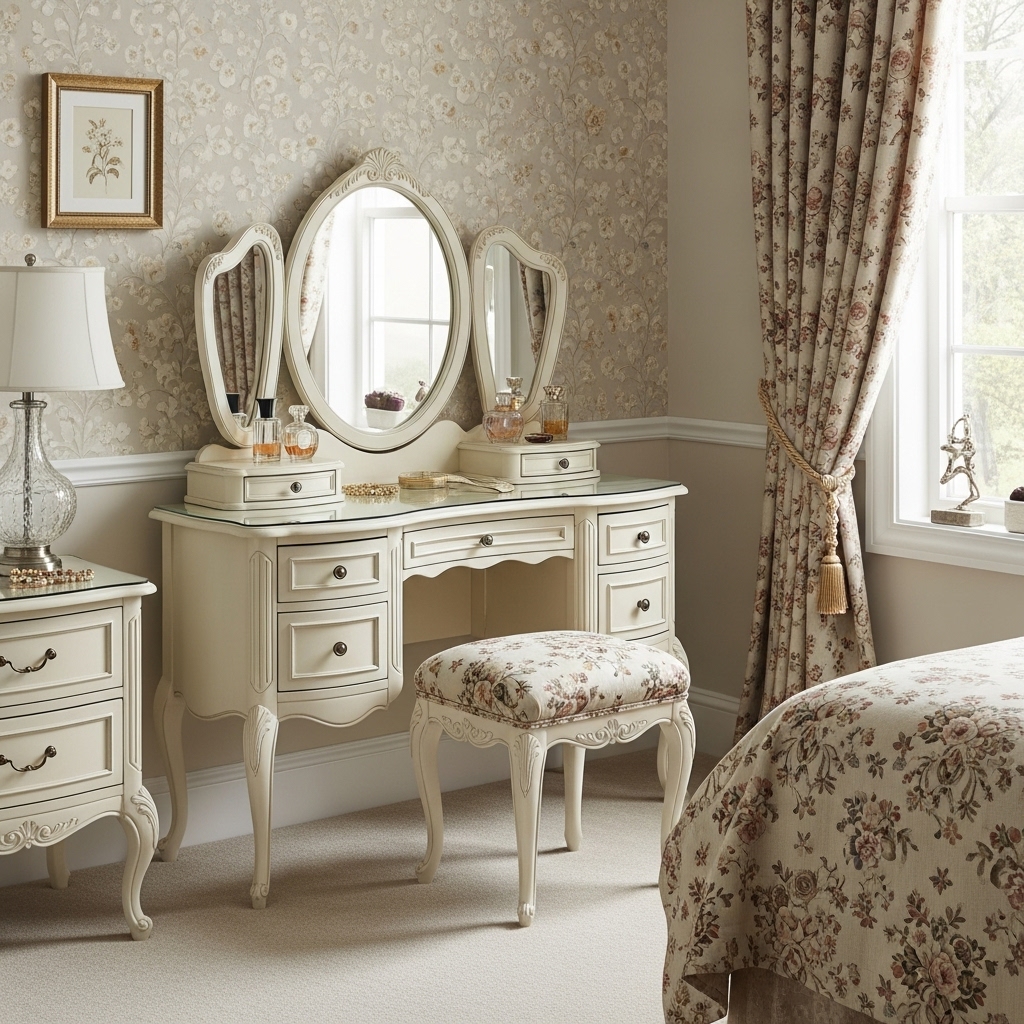
A dressing table provides a natural place to display the decorative side of Rococo Revival design. Look for a curved tabletop, delicate legs, small drawers, or a framed mirror. A compact vanity can fit beside a wardrobe or in an unused corner without taking over the room.
Style the surface with a tray, a small vase, and one or two perfume bottles or other personal accessories. A fabric-covered stool adds softness, while a chair with a carved wooden frame creates a more traditional look.
How to make it work: Make sure the table is comfortable to sit at and offers enough storage for your daily routine. Keep frequently used items in the drawers and reserve the tabletop for objects that are both attractive and useful. This prevents the display from becoming a collection of clutter.
Lighting is especially important at a vanity. Place a lamp where it illuminates your face without creating harsh shadows, and use a mirror positioned at a comfortable height.
In a small bedroom, a narrow writing desk can double as a vanity. A wall-mounted mirror and a compact stool can save floor space, and a tray can be removed when you need the surface for another task.
9. Introduce Floral and Damask Wallpapers
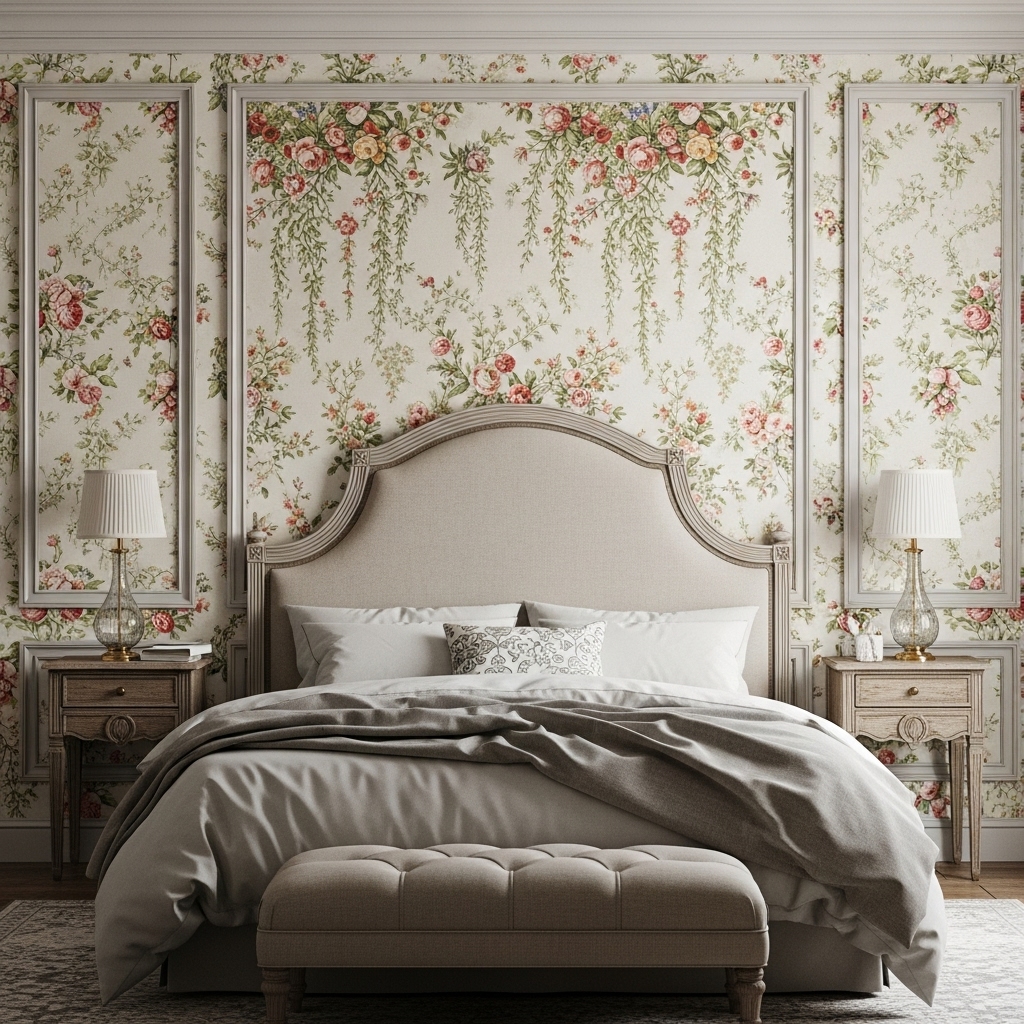
Floral wallpaper is an easy way to introduce the decorative patterns associated with historic French interiors. Look for roses, trailing vines, delicate botanical illustrations, or traditional damask motifs in soft, coordinated colors.
For a balanced result, consider using wallpaper on the wall behind the bed while keeping the other walls painted in a shade taken from the pattern. This gives the room a clear focal point and makes it easier to coordinate the bedding and curtains.
A small-scale pattern can work well in a compact bedroom, especially when its background is light. Larger patterns can be effective in spacious rooms, but they need enough surrounding space to remain visually clear.
How to make it work: Order samples before buying enough wallpaper for the entire wall. Check the pattern in morning and evening light, and compare it with your headboard, floor, and curtains. Remember that some patterns require additional material for matching repeats.
If you rent your home, removable wallpaper may be an option, but check the manufacturer’s guidance and test a small area first. Wall condition and paint type can affect how easily it comes away.
When choosing between wallpaper and paneling, consider which feature best suits your room. You can use both, but it helps to let one take the lead rather than combining elaborate molding with an equally busy print.
10. Add Touches of Gold Leafing
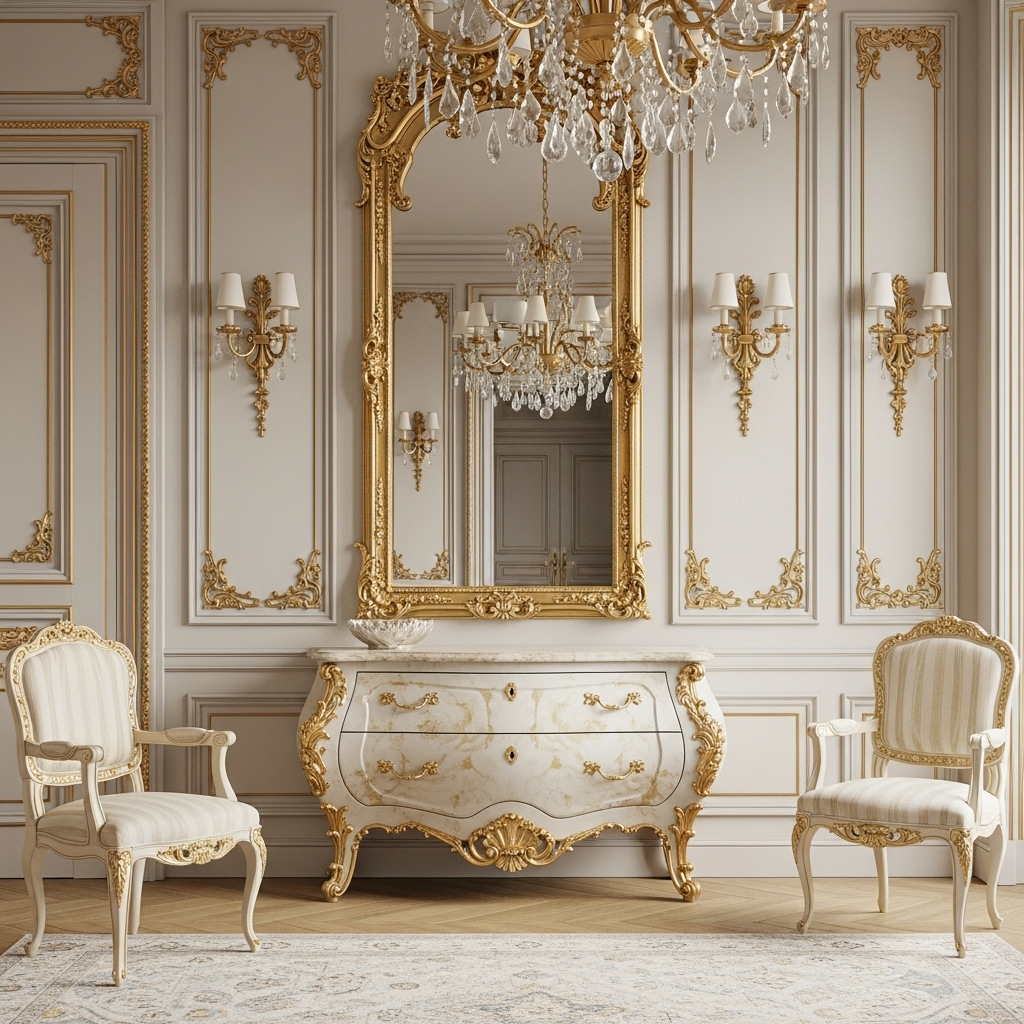
Gold details bring warmth to the pale colors and carved forms commonly used in Rococo Revival bedrooms. They can appear on mirror frames, drawer handles, lamp bases, picture frames, or the raised details of a wooden chair.
The finish you choose will affect the overall mood. Bright gold looks more glamorous, while antique brass and muted gold tend to feel softer and more understated. Choose a finish that works with the room’s existing hardware instead of introducing several competing metallic colors.
How to make it work: Repeat the finish in a few places so the room feels coordinated. For example, a gilded mirror, brass bedside lamp, and matching drawer pulls can form a visual connection without covering every surface in gold.
For a budget-friendly update, try a suitable metallic wax or paint on an existing frame. Clean and prepare the surface according to the product instructions, and test the finish on an inconspicuous area before applying it to the whole piece.
Avoid treating every piece of furniture at once. A little contrast between gold accents, painted wood, and natural finishes helps each detail remain visible.
11. Layer with Plush Area Rugs
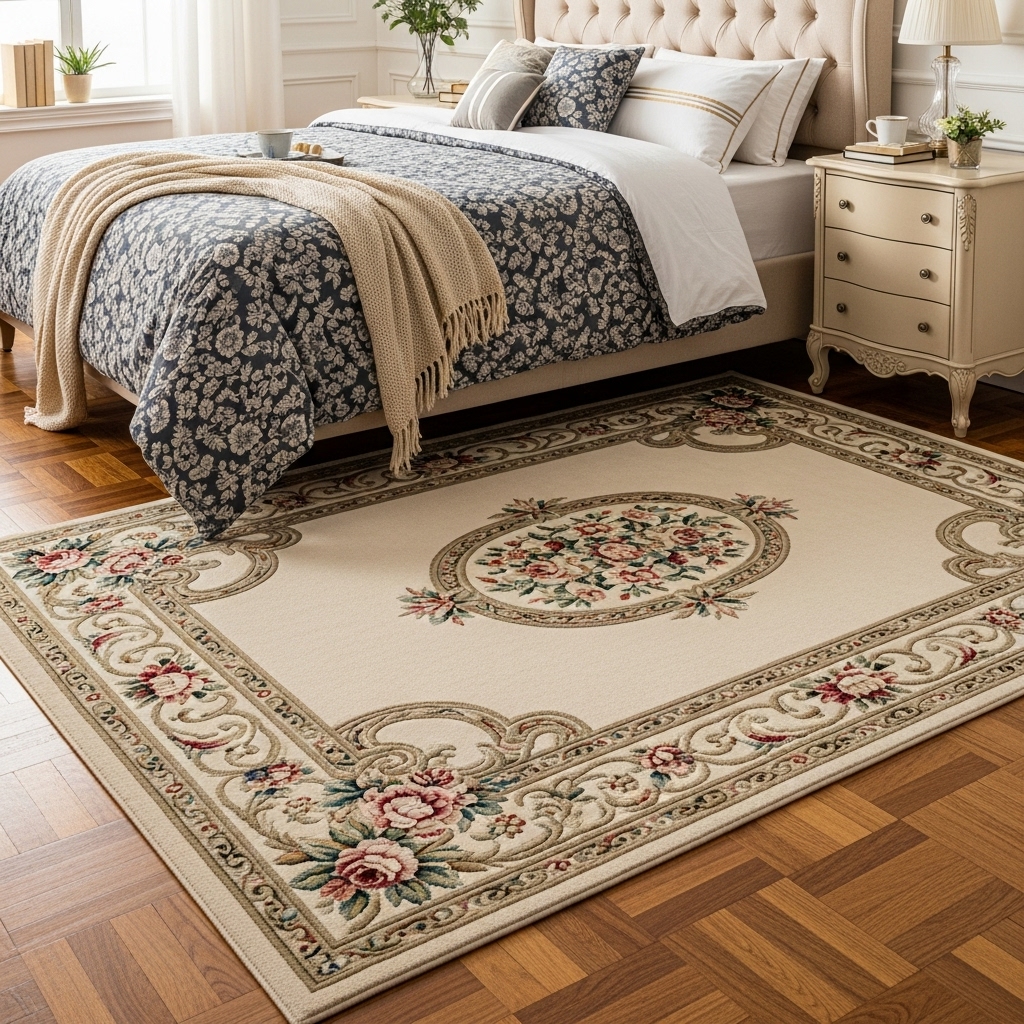
An area rug can make a Rococo-inspired bedroom feel more comfortable while visually connecting the bed, bedside tables, and surrounding furniture. Traditional floral rugs and Aubusson-inspired designs suit the style, but a simple rug in a faded pastel shade can work just as well.
If your furniture already has elaborate carvings and your wallpaper contains a strong pattern, a relatively quiet rug may be the better choice. On the other hand, a plain room can benefit from a rug with a floral border or central medallion.
How to make it work: Measure the space around the bed before shopping. A rug that extends beyond the sides of the bed creates a more unified arrangement and gives you a soft surface to step onto. If the room is too small for a large rug, two smaller bedside rugs can be a practical alternative.
Think about the floor underneath, too. A rug pad can help reduce slipping on appropriate floor surfaces, while a low-pile design may be easier to clean than a very thick one.
Choose a material that suits your daily routine. A decorative rug is only a good investment if you can maintain it comfortably and it doesn’t create a tripping hazard near the bed.
12. Accessorize with Porcelain and Art
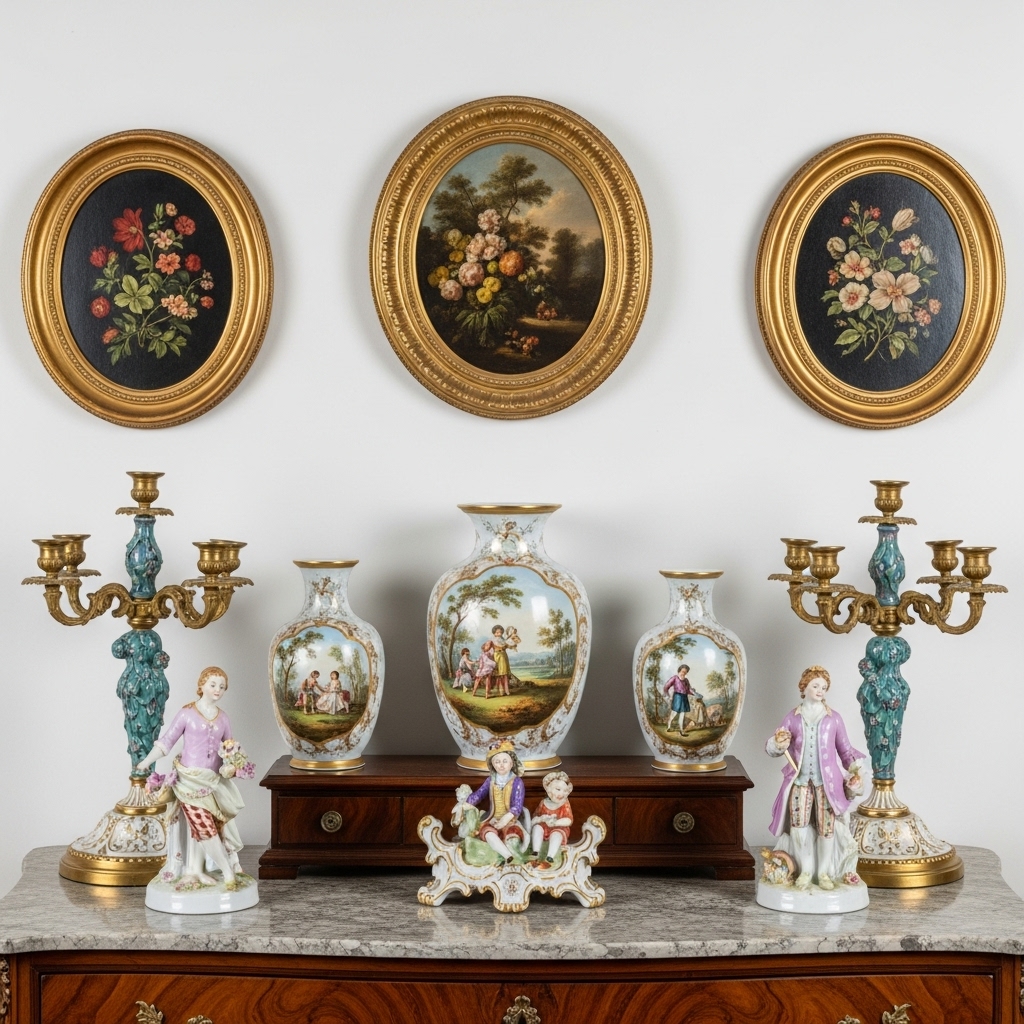
The finishing details are what make a Rococo Revival bedroom feel personal rather than simply decorated. Porcelain vases, small figurines, botanical prints, romantic landscapes, and framed illustrations can introduce the delicate, artistic character associated with the style.
You don’t need expensive antiques. A thrifted vase, a framed floral print, or a small decorative box can work if its color and shape complement the rest of the room. The goal is to choose objects that contribute to the design instead of filling every available surface.
How to make it work: Group objects in small arrangements. For example, place a vase and a framed print on a dresser, or arrange two decorative objects on a bedside table beside a useful lamp. Vary their heights slightly so the arrangement looks natural.
Hang artwork at a comfortable viewing height and consider the wall behind it. A simple print may stand out beautifully against a pastel wall, while a more elaborate frame can complement plain paneling.
Keep fragile porcelain away from the edge of furniture and from places where it could be knocked over. If you have pets, children, or limited display space, choose fewer, sturdier objects and use enclosed shelves where appropriate.
Most importantly, include a few items that reflect your own interests. A bedroom feels more welcoming when its decorative choices have personal meaning rather than following a style guide too literally.
Why Choose Rococo Revival?
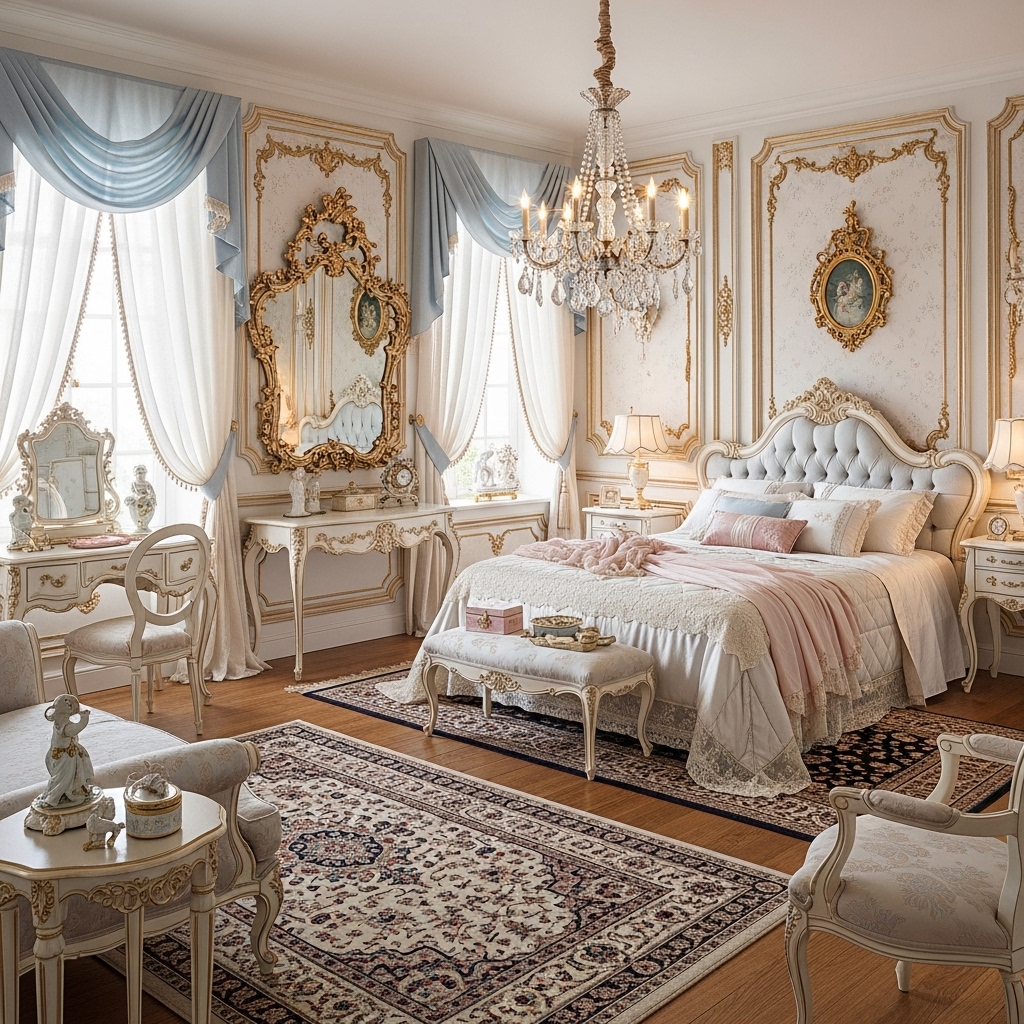
Rococo Revival offers a way to introduce personality, craftsmanship, and decorative detail into a bedroom. Its curved furniture, pastel colors, ornamental mirrors, and floral motifs create a different atmosphere from the clean lines and restrained palettes of minimalist interiors.
It is also adaptable. A traditional interpretation can include elaborate paneling, carved furniture, and a chandelier, while a contemporary version might use a simple bed, one antique-style mirror, and carefully chosen gold accents.
The style can encourage you to make better use of existing furniture, too. Refinishing an old dresser or giving a secondhand frame a new finish can be a practical alternative to buying everything new. However, sustainability depends on the materials, condition, and useful life of the items you choose rather than on appearance alone.
How to Create a Rococo Revival Bedroom on a Budget
You can capture this look without buying a complete bedroom set or investing in expensive antiques. Focus on the elements that will make the greatest difference in your particular room.
- Start with what you own. Repaint a suitable wooden table, reuse an existing mirror, or update drawer handles before replacing furniture.
- Choose one statement piece. A curved headboard, ornate mirror, or decorative chandelier can establish the style without requiring every item to be elaborate.
- Shop secondhand. Antique shops, flea markets, estate sales, and secondhand listings can be good places to look for carved frames, traditional chairs, and decorative accessories. Check condition, dimensions, and repair costs before purchasing.
- Use affordable textiles. Plain bedding in cream or pastel shades can balance an ornate headboard. Cushions, throws, and curtains are also relatively easy to change later.
- Prioritize the layout. A well-arranged room with comfortable lighting and enough walking space will feel more successful than one filled with expensive ornaments.
If your budget is limited, make changes in stages. Begin with the color palette and bedding, add one distinctive decorative feature, and then introduce smaller accessories as you find pieces you genuinely like.
Common Mistakes to Avoid When Decorating a Rococo Revival Bedroom
The style’s decorative nature can make it tempting to add too many details. A few careful decisions will help keep the room attractive and functional.
Mixing too many patterns: Floral wallpaper, patterned curtains, an ornate rug, and printed bedding can compete for attention. Choose one dominant pattern and let the other textiles support it.
Choosing furniture that is too large: A dramatic bed or oversized dresser may look beautiful on its own but leave little room to move. Measure the bedroom and check the clearance needed for drawers, doors, and bedside access.
Using too much gold: Metallic finishes are most effective when they highlight selected details. Combining several gold finishes with reflective surfaces everywhere can make the room feel visually busy.
Ignoring practical lighting: A chandelier may provide atmosphere but still leave dark corners. Add bedside lighting and appropriate task lighting for reading, dressing, or working.
Confusing decoration with comfort: A bedroom should still be restful. Choose a comfortable mattress, breathable bedding suited to your climate, and curtains that meet your privacy needs. Decorative details should improve the space rather than make it difficult to use.
Frequently Asked Questions About Rococo Revival Bedrooms
Can Rococo Revival work in a small bedroom?
Yes. Use a light color palette, a few curved furniture pieces, and one main decorative feature. A tall mirror or full-length curtains can draw attention upward, while wall-mounted lighting and compact bedside tables preserve floor space. Avoid oversized furniture that blocks walking routes or makes the room difficult to use.
What is the difference between Rococo and Baroque decor?
Both styles are associated with elaborate historical interiors, but they have different visual characteristics. Baroque design is often more monumental and dramatic, with strong contrasts and substantial forms. Rococo tends to emphasize lighter colors, flowing curves, asymmetry, delicate ornament, and natural motifs. Individual historical interiors vary, so these are broad distinctions rather than absolute rules.
How can I make a Rococo Revival bedroom look modern?
Combine one or two ornate pieces with simple contemporary furniture and uncomplicated bedding. For example, pair a carved ivory headboard with plain linen-style bedding, discreet bedside lamps, and a restrained color palette. Keeping the layout uncluttered allows the decorative details to stand out.
Is Rococo Revival bedroom decor expensive?
It can be expensive if you purchase antique furniture and elaborate lighting, but it doesn’t have to be. Start with affordable accessories, secondhand furniture, and textiles in complementary colors. A single distinctive mirror or refurbished bedside table can introduce the look without requiring a complete makeover.
Which colors work best for a Rococo-inspired bedroom?
Powder blue, blush pink, ivory, pale sage, lavender, and muted yellow are useful starting points. Cream and warm white provide neutral backgrounds, while antique gold and brass add contrast. Choose shades that work with your existing flooring, natural light, and furniture rather than relying on a fixed color combination.
What furniture is essential for a Rococo Revival bedroom?
There is no required furniture checklist. A comfortable bed is the priority, followed by practical storage and suitable bedside surfaces. Curved chairs, carved dressers, and decorative vanities can strengthen the style, but select them according to the room’s dimensions and your needs.
How do I decorate a rented bedroom in Rococo style?
Use removable wallpaper where suitable, freestanding mirrors, decorative lamps, cushions, curtains, and secondhand furniture that doesn’t require permanent changes. Before hanging heavy artwork or installing anything, check your rental agreement and use fixing methods appropriate for the wall and the item’s weight.
Final Thoughts
Creating a Rococo Revival bedroom is less about recreating a French palace and more about choosing decorative details that make your own space feel considered and comfortable. Pastel walls, curved furniture, ornate mirrors, soft textiles, and a few gilded accents can establish the look without overwhelming the room.
Begin with one feature that genuinely appeals to you, then build the rest of the design around it. Pay attention to scale, lighting, storage, and the patterns you combine. Whether you are refreshing a small rented bedroom or redesigning a spacious master suite, the most successful result will balance historical character with the practical needs of everyday life.