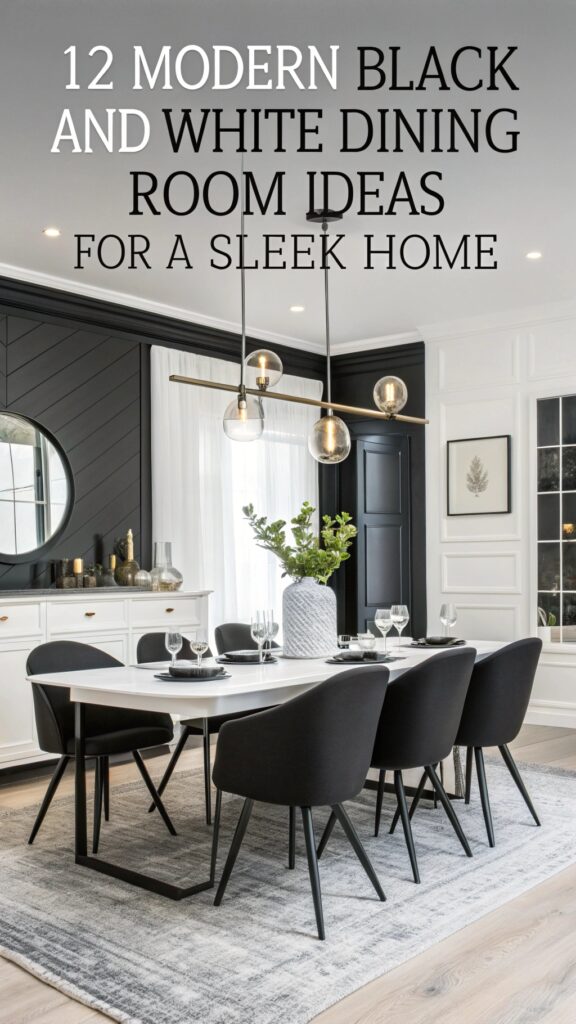
A black and white dining room can look striking without feeling overly formal or difficult to live with. The secret is knowing where to use each color, which materials to combine, and how to balance bold details with everyday comfort.
For example, white walls can help a compact dining area feel more open, while black dining chairs, a dark light fixture, or framed artwork can give the room definition. In a larger space, the same colors can create a more dramatic look through dark ceilings, patterned wallpaper, or a statement dining table.
You do not need to replace every piece of furniture to achieve this style, either. A few carefully chosen changes can make an existing dining room feel more coordinated.
Below are 12 modern black and white dining room ideas, along with practical tips for choosing furniture, arranging decor, and making the look work in your own home.
Why Choose a Black and White Dining Room?
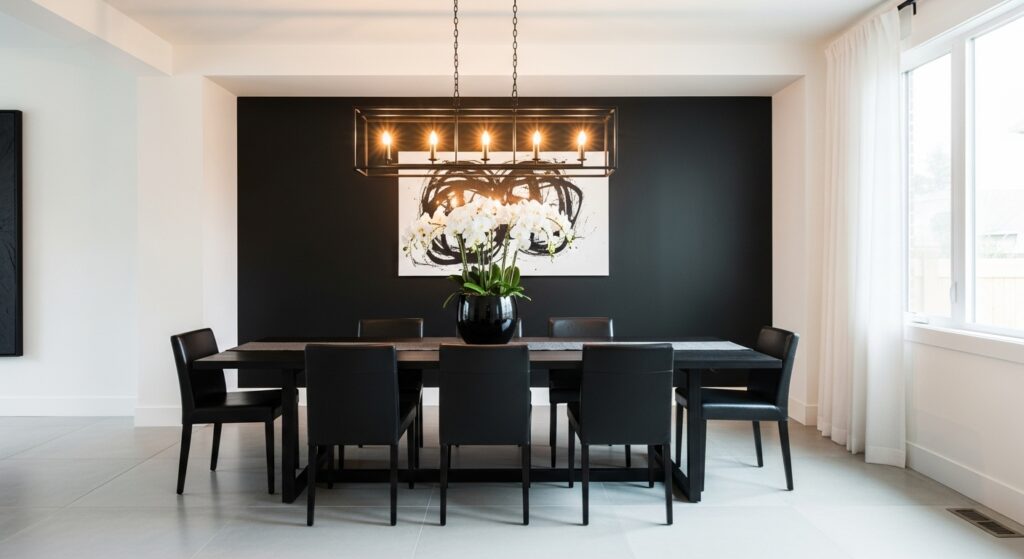
One of the biggest advantages of decorating with black and white is that the colors give you a clear starting point. Instead of worrying about whether several shades work together, you can focus on furniture shapes, materials, lighting, and the overall arrangement of the room.
White is useful for walls, ceilings, and other large surfaces because it reflects light. Black works well on smaller elements that need to stand out, including chair frames, pendant lights, picture frames, and table bases.
The balance does not have to be equal. A room with mostly white surfaces and a few black accents can feel light and understated, while dark furniture against white walls creates a stronger contrast.
There is also room to introduce natural materials. Wood, linen, stone, and woven textures can soften the contrast without taking attention away from the main color scheme.
Before buying anything, consider the size of your dining area, the amount of daylight it receives, and how often the space is used. These details will help you choose a design that looks attractive and remains practical for everyday meals.
1. The Statement Sculptural Light
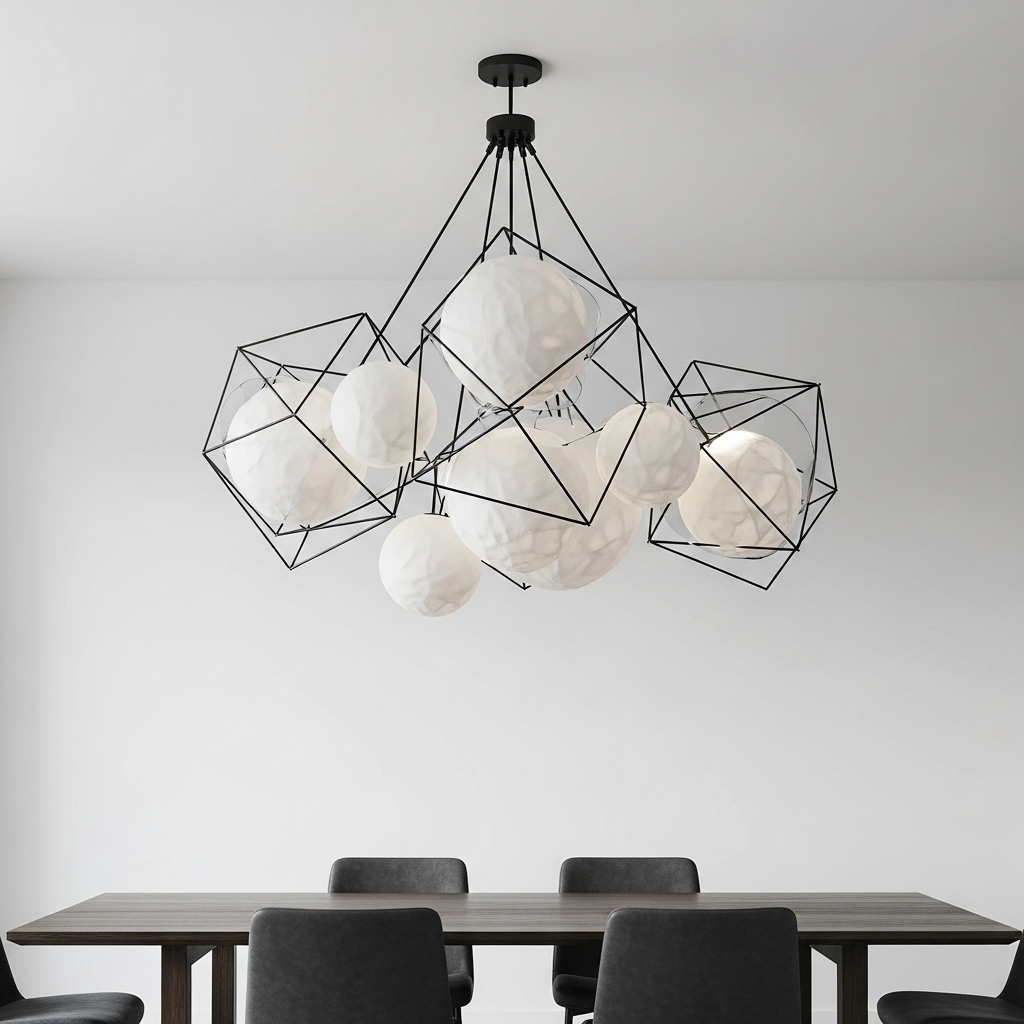
A distinctive light fixture can give a black and white dining room a clear focal point, particularly when the furniture is simple. Consider a black geometric pendant, a cluster of white globe lights, or a slim linear fixture positioned above a rectangular dining table.
The shape of the fixture matters just as much as its color. Rounded pendants soften a room filled with straight lines, while angular metal designs reinforce a clean, architectural look.
How to make this idea work: Choose a fixture that relates to the size and shape of your table. A linear light often suits a long rectangular table, whereas a central pendant or compact cluster may work better above a round table.
Hang the fixture at a height that illuminates the tabletop without obstructing conversation or the view across the room. Check the manufacturer’s installation guidance and allow for adequate clearance.
Light temperature also deserves attention. Warm-white lighting generally creates a more comfortable atmosphere for dinner, while cooler lighting can make white surfaces feel harsher. If possible, install a dimmer so you can use brighter lighting for everyday activities and a softer setting for evening meals
2. High-Contrast Graphic Wallpaper
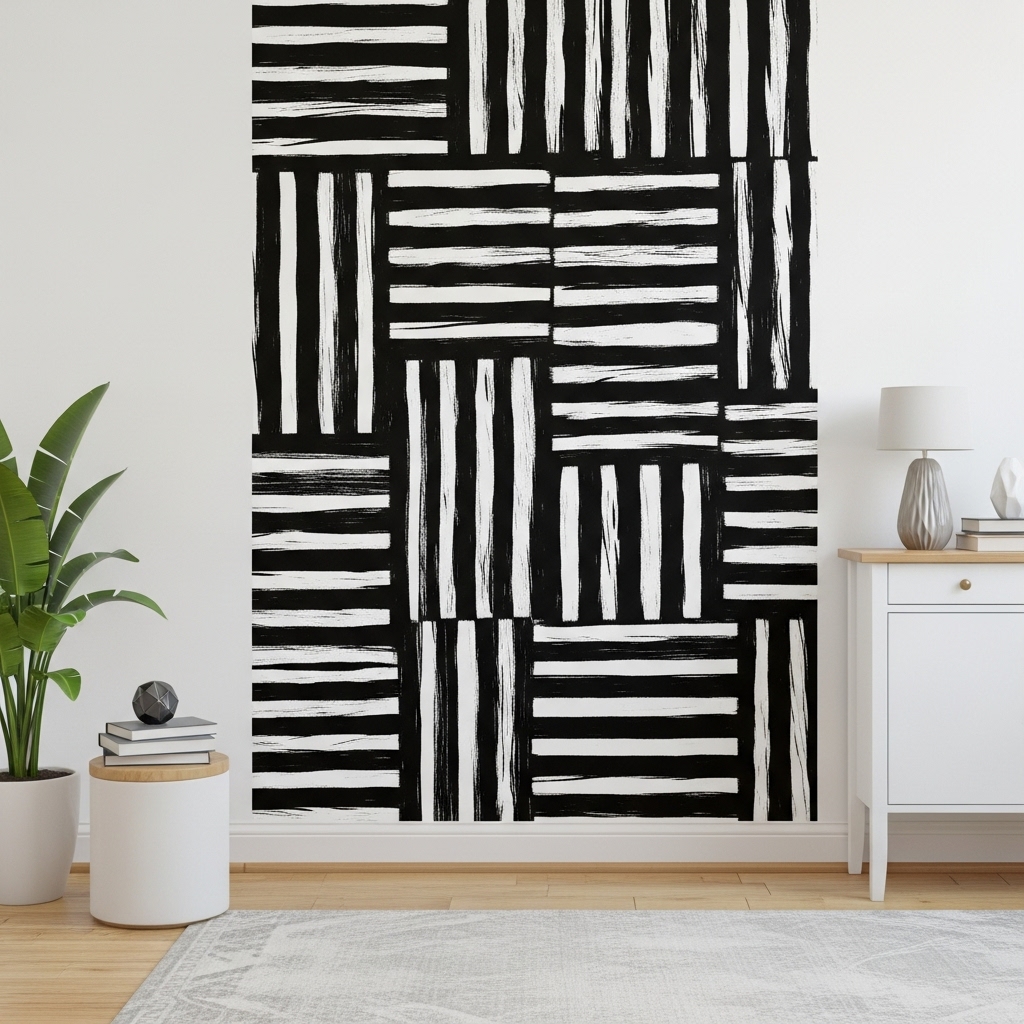
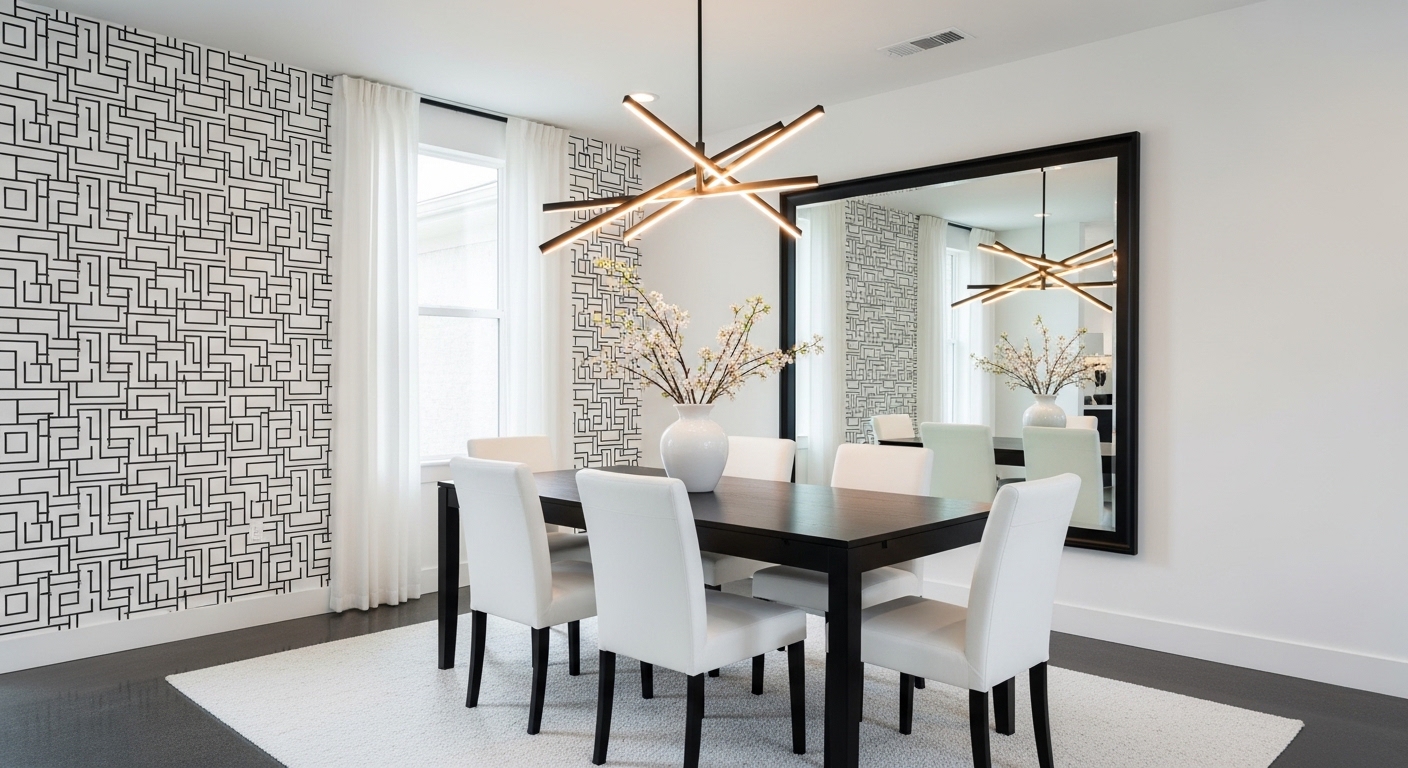
Patterned wallpaper offers a way to introduce contrast without filling the dining room with additional furniture. Geometric shapes, oversized stripes, abstract line drawings, and irregular brushstroke patterns can all work well in a contemporary space.
The important thing is to choose a pattern that suits the room rather than competing with everything else in it.
For a small dining area, a large-scale pattern on one wall can create a strong focal point. Smaller, busier patterns may make a narrow room feel visually crowded, especially when combined with elaborate furniture and numerous accessories.
A practical decorating approach: Apply the wallpaper to the wall behind the dining table or sideboard. Keep the other walls relatively simple, and choose chairs and tableware that allow the pattern to remain the main attraction.
If you rent your home or prefer to change your decor regularly, removable wallpaper may be worth considering. Check whether the product is suitable for your wall finish and whether removal could damage the surface.
Before committing to a full wall, obtain a sample and view it at different times of day. Black can look much stronger under artificial lighting than it does in bright daylight.
3. The Sleek Marble Table
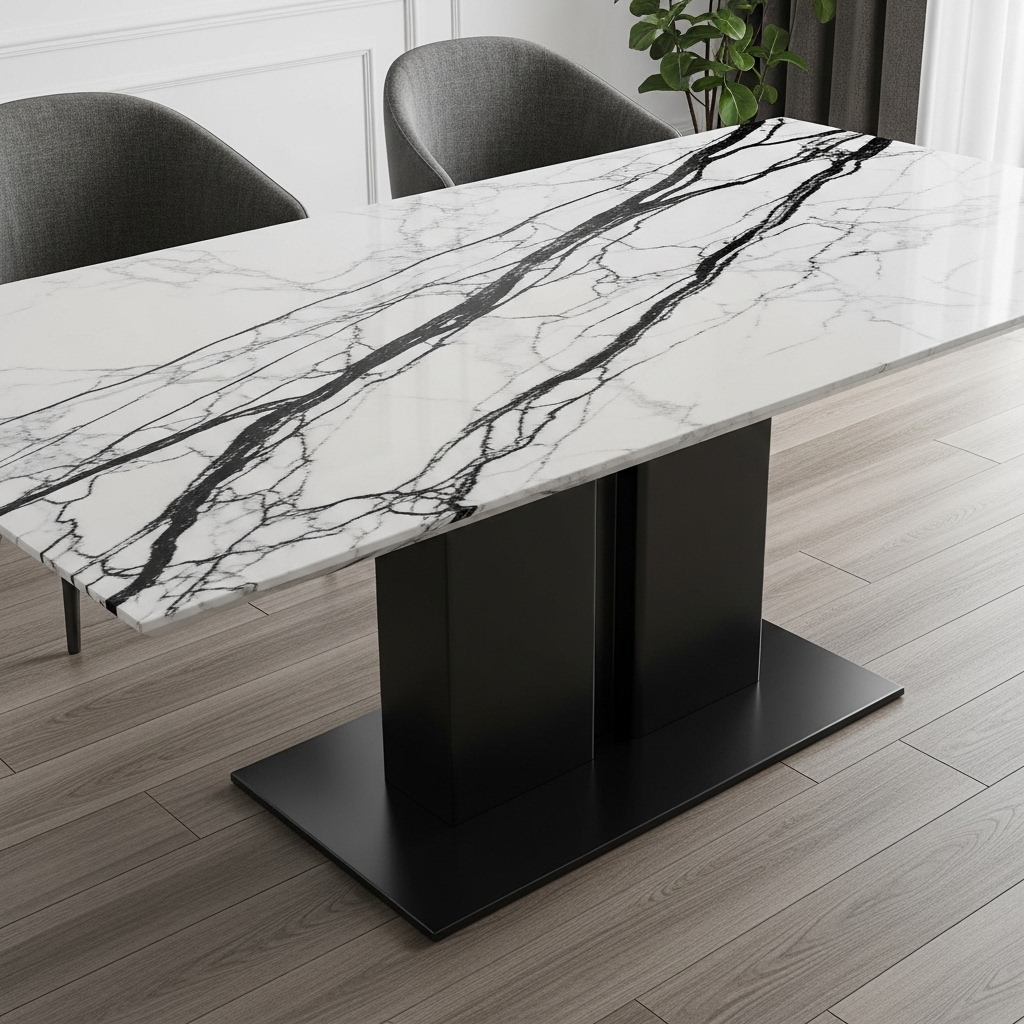
A white marble dining table with dark veining can bring natural pattern into a monochrome room. Pairing the top with a black pedestal base creates contrast while keeping the design visually simple.
If genuine marble is outside your budget, consider porcelain, quartz, or a well-made laminate surface with a marble-inspired finish. These alternatives offer different levels of maintenance, appearance, and cost, so compare the manufacturer’s specifications before deciding.
The base deserves attention, too. A pedestal can provide more flexibility for seating because it avoids the corner legs of a traditional table. However, the shape and size of the base still determine how comfortably chairs fit underneath.
Before buying, measure the dining area. Allow enough space for chairs to be pulled out and for people to walk around the table. A beautiful tabletop will not improve the room if everyone has to squeeze past it.
Think about everyday use as well. Natural marble can be sensitive to acids and staining, so spills should be cleaned promptly and the stone maintained according to its care instructions. If the table will be used frequently by children or for busy family meals, a more forgiving surface may be the better choice.
4. Matte Black Wishbone Chairs
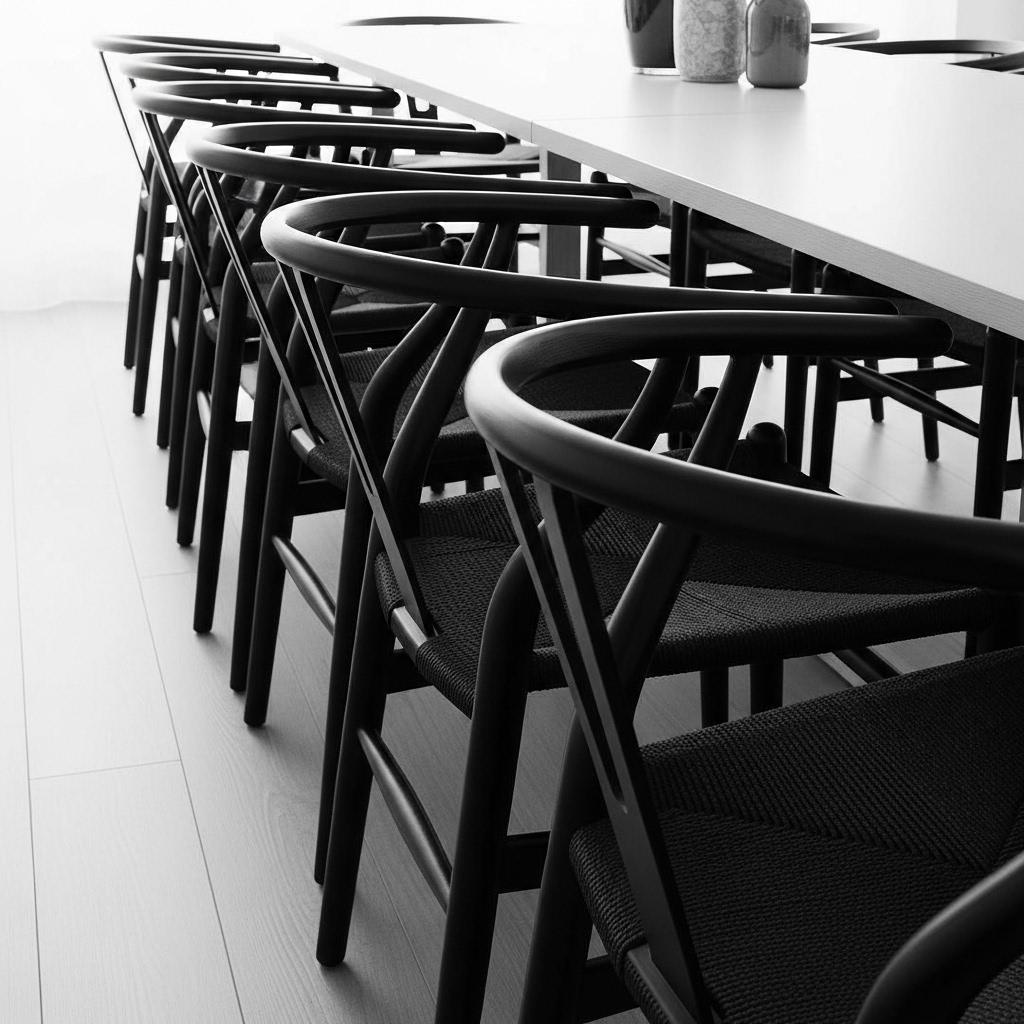
Matte black dining chairs are an easy way to introduce contrast without making the entire room feel dark. They work particularly well with white tabletops, pale timber, and simple pendant lighting.
Wishbone-style chairs are one option, thanks to their curved backs and woven seats. Other possibilities include slim metal chairs for an industrial look or upholstered black chairs for a softer, more comfortable dining area.
You do not necessarily need to buy a complete matching set. A combination of black side chairs and a different pair of chairs at the ends of a rectangular table can create a more personal arrangement, provided the shapes and finishes work together.
Think about comfort before appearance. Check the seat height, back support, and available space beneath the table. Upholstered seats may be more comfortable for long meals, while smooth finishes are often easier to wipe clean.
For a family dining area, look for durable finishes that tolerate regular use. Matte surfaces can show dust, fingerprints, or scuffs depending on the material, so ask about cleaning requirements before purchasing.
5. The Monochrome Gallery Wall
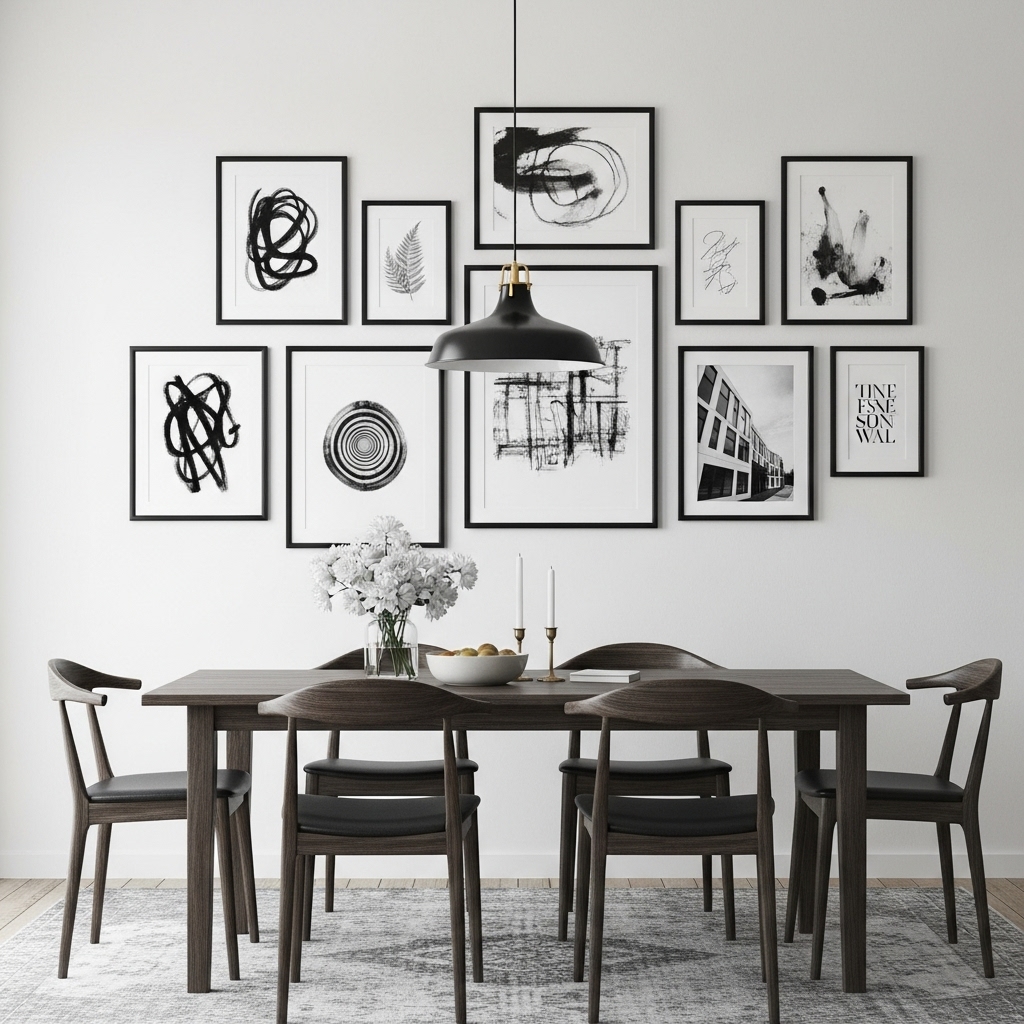
A gallery wall gives a dining room personality without requiring a large collection of decorative objects on the table. Black-framed photographs, charcoal drawings, architectural prints, and abstract artwork can all contribute to a coordinated display.
You can arrange the frames in a neat grid for a more structured appearance or use different frame sizes for a relaxed arrangement. The choice depends on the style of your furniture and how formal you want the room to feel.
For a balanced display, begin by deciding which wall will hold the artwork. Arrange the frames on the floor first, then measure the spacing before hanging them. This makes it easier to identify awkward gaps and prevent the collection from looking crowded.
One useful trick: Repeat a detail from the dining room in the artwork. For instance, black frames can echo the legs of the dining chairs, while a print featuring curved shapes can complement rounded pendant lights.
You can also create a gallery wall on a budget using personal photographs printed in black and white. This approach adds meaning to the room instead of relying entirely on generic decorative prints.
Choose artwork sizes that relate to the furniture below them. A small collection may disappear above a long sideboard, while an oversized arrangement can overwhelm a narrow wall.
6. Black Ceiling, White Walls
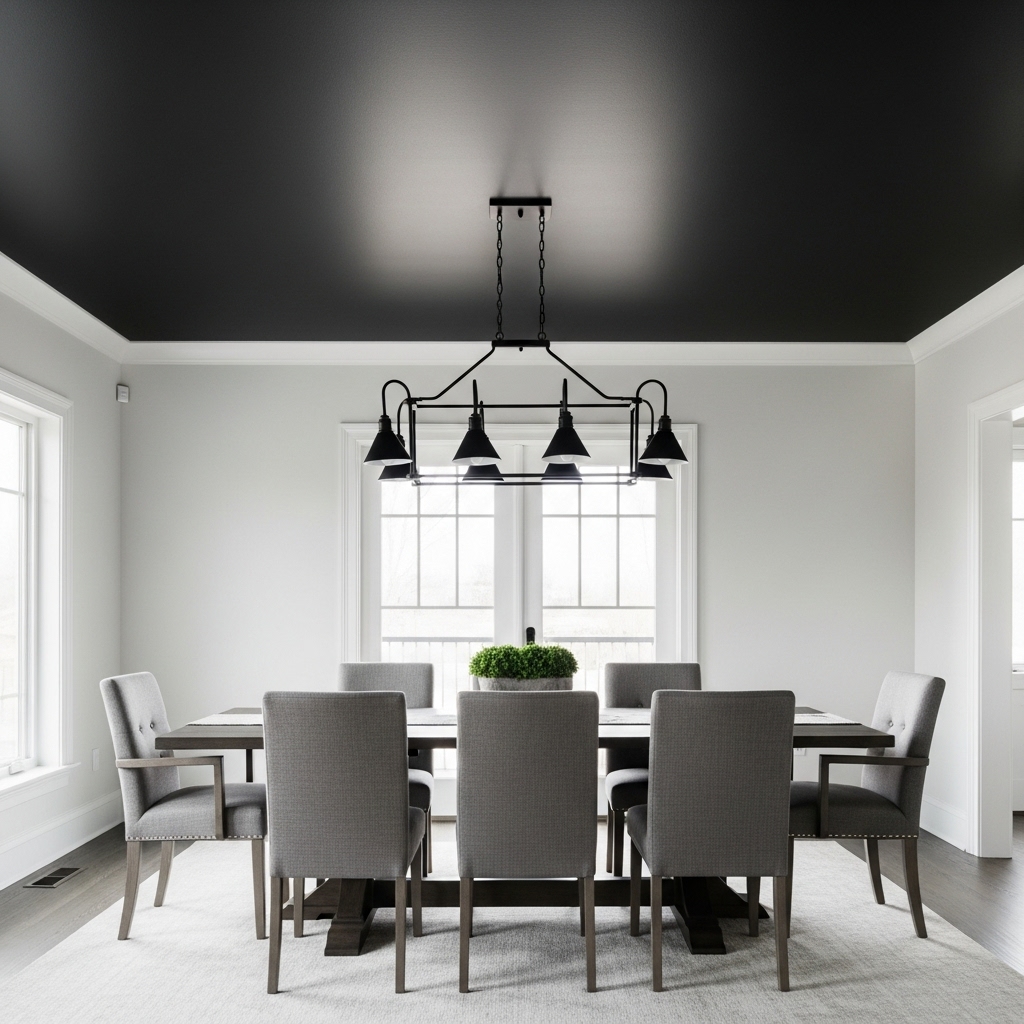
A black ceiling is a more adventurous choice, but it can make a dining room feel distinctive and intimate. Against white walls, the dark surface creates a strong visual boundary that draws attention to the dining table and light fixture.
This treatment is especially worth considering in a room with good natural light, sufficient artificial lighting, and a layout that does not already feel cramped.
The finish makes a difference. A flat or matte black ceiling creates a subdued effect, while a glossier finish reflects more light and may highlight surface imperfections.
If you have a low ceiling or a small dining area, test the color before painting the entire surface. A dark ceiling can make the room feel more enclosed, which may be desirable in a spacious dining room but less comfortable in a compact one.
How to balance the look: Keep the walls white or a soft off-white, use a light-colored table or rug, and avoid filling every corner with dark furniture. A well-placed pendant can also help draw the eye toward the center of the room.
If you are unsure about committing to black paint, try a smaller architectural feature first, such as a ceiling beam or a shallow recess, where appropriate.
7. Textured Rug Layering
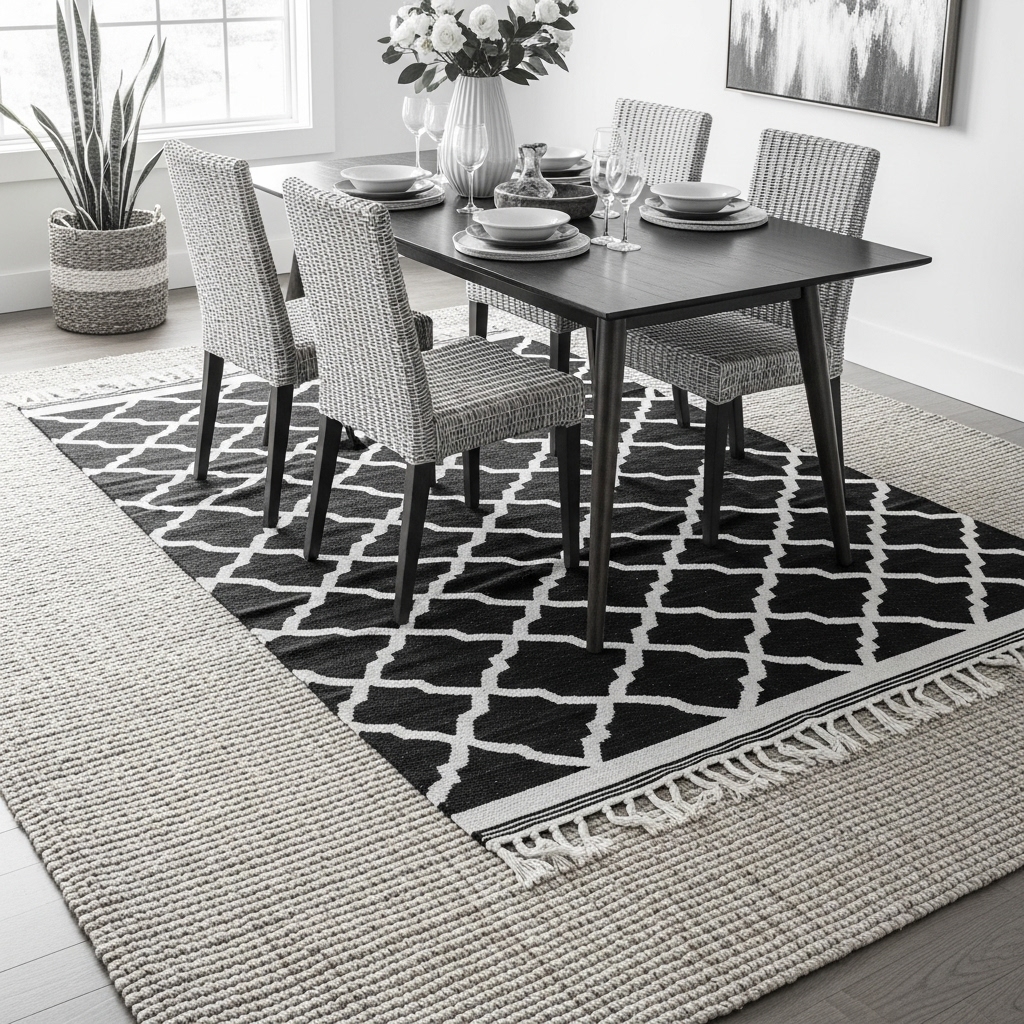
A rug can help define the dining area, especially in an open-plan home where the table shares space with the living room or kitchen. In a black and white scheme, texture is particularly useful because it adds depth without relying on extra colors.
A pale woven rug creates a softer foundation beneath dark chairs. Alternatively, a black and white striped or geometric rug can become a feature in its own right.
Layering rugs is possible, but it is not always necessary. In a dining area, two rugs can create extra bulk and make chairs harder to move. A single, well-sized rug is often the simpler option.
Choose the size carefully. The rug should extend far enough beyond the table for chairs to remain on it when people sit down and pull their seats back. Measure the table and the chairs in their pulled-out positions before buying.
Material matters, too. Flatweave rugs are often easier to use beneath dining chairs than thick, plush designs. Washable rugs may be useful in busy households, while a natural-fiber rug can introduce an organic texture if its care requirements suit your lifestyle.
Use an appropriate nonslip underlay where needed, and select a rug that can be cleaned according to the manufacturer’s instructions. This will help keep the dining area comfortable and practical.
8. Minimalist Black Tableware
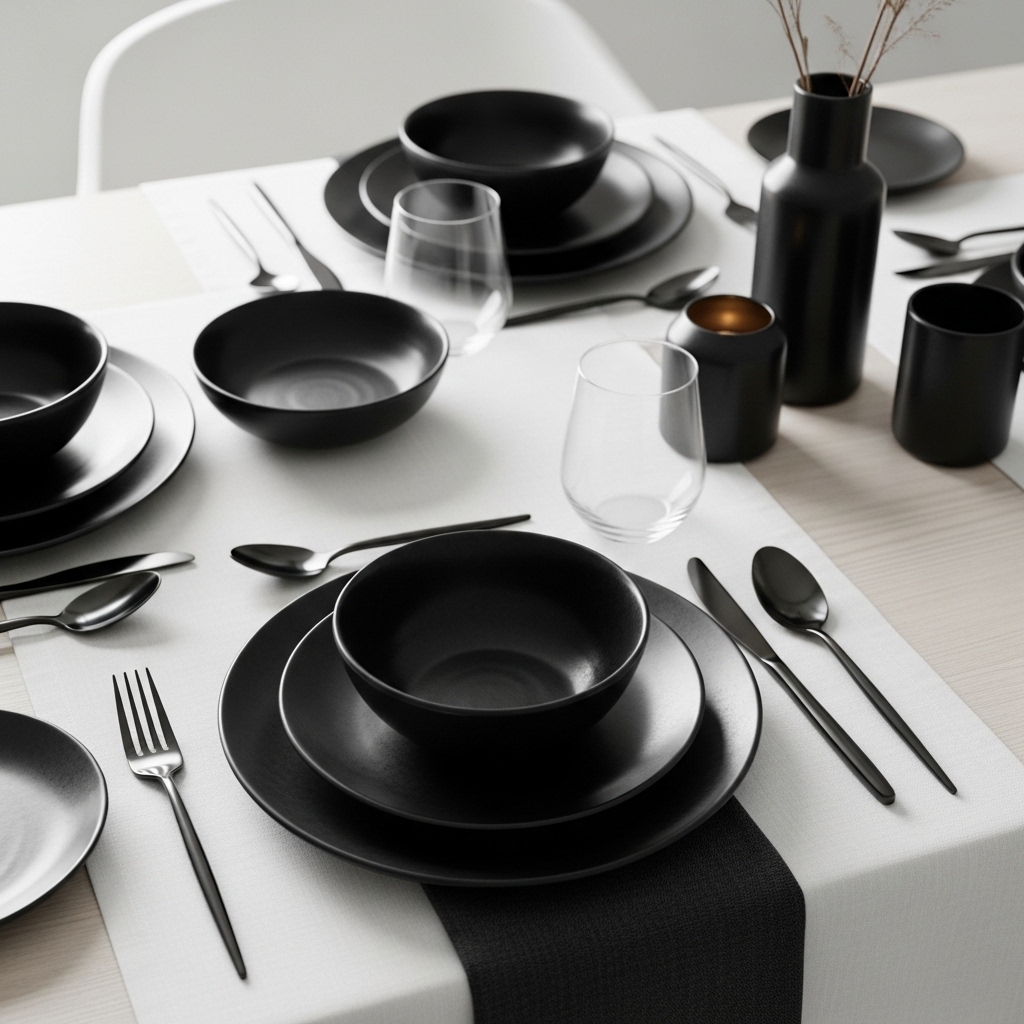
You can carry the monochrome theme onto the dining table without changing the furniture at all. Matte black plates, white serving bowls, clear drinking glasses, and simple cutlery create a coordinated setting for everyday meals or special occasions.
Black tableware looks particularly striking against a white tablecloth or a pale wood tabletop. On a dark table, white plates and lighter serving pieces may provide better contrast.
Keep the arrangement simple enough that the table remains usable. A small vase, a low bowl, or a modest arrangement of fresh flowers can provide a focal point without getting in the way of conversation.
For everyday practicality: Check whether the plates are dishwasher-safe, whether the finish is prone to showing scratches, and whether replacement pieces are readily available. If you prefer to mix and match, start with a small set of black dinner plates and combine them with white bowls or existing neutral tableware.
You do not need to make every item black. Alternating dark and light pieces can create a more balanced setting, while linen napkins introduce softness without disrupting the design.
The result is a dining table that feels intentional but is still comfortable to use every day.
9. Industrial Metal Accents
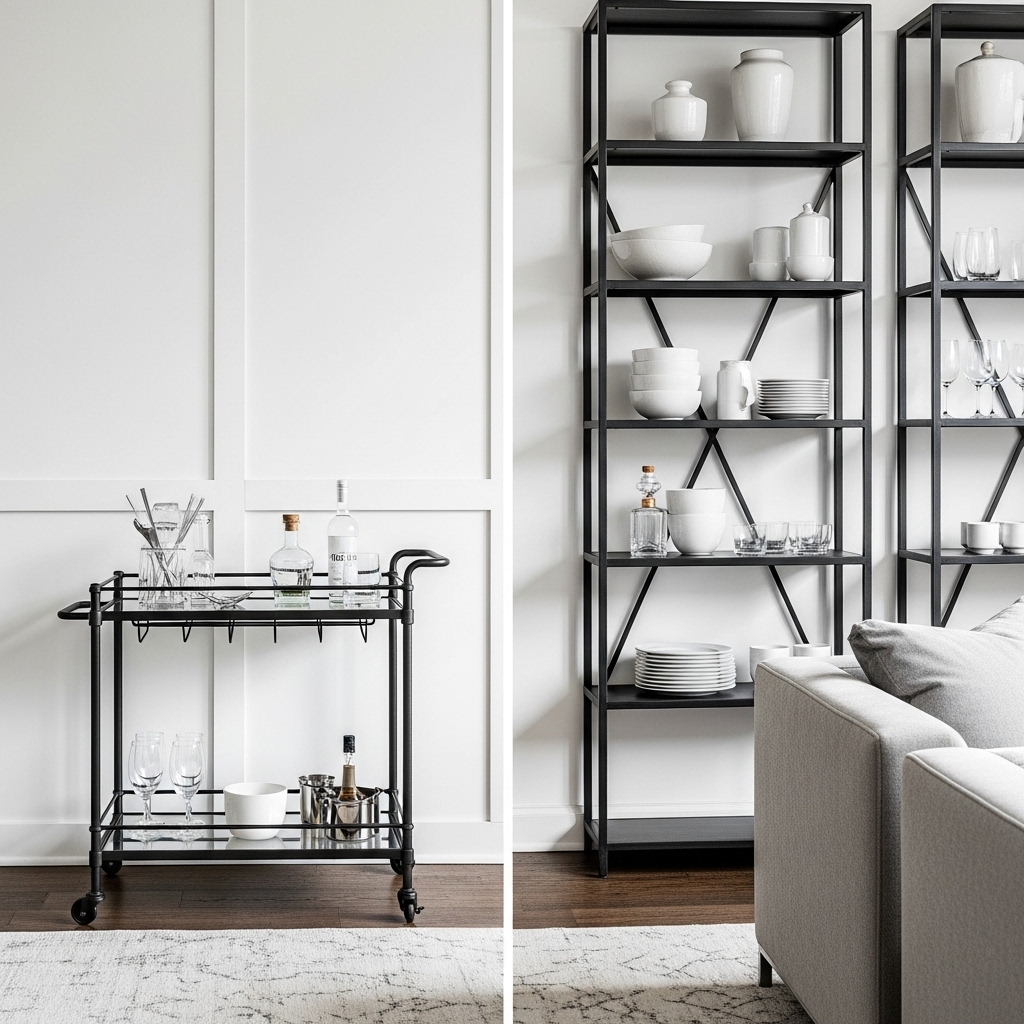
Black metal accents can give a monochrome dining room a more architectural feel. Consider a slim metal sideboard frame, a bar cart, open shelving, or a pendant with exposed structural details.
These pieces are especially useful when the room already contains simple furniture. Their clean lines add definition without requiring another large decorative feature.
A black metal bar cart, for example, can hold serving dishes, glasses, or a small collection of dining accessories. Open shelving can display white ceramics and clear glassware, allowing the contents to stand out against the dark frame.
However, avoid filling every available surface with accessories. Too many small objects can make a modern dining room feel cluttered rather than carefully arranged.
A better approach is to give each piece a purpose. Use a sideboard for storage, shelves for a limited collection of ceramics, or a cart when you need extra serving space.
If you have young children or a narrow walkway, check that shelving and carts are stable and positioned safely. Secure freestanding furniture to the wall where appropriate, and choose finishes that can withstand the room’s everyday use.
10. Natural Wood Integration
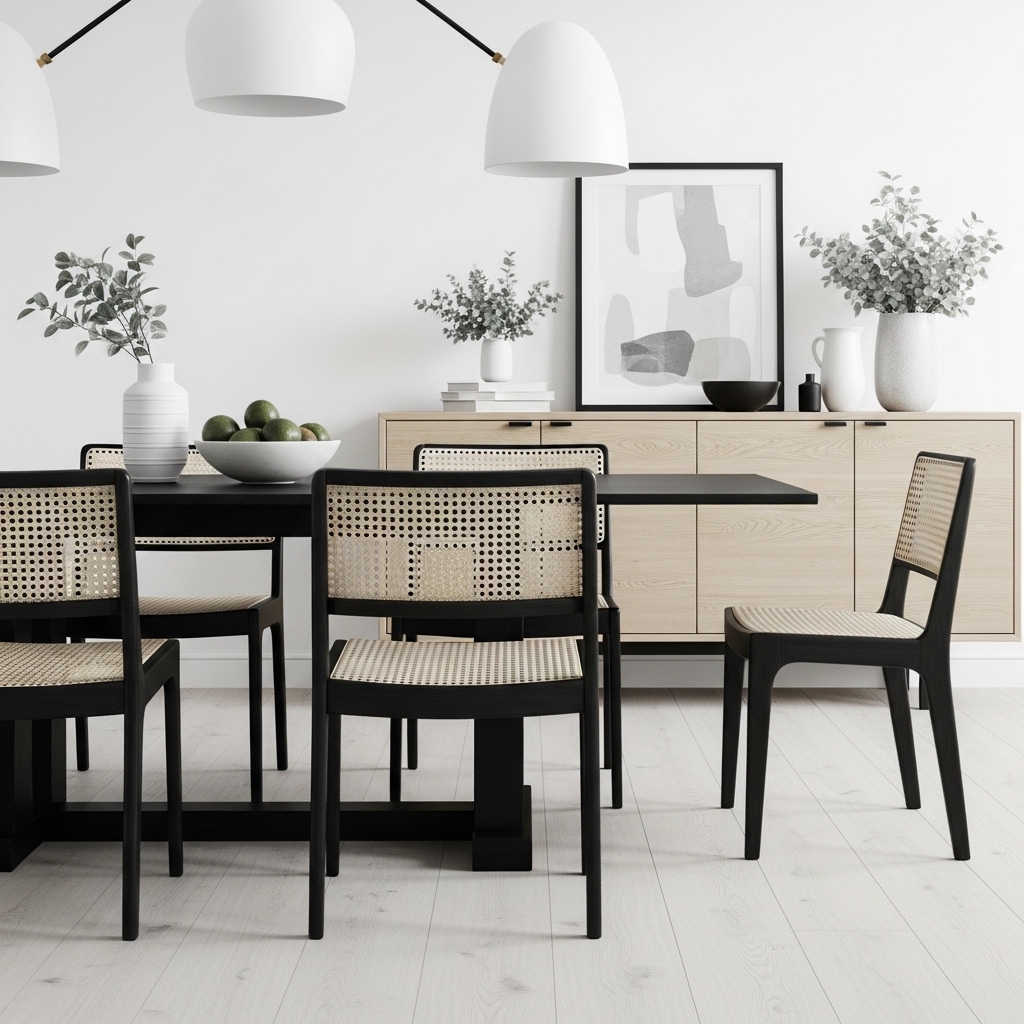
Black and white can look crisp and contemporary, but a room dominated by smooth, hard surfaces may feel less welcoming than intended. Natural wood helps soften that contrast.
A pale oak sideboard, a wooden dining tabletop, cane-backed chairs, or a timber floor can introduce warmth while allowing the black and white palette to remain the main focus.
You do not need to add wood everywhere. One substantial wooden piece can be enough to change the atmosphere of the room. For example, a light wood dining table paired with black chairs creates contrast without the intensity of an all-black furniture set.
Pay attention to the undertones of the materials. Yellow-toned timber can look different from cooler, pale oak, and some wood finishes may clash with existing flooring or cabinetry.
How to create a coordinated look: Choose one main wood tone and repeat it in one or two smaller details. A wooden sideboard and matching chair seats, for example, can make the room feel connected without looking overly matched.
Wood is also a practical choice for people who want a softer alternative to stone and metal. Consider the finish and maintenance requirements, particularly if the table will be exposed to spills, heat, or frequent cleaning.
11. Architectural Molding and Trim
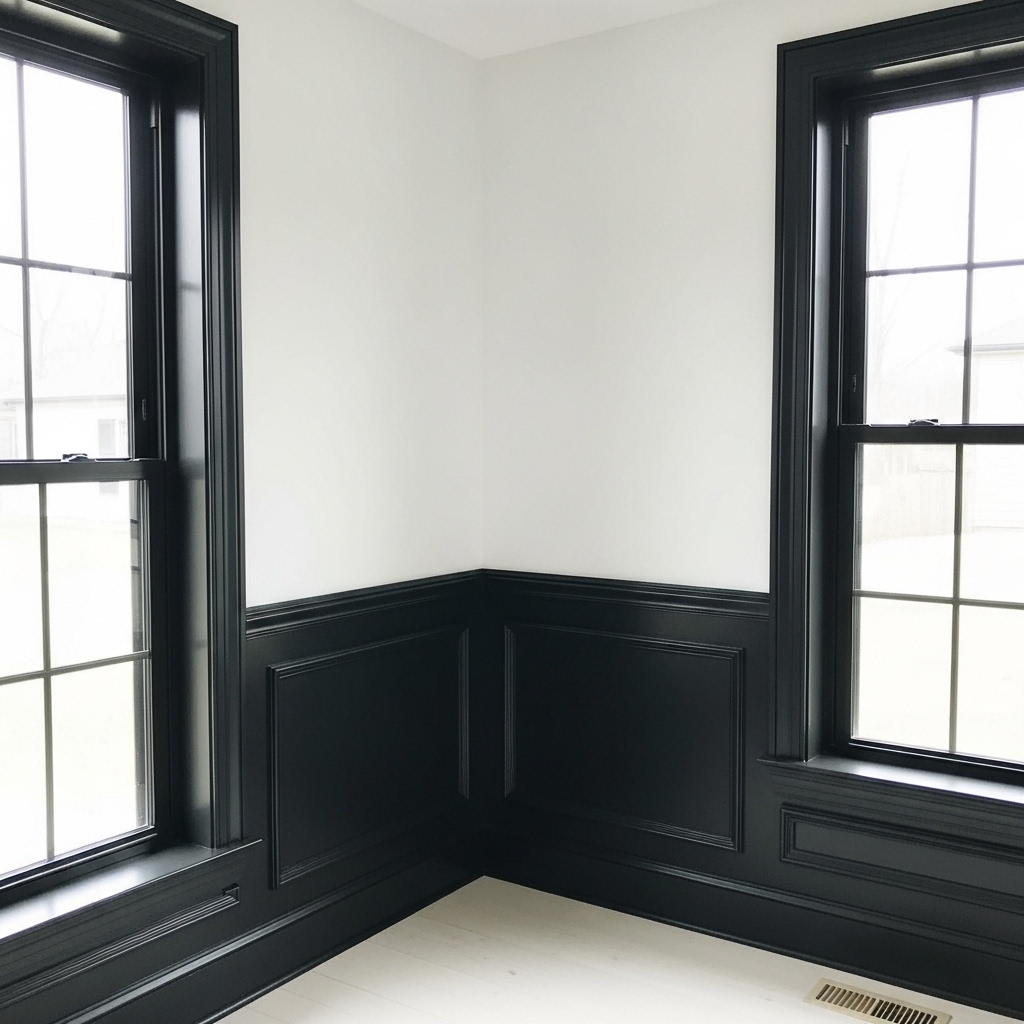
Black trim can give a dining room a defined, graphic appearance. Window frames, door surrounds, skirting boards, and wall paneling are all potential places to introduce the darker color.
Against white walls, the trim outlines architectural features and helps the room feel more structured. It can be particularly effective in a space with simple furniture, where the details have room to stand out.
For a subtler treatment, paint the window frames or a single doorway black. For a stronger effect, consider black wainscoting on the lower half of a wall with white paint above it.
The existing architecture should guide your decision. A room with decorative molding may benefit from emphasizing those details, while a plain room may suit a simpler treatment.
Before painting, prepare the surface properly. Clean the trim, repair visible damage, and use a primer and paint suitable for the material. A durable finish is often helpful on surfaces that are frequently touched or cleaned.
If you rent, check whether you are permitted to repaint the trim. You can achieve a similar visual effect with black-framed artwork, freestanding furniture, or removable decorative details instead.
The aim is to create a clear outline, not to make every edge in the room compete for attention.
12. Large-Scale Abstract Art
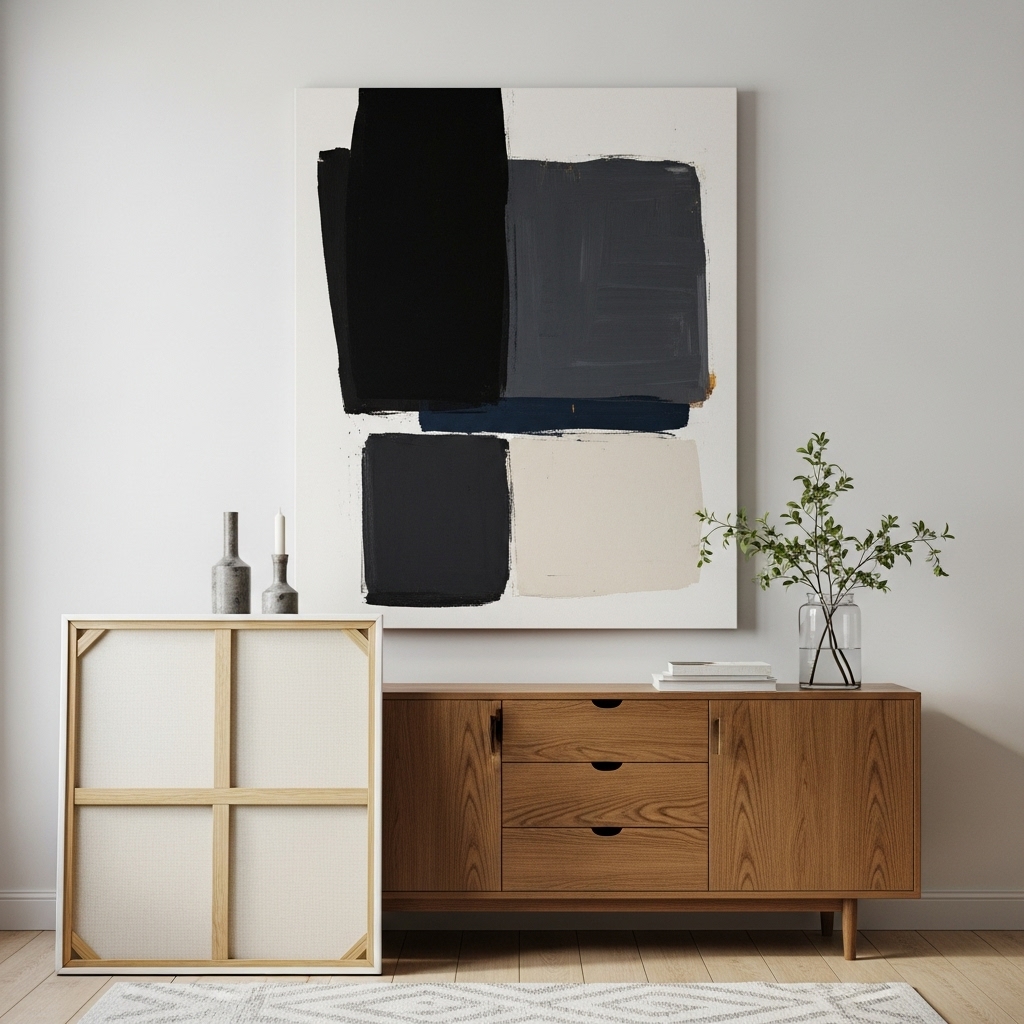
One large piece of abstract art can give a dining room a finished appearance without the need for numerous accessories. Look for a canvas featuring expressive black brushstrokes, geometric shapes, or a restrained mixture of black, white, and gray.
Large artwork works particularly well above a sideboard or on the wall behind the dining table. It creates a focal point while allowing the furniture and tabletop to remain relatively simple.
When choosing a piece, consider the width of the wall and the furniture beneath it. Artwork that is too small may look disconnected, while an excessively large canvas can dominate a compact dining area.
You can also make the display more personal by choosing an original work from a local artist, creating your own abstract piece, or framing a print that reflects your taste.
Keep the surrounding decor restrained. If the artwork has bold shapes or heavy brushstrokes, use simpler tableware and furniture nearby. If the artwork is minimal, a textured rug or sculptural pendant can provide another layer of interest.
For a flexible arrangement, a large framed piece can be changed when you want to refresh the room. Just make sure that anything leaning against a wall is stable and positioned away from areas where it could be knocked over.
Practical Tips for Balancing Black and White
The most successful monochrome dining rooms are not necessarily the ones with the most dramatic furniture. They are the ones where the colors, textures, lighting, and proportions work together.
Keep these considerations in mind as you plan your room.
1. Start With the Largest Surfaces
Decide on the wall color and flooring before selecting smaller decorative pieces. White or off-white walls can help reflect light, while dark walls or ceilings create a more enclosed, dramatic effect.
If you are decorating a small room, begin with lighter surfaces and introduce black through chairs, lighting, and artwork.
2. Mix Textures Instead of Adding More Patterns
Combine smooth tabletops with woven chairs, linen curtains, textured rugs, or natural wood. These materials prevent the room from looking flat even when the color palette is limited.
You do not need several competing patterns. One patterned rug or wallpaper feature may be enough.
3. Plan Lighting for Different Activities
A single ceiling light may not provide the most comfortable atmosphere for every occasion. Where possible, combine general lighting with a pendant over the table and softer accent lighting.
Warm-white bulbs can make the room feel more inviting during meals. Make sure the table is sufficiently illuminated and that the light does not create uncomfortable glare.
4. Use the 60/30/10 Rule as a Starting Point
A useful starting point is to allocate approximately 60% of the visual palette to a dominant color, 30% to a secondary color, and 10% to accents.
For a dining room, this might mean white walls and ceilings, black furniture or lighting, and smaller touches of wood, brass, or greenery.
These proportions are only a guideline, not a strict rule. A room with black walls and lighter furniture can work just as well when its lighting, layout, and materials are carefully considered.
5. Choose Finishes That Suit Your Household
A dining room needs to be more than attractive. Consider how easily surfaces can be cleaned, whether fabrics resist stains, and how much maintenance your furniture requires.
Matte black finishes, polished stone, glass, and natural timber all have different care needs. Check the manufacturer’s cleaning recommendations before using products that could damage the surface.
6. Introduce Color If the Room Needs It
Black and white provide a flexible foundation, but you do not have to exclude every other color. Fresh flowers, green plants, natural timber, or a small metallic accent can soften the contrast.
If you prefer a strictly monochrome appearance, vary the materials and shades instead. Soft white, charcoal, and different surface finishes can create depth while maintaining a restrained palette.
Conclusion
A modern black and white dining room can be bold, relaxed, minimalist, or somewhere in between. The difference comes down to how you combine the colors and which details you choose to emphasize.
If you are working with a small space, start with lighter walls and introduce black through the chairs, lighting, or artwork. If your room is larger, you have more freedom to experiment with patterned wallpaper, dark ceilings, or statement furniture.
You can also refresh an existing dining room without starting from scratch. Changing the light fixture, adding a gallery wall, updating the table setting, or introducing a textured rug may be enough to bring the space together.
Choose ideas that suit your room, your budget, and the way you actually use the dining area. A well-planned design should look good in photographs, but it should also feel comfortable when family and friends gather around the table.
Frequently Asked Questions
Will a black and white dining room look too cold?
It can feel stark if every surface is smooth and the lighting is harsh. To soften the effect, introduce wood, woven materials, upholstered chairs, linen curtains, or a textured rug. Warm lighting can also make the room feel more welcoming.
Can I introduce other colors into a monochrome dining room?
Yes. Black and white work well with natural wood, greenery, metallic finishes, and occasional colorful accessories. Fresh flowers or a colored centerpiece can add variety without requiring you to change the furniture or repaint the walls.
How can I decorate a small black and white dining room?
Use white or soft off-white on the larger surfaces to help the room feel open. Choose appropriately sized furniture, keep walkways clear, and use black selectively for definition. A wall-mounted mirror may also help reflect light, depending on its placement.
What flooring works best with black and white dining furniture?
Light oak, pale timber, white or gray tile, and neutral stone-look flooring can all complement this palette. Dark flooring can work too, particularly when balanced with lighter walls and furniture. Consider cleaning requirements, durability, and the colors already present in adjoining rooms.
How do I maintain black and white dining furniture?
Maintenance depends on the material and finish. Wipe spills promptly, use suitable cleaning products, and follow the manufacturer’s care instructions. Dark finishes may show dust or fingerprints, while pale surfaces can reveal certain stains. Choose materials according to how frequently the dining room is used.
Is black and white suitable for a family dining room?
Yes, provided you choose practical furniture and finishes. Look for stable tables, comfortable chairs, easy-to-clean surfaces, and durable fabrics. You can still create a stylish monochrome room without choosing delicate materials that require constant attention.