
Scandinavian dining rooms are known for their simple furniture, natural materials, and bright, uncluttered appearance. But a Nordic-inspired space does not have to feel cold or look like a room where nobody is allowed to move anything.
The most inviting examples combine practical design with personal touches, comfortable seating, warm lighting, and materials that become more characterful with everyday use.
If you are planning to update your dining room, you do not need to replace every piece of furniture or buy an entirely new set of decorations.
A change in lighting, a different table shape, or a carefully chosen color can make a noticeable difference. The key is to understand how each element works with the others.
These 12 Scandinavian dining room design ideas offer inspiration for different homes, from compact dining corners to larger family spaces. Each one includes practical ways to bring the look into your own home without sacrificing comfort or usefulness.
Why Choose Scandinavian Design?

A dining room needs to do more than look attractive in photographs. It should provide enough space to pull out chairs, allow people to move around comfortably, and accommodate everyday meals without requiring constant tidying.
Scandinavian design offers a useful approach to these practical concerns. It favors straightforward furniture, thoughtful storage, natural finishes, and a restrained selection of colors. Rather than filling every empty corner, the aim is to give important pieces enough room to stand out.
Light-colored walls and pale wood can help a room feel brighter, particularly when daylight is limited. Soft textiles and warm lighting add comfort, while a few personal decorations prevent the space from feeling impersonal.
Another advantage is flexibility. A simple wooden dining table can work with contemporary chairs, vintage furniture, or handmade accessories. This makes it easier to update the room gradually instead of replacing everything whenever your preferences change.
1. Soft Minimalism & Warm Neutrals

White, cream, beige, and pale wood remain useful choices for a Scandinavian dining room, but combining them thoughtfully makes the difference between a welcoming interior and one that feels unfinished.
Instead of painting every surface the same shade of white, introduce subtle variations. Cream walls, oatmeal-colored curtains, and a natural oak table create depth without making the room look busy. A textured rug or woven pendant can add another layer of interest.
The finish matters, too. Matte walls create a softer appearance, while the grain of a wooden table introduces natural variation. Upholstered chairs in a warm neutral shade can soften the overall look without competing with the furniture.
How to use this idea: If your dining room is small, begin with a light wall color and furniture that does not visually overwhelm the space.
Add one or two warmer tones through cushions, curtains, or a table runner. Test paint samples at different times of day before committing, since natural and artificial light can change how a color appears.
You do not need to make every item match. A little contrast helps individual pieces stand out while keeping the room cohesive.
2. Sustainable & Eco-Conscious Materials

Natural materials are a natural fit for Scandinavian interiors because their textures and small variations add interest without requiring elaborate decoration. Solid wood, linen, wool, and woven fibers can all contribute to a dining room that feels comfortable and considered.
The more important decision, however, is choosing materials that suit your household. A dining table used by children every day has different requirements from one used occasionally for formal dinners. A durable finish, sturdy construction, and surfaces that are easy to clean may matter more than a particular wood species.
Sustainable design also involves buying less and making existing possessions last longer. A well-maintained second-hand table can be a better choice for your needs than purchasing a new item simply because it follows a current trend.
When shopping, look for clear information about material composition, product durability, repair options, and any credible environmental certifications. For wood products, FSC certification can help identify products sourced through a responsible forest-management certification system, although the exact claim depends on the product and label.
How to use this idea: Keep an existing table if it is structurally sound. Sanding and refinishing it, replacing damaged hardware, or pairing it with different chairs may refresh the room without creating unnecessary waste. Choose washable textiles and furniture that can be repaired when practical.
3. Japandi Fusion Aesthetics

Japandi combines elements of Scandinavian functionality with Japanese-inspired simplicity and an appreciation for natural materials. The result often feels quieter and more grounded than a conventional bright Nordic interior.
Furniture tends to have clean silhouettes, while decoration is kept selective. A wooden dining table, understated chairs, handmade ceramics, and a single branch in a simple vase can establish the look without filling the room with accessories.
Darker wood can work particularly well here. Walnut or another deep brown finish introduces contrast against cream walls and natural fabrics. Black details, textured plaster finishes, and handmade objects can add further depth.
The important point is not to make the room look empty. It is to give the furniture and materials enough space to be appreciated.
How to use this idea: Start with a simple table and chairs, then choose two or three accessories that have a clear purpose or personal meaning. A ceramic bowl can serve as a centerpiece, for example, while a textured pendant provides visual interest overhead.
If you prefer dark furniture, balance it with lighter walls and adequate lighting. This prevents the room from becoming visually heavy, especially in a small dining area.
4. Statement Sculptural Lighting

A pendant light can become the main decorative feature in a Scandinavian dining room. Paper shades, curved metal designs, opal glass, and softly rounded forms all work well with the style’s uncomplicated furniture.
The right fixture should do two jobs: provide useful light for meals and give the dining area a clear focal point. A beautiful lamp that creates glare or leaves the table too dark will quickly become frustrating.
Scale is important. A large fixture can suit a long table in a spacious room, while a smaller shade may be more appropriate above a compact round table. In an open-plan home, hanging the light over the dining table also helps distinguish the eating area from the living space.
How to use this idea: Position the fixture centrally over the table rather than in the middle of the entire room. As a practical starting point, the bottom of a pendant is often placed about 75–90 cm above the tabletop, although the appropriate height depends on the fixture, ceiling, sightlines, and manufacturer’s guidance.
Choose a warm, comfortable light color and consider dimmable bulbs if the fixture supports them. This makes it easier to create brighter conditions for working or serving food and a softer atmosphere during dinner.
5. Tactile Textiles & Hygge Layers

Wooden furniture and clean lines can sometimes make a dining room feel a little hard. Textiles introduce softness, absorb some sound, and make the space more comfortable for long meals.
The Danish word hygge is often associated with coziness and enjoying ordinary moments. In a dining room, that feeling might come from a linen tablecloth, woven placemats, soft curtains, or a rug that adds texture beneath the table.
You do not need to use every type of textile at once. Too many layers can make the room difficult to maintain, particularly where food and drink are served. Choose materials that suit how the room is used.
For a busy family, washable cotton or linen-blend table coverings may be more practical than delicate fabrics. If you want a rug, select a low-pile design that allows chairs to move easily and can be cleaned without too much trouble.
How to use this idea: Begin with one textured element, such as a table runner or a pair of upholstered chairs. Add curtains or a rug only if the room needs more softness. Keep fabrics away from candles, hot cookware, and other potential fire hazards.
The goal is a dining room that feels inviting on an ordinary weekday, not one that requires special care every time someone sits down.
6. Organic Curves & Fluid Shapes

Rounded furniture offers a softer alternative to rooms dominated by straight edges. Round and oval dining tables, curved chair backs, and arched mirrors can introduce movement while maintaining the simplicity associated with Scandinavian interiors.
A round table is particularly useful in some smaller dining areas because it has no corners to navigate around. It can also make conversation easier when everyone is seated around the same surface. However, it is not automatically the best choice for every compact room: the table still needs enough space for chairs and movement.
Oval tables provide another option. Their elongated shape can accommodate more people than a similarly narrow round table while retaining softer edges.
How to use this idea: Measure the dining area before purchasing furniture. Allow enough room behind occupied chairs for people to move past comfortably; around 90 cm is a useful planning target where space permits, though tighter layouts may require a different arrangement.
If you already own a rectangular table, you can introduce curves through chairs, a rounded mirror, a circular centerpiece, or a pendant with a soft silhouette. There is no need to replace functional furniture just to follow a trend.
7. Biophilic Elements & Indoor Greenery

Plants introduce color and irregular shapes that complement the orderly lines of Scandinavian furniture. Even one healthy plant can make a dining area feel less rigid, while a larger indoor tree can fill an otherwise empty corner.
Choose plants according to the light available in your home rather than selecting them solely for their appearance. A species that needs bright indirect light may struggle in a dim corner, while a plant suited to lower light may be easier to maintain there.
Placement matters as well. A plant should not obstruct walkways, crowd the table, or block a window that provides valuable daylight. If you have pets or young children, check whether the selected species is safe for them and keep pots stable.
Natural elements do not have to be living plants. Wooden bowls, woven baskets, stoneware, and branches arranged in a sturdy vase can provide similar visual interest with less maintenance.
How to use this idea: Place a small plant on a sideboard or a larger one beside a window, provided the lighting suits its needs. Use simple pots in terracotta, stone, or neutral colors to maintain a consistent look.
8. Multifunctional & Extendable Furniture
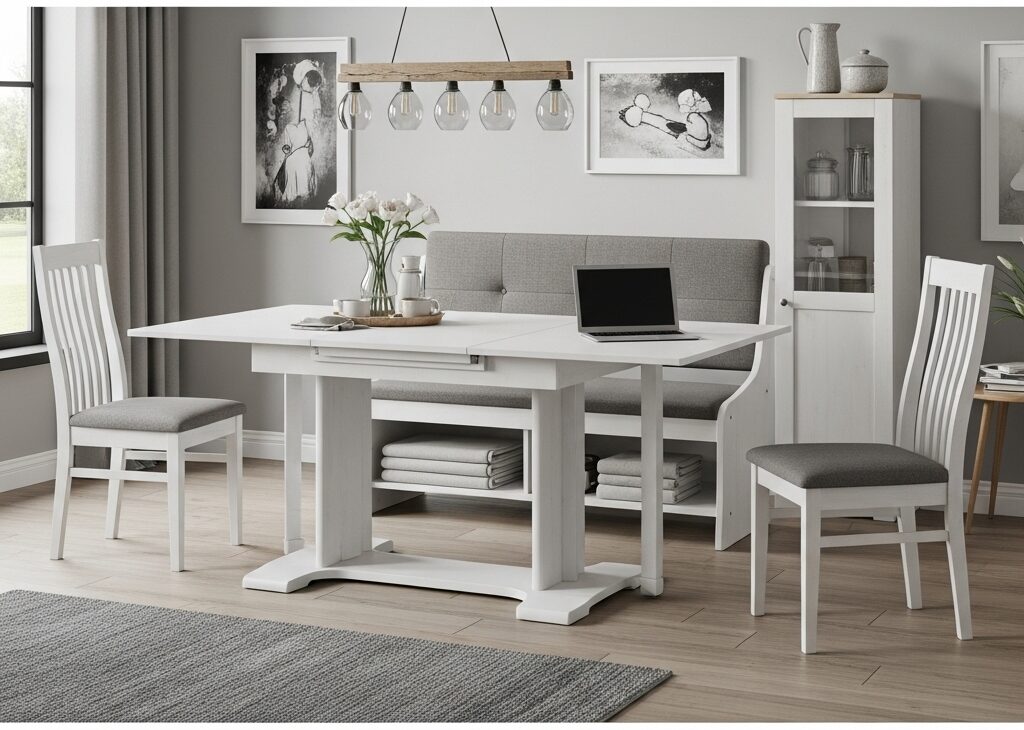
A dining area may need to serve several purposes throughout the week. It might be a breakfast spot in the morning, a place for homework in the afternoon, and a gathering space for guests in the evening.
Multifunctional furniture makes these changes easier without filling the room with extra pieces. Extendable dining tables are especially useful because they can remain compact for daily use and expand when more people visit.
Storage benches can provide seating and a place to keep table linens, board games, or other dining essentials. A narrow sideboard can hold dishes and serving items while keeping the tabletop clear.
Before buying an extendable table, check its dimensions in both configurations. Make sure the expanded version will not block a doorway or prevent people from reaching other parts of the room. It is also worth checking how easily the extension mechanism operates and whether additional chairs can be stored conveniently.
How to use this idea: Write down what your dining room needs to accommodate during a typical week. If you rarely host large gatherings, a modest extendable table may be more useful than a permanently oversized one.
If the room doubles as a workspace, prioritize a durable tabletop and storage that keeps work materials out of sight when meals begin.
Good multifunctional design makes everyday routines easier rather than adding complicated features you seldom use..
9. Bold Matte Black Accents

A dining room decorated entirely in pale colors can sometimes lack definition. Matte black details offer a simple way to create contrast without abandoning the light, natural character of Scandinavian design.
Consider black pendant fittings, slim chair legs, cabinet handles, picture frames, or a dark centerpiece. These small details can connect different parts of the room and give the furniture a clearer outline.
The trick is to use black deliberately. A few repeated accents often look more cohesive than introducing several unrelated dark objects. For example, black chair legs can work with a black pendant and a narrow frame around a piece of artwork.
How to use this idea: Choose one or two black elements first and see how they look against your existing furniture. If your dining room already has dark flooring or heavy furniture, use black more sparingly and rely on lighter textiles to maintain balance.
Matte finishes can create a subdued appearance, but they are not automatically easier to maintain. Depending on the material, dark surfaces may show dust, fingerprints, or scratches. Consider the finish’s durability before choosing it for frequently handled furniture.
10. Earthy Color Palettes

Scandinavian dining rooms do not have to rely exclusively on white, gray, and beige. Muted greens, warm browns, terracotta, and ochre can introduce personality while remaining compatible with natural materials.
Sage green works well with pale oak and cream fabrics, while terracotta can bring warmth to a room with simple white walls. Deep brown and olive tones offer a richer look when paired with lighter furniture or natural linen.
Rather than introducing several new colors at once, choose a main neutral and one or two supporting shades. Repeating these colors in a few places helps the room feel intentional.
How to use this idea: If you are unsure about painting the walls, start with removable or inexpensive changes. Try green cushions, an earthy table runner, ceramic planters, or artwork with muted natural colors. Once you know which shades work with the existing wood and flooring, you can consider a larger change.
Remember that colors can look different under daylight and artificial lighting. Test paint samples on the actual wall and view them at different times before deciding.
11. Vintage & Retro Revivals

Vintage furniture brings a sense of history that is difficult to reproduce with a room full of brand-new pieces. A wooden sideboard, a set of older dining chairs, or a second-hand table can add character while keeping the overall design simple.
Mid-century furniture is particularly compatible with Scandinavian interiors because many pieces feature clean lines, practical construction, and warm wood finishes. However, you do not need an expensive designer original to achieve a similar effect. A sturdy, well-made second-hand piece can work just as well in your home.
Mixing old and new also gives you more freedom to develop the room over time. A vintage table can be paired with contemporary lighting, while modern chairs can refresh an older wooden dining set.
When buying second-hand furniture, check for loose joints, unstable legs, damaged finishes, and signs of moisture or pests. Drawers and extension mechanisms should operate properly, and upholstered items deserve careful inspection before they enter your home.
How to use this idea: Let one vintage item take the lead instead of filling the room with pieces from the same period. If the wood tones differ, repeat one of the colors elsewhere through a frame, bowl, or smaller piece of furniture.
The aim is a collected appearance that reflects your taste, not a room that looks as though every item came from the same showroom.
12. Minimalist Gallery Walls

Artwork can give a simple dining room personality without adding clutter to shelves or tabletops. Scandinavian-inspired arrangements often use a few carefully chosen prints, understated frames, and enough space around each piece to let the composition breathe.
Abstract shapes, botanical illustrations, landscape photography, and line drawings can all work. The best choice depends on the atmosphere you want to create and the colors already present in the room.
A single large print can be effective above a sideboard or along a long, empty wall. A small gallery arrangement may suit a larger space, especially when the frames share a finish or the artwork follows a consistent color palette.
How to use this idea: Measure the available wall area and arrange paper templates before hanging anything. This helps you judge the spacing and overall scale without repeatedly making holes in the wall.
For artwork above a dining table, consider the table’s width, the height of nearby furniture, and the position of pendant lights. Keep frames securely mounted and away from places where they could be knocked by moving chairs.
Your artwork does not need to be expensive. Personal photographs, prints from independent artists, or your own framed illustrations can make the room feel more individual than generic decorations selected simply to match a trend.
Practical Tips for Creating a Scandinavian Dining Room
You can introduce Scandinavian design gradually. Start with the room you have, identify what is not working, and make changes that solve real problems.
- Clear the surfaces first. Remove objects that are rarely used and find a proper place for everyday essentials. Keeping the table relatively clear makes cleaning and serving meals easier.
- Measure before purchasing furniture. Check the table’s length and width, the space needed for pulled-out chairs, and the route people use to enter and leave the room. A beautiful table is not a good choice if it makes the space difficult to navigate.
- Choose a consistent color palette. Begin with a neutral base, then introduce one or two supporting colors through artwork, textiles, or accessories. Repeat selected shades rather than matching every item exactly.
- Use lighting for different activities. Combine suitable overhead lighting with softer ambient light where practical. Select fixtures and bulbs according to the manufacturer’s recommendations, and use dimmers only with compatible equipment.
- Mix wood tones thoughtfully. Oak, walnut, and other finishes can work together when the room has a few connecting elements. Repeat a wood tone or introduce a common fabric color to help different pieces feel related.
- Prioritize furniture you will actually use. If you host guests regularly, consider an extendable table. If the room is narrow, a compact table and lightweight chairs may be more useful than bulky furniture.
- Make maintenance part of the decision. Choose washable fabrics, suitable tabletop finishes, and storage that fits your daily routine. A room should remain practical after the photographs have been taken.
- Add personal details slowly. A favorite ceramic piece, a framed photograph, or a plant that you enjoy caring for can give the room character. Leave some space undecorated rather than buying accessories to fill every corner.
Frequently Asked Questions
Can I use dark colors in a Scandinavian dining room?
Yes. Dark green, charcoal, navy, and deep brown can all work with Scandinavian design. The important thing is to balance them with other elements in the room. A dark accent wall may look attractive with pale wood furniture and warm lighting, while a dark table can stand out against cream walls and lighter chairs.
If the room receives little daylight, try darker colors in smaller doses before committing to painting every wall.
Is Scandinavian dining room design expensive?
It does not have to be. The style relies on thoughtful choices rather than the number or price of decorations. You can retain your existing table, simplify the room, change the lighting, and introduce a few well-chosen textiles without undertaking a complete renovation.
Second-hand furniture, repaired wooden pieces, and simple accessories can also help manage costs. Spend more carefully on items that receive heavy daily use, such as the dining table and chairs, and save on decorations that are easy to change later.
How can I make a minimalist dining room feel cozy?
Focus on texture, comfortable seating, and lighting. Linen curtains, upholstered chairs, woven placemats, and a suitable rug can soften the room’s harder surfaces. Warm-toned lighting can also make evening meals feel more relaxed.
You can add personality through artwork, plants, family photographs, or objects you already own. Minimalism does not mean removing everything that makes a home feel personal.
What furniture works best in a small Scandinavian dining room?
Start with a table that suits the room’s proportions. A round table may work well in a compact square space, while a narrow rectangular table can fit better in a long room. Extendable designs are useful if you occasionally need extra seating.
Choose chairs that can be moved easily and avoid bulky storage units that block movement. Measure the room and check the table’s expanded dimensions before making a purchase.
How do I combine Scandinavian and Japandi styles?
Use simple furniture, natural materials, and a restrained color palette as your starting point. Scandinavian elements can contribute light wood and comfortable functionality, while Japandi-inspired details may introduce darker finishes, handmade ceramics, and a stronger emphasis on visual simplicity.
You do not need to follow strict rules. Choose pieces that complement each other and avoid introducing so many contrasting materials that the room loses its sense of balance.
What is the easiest way to update an existing dining room?
Start with the change that would make the biggest practical difference. If the room feels dark, consider the lighting and wall color. If it looks cluttered, improve storage and clear unnecessary objects. If it feels bare, introduce a textile, a plant, or a piece of artwork.
Making one change at a time also helps you see what works before spending more money.
Final Thoughts
A Scandinavian dining room is not defined by a particular chair, shade of white, or decorative trend. Its appeal comes from the way the space works as a whole: the furniture fits the room, the materials feel comfortable, the lighting suits everyday activities, and the decoration reflects the people who live there.
You might prefer the warmth of earthy colors, the simplicity of Japandi, the character of vintage furniture, or the flexibility of an extendable dining table. Any of these choices can work when they support your needs rather than simply copying a photograph.
Start with the furniture you already own, make practical improvements where necessary, and introduce new details gradually. The result should be a dining room that looks considered but still feels comfortable enough for everyday breakfasts, family dinners, and conversations that last longer than expected.
