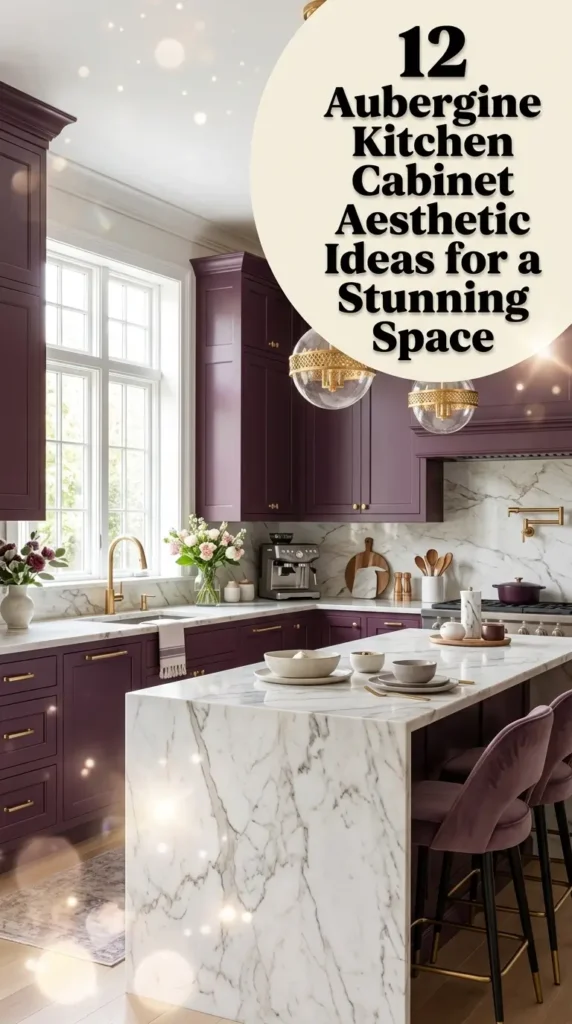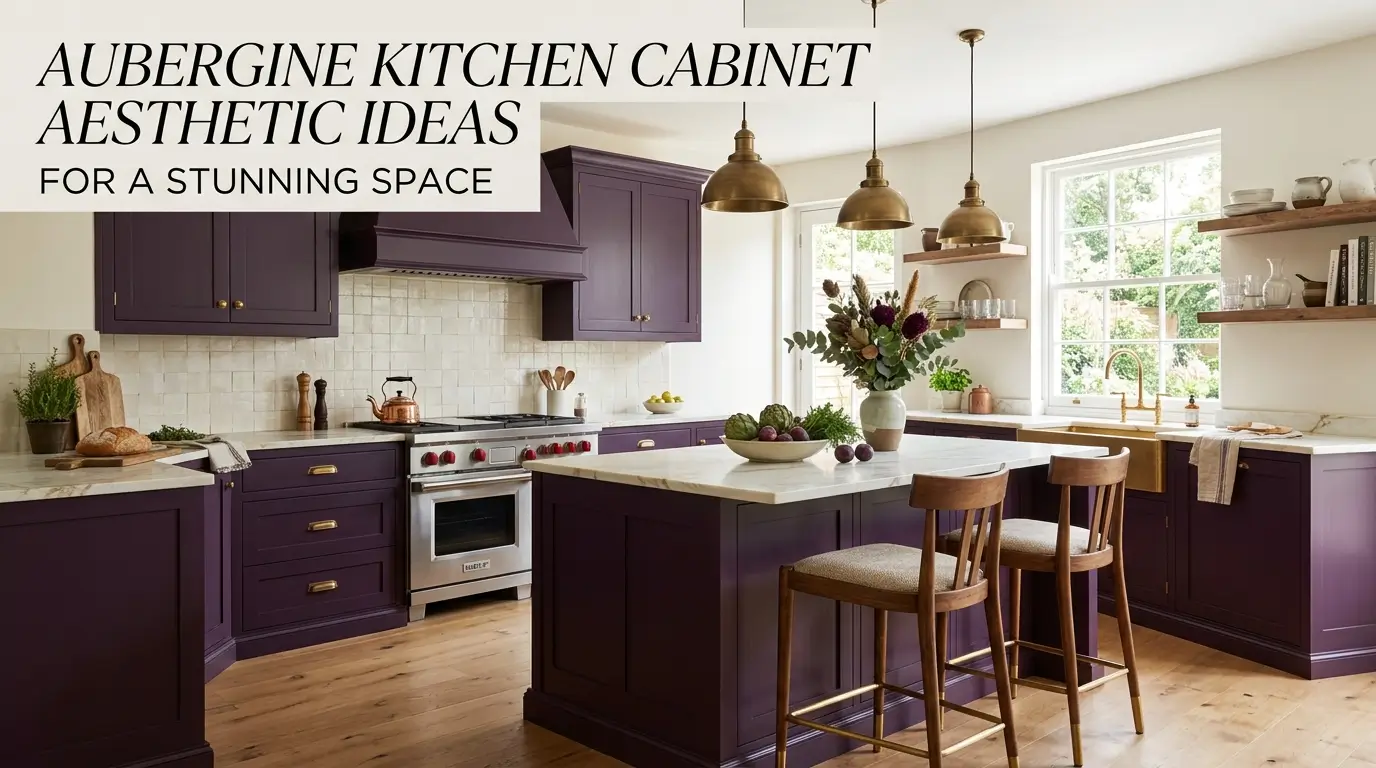
Aubergine kitchen cabinets offer a way to bring rich color into a kitchen without relying on the usual white, gray, or navy palette.
The shade sits somewhere between deep purple and eggplant, sometimes revealing red or brown undertones depending on the paint and lighting.
It can feel traditional, contemporary, or surprisingly relaxed when paired with the right materials.
One of the things that makes aubergine interesting is its flexibility. Against warm wood, it feels earthy. Paired with brass hardware, it takes on a more refined appearance.
Combine it with white countertops and pale walls, and the color becomes the main feature without dominating every corner of the room.
Of course, dark purple cabinetry requires a little planning. The shade you choose, the amount of natural light in your kitchen, and the color of your flooring can all influence the final result.
If you’re considering this distinctive color for your home, these 12 aubergine kitchen cabinet ideas explore different finishes, materials, and layouts, along with practical tips to help you decide which approach might work best.
Why Choose Aubergine Kitchen Cabinets?
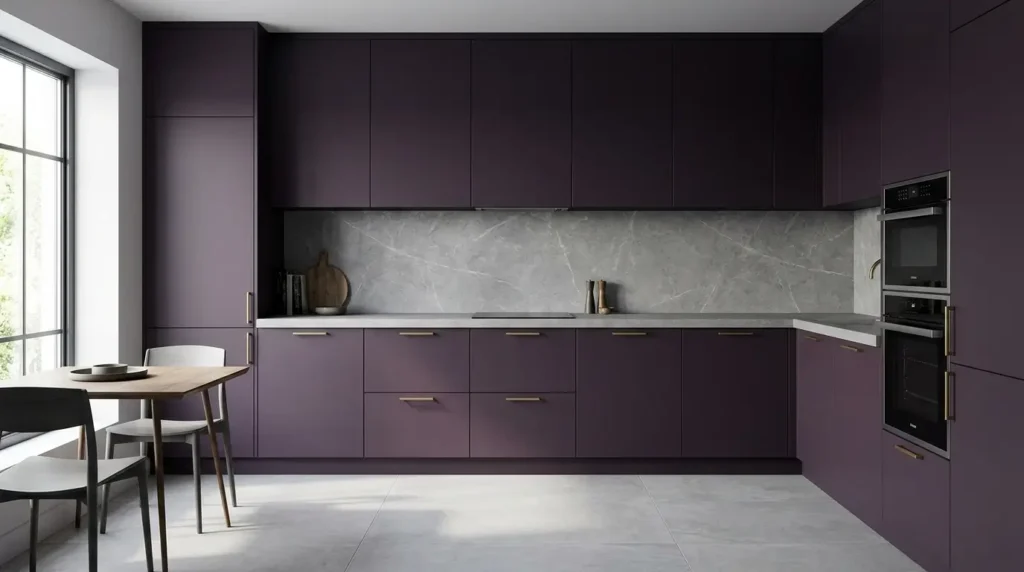
Aubergine is worth considering if you want something more expressive than a neutral kitchen but aren’t drawn to brighter purple shades. Its depth makes it suitable for statement islands, traditional shaker cabinets, and sleek contemporary kitchens.
The color also works with several familiar materials. Cream, natural oak, marble, brushed brass, and warm terracotta can all complement aubergine, although the proportions matter.
In a small kitchen, using purple on the lower cabinets while keeping the upper walls light may feel more comfortable than covering every surface in a dark shade.
Before choosing a paint color, look at samples in your actual kitchen. Some aubergine shades lean toward burgundy, while others have cooler violet undertones.
Artificial lighting can change their appearance considerably, so check your samples during the day and again in the evening.
1. Matte Aubergine with Brushed Brass Hardware
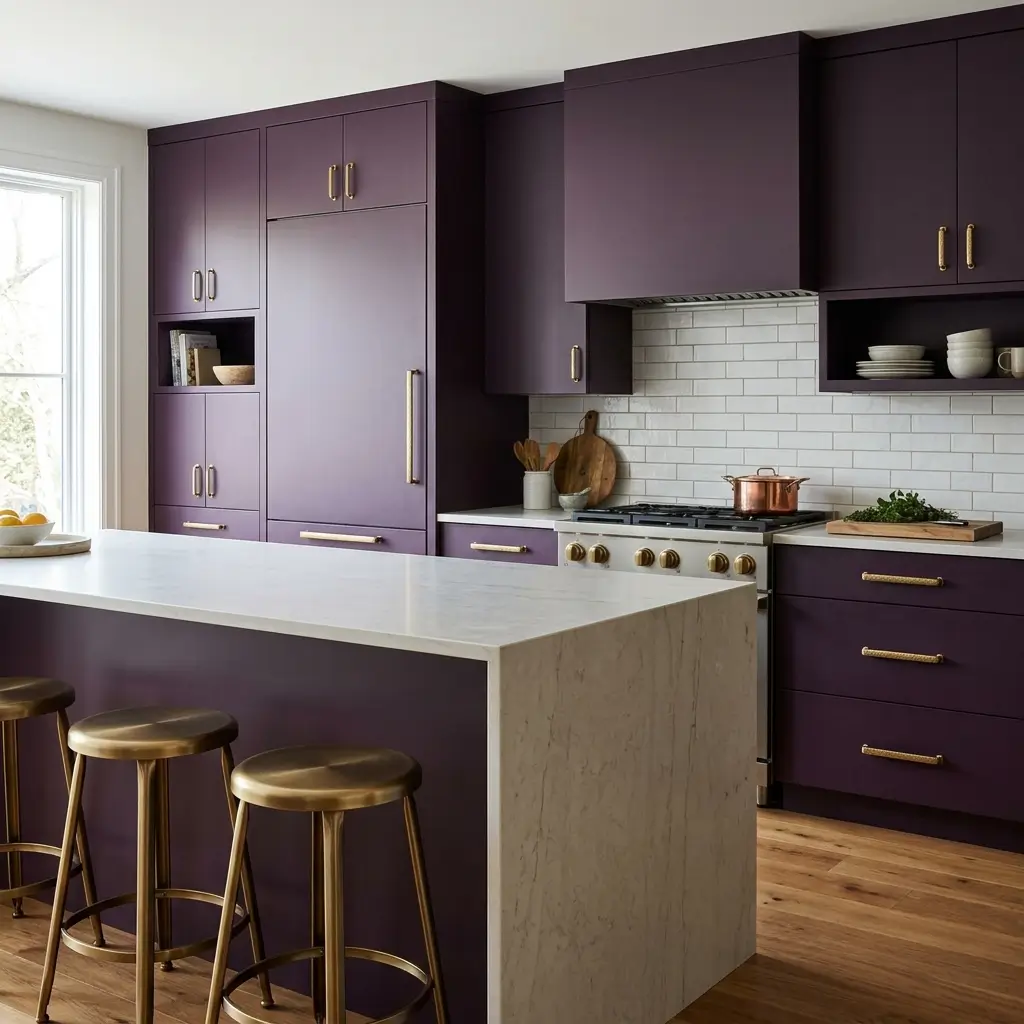
Matte aubergine cabinetry creates a rich, understated look that doesn’t depend on shine to make an impression. Its soft finish suits kitchens with shaker doors, simple slab fronts, or understated traditional details.
Brushed brass handles introduce warmth without competing with the cabinet color. The combination works particularly well with cream walls, pale stone countertops, and warm white lighting.
If you prefer a more contemporary result, choose slim brass pulls rather than ornate handles.
There is one practical detail to consider: matte finishes aren’t automatically maintenance-free. Some show greasy fingerprints or polished patches, particularly around frequently used handles.
Ask your cabinet supplier about the cleanability of the specific finish before committing.
Design tip: Repeat the brass in one or two other places, such as a faucet or pendant light. A small amount of repetition helps the hardware feel connected to the rest of the kitchen rather than like an isolated decoration.
Check out this item here: Buy Brushed Brass Hardware on Amazon.
2. Two-Toned Elegance with Cream Upper Cabinets
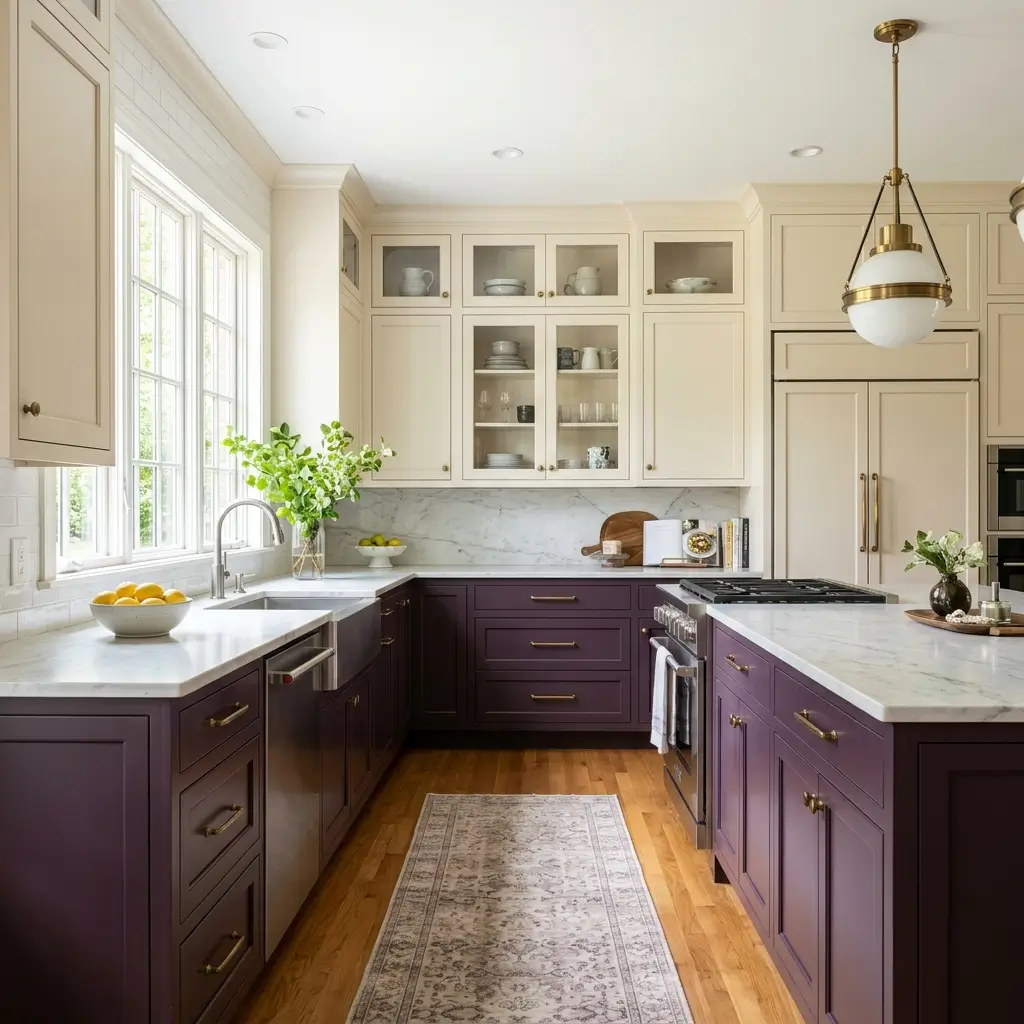
If you love the dramatic impact of aubergine but worry about losing natural light, keep the dark color below eye level.
- Why it works: Heavy dark shades visually “anchor” a room when applied to base cabinets and kitchen islands. Painting upper cabinets in a warm off-white (look for paints with a yellow or peach undertone, rather than cold blue-whites) draws the eye upward and preserves an open feeling.
- Pairing Idea: Match the upper cabinets to your wall color to make the upper storage visually disappear into the background.
Check it out: Buy Cream Cabinet Paint on Amazon.
3. High-Gloss Aubergine for Ultra-Modern Spaces
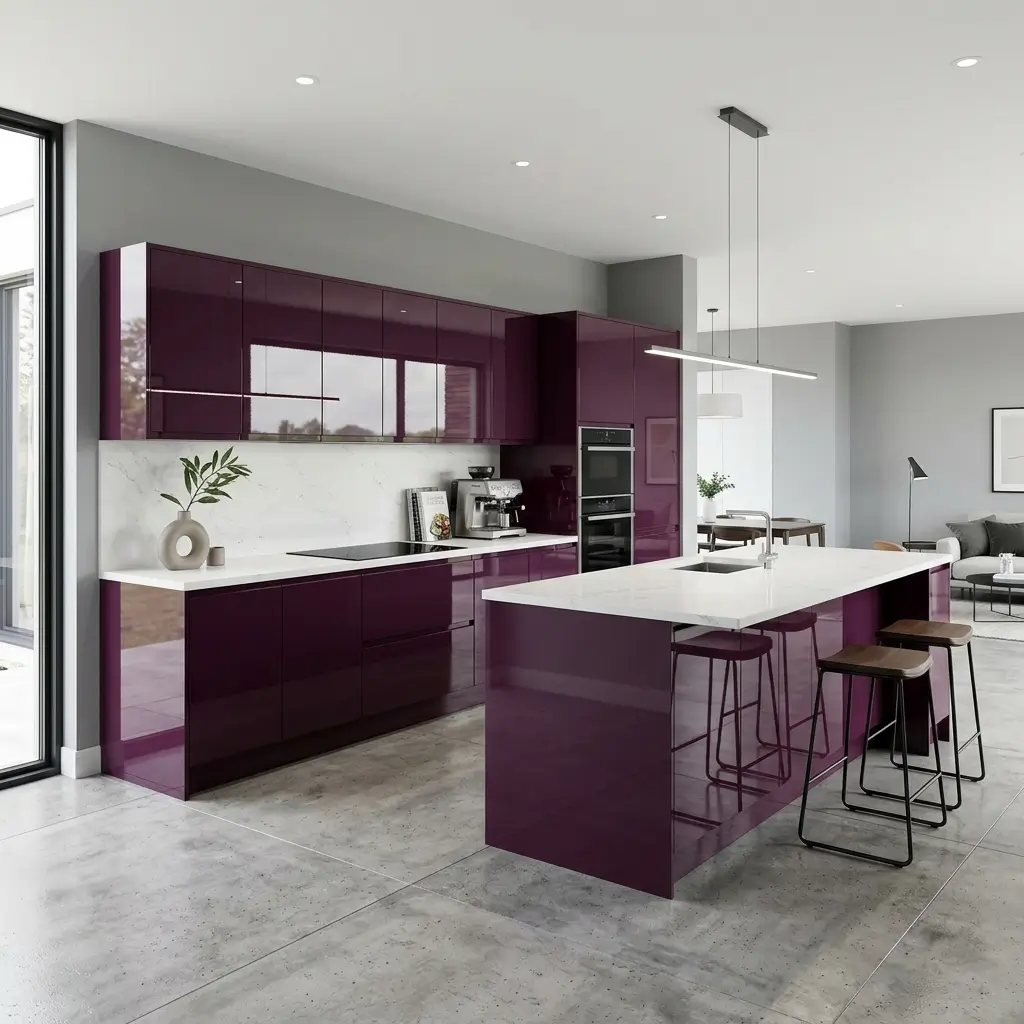
High-gloss aubergine offers a different personality from matte cabinetry. Its reflective surface catches light and emphasizes the depth of the purple, making it a natural fit for modern kitchens with clean lines.
Pair glossy cabinet fronts with white or pale gray countertops, understated hardware, and a simple backsplash. Handleless doors can reinforce the streamlined look, although conventional slim pulls work just as well.
Reflection can help a kitchen feel brighter, but it doesn’t guarantee that a small room will appear larger. Glossy surfaces also reflect clutter, fingerprints, and nearby objects. In a busy family kitchen, this may mean more frequent wiping than you would need with some other finishes.
If you like the style but want less maintenance, consider using gloss on a kitchen island or a limited run of cabinets instead of throughout the entire room.
Design tip: Keep the surrounding materials relatively quiet. Too many shiny surfaces, decorative patterns, and metallic accents can make the overall design feel crowded.
View this option: Buy High-Gloss Polish on Amazon.
4. Rustic Farmhouse Aubergine with Wood Accents
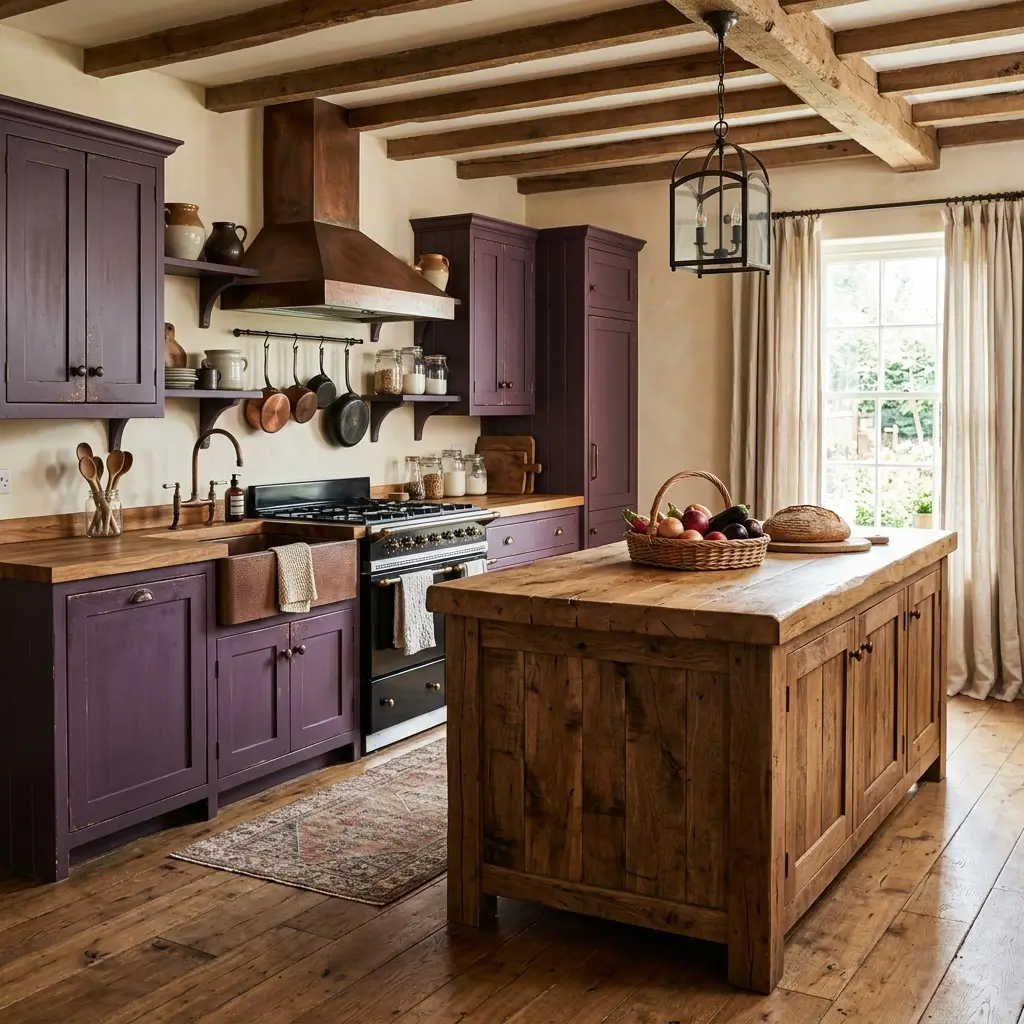
Aubergine may seem like an unusual choice for a farmhouse kitchen, but natural wood gives it a grounded, approachable quality.
Imagine aubergine shaker cabinets alongside an oak island, butcher-block worktop, or reclaimed timber shelf. The wood introduces visible grain and a lighter, organic texture, while the purple gives the room a little more personality than conventional farmhouse neutrals.
This combination works with both pale oak and richer walnut tones. Lighter woods create more contrast; darker woods produce a moodier, more traditional atmosphere.
If your kitchen already has timber flooring, use a wood sample to check that the undertones work together rather than trying to match every wooden surface exactly.
For a relaxed finish, choose simple ceramic accessories, woven baskets, and warm lighting. Distressed cabinet finishes can suit an older farmhouse, but they aren’t essential. Smooth painted doors can look equally at home with natural wood.
Design tip: If you’re working with a limited budget, repainting existing cabinets and adding a timber shelf may deliver the look without replacing the entire kitchen.
Grab it here: Buy Butcher Block Countertop on Amazon.
5. Moody Aubergine Paired with Dark Marble
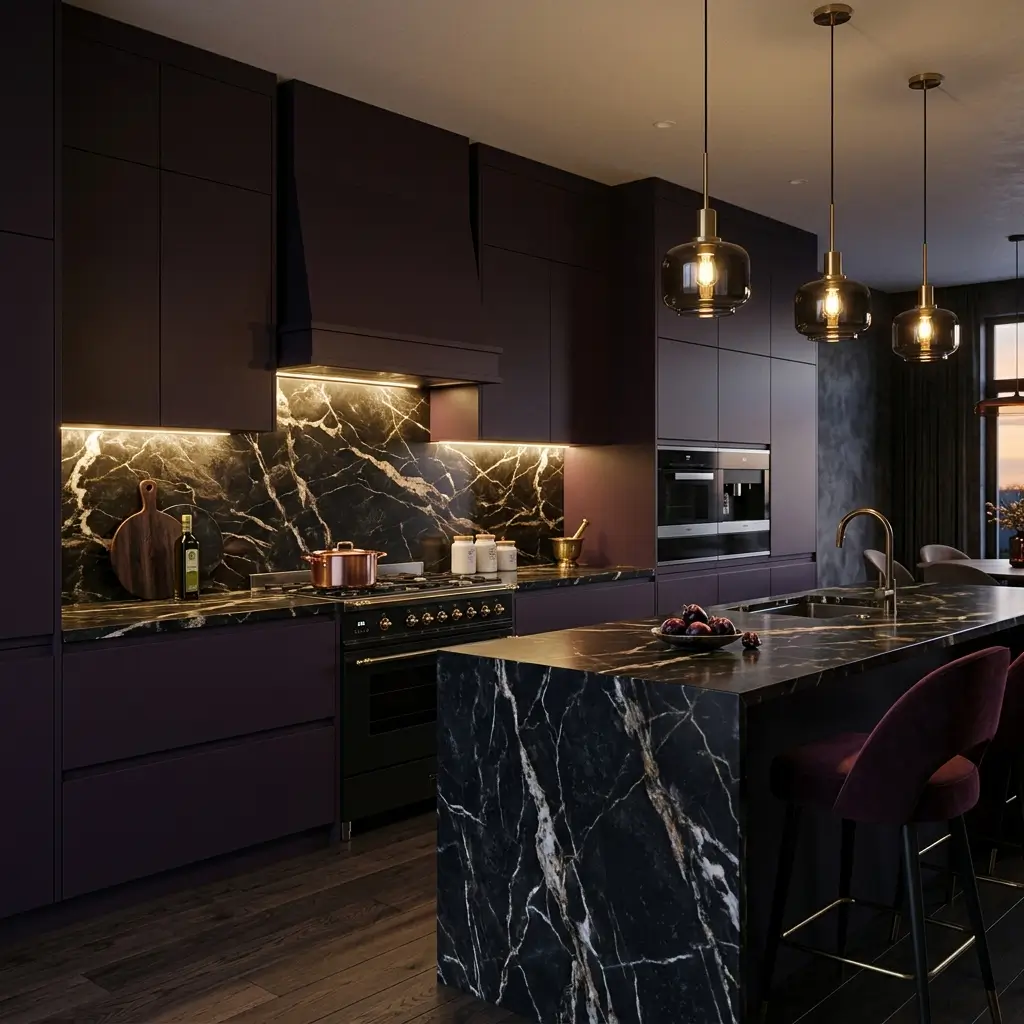
For a kitchen with a dramatic, evening-inspired atmosphere, combine aubergine cabinets with dark stone countertops or a dark marble-look backsplash.
Black, charcoal, and deep brown surfaces can work with aubergine, especially when they feature contrasting veins or subtle movement. The challenge is ensuring that the different dark tones don’t merge into one flat expanse.
Consider a countertop with lighter veining, a pale wall, or a metallic accent to break up the color. Under-cabinet lighting is also important because the countertop needs to remain practical for food preparation, not just visually appealing.
Natural marble has its own maintenance requirements and may need appropriate sealing and careful cleaning, depending on the stone and finish. If you’d prefer less upkeep, compare engineered quartz or other suitable countertop materials before making a decision.
Design tip: Use a sample of the countertop beside your cabinet color under your kitchen’s actual lighting. Dark materials can look noticeably different in a showroom than they do at home.
Browse the selection: Buy Marble Contact Paper on Amazon
6. Aubergine Cabinetry with Open Shelving
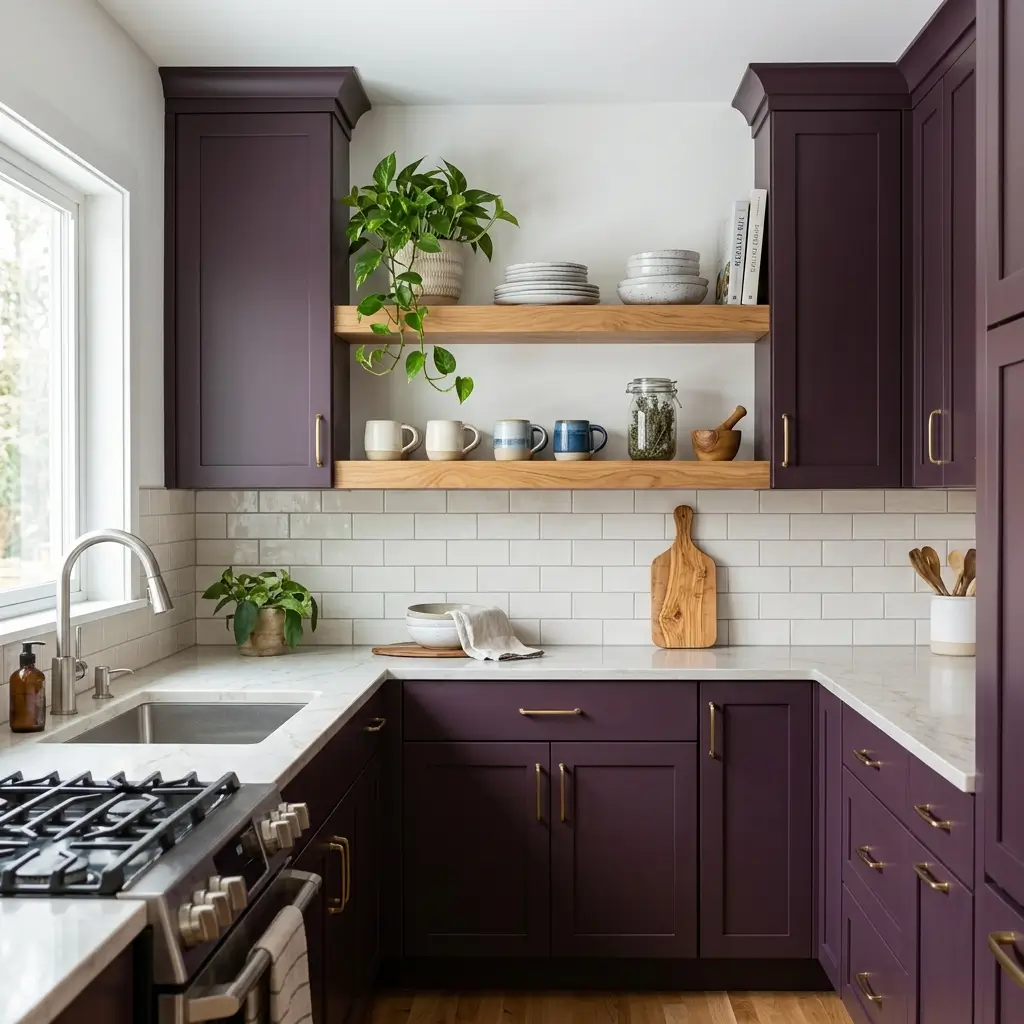
A continuous run of floor-to-ceiling dark cabinets can feel imposing. Replacing a section of upper cabinetry with floating wood shelves keeps the layout light and practical.
- Why it works: Open shelving creates a visual “breathing space” while giving you a place to display everyday pottery, glassware, or small potted herbs.
- Styling Note: Keep the items on your open shelves light in color (think white ceramic mugs, clear glassware, and light wood cutting boards) to contrast against the dark wall behind them.
Find them today: Buy Floating Wall Shelves on Amazon
7. Aubergine and Crisp White Subway Tile
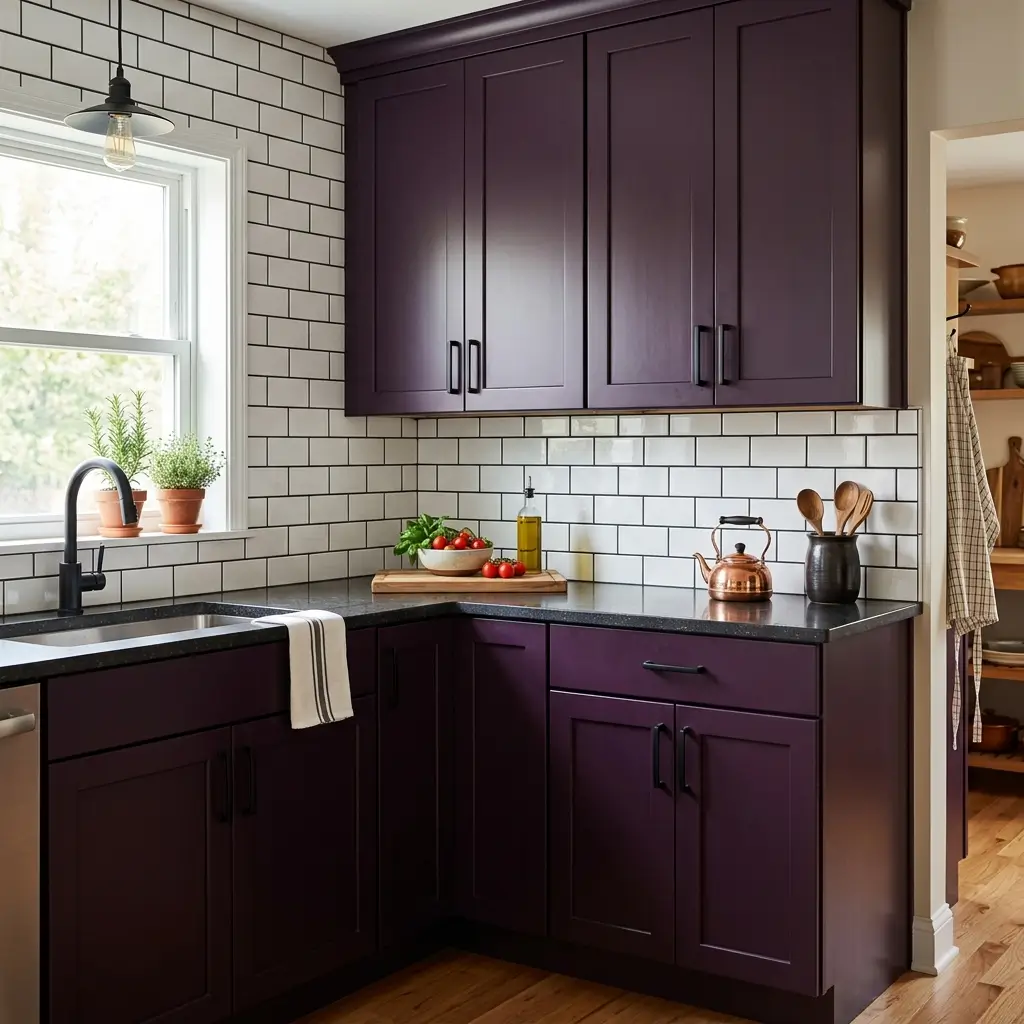
White subway tiles offer a familiar backdrop that allows aubergine cabinets to stand out without introducing another strong color.
The rectangular shape works well with shaker doors, brass handles, and traditional kitchen details. For a more contemporary finish, consider a vertical stack or a simple straight-lay pattern rather than the familiar offset arrangement.
Grout deserves attention, too. White or light gray grout gives the backsplash a quieter appearance, while charcoal grout emphasizes the individual tiles and introduces a stronger graphic element.
Dark grout can be effective, but it won’t necessarily conceal every mark and may require care to keep it looking consistent.
A warm white tile often suits aubergine with reddish undertones. A cooler white may work better with a violet-leaning shade.
Design tip: If the cabinets already have a strong color and the countertops feature noticeable veining, choose a simple tile layout. You don’t need every surface to compete for attention.
Shop the look: Buy White Subway Tile on Amazon.
8. Glass-Front Aubergine Upper Cabinets
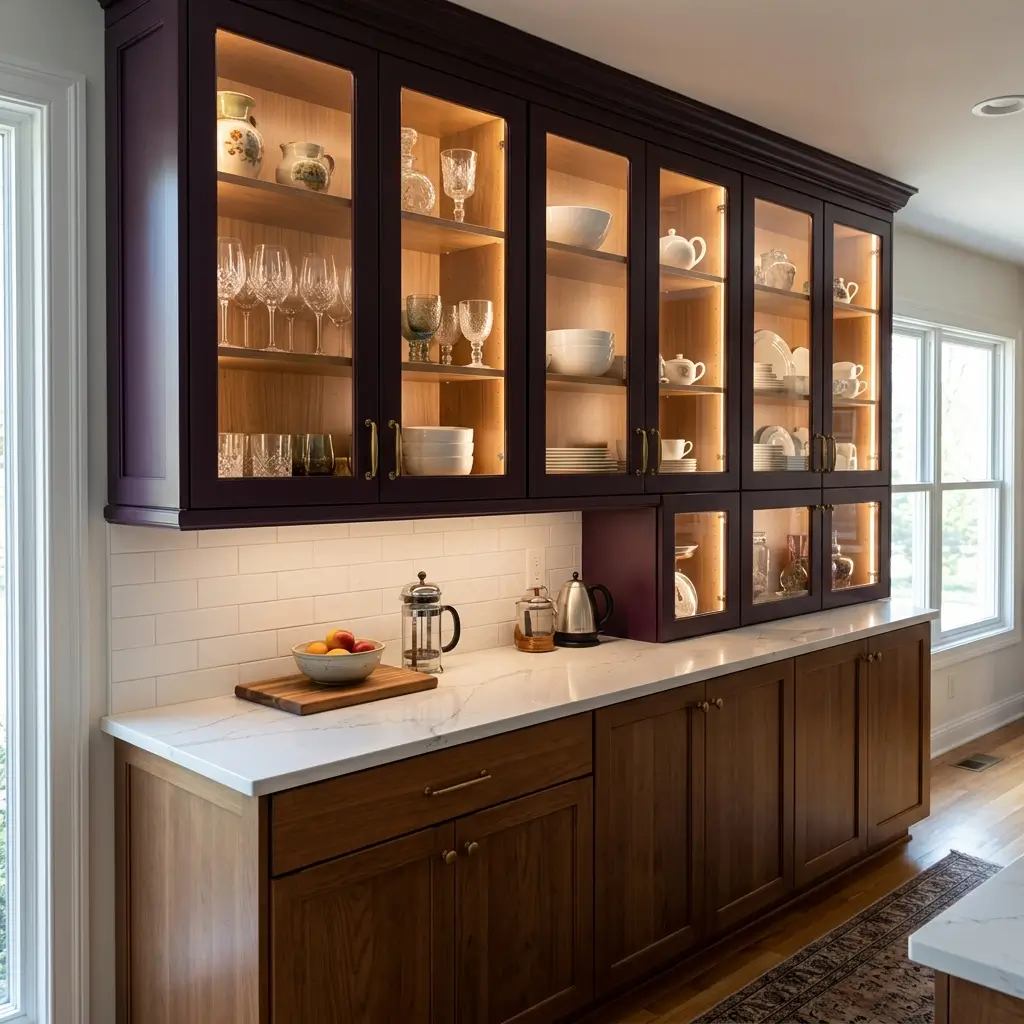
Glass-front doors provide an alternative to using solid aubergine cabinetry across every upper cabinet.
The glass introduces a visual break while allowing the cabinet frames to retain their rich color. Clear glass works well for neatly arranged dishes and glassware, while reeded or textured glass softens the view of the contents.
Interior cabinet lighting can add warmth after dark, especially when the shelves hold pale ceramics or glass objects. Choose lighting designed for cabinet interiors and position it to avoid harsh glare.
There is a practical trade-off: glass-front cabinets reveal what’s stored inside. If your everyday dishes are mismatched or your shelves tend to become cluttered, use glass doors selectively rather than across an entire wall.
Design tip: Place glass-front cabinets where their contents can be arranged easily, such as above a coffee station or near a dining area. Keep less attractive everyday storage behind solid doors.
Get the glow: Buy Glass Cabinet Lighting on Amazon.
9. Aubergine Island as a Statement Piece
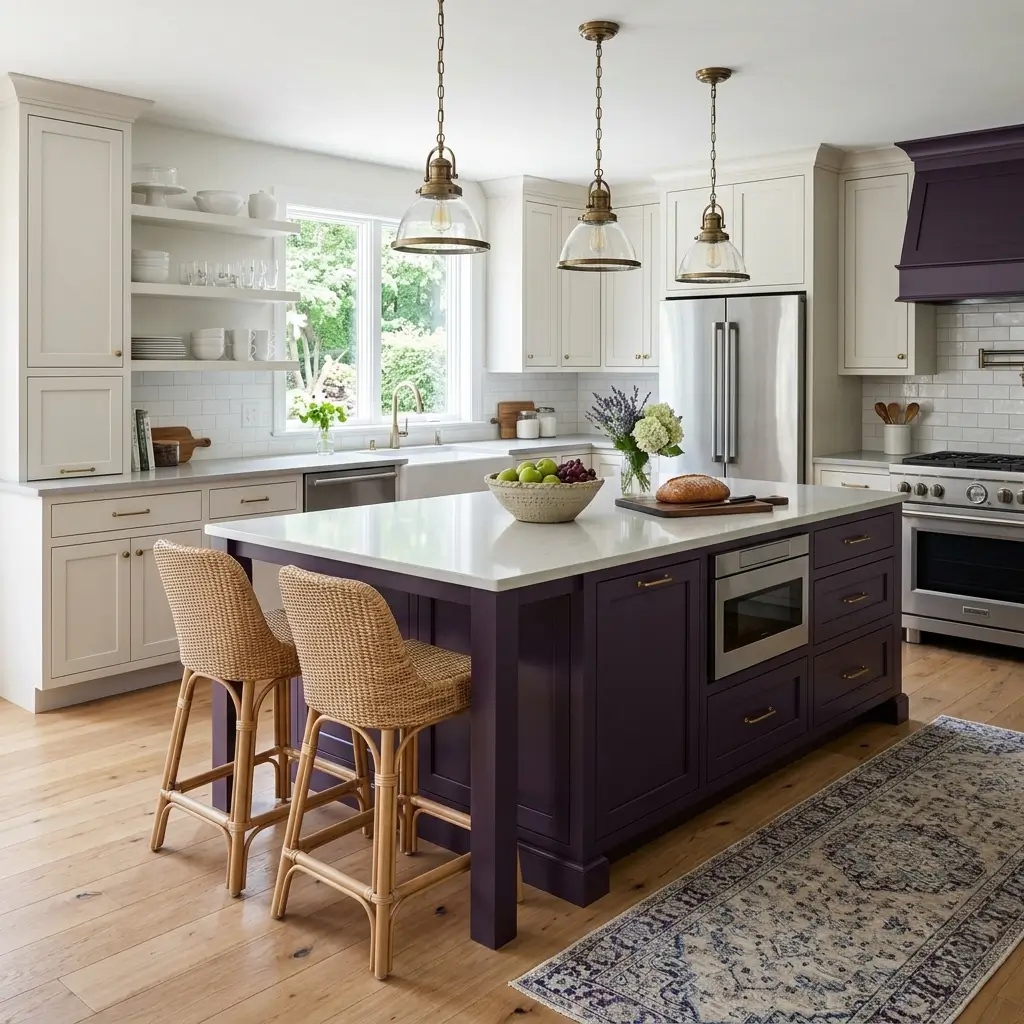
You don’t need a fully purple kitchen to enjoy aubergine cabinetry. Painting the island alone can introduce the color while leaving the rest of the room relatively neutral.
White, cream, pale gray, and natural wood cabinets can all work around an aubergine island. The best choice depends on the room’s existing finishes and whether you want a warm or cool overall palette.
A contrasting island can also help define an open-plan kitchen, particularly when the kitchen and living areas share one large space. Repeating the island color in small accessories or nearby artwork can connect the areas without requiring more purple cabinetry.
Before choosing the shade, look at the island’s position. A large island beneath pendant lights may appear more saturated than cabinets along a shaded wall. The countertop also influences the result: pale stone creates contrast, while dark stone produces a more restrained look.
Design tip: If you’re repainting an existing island, check that the current surface is suitable for repainting and use a coating designed for kitchen cabinetry.
Find a piece: Buy Kitchen Island Cart on Amazon
10. Jewel-Toned Aubergine with Emerald Accents
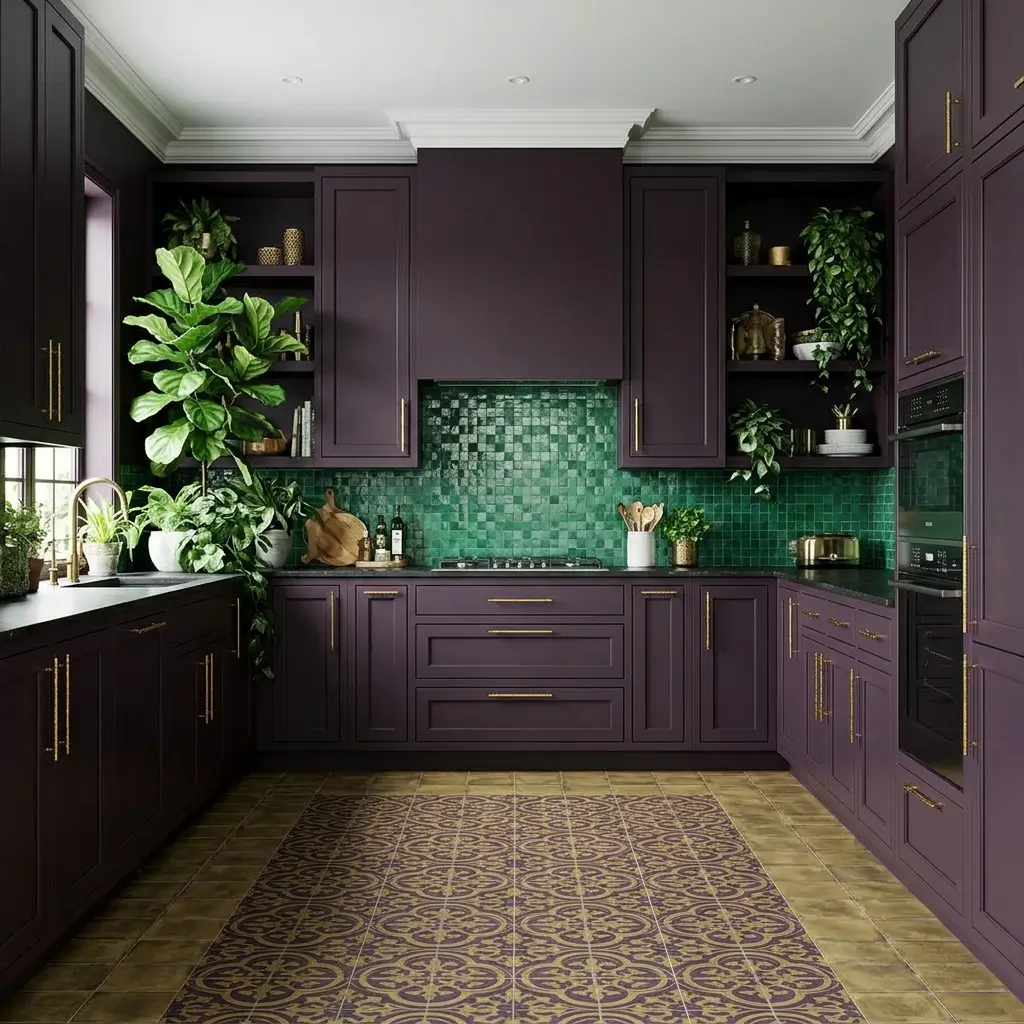
Aubergine and emerald green create a rich, jewel-toned palette that suits homeowners who enjoy expressive interiors.
The trick is to give each color a clear role. Let aubergine dominate the cabinetry and introduce emerald through bar stools, a small section of backsplash, decorative ceramics, or a few green plants.
Both colors are relatively strong, so adding too many large surfaces in each shade can make the kitchen feel visually busy. Neutral countertops and warm wood can help balance the combination.
You should also consider the undertones. A reddish aubergine and a deep, blue-leaning emerald may create a different effect from a warmer purple paired with a softer green. Collect samples before buying tiles or upholstery.
Design tip: If you’re unsure about committing to green tile or seating, start with a few removable accessories. It’s easier to adjust the palette once you’ve seen how the colors work in your space.
Add some green: Buy Emerald Velvet Bar Stools on Amazon.
11. Minimalist Aubergine with Integrated Handles
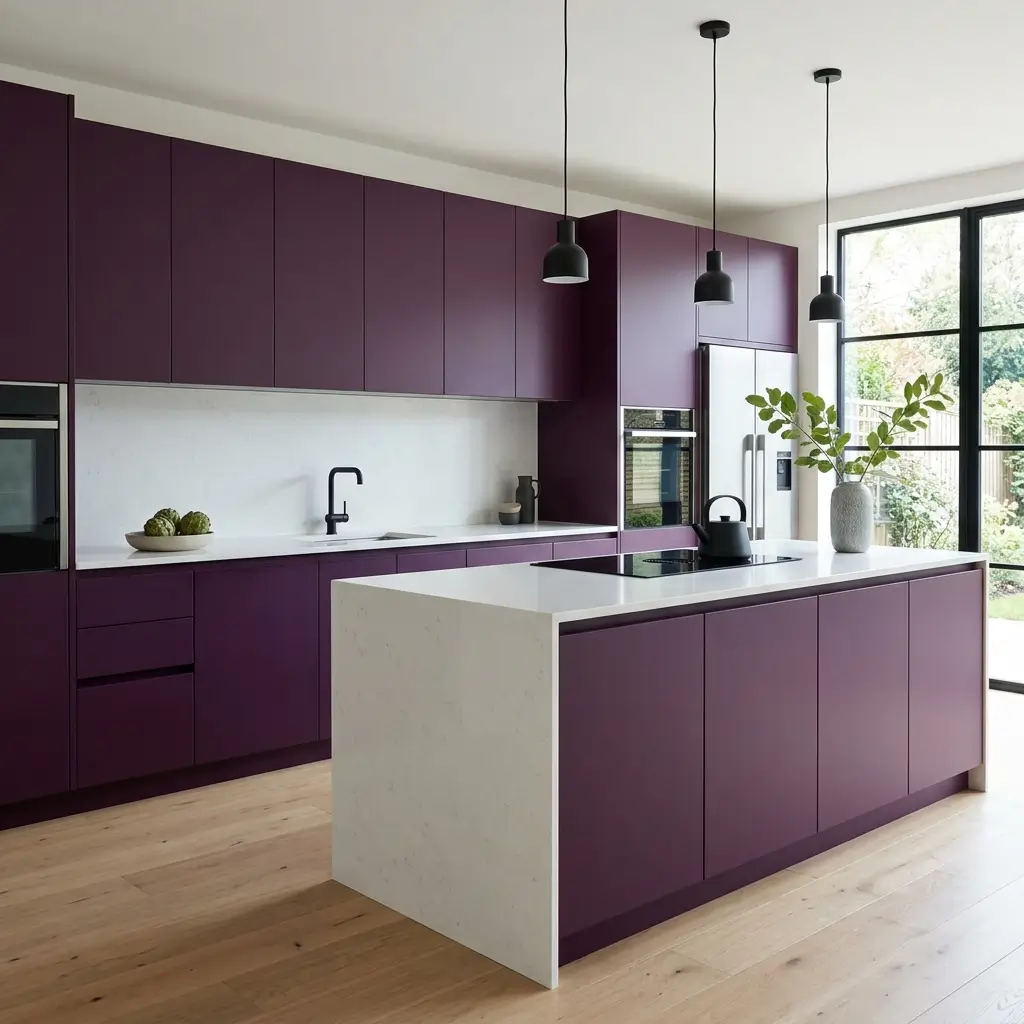
For a contemporary kitchen, simple aubergine cabinet fronts can make the color the main design feature without relying on decorative details.
Integrated handles, recessed pulls, and push-to-open mechanisms all help create a clean appearance. The best option depends on the cabinet construction, your budget, and how comfortable the doors are to use.
Handleless cabinetry can be especially effective with slab doors, pale countertops, and a restrained backsplash. Natural wood flooring or a timber breakfast bar can prevent the result from feeling too stark.
Think about daily use before choosing a push-to-open system. Cabinet doors and drawers are opened frequently in a busy kitchen, so the mechanism needs to be suitable for the hardware and weight involved. Integrated pulls may be more convenient for some households.
Design tip: Keep the door style and hardware consistent throughout the main cabinetry. A limited number of finishes makes a bold cabinet color feel more deliberate.
Check this gear: Buy Push-to-Open Latches on Amazon
12. Aubergine Cabinets with Warm Terracotta Floors
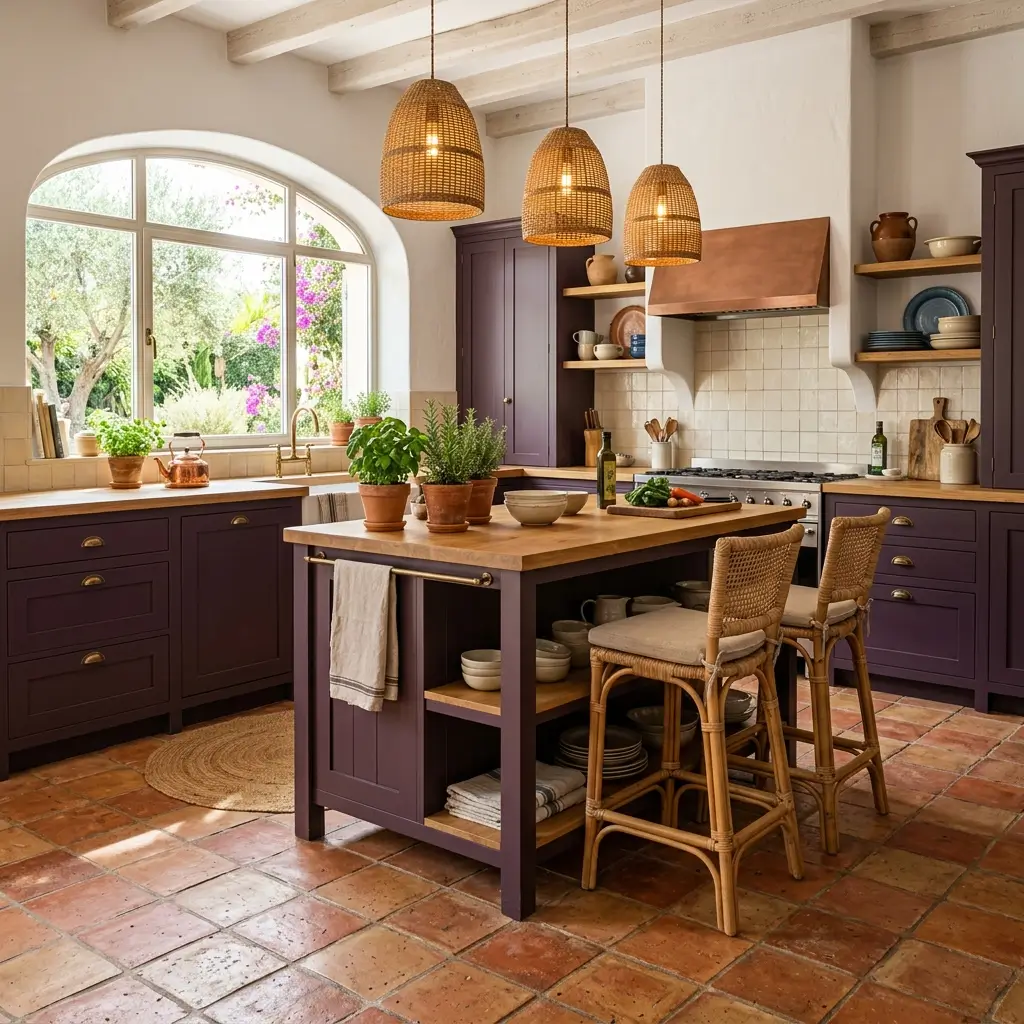
erracotta flooring brings an earthy quality to aubergine cabinets. The combination draws on the contrast between deep purple and the warmer orange, red, and brown tones found in clay tiles.
It works particularly well in kitchens with natural wood, woven pendant lights, simple pottery, and warm wall colors. The result can feel rustic or Mediterranean-inspired without requiring elaborate decoration.
Terracotta varies considerably in color and texture. Some tiles are pale and dusty, while others are strongly orange or reddish brown. A highly saturated floor may compete with the cabinets, so compare samples before choosing a tile.
Maintenance is another consideration. Natural terracotta may require sealing and care suited to the particular product. If you want the look with different maintenance requirements, investigate porcelain tiles designed to resemble terracotta.
Design tip: When the floor has a strong pattern or noticeable variation, keep the backsplash and countertop relatively simple. This gives the cabinetry and flooring room to work together.
Upgrade your floors: Buy Terracotta Floor Tiles on Amazon.
Pros and Cons of Aubergine Kitchen Cabinets
Aubergine can be a rewarding cabinet color, but it’s worth considering how it will function in your particular kitchen.
Advantages
- Distinctive appearance: Aubergine offers a colorful alternative to common neutral cabinet shades.
- Flexible styling: It works with a range of materials, including wood, brass, white tile, and stone.
- Different design possibilities: The color suits traditional shaker doors as well as minimalist slab cabinetry.
- Useful as an accent: You can introduce it through an island or lower cabinets without repainting the entire kitchen.
Potential drawbacks
- Lighting matters: Dark shades can make poorly lit areas feel heavier, particularly when paired with dark countertops and flooring.
- Finishes require consideration: Fingerprints, dust, and cleaning marks may be visible depending on the cabinet surface and lighting.
- Color matching takes care: Aubergine varies from reddish purple to cooler violet, so samples are important.
- Future changes may take work: If you later want a pale kitchen, repainting dark cabinets may require careful preparation and suitable products.
Practical Tips for Getting the Color Right
Before purchasing paint or ordering new doors, work through a few simple checks.
1. Test the shade in your kitchen. Place large paint samples beside your countertop, backsplash, and flooring. Look at them in daylight and under your evening lights.
2. Choose the finish for your household. Matte, satin, and gloss finishes have different appearances and maintenance requirements. Ask for product-specific cleaning guidance instead of assuming one finish is always easier to maintain.
3. Balance dark cabinets with lighter surfaces. Pale walls, reflective backsplashes, or a light countertop can help keep the room from feeling too enclosed.
4. Think about the whole color palette. Cabinet paint is only one part of the room. Flooring, wall color, appliances, and hardware all affect the final appearance.
5. Plan task lighting. Under-cabinet lights can make food preparation easier and illuminate darker work surfaces. General ceiling lighting and pendant lights may serve different purposes, so consider the room as a whole.
6. Set a realistic renovation budget. Repainting existing cabinets, replacing handles, and changing a backsplash can be less disruptive than a full renovation. However, the final cost depends on the condition of the cabinets, materials, labor, and any repairs required.
Mistakes to Avoid When Decorating With Aubergine
A few common design choices can make aubergine cabinetry harder to live with.
- Choosing paint from a small screen image: Online photographs cannot reliably show the exact color because screens, filters, and lighting vary.
- Using dark finishes everywhere: Dark cabinets, dark floors, and a dark backsplash may leave too little visual contrast, especially in a small room.
- Ignoring undertones: A purple with strong red undertones may clash with some cool gray finishes. Compare samples instead of relying on color names alone.
- Overdecorating the countertops: A strong cabinet color already attracts attention. Leave enough clear workspace for the kitchen to remain practical.
- Choosing style over usability: Open shelves, glass-front doors, and handleless cabinets each have practical trade-offs. Select them according to your storage needs and everyday routine.
Frequently Asked Questions
Are aubergine kitchen cabinets timeless?
Aubergine is a distinctive color rather than a universal neutral. Its longevity depends partly on the shade, cabinet style, and surrounding materials. Simple doors, quality finishes, and classic combinations such as aubergine with cream or natural wood can make the design easier to adapt as tastes change.
What countertop colors go with aubergine cabinets?
Warm white, cream, pale beige, and natural wood are useful options for creating contrast. Gray and charcoal stone can produce a moodier result, while heavily veined marble introduces additional visual interest. Always compare material samples with the actual cabinet color.
Do aubergine cabinets work in a small kitchen?
Yes, provided the overall design suits the available light and space. Consider using aubergine on the lower cabinets or island while keeping upper cabinets and walls lighter. Good task lighting and a carefully chosen countertop can also help balance the darker color.
What hardware looks best with aubergine cabinets?
Brushed brass creates a warm contrast, while chrome and stainless steel offer a cooler, more contemporary appearance. Black hardware produces a restrained effect, particularly with modern cabinet fronts. The best choice depends on the undertones of the paint and the other finishes in the room.
Is aubergine suitable for a traditional kitchen?
Yes. Shaker doors, brass knobs, natural wood, ceramic tile, and classic stone surfaces can all complement aubergine cabinetry. A muted, reddish-purple shade may feel especially comfortable in a traditional kitchen, although the final effect depends on the materials and lighting.
Can I repaint my existing kitchen cabinets aubergine?
Often, yes. The suitability of repainting depends on the existing material, surface condition, and previous coating. Clean and prepare the doors properly, use a compatible primer where needed, and choose a durable finish intended for cabinetry. Test the complete process on an inconspicuous area before proceeding with the entire kitchen.
Final Thoughts
Aubergine kitchen cabinets offer plenty of room for personal expression, whether you prefer a restrained two-tone design or a kitchen filled with rich, dramatic color.
The most successful approach is to consider the entire room rather than choosing the cabinet shade in isolation. A matte finish with brass hardware creates a different mood from glossy doors with white countertops, while wood and terracotta bring warmth to a palette that might otherwise feel cool or formal.
If you’re not ready to commit to a full kitchen makeover, begin with an aubergine island or lower cabinets. Test the color under your own lighting, compare it with the materials you already have, and make sure the finish suits your everyday needs.
With a little planning, aubergine can become a distinctive part of your kitchen without sacrificing comfort, practicality, or your personal style.