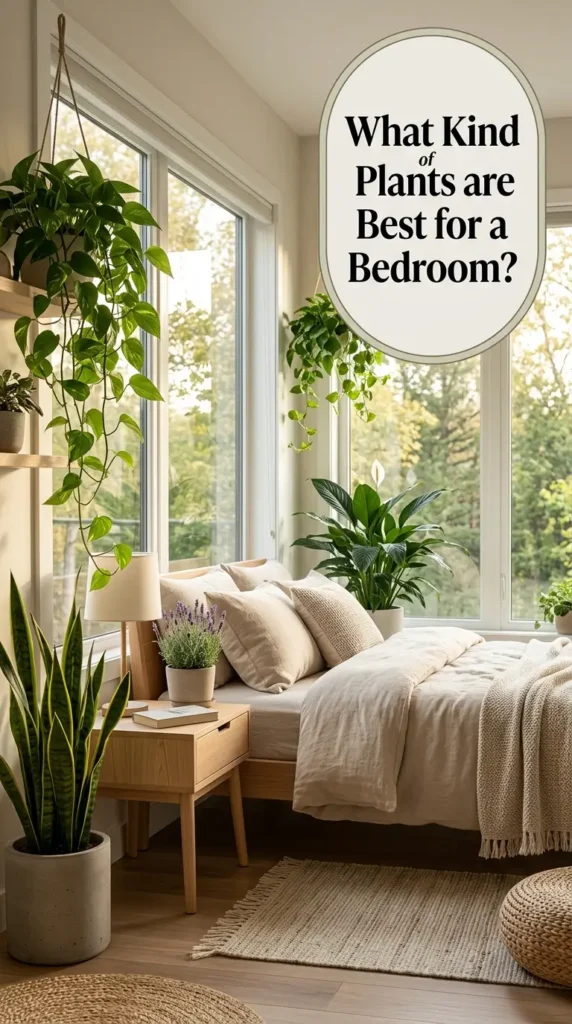
Choosing plants for a bedroom is about more than finding attractive leaves or flowers. The right plant should suit the amount of sunlight your room receives, fit comfortably into the available space, and match the time you can devote to caring for it.
Some bedroom plants tolerate low light and occasional missed watering, while others need a bright windowsill to remain healthy. Pet safety is another important consideration, particularly if your cat or dog likes to chew leaves.
In this guide, you will discover 10 plants worth considering for your bedroom, what each one needs to grow well, where to place it, and which varieties are better suited to beginners. You will also find practical advice for dealing with yellow leaves, overwatering, limited sunlight, and common indoor plant problems.
Why Choose Plants for Your Bedroom?
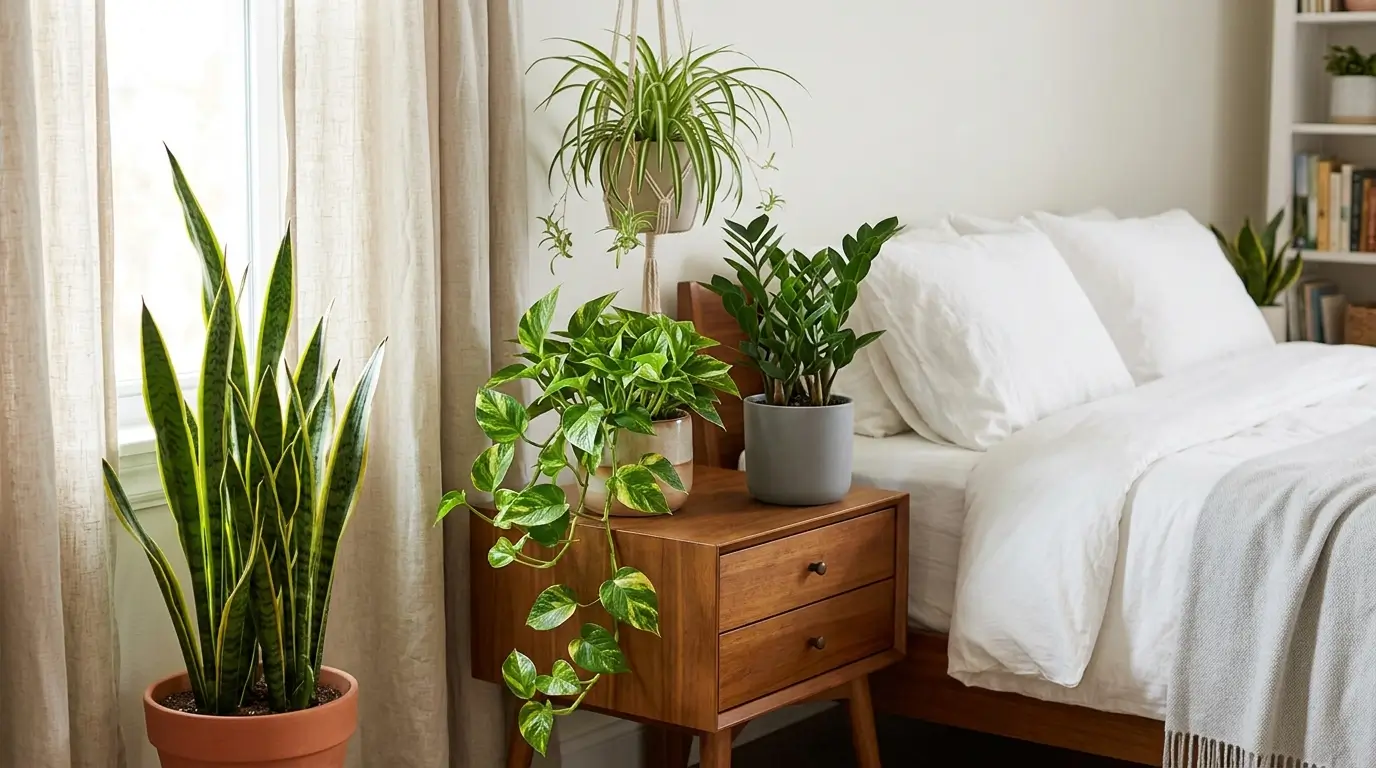
Plants can make a bedroom feel more welcoming by adding natural colour, texture, and a connection to the outdoors. A leafy plant on a dresser, for example, can soften a room filled with straight lines and hard surfaces. A trailing vine can bring an empty shelf to life, while a flowering plant can introduce a small splash of colour.
There are practical considerations, too. Caring for plants gives you a simple way to enjoy a hobby, and choosing attractive pots can help tie together your bedroom’s colours and materials.
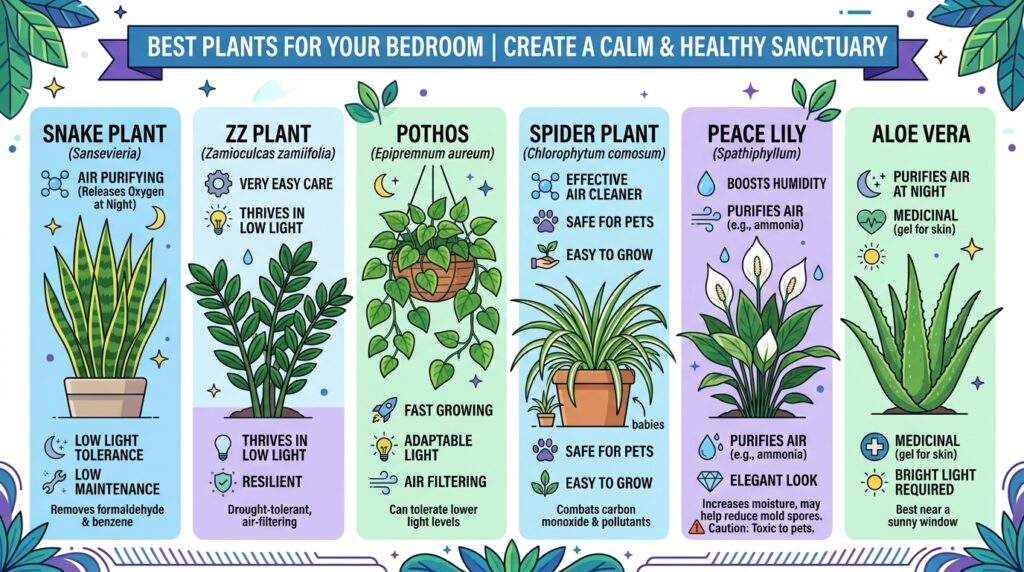
However, it is important to separate appearance from health claims. Although some plants have demonstrated pollutant-removal abilities in laboratory studies, ordinary houseplants have not been shown to clean indoor air effectively enough to replace ventilation or air filtration. Nor should a bedroom plant be treated as a proven remedy for insomnia or breathing problems.
If your goal is to create a healthier sleeping environment, keep the room ventilated, address dampness and mould at their source, and choose plants that can thrive without leaving persistently wet soil around the bedroom.
1. Snake Plant
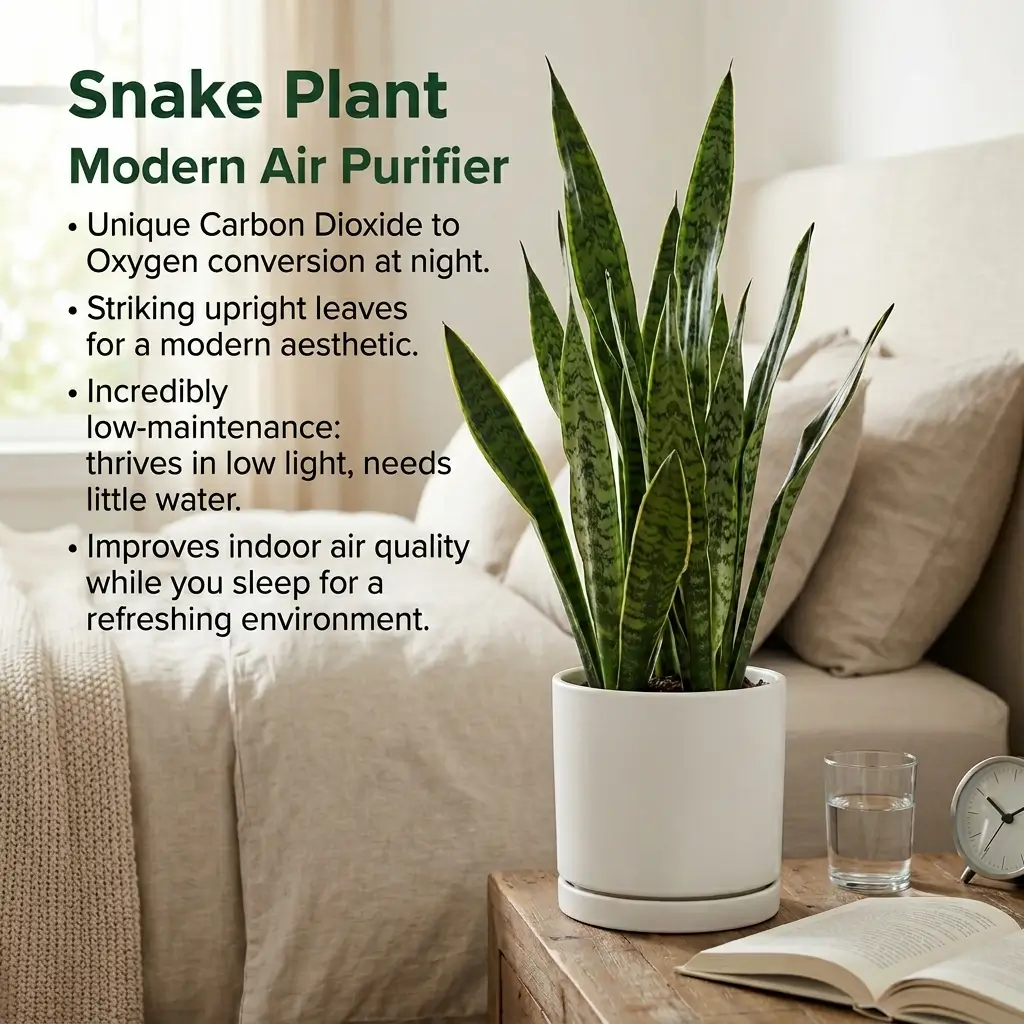
The snake plant (Dracaena trifasciata, also known by its older botanical name, Sansevieria trifasciata) is a practical option for anyone who wants greenery without a demanding care routine. Its stiff, upright leaves grow in compact clusters, making it suitable for a bedside corner, a dresser, or a small floor space.
Light: It tolerates low light, although moderate or bright indirect light generally supports better growth.
Watering: Allow the potting mix to dry thoroughly before watering again. Water less frequently in cool conditions or when the plant receives little light.
Space: Choose a compact variety for a small bedroom or a taller variety to fill an empty corner.
Best for: Beginners, busy households, and bedrooms where other plants struggle because of limited natural light.
One common mistake is watering a snake plant on a fixed weekly schedule. Its thick leaves store water, so constantly damp soil can cause root rot. A pot with drainage holes and a free-draining potting mix will help prevent this problem.
Keep in mind that snake plants are toxic to cats and dogs if eaten. Place one somewhere pets cannot reach if they are likely to chew its leaves.

2. Lavender
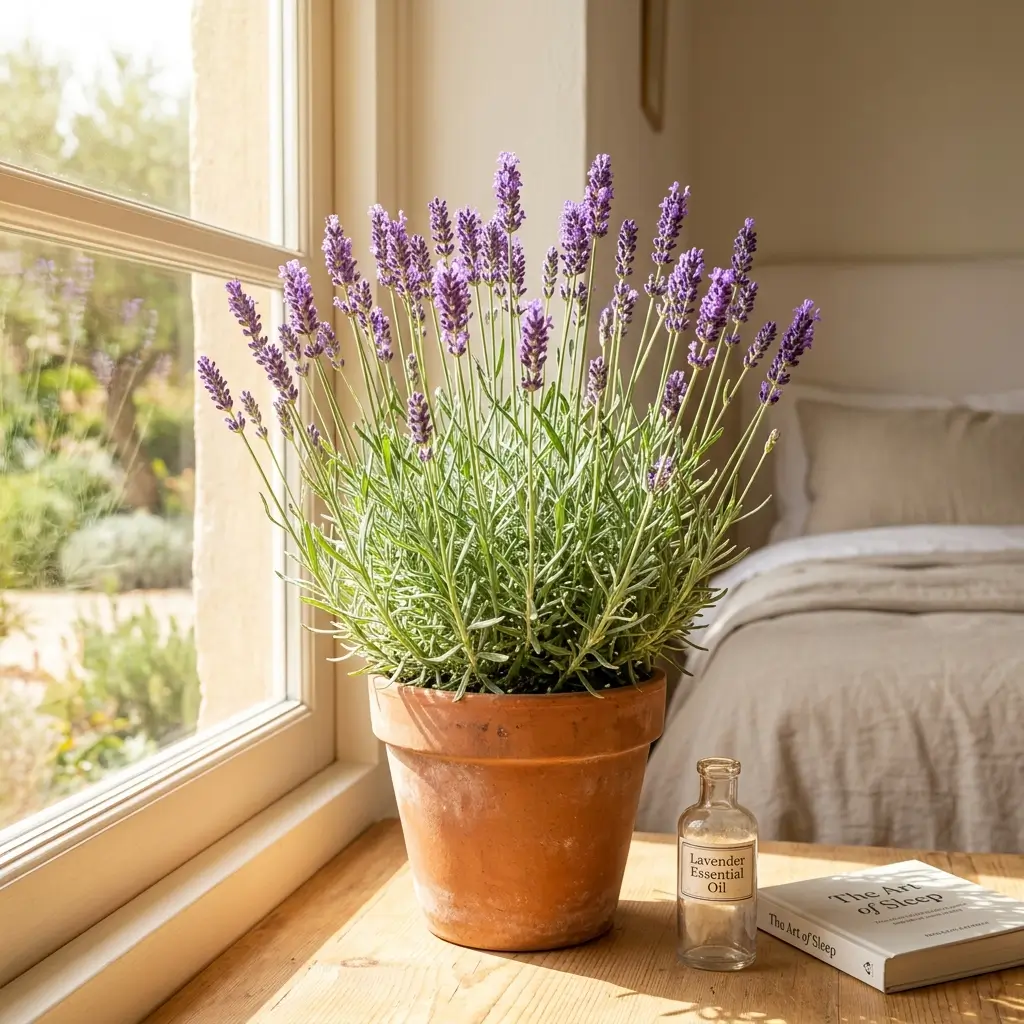
Lavender (Lavandula species) is known for its fragrant foliage and purple flowers. Its soft colour and familiar scent can complement bedrooms decorated in neutral shades, natural fabrics, or a relaxed country style.
Unlike many foliage houseplants, lavender is not a good choice for a dim bedroom. It needs abundant sunlight and good airflow, so a bright, sunny window is usually essential when growing it indoors.
Light: Provide several hours of direct sunlight daily, preferably in a bright, sunny position.
Watering: Water when the upper part of the potting mix has dried, then allow excess water to drain away.
Space: A small pot can sit on a sunny windowsill, provided the plant receives enough light and has room for airflow.
Best for: People with sunny bedrooms who enjoy fragrant plants and are willing to give them extra attention.
Lavender does not thrive in permanently wet soil. If the room has only a north-facing window, a shaded interior corner, or very little daylight, a snake plant or pothos will generally be a more practical choice.
Lavender’s scent may feel relaxing to some people, but a live plant should not be presented as a guaranteed treatment for anxiety or poor sleep.
3. Peace Lily
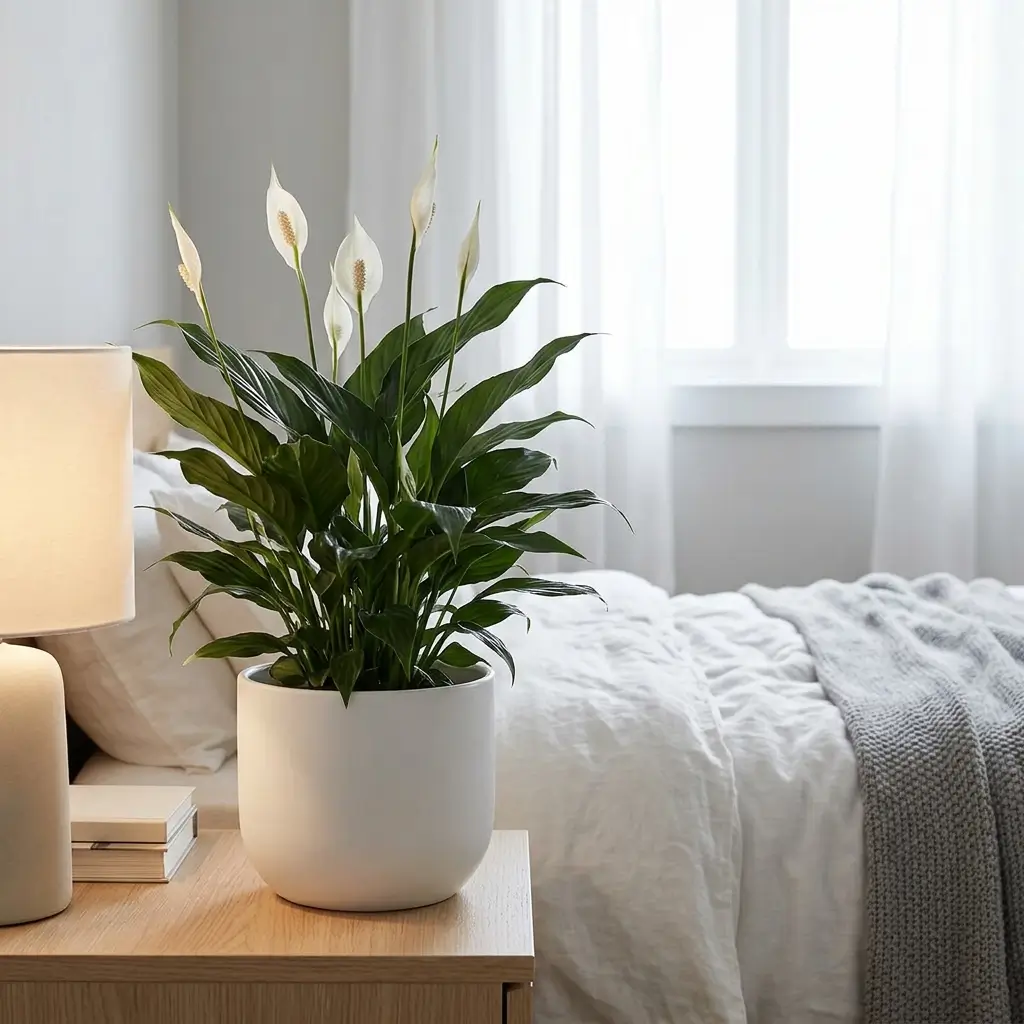
The peace lily (Spathiphyllum species) combines deep green leaves with distinctive white flower-like structures called spathes. It works well beside a bedroom chair, near a window with filtered light, or on a low stand where its leaves can spread naturally.
Light: Bright, indirect light is ideal. It can tolerate lower light, but flowering may become less frequent.
Watering: Check the potting mix regularly and water when the surface begins to dry. Do not leave the roots sitting in water.
Space: Medium-sized pots work well on the floor or a sturdy plant stand.
Best for: People who want a leafy plant with a more decorative, flowering appearance.
Peace lilies sometimes droop noticeably when they need water, but waiting for severe wilting every time is not the best care strategy. Checking the soil before the plant becomes stressed is better.
Although peace lilies are often advertised as air-purifying plants, they should not be relied upon to remove indoor pollutants at a meaningful rate in an ordinary home.
Pet warning: Peace lilies are toxic to cats and dogs if chewed or swallowed. Choose a different plant if pets can access it.
4. Spider Plant
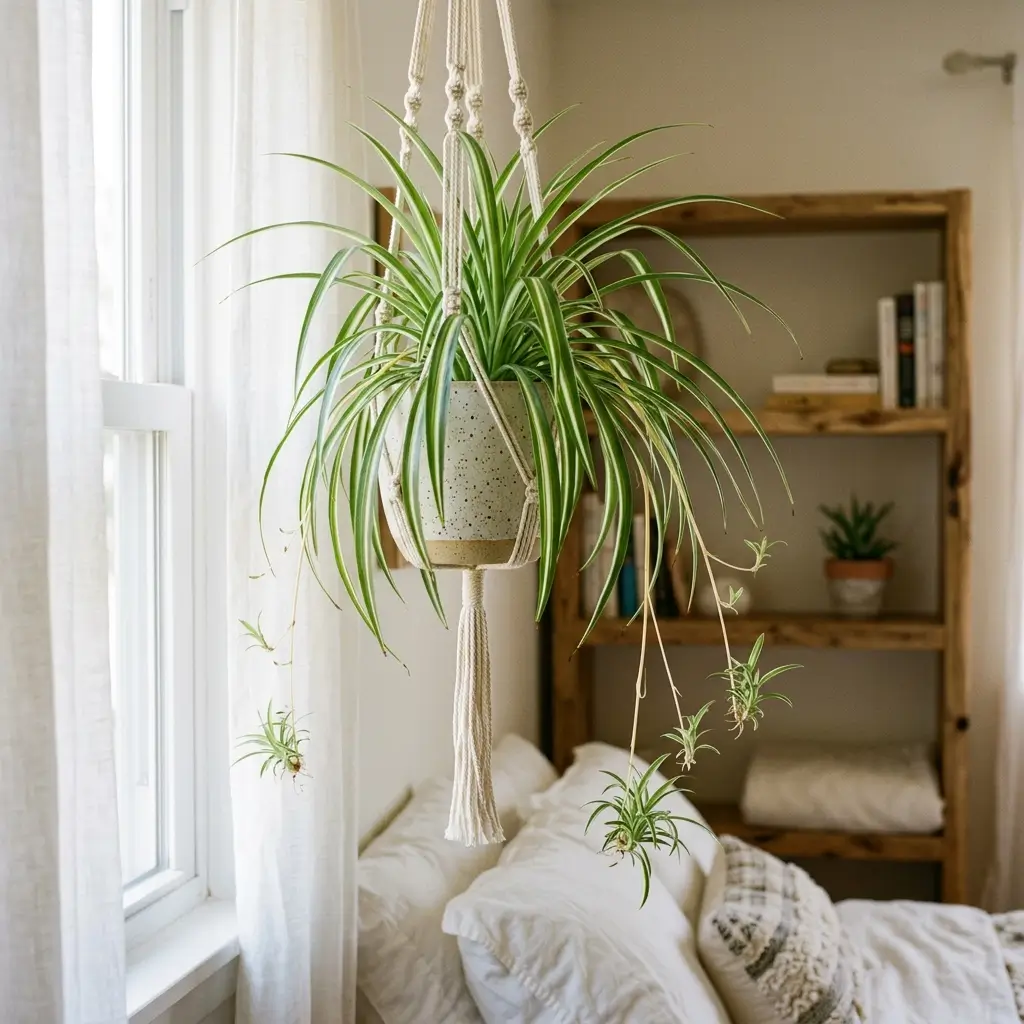
The spider plant (Chlorophytum comosum) has narrow, arching leaves that often feature green-and-white stripes. Mature plants may produce long stems carrying small plantlets, giving the plant a naturally cascading appearance.
This growth habit makes it particularly useful when floor space is limited. A hanging basket or an elevated shelf allows the leaves to spill over the edges without taking up room on a bedside table.
Light: Bright, indirect light is a good starting point. Avoid harsh sunlight that scorches the leaves.
Watering: Water when the upper layer of potting mix begins to dry, adjusting the frequency to the room’s temperature and light.
Space: Hanging baskets, shelves, and medium-sized pots are all suitable.
Best for: Small bedrooms, beginners, and people who enjoy propagating plants to grow their collection.
Brown leaf tips can appear when the plant is exposed to inconsistent watering, dry conditions, or a buildup of minerals from water or fertiliser. Trim damaged tips with clean scissors and review the plant’s care rather than automatically increasing watering.
Spider plants are listed as non-toxic to cats and dogs by the American Society for the Prevention of Cruelty to Animals (ASPCA). However, eating any plant material can still upset a pet’s stomach.
5. Aloe Vera
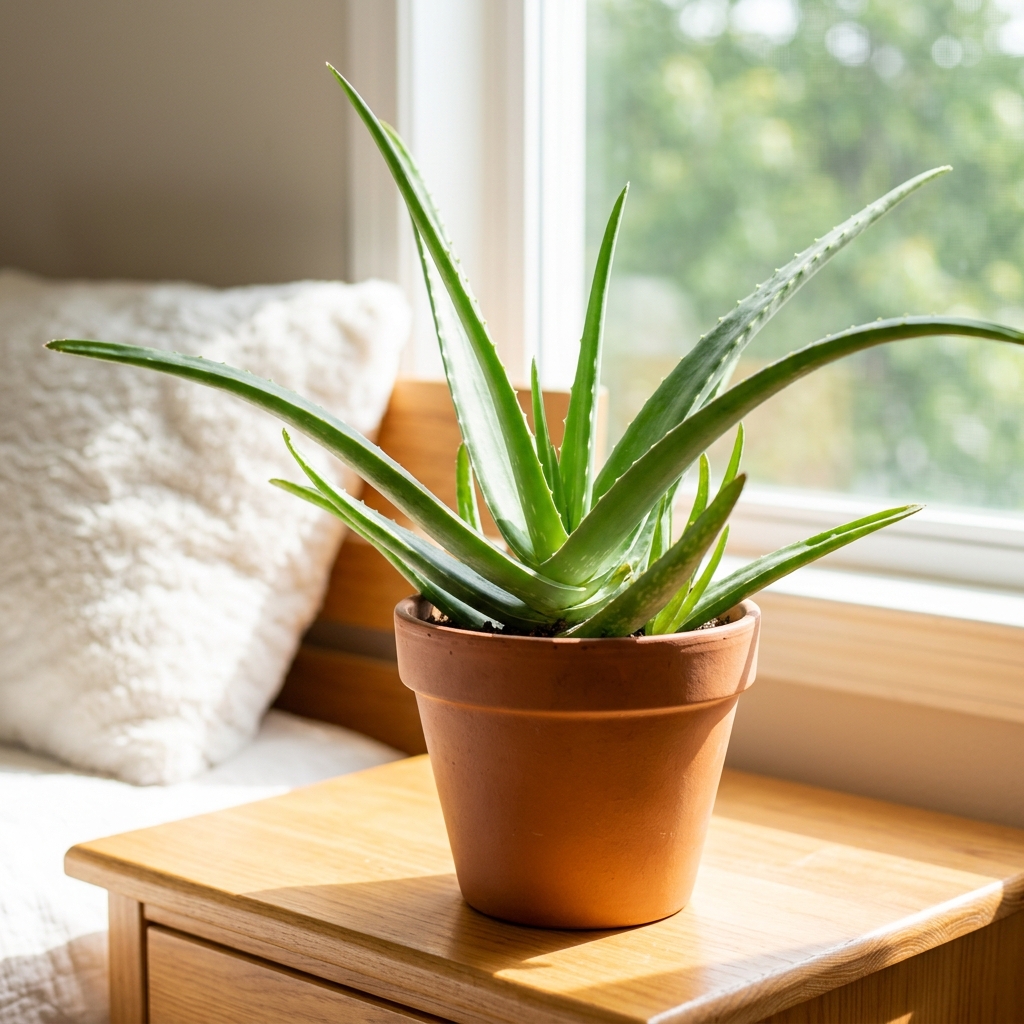
Aloe vera (Aloe vera) is a succulent with thick, fleshy leaves that grow in a compact rosette. Its sculptural shape suits minimalist bedrooms, wooden furniture, simple ceramic pots, and windowsills with plenty of sunlight.
Light: Provide bright light, with some direct sunlight if the plant has been gradually acclimated to it.
Watering: Let the potting mix dry completely before watering again.
Space: A small pot is usually sufficient for a young plant, while mature specimens may need a wider container.
Best for: Sunny bedrooms, succulent enthusiasts, and people who prefer a plant that does not need frequent watering.
Aloe vera is sometimes chosen because its leaves contain a gel used in certain skin-care products. Nevertheless, a potted plant is not a substitute for appropriate burn treatment, and its presence does not improve sleep by itself.
The most important care rule is to avoid excess water. A pot without drainage, dense soil, or frequent watering can quickly lead to root problems.
Pet warning: Aloe vera is toxic to cats and dogs if ingested. Keep it out of their reach.
6. English Ivy
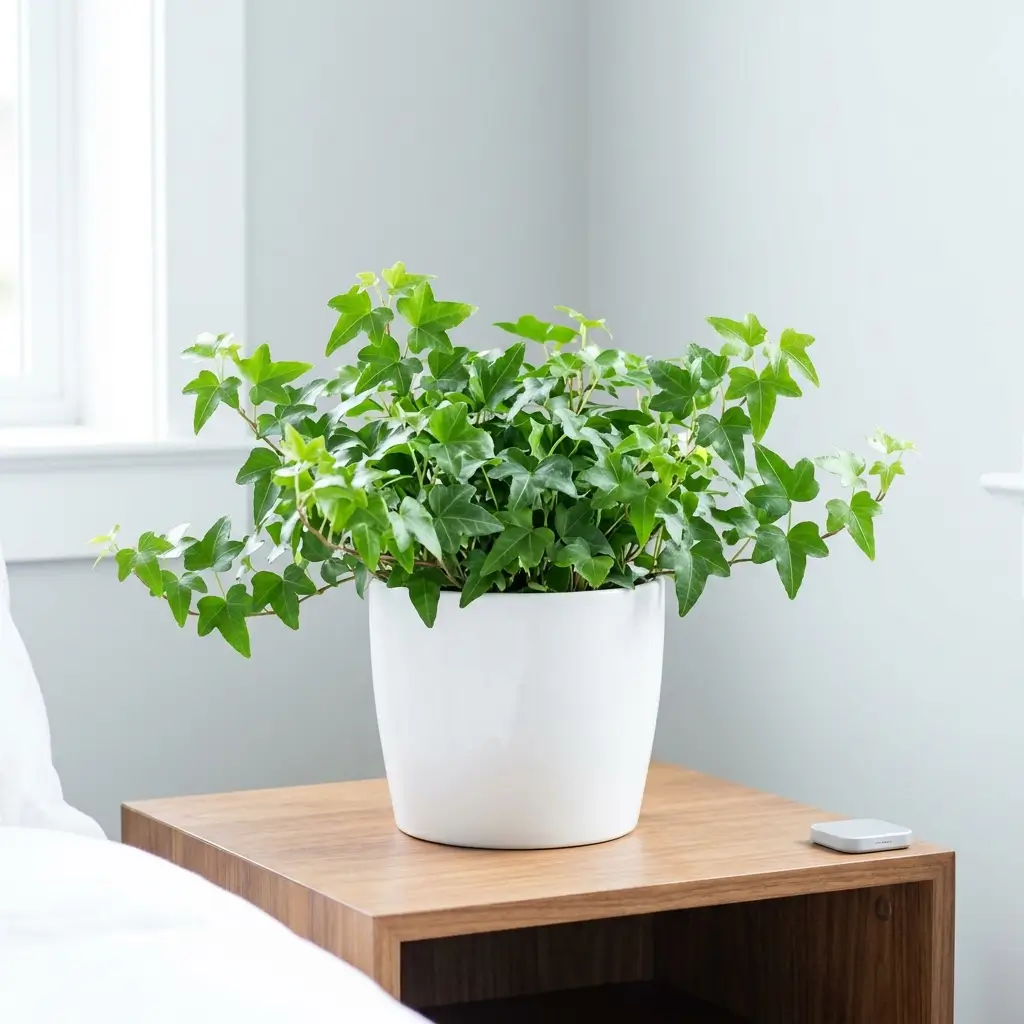
English ivy (Hedera helix) is a climbing and trailing plant with lobed leaves that can create a full, cascading display. It can be attractive on a high shelf or in a hanging planter, especially in bedrooms that need more visual texture.
Light: Bright, indirect light is a useful target for indoor growth.
Watering: Keep the potting mix lightly moist without leaving the roots waterlogged. Check the soil before watering.
Space: A hanging basket or elevated shelf gives its trailing stems room to grow.
Best for: People who like leafy displays and can provide consistent care.
English ivy is sometimes promoted as a solution for airborne mould or allergies. Do not rely on a potted ivy plant to control mould in a bedroom. If mould is present, find and correct the moisture problem, improve ventilation where appropriate, and clean or repair the affected area safely.
Ivy also needs monitoring for pests and dry conditions, particularly when grown indoors for long periods.
Pet warning: English ivy is toxic to cats and dogs. Its trailing stems can be especially tempting to curious pets, so a different plant may be safer.
7. Pothos (Devil’s Ivy)
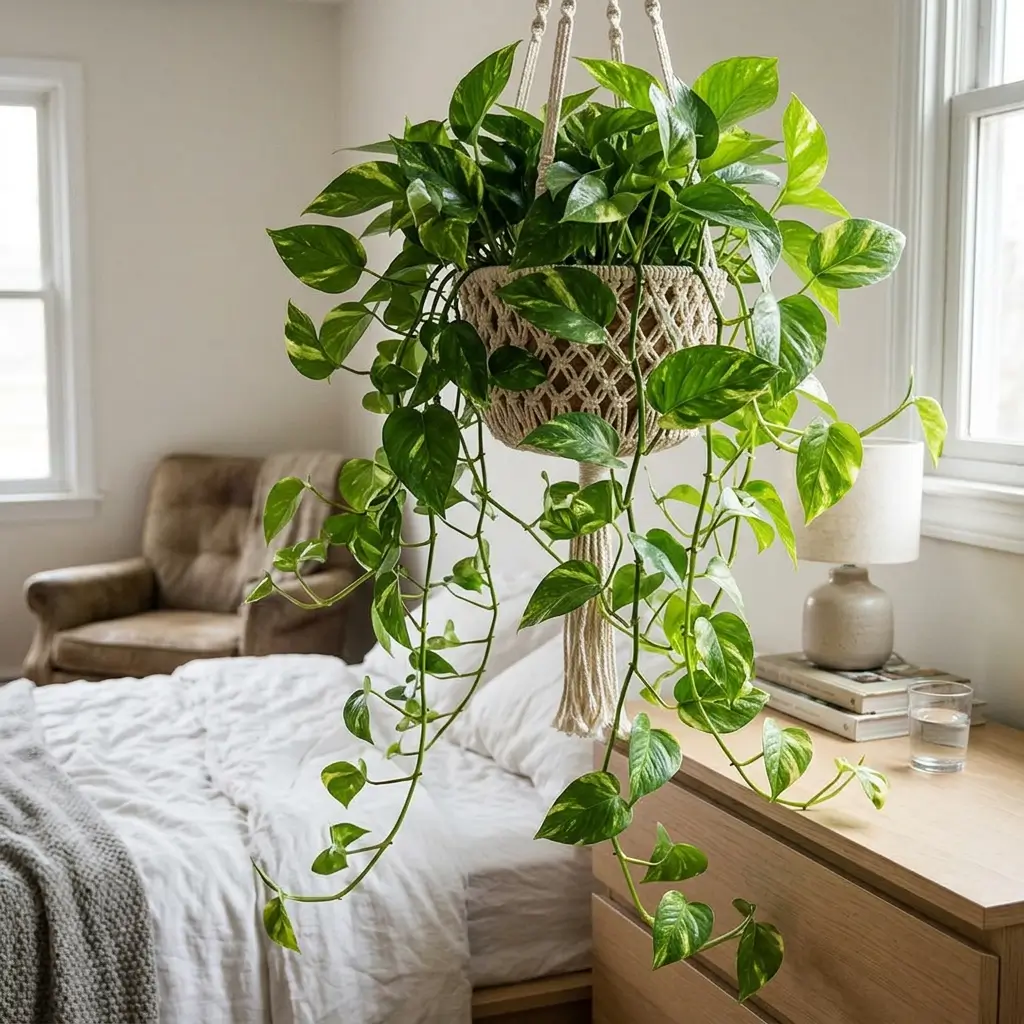
Pothos (Epipremnum aureum), often called devil’s ivy, is a popular foliage plant with heart-shaped leaves. Depending on the variety, its foliage may be solid green, golden, or marbled with cream.
Its trailing growth makes it useful for decorating the top of a wardrobe, a bookshelf, or a tall plant stand. Pothos is also forgiving when watering is occasionally delayed, provided it is not left to dry out severely over and over.
Light: It tolerates lower light, but bright indirect light usually helps variegated varieties maintain their leaf patterns.
Watering: Let the upper portion of the potting mix dry before watering again.
Space: Use a shelf or hanging pot to display its trailing stems.
Best for: Beginners, renters, and people who want greenery without needing a sunny windowsill.
Low light does not mean no light. A pothos placed in a windowless room will not remain healthy indefinitely without suitable artificial lighting.
If the stems become unusually long with large gaps between the leaves, the plant may need more light. You can also trim long stems to encourage a fuller appearance and propagate healthy cuttings.
Pet warning: Pothos is toxic to cats and dogs if chewed or swallowed. Keep it inaccessible to pets.
8. Jasmine
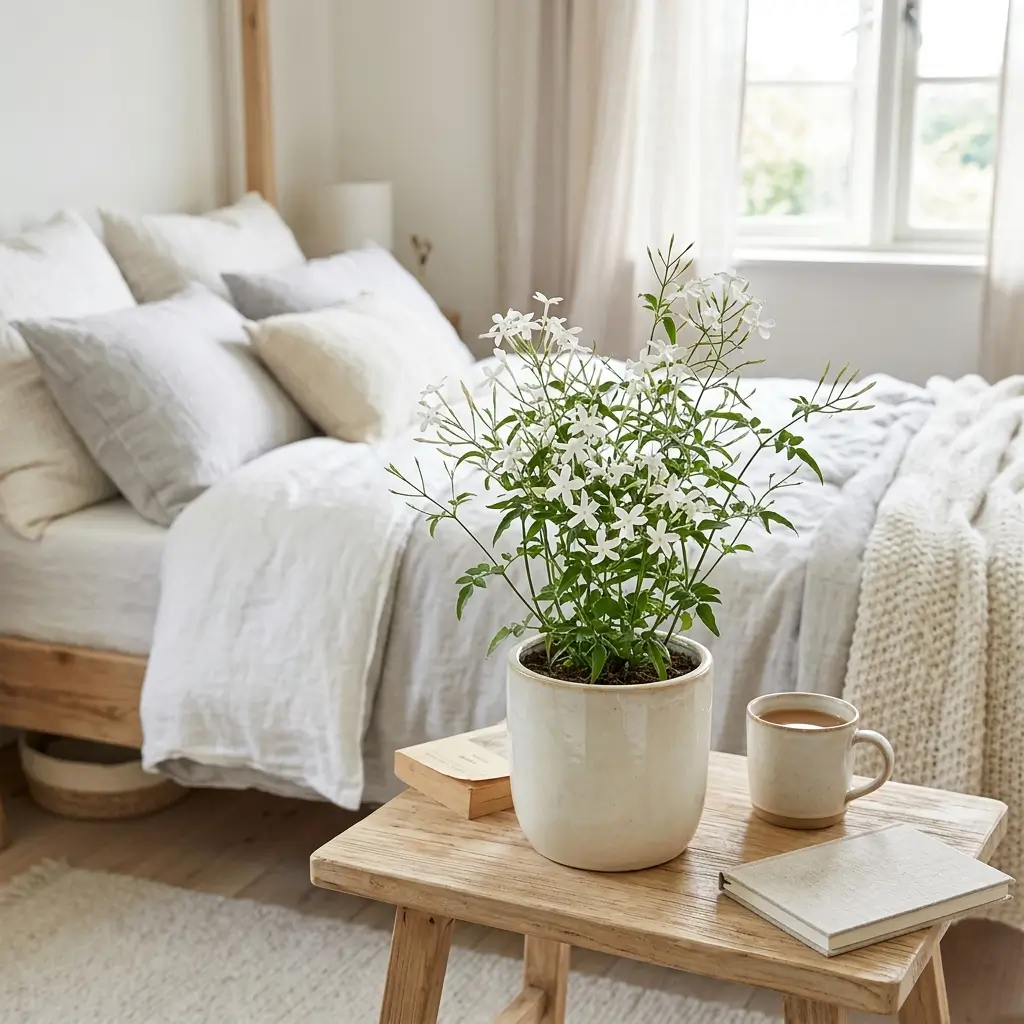
Jasmine is a flowering plant valued for its delicate blossoms and distinctive fragrance. Depending on the species, its flowers may be white or pale yellow, and some varieties produce a noticeable scent in the evening.
It can make a bedroom feel special, particularly when placed near a bright window where its flowers can be enjoyed without crowding the bed.
Light: Most jasmine varieties grown for flowers need bright light and may benefit from several hours of sunlight.
Watering: Follow the needs of the particular species. During active growth, check the soil frequently and avoid letting the root ball become excessively dry or waterlogged.
Space: A windowsill or small trellis can support a compact climbing variety.
Best for: Plant lovers who enjoy fragrant flowers and are prepared for more maintenance than a typical foliage plant requires.
Not every plant sold as jasmine has identical care requirements. Check the botanical name before buying, particularly if you want to grow it indoors year-round.
A fragrant plant may be pleasant, but strong scents can bother people who are sensitive to perfumes or floral fragrances. If a scent interferes with your comfort, move the plant to another room.
9. Rubber Plant
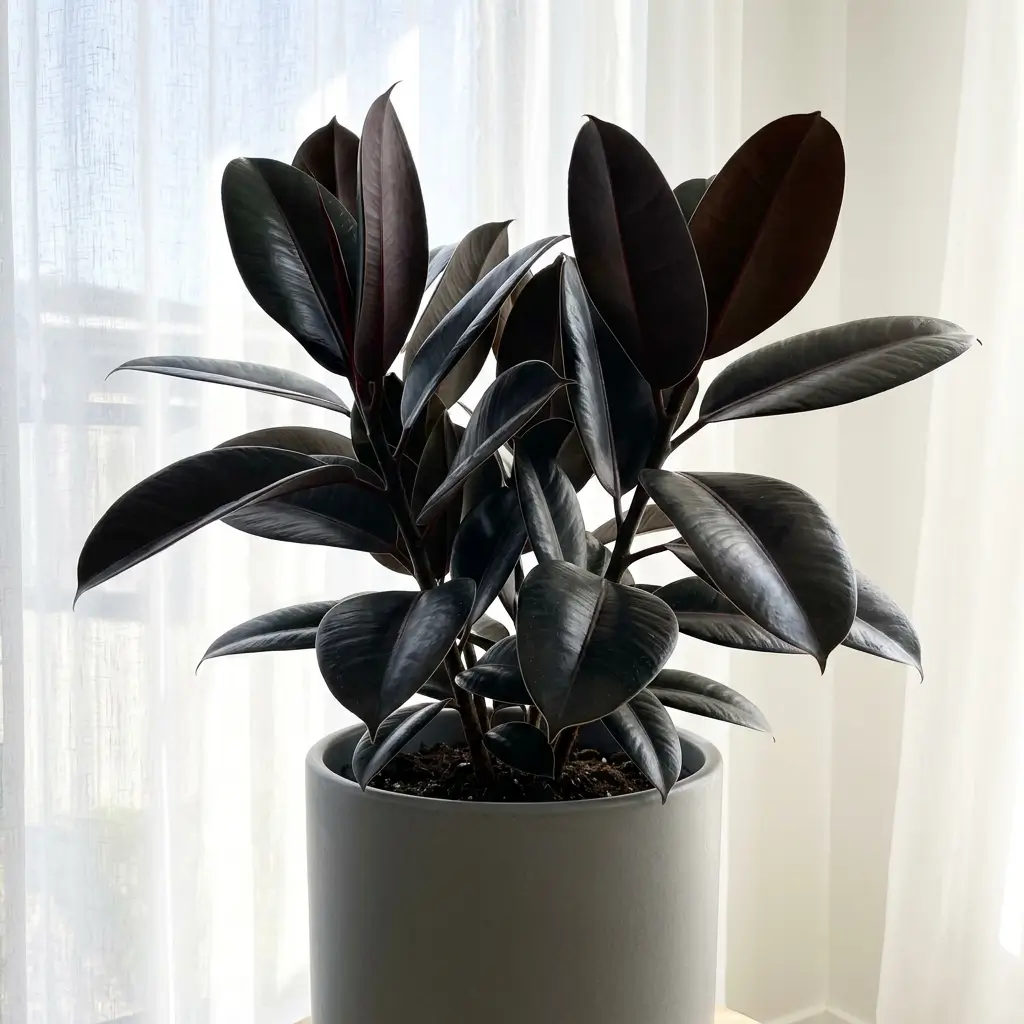
The rubber plant (Ficus elastica) has broad, glossy leaves that create a bold focal point. Dark-leaved varieties work particularly well with contemporary furniture, neutral walls, and simple decorative accessories.
Unlike trailing plants, a rubber plant grows upright and can gradually become a substantial floor plant. It is therefore worth considering how much room it will need as it matures.
Light: Bright, indirect light is ideal. A gradual adjustment may be necessary if you move it to a sunnier position.
Watering: Allow the upper part of the potting mix to dry before watering. Reduce watering when growth slows.
Space: A floor pot beside a window or in a bright corner provides room for its upright growth.
Best for: Bedrooms with enough space for a statement plant and people who prefer large leaves over delicate flowers.
Dust can collect on broad leaves, so gently wiping them with a damp, soft cloth helps keep the plant looking attractive. Avoid harsh cleaning products or leaf-shine sprays unless the product is specifically appropriate for the plant.
Rubber plants contain an irritating milky sap, so avoid contact with the sap and keep the plant away from children and pets who might chew it.
10. Areca Palm
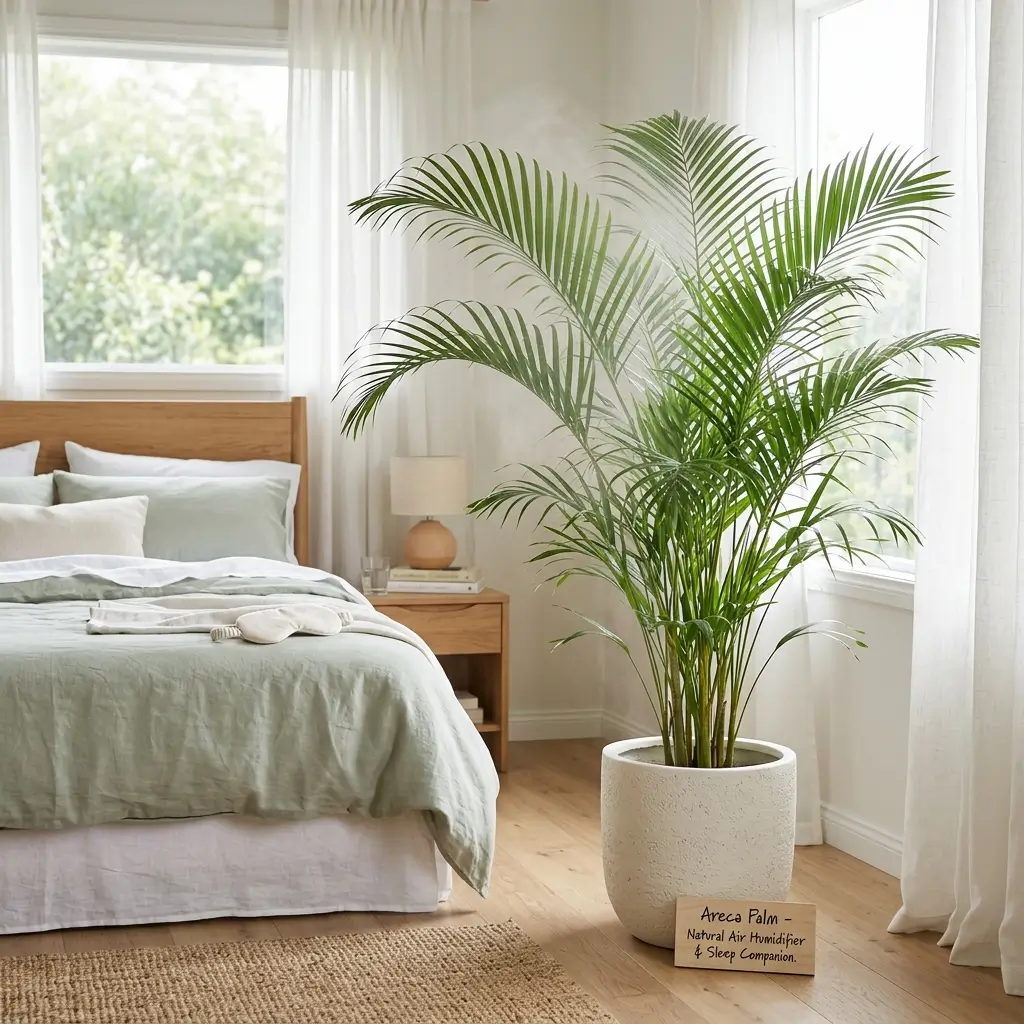
The areca palm (Dypsis lutescens) has slender stems and arching, feather-like fronds. It is a good choice when you want a softer, tropical appearance rather than the upright shape of a snake plant or the trailing growth of pothos.
A healthy areca palm can become quite wide, so it is better suited to a bedroom with enough floor space than to a narrow bedside table.
Light: Bright, indirect light generally suits it well.
Watering: Water when the upper layer of potting mix starts to dry, while avoiding both prolonged dryness and waterlogged soil.
Space: Use a stable floor pot with sufficient room for the fronds to spread.
Best for: Larger bedrooms, tropical decorating styles, and people who can provide regular care.
Palm fronds can develop brown tips when watering, humidity, or mineral levels are unsuitable. Before changing several things at once, check the soil, inspect the leaves, and consider whether the plant is near an air conditioner or a strong draft.
An areca palm releases some moisture through its leaves, but one plant should not be expected to humidify an entire bedroom substantially.
It is generally listed as non-toxic to cats and dogs, making it a useful option for households that need to consider pet safety. Still, prevent pets from chewing the plant or its potting mix.
Which Bedroom Plant Should You Choose?
The best choice depends on your room rather than on which plant is most popular.
| Your bedroom situation | Plant to consider | Main reason |
|---|---|---|
| Little natural light | Snake plant | Tolerates lower light |
| Bright, sunny windowsill | Lavender or aloe vera | Suits stronger light |
| Small room with limited floor space | Spider plant | Works on shelves and in hanging baskets |
| Empty corner that needs a focal point | Rubber plant | Upright, broad-leaved growth |
| You prefer trailing greenery | Pothos or English ivy | Cascading stems |
| You want fragrant flowers | Lavender or jasmine | Fragrant foliage or blooms |
| You have curious cats or dogs | Spider plant or areca palm | Listed as non-toxic to cats and dogs |
| You often forget to water | Snake plant | Stores water in its leaves |
Remember that a plant’s tolerance for low light is not the same as an ability to grow without light. If your bedroom has no suitable natural light, consider an appropriate grow light or choose a different location for the plant.
How to Care for Bedroom Plants Successfully
1. Check the light before buying
Spend some time observing your bedroom during the day. Is the window exposed to direct sun? Does daylight reach the back of the room? Is a neighbouring building blocking much of the light?
Bright indirect light usually means the plant receives plenty of daylight without strong, direct rays hitting its leaves for long periods. A dim corner several metres from a small window may receive far less light than it appears to.
Match the plant to the actual conditions. A sun-loving lavender plant is unlikely to thrive on a dark shelf, even if the spot looks attractive.
2. Water according to the plant, not the calendar
There is no single watering schedule that works for all bedroom plants. A succulent such as aloe vera needs its potting mix to dry out between waterings, while a peace lily generally prefers more consistent moisture.
Use your finger to check the soil, or use a suitable moisture meter if you prefer. When watering is needed, moisten the root ball thoroughly and allow excess water to drain away. Empty any saucer that collects runoff.
Watering every plant on the same day can lead to trouble because pots dry at different rates depending on their size, soil, light, and temperature.
3. Choose pots with drainage holes
Decorative pots can improve the appearance of a bedroom, but the container must also suit the plant’s needs. A pot with drainage holes allows excess water to escape and makes it easier to manage soil moisture.
If you prefer a decorative container without holes, keep the plant in a separate nursery pot with drainage and remove it for watering. Let it drain before returning it to the outer container.
4. Use an appropriate potting mix
Succulents such as aloe vera and snake plants generally benefit from a free-draining mix. Other tropical foliage plants may prefer a mix that retains some moisture while allowing air to reach the roots.
Ordinary garden soil can become compacted in a container and may not drain well. Choose a potting mix intended for indoor plants, then adjust it to the needs of the species.
5. Keep leaves clean and inspect them regularly
Dust can settle on leaves, particularly in bedrooms near open windows or busy streets. Wipe broad, sturdy leaves gently with a damp cloth when needed.
While cleaning, look for yellowing leaves, sticky residue, fine webbing, or small insects. Early inspection makes it easier to identify pests before they spread to other plants.
Remove dead leaves with clean scissors and avoid applying unnecessary fertiliser or pest-control products when the cause of a problem is still unknown.
6. Avoid excess moisture and poor airflow
Constantly wet potting mix can encourage root rot and fungus gnats. These tiny flying insects are often associated with moist growing media and can become irritating in a bedroom.
Allow the soil to dry according to the plant’s needs, use containers with drainage, and remove fallen leaves from the soil surface. If mould appears on the soil or around the window, investigate excess moisture rather than simply adding another plant.
Misting is not a universal solution to dry indoor air. Its effect on room humidity is brief, and some plants do better with other adjustments to their growing conditions.
7. Position plants where they will not cause problems
Avoid placing large pots where they obstruct walking paths or make it difficult to open windows. Keep water away from electrical equipment, bedding, and wooden furniture that could be damaged by spills.
A bedside table may suit a compact plant, but a larger palm or rubber plant will generally need a stable floor position. Hanging planters should be secured properly, and trailing stems should not become a hazard.
Common Bedroom Plant Problems and How to Fix Them
Yellow leaves: Yellowing can result from overwatering, poor drainage, insufficient light, or normal ageing. Check the soil and the condition of the roots before changing the watering routine.
Brown leaf tips: These may be linked to irregular watering, dry air, mineral buildup, or fertiliser issues. Inspect the growing conditions before assuming the plant needs more water.
Soft or mushy stems: This can indicate rot, particularly when the soil stays wet. Check the roots and remove damaged material with clean tools if appropriate. Repotting into a suitable fresh mix may be necessary.
Long, sparse growth: A plant that stretches toward a window may not be receiving enough light. Move it gradually to a brighter location that suits the species.
Small flying insects: Fungus gnats often become noticeable when potting mix stays consistently damp. Let the appropriate portion of the soil dry between waterings, improve drainage, and remove decaying plant material.
Leaves with pale or scorched patches: Strong direct sunlight may burn leaves that are not accustomed to it. Move the plant to a more suitable position and introduce stronger light gradually when the species can tolerate it.
Bedroom Plant Safety: What to Know Before Buying
Before bringing a plant into your bedroom, consider children, pets, allergies, and the space available.
Several plants in this guide—including snake plants, peace lilies, pothos, English ivy, and aloe vera—are toxic to cats or dogs if ingested. The ASPCA provides plant-specific toxicity information, so check the exact species before purchasing.
Spider plants and areca palms are generally listed as non-toxic to cats and dogs. Even so, a pet that eats a large amount of plant material may experience stomach upset.
Keep plants out of reach of children who might chew the leaves or swallow potting mix. Wear suitable gloves when handling irritating sap, and wash your hands after pruning or repotting.
If you have a strong sensitivity to fragrance, choose a foliage plant rather than a strongly scented flowering variety. Anyone experiencing persistent respiratory symptoms should address the underlying cause rather than relying on plants to improve indoor air.
Frequently Asked Questions
What is the best plant for a bedroom with little sunlight?
A snake plant is a practical choice because it tolerates low light and does not need frequent watering. Pothos is another option. Neither plant can grow indefinitely without light, so use a brighter location or a suitable grow light if the room receives very little daylight.
Are bedroom plants good for sleep?
Plants can make a bedroom feel more comfortable and visually relaxing, but there is no guarantee that a particular plant will improve sleep. Choose one that suits your space, avoid fragrances that disturb you, and maintain a comfortable sleeping environment.
Do plants release oxygen at night?
Some plants, including snake plants and aloe vera, use forms of photosynthesis that allow carbon dioxide uptake at night. However, the oxygen contribution of an ordinary potted plant is too small to treat it as a meaningful way to improve the air in a bedroom.
How many plants should I keep in my bedroom?
There is no fixed number that suits every room. Start with one or two plants and consider the available light, floor space, ventilation, and your ability to care for them. More plants are not automatically better, particularly if they lead to crowded surfaces or persistently damp potting mix.
Which bedroom plants are safest for cats and dogs?
Spider plants and areca palms are commonly listed as non-toxic to cats and dogs. Check the botanical name before buying, since common names can sometimes refer to different plants. The ASPCA’s plant database is a useful starting point for checking toxicity.
Can I keep a plant on my bedside table?
Yes. Choose a compact plant that suits the light near the bed, and use a stable pot that will not spill easily. A small spider plant or appropriately sized snake plant may work well. Protect the table from water damage and keep toxic plants away from pets and young children.
Why is my bedroom plant dying even though I water it?
Watering too often is a common cause of houseplant problems, but insufficient light, poor drainage, pests, and unsuitable temperatures can also affect growth. Check the soil and roots, review the plant’s light requirements, and change one factor at a time so you can identify the problem.
Final Thoughts
The best bedroom plant is one that suits your room, your routine, and the amount of natural light available. A snake plant may be a sensible choice for someone who wants low-maintenance greenery, while a spider plant works well on shelves and an aloe vera plant can thrive on a sunny windowsill.
Before buying, check the plant’s light and watering requirements, consider how large it may grow, and confirm whether it is safe around your pets. A healthy plant in the right position will be easier to maintain and more enjoyable than a demanding variety that struggles in the wrong conditions.
Start with one suitable plant, learn how it responds to your room, and add more greenery only when you have the space and time to care for it.