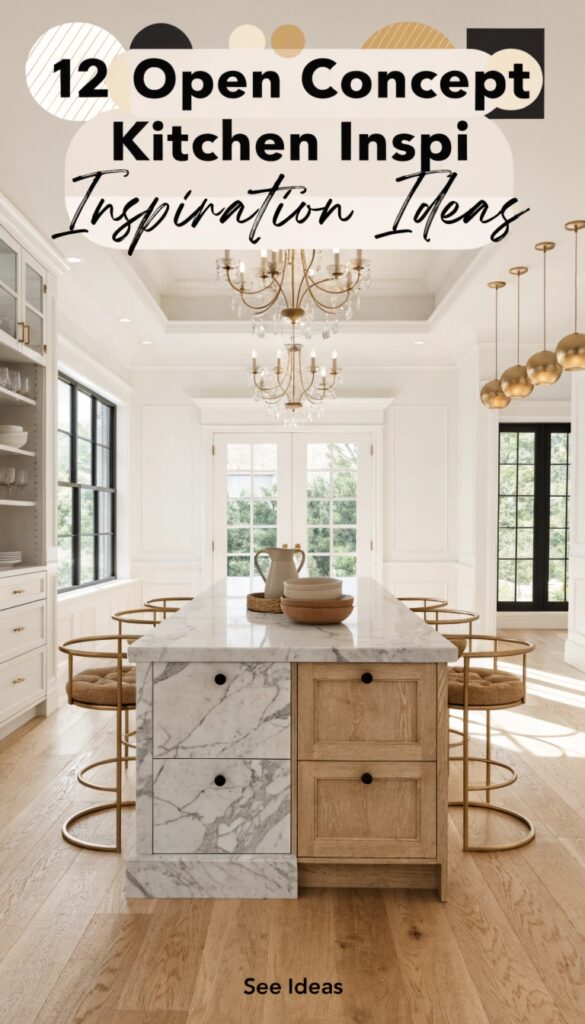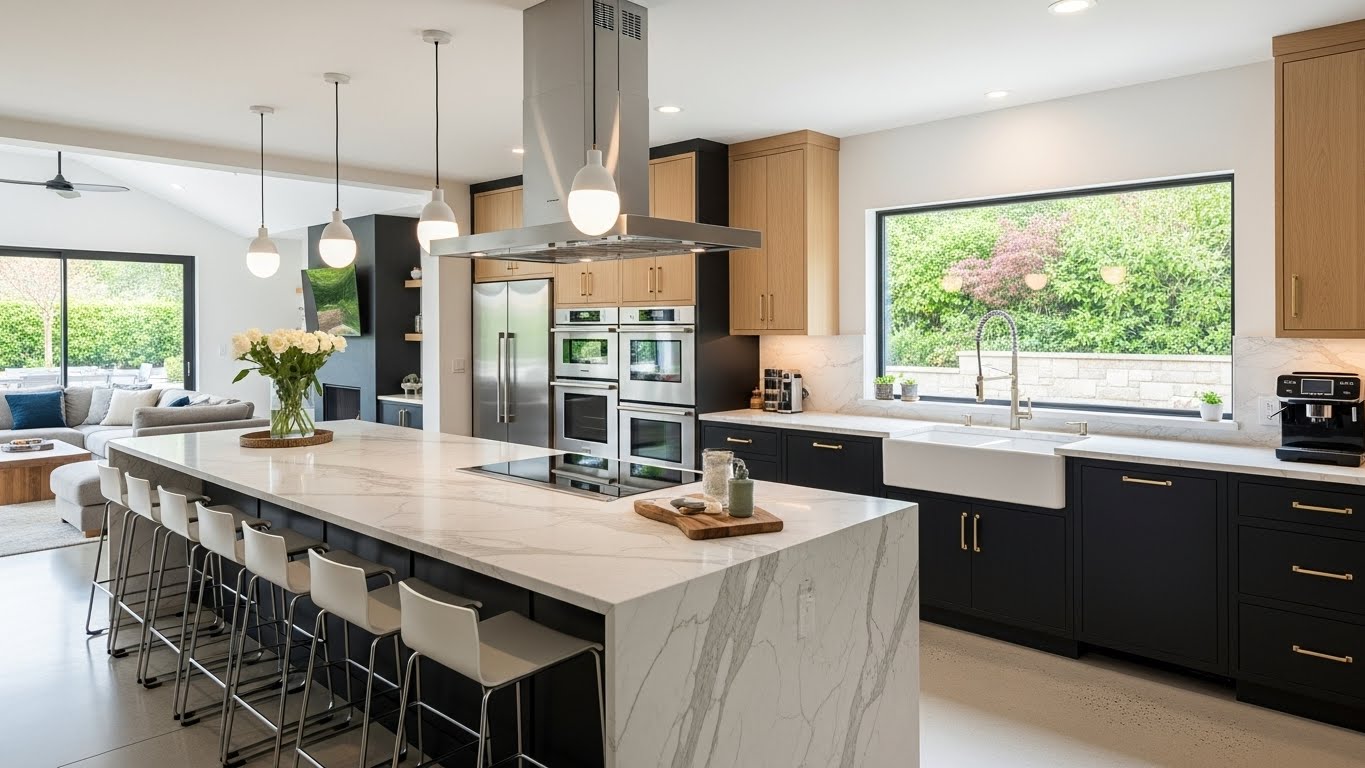
An open concept kitchen can make a home feel brighter, more connected, and easier to live in. Instead of separating the cooking area from the dining room or living room with walls, this layout brings the spaces together so family members can prepare meals, eat, relax, and spend time together without feeling isolated in different rooms.
However, creating a successful open kitchen involves more than removing walls or choosing attractive cabinets.
The layout needs enough room for people to move around, storage must be planned carefully, and the materials should work for both busy cooking areas and the spaces around them.
The good news is that an open kitchen does not have to be large or expensive to look beautiful. A well-positioned island, a coordinated color palette, layered lighting, or a thoughtful flooring choice can make a noticeable difference.
These 12 open concept kitchen ideas explore different ways to combine style and practicality.
Whether you are renovating a family home, updating a small apartment, or looking for inspiration before choosing new finishes, you will find ideas to help you plan a space that suits your needs.
Why Choose Open Concept
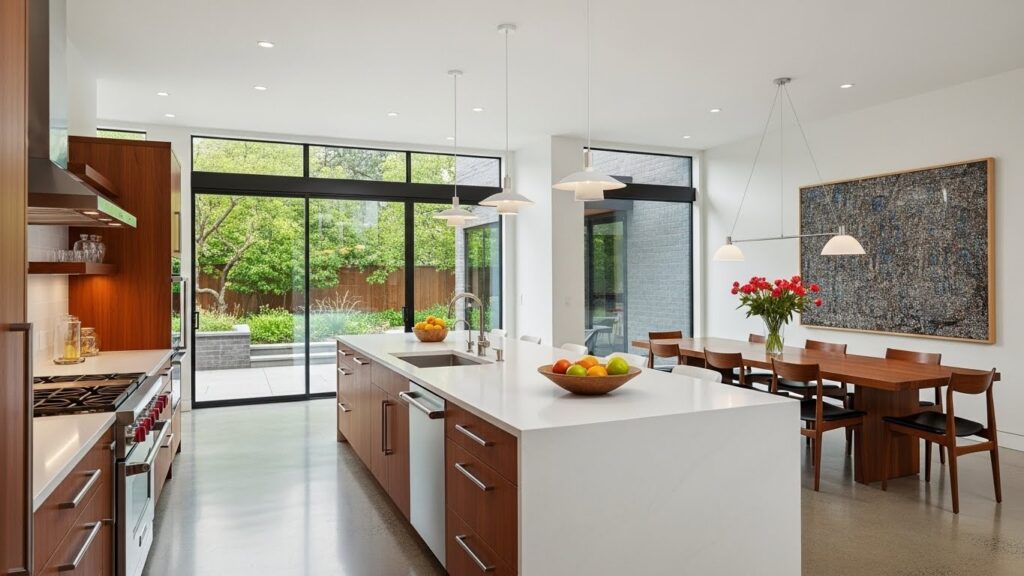
An open concept kitchen works best when cooking, dining, and relaxing happen in the same general area. It is especially useful for families and people who entertain often, because the cook can remain part of the conversation instead of being shut behind a wall.
The main benefits are:
- Better natural light: Fewer interior walls allow daylight to reach more of the living area.
- Easier entertaining: Guests can sit nearby while food is being prepared.
- Improved supervision: Parents can keep an eye on children in the living or dining area while cooking.
- Flexible use: The kitchen island can serve as a breakfast bar, homework station, workspace, or serving area.
The trade-off is that everything is visible. Cooking smells, appliance noise, and countertop clutter travel into the living space, so storage, ventilation, and zoning matter more than they would in a closed kitchen.
1. Central Kitchen Island Hub
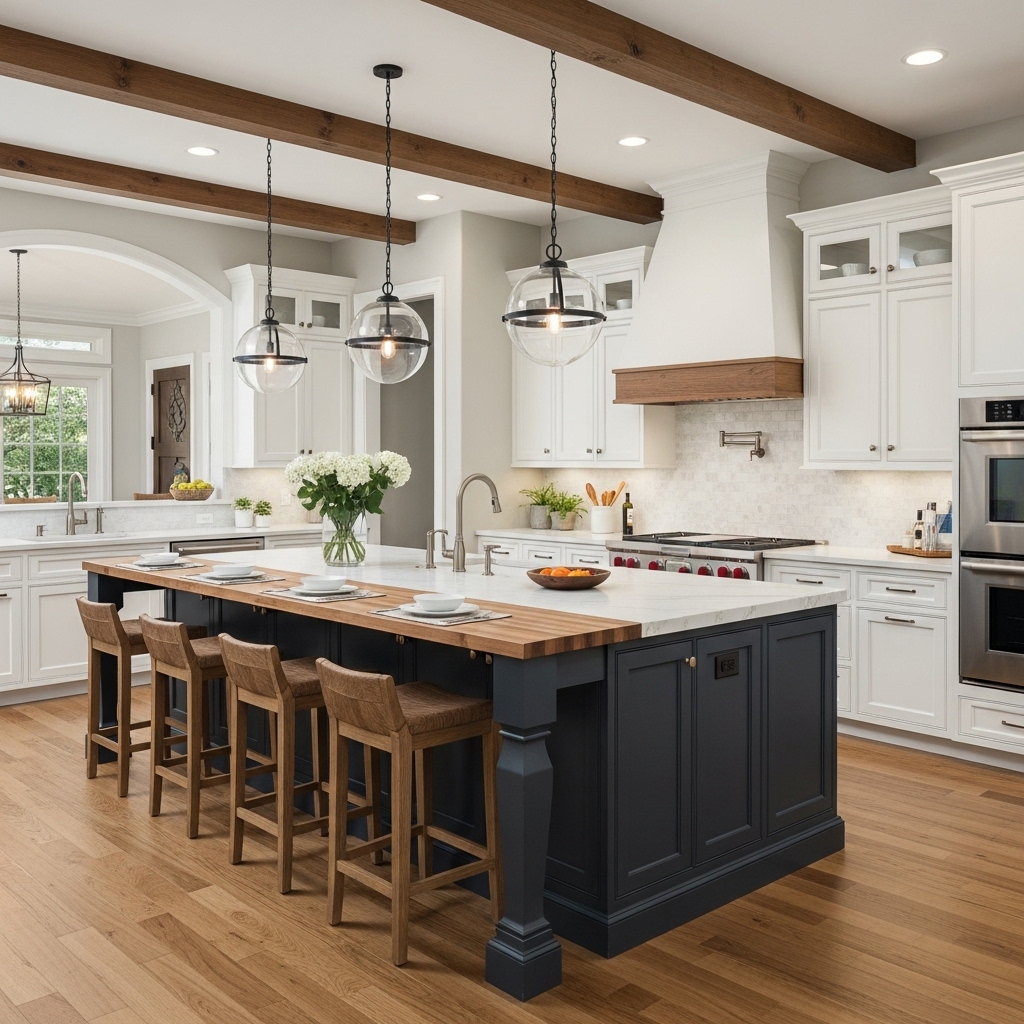
A central kitchen island can bring the entire open-plan space together. It provides a convenient place to prepare food, serve breakfast, store cooking essentials, and chat with family members while meals are being made.
The most important decision is how you intend to use it. An island designed mainly for food preparation needs a generous, easy-to-clean worktop.
One intended for casual dining needs comfortable seating, suitable legroom, and enough overhang for people to sit without knocking their knees against the cabinets.
Storage can make the island even more useful. Deep drawers are suitable for pots and pans, while cupboards can hold serving dishes and small appliances.
If you want a sink or cooktop in the island, remember that plumbing, electrical work, ventilation, and installation costs may increase.
Choose a countertop that complements the surrounding cabinetry rather than competing with it. A waterfall countertop, which continues down the sides of the island, creates a striking contemporary look, while a wood accent can soften a kitchen dominated by stone and metal.
Practical tip: Measure the available space before selecting an island. As a planning starting point, aim for roughly 42 inches of clearance around frequently used work areas, where the room allows.
Larger clearances may be needed where appliance doors open or several people work together. Check the applicable building requirements and the actual appliance dimensions before finalizing the layout.
2. All-White Bright Palette
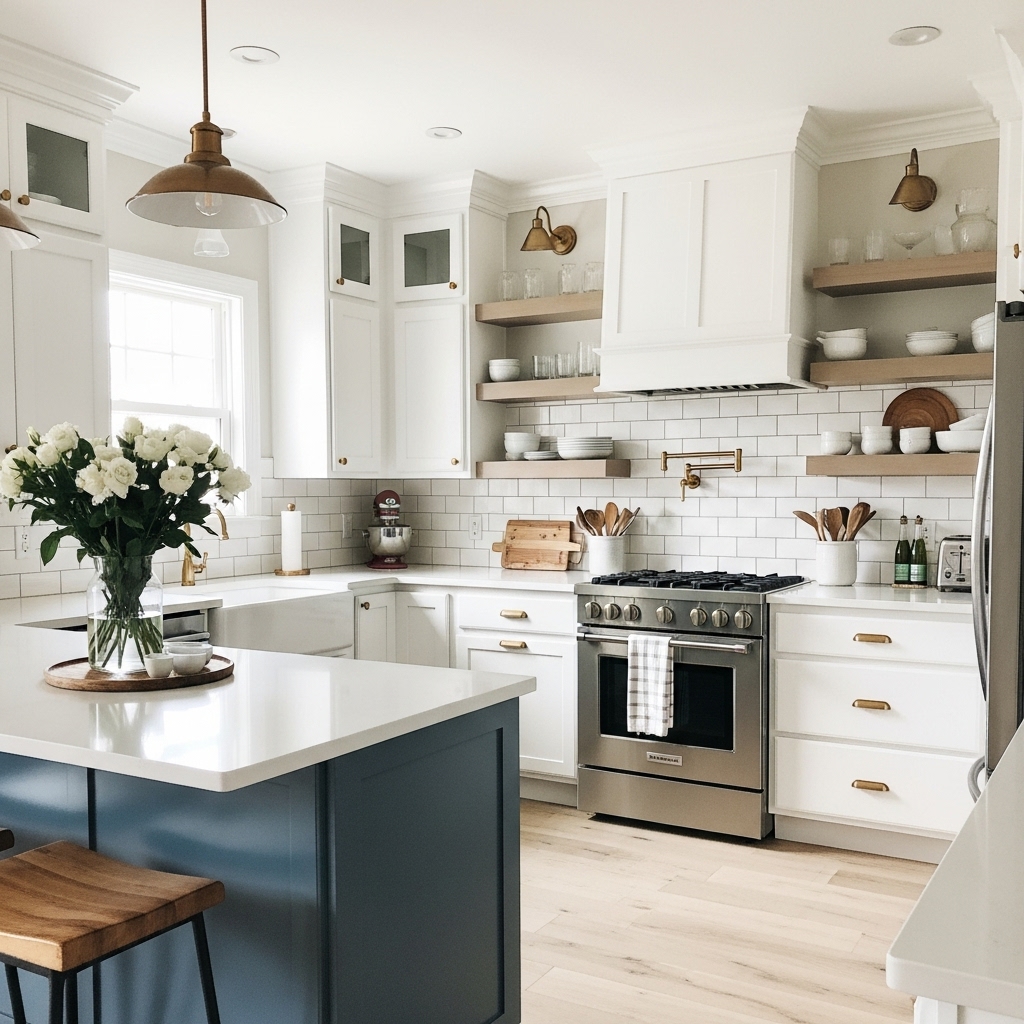
White cabinets, pale countertops, and light-colored walls can help an open concept kitchen feel clean and spacious. Because the kitchen shares its visual space with the dining and living areas, a light palette also makes it easier to create a consistent appearance throughout the home.
You do not have to use exactly the same shade of white everywhere. Warm white cabinets can pair beautifully with cream walls, pale oak flooring, and soft beige upholstery. Cooler whites work well with gray accents, stainless steel appliances, and contemporary furniture.
The main challenge is preventing the room from feeling flat or clinical. Introduce contrast through wooden stools, brushed brass handles, textured backsplash tiles, or a blue island. These details give the eye something to focus on without making the space feel busy.
Consider maintenance before choosing your finishes. Glossy surfaces can reflect light, but fingerprints and reflections may be more noticeable. Matte finishes offer a softer appearance, although their cleaning requirements vary by material.
Best for: Smaller kitchens, rooms with limited natural light, and homeowners who prefer a bright, understated interior.
3. Natural Wood Warmth
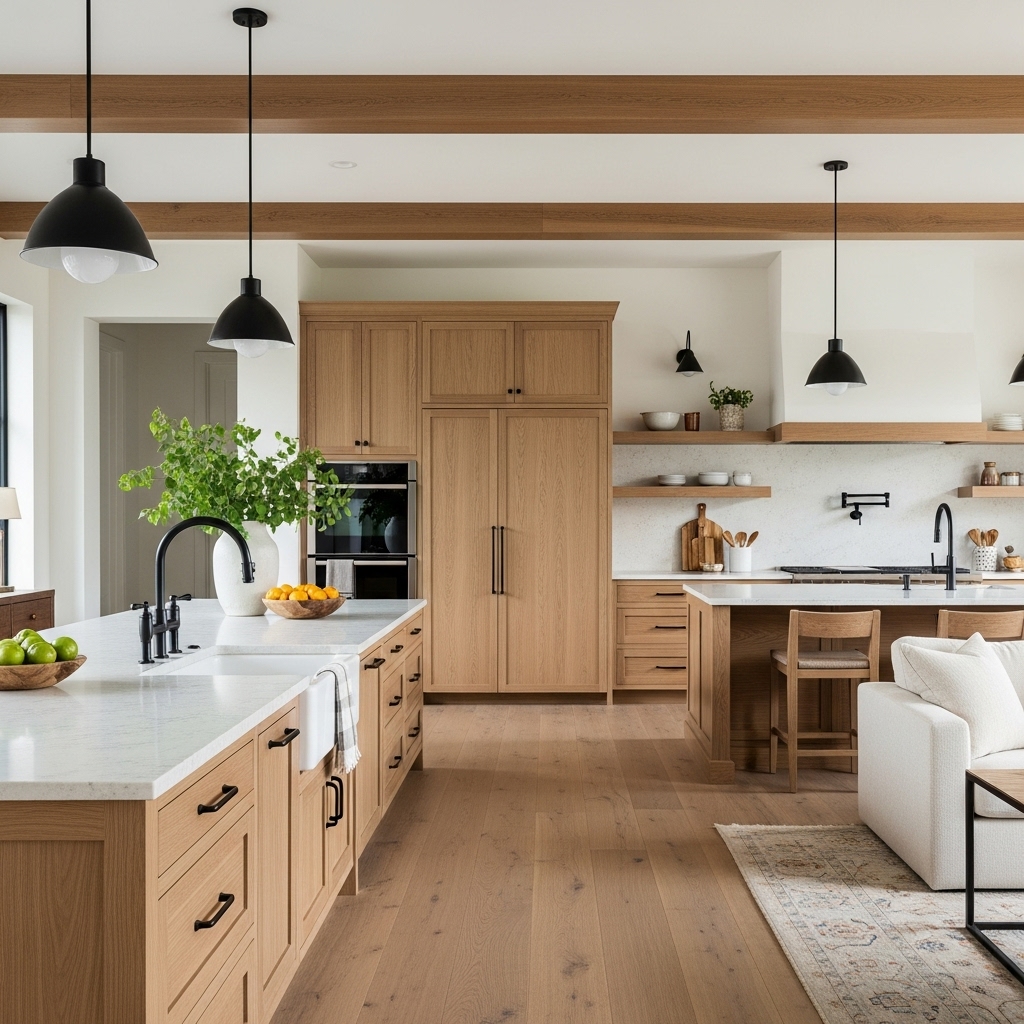
Wood prevents an open kitchen from feeling cold or showroom-like. Light oak, ash, and maple suit Scandinavian or minimalist interiors, while walnut and darker stained wood work well in larger, more traditional spaces.
For a cohesive look, repeat one or two wood tones rather than introducing several unrelated finishes. For example, use oak cabinet fronts, matching oak stools, and a nearby living-room coffee table in a similar tone.
Good places to add wood include:
- Cabinet fronts or open shelving
- Bar stools
- A butcher-block island section
- Ceiling beams
- Flooring transitions between the kitchen and living area
Pair wood with stone, matte black metal, or neutral upholstery to keep the space balanced. Avoid placing unprotected wood directly beside a cooktop or sink, where heat and moisture can cause damage.
4. Bold Blue Accents
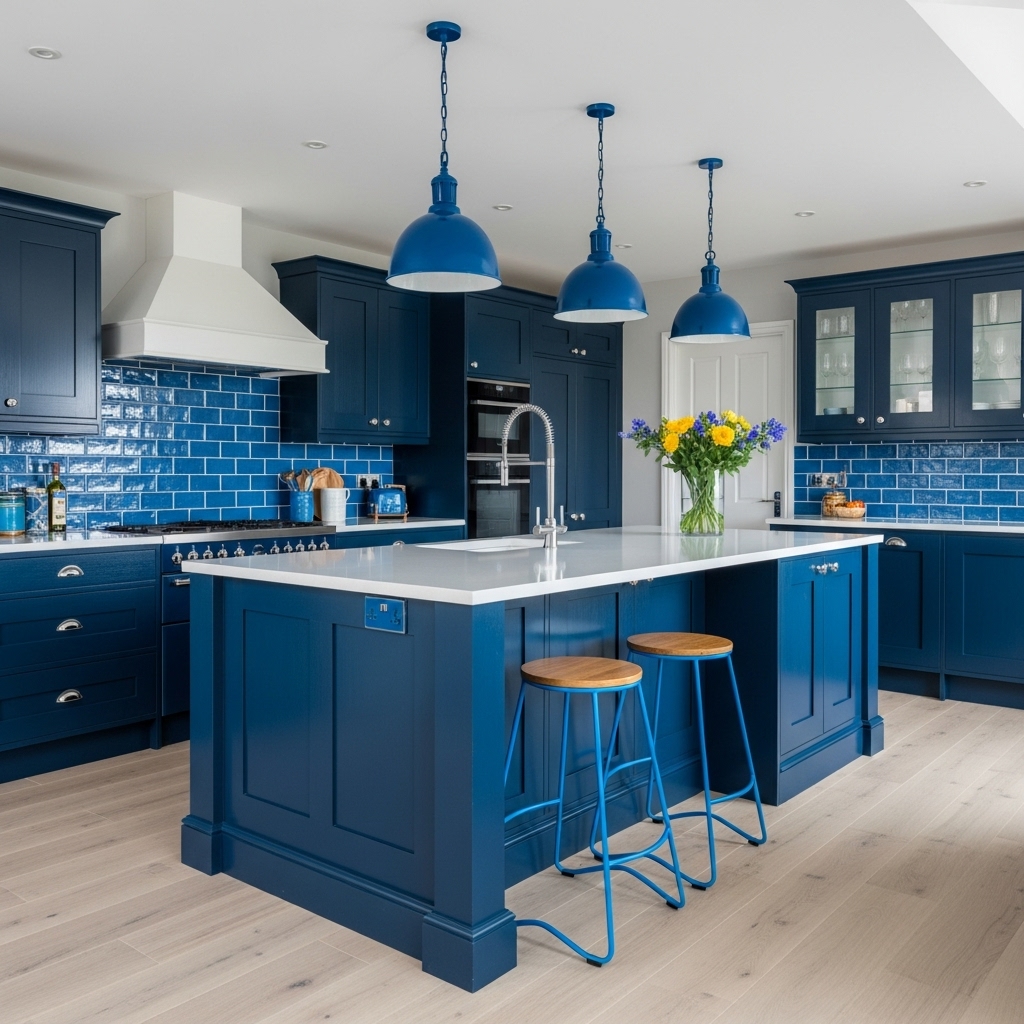
Blue is an effective way to introduce personality into an open kitchen without making the entire space feel overwhelming. Deep navy cabinets provide a rich, sophisticated look, while softer blue shades create a lighter atmosphere.
If you are unsure about committing to colorful cabinetry, start with the island. A blue island against white or warm-gray cabinets becomes a natural focal point and helps distinguish the kitchen from the surrounding dining and living areas.
You can carry the color into nearby rooms through small details such as cushions, artwork, tableware, or an upholstered dining chair. Repeating a color in a few places creates a connection between the different zones without requiring everything to match.
Pay attention to the lighting in your home before choosing a paint shade. Dark navy may appear almost black in a room with limited natural light, while a bright blue can look more intense under cool artificial lighting. Test a sample on the intended surface and observe it at different times of day.
For a balanced finish, pair blue with warm wood, pale stone, or neutral walls. Brass or brushed-nickel hardware can complete the look, depending on the style you prefer.
Best for: Homeowners who want a colorful kitchen with a clear focal point but do not want to commit to a fully colorful interior.
5. Curved Organic Shapes
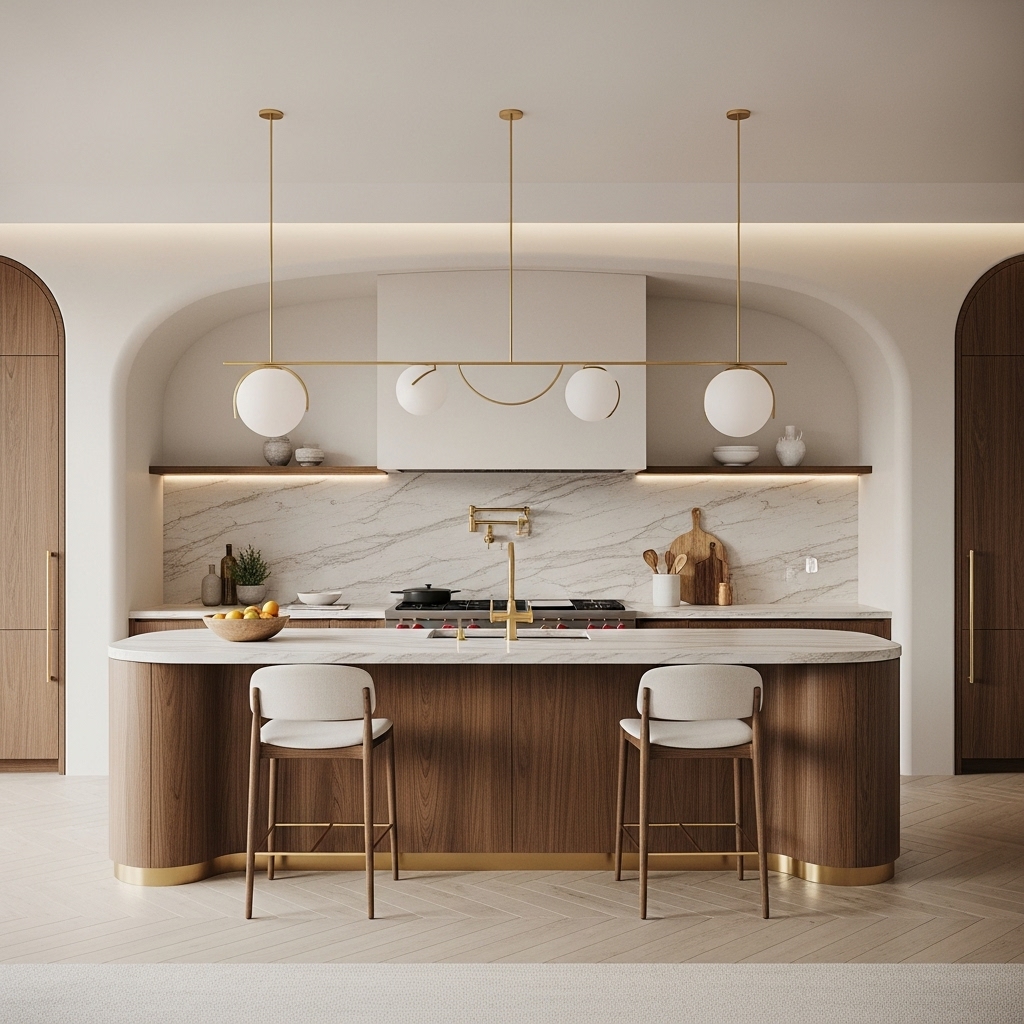
Curved islands, rounded countertop edges, and arched openings can soften an open plan and make movement feel more natural. They are especially useful in family homes because rounded corners reduce sharp edges in high-traffic areas.
Curves work best in specific places:
- A rounded island end near a walkway
- A curved breakfast bar
- An arched doorway or range hood
- Rounded shelving or a curved sofa in the adjoining living area
Do not add curves everywhere. One or two rounded features are usually enough; too many can make the layout feel complicated and reduce usable storage.
6. L-Shaped Versatile Layout
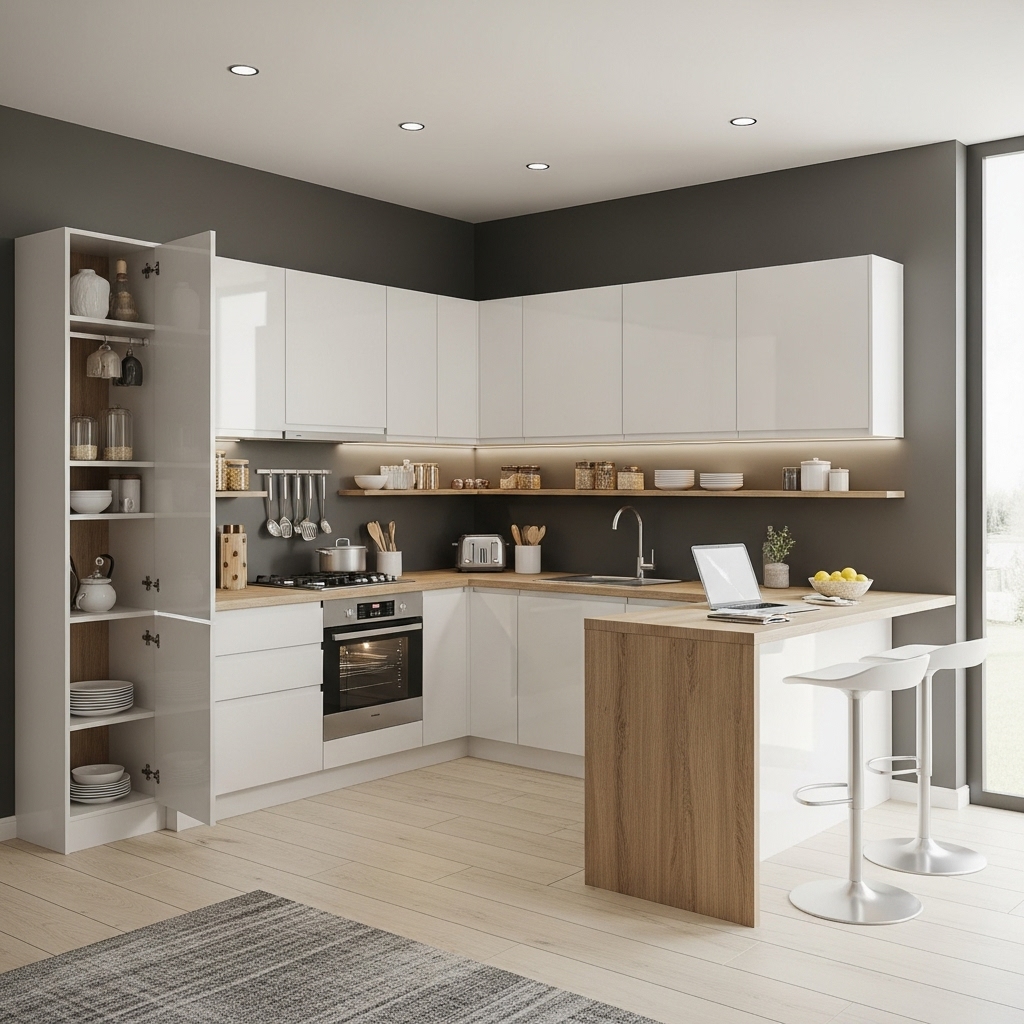
An L-shaped kitchen places cabinets and work surfaces along two adjoining walls. Because the layout leaves much of the center open, it can work well in apartments, smaller homes, and larger spaces where the kitchen needs to connect naturally with a dining or living area.
One benefit is that the corner arrangement can help organize food preparation, cooking, and cleaning without requiring a large central island. You can add a small dining table or a peninsula if there is enough room, but neither is essential.
Think carefully about where the sink, refrigerator, and cooktop will sit. They should be convenient to reach without forcing people to cross the main walkway repeatedly. Corner cabinets also need attention: pull-out organizers or suitable drawers can make awkward spaces easier to use.
An L-shaped layout is not automatically ideal for every room. If the two cabinet runs are too short, you may struggle with storage and counter space. If they are too close together, adding an island can create congestion.
Before buying cabinets, mark the proposed layout on the floor with removable tape. Include the space needed to open refrigerator doors, pull out drawers, and move between the kitchen and dining area. Walking through the marked space can reveal problems that are difficult to spot on a drawing.
Best for: Small and medium-sized open kitchens, especially when preserving an open central area is a priority.
7. Strategic Lighting Layers
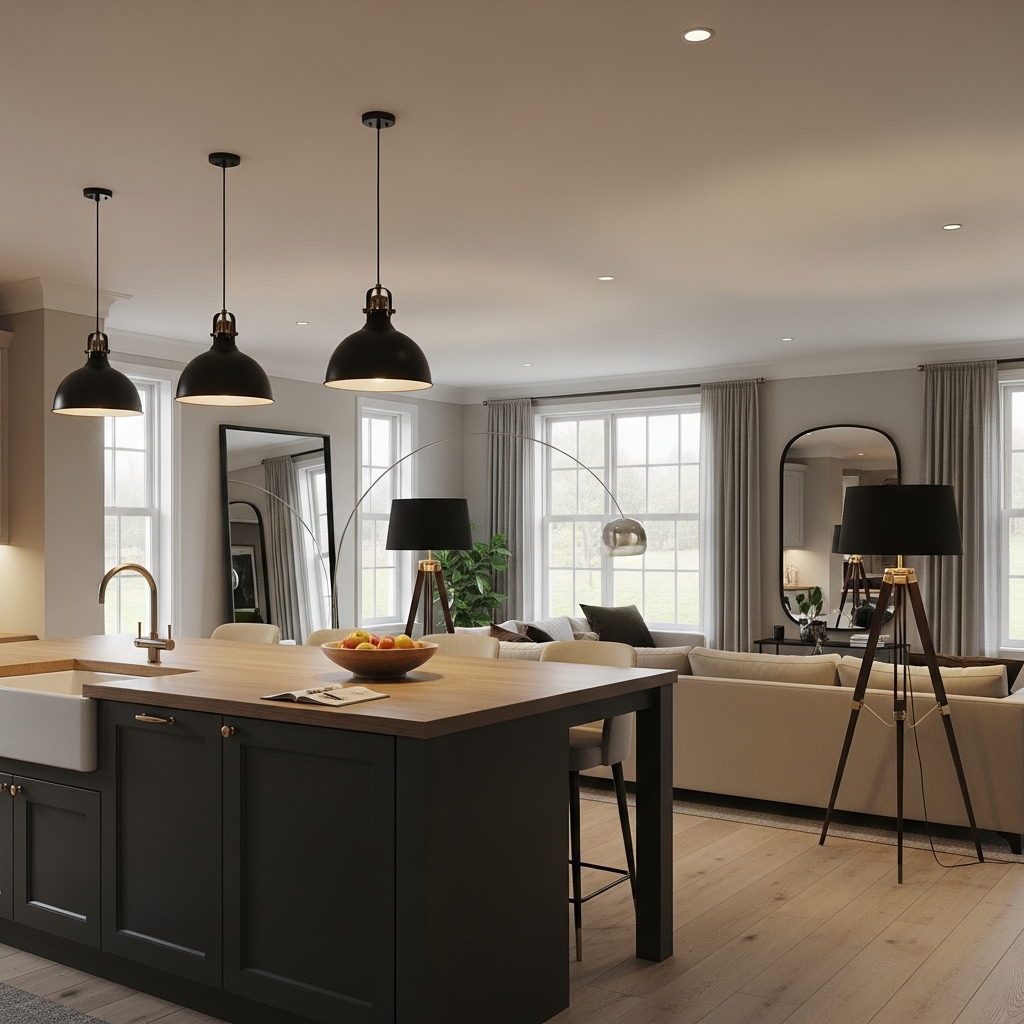
Lighting plays an important role in open concept kitchens because one large room often serves several purposes. The kitchen needs enough light for food preparation, the dining area benefits from a comfortable glow, and the living room may need softer lighting for relaxing in the evening.
A practical lighting plan uses three layers:
- Ambient lighting: Ceiling fixtures or recessed lights provide general illumination throughout the open space.
- Task lighting: Under-cabinet lights brighten countertops, while appropriately positioned fixtures illuminate food preparation areas.
- Accent lighting: Pendant lights, display lighting, or selected wall fixtures add character and help distinguish different zones.
Pendant lights above an island can create a visual boundary between the kitchen and the dining or living area without blocking sightlines. Their size, height, and spacing should suit the island dimensions and avoid obstructing views across the room.
Dimmers are useful where compatible with the installed fixtures. They let you use brighter lighting while cooking and a softer setting when entertaining. Separate switches for different zones provide even greater flexibility.
Natural light should also be considered. Keep windows as unobstructed as practical, and avoid placing tall cabinets where they unnecessarily block daylight.
Practical tip: Plan countertop lighting before the cabinets are installed. It is much easier to position wiring and fixtures correctly during a renovation than to add them after the backsplash and cabinetry are complete.
8. Textural Grasscloth Walls
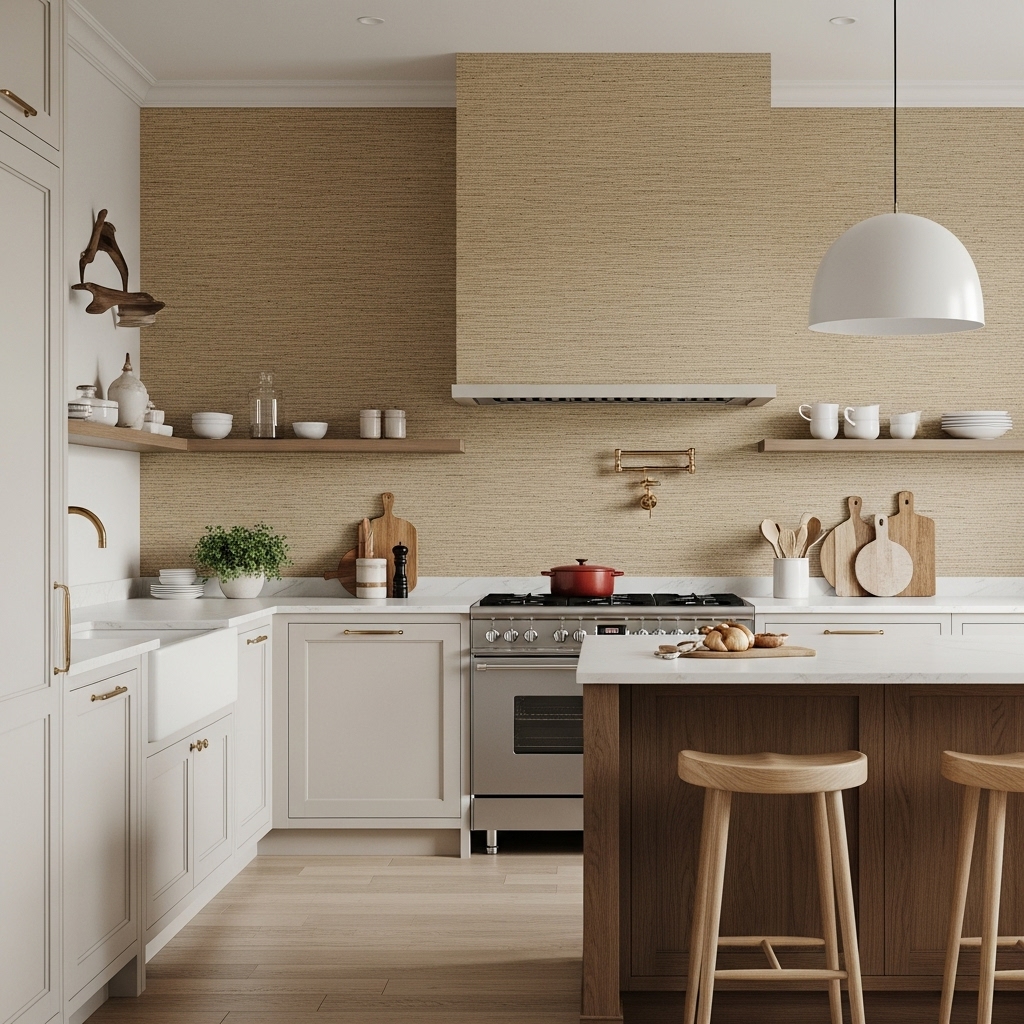
Texture can prevent an open kitchen from feeling too plain, particularly when the cabinets, walls, and countertops share similar colors. Woven materials, subtle wall finishes, textured tiles, and natural stone introduce depth without requiring a bold color scheme.
Grasscloth wallpaper is one option for adding a natural, woven appearance. However, it is generally better suited to a dry feature wall away from cooking splashes, steam, and grease.
Many natural grasscloth products are difficult to clean and can stain or become damaged when exposed to moisture.
If you like the look but need something more practical, consider a washable textured wallpaper approved for the intended room, a textured porcelain backsplash, or a durable painted finish with a subtle visual effect.
In an open-plan space, the location matters as much as the material. A textured wall near the dining area can add warmth without interfering with everyday cooking. Near a sink or cooktop, choose a finish that can tolerate the conditions and be cleaned appropriately.
Pair the texture with simple cabinetry and a restrained color palette. Too many competing patterns can make the kitchen and adjoining living room feel disconnected.
Best for: Homeowners who want more visual depth without adding several colors or decorative accessories.
9. Flooring Zone Definition
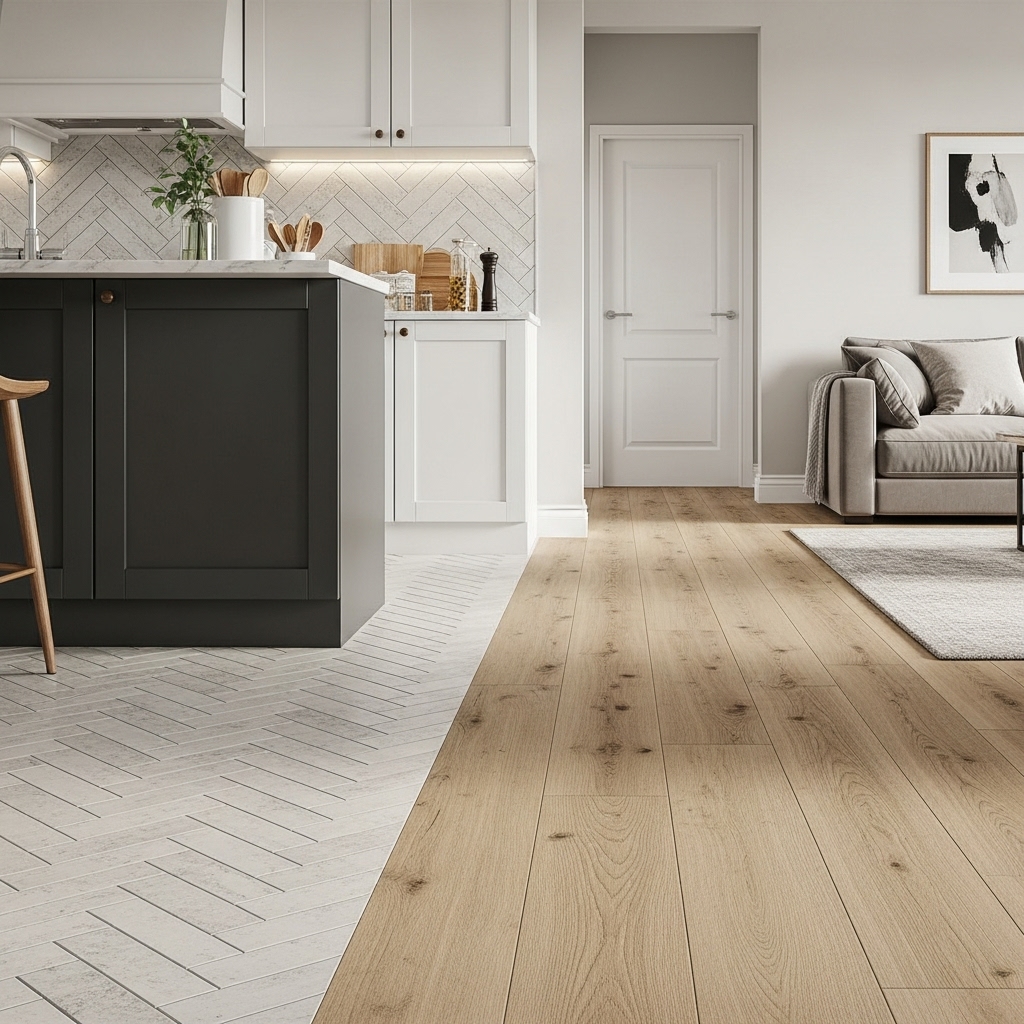
Flooring can help distinguish the kitchen from the dining and living areas while preserving the openness that makes the layout appealing. The right choice depends on your cleaning habits, the appearance you want, and the condition of the existing floor.
Using the same flooring throughout creates continuity and can make a small home feel larger. Wood-look flooring, for example, can visually connect the kitchen with the living room, especially when the cabinets and furniture share complementary tones.
Alternatively, you can use different flooring materials to create subtle zones. Porcelain tile in the kitchen offers a practical surface for an area exposed to spills, while wood or another suitable material can add warmth to the living room. The transition needs to be carefully planned so the change looks intentional and the finished floor levels are compatible.
Patterned tiles can also define the kitchen without adding a wall. A herringbone arrangement or a restrained geometric design introduces interest, although a busy pattern may compete with colorful cabinets or patterned furniture.
Consider slip resistance, ease of cleaning, durability, and installation requirements rather than appearance alone. Rugs can soften a dining area, but those placed near cooking or washing areas should be suitable for the environment and secured to reduce slipping.
Practical tip: Choose the flooring before finalizing the kitchen installation details. Material thickness, transition strips, and floor levels can affect how cabinets, appliances, and adjoining rooms fit together.
10. Multifunctional Furniture
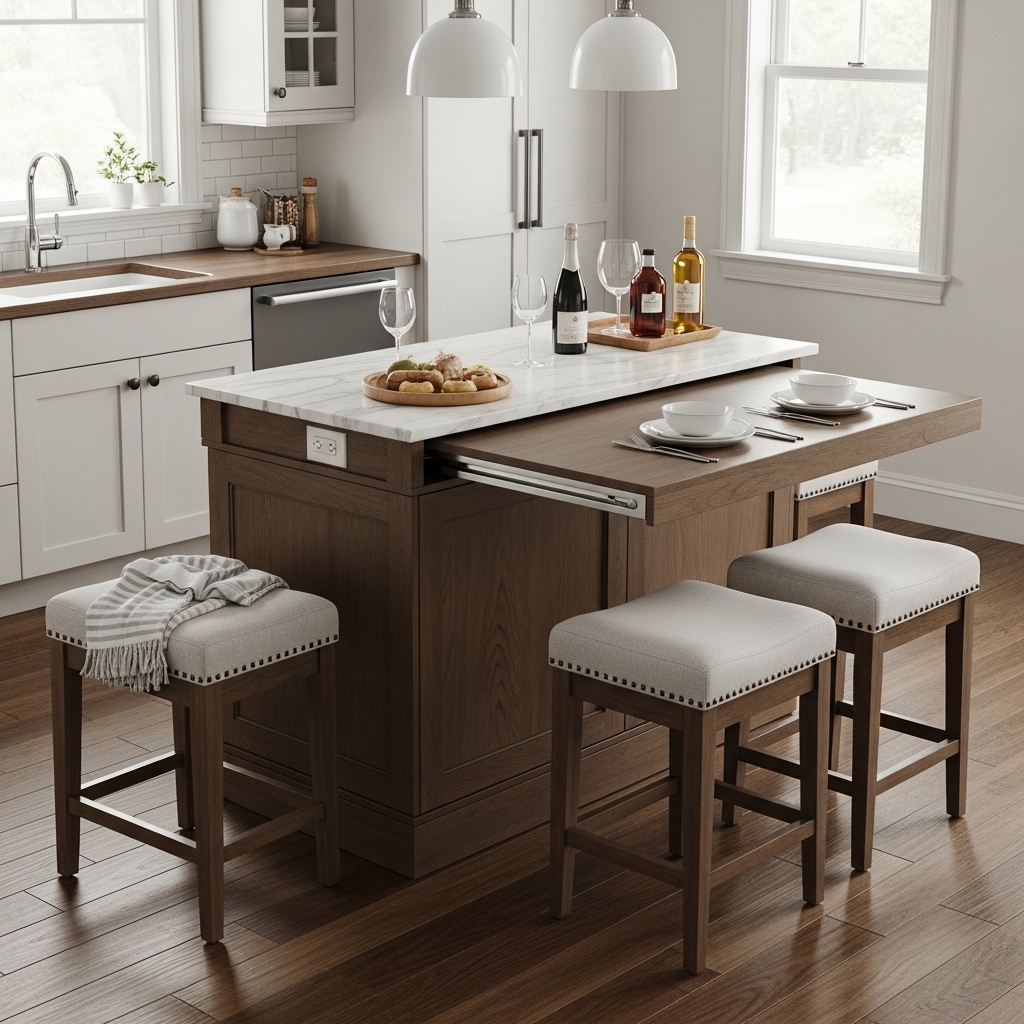
In an open concept kitchen, furniture needs to support several activities without making the room feel crowded. A compact dining table might serve as a breakfast spot, a place to prepare ingredients, and a workspace during the day. An island with drawers and seating can combine food preparation, storage, and casual dining.
The best multifunctional furniture is designed around activities you actually do. If your household regularly eats at the island, comfortable stools and adequate knee space are more useful than decorative features that reduce seating room. If you rarely entertain, a smaller table may be more practical than a large island that dominates the room.
Look for extendable tables, nesting stools, benches with storage, and movable serving carts where they fit the layout. These options provide flexibility without permanently occupying valuable floor space.
Materials matter too. Kitchen furniture should withstand regular cleaning, spills, and everyday use. Select finishes appropriate for the expected wear and avoid upholstery that is difficult to maintain in a busy cooking area.
Leave enough room to pull chairs out and walk behind seated guests. A furniture arrangement can look spacious in a photograph but become uncomfortable when people are actually using it.
Best for: Apartments, smaller open-plan homes, and households that need their kitchen to support work, dining, cooking, and entertaining.
11. Airy Glass Partitions
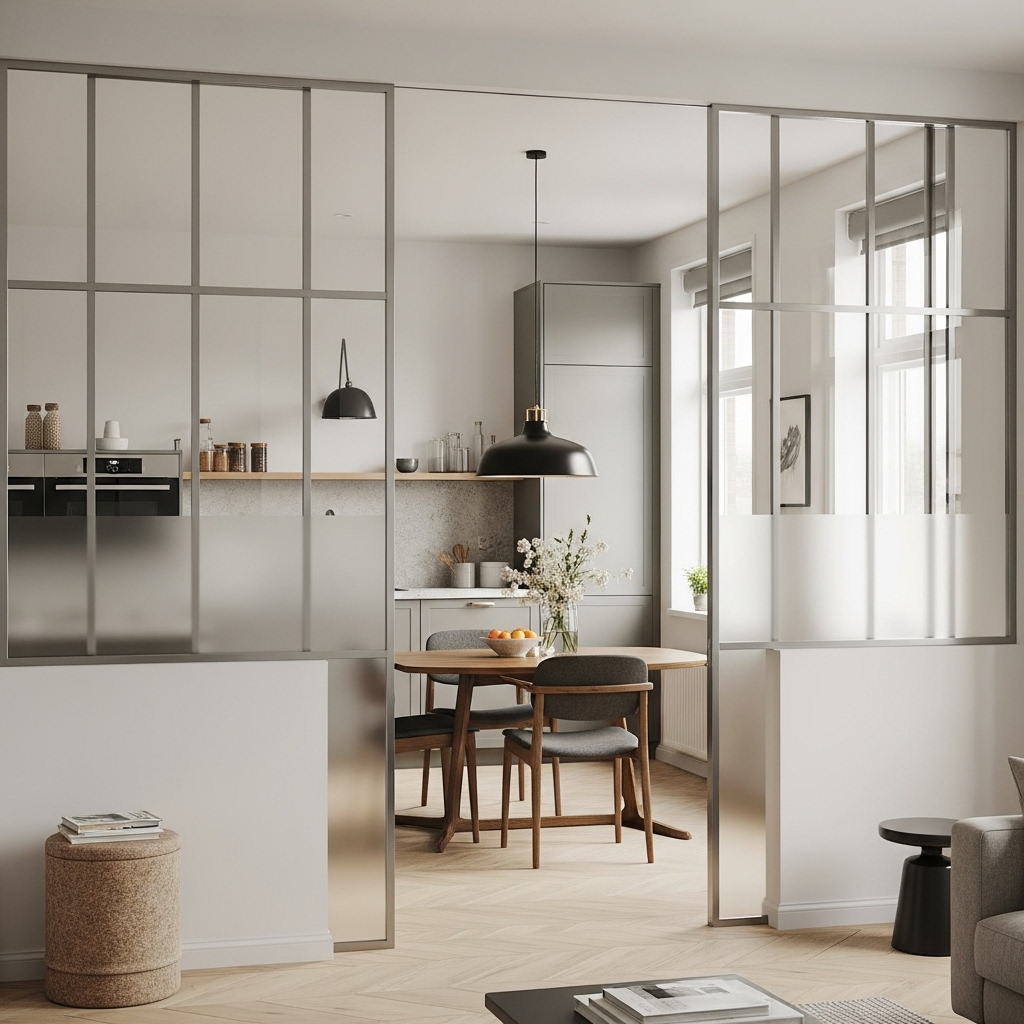
Glass partitions are useful when you want some separation without losing light or connection. Steel-framed glass doors, internal windows, or a half-wall with glass above can contain cooking noise and smells while preserving openness.
They work especially well in:
- Apartments where the kitchen faces the living room
- Homes where someone wants to work or watch television while another person cooks
- Open plans where cooking smells are a concern
Choose tempered safety glass and consider frosted or reeded glass for the lower section if you prefer more privacy. Sliding doors are often better than swinging doors because they do not take up floor space.
12. Minimalist Monochrome
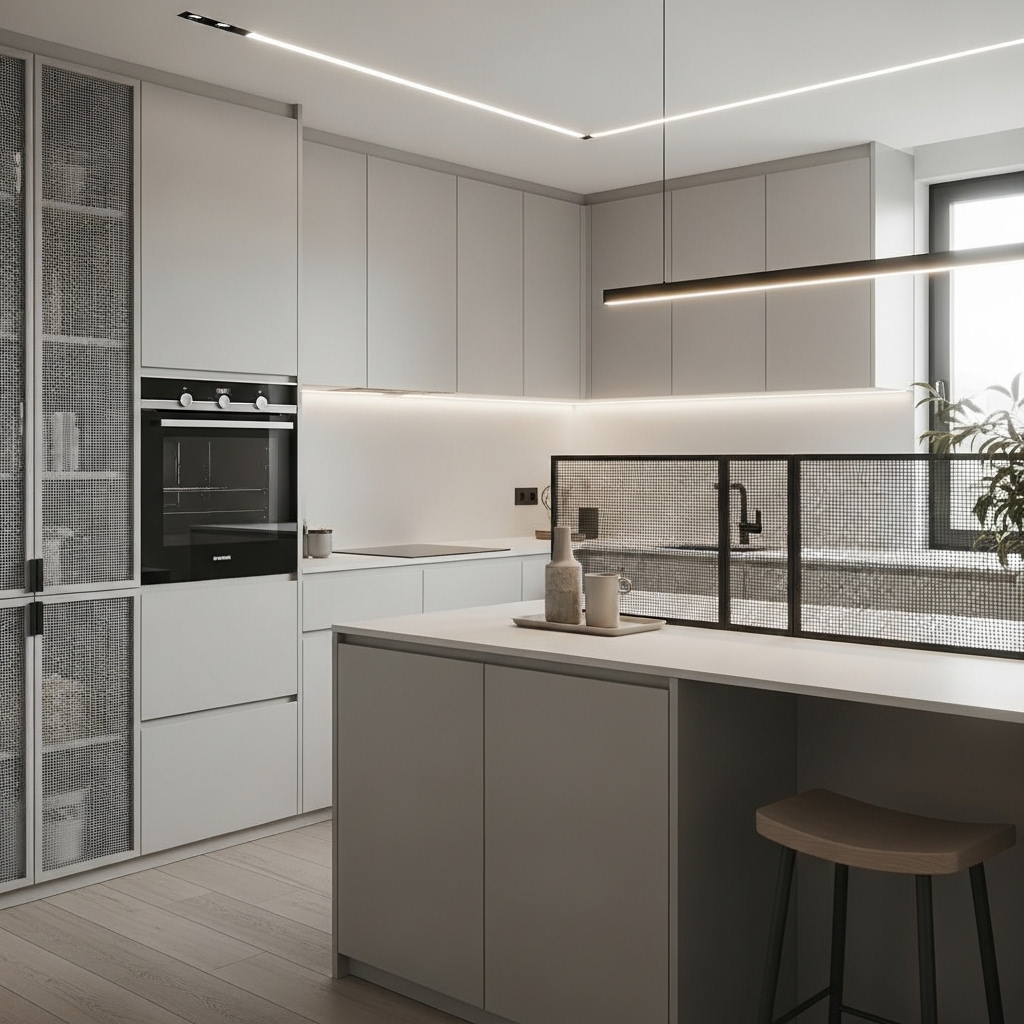
A gray, cream, or greige monochrome kitchen can feel calm and spacious, but it depends heavily on storage. Because there is little color contrast to distract the eye, clutter becomes more noticeable.
To make this style practical:
- Use handleless cabinets or slim integrated handles.
- Include a tall pantry or appliance garage for small appliances.
- Choose a countertop with subtle movement rather than a completely flat color.
- Use one metal finish throughout, such as brushed nickel, black, or brass.
- Keep countertops mostly clear, storing daily items in drawers and cabinets.
This approach suits people who prefer a quiet, orderly home and are willing to put things away after use.
How to Choose the Right Open Concept Kitchen Design
The most attractive idea is not necessarily the most suitable one for your home. Use your room dimensions, cooking habits, storage needs, and budget to narrow down the options.
| Your priority | Ideas worth considering | Why they may work |
|---|---|---|
| Making a small room feel brighter | All-white palette, minimalist monochrome | Light colors and restrained visual details can make the space feel more open. |
| Creating a social gathering point | Central island, multifunctional furniture | These options provide places to sit, talk, eat, or prepare food. |
| Making the kitchen feel warmer | Natural wood, textured finishes | Natural-looking materials add contrast and visual depth. |
| Working with limited floor space | L-shaped layout, multifunctional furniture | These approaches can preserve usable floor area when planned carefully. |
| Adding color without overwhelming the room | Bold blue accents | A colored island or selected details provide a clear focal point. |
| Separating areas without a solid wall | Glass partition, layered lighting, flooring zones | These features create visual definition while preserving a sense of connection. |
Use this table as a starting point rather than a set of fixed rules. A small kitchen may benefit from wood accents as much as a large one, and a central island is only useful if the room can accommodate it comfortably.
Practical Tips for Planning an Open Concept Kitchen
Before committing to a design, consider the details that affect everyday use.
1. Measure walkways and appliance clearances. Check the space needed for cabinet drawers, oven doors, the refrigerator, and the dishwasher. Roughly 42 inches is a useful starting point for some kitchen work aisles, but the right clearance depends on the layout, number of cooks, and applicable requirements.
2. Plan storage before choosing decorative finishes. Work out where pots, pans, dry food, dishes, cleaning supplies, and small appliances will go. A beautiful open kitchen becomes difficult to maintain if everyday items have no convenient home.
3. Install effective ventilation. Cooking fumes, grease, heat, and odors can travel into adjoining rooms. Choose an appropriate extractor or range hood and ensure it is installed and vented according to the manufacturer’s instructions and local requirements.
4. Coordinate the kitchen with nearby rooms. You do not need identical furniture or finishes everywhere. Repeat one or two elements, such as a wood tone, metal finish, or accent color, to create a natural connection.
5. Use lighting for different activities. Plan general lighting, task lighting, and softer evening lighting separately where possible. This allows the same space to work for food preparation, family meals, and entertaining.
6. Set a realistic renovation budget. Cabinetry, countertops, appliances, plumbing, electrical work, flooring, and labor can account for very different proportions of the total cost. Get local quotations and keep a contingency for unexpected work, especially if structural changes are involved.
7. Check structural changes before removing walls. Some walls carry loads or contain electrical wiring, plumbing, or ventilation. Consult a qualified professional before altering them, and obtain any required approvals.
Frequently Asked Questions
Are open concept kitchens still a good choice in 2026?
They can be an excellent choice for households that value shared living areas, natural light, and easier interaction between cooking and dining spaces. However, they are not ideal for everyone. Noise, cooking odors, and visible clutter can be drawbacks. The best decision depends on your home, lifestyle, and priorities rather than a design trend alone.
How can I keep an open concept kitchen from looking cluttered?
Give everyday items designated storage spaces and keep frequently used countertops as clear as practical. Use drawers, pantry cabinets, appliance garages, or closed storage for items that do not need to remain visible. A simple color palette and coordinated accessories can also help the kitchen feel connected to the adjoining living area.
What is the best open concept kitchen layout for a small home?
An L-shaped layout is often worth considering because it uses two adjoining walls and can leave the center of the room open. A compact peninsula may provide additional workspace or seating where there is enough room. Measure appliance doors, walkways, and dining furniture before deciding whether an island will fit comfortably.
Do open concept kitchens need a kitchen island?
No. An island is useful when there is enough floor space for comfortable movement, but it is not essential. A peninsula, a small dining table, or a well-designed countertop can provide extra workspace and seating without occupying the center of the room.
What flooring is best for an open kitchen and living room?
There is no single best option for every home. Continuous flooring can make the space feel unified, while combining kitchen tile with another flooring material can help define different zones. Consider moisture resistance, slip resistance, durability, cleaning requirements, appearance, and compatibility between floor levels before choosing.
How can I reduce cooking smells in an open-plan home?
Use an appropriately sized and installed range hood or extractor, keep it maintained, and ventilate the room as permitted by your home’s design. Lids on pots, prompt cleaning of grease, and keeping kitchen waste covered can also help. A glass partition may provide some separation, but it should not be treated as a substitute for effective ventilation.
Can an open concept kitchen work in a traditional home?
Yes. The layout can be adapted to traditional, farmhouse, Scandinavian, transitional, and contemporary interiors. Shaker cabinets, warm timber, classic pendant lights, and natural stone can give an open kitchen a traditional character while allowing it to connect with the dining and living areas.
Final Thoughts
A successful open concept kitchen brings together the way you cook, the way you live, and the look you want to create. A central island can make entertaining easier, an L-shaped layout can preserve space, and thoughtful lighting or flooring can distinguish different areas without closing them off.
Start with the practical decisions: how much storage you need, where people will walk, how the kitchen will be ventilated, and which materials are suitable for everyday use. Once those essentials are in place, color, texture, furniture, and lighting can help turn the room into a welcoming part of your home.
The best open kitchen is not necessarily the largest or most expensive. It is the one that feels comfortable, works with your daily routine, and connects naturally with the rest of your living space.