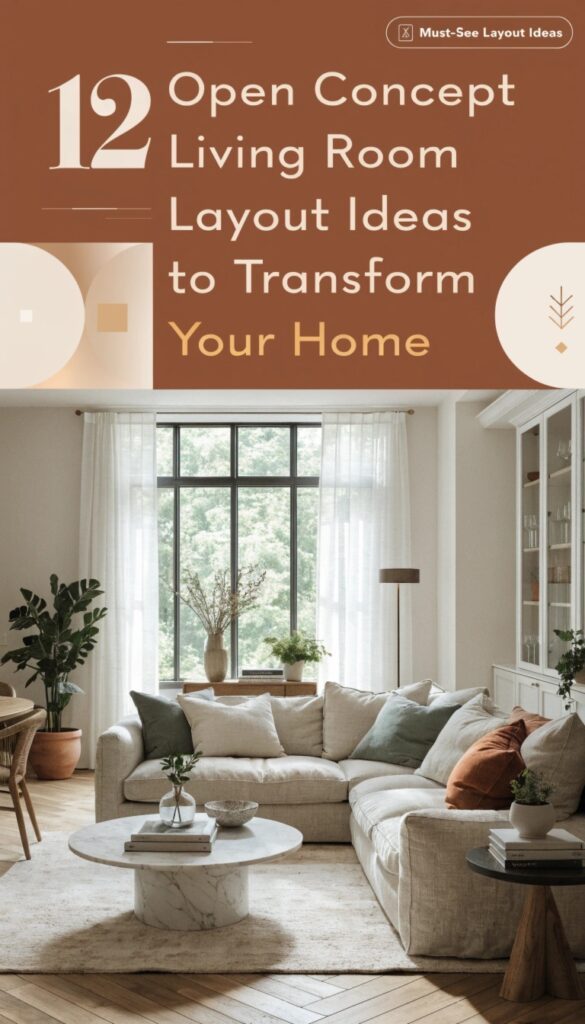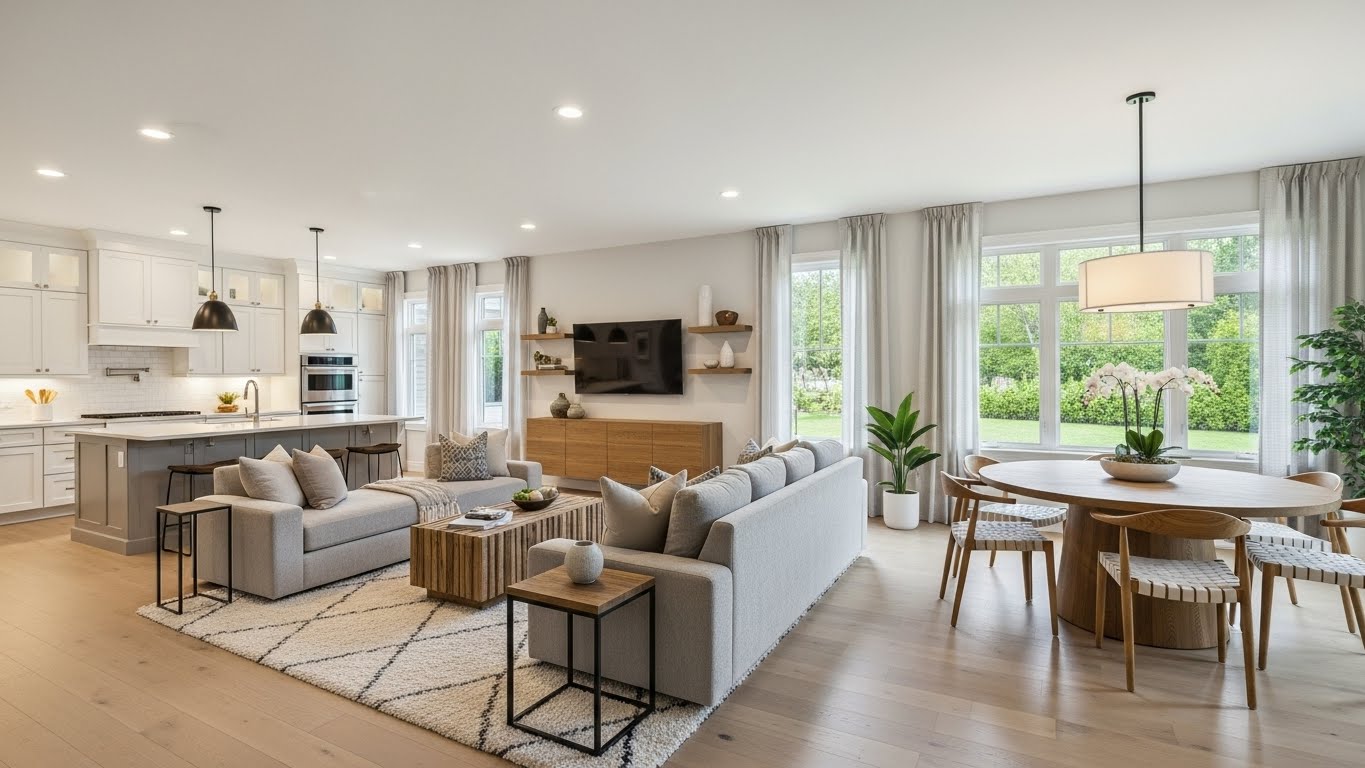
Open concept living has become a defining feature of modern homes, celebrated for its airy feel, abundant light, and seamless flow between spaces.
By eliminating walls between the kitchen, dining, and living areas, the home feels more connected and inviting perfect for entertaining or everyday family life. Still, designing such an open space can be tricky without clear boundaries.
These twelve layout ideas help bring structure, balance, and personality to your open concept living room while maintaining comfort and visual harmony.
Why Choose an Open Concept Layout?
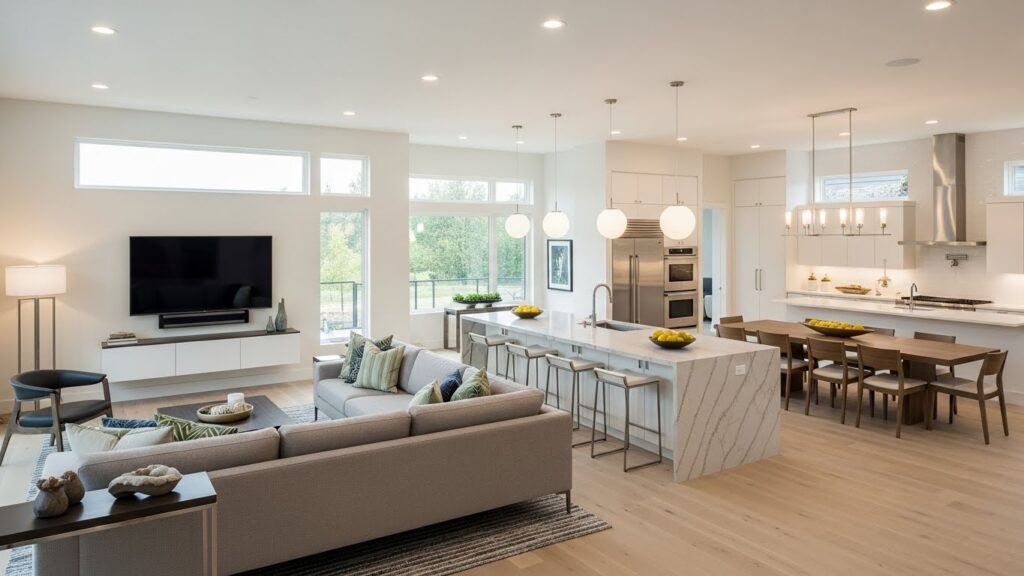
The primary appeal of an open concept layout lies in its ability to maximize natural light and improve social interaction. By eliminating interior walls, sunlight from windows can penetrate deeper into the home, making every corner feel brighter and more inviting.
Furthermore, this design fosters togetherness; you can cook dinner in the kitchen while conversing with guests lounging in the living area or keep an eye on children playing.
It creates a seamless flow that accommodates modern, multitasking lifestyles, making even smaller homes feel significantly larger and airier.
1. The Classic L-Shaped Sectional Divider
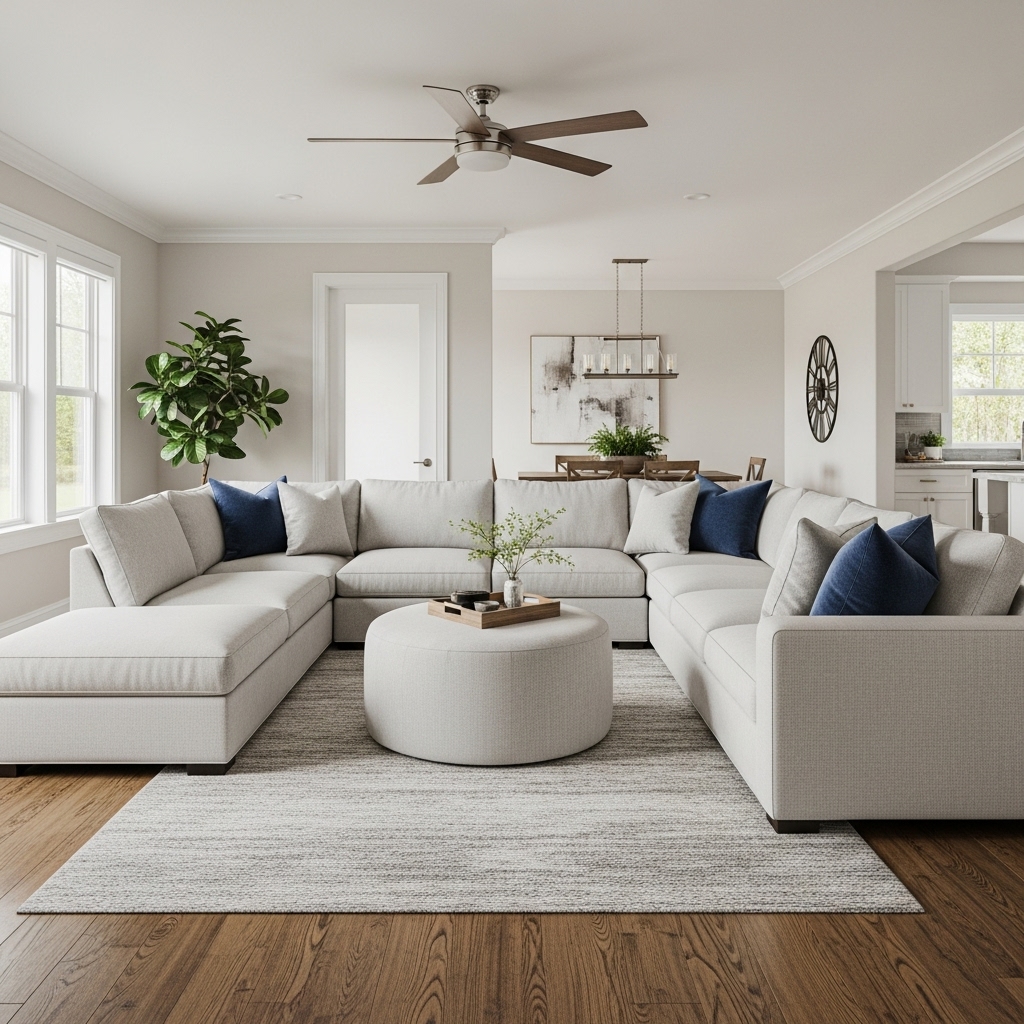
Using a large L-shaped sectional is perhaps the most effective way to create a soft “wall” between your living lounge and the adjacent dining area without blocking sightlines.
By positioning the back of the sofa towards the dining table or kitchen, you effectively demarcate where the relaxation zone begins and ends.
This layout naturally guides foot traffic around the seating area rather than through it, establishing a cozy, enclosed feeling within the larger open space while maintaining a visually cohesive and airy atmosphere for everyone.
2. Anchoring Zones with Large Area Rugs
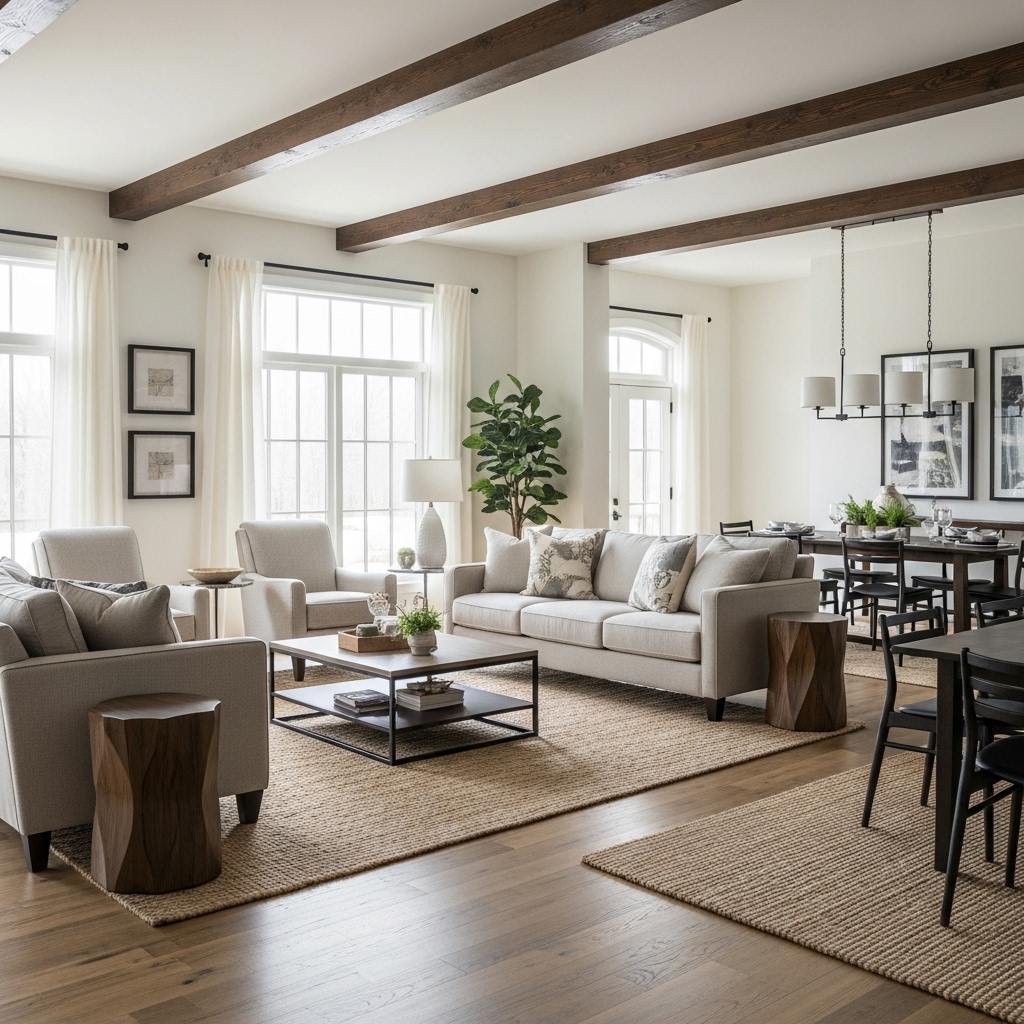
In an expansive room without physical boundaries, area rugs become essential tools for visual zoning, instantly grounding your furniture groupings to stop them from floating aimlessly.
Place a large, plush rug under your living room seating and a distinct, flat-weave rug under your dining table to clearly signal different functional areas to the eye.
This technique adds necessary warmth and texture to the room while effectively creating “rooms within a room.” Ensure the rugs are large enough that the front legs of all major furniture pieces sit comfortably upon them.
3. The Floating Furniture Arrangement
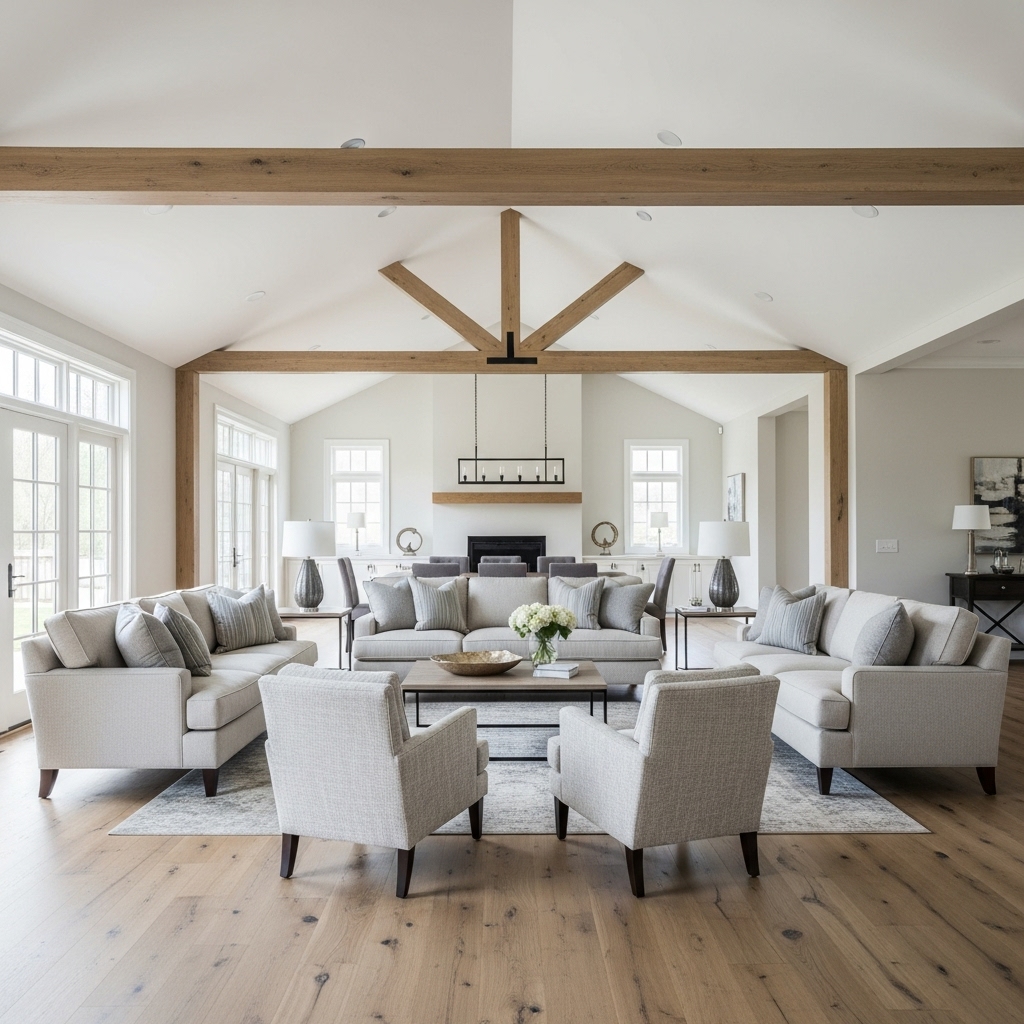
A common mistake in open floor plans is pushing all furniture against the distant walls, creating a cavernous and disconnected “dance hall” effect in the center.
Instead, pull your sofas and armchairs inward to float in the middle of the room, creating an intimate conversation island.
This arrangement frees up the perimeter of the room for traffic flow and walkways, ensuring that the living space feels cozy and intentional.
It also allows you to place console tables or lighting behind the sofa for added depth and visual interest.
4. Face-to-Face Symmetry for Conversation
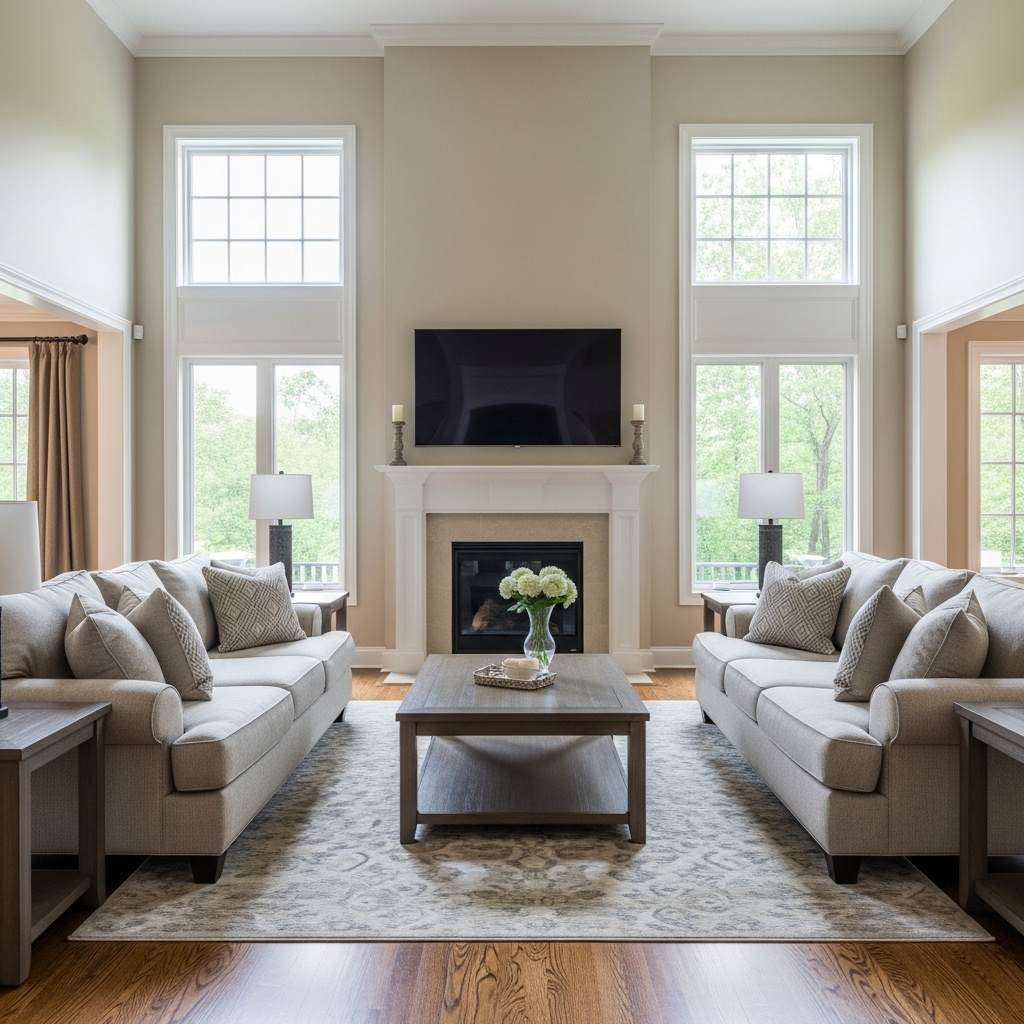
For a formal yet inviting look, place two matching sofas directly facing each other, usually perpendicular to a fireplace or a large window view.
This symmetrical layout promotes conversation and social interaction better than a typical TV-focused arrangement, making it ideal for households that love to entertain guests frequently.
A large coffee table in the center ties the two sides together, creating a balanced and structured aesthetic. This setup works exceptionally well in rectangular rooms where you want to define a clear, central gathering point distinct from the kitchen.
5. The Console Table Border
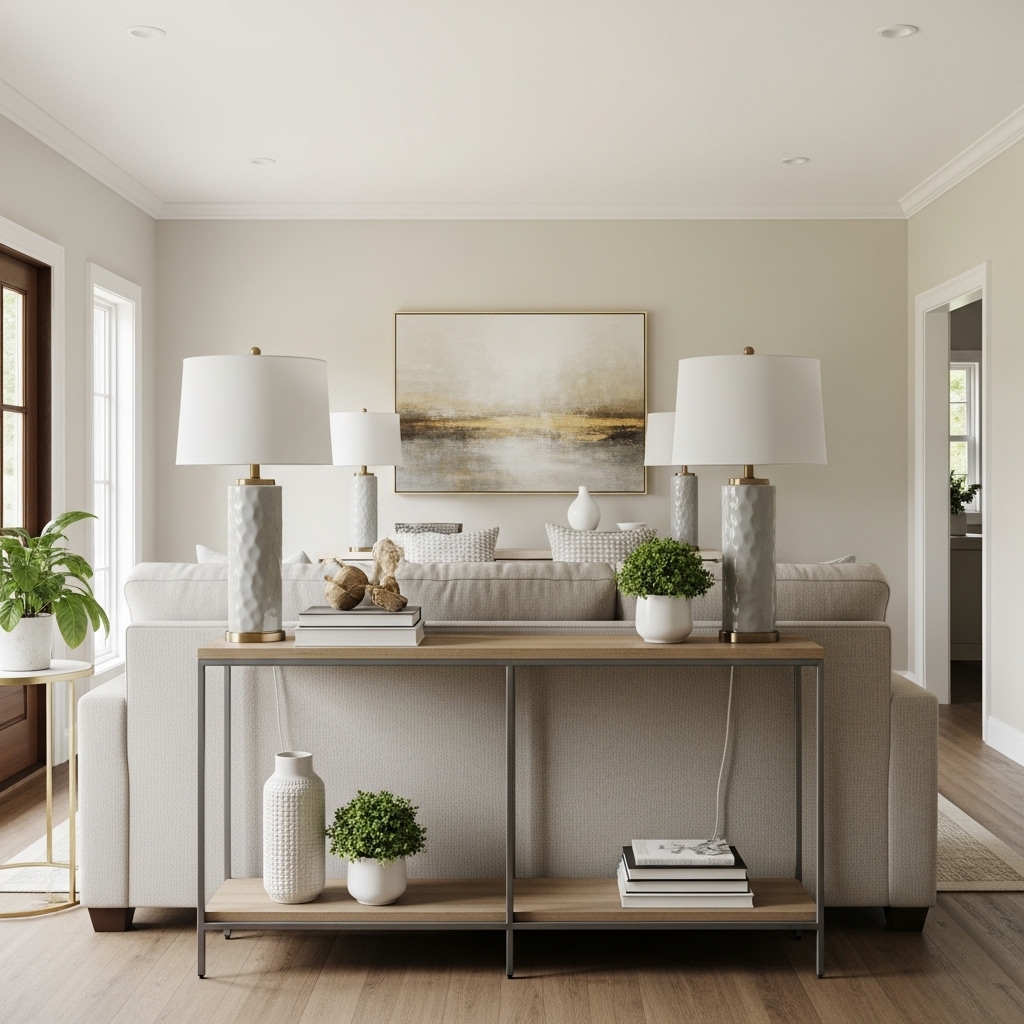
If your sofa’s back faces the entry or the dining room, it can sometimes look unfinished or heavy, but a console table offers a stylish solution.
Placing a slim console table directly behind the sofa creates a deliberate visual barrier that separates the living zone from the rest of the open plan.
You can style this table with lamps, books, or decorative vases to add height and personality. It serves as a functional transition piece that softens the view of the sofa back while offering extra surface area for storage.
6. Back-to-Back Seating for Large Spaces
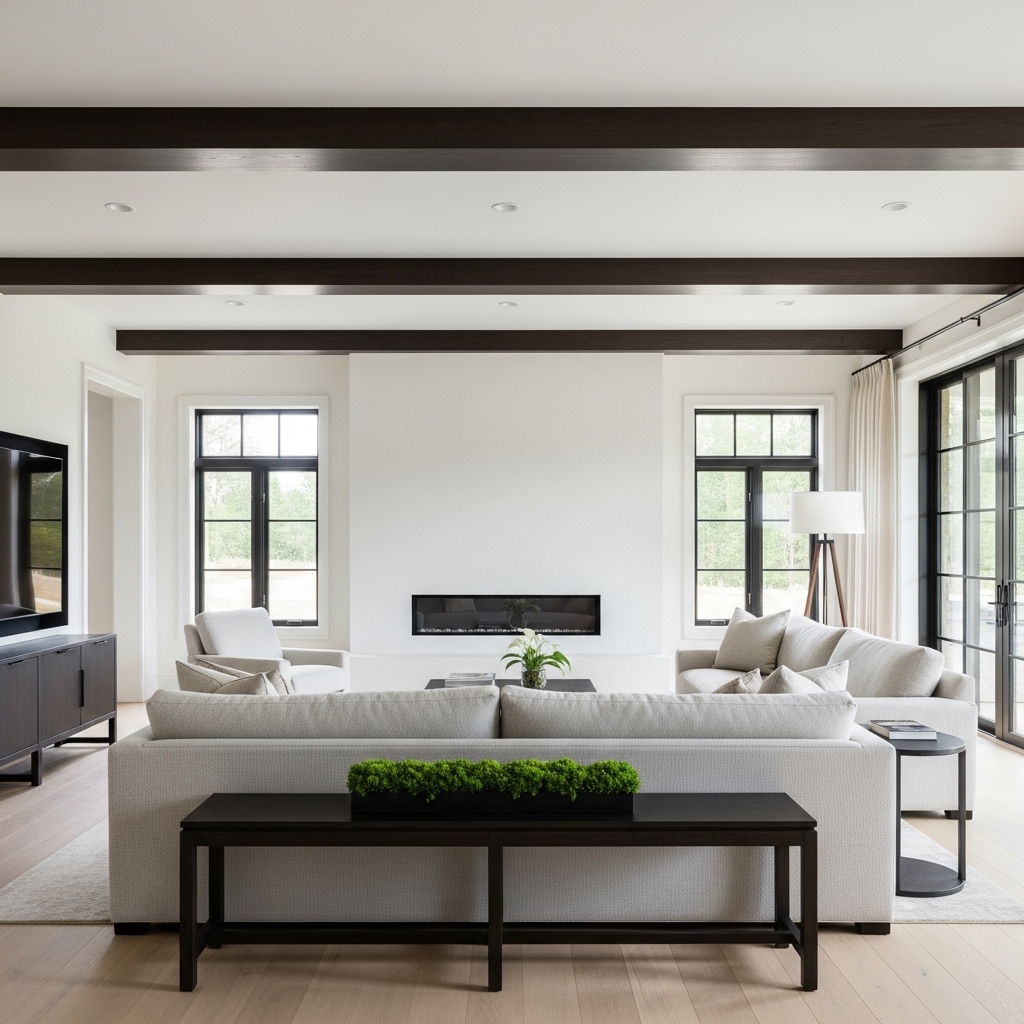
In particularly large or long great rooms, a single seating area might leave too much empty space, so consider a back-to-back sofa arrangement. Place two sofas touching backs in the center of the room; one can face the media wall or fireplace, while the other faces a view or a quiet reading nook.
This clever layout effectively splits a massive room into two distinct functional zones without building a single wall. It is a sophisticated way to maximize square footage, allowing different activities to happen simultaneously in the same room.
7. Using Open Shelving as Partitions
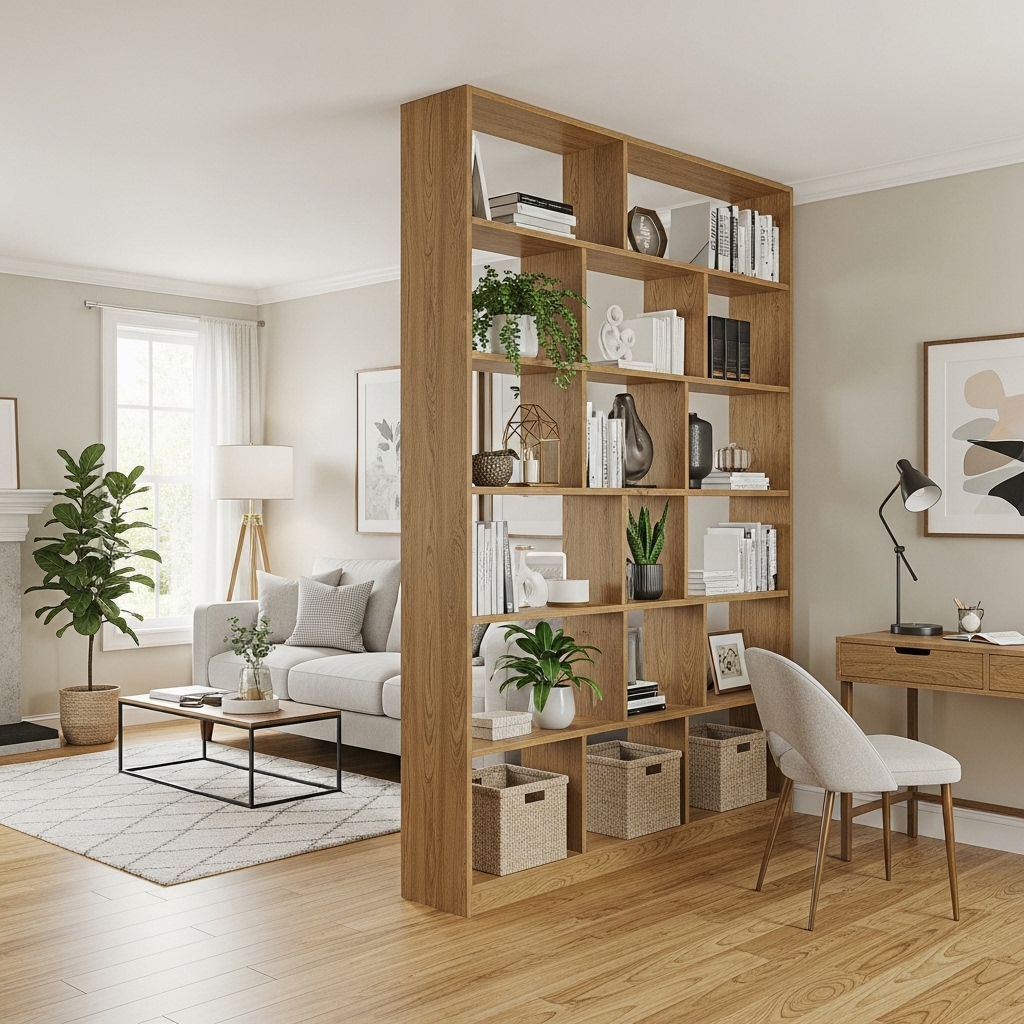
Freestanding bookcases or open shelving units are excellent for partitioning spaces while preserving the flow of light and air throughout your open concept home.
Position a tall, open-backed bookshelf perpendicular to a wall to create a semi-private nook for a home office or reading area within the larger living space. This adds vertical interest and valuable storage without closing off the room entirely like a solid wall would.
Style the shelves with plants and decor to ensure the divider feels like an integrated design element rather than a blockage.
8. The Diagonal Layout for Flow
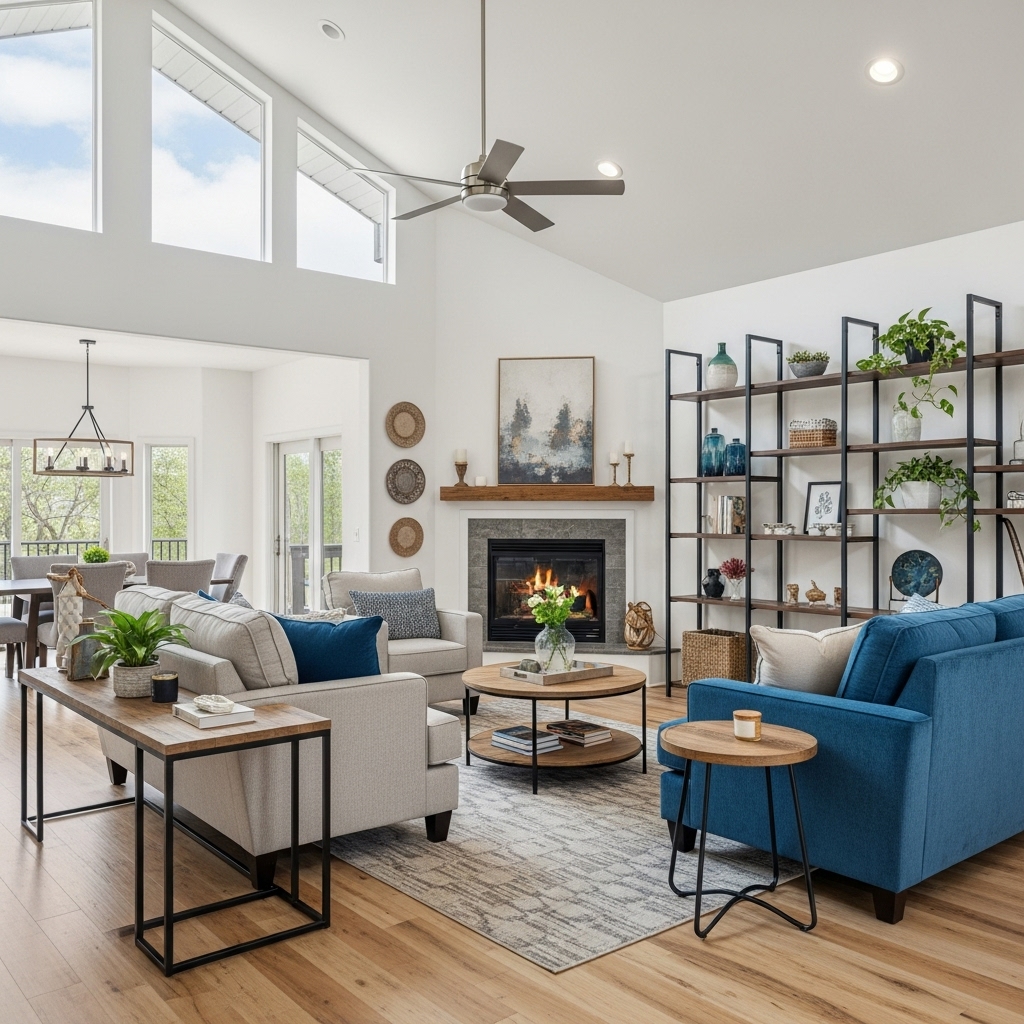
If your open living room feels too boxy or rigid with right angles, try arranging your furniture on a diagonal bias to break up the monotony.
Angling your sofa and coffee table toward a focal point, such as a corner fireplace or a scenic window, creates a dynamic and unexpected energy in the room.
This layout can also help direct traffic flow more smoothly in awkwardly shaped spaces, guiding people toward specific pathways. It adds a casual, relaxed vibe that contrasts beautifully with the straight lines of modern architecture.
9. Integrating a Daybed or Bench
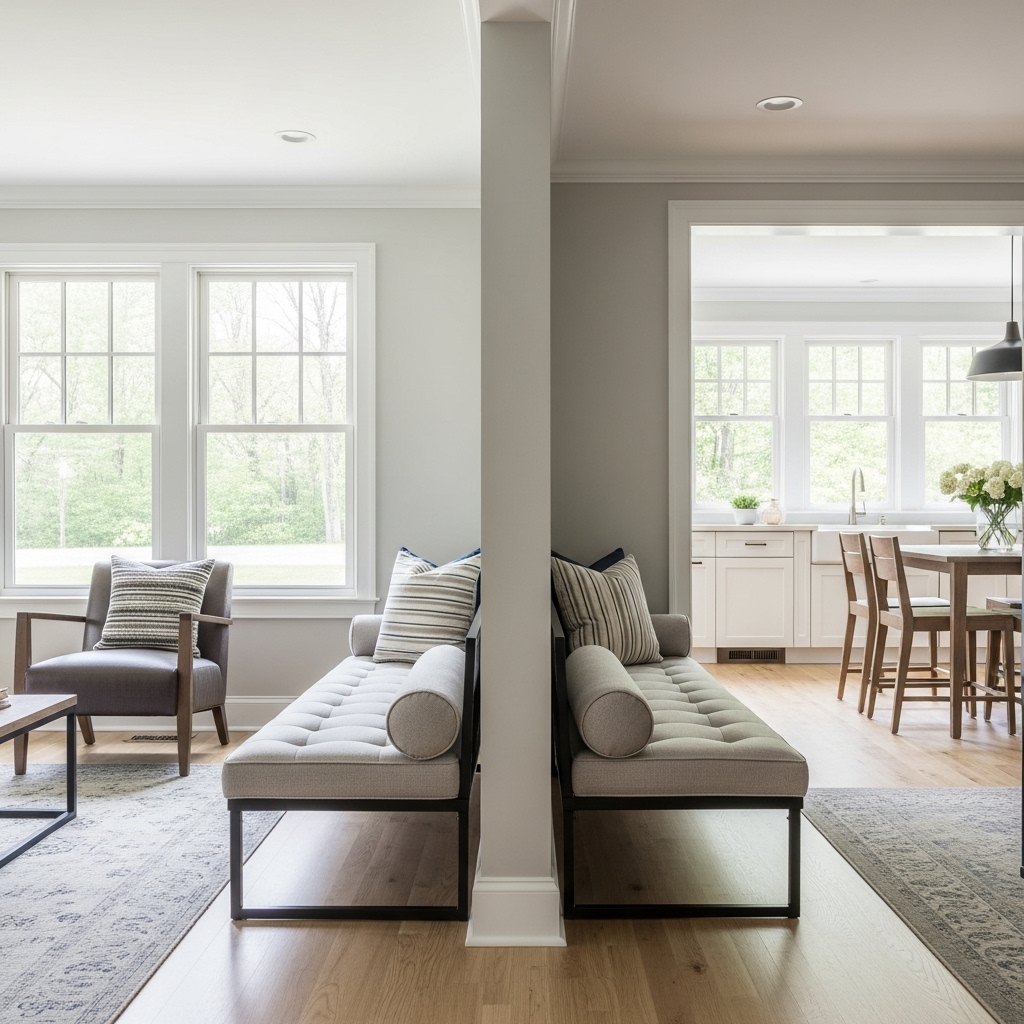
To bridge the gap between two distinct zones, such as the living room and an adjoining sunroom or kitchen, incorporate a stylish daybed or backless bench.
Because these pieces lack a high back, they do not interrupt the visual sightlines across the room, maintaining the open and airy feel you desire. They offer flexible seating that can be used from either side, effectively knitting the two areas together.
This is a perfect solution for adding extra seating for parties without adding visual bulk or blocking the view.
10. Defining Pathways with Traffic Lanes
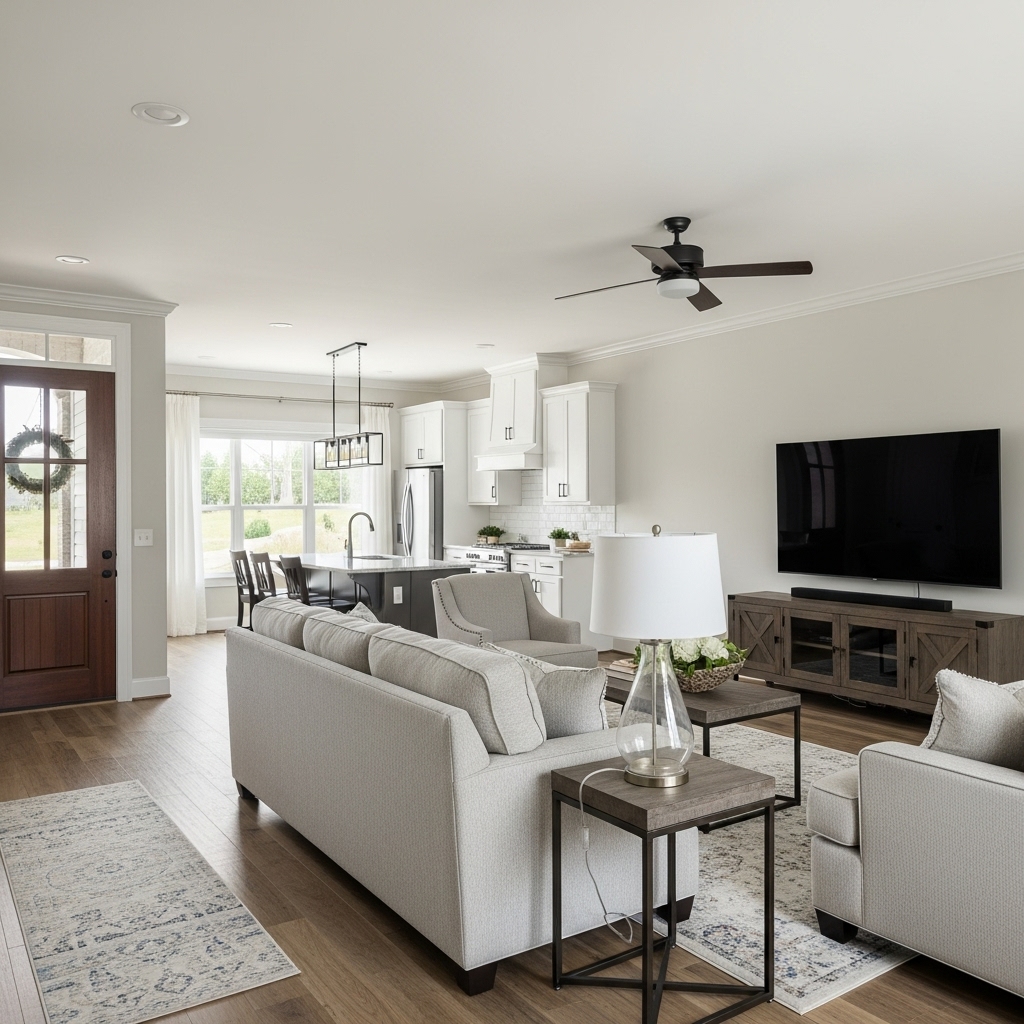
A successful open concept layout is often defined as much by the empty space as it is by the furniture you choose to include.
Plan your layout by establishing clear “traffic lanes” walkways at least three feet wide that allow people to move from the entryway to the kitchen without cutting through the TV zone. Use the backs of chairs or the edge of a rug to create these invisible corridors.
This approach ensures the space feels organized and navigable, preventing that cluttered, obstacle-course feeling that can happen in open rooms.
11. The Kitchen-Facing Social Setup
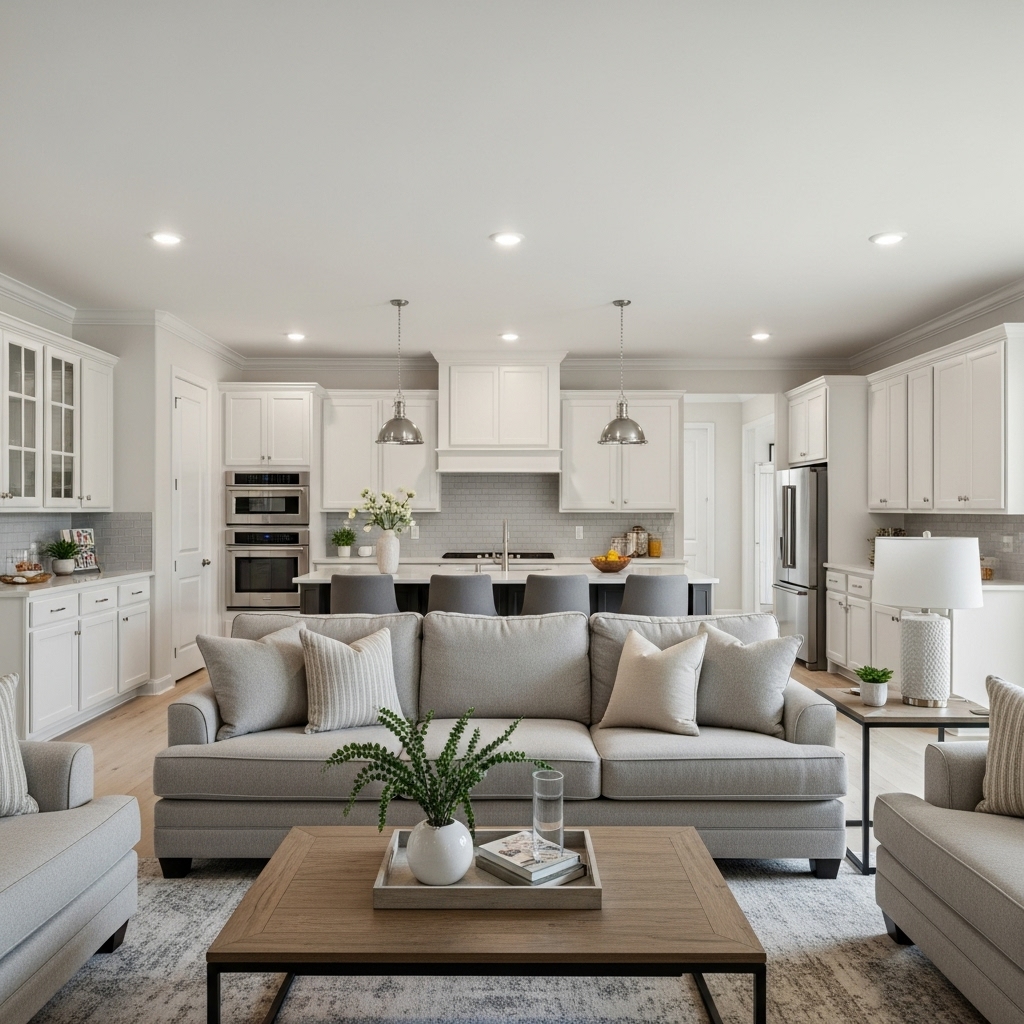
For families who view the kitchen as the heart of the home, orient your main living room seating to face towards the kitchen island.
This layout fosters connection between the cook and the people relaxing on the sofa, ensuring no one feels isolated during meal prep or parties.
It creates a seamless entertainment hub where conversation can flow naturally between the culinary zone and the lounge area.
Ideally, keep the furniture low-profile to ensure that the view between the two spaces remains unobstructed and welcoming for everyone involved.
12. Corner Sectional for Maximum Space
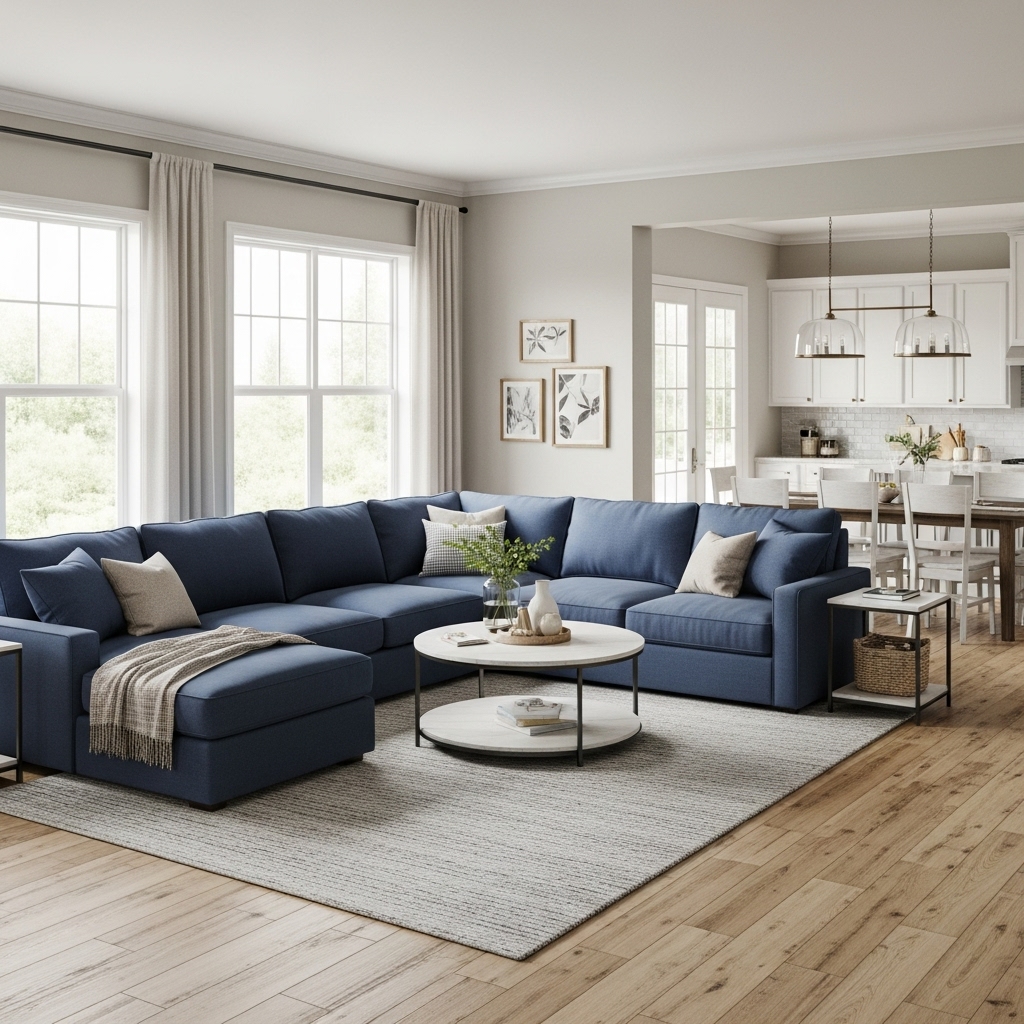
If your open living area is on the smaller side, tucking a cozy sectional into a corner can maximize the available floor space significantly.
This layout pulls the seating back against the walls, opening up the center of the room for a play area, a larger coffee table, or simply better flow.
It creates a distinct, comfortable “cove” for relaxation that feels separate from the bustle of the dining and kitchen areas. This creates a highly functional use of square footage, leaving ample room for other necessary zones.
Tips for a Cohesive Open Concept Space
- Color Consistency: Use a consistent color palette throughout the living, dining, and kitchen areas. You don’t need to match everything perfectly, but repeating accent colors (like blue pillows in the lounge and blue placemats in the dining area) creates harmony.
- Lighting Layers: Use lighting to define zones. A chandelier over the dining table and a floor lamp by the sofa can act as visual anchors, replacing the job that ceiling fixtures in separate rooms would usually do.
- Scale Matters: Ensure your furniture is sized appropriately. Tiny furniture in a massive open room will look lost, while oversized pieces can make the flow feel cramped and blocked.
Frequently Asked Questions
Q: How do I manage noise in an open concept living room? A: Open spaces can echo. To dampen sound, incorporate plenty of soft textures. Heavy curtains, plush area rugs, throw pillows, and upholstered furniture all help absorb noise. Acoustic panels disguised as art are also a modern solution.
Q: How do I paint an open concept room? A: It is generally best to paint all connecting walls the same neutral color to maintain flow. You can then use feature walls or wallpaper in specific “zones” (like behind the dining buffet) to add interest without breaking visual continuity.
Q: Can I mix furniture styles in an open layout? A: Yes, but keep a common thread. If you have a modern dining table, you can pair it with a vintage sofa, provided they share a similar color tone or material finish (like brass legs or dark wood) to tie the look together.
Conclusion
Designing an open concept living room is about finding the perfect balance between separation and connection.
By using smart furniture arrangements, rugs, and lighting layout ideas, you can create a home that feels grand and spacious yet warm and intimate.
Whether you prefer the structure of symmetrical sofas or the casual vibe of a corner sectional, these layout ideas prove that you don’t need walls to define a beautiful, functional living space.