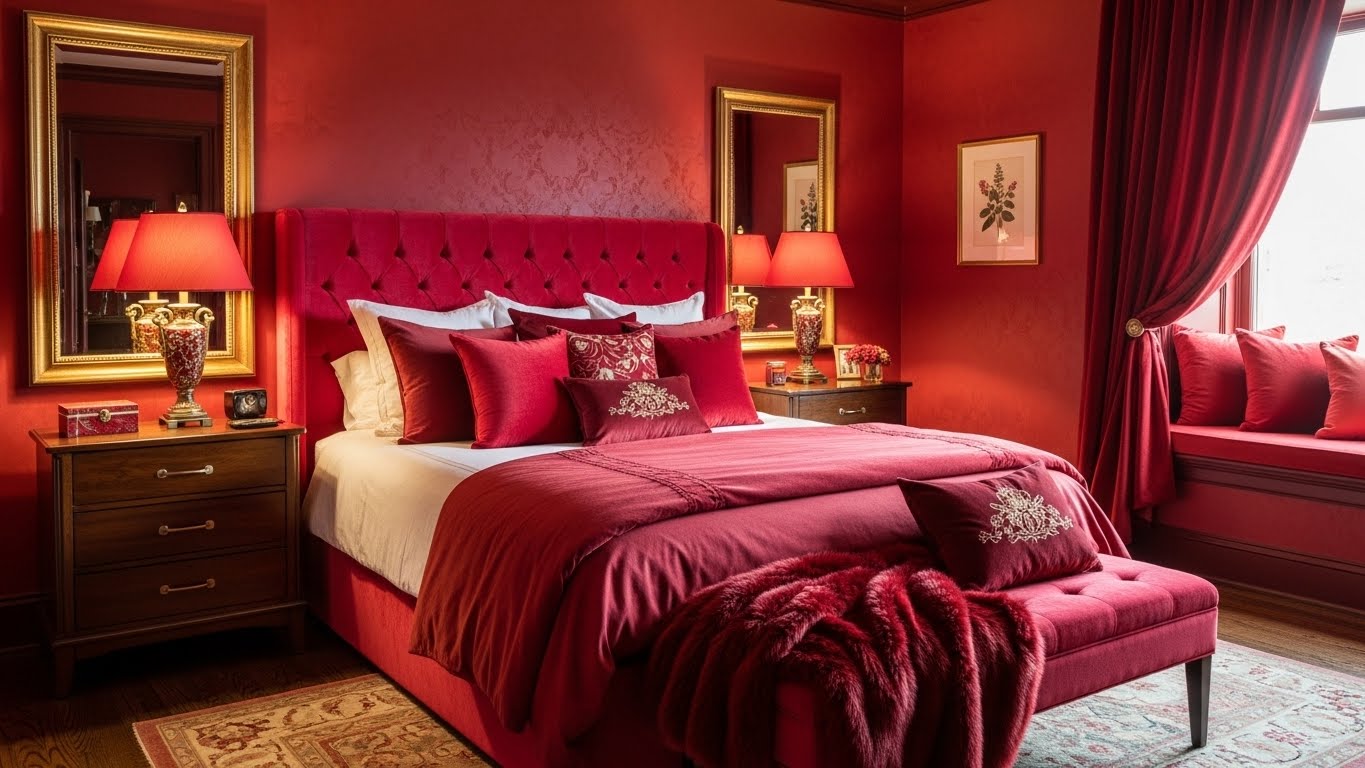
Cherry red is a bold bedroom color that can make an ordinary space feel warm, expressive, and full of personality. Whether you prefer a modern bedroom with clean lines or a cozy retreat filled with soft fabrics, this rich shade can work in different decorating styles when you use it thoughtfully.
The key is deciding how much red your room needs. A cherry red accent wall creates a dramatic focal point, while red bedding, curtains, artwork, or a bedside lamp can introduce the color without changing the entire room. Pairing it with cream, natural wood, blush pink, or dark green also helps create different moods, from soft and romantic to striking and contemporary.
If you are looking for cherry red bedroom decor ideas that are beautiful and practical, these 12 approaches will help you choose the right colors, textures, furniture, and finishing touches for your space. You will also find tips for decorating a small bedroom, working with a limited budget, and avoiding common styling mistakes.
Why Choose a Cherry Red Aesthetic?

Cherry red sits between bright, energetic red and the deeper tones of burgundy. Depending on its undertones and the lighting in your room, it can look vibrant, slightly wine-colored, or almost like a polished red cherry. This versatility makes it suitable for several bedroom styles.
One of its biggest advantages is that you can introduce it in almost any amount. If you enjoy colorful interiors, red walls and matching textiles can create a dramatic look. If your taste leans toward minimalism, a single red pillow, bedside table, or piece of artwork can provide enough contrast to make a neutral bedroom more interesting.
Cherry red also works with a variety of materials. Velvet gives it a soft, rich appearance, glossy furniture creates a retro-modern effect, and natural wood helps the color feel grounded rather than overly formal.
Before choosing your decor, consider three things: the size of your bedroom, the amount of natural light it receives, and how much color you want to see every day. These details will help you create a coordinated space instead of a room where every element competes for attention.
1. The Bold Accent Wall
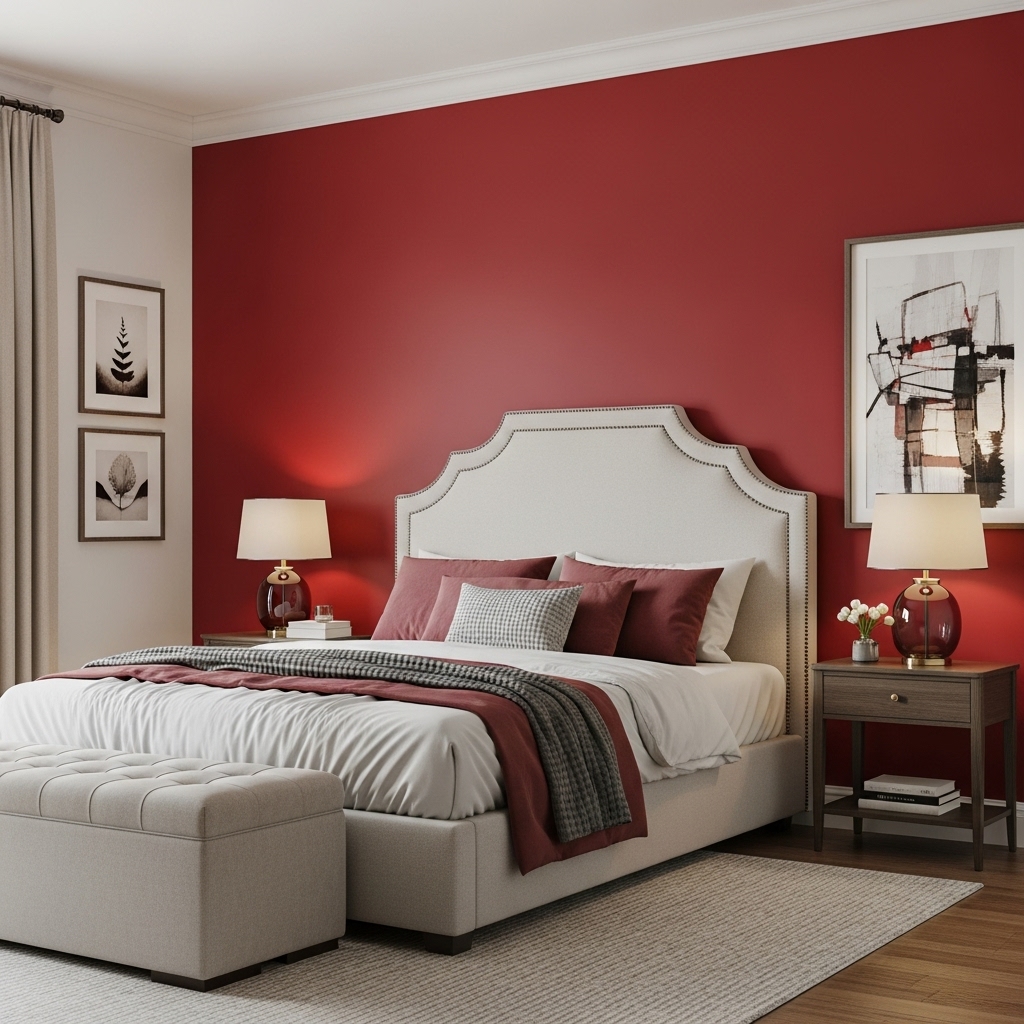
A cherry red accent wall is an effective way to introduce this color without repainting the entire bedroom. The wall behind the headboard is often the best place to start because it naturally draws attention to the bed, making the sleeping area feel like the center of the room.
For a balanced look, paint the wall behind the bed cherry red and keep the remaining walls warm white, ivory, or a soft neutral. Cream bedding and wooden bedside tables will soften the contrast, while black picture frames and simple lighting can give the room a more contemporary appearance.
The finish matters, too. A matte or eggshell finish generally creates a softer appearance than a highly reflective paint, particularly on a large wall. Test a few paint samples before committing to the whole surface, since cherry red can look brighter in direct sunlight and deeper in a dimly lit room.
How to make it work: If your bedroom is small, keep the other walls light and avoid surrounding the accent wall with several large red accessories. One strong focal point usually looks more intentional than repeating the same color everywhere.
If painting is not an option, consider removable wallpaper or a large piece of red artwork above the headboard. Both approaches can introduce a similar color statement with less permanent alteration.
2. Luxurious Velvet Headboards
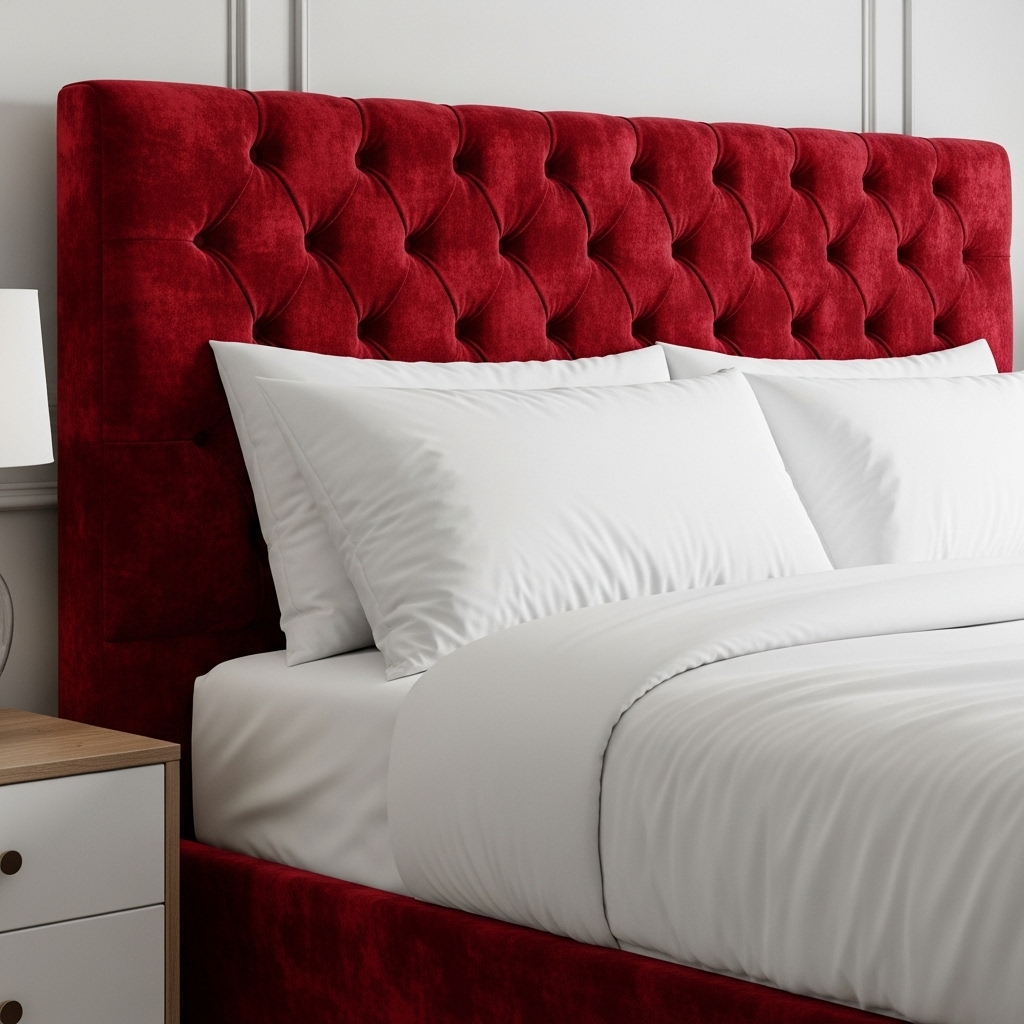
A cherry red headboard gives you the color without painting anything. Velvet is the most luxurious option, but linen, bouclé, and performance fabric can feel more relaxed and easier to maintain.
Pair a deep cherry headboard with white or off-white bedding, then add one patterned pillow rather than filling the bed with matching red cushions. This keeps the look polished instead of overly themed.
Practical tip: If you have pets or young children, choose a tightly woven performance velvet or treated linen rather than loose-pile velvet, which can show marks more easily.
3. Layered Textiles and Throws
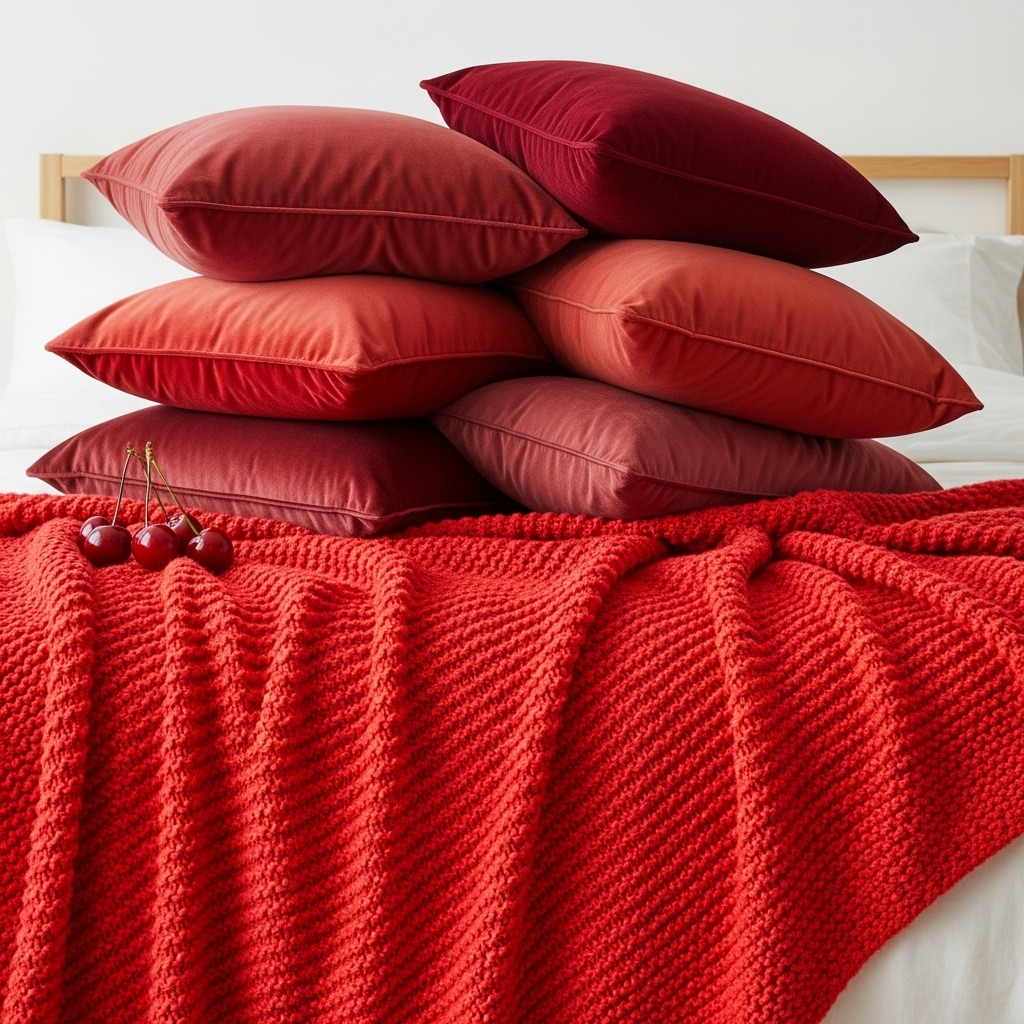
If you are renting, decorating on a budget, or simply unsure whether you want a permanent color change, start with textiles. Cherry red bedding and accessories are easy to rearrange, replace, or store when you want a different look.
Begin with a neutral duvet cover and introduce red through two decorative pillows and a throw blanket folded across the foot of the bed. This arrangement gives the color a clear place in the room without allowing it to dominate every surface.
For more depth, combine different textures rather than buying everything in the same fabric. Cotton bedding, a velvet cushion, and a knitted throw can make the arrangement feel comfortable and visually interesting. You can also mix cherry red with burgundy or softer berry tones for a layered color palette.
The amount of red you use makes a difference. A red duvet cover creates a stronger statement than a few cushions, so consider how much of the bed you want to stand out.
Budget-friendly idea: Keep your existing bedding and purchase just one red throw and two pillow covers. Change the arrangement before buying additional accessories to see whether the color feels right in your room.
4. Dramatic Floor-to-Ceiling Curtains
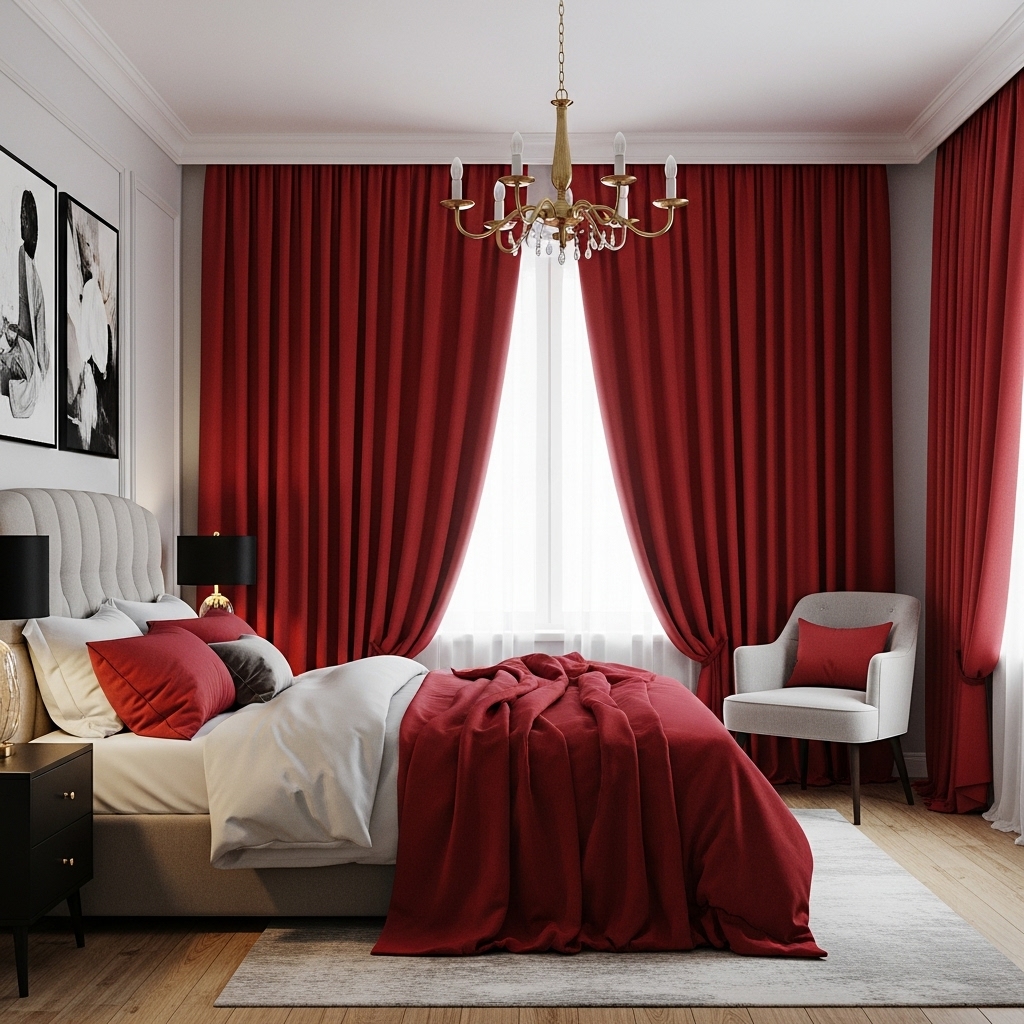
Cherry red curtains can turn an ordinary window into a striking feature. They also introduce color across a large vertical area, which makes them particularly useful when you want a dramatic effect without painting the walls.
For a polished appearance, hang the curtain rod higher than the top of the window frame where the room layout allows it. Choose panels long enough to reach the floor, and make sure the rod extends far enough beyond the window for the curtains to sit mostly clear of the glass when open.
The fabric should suit your needs. Velvet or lined curtains can help reduce incoming light, while lighter cotton or linen-style fabrics create a more relaxed appearance. If the bedroom receives strong sunlight, check the fabric’s fading resistance before purchasing deep red panels.
Cherry red curtains work especially well against ivory walls, pale wood floors, and neutral bedding. If the curtains are already a strong visual feature, keep nearby furniture and window accessories simple.
Small-bedroom tip: Choose a curtain shade that coordinates with the bedding or an existing accent rather than introducing several unrelated colors. Mounting curtains neatly above the window can also create a taller-looking effect without requiring a major renovation.
5. Statement Area Rugs
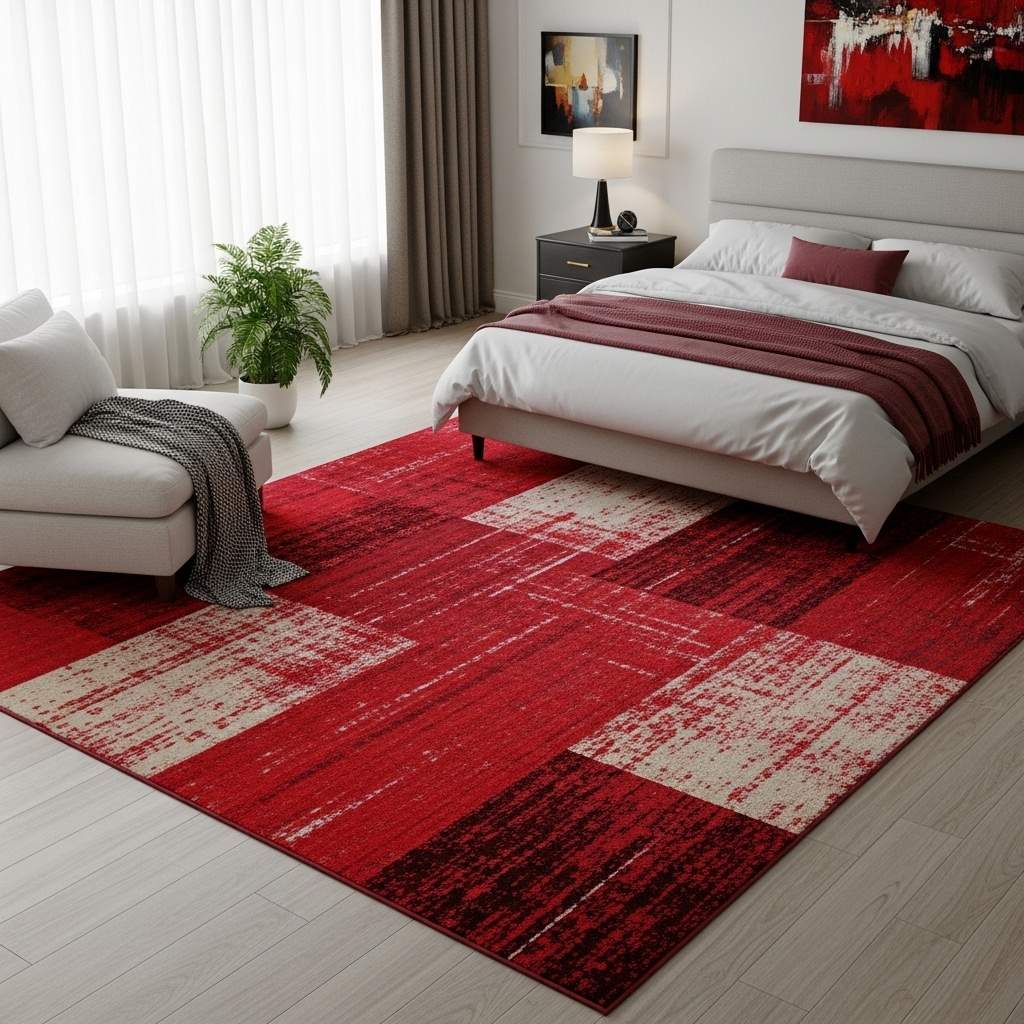
A cherry red area rug is a useful option if you want to introduce color at floor level while keeping the walls and furniture relatively neutral. It can also help visually connect the bed, bedside tables, and other pieces of furniture.
You have several styles to choose from. A traditional patterned rug with red, cream, and dark blue details creates a collected, classic look. An abstract rug feels more contemporary, while a simple red rug can make a stronger color statement.
Size is important. A rug that is too small may look disconnected from the bed. For a larger bedroom, consider a rug that extends beyond the sides and foot of the bed. In a compact room, smaller rugs placed beside the bed can introduce the color without taking up most of the visible floor.
Before buying, measure the available floor space and account for doors, wardrobes, and other furniture that must open or move freely. A rug pad can help keep the rug in place and reduce slipping.
Styling tip: If the rug contains several colors, repeat just one of its secondary shades in your pillows, artwork, or curtains. This creates a visual connection without making every item match.
6. High-Gloss Accent Furniture
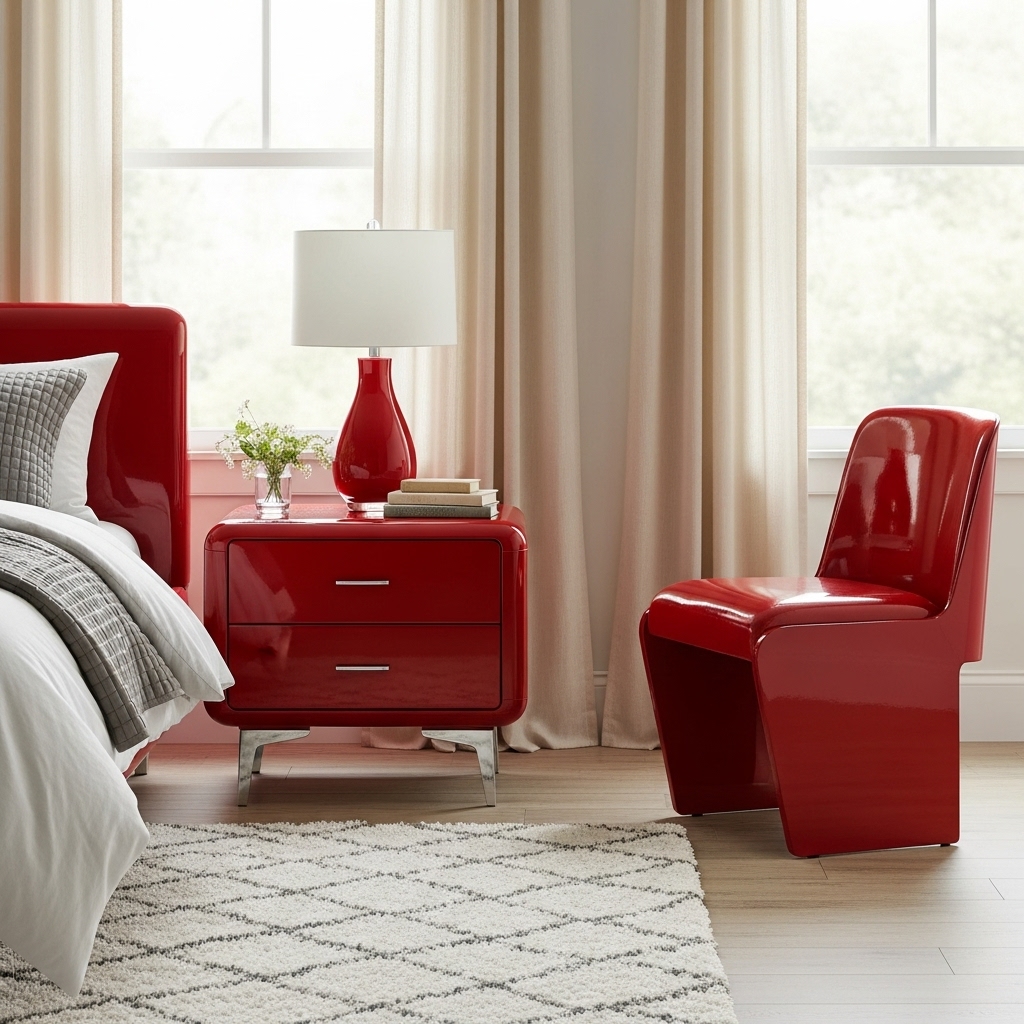
Cherry red furniture is a good choice for anyone who enjoys contemporary interiors, retro-inspired decor, or statement pieces that stand out against a neutral background.
A small bedside table, vanity stool, or refinished dresser can provide a concentrated burst of color. The glossy finish reflects light and creates a different effect from the softness of fabric or the flat appearance of painted walls.
To keep the room balanced, choose one prominent piece rather than several large red furniture items. A glossy red nightstand beside a cream bed, for example, can create a striking contrast without making the room feel crowded.
You can also update an existing piece of furniture if its surface is suitable for repainting. Clean and prepare the surface properly, use a primer appropriate for the material, and choose a compatible furniture paint. Always follow the product instructions and allow adequate curing time before placing objects on the finished surface.
Best color pairings: Cherry red furniture looks especially effective with pale wood, warm white, charcoal, and simple metal hardware. Matte fabrics and natural materials can soften the shine of a glossy finish.
7. The “Fifth Wall” Ceiling Paint
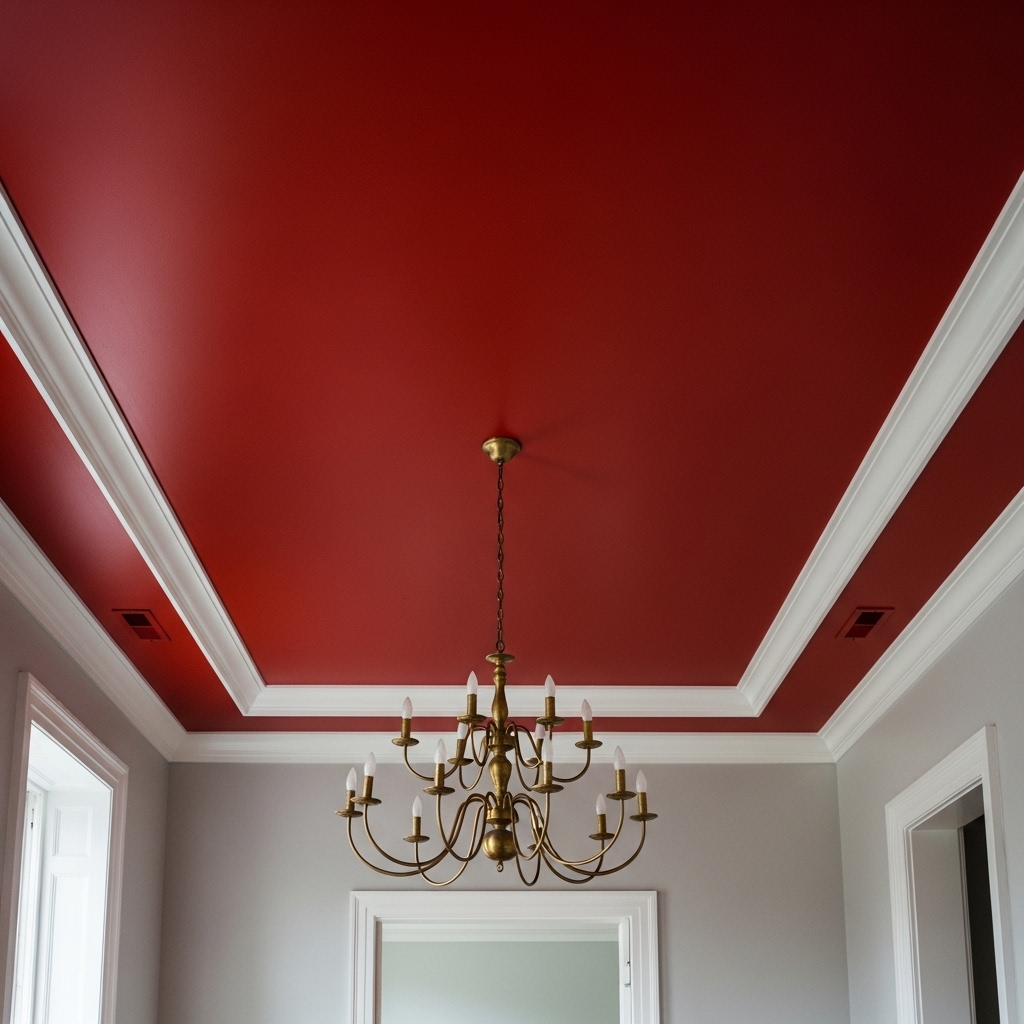
The ceiling is often overlooked when decorating a bedroom, but painting it cherry red can create a distinctive, enveloping effect. It is a more adventurous choice than an accent wall, so it works best when the rest of the design is planned around it.
One approach is to keep the walls warm white or pale beige while using red on the ceiling. This creates a clear separation between the bold upper surface and the lighter walls. Simple bedding and understated furniture help maintain that balance.
A red ceiling may feel particularly dramatic in a room with high ceilings, although it can also work in a smaller bedroom if the shade, lighting, and other finishes are chosen carefully. Rather than assuming the color will always make a room feel cozy, test a sample and observe how it looks during the day and at night.
If you have decorative ceiling trim, decide whether you want it to match the ceiling or remain white. White trim emphasizes the boundary, while a continuous color treatment creates a more unified appearance.
Before painting: Check the ceiling for damage, use a paint suitable for the surface, and protect the floor and furniture. If you are renting, consider removable decor or focus on the walls and textiles instead.
8. Curated Art Gallery Walls
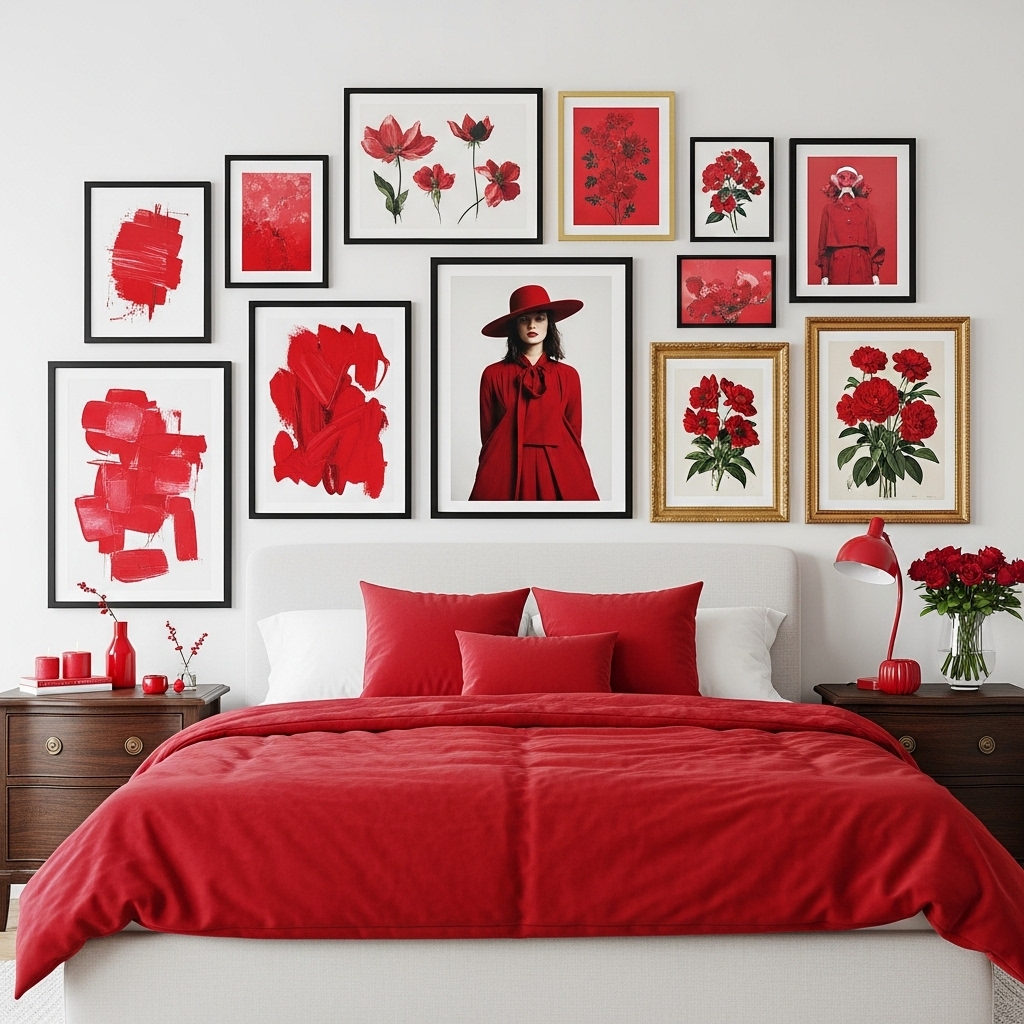
A gallery wall is an excellent way to bring cherry red into a bedroom without covering a large surface in the color. It also gives you an opportunity to express your interests through artwork, photography, prints, or personal illustrations.
Start by choosing a small group of pieces that share a visual connection. You might combine abstract red shapes, botanical illustrations, black-and-white photography, and artwork featuring burgundy or blush pink. The designs do not need to be identical; a consistent color palette is often enough to make them work together.
Frames can help establish the style. Black frames create a clean, modern look, while natural wood brings warmth. Brass or gold-colored frames add contrast and can complement warm-toned furniture.
Before hanging anything, arrange the artwork on the floor or cut paper templates to the approximate frame sizes. This lets you experiment with spacing and proportions without repeatedly making holes in the wall.
A gallery wall above the headboard can create a focal point, but leave enough clearance so the arrangement does not feel crowded against the bed. For a narrower wall, use fewer, slightly larger pieces instead of squeezing in many small frames.
Practical tip: Choose artwork with at least one color already present in the bedroom. Repeating a shade from the bedding, rug, or curtains helps the gallery wall feel connected to the rest of the space.
9. Mood Lighting and Lampshades
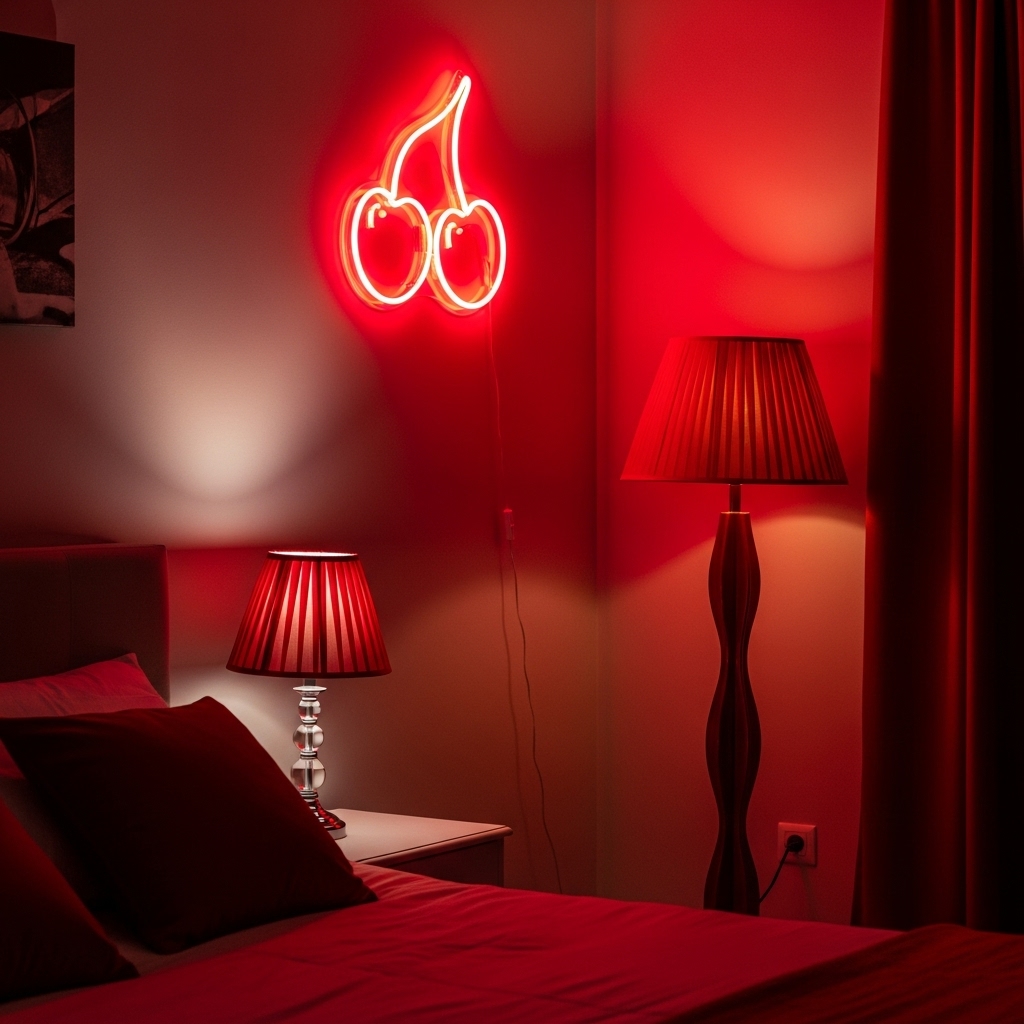
Lighting can change how cherry red appears in a bedroom. Under warm light, the color may look softer and richer, while cooler light can make some reds appear sharper or less warm. The surrounding wall colors and the amount of daylight also influence the result.
A cherry red bedside lamp is an easy way to test the color before investing in larger decor changes. Choose a red ceramic base, a fabric lampshade, or a sculptural lamp with a red finish. The right option depends on whether you want the lamp to blend into the room or stand out as an accent.
For a comfortable bedroom, use layered lighting rather than relying on one bright ceiling fixture. Bedside lamps provide light for reading, while a ceiling light helps illuminate the room more evenly. Dimmable lighting can make it easier to adjust the atmosphere in the evening.
If you choose a red lampshade, remember that it will not necessarily cast a strong red glow across the whole room. The effect depends on the shade material, bulb, and lamp design.
What works best: Pair a red lamp with neutral bedding and a simple bedside table. If your bedroom already has red curtains or a red accent wall, choose a smaller lamp with a less dominant finish.
10. Wallpaper with Punchy Patterns
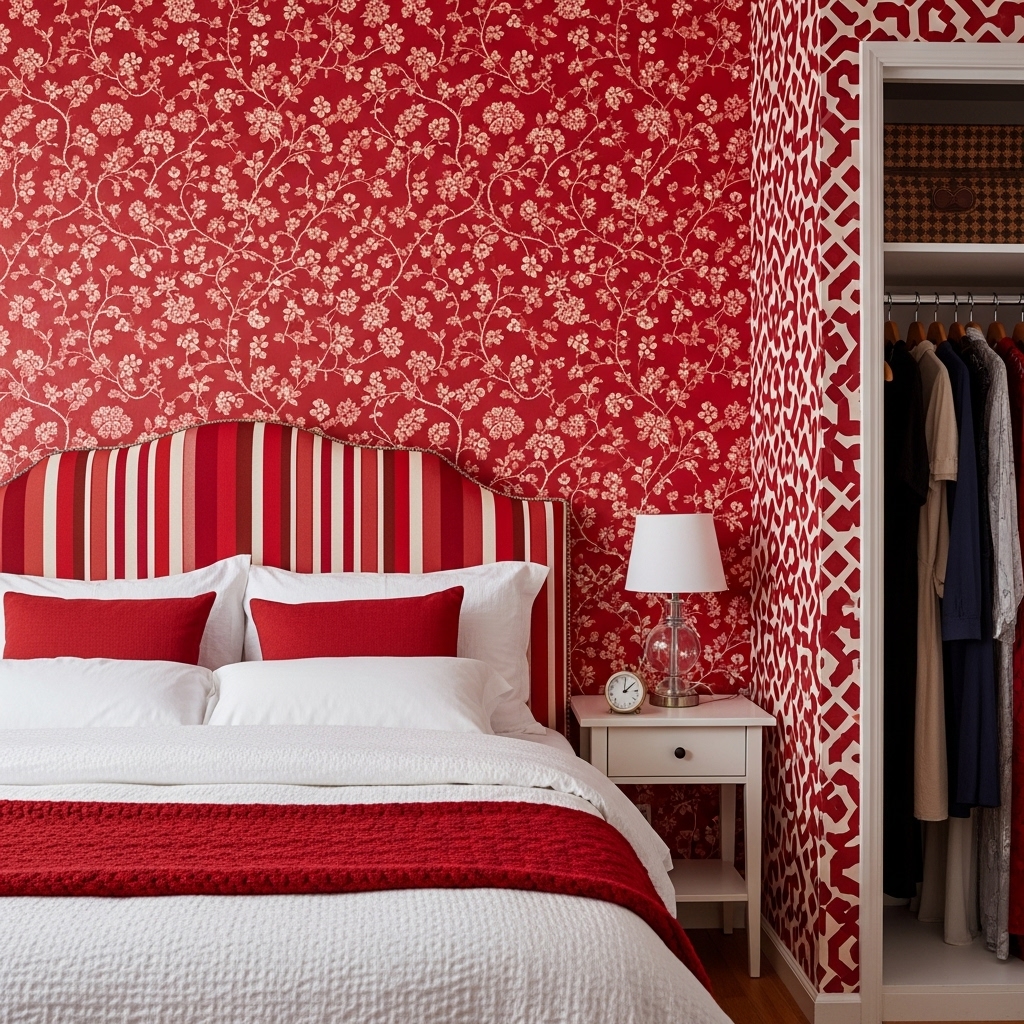
Patterned wallpaper can introduce cherry red while adding detail that plain paint cannot provide. Depending on the design, it can make a bedroom feel traditional, artistic, playful, or distinctly modern.
For a classic look, consider floral or botanical wallpaper featuring red blossoms against a cream background. Geometric patterns work well in contemporary rooms, while stripes can create a more structured appearance. A small-scale pattern may suit a compact bedroom, whereas a large print can become an intentional focal point.
Using wallpaper on the wall behind the bed is often a straightforward way to establish the design. Keep the surrounding walls relatively simple and choose bedding that picks up one of the wallpaper’s quieter colors.
If you prefer a more subtle approach, consider wallpapering a small section of wall or the interior of a suitable open shelving unit. This introduces the pattern without overwhelming the room.
Before purchasing wallpaper, measure the wall and check the manufacturer’s instructions for calculating rolls, matching patterns, and preparing the surface. Pattern repeats can create additional material waste, so it is worth allowing for this when estimating the quantity needed.
Renter-friendly alternative: Look for removable wallpaper that is suitable for your wall surface. Test it according to the manufacturer’s guidance before covering a large area.
11. The Unexpected Doorway
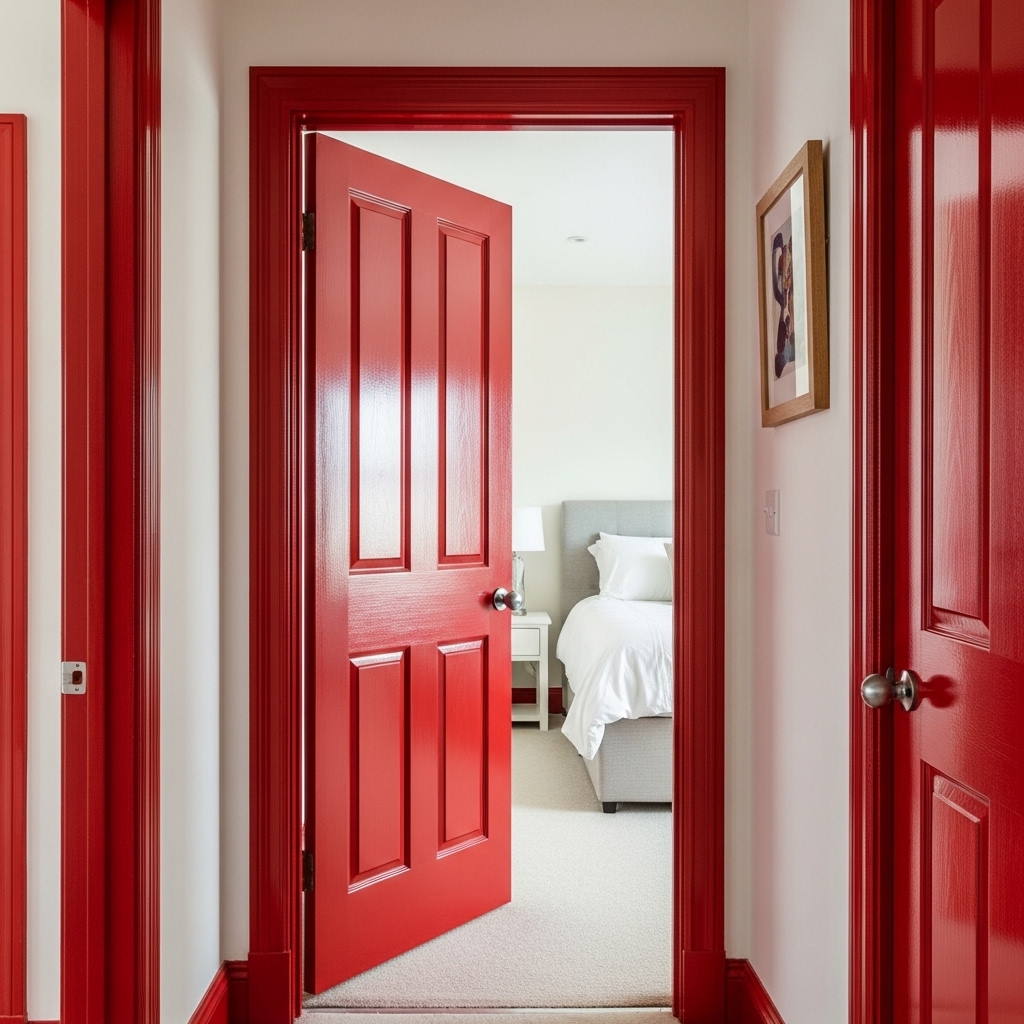
If you want to experiment with cherry red but do not want to change the walls or furniture, consider painting the bedroom door. It is a relatively small surface that can introduce a bold color while leaving most of the room untouched.
A glossy cherry red door creates a contemporary, statement-making appearance. A satin finish offers a softer sheen, while a matte finish feels more understated. Choose a finish suitable for the door’s material and the amount of handling it receives.
You can paint the room-facing side of the door red and leave the hallway side in its existing color if you prefer a more contained design. Alternatively, repeat the red elsewhere in the bedroom through a cushion, artwork, or small accessory.
Pay attention to the surrounding trim and hardware. White trim creates a sharp contrast, while black or brass-colored hardware can reinforce a modern or classic look.
Before starting, check whether you have permission to paint if you rent your home. Prepare the surface, protect the hinges and floor, and follow the paint manufacturer’s drying and curing instructions.
Why this idea works: It allows you to experiment with a distinctive color in a controlled area. If you later change the bedroom palette, the door can remain the main accent or be repainted to suit the new design.
12. Contrasting Color Blocking with Pink
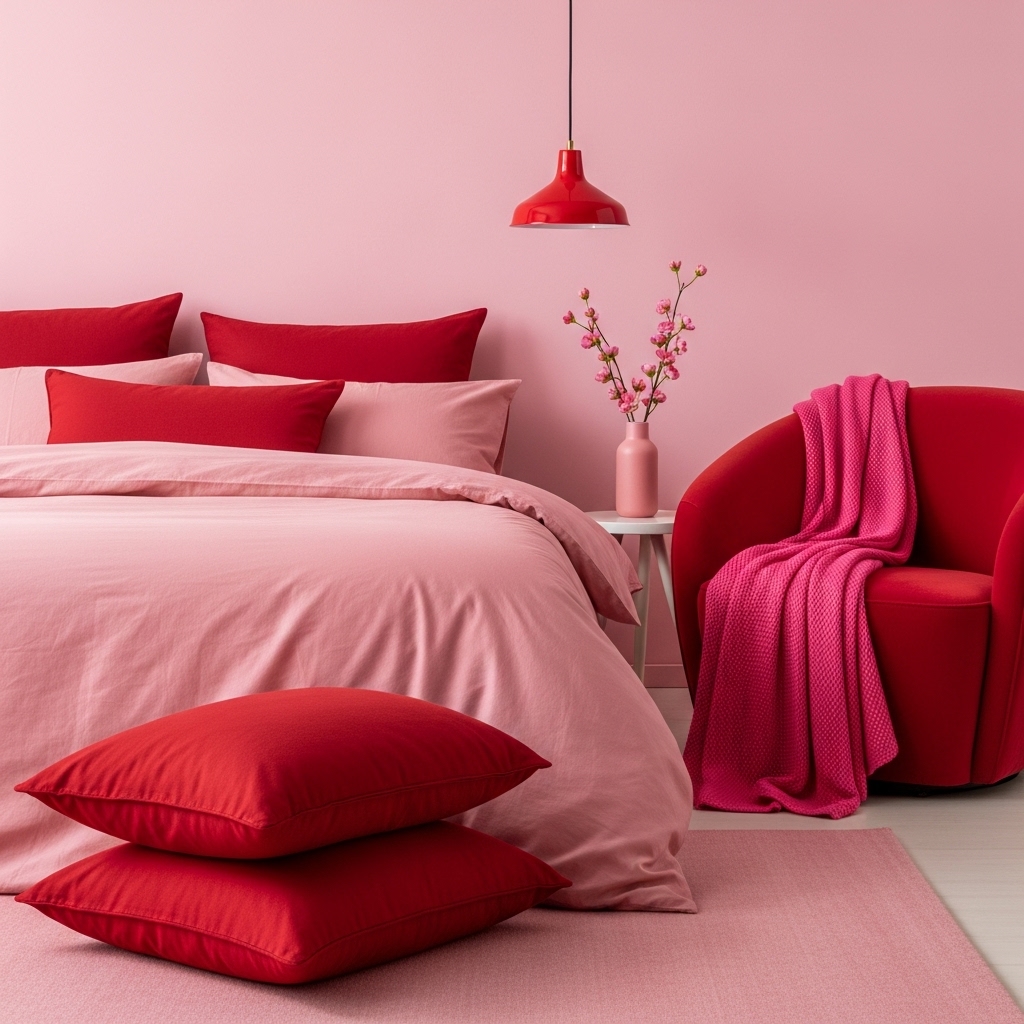
Cherry red and pink create a lively bedroom palette that can feel playful, romantic, or fashion-inspired depending on the shades and proportions you choose.
For a softer look, combine cherry red cushions with a dusty rose duvet and warm white walls. If you prefer stronger contrast, use cherry red bedding with pale pink artwork or a brighter pink throw. Blush, rose, and muted pinks generally create a gentler transition than highly saturated pinks.
You can also experiment with color blocking. For example, use red on one section of a wall and pink on another, or combine a red upholstered chair with a pink cushion. Keeping the shapes and surrounding furniture simple will help the colors stand out without creating unnecessary visual clutter.
Natural wood, cream textiles, and understated metal finishes can balance the combination. If you want a more dramatic bedroom, add a small amount of burgundy or deep plum rather than introducing several additional bright colors.
How to avoid an overwhelming look: Decide which color will dominate before decorating. If cherry red is the main color, let pink appear in smaller accessories. If you prefer a softer bedroom, make pink the primary shade and use red for contrast.
How to Balance Cherry Red in Your Bedroom
Cherry red is a strong color, but it does not have to dominate a bedroom. A few thoughtful decisions can help it work with your furniture, lighting, and available space.
Choose a supporting neutral
Cream, ivory, warm white, beige, and natural wood can soften the contrast created by cherry red. Cool grey can work in a more contemporary bedroom, although the exact result depends on the undertones of the grey and red.
Start with one neutral base and one main accent color. Add a third color only when it serves a clear purpose, such as connecting the bedding to the artwork.
Mix textures instead of matching everything
Different materials make a room feel more layered. Combine cotton bedding with a velvet cushion, a woven rug, or wooden furniture. If you choose a glossy red nightstand, softer fabrics can prevent the room from feeling too polished or artificial.
Pay attention to lighting
Look at your chosen red in both daylight and artificial light before committing to paint, wallpaper, or large furniture purchases. A shade that appears deep in a store or on a screen may look much brighter in your bedroom.
Use task lighting near the bed and comfortable ambient lighting for the rest of the room. Avoid choosing every light source solely for its decorative appearance; the room should still be practical for reading, dressing, and relaxing.
Repeat the color selectively
Repeating cherry red in two or three places can make a bedroom feel coordinated. For instance, red curtains can connect with a small artwork detail and a bedside accessory.
You do not need to repeat it in every part of the room. Leaving some surfaces neutral helps the main accent stand out.
Consider the size of the room
In a compact bedroom, red pillow covers, a bedside lamp, or one small furniture piece may be enough. Larger rooms can accommodate more substantial features, such as an accent wall or patterned rug, without the same degree of visual concentration.
These are starting points rather than strict rules. The best arrangement depends on your existing furniture, the natural light, and the effect you want to achieve.
Cherry Red Bedroom Ideas for Small Spaces
A small bedroom can benefit from cherry red, but the placement of the color matters more than the number of accessories you own.
- Start with removable accents: Try pillow covers, a throw, artwork, or a small lamp before painting the walls.
- Keep large surfaces simple: Neutral bedding and light walls can balance a red headboard or curtain.
- Avoid unnecessary furniture: Use your existing bedside tables and storage rather than adding several decorative pieces just to match the color scheme.
- Use mirrors thoughtfully: A mirror can reflect available light and help the room feel more open, depending on its placement.
- Choose patterns carefully: One patterned rug or wallpaper feature is often easier to coordinate than several competing prints.
If you want a more dramatic result, a cherry red accent wall can still work in a small room. Test the shade first and keep the rest of the palette restrained so you can judge the overall effect before making further changes.
Budget-Friendly Ways to Try the Cherry Red Aesthetic
You do not need to replace your bedroom furniture to create a noticeable change. Begin with the items that are easiest to update and expand the design only if you like the result.
| Budget approach | What to try | Why it helps |
|---|---|---|
| Lowest commitment | Red pillow covers or a throw | Introduces color without permanent changes |
| Small DIY update | A red picture frame, vase, or lamp base | Adds a concentrated accent |
| Moderate update | Curtains or an area rug | Brings the color into a larger part of the room |
| Larger change | A headboard, accent wall, or dresser | Creates a more prominent focal point |
Actual costs will depend on your location, materials, dimensions, and whether you already own suitable items. Compare the price of updating an existing piece with the cost of replacing it before buying new furniture.
A practical way to start is to choose one change, live with it for a few days, and see how it looks in different lighting conditions. This helps you decide whether you need more red or whether the first addition already provides enough contrast.
Frequently Asked Questions
Is cherry red a good color for a bedroom?
Yes. Cherry red can work well in a bedroom when it suits your preferences and is balanced with the rest of the room. If you want a subtle look, use it in accessories or artwork. For a stronger statement, consider an accent wall, curtains, or a red headboard.
What colors go best with cherry red bedroom decor?
Cream, ivory, beige, natural wood, blush pink, and dark green are useful starting points. Black can create a sharper modern contrast, while brass-colored finishes can complement warmer red tones. The best pairing depends on the exact shade of red and the mood you want to create.
How can I decorate a bedroom with cherry red without painting the walls?
Use cherry red pillow covers, a throw blanket, curtains, a bedside lamp, artwork, or a small accent piece of furniture. These options allow you to experiment with the color without making a permanent change to the room.
Is cherry red suitable for a small bedroom?
Yes. In a small bedroom, try using cherry red in a few carefully selected areas while keeping larger surfaces relatively simple. A red lamp, two decorative cushions, or a small piece of artwork can create contrast without requiring a complete redesign.
What bedding goes with a cherry red headboard?
White, ivory, beige, and pale grey bedding can create a clean contrast with a red headboard. Blush pink offers a softer combination, while darker neutral bedding creates a more dramatic effect. Consider the wall color and other furniture when making your choice.
Should cherry red bedroom furniture be matte or glossy?
Both finishes can work. Matte finishes tend to look softer and more understated, while glossy surfaces create stronger reflections and a contemporary or retro-inspired appearance. Choose the finish that complements your other furniture and the amount of visual contrast you want.
How can I make a cherry red bedroom look elegant rather than cluttered?
Choose one main feature, such as a red wall, headboard, or rug, and let the remaining elements support it. Use a consistent color palette, vary the textures, and leave enough uncluttered space around decorative items. Coordinated colors are usually more effective than buying every item in the same shade.
Can I combine cherry red with burgundy?
Yes. Cherry red and burgundy can create a layered red palette because one is generally brighter while the other is deeper and more wine-colored. Use them in different proportions, such as a cherry red accent with burgundy cushions, and introduce a neutral shade to separate the two.
Conclusion
Cherry red bedroom decor offers plenty of room for personal expression, whether you prefer a bold statement wall, soft layered bedding, dramatic curtains, or a small collection of colorful accessories.
The best approach is to begin with the feature that matters most to you. If you want a noticeable transformation, consider a red headboard or accent wall. If you prefer an affordable update, start with pillow covers, a throw, or a bedside lamp. For a coordinated look, choose a neutral base and repeat cherry red in a few carefully selected places.
Above all, let your existing room guide your decisions. Consider its size, lighting, furniture, and the amount of color you enjoy seeing every day. With a thoughtful combination of shades, textures, and practical details, you can create a cherry red bedroom that feels distinctive, comfortable, and genuinely suited to your home.