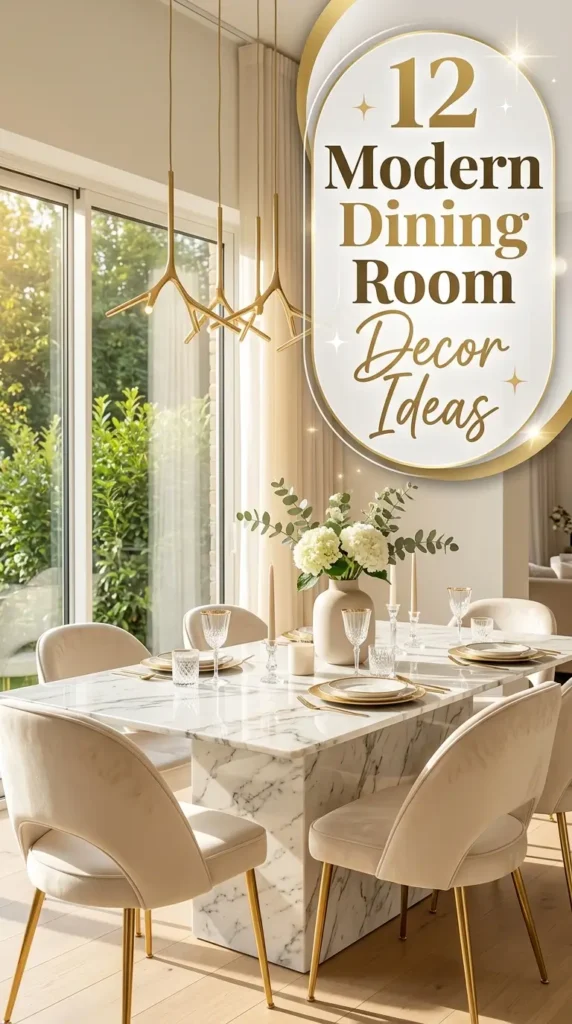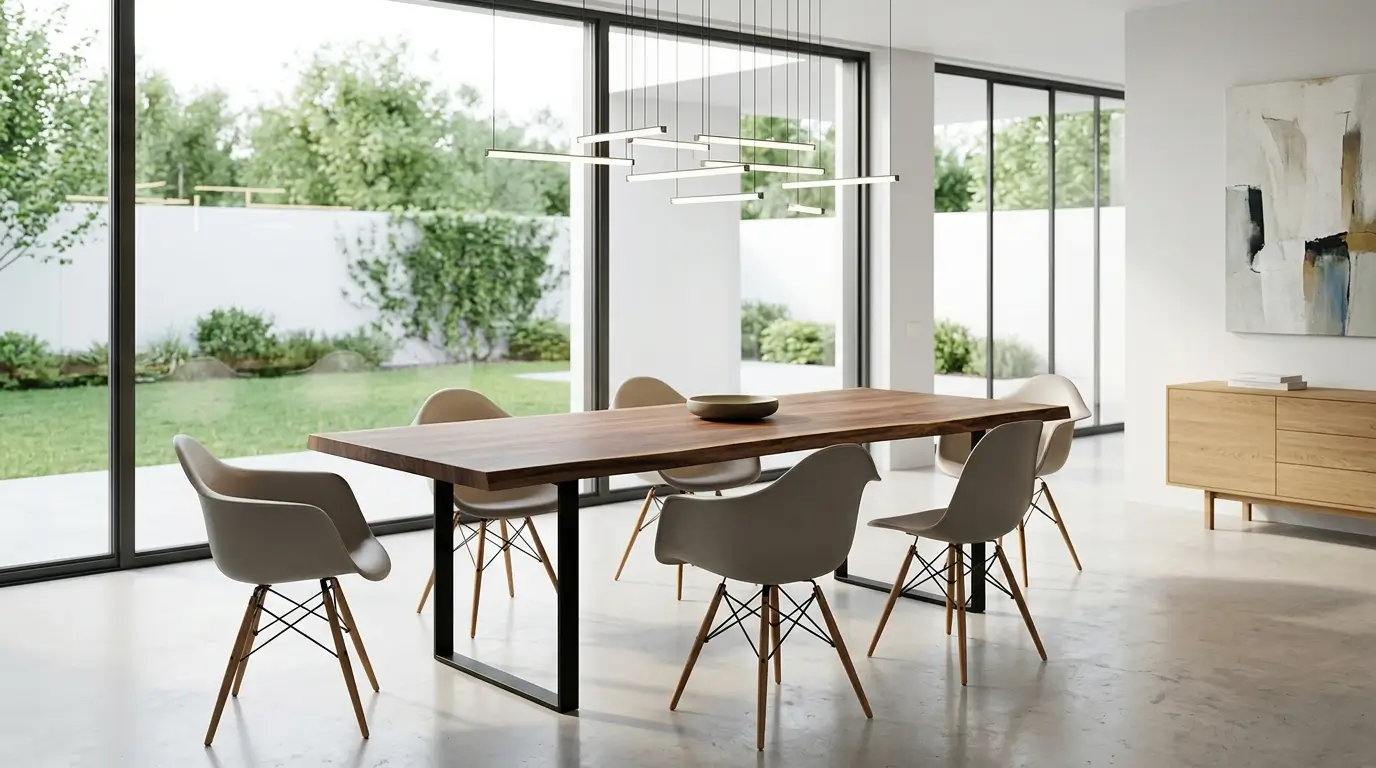
A dining room should look beautiful, but it also needs to work for everyday life. It should have enough space to pull out chairs, comfortable lighting for evening meals, and furniture that suits the way your household actually uses the room.
Modern dining room design makes this balance easier by combining clean lines, thoughtful materials, practical storage, and carefully chosen decorative details.
You do not need a large room or an entirely new furniture set to achieve the look. Sometimes, changing the lighting, adding a properly sized rug, or introducing a contrasting color can make a noticeable difference.
If you are planning a complete dining room makeover or simply want to refresh your existing space, these 12 modern dining room decor ideas will help you make informed choices while creating a room that feels welcoming and personal.
1. Statement Geometric Lighting
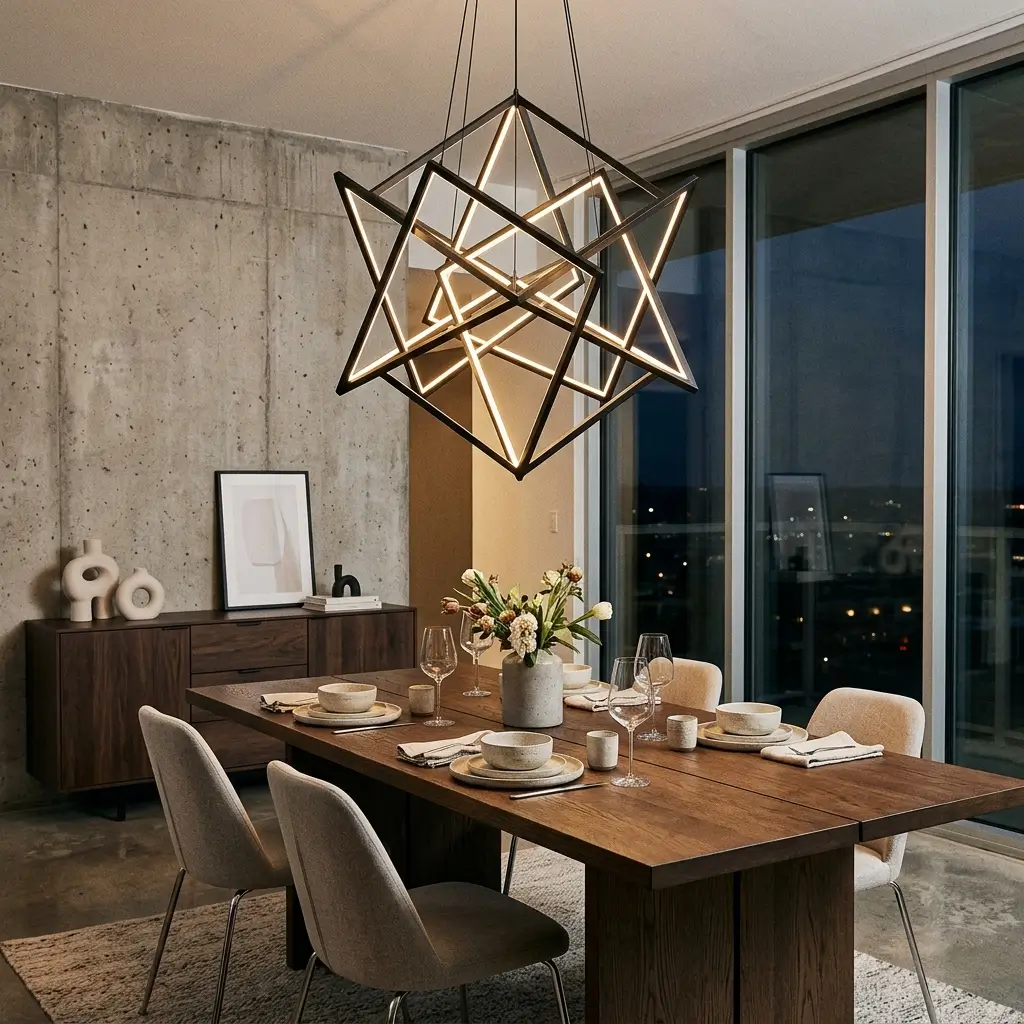
A modern light fixture acts as the room’s main architectural feature. Instead of traditional chandeliers, modern spaces lean toward oversized drum pendants, Sputnik-style fixtures, or linear LED bars.
- The Design Rule: Hang the bottom of your fixture 30 to 36 inches above the tabletop (for a standard 8-foot ceiling). For higher ceilings, add 3 inches of height for every extra foot of wall.
- Pro Scale Tip: Your fixture’s width should be approximately half to two-thirds the width of your dining table so it doesn’t overpower the space.

2. Minimalist Tapered Tables
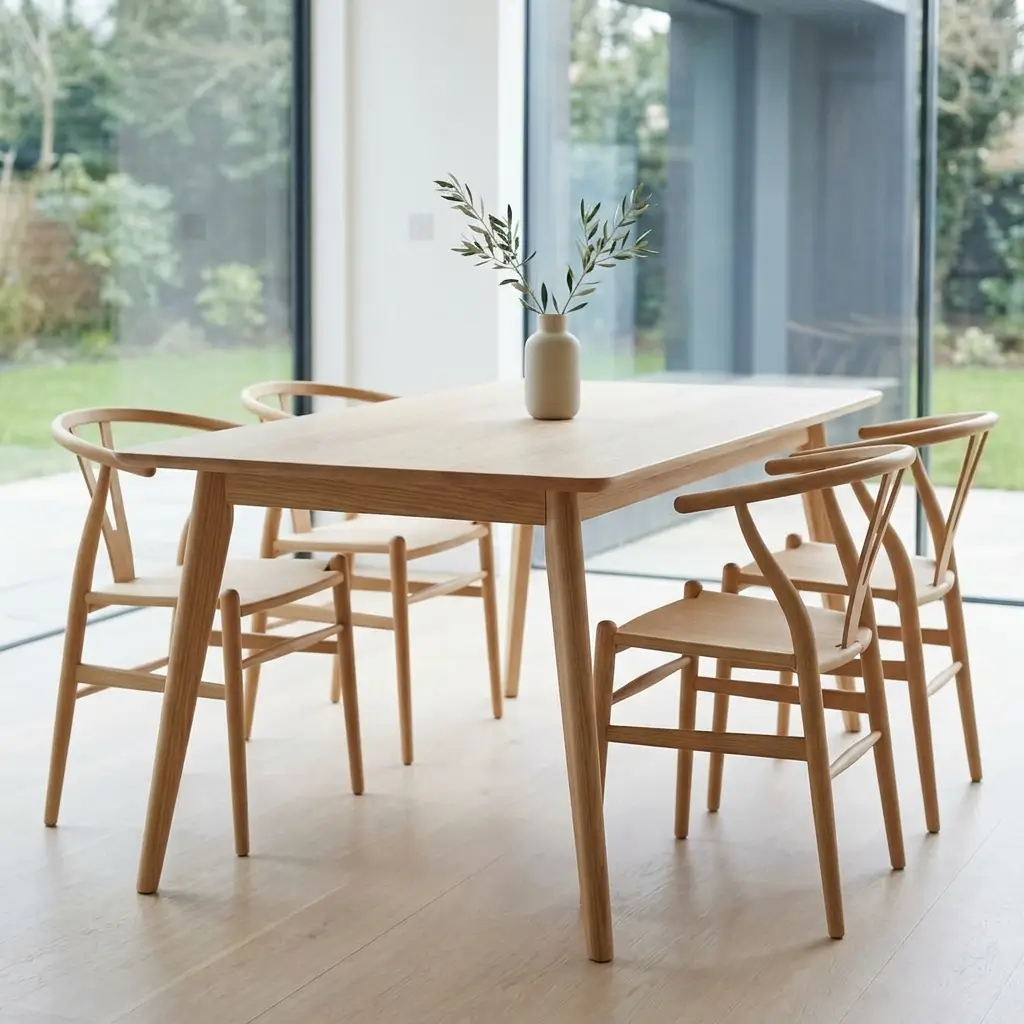
Modern dining tables emphasize clean silhouettes and heavy-duty materials over bulky aprons and ornate carving.
- Top Material Options:
- Honed Marble or Quartz: Delivers a sleek aesthetic, but requires sealing to prevent acidic etching from wine or sauce.
- White Oak or Walnut: Adds natural warmth. Opt for a matte polyurethane finish to protect the wood without adding cheap-looking sheen.
- Leg Placement Matters: Pedestal or trestle bases eliminate corner legs, maximizing legroom and allowing you to tuck in extra guests during holidays.
3. Velvet Accent Seating
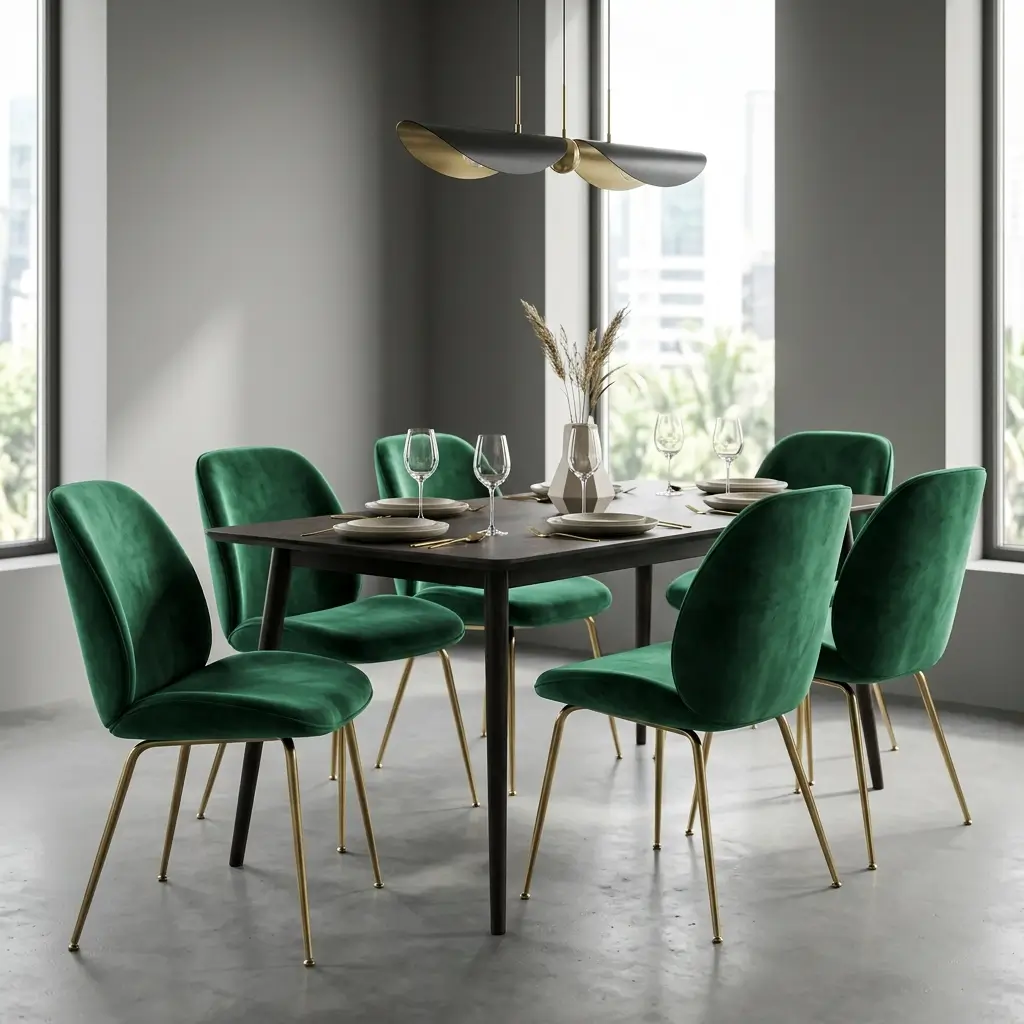
Hard surfaces like tile, glass, and wood can leave a modern dining room feeling sterile and noisy. Adding plush dining chairs solves both problems by introducing visual warmth and sound absorption.
- Fabric Selection: Look for commercial-grade performance velvet (with a Martindale abrasion rating over 30,000 double rubs). This guarantees spill resistance and easy spot-cleaning.
- Color Strategy: If your walls and table are neutral, introduce rich jewel tones such as deep olive, rust, or midnight blue on the seating to anchor the room.
4. Oversized Abstract Art
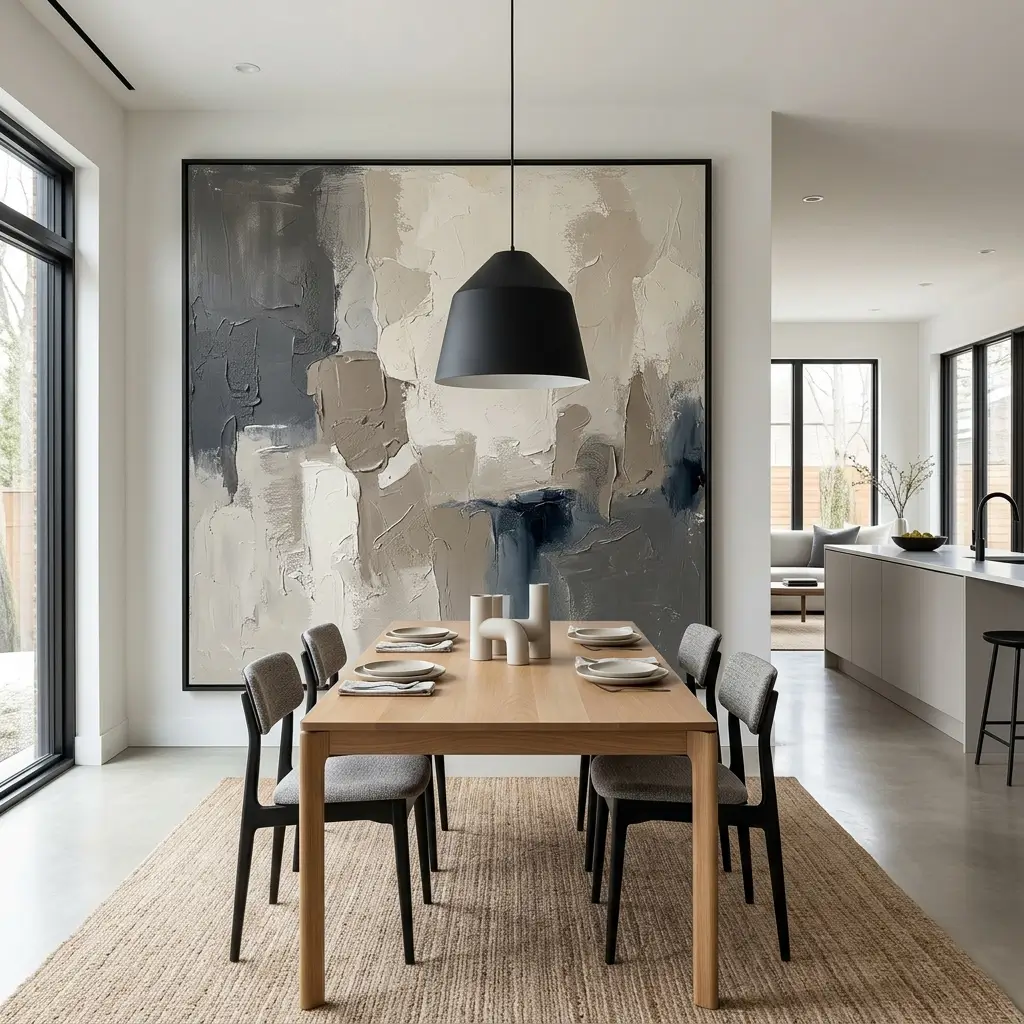
Multiple small prints can quickly look cluttered. A single large canvas creates an intentional, gallery-like focal point that grounds open-concept floor plans.
- Sizing Rule: Art should cover roughly 60% to 75% of the available wall space above a sideboard or table.
- Hanging Height: Center the middle of the canvas at eye level, roughly 57 to 60 inches from the floor.
5. Low-Pile Geometric Rugs
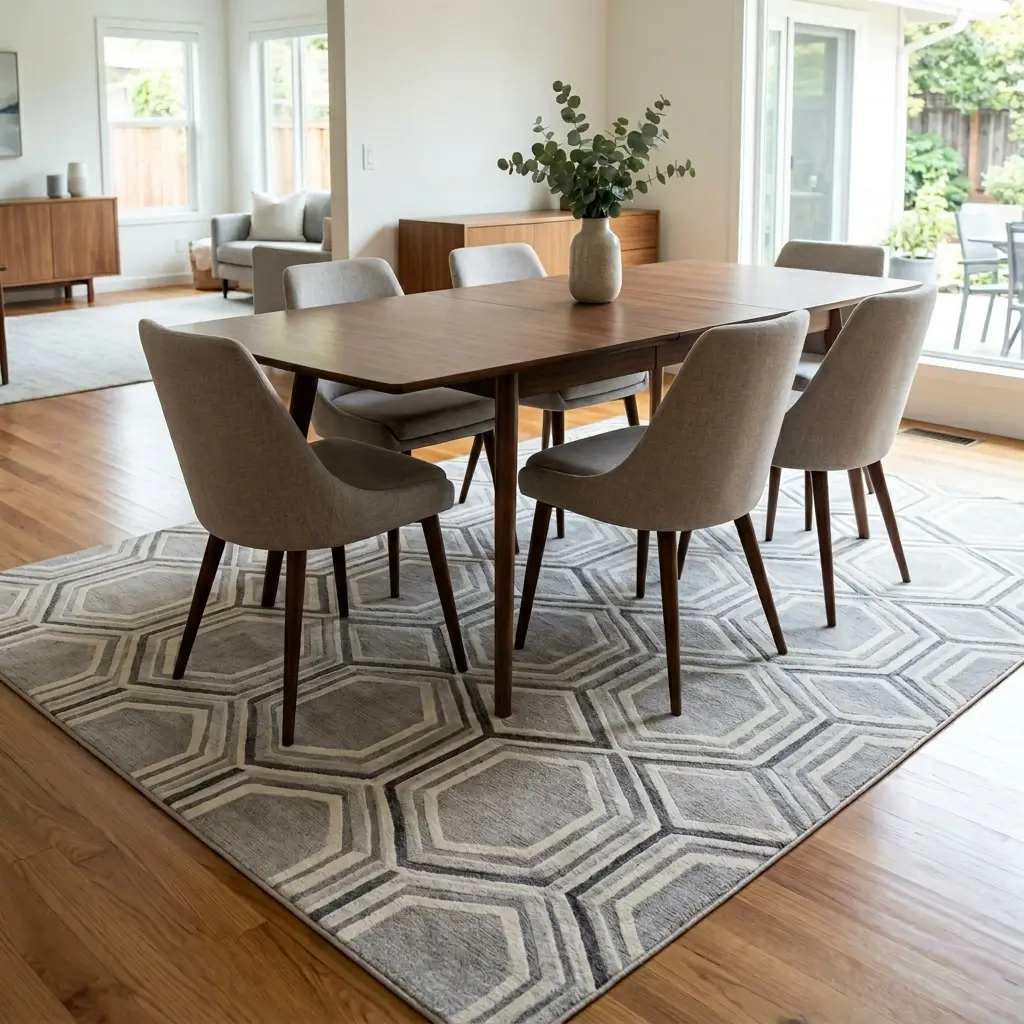
A rug anchors your dining ensemble, but selecting the wrong material can make cleaning a nightmare.
- Material Specs: Avoid high-pile shag or natural jute (which can snag chair legs). Instead, select flat-weave wool, low-pile polypropylene, or washable performance weaves.
- The 24-Inch Rule: Your rug must extend at least 24 inches beyond all sides of the table. This ensures chair legs stay flat on the rug even when pulled out to sit.
6. Monochromatic Color Palettes
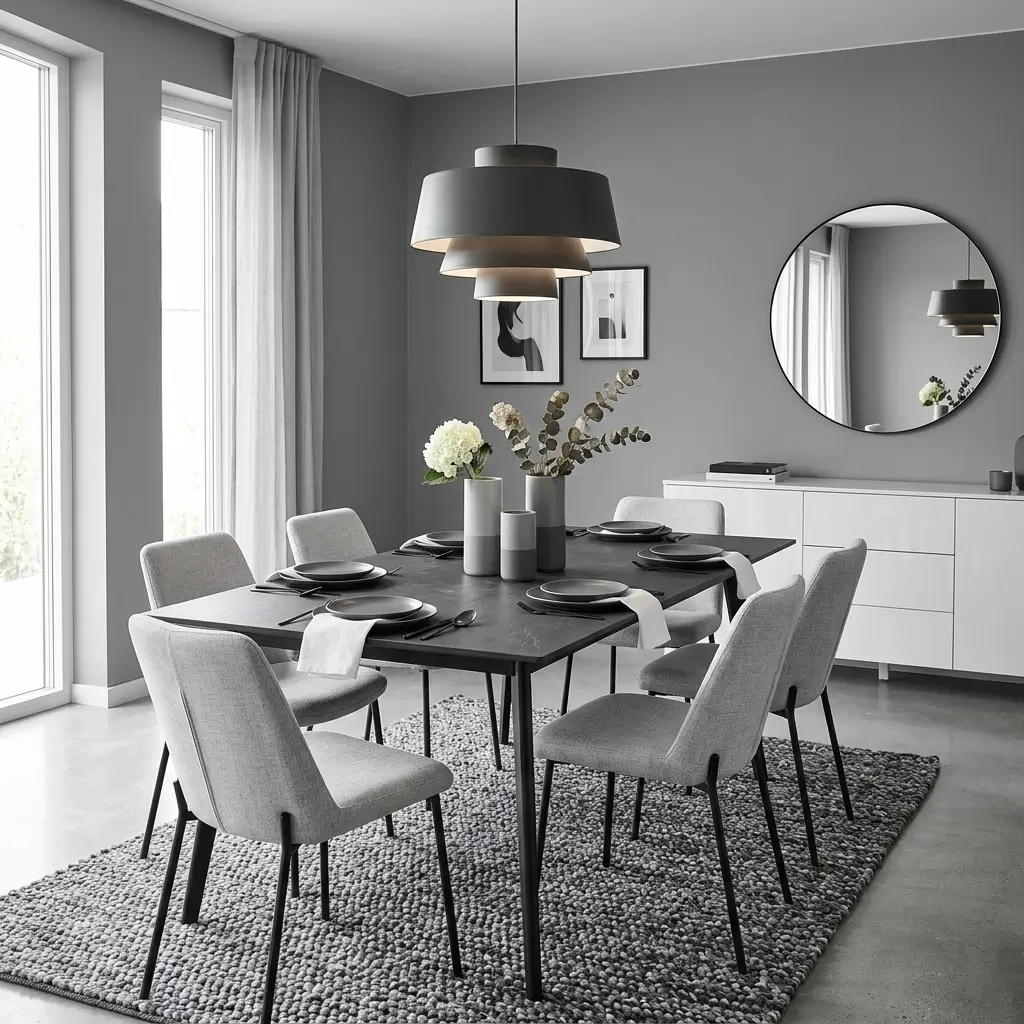
A monochromatic color scheme uses variations of one main color to create a coordinated interior. It can work particularly well in modern dining rooms because it allows the furniture, lighting, and textures to stand out without introducing too many competing colors.
White, warm beige, gray, taupe, and charcoal are useful starting points. You can combine several shades of the same color family rather than painting every surface identically.
For example, a warm neutral dining room might feature cream walls, a beige rug, a natural oak table, and darker brown accessories. The different shades provide depth while maintaining a consistent overall appearance.
How to avoid a flat result: Introduce contrasting textures. Matte-painted walls, woven curtains, a wooden table, and ceramic accessories will look more layered than a room filled entirely with smooth surfaces.
Lighting also influences how colors appear. A gray that looks cool in daylight may appear different under warm artificial lighting, so test paint samples on your wall before committing to a full room makeover.
If you prefer a darker palette, charcoal walls and black accents can create a dramatic dining area. Balance them with lighter upholstery, reflective surfaces, or warm wood so the room does not feel unnecessarily heavy.
7. Sleek Handle-less Sideboards
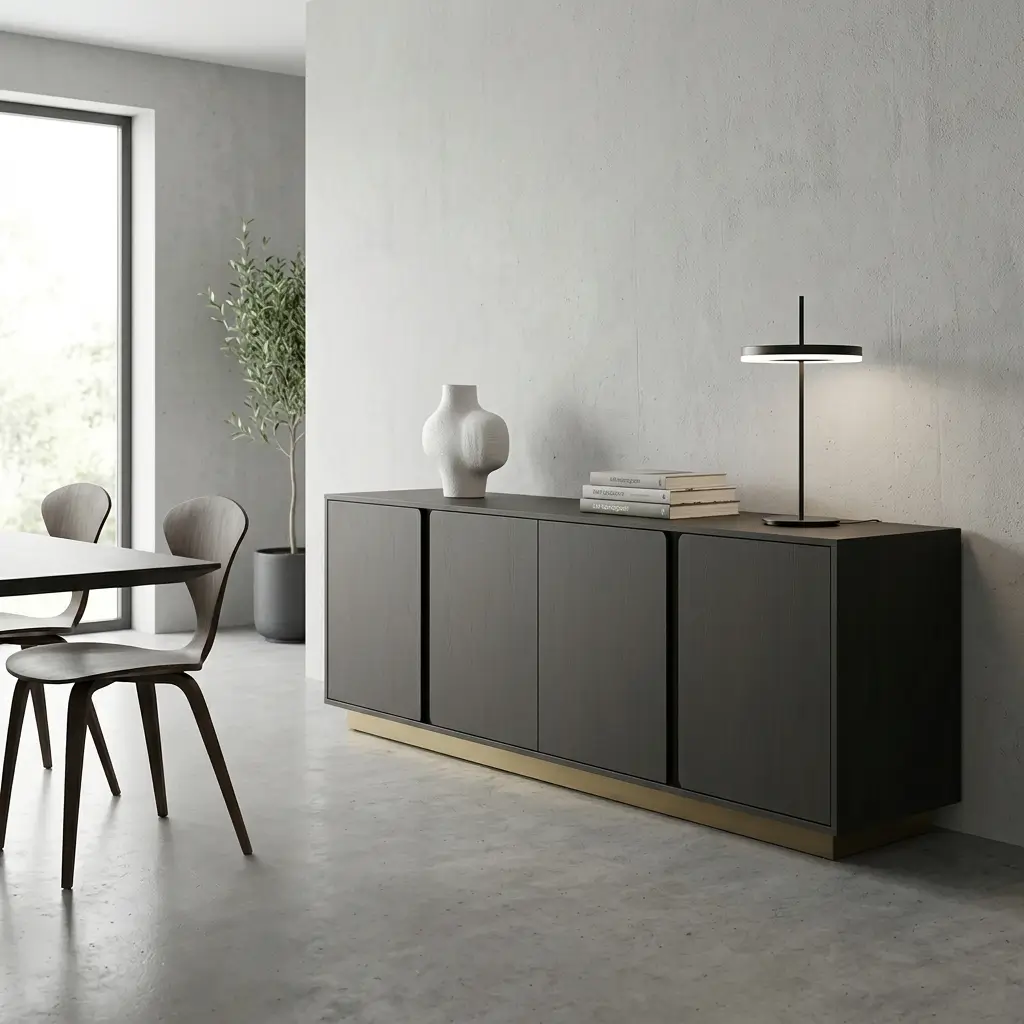
A dining room often needs more storage than its furniture initially suggests. Table linens, serving dishes, cutlery, candles, and entertaining accessories can quickly occupy valuable space.
A modern sideboard provides a practical place to store these items while creating another surface for decoration. Handleless cabinets, simple wooden buffets, and designs with understated metal details work well in contemporary interiors.
How to style it: Keep the arrangement simple. Place a table lamp or vase at one end, add a small stack of books or a decorative bowl, and leave some of the surface visible. This creates a deliberate arrangement without making the sideboard look crowded.
Choose the width and depth according to the available wall space. Check that doors and drawers can open fully without obstructing walkways or nearby dining chairs.
If you have a small dining room, a wall-mounted sideboard or a shallow cabinet may offer useful storage without occupying as much floor space.
You can also use the sideboard as a serving station during gatherings. Keeping plates, napkins, and serving utensils nearby makes it easier to serve food without covering the dining table with unnecessary items.
8. Architectural Indoor Greenery
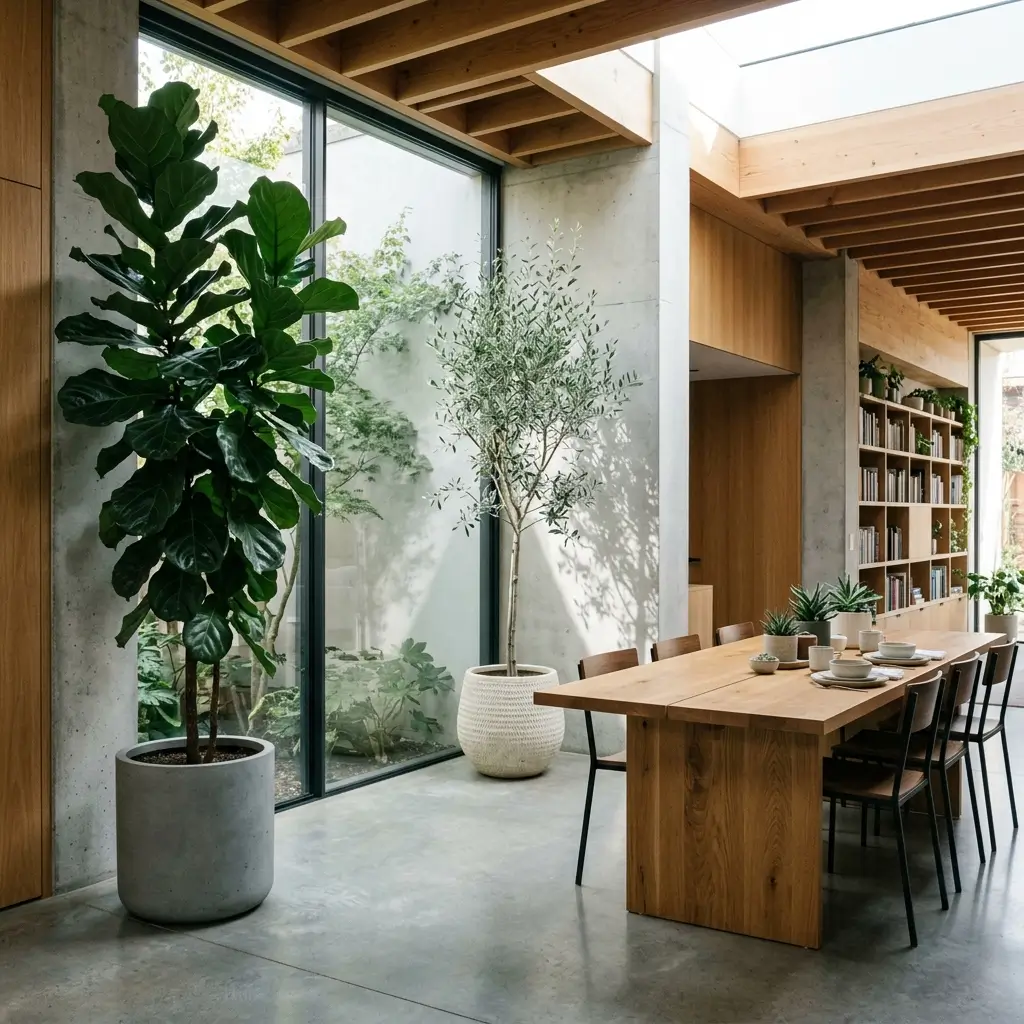
Plants introduce natural shapes and color into a dining room dominated by straight furniture lines and hard surfaces. A tall plant in an empty corner can add height, while a smaller plant on a sideboard provides a subtle decorative accent.
Fiddle-leaf figs, rubber plants, and other upright indoor plants may suit rooms with enough suitable light. However, plant selection should depend on the actual growing conditions rather than appearance alone.
How to style it: Choose a planter that complements the room. A matte ceramic pot can suit a minimalist interior, while a woven basket-style cover can introduce a softer texture.
Consider the amount of daylight available, the plant’s mature size, and how often it needs watering. A plant that requires bright indirect light may struggle in a dark corner, so assess the location before purchasing it.
If floor space is limited, a small plant on a sideboard or a suitable shelf can provide the same decorative connection to nature without interfering with chair movement.
Keep foliage away from candles, cooking appliances, and other potential hazards. If you have pets or young children, check whether the chosen plant is safe for your household.
Greenery is primarily a design choice here. Although plants can contribute to a pleasant indoor environment, ordinary houseplants should not be relied on as a substitute for ventilation or other measures to maintain indoor air quality.
9. Mixed Material Combinations
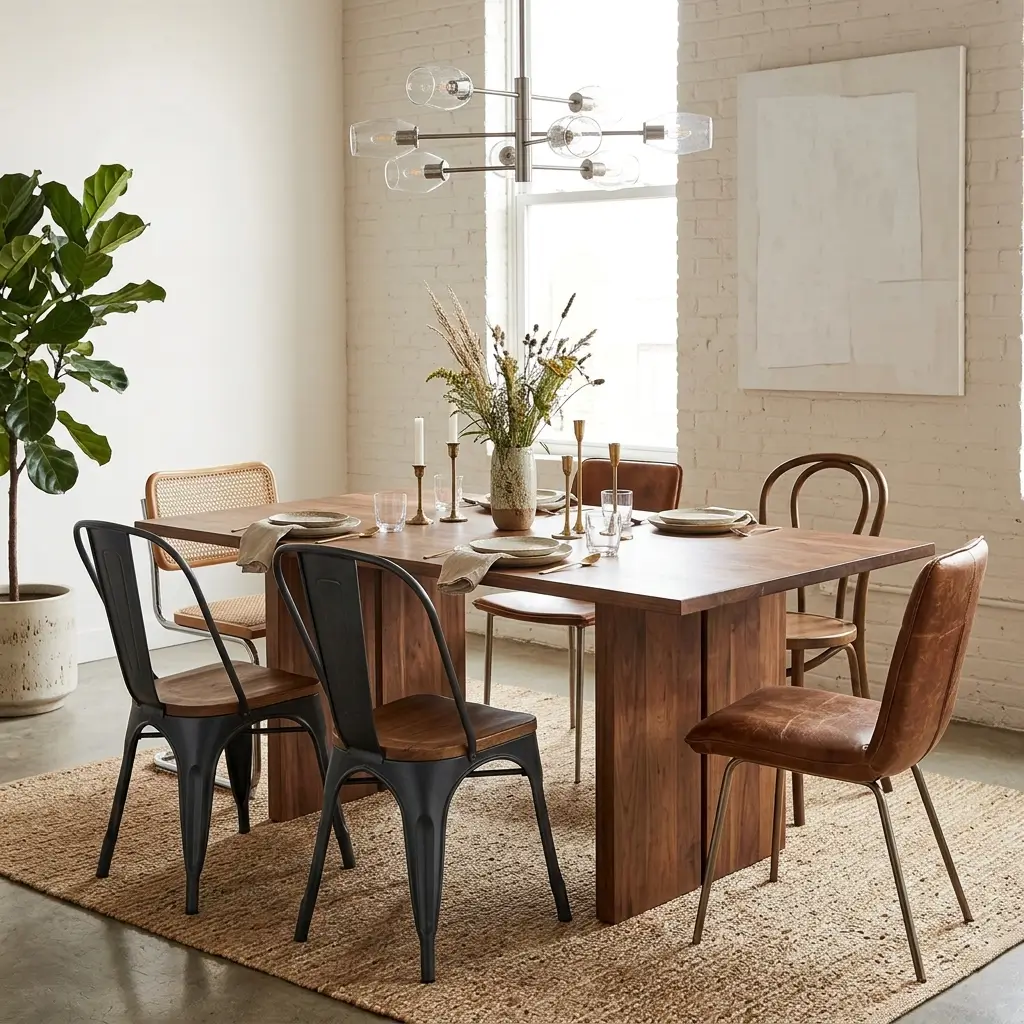
A dining room does not need to contain furniture from one collection to look coordinated. Combining different materials can create a more individual space, provided the finishes relate to one another.
For example, a natural wood table can work with upholstered chairs, a black metal pendant, a ceramic centerpiece, and a textured rug. Each material contributes something different without competing for attention.
Wood introduces warmth, metal adds definition, glass creates visual lightness, and upholstery brings softness. The contrast between these materials can make a simple dining room feel more considered.
How to combine materials successfully: Start with two dominant materials and introduce one or two supporting finishes. If your table is made from warm oak, you might choose black metal lighting and cream upholstery. Repeating black in a picture frame or cabinet handle helps connect the different elements.
Pay attention to undertones as well. Warm wood and creamy textiles often work naturally together, while cooler woods and gray finishes can produce a more restrained appearance. These are starting points, not strict rules.
Avoid introducing too many unrelated finishes at once. A room with numerous wood tones, metallic colors, and competing patterns may feel busy rather than deliberately collected.
If you already own a dining set, keep it and experiment with chairs, lighting, artwork, or accessories before replacing everything.
10. High-Contrast Black Accents
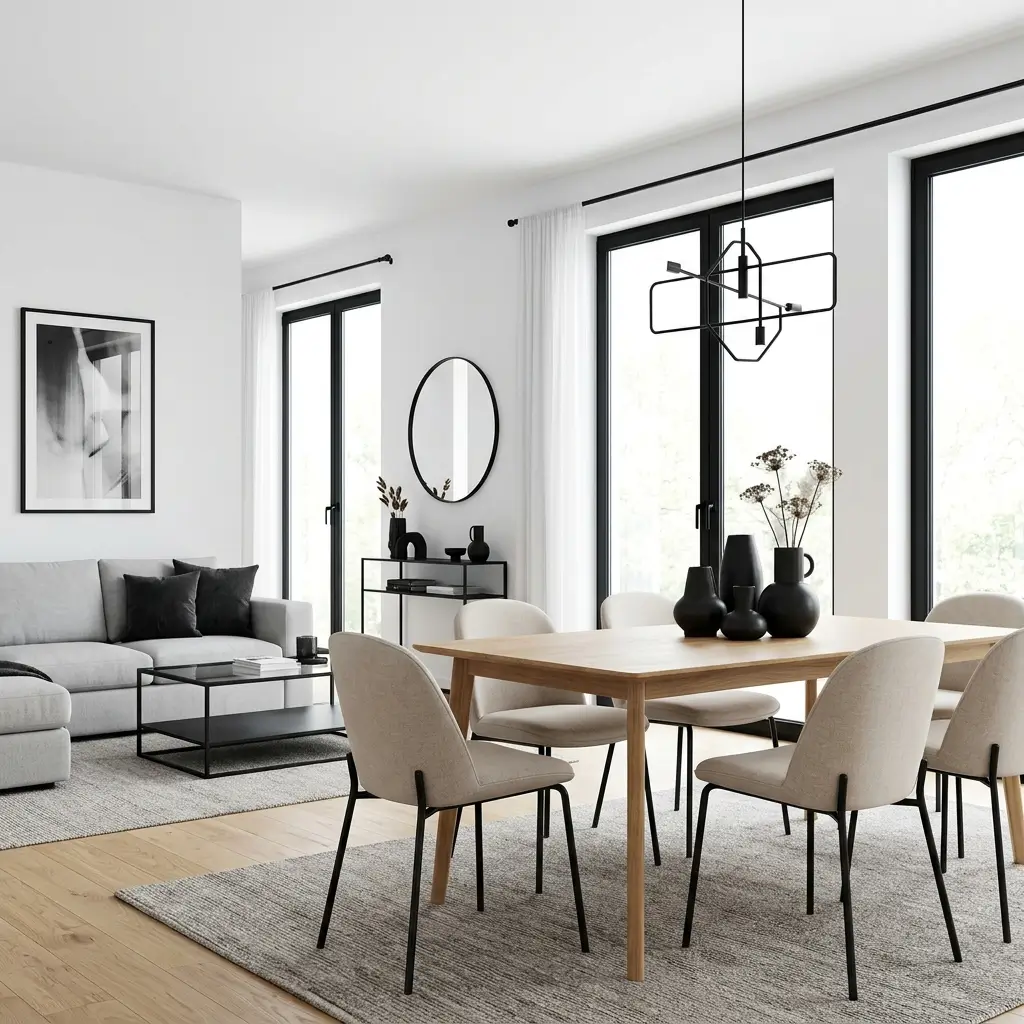
Matte black details can add definition to a dining room with pale walls, natural wood, and neutral upholstery. Because black creates strong contrast, even a few carefully placed accents can help the space feel more structured.
Possible choices include black pendant lighting, chair legs, cabinet handles, curtain rods, picture frames, or a simple ceramic vase.
How to use black effectively: Repeat the color in two or three places rather than scattering it randomly throughout the room. For example, pair a black light fixture with dark chair legs and a framed print containing black details.
This repetition creates a visual connection between different parts of the room.
If you have a small dining area, you do not necessarily need to avoid black. The key is to consider its proportion and balance. A black fixture against a light ceiling may stand out beautifully, while a large amount of dark furniture can make the room feel heavier.
Matte finishes are particularly useful when you want a subdued appearance, although their resistance to fingerprints and scratches varies by material and product quality.
You can introduce black gradually, making this one of the more affordable ways to refresh an existing dining room.
11. Transparent Acrylic Furniture
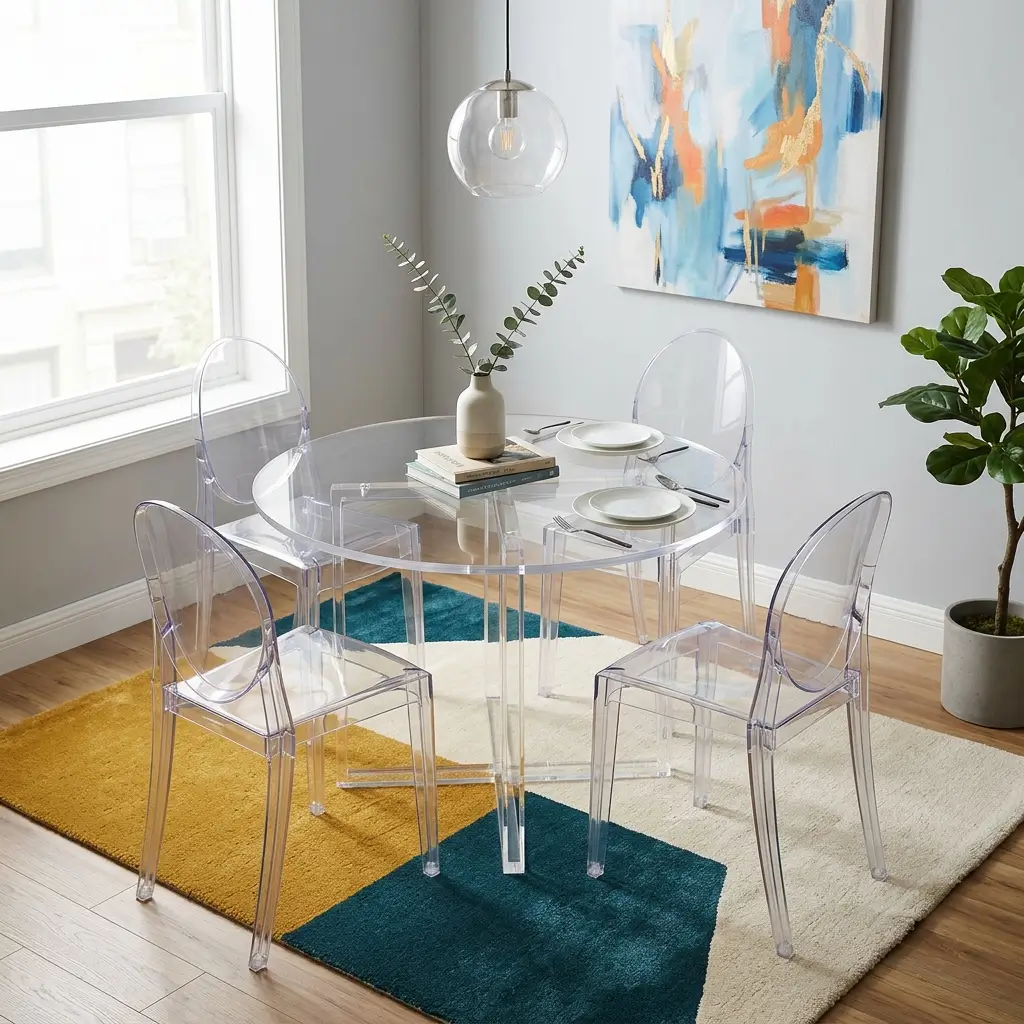
Glass tables and transparent acrylic chairs can help reduce the visual weight of furniture in a compact dining room. Because these pieces allow more of the surrounding space to remain visible, the layout may feel less crowded.
This can be useful in apartments, narrow dining areas, and open-plan rooms where a bulky dining set competes with other furniture.
How to use transparent furniture: Consider a glass-topped table with a simple base, or pair existing furniture with one or two transparent accent chairs. Keep surrounding accessories relatively restrained so the room does not become visually busy.
Transparent materials work particularly well with a carefully chosen rug or a statement light fixture because those elements remain visible rather than being hidden behind heavy furniture.
There are trade-offs, however. Glass can show fingerprints, acrylic may scratch, and transparent chairs are not automatically more comfortable than upholstered alternatives. Check the weight capacity, dimensions, stability, and cleaning requirements before purchasing.
If you have young children or need a particularly durable dining setup, compare the practical benefits with the appearance you want to achieve.
Transparent furniture is one option for a small room, not a requirement. A slim wooden table and lightweight chairs may provide a similar sense of openness at a different price point.
12. Minimalist Floating Shelves
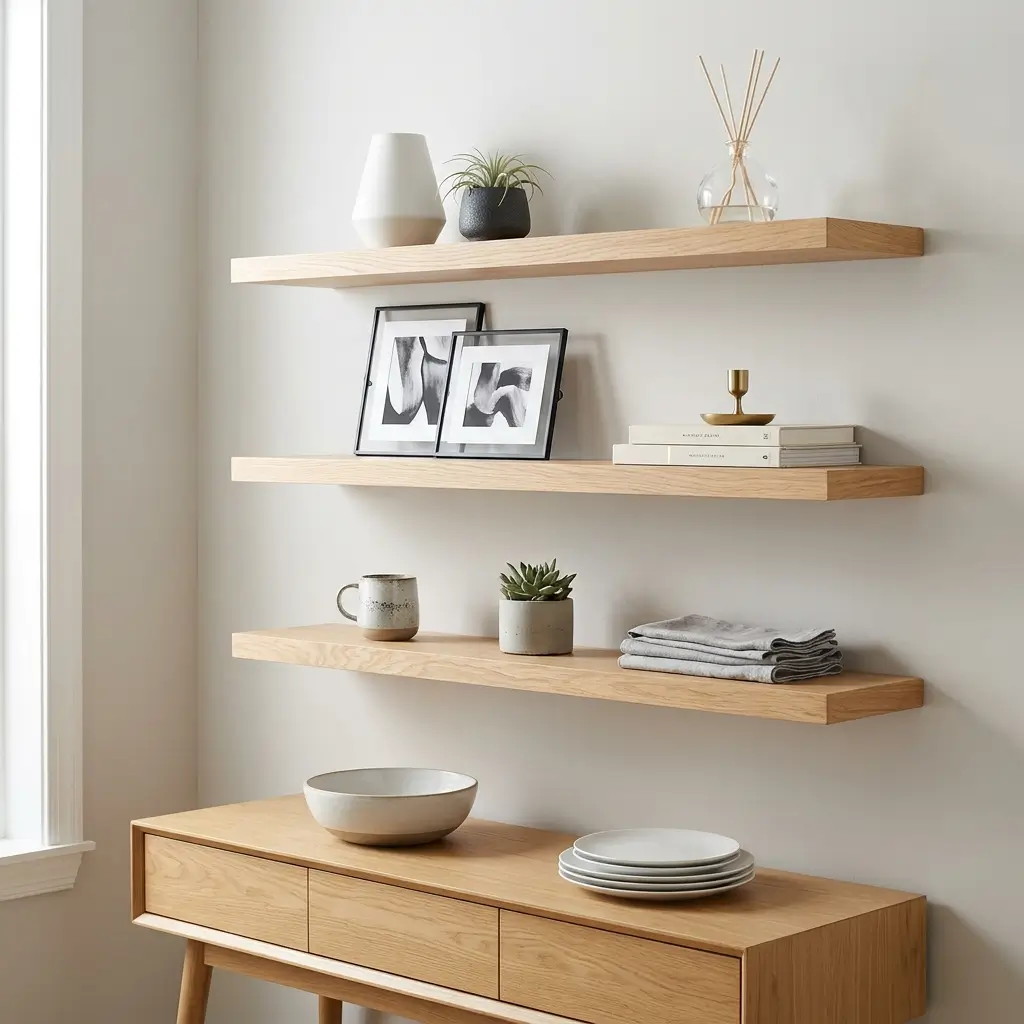
Floating shelves provide a way to display decorative objects when a full cabinet or bookcase would take up too much space. They are particularly useful in dining rooms with an empty wall, a narrow layout, or limited storage options.
You can use them to display ceramic bowls, framed photographs, small plants, glassware, or a few carefully chosen decorative pieces.
How to style floating shelves: Arrange objects in small groups rather than filling every available space. Vary the heights of the items, leave visible gaps, and repeat one or two colors already present in the room.
For example, white ceramics, a small green plant, and a framed print can create a balanced arrangement against a neutral wall. In a darker dining room, lighter objects may stand out more clearly.
Consider the shelf material and finish. Natural wood introduces warmth, while painted shelves can blend into the wall for a quieter appearance.
Installation is important. Use suitable fixings for the wall construction, check the manufacturer’s load limits, and avoid placing heavy objects above seating where they could fall. If you plan to display glassware or frequently used dishes, make sure the shelves are accessible and securely mounted.
Floating shelves are best for carefully selected displays rather than storing every dining accessory. If you need substantial concealed storage, a cabinet may be the more practical solution.
How to Make a Modern Dining Room Feel Warm and Inviting
Modern interiors can sometimes feel stark when every surface is smooth, the palette is limited, and decorative objects are kept to a minimum. A few thoughtful choices can soften the appearance without losing the clean, uncluttered style.
Consider these practical adjustments:
- Layer the lighting: Combine a main ceiling fixture with suitable wall lighting or a nearby lamp. Dimmable lighting lets you adjust the atmosphere for different occasions.
- Introduce natural materials: Wood, linen, wool, and woven textures can soften the appearance of metal, glass, and stone.
- Choose comfortable chairs: Attractive furniture is less useful if people find it uncomfortable during longer meals.
- Use a restrained color palette: Select a dominant neutral and one or two supporting colors to create visual consistency.
- Leave room to move: Keep walkways clear and avoid filling every empty corner with furniture or accessories.
You can apply these changes gradually. Start with the part of the room that feels least functional, then decide whether a decorative update or a furniture change would make the greatest difference.
Common Modern Dining Room Decorating Mistakes to Avoid
Even attractive furniture and accessories can produce an uncomfortable dining room when their size or placement is wrong. Before completing your makeover, check the following details.
Choosing a rug that is too small. When chair legs repeatedly catch on the rug’s edge, the dining area becomes less comfortable to use. Measure the table and available floor space before choosing a rug.
Selecting an oversized light fixture. A dramatic pendant can become the main feature of the room, but it should not obstruct sightlines or overwhelm a small table. Consider the fixture’s diameter, height, and light output.
Buying furniture before measuring. A table may fit the room on paper but leave insufficient space for people to sit down and walk around it. Account for chairs, doors, cabinets, and normal traffic routes.
Using too many decorative accessories. A modern dining room benefits from thoughtful editing. Choose a few items that add color, texture, or personal meaning instead of displaying everything at once.
Ignoring maintenance requirements. Delicate fabrics, highly polished surfaces, and certain natural materials may need more care than expected. Choose finishes that suit your household and daily routines.
Matching everything too closely. A coordinated room does not require identical furniture, colors, or finishes. Repeating a few details across different pieces often creates a more interesting result.
Modern Dining Room Decorating Ideas on a Budget
You do not need to replace your dining table, chairs, and cabinets to create a more contemporary look. If your existing furniture is functional, focus on changes that deliver the greatest visual impact.
| Update | What it can achieve |
|---|---|
| Change the light fixture | Creates a focal point above the table. |
| Add a suitable area rug | Defines the dining zone and introduces texture. |
| Update chair cushions | Adds comfort and a new accent color. |
| Hang one large artwork | Gives an empty wall a clear purpose. |
| Replace cabinet handles | Refreshes existing furniture without replacing it. |
| Add a plant or ceramic centerpiece | Introduces natural color or texture. |
| Rearrange existing accessories | Creates a cleaner look without requiring new purchases. |
Start by identifying the room’s biggest weakness. If it feels dark, review the lighting and wall colors. If it looks crowded, remove unnecessary furniture or accessories before buying anything. If the room feels unfinished, a rug or artwork may provide the missing visual connection.
A simple plan can also help you avoid unnecessary spending. Set a budget, list the items that genuinely need replacing, and compare measurements and maintenance requirements before making purchases.
Frequently Asked Questions
How can I decorate a modern dining room on a small budget?
Keep your existing furniture if it is still in good condition, then focus on one or two noticeable changes. A new pendant light, updated chair cushions, a carefully selected artwork, or a rearranged centerpiece can refresh the room without requiring a complete makeover.
Which colors work best in a modern dining room?
White, beige, taupe, gray, and natural wood tones are versatile starting points. You can introduce darker accents such as black or charcoal, or add muted greens and blues for more color. The best combination depends on the room’s natural light, flooring, furniture, and your personal preferences.
How do I make a small dining room look more spacious?
Choose furniture that fits the room, maintain clear walkways, and avoid oversized decorative pieces. Slim-profile chairs, a round table where appropriate, wall-mounted storage, and transparent furniture can reduce visual bulk. Good lighting and a consistent color palette may also help the space feel more open.
What type of lighting is best above a dining table?
A pendant light or chandelier can provide a focal point and direct illumination toward the table. Choose a size and hanging height that suit the table and ceiling, and consider dimmable lighting for greater flexibility. Additional light sources can help prevent the room from feeling too dark outside mealtimes.
Should dining room furniture all match?
No. Mixing furniture styles and materials can make a dining room feel more personal. To maintain a cohesive appearance, repeat a few colors, finishes, or design details across the table, chairs, lighting, and accessories.
Is a rug necessary under a dining table?
No. A rug can help define the dining area, but it is optional. If the room is too small for a rug that accommodates pulled-out chairs, leaving the floor uncovered may be more practical. If you choose a rug, consider chair movement, cleaning, and slip resistance.
Final Thoughts
A successful modern dining room combines visual simplicity with the practical details that make everyday meals comfortable. The right table, well-planned lighting, suitable seating, and a few carefully chosen accessories can create a room that feels complete without becoming crowded.
You do not need to use all 12 ideas at once. Start with the changes that address your room’s biggest challenges, whether that means improving the lighting, finding a better-sized rug, adding storage, or introducing more texture.
Measure your space, consider how you use it each day, and choose materials that suit your lifestyle. With a few deliberate decisions, your dining room can become a welcoming place for family meals, entertaining, and the ordinary moments that make a home feel personal.