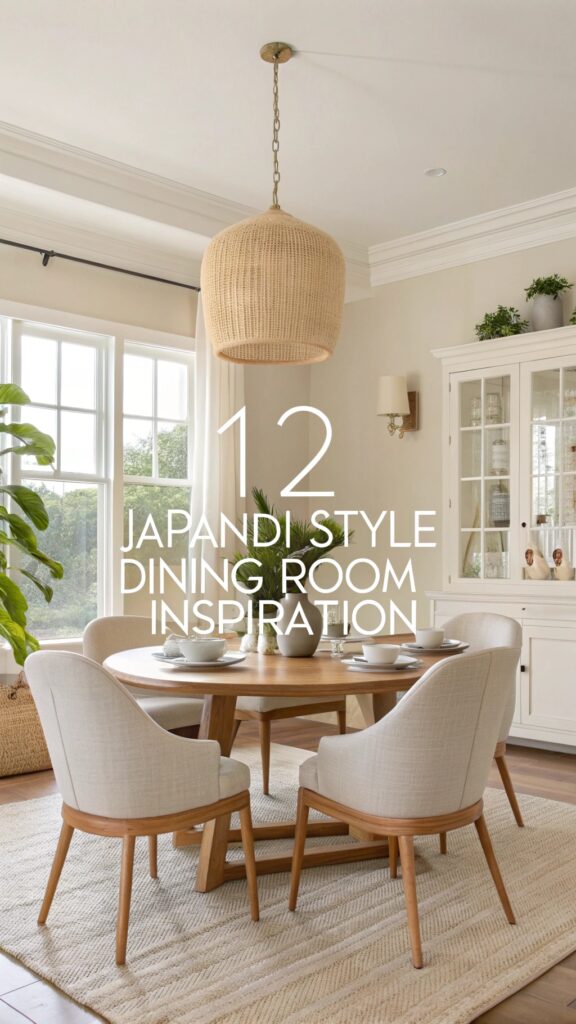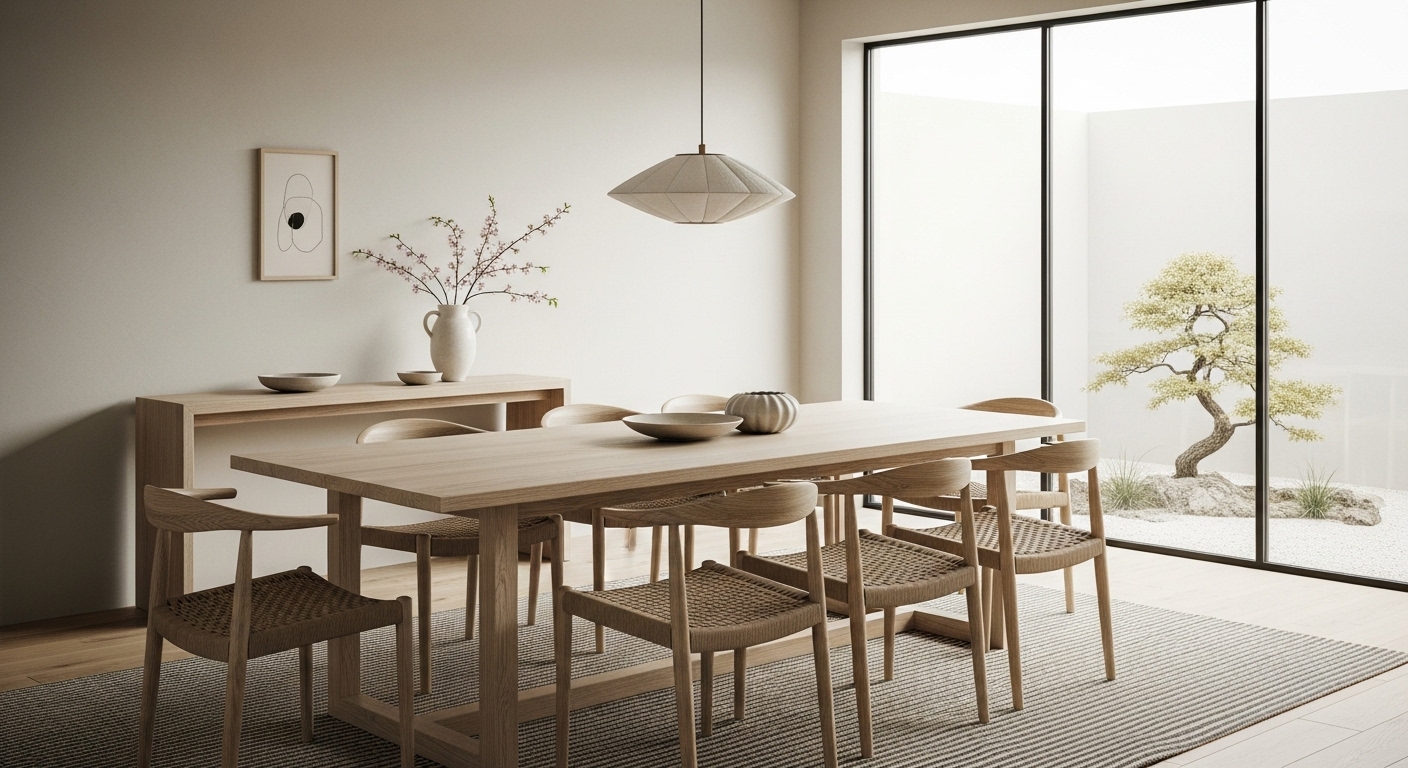
A dining room doesn’t need expensive furniture or lots of decoration to feel inviting. Sometimes, a simple wooden table, comfortable chairs, warm lighting, and a few thoughtful details are all it takes to create a space where people enjoy spending time together.
That’s the appeal of Japandi style. It combines the natural materials and practical simplicity associated with Japanese interiors with the warmth and comfort of Scandinavian design. The result is a dining room that feels uncluttered without looking cold or unfinished.
Whether you’re decorating a small dining corner or updating a spacious open-plan room, these 12 Japandi dining room ideas will help you choose furniture, colors, lighting, and accessories that work together. You can also adapt the ideas to suit your budget and the furniture you already own.
Why Choose Japandi Style?
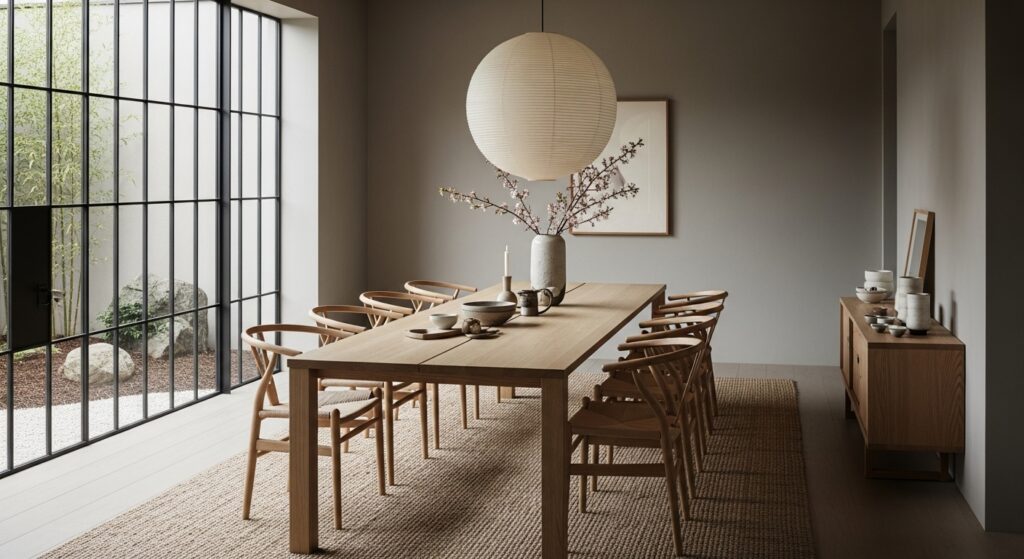
Japandi design is a good choice if you prefer a tidy, understated home with natural textures and functional furniture.
It draws inspiration from Japanese wabi-sabi, which appreciates natural imperfections, and Scandinavian hygge, which emphasizes comfort and everyday well-being.
Rather than filling a room with decorations, the style focuses on a few well-chosen pieces. Wood grain, handmade ceramics, soft fabrics, and carefully placed lighting provide visual interest without making the space feel crowded.
It’s also flexible. You can introduce Japandi elements gradually instead of replacing everything at once.
1. The Central Statement: Light Wood Tables
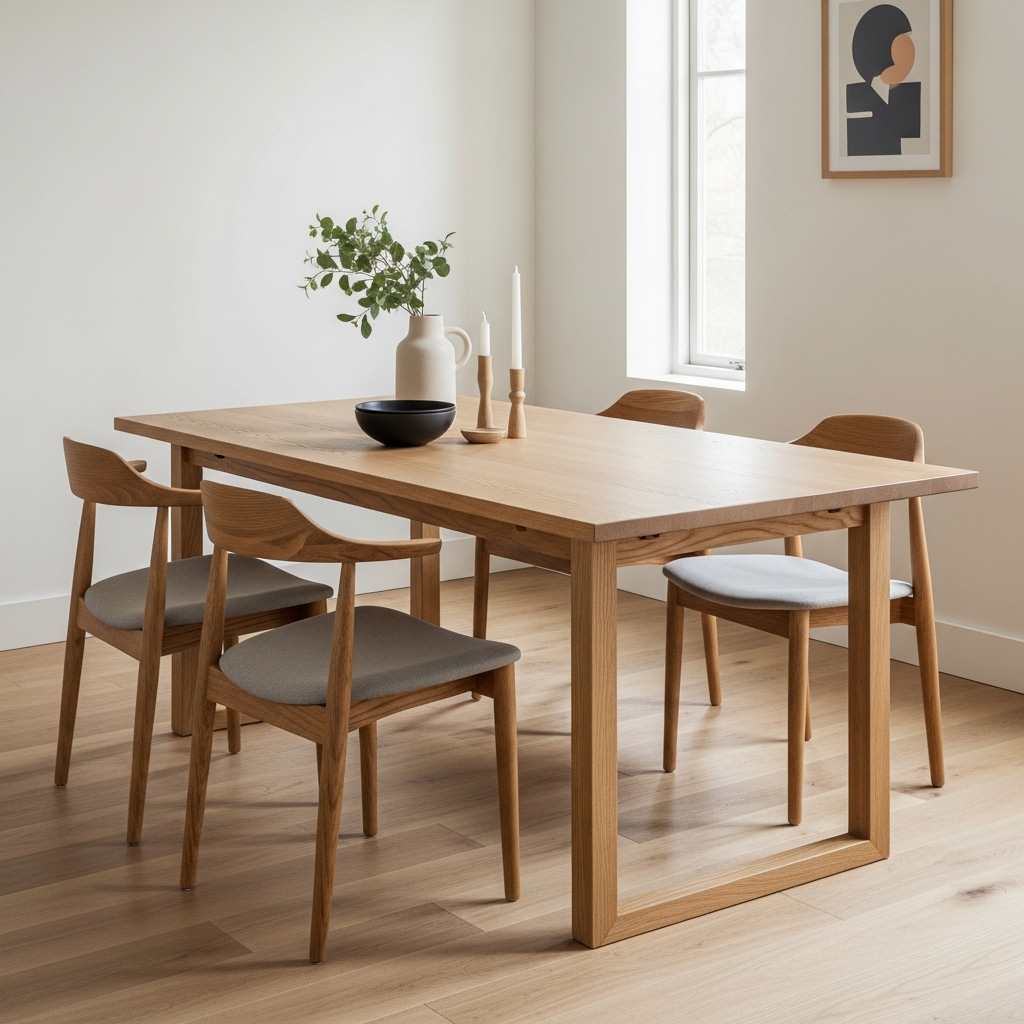
A wooden dining table makes a natural starting point for a Japandi dining room. Oak, ash, and beech are good options if you want a lighter finish that keeps the room feeling open.
Look for a table with a simple silhouette, sturdy legs, and a matte or low-sheen finish. A rectangular table works well in a narrow room, while a round table can make a compact dining area easier to navigate.
Practical tip: Before buying, measure the table and leave enough clearance for chairs to move comfortably. A beautiful table won’t be practical if everyone has to squeeze past it.
2. Embrace Low-Profile Seating Arrangements
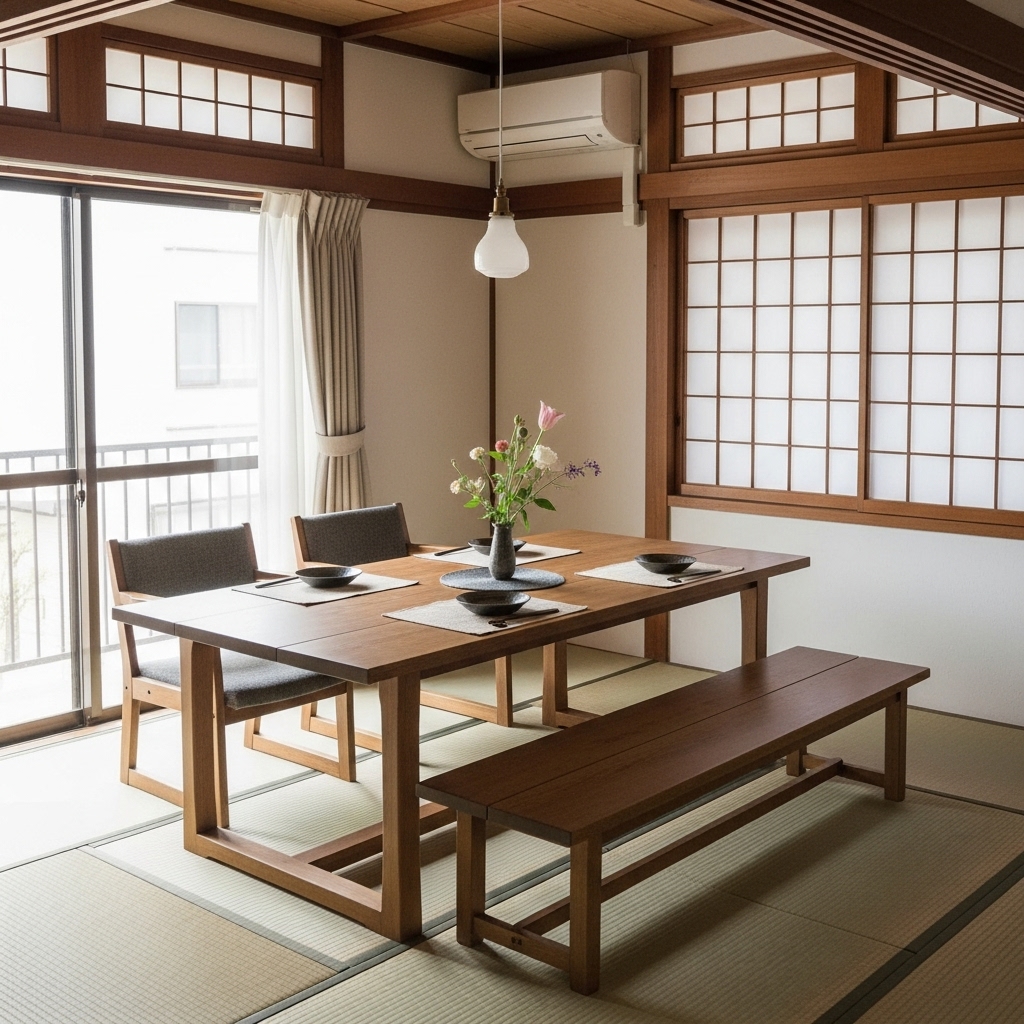
Low-profile furniture can give a dining room a relaxed, grounded appearance. Choose chairs with clean lines, modest backrests, or a simple wooden bench that complements your table.
You don’t need traditional floor seating to capture this look. Standard dining chairs with understated frames can work just as well.
A bench along one side of the table is particularly useful for family meals or when you occasionally need an extra seat. Just make sure the seat height allows everyone to sit comfortably at the table.
3. Soften the Edges with Curved Chairs
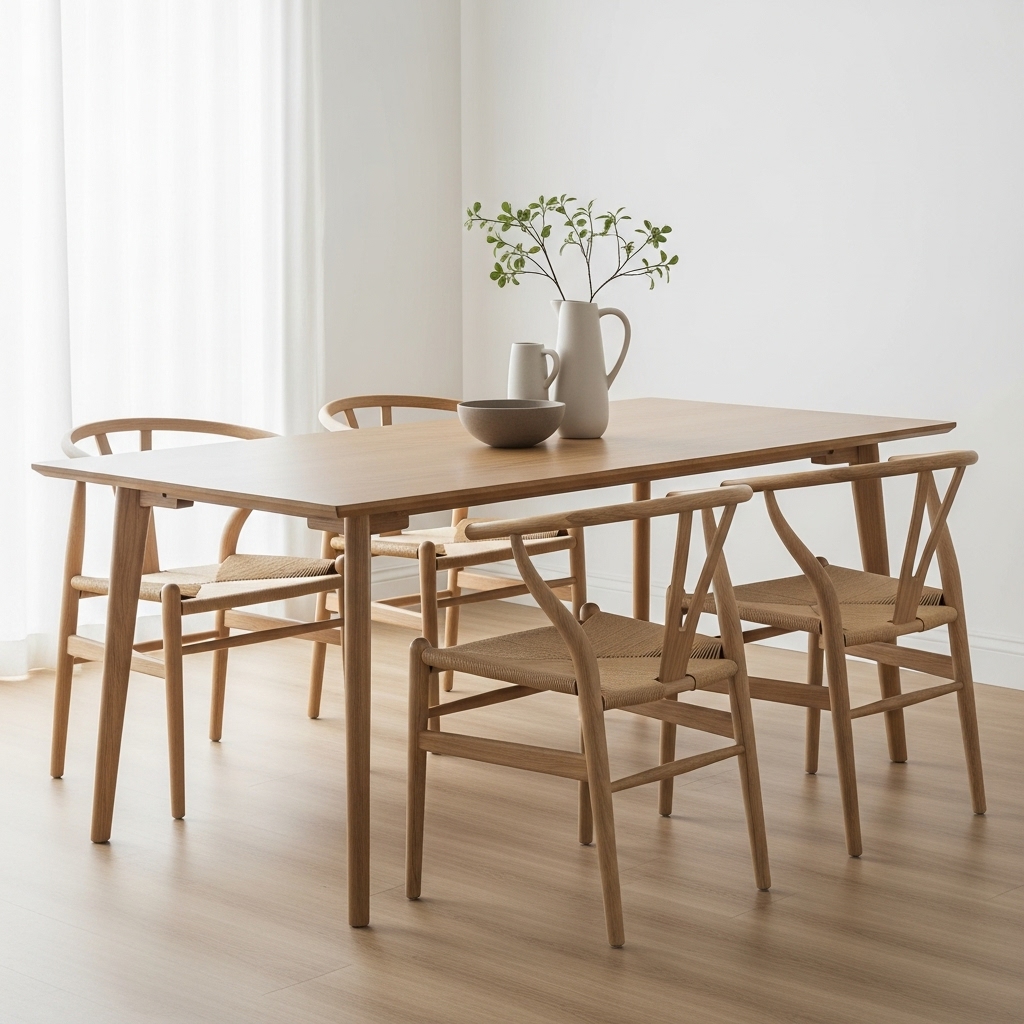
Japandi interiors balance straight lines with softer shapes. If your dining table has a rectangular top and angular legs, curved chairs can make the overall arrangement feel less rigid.
Consider bentwood chairs, rounded wooden backs, or the familiar Wishbone-style chair with its woven seat. Natural finishes and simple construction help maintain the look.
For a budget-friendly option, keep your existing chairs and add just two curved accent chairs at the ends of the table. This creates contrast without requiring a complete furniture makeover.
4. The Warmth of Paper Lantern Lighting
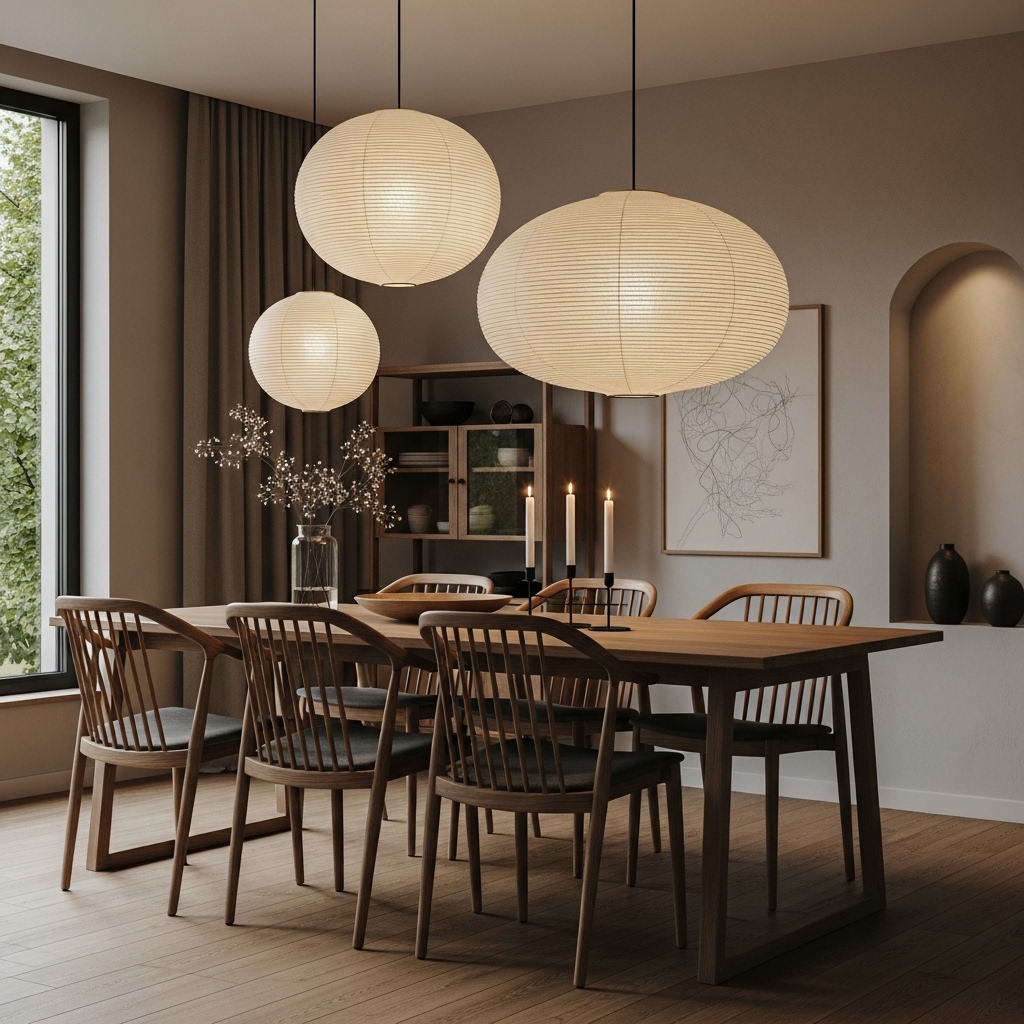
Lighting can change the entire mood of a dining room. A paper pendant above the table introduces a soft shape and diffuses light, making it a natural fit for Japandi interiors.
Choose a rounded or sculptural shade in white, cream, or a warm neutral. Position it centrally over the dining table, with the bottom high enough to avoid obstructing people’s view across the table.
For everyday meals, use a warm-white bulb and avoid lighting that feels harsh. If you have a dimmer, you can make the room brighter for cleaning and softer for dinner.
5. Integrating Wabi-Sabi Ceramics and Decor
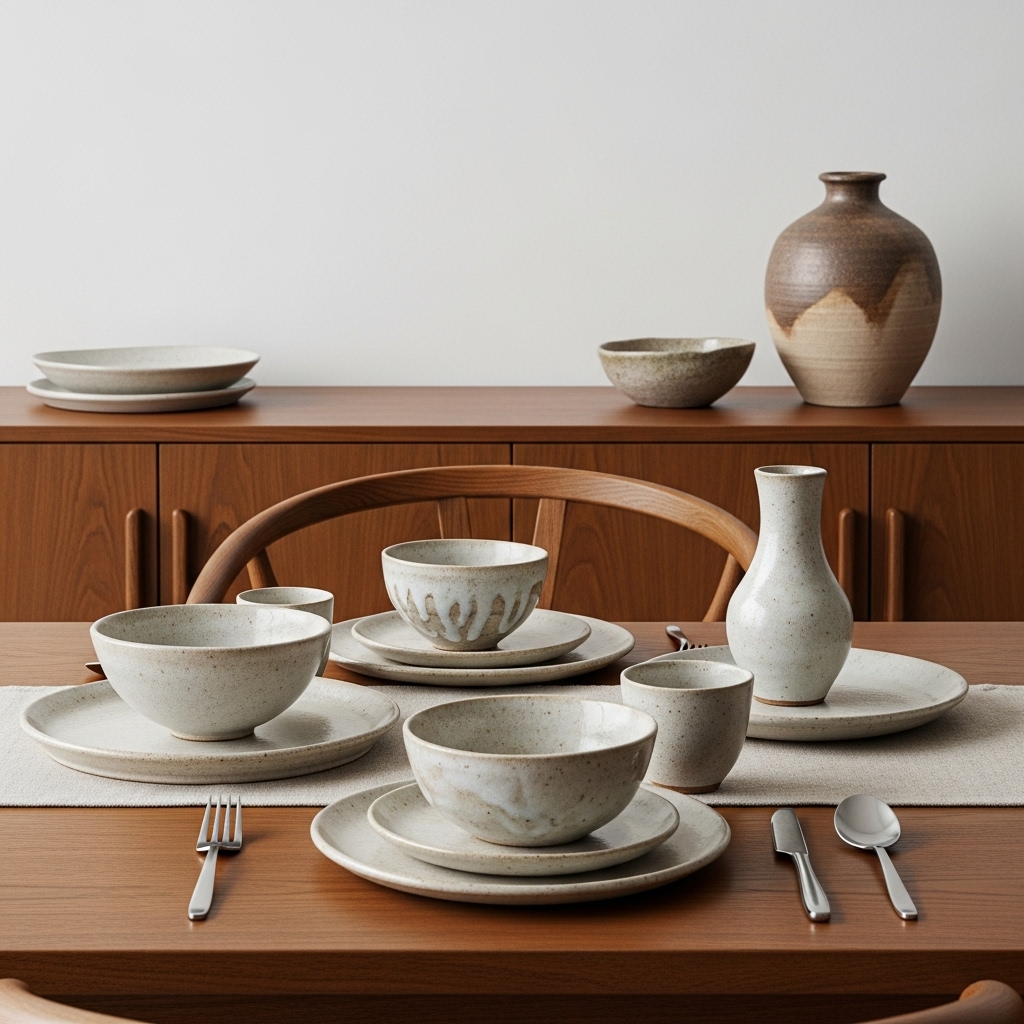
Handmade-looking ceramics add character to a minimalist dining room. Look for bowls, plates, and vases with earthy glazes, uneven edges, or subtle variations in texture.
You don’t need a collection of expensive pottery. A single ceramic vase on a sideboard or a few coordinated bowls on the table can introduce the same natural, understated feel.
Keep the arrangement simple enough that it doesn’t interfere with serving food. The aim is to use decorative objects that are beautiful but still practical.
6. Layering Textures for Hygge Comfort
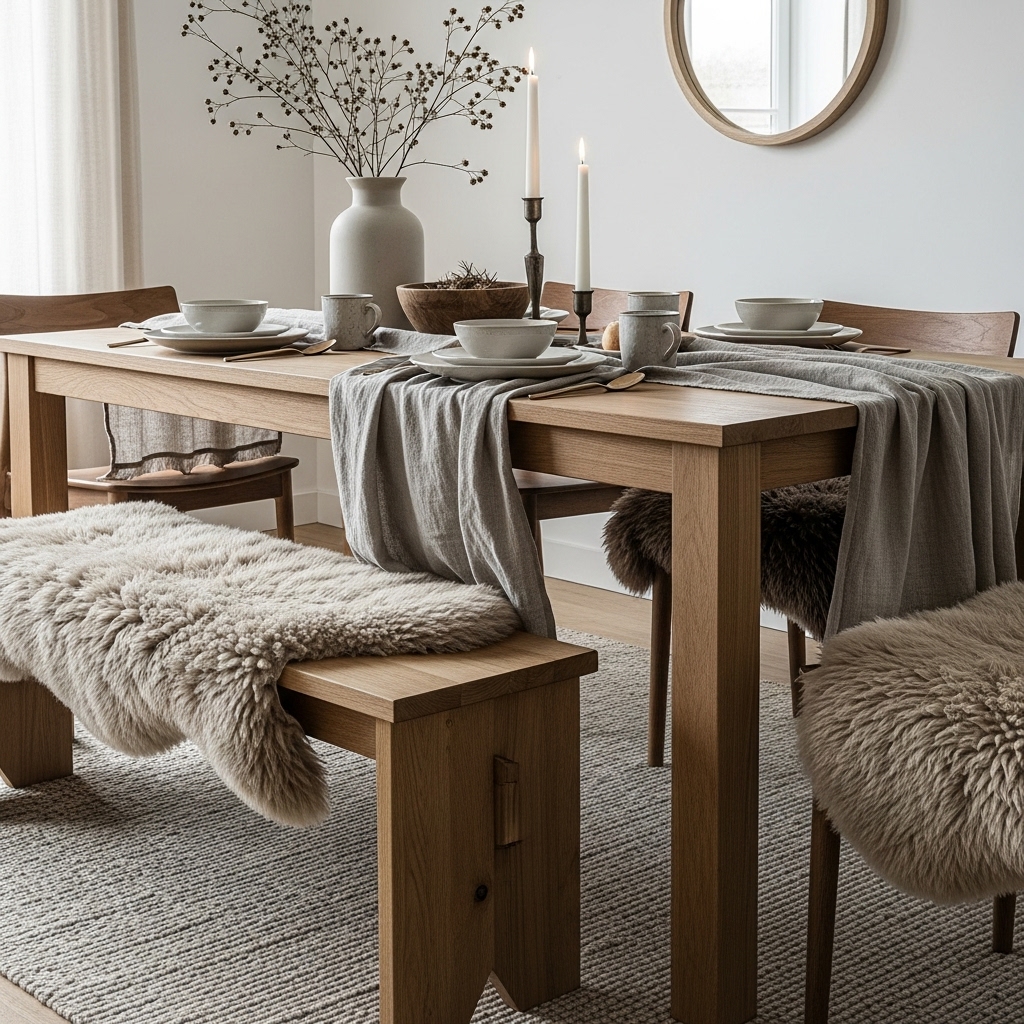
Neutral colors can sometimes make a dining room feel flat. Different textures help solve that problem without introducing too many new shades.
Combine a wooden table with a linen runner, woven placemats, cotton curtains, or upholstered dining chairs in a soft natural color. A flat-weave rug can also define the dining area in an open-plan room.
Choose a rug large enough for chairs to remain on it when pulled away from the table. In busy households, a washable or easy-to-clean option may be more practical than a delicate wool rug.
7. A Palette of Warm Neutrals and Earth Tones
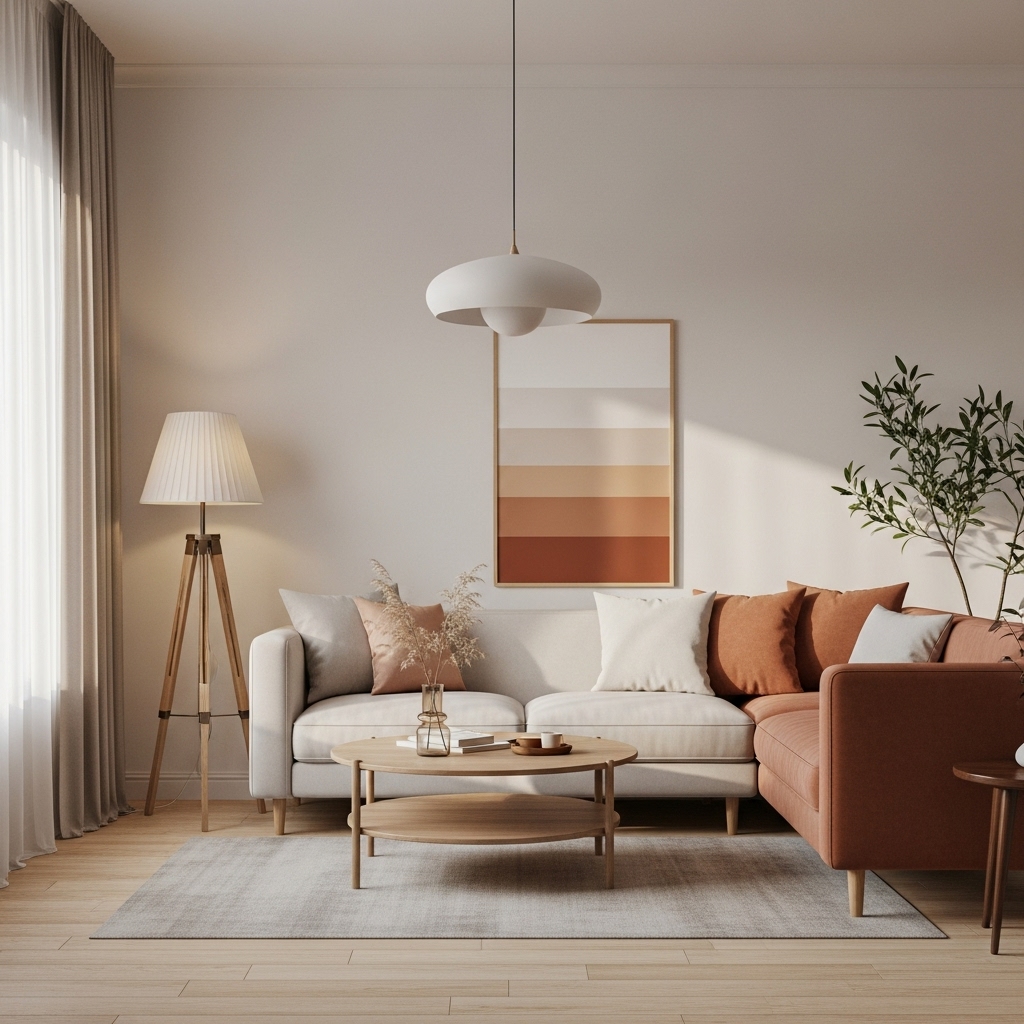
Japandi dining rooms often feature warm white, cream, beige, oatmeal, and soft gray. These shades create a quiet background for wooden furniture and textured accessories.
For more depth, introduce muted sage, olive green, clay, or terracotta through cushions, ceramics, artwork, or a painted accent wall.
You don’t need to use every color at once. Start with two or three complementary shades and repeat them throughout the room so the space feels coordinated.
Practical tip: Test paint samples on different walls before committing. Natural and artificial light can make the same neutral color appear noticeably different throughout the day.
8. Minimalist Window Treatments for Natural Light
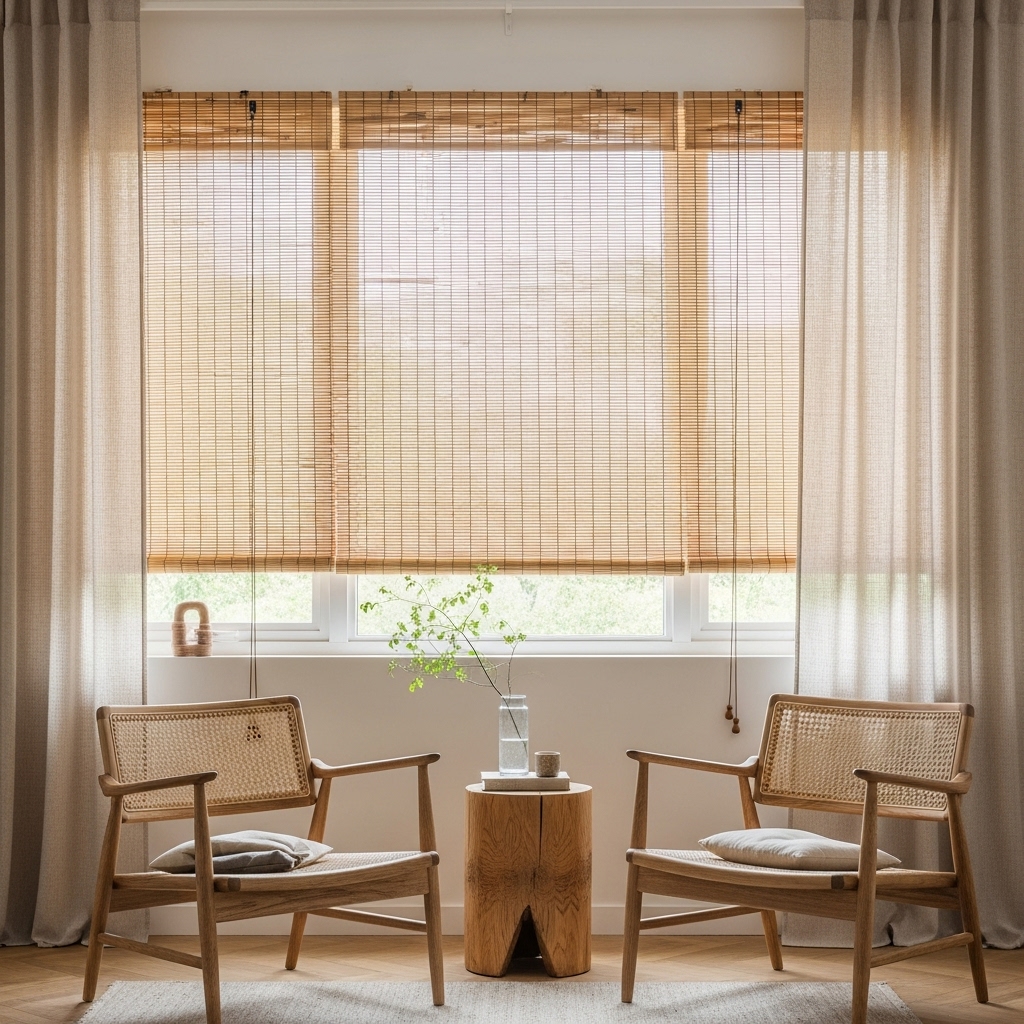
Natural light helps highlight the grain of wooden furniture and the texture of fabrics. Light-filtering curtains or simple bamboo blinds can support this look without drawing too much attention to the windows.
Sheer linen-look curtains work well when privacy is less of a concern. For rooms that face a busy street or neighboring buildings, choose lined curtains or adjustable blinds instead.
Hang curtains neatly and avoid heavy decorative tiebacks or elaborate patterns. Simple window treatments keep the focus on the dining furniture and the light entering the room.
9. Bringing the Outdoors In with Greenery
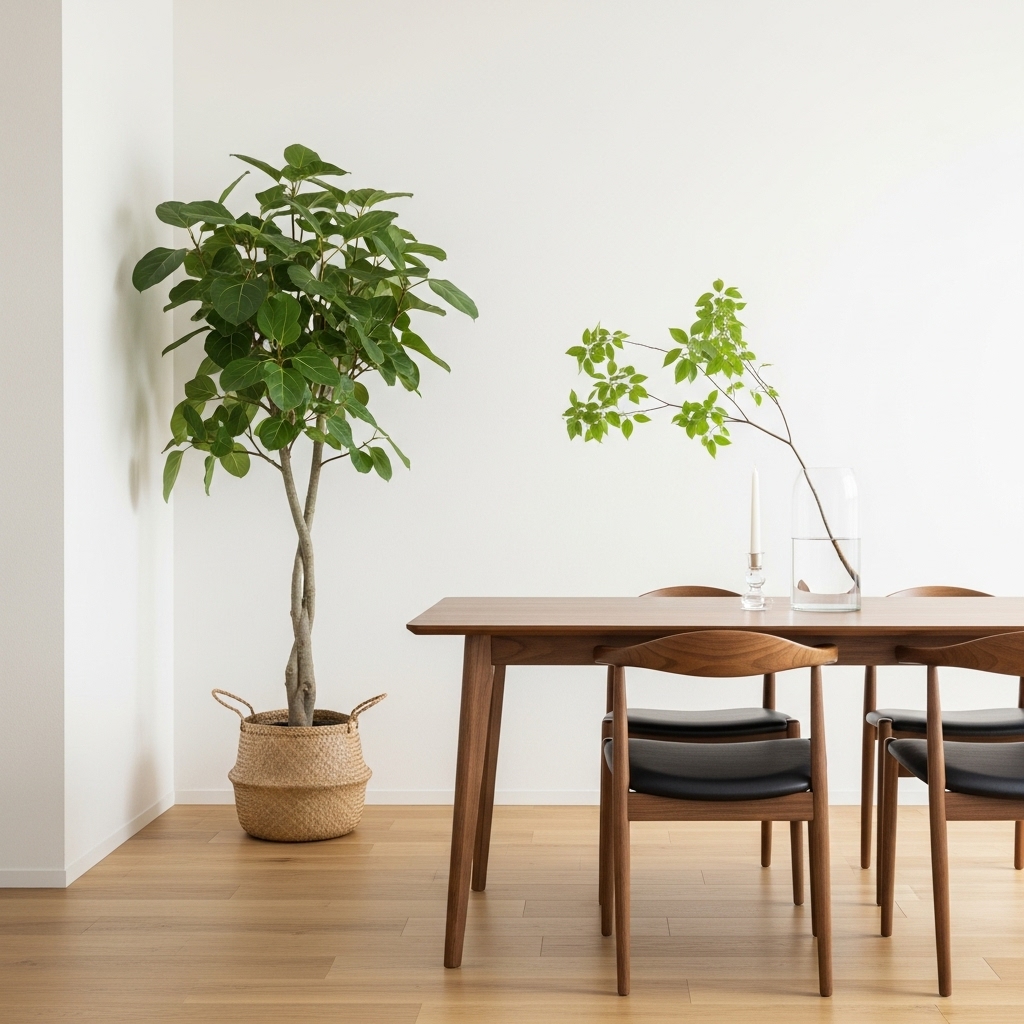
A plant or a few branches can add a welcome touch of color to a neutral dining room. The key is choosing greenery that suits the available space rather than filling every corner.
A tall indoor tree can work beside a sideboard or near a bright window. On the dining table, a small potted plant or a glass vase with a single branch makes a more practical centerpiece than a large arrangement.
Choose plants according to the light in your home and the care you can provide. If the dining room is dim, select a suitable low-light plant or use a simple branch arrangement instead.
10. Strategic Use of Black Accents
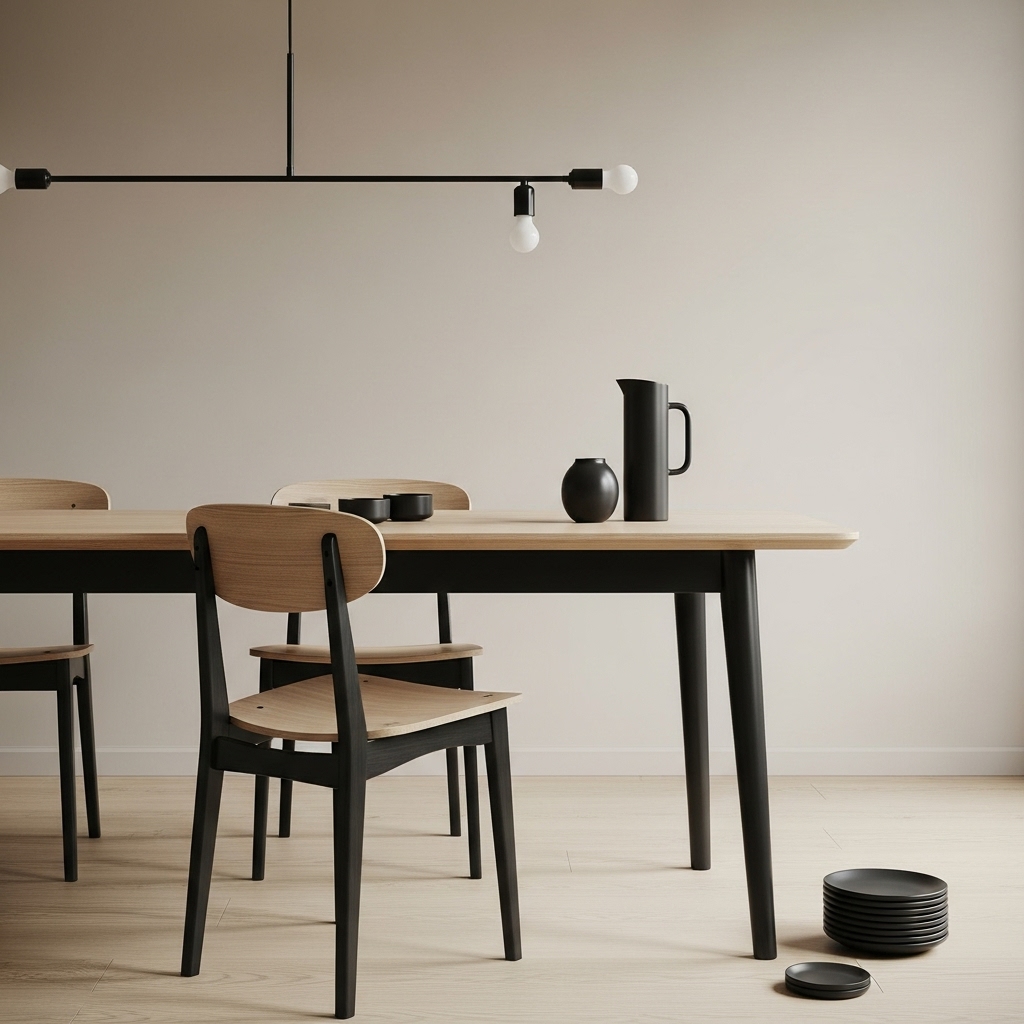
Light wood, cream walls, and beige fabrics can look beautiful together, but a little contrast helps define the room. Matte black accents provide that definition without requiring a darker overall color scheme.
Try a black pendant light, slender chair legs, a dark-framed artwork, or a small ceramic vase. These details can connect different parts of the room and prevent the palette from feeling too uniform.
Start with one or two accents and see how they look against your existing furniture. Too many dark elements can overpower a small dining area, so keep the balance intentional.
11. Functional and Hidden Storage Solutions
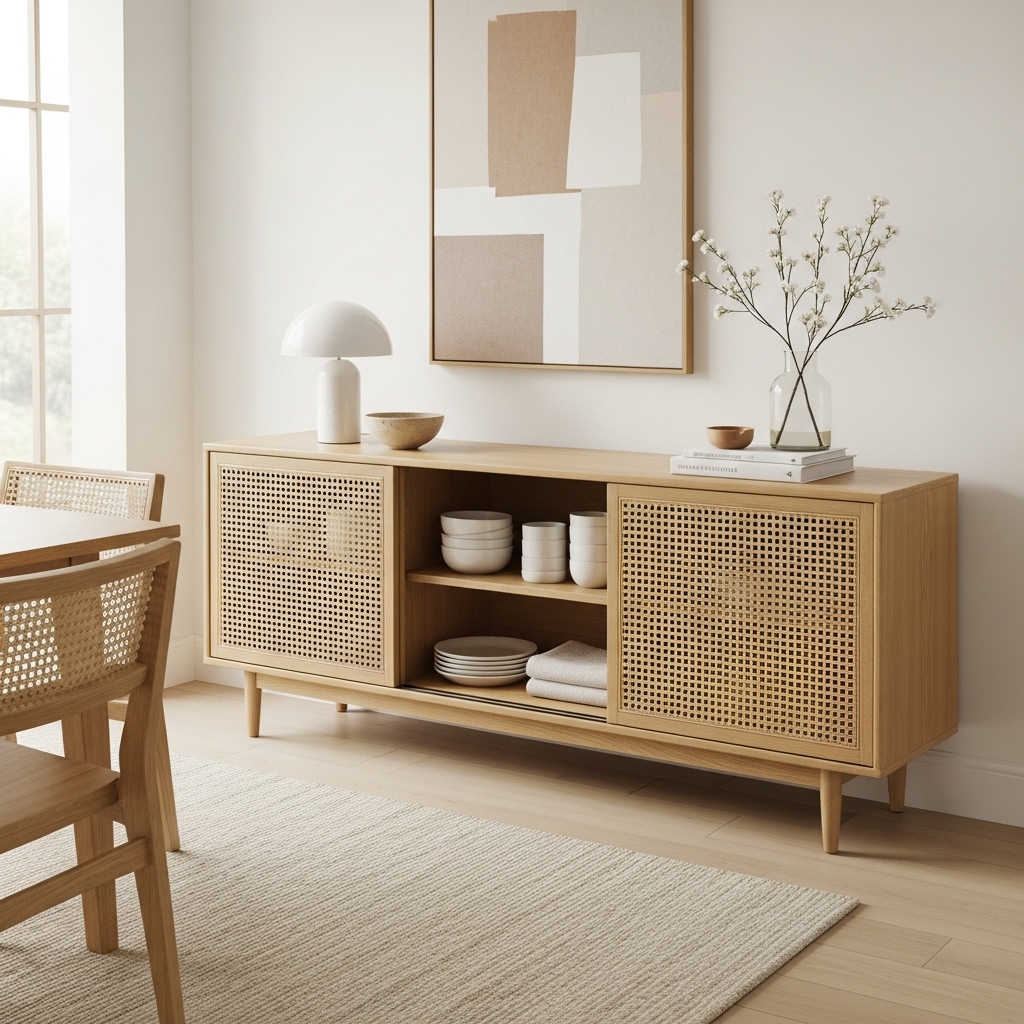
A tidy dining room is easier to maintain when everyday items have a proper place. A simple sideboard or low cabinet can store plates, serving dishes, table linens, and other dining essentials.
Choose a piece with clean fronts, discreet handles, or sliding doors. Wood finishes and understated detailing help it blend with the rest of the room.
Keep the top useful rather than crowded. A small lamp, a ceramic vase, or a framed print is usually enough. If you’re decorating on a budget, an existing cabinet can work well after a simple refresh with new handles or a more suitable finish.
12. Slatted Wood Details and room Dividers
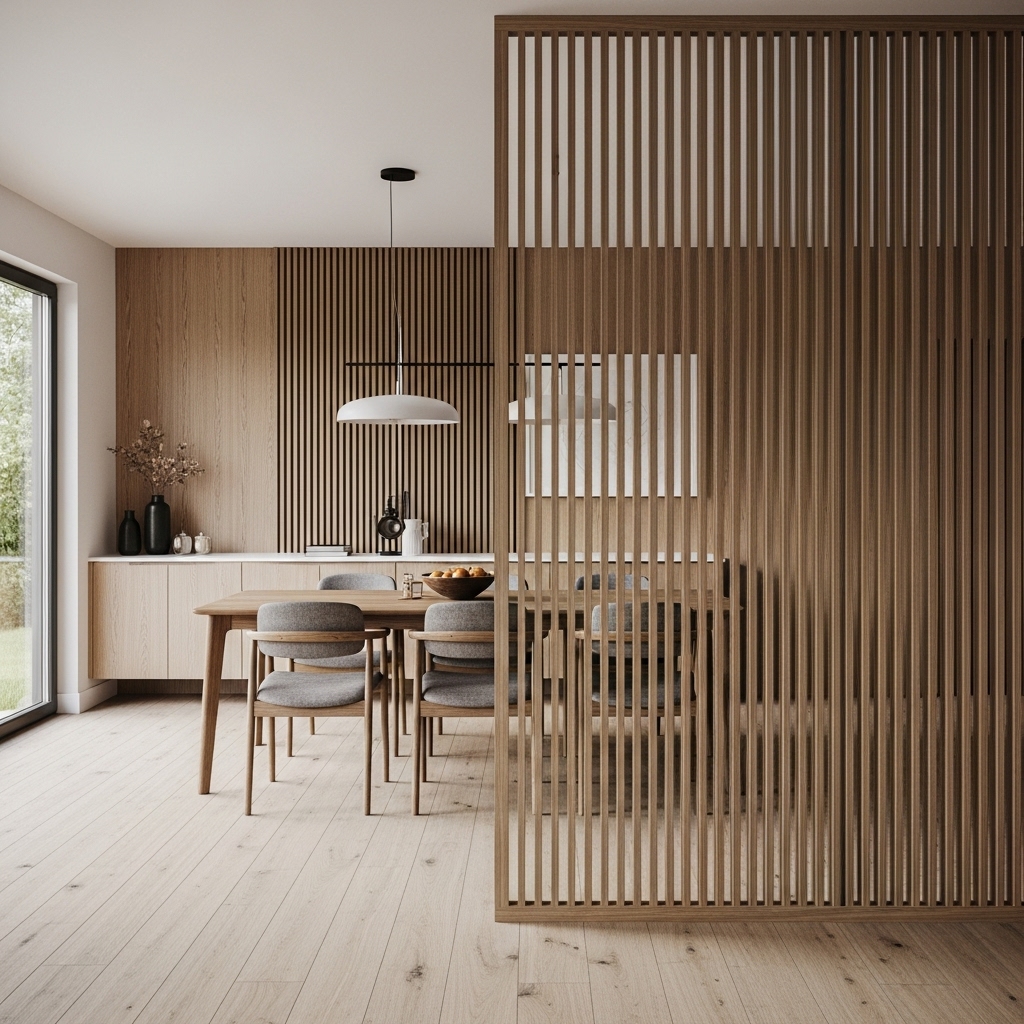
Wooden slats add pattern and depth while keeping the overall design simple. They can be used on a feature wall, as a decorative screen, or as a divider between a dining area and a living room.
In an open-plan home, a slatted screen helps distinguish the dining space without completely blocking the view or available light. Vertical slats can also draw the eye upward, making the room feel taller.
You don’t need to cover an entire wall to achieve this effect. A small screen or a limited section of slatted detailing can introduce the same architectural interest at a lower cost.
Tips for Achieving the Look
- Declutter Ruthlessly: Keep surfaces clear. Only display items that are functional or hold deep personal significance.
- Invest in Quality: Since there is less furniture, the pieces you choose should be well-made and durable.
- Mix Wood Tones: Don’t be afraid to mix light oak with slightly darker walnut; it adds depth, provided the undertones match.
- Focus on Flow: Ensure there is ample space to walk around the table; the negative space is just as important as the furniture.
Frequently Asked Questions
Q: Can I use dark wood in a Japandi dining room? A: Yes, while light wood is more common in Scandinavian design, darker woods are traditional in Japanese interiors. Using dark wood adds sophistication and contrast.
Q: Is Japandi expensive to achieve? A: Not necessarily. While it emphasizes quality, the minimalist nature means you buy fewer items. You can also upcycle existing furniture by sanding down finishes to a matte, natural look.
Q: Can I add color to a Japandi room? A: Yes, but keep it muted. Soft pastels, olive greens, or rust tones work well. Avoid bright, primary colors that disrupt the calm.
Conclusion
Creating a Japandi style dining room is about more than just following a trend; it is about curating a space that fosters peace and togetherness.
By combining the best elements of Scandinavian comfort and Japanese minimalism, you can build a dining area that is timeless, functional, and undeniably beautiful.
Start with a few key changes perhaps a new light fixture or decluttering your sideboard and slowly layer in the natural textures and warm tones that define this serene aesthetic. Simplicity, after all, is the ultimate sophistication.