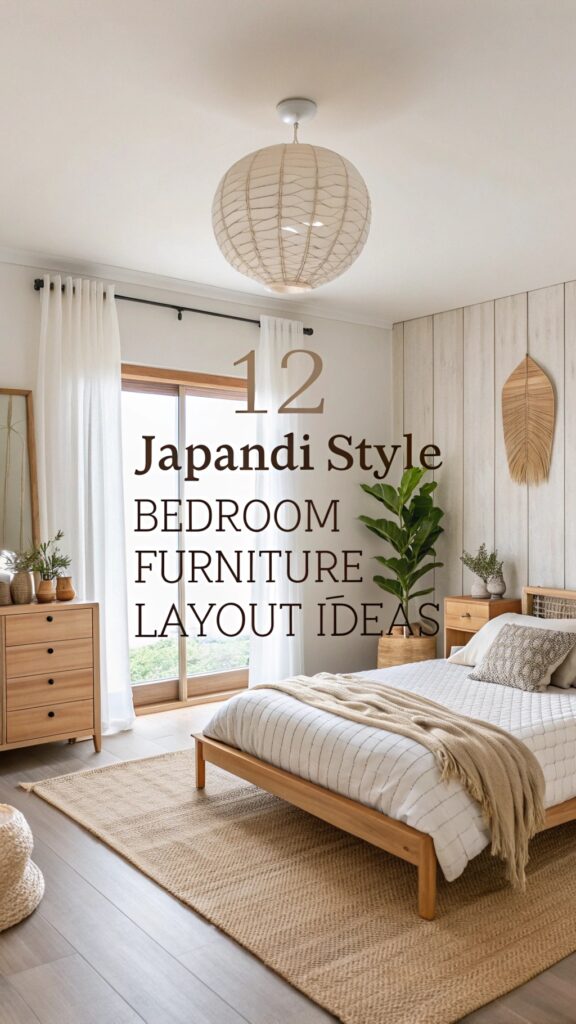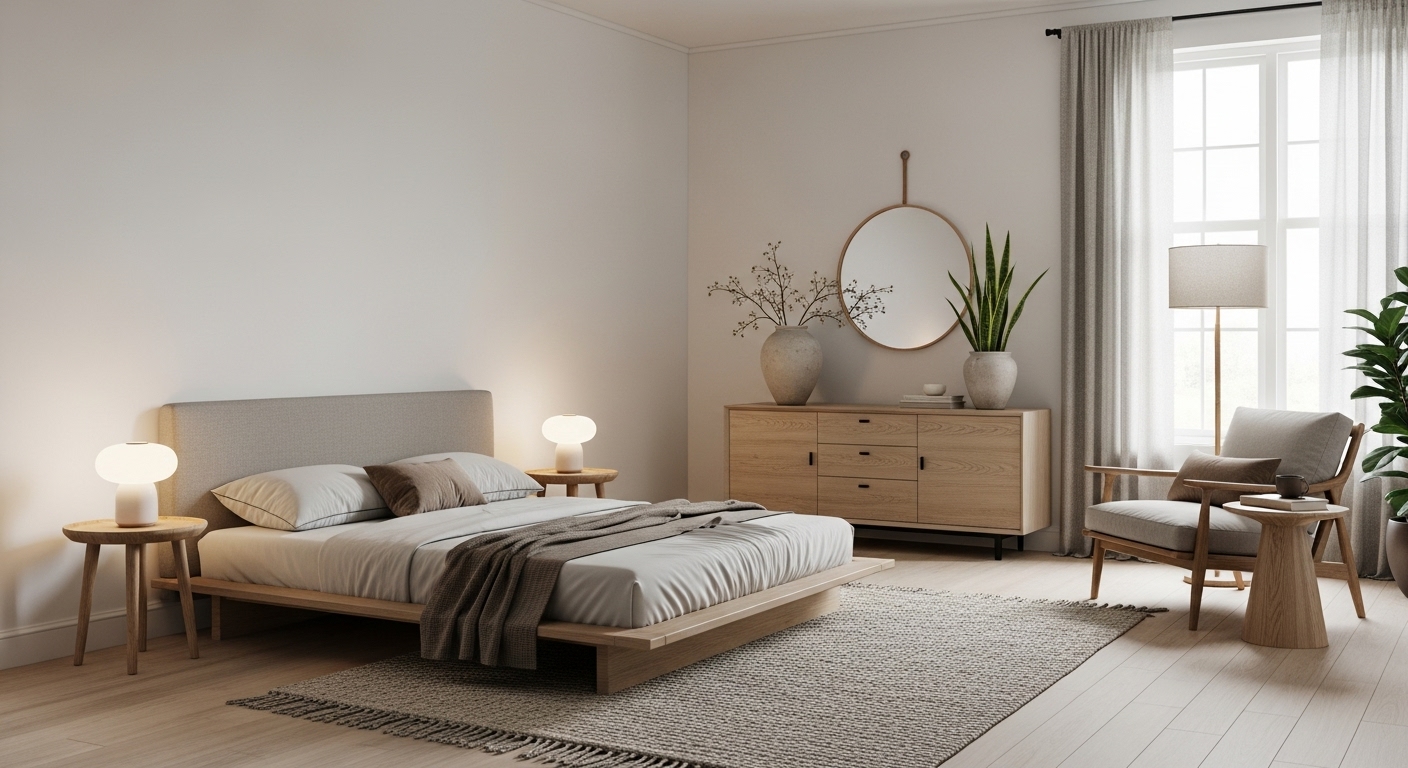
If you have been searching for a way to transform your sleeping space into a sanctuary of peace, the Japandi aesthetic might be your perfect answer.
A harmonious hybrid of Japanese rustic minimalism and Scandinavian functional warmth, this style isn’t just about decor it is about how you arrange your space to promote flow and tranquility.
By focusing on intentional placement and breathing room, you can create a bedroom that feels both cozy and curating. Here are 12 furniture layout ideas to help you achieve that perfect Zen balance.
1. The Low-Profile Anchor
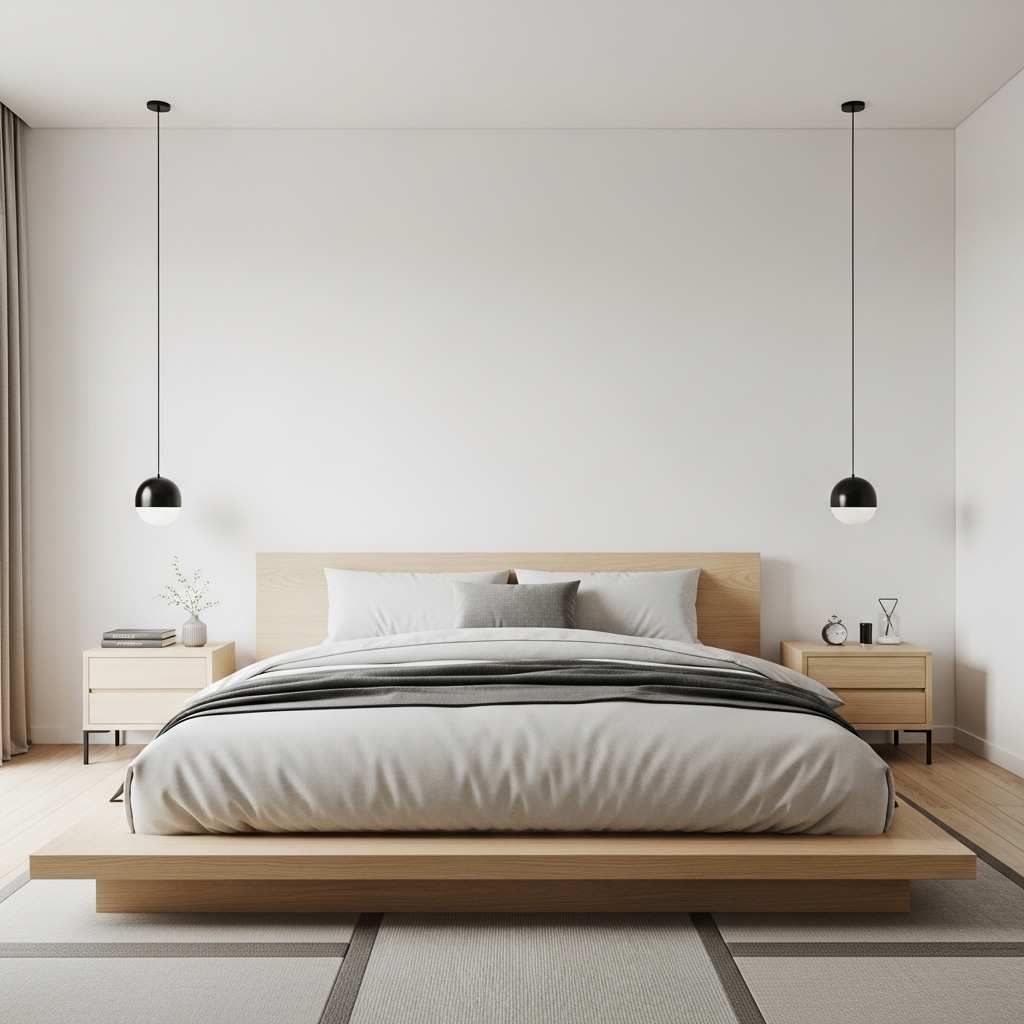
Start by grounding the room with a low platform bed placed strictly in the center of the main wall. Japandi style relies heavily on being close to the earth to encourage a sense of grounding and stability.
By centering the bed, you create a symmetrical focal point that instantly calms the eye upon entering. Ensure there is ample walking space on either side to maintain an airy feel.
This layout prioritizes negative space, allowing the energy of the room to flow freely around your sleeping area without obstruction.
2. Floating Nightstand Symmetry
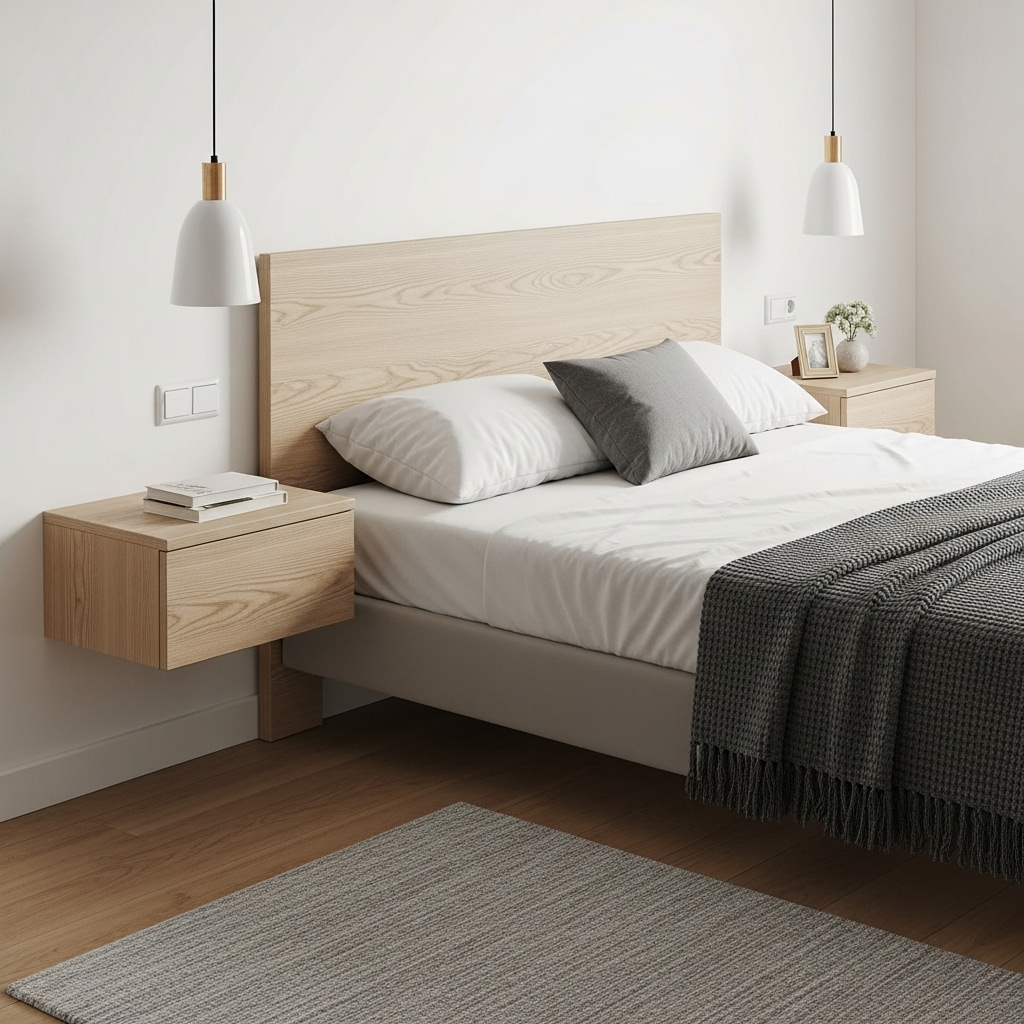
To enhance the feeling of spaciousness in a smaller bedroom, mount floating nightstands on the wall on either side of your bed. This layout trick keeps the floor visible and uncluttered, which is a hallmark of Japanese minimalism.
By elevating your storage, you create a visual lightness that makes the room feel larger and more open. Ensure they are aligned perfectly with the height of your mattress to maintain clean, uninterrupted lines. This arrangement prevents the furniture from feeling heavy or boxy, contributing to an overall sense of weightlessness.
3. The Asymmetrical Wabi-Sabi Corner
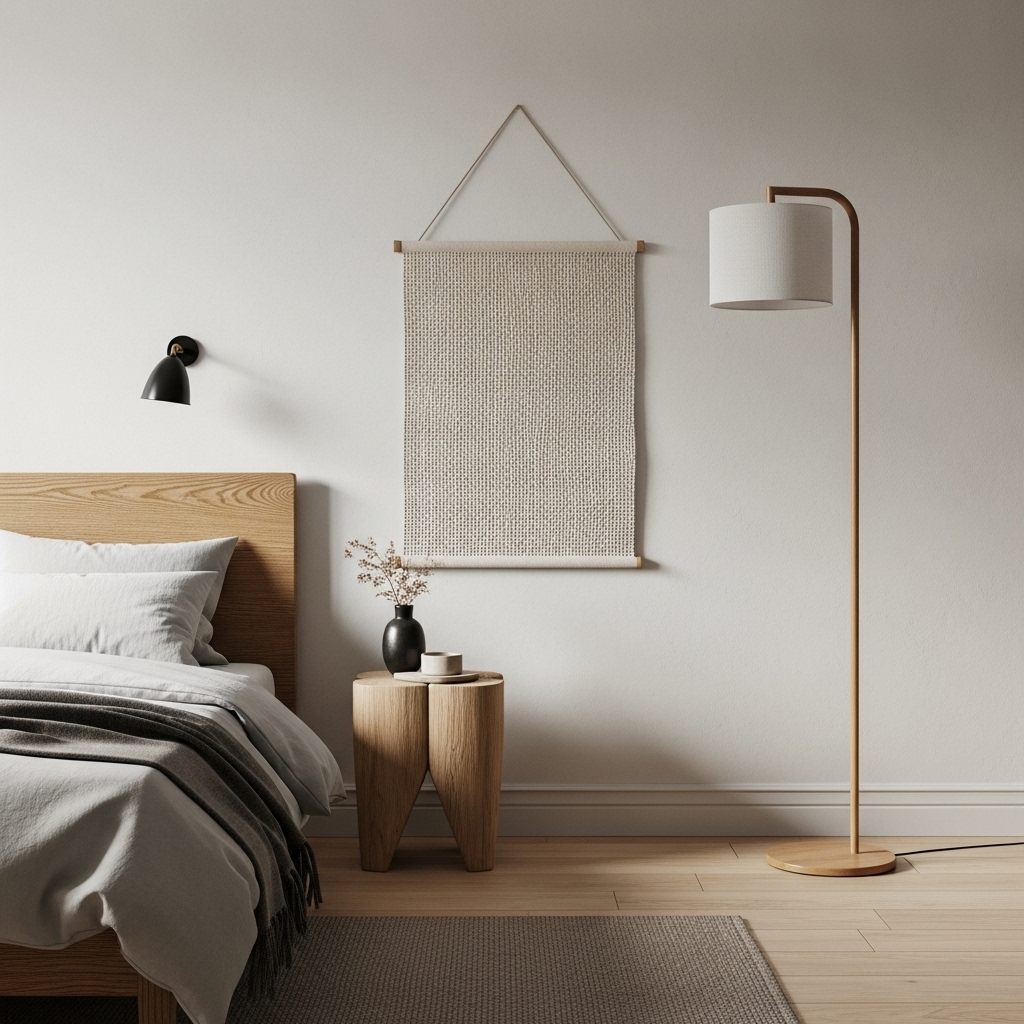
Embrace the concept of wabi-sabi finding beauty in imperfection by arranging your furniture asymmetrically.
Instead of matching bedside tables, place a simple wooden stool on one side and a tall, slender floor lamp on the other. This layout choice breaks the rigid rules of traditional Western design, offering a more organic and relaxed feel.
It encourages a visual journey across the room rather than a static stare. Balance the visual weight by placing a piece of textured wall art above the lower side, ensuring the composition feels intentional rather than accidental.
4. The Shoji Screen Divider
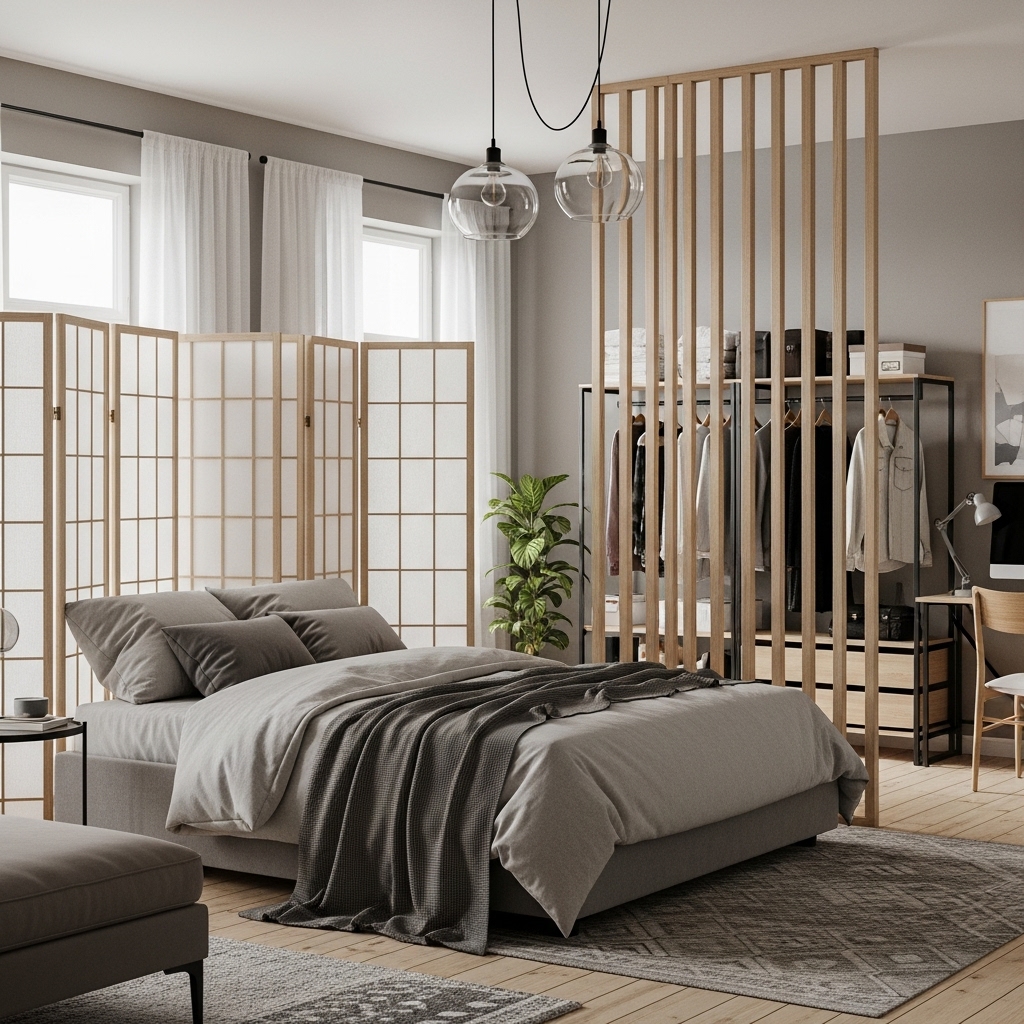
If you have a larger bedroom or a studio apartment, use a Shoji screen or a slat wood divider to zone your space without blocking light.
Place the screen at the foot of the bed or to the side to separate the sleeping area from a dressing zone or home office. This layout creates a “room within a room” effect, offering privacy while maintaining the soft, diffused light characteristic of Scandinavian homes.
It allows you to hide clothes racks or workspaces, ensuring that your view from the bed remains perfectly serene and clutter-free.
5. The Window-Facing Retreat
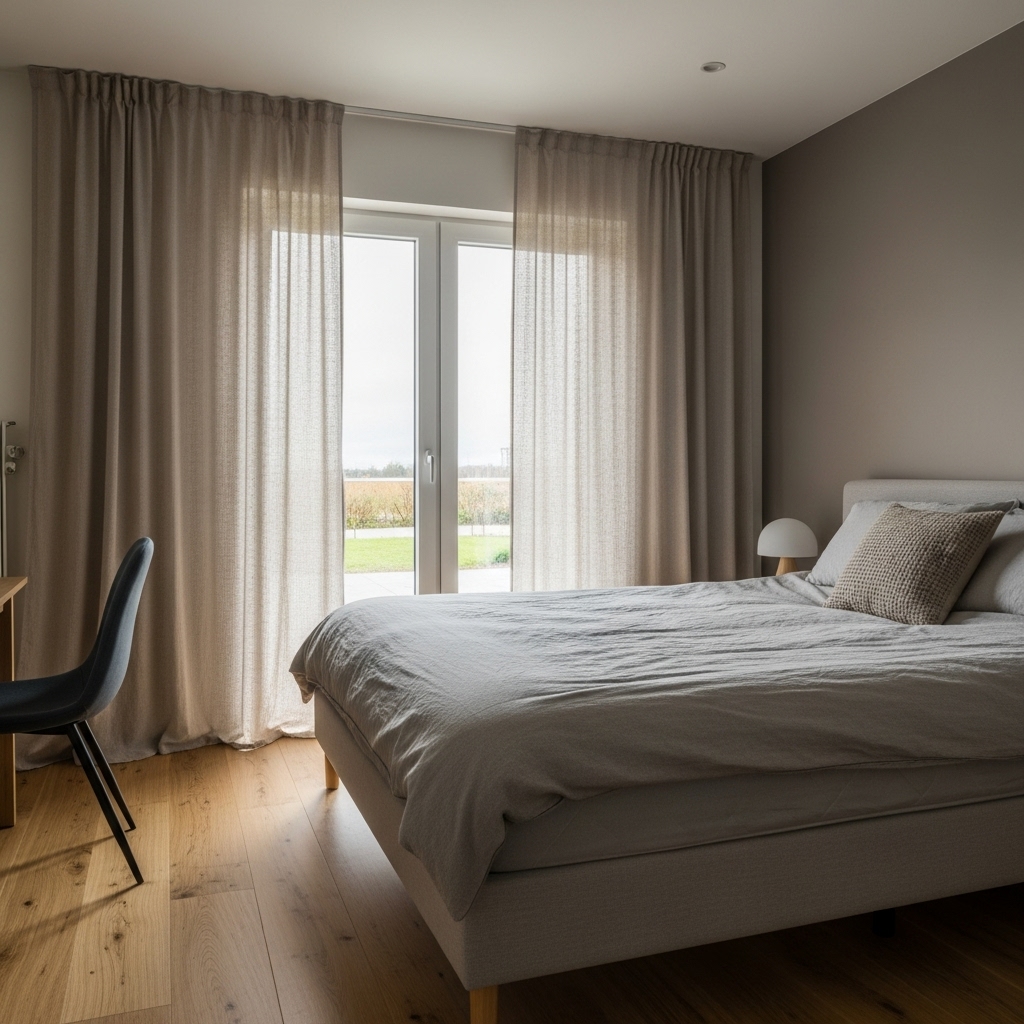
Orient your bed so that it faces the window, allowing natural light to be the first thing you see in the morning. Japandi style deeply values a connection to nature, and this layout maximizes that relationship.
If privacy is a concern, use sheer linen curtains that soften the view while letting in the glow. Position the bed far enough away to avoid drafts but close enough to feel connected to the outdoors.
This arrangement turns the changing seasons and natural daylight into a living element of your bedroom’s interior design.
6. The Meditation Nook
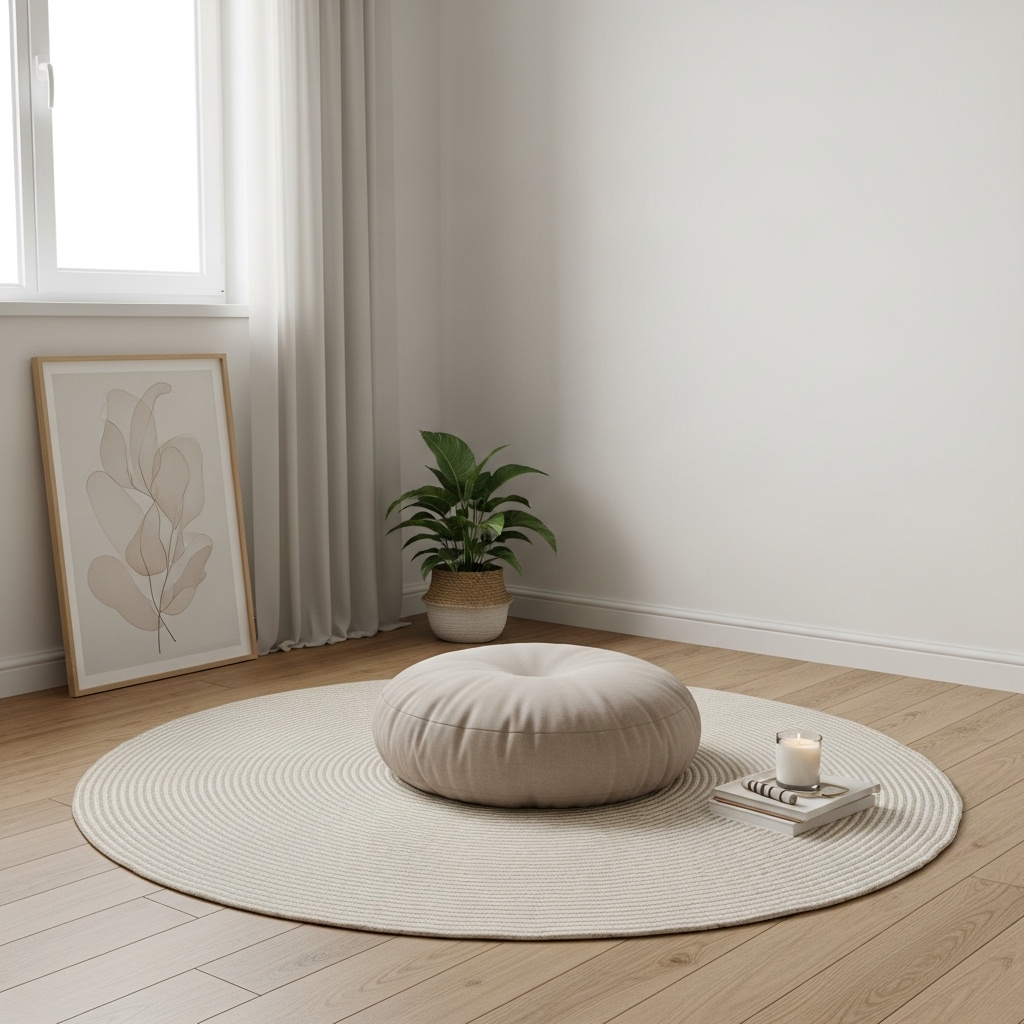
Dedicate a specific corner of the room solely to mindfulness by keeping it free of heavy furniture. Place a round tatami mat or a soft, neutral floor cushion in an empty corner, perhaps accompanied by a single low shelf for a candle or plant.
This layout prioritizes “Ma” the Japanese concept of negative space and serves as a physical reminder to pause and breathe. By leaving this area intentionally sparse, you prevent the room from feeling overstuffed and create a designated sanctuary for yoga, meditation, or simply quiet contemplation before sleep.
7. The Linear Wardrobe Wall
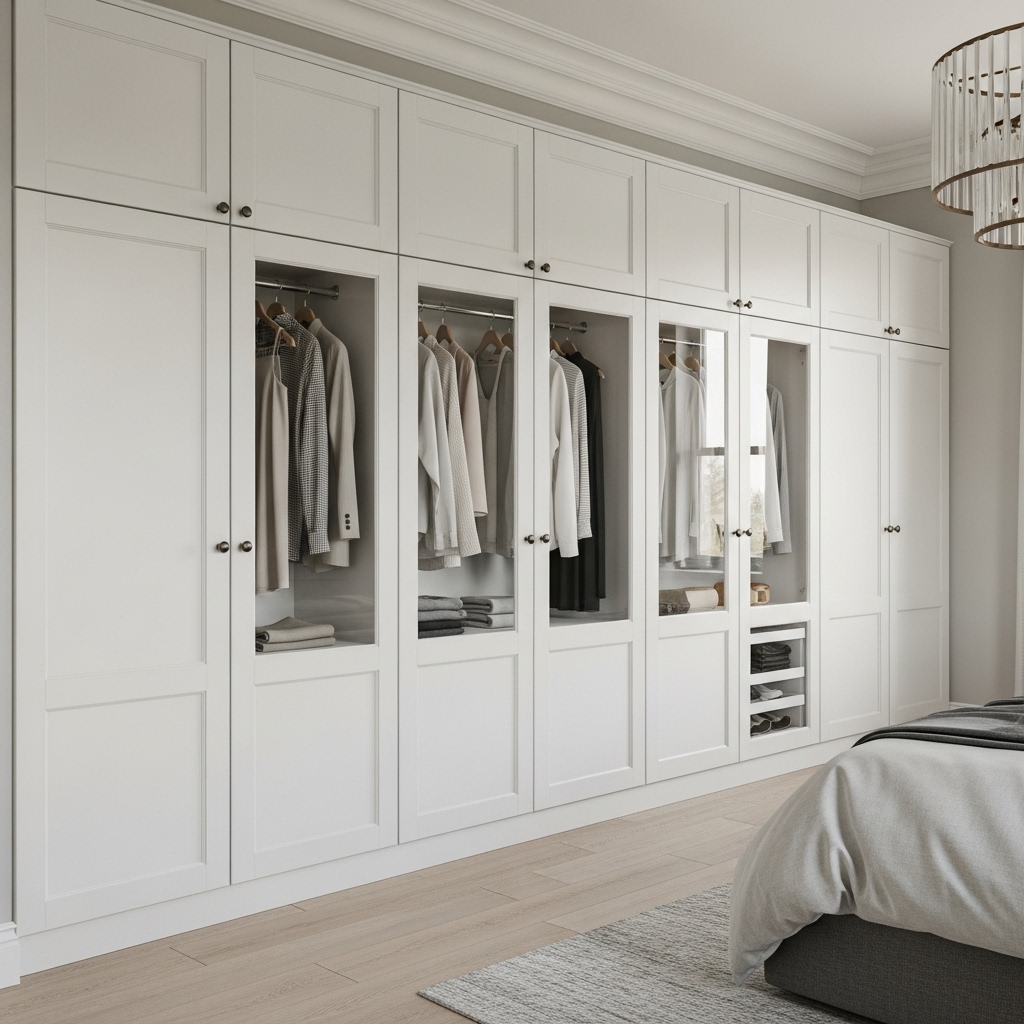
To maintain a clean and uncluttered look, arrange all your tall storage units along a single wall, preferably one that isn’t the focal point.
Built-in wardrobes or flat-fronted armoires painted the same color as the walls work best to disappear into the architecture. This layout strategy prevents visual noise by consolidating “heavy” items in one zone, leaving the rest of the room breathable.
It mimics the clean lines of Scandinavian functionality, ensuring that your clothing and clutter are tucked away, leaving only peace and order in your visual field.
8. The Foot-of-Bed Bench
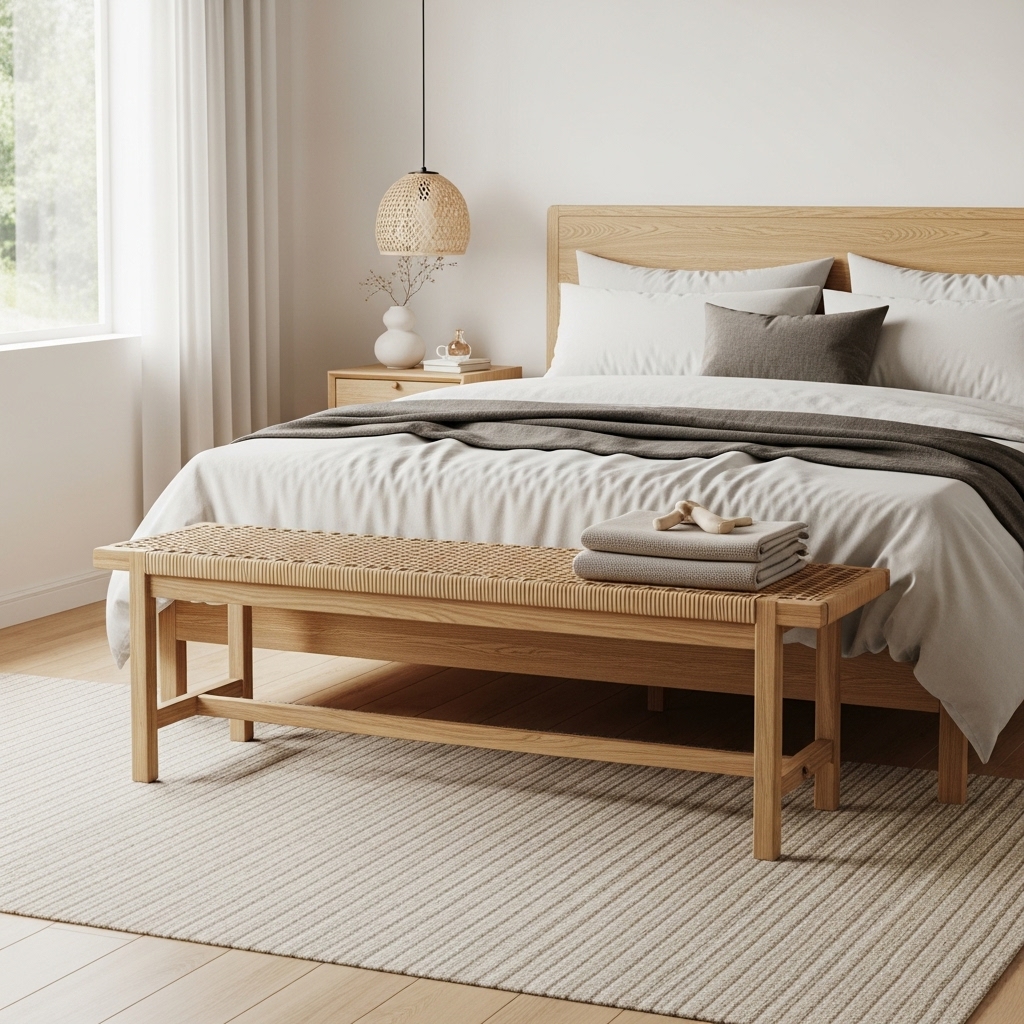
Anchor your sleeping space by placing a long, narrow bench at the foot of your bed. Choose a piece made of light oak or woven rattan to add texture without bulk.
This layout addition provides a practical spot for dressing or placing decorative throws while visually extending the bed frame. It creates a layered look that adds Scandinavian warmth (hygge) to the minimalist Japanese lines.
Ensure the bench is slightly shorter than the width of the bed to keep the proportions balanced and the flow around the room unobstructed.
9. The Nature-Integrated Corner
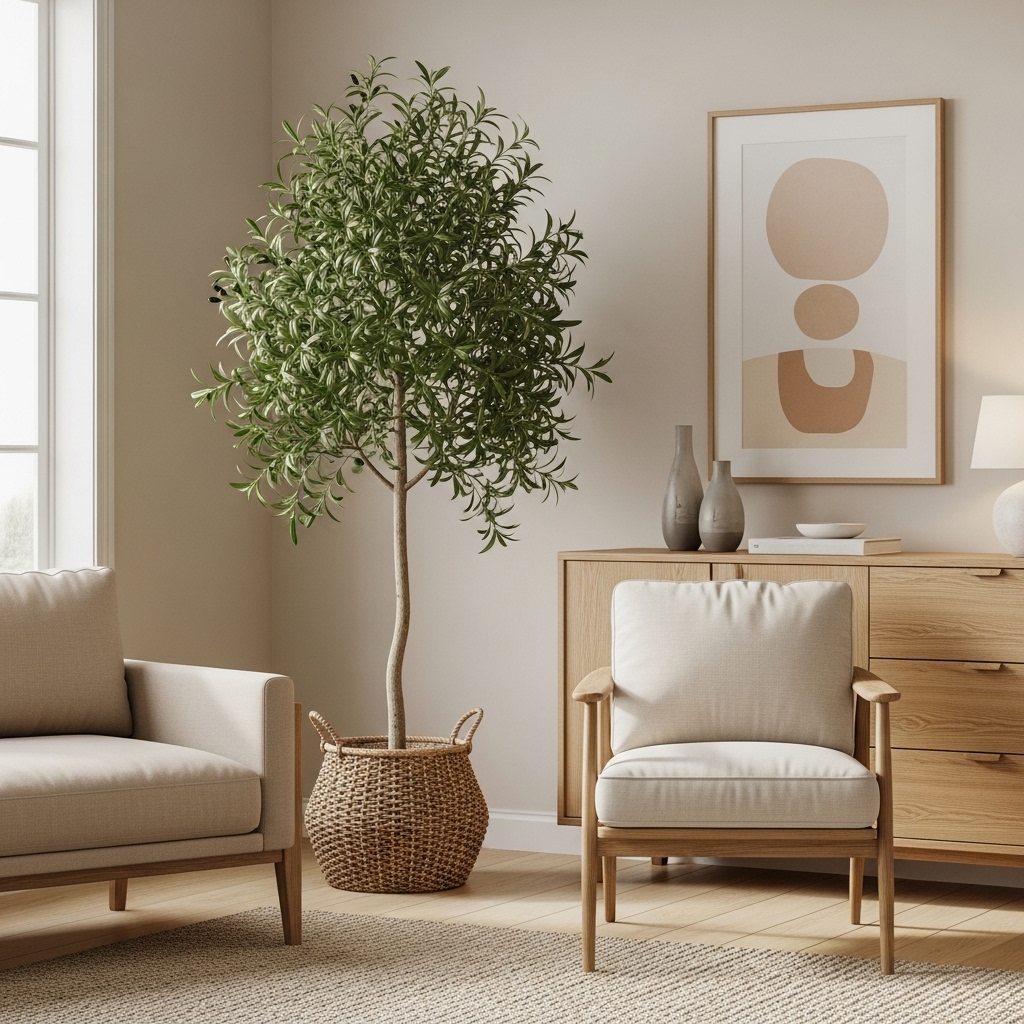
Soften the architectural lines of your furniture by dedicating a corner to a large, statement indoor plant. Place a tall potted tree, like a Ficus or Olive tree, in a woven basket next to a low armchair or dresser.
This layout idea brings the outdoors in, a crucial element of Japandi design. The organic shape of the plant breaks up the straight lines of the furniture, adding life and movement to the static layout. It balances the neutral color palette with a splash of vibrant, living green.
10. The Minimalist Desk Alcove
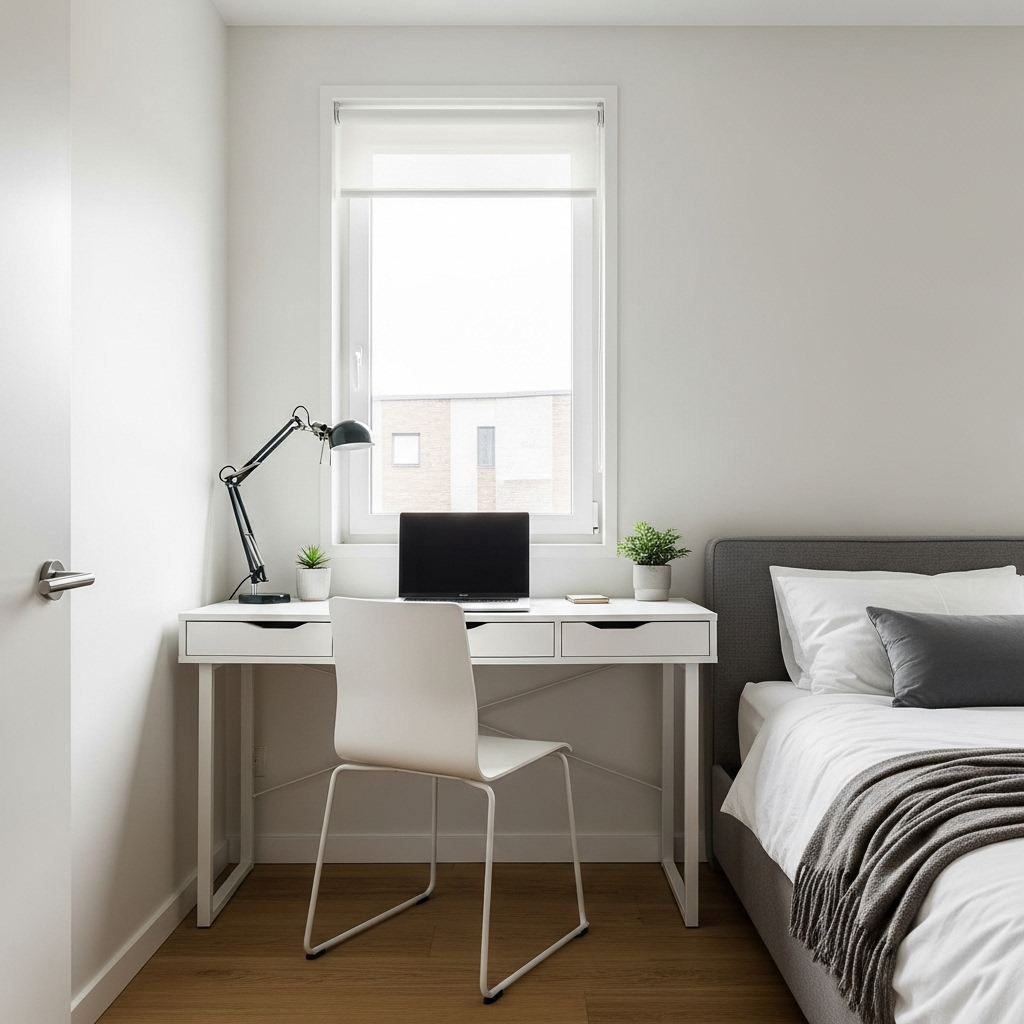
If you must work in your bedroom, position a slim, leggy desk against a wall, ideally facing away from the bed to mentally separate rest from work.
Choose a chair that can tuck completely under the desk to save space and maintain clean sightlines. This layout keeps the workspace unobtrusive and compact, ensuring it doesn’t dominate the room.
By keeping the surface clear and using a desk with hidden drawers, you preserve the room’s primary function as a place of rest, blending utility with uncompromising tranquility.
11. The Rug Island
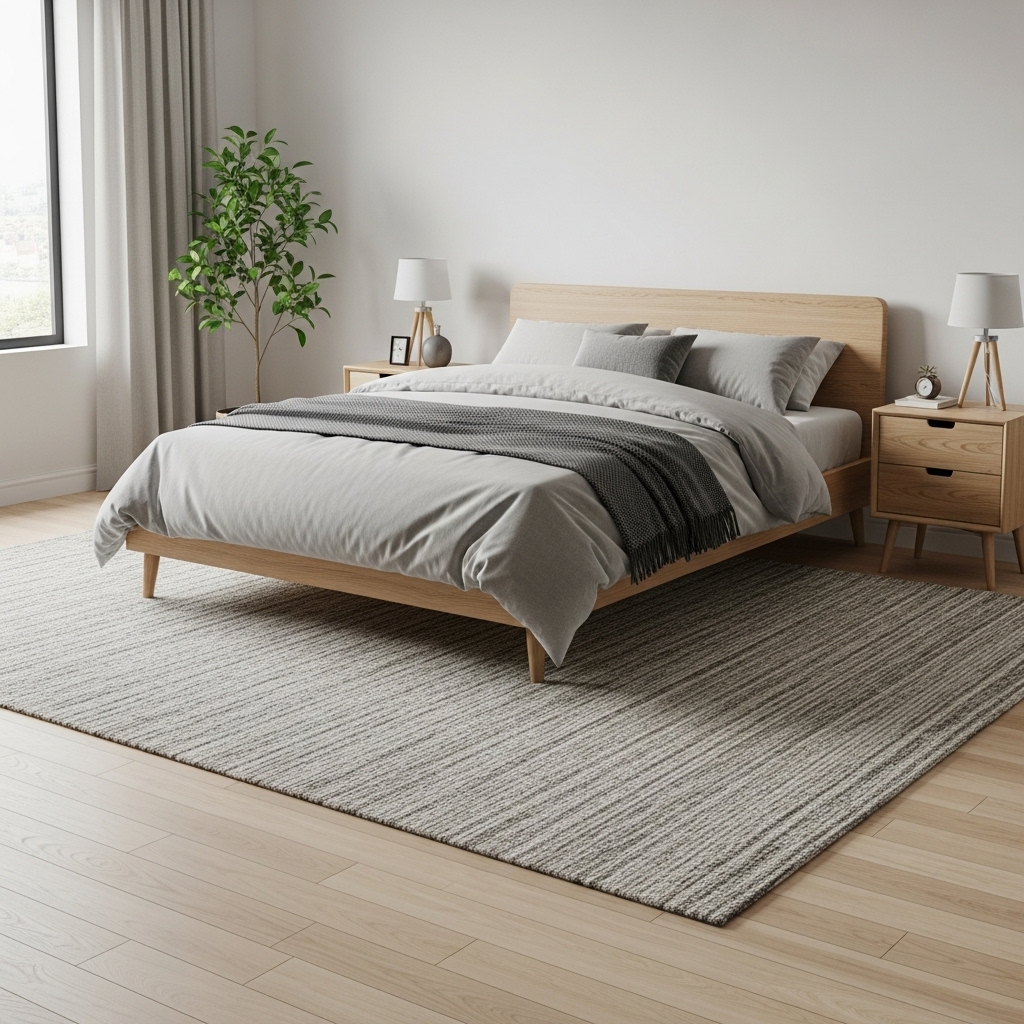
Use a large, textured area rug to define the sleeping zone, placing it horizontally under the bed. The layout should allow the rug to extend a few feet on either side and at the foot of the bed, creating a soft “island” for your furniture to rest on.
This adds a layer of Scandinavian coziness and warmth to the potentially cool Japanese minimalism. It visually groups the bed and nightstands together, anchoring them in the vastness of the room and providing a tactile comfort for bare feet in the morning.
12. The Low-Slung Reading Area
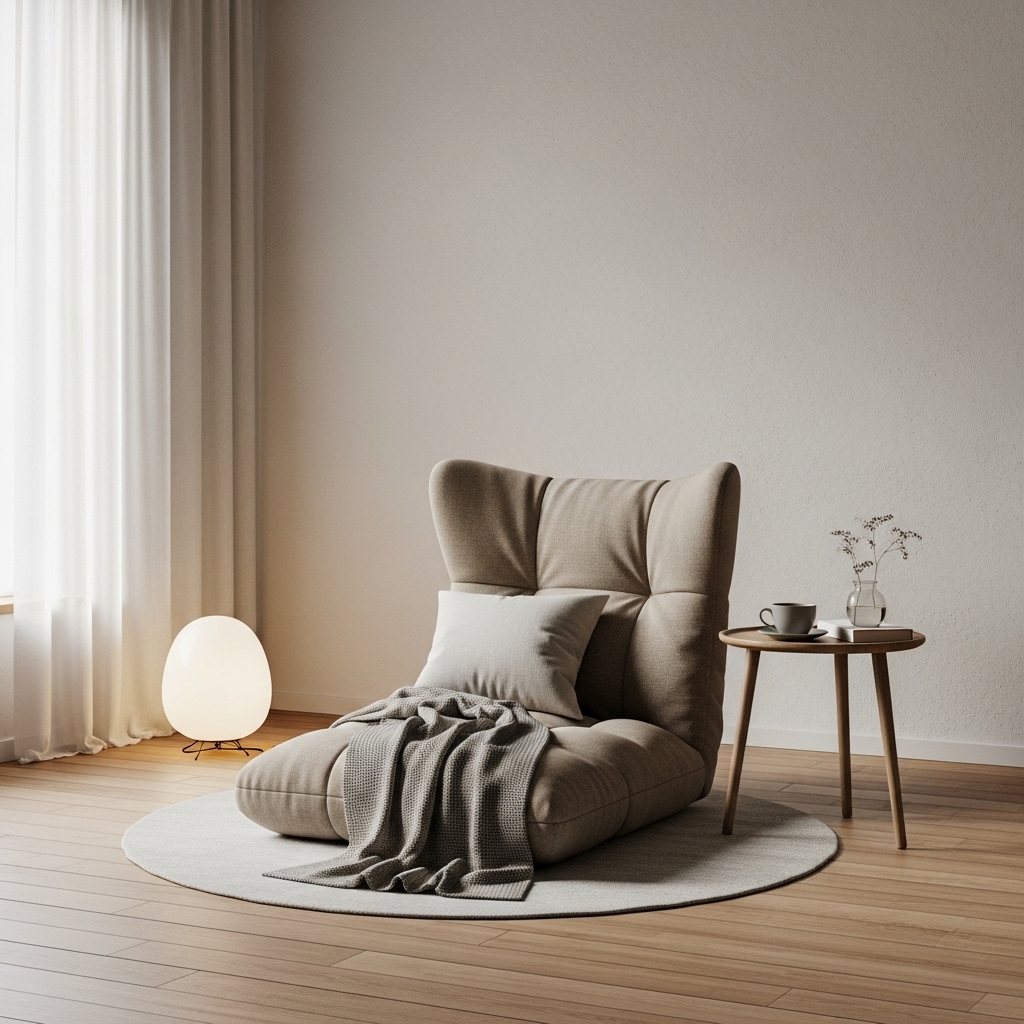
Create a cozy reading zone by placing a low-profile armchair or a floor chair near a source of light. Unlike traditional high-back wing chairs, a low-slung seat keeps the visual plane uninterrupted and maintains the “grounded” feel of the room.
Pair it with a tiny, round side table for a cup of tea. This layout invites relaxation without adding visual height or bulk. It is an intimate arrangement that encourages curling up with a book, embodying the cozy comfort of hygge within a disciplined minimalist framework.
Why Choose Japandi Style?
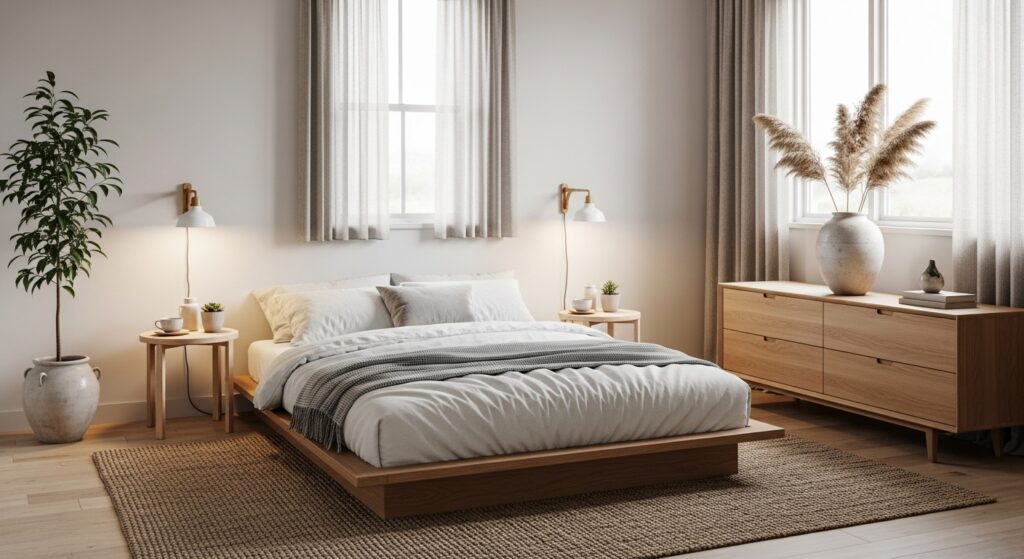
Japandi is more than just a visual trend; it is a lifestyle choice that prioritizes mental well-being. By stripping away non-essential items and focusing on quality, functional pieces, you create an environment that naturally lowers stress levels.
The neutral color palettes and natural materials evoke a connection to the earth, which is grounding in our fast-paced, digital lives.
It combines the best of both worlds: the cozy, welcoming nature of Scandinavian design ensures the room doesn’t feel cold, while the Japanese influence keeps it clutter-free and Zen.
Tips for Achieving the Look
- Focus on Texture: Since the color palette is monochromatic, use different textures like linen, wool, clay, and raw wood to add depth and interest.
- Declutter Ruthlessly: Before arranging furniture, remove anything that doesn’t serve a purpose or bring you joy. Open space is a key “ingredient” in this style.
- Choose Warm Neutrals: Avoid sterile whites. Opt for creams, beiges, soft greys, and pale oaks to keep the room feeling warm and inviting.
- Bring in Nature: Always include a natural element, whether it is a plant, a stone vase, or a wooden branch, to bridge the gap between indoors and out.
Conclusion
Adopting a Japandi layout for your bedroom is a powerful way to curate a lifestyle of intention and peace. It isn’t about buying the most expensive furniture, but about arranging what you have in a way that promotes flow, light, and breathing room.
By following these layout ideas, you can transform your bedroom from a mere place to sleep into a restorative sanctuary that recharges your mind and body every single night.
Frequently Asked Questions
Q: Can I use dark colors in a Japandi bedroom? A: Yes, but use them sparingly as accents. Charcoal, deep brown, or forest green can add sophisticated contrast (common in Japanese design) against a light Scandi backdrop.
Q: Is Japandi style expensive to achieve? A: Not necessarily. Since the style focuses on minimalism, you need fewer pieces. It encourages buying quality over quantity, or even upcycling simple wooden furniture.
Q: Can I mix metal furniture with Japandi style? A: Yes, matte black or brushed brass metals work well if the lines are sleek and thin. Avoid heavy, shiny chrome, which can feel too industrial or cold.